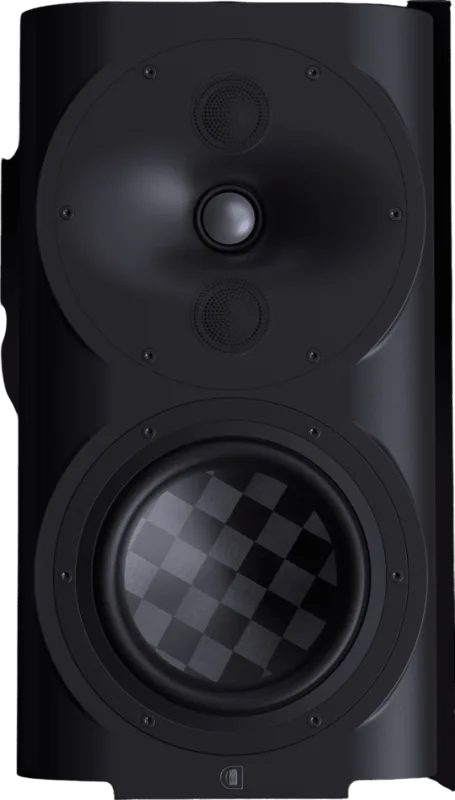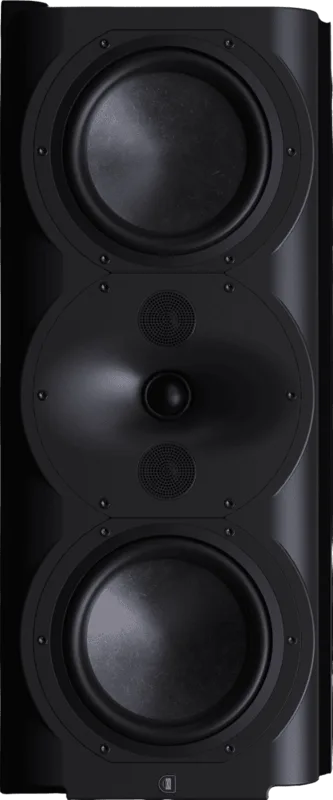
Kaya S12
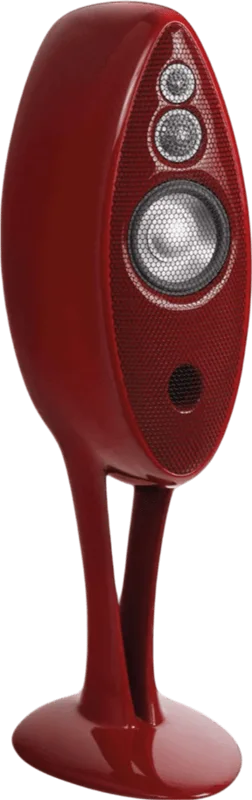
Vivid's Kaya S12 is a compact bookshelf speaker that can also be mounted on a wall, and it suits small rooms and near-field listening. Reviews praise its transparent, detailed sound and its imaging and soundstage.

New here? ExtremeHiFi is a free hifi encyclopedia: reviews, prices and used listings. We don’t sell anything.
Summary
Vivid's Kaya S12 is a compact bookshelf speaker that can also be mounted on a wall, and it suits small rooms and near-field listening. Reviews praise its transparent, detailed sound and its imaging and soundstage.
What reviewers love
The Kaya S12 delivers a vivid and detailed sound experience with surprisingly powerful performance for its compact size, making it a great choice for smaller listening spaces. Its unique design and low distortion contribute to a lifelike and engaging musical experience.
Product Strengths
- Stunning clarity and detail in sound reproduction
- Excellent integration between drive units with super imaging and soundstaging
- Very low distortion, leading to a cohesive and lifelike sound
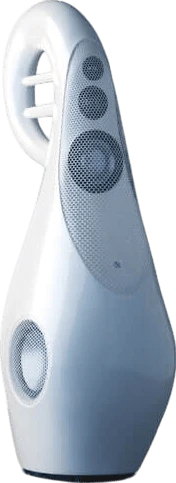
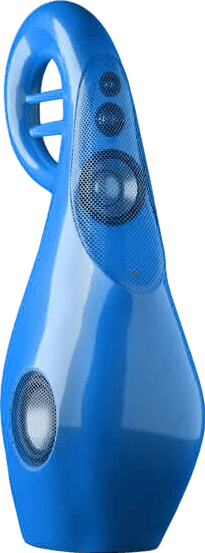
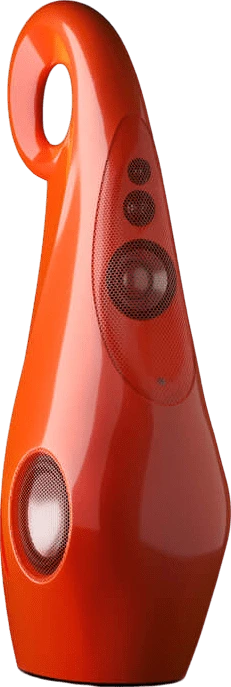
- Unique cabinet design minimizes diffraction and internal resonance
- Aesthetically pleasing and domestically chummy design
Product Considerations
- Limited low-frequency output, may not satisfy bass enthusiasts
- Can be very revealing of less-than-perfect recordings
- Single wiring only
- The price of the stand might dissuade some buyers
Comparisons (according to reviewers)
- Compared to Audiovector R1 Arreté, Kaya has a more super-focused perspective on the soundstage
- Compared to Sonus Faber Minima Amator II, Kaya has better dynamics
Takeaway: The Kaya S12 delivers a vivid and detailed sound experience with surprisingly powerful performance for its compact size, making it a great choice for smaller listening spaces. Its unique design and low distortion contribute to a lifelike and engaging musical experience.
Written reviews0
Awards0

Bookshelf, floorstanding, in-wall, and powered speakers, compared on the specs that matter in a real room: bass extension, sensitivity, and tweeter type.
Buying tips that apply to the Kaya S12
- Get placement right before anything else. Pulling speakers 2–3 feet (60–90 cm) from the wall behind them tames boomy bass; the listening seat should sit at the third point of an equilateral triangle, with toe-in adjusted to set the width of the image.
- Match speaker size to the room. Large towers in a small room often sound bloated, and nearfield listening at a desk favors small two-way designs.
- Each 3 dB of extra sensitivity halves the power needed for the same volume. For moderate listening levels, speakers rated 90 dB or more allow a smaller, cheaper amp.
- Treat the room before spending more on speakers. Bass traps in the corners and absorption at the first reflection points often do more than a step up in speakers.
- Used speakers lose value quickly, so two- or three-year-old models from established brands often sell well below their new price.
- Three-way designs free the midrange driver from bass duty, which can lower distortion in voices, though a well-designed two-way can image just as precisely.
- Tweeter dispersion matters more than its frequency response. Wide dispersion gives a bigger sweet spot but lights up more room reflections; controlled directivity suits lively rooms.
- Open-plan rooms lose bass. If the room opens onto other spaces, budget for a subwoofer instead of bigger main speakers.
- Audition with familiar music. Voicing varies a lot between brands, and a pair that excites on rock can grow tiring on strings.
- Many brands put their flagship tweeter into smaller models. A bookshelf speaker from a brand's top range often beats a cheaper tower in a small room.
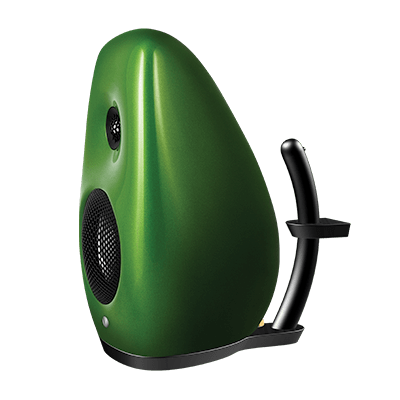
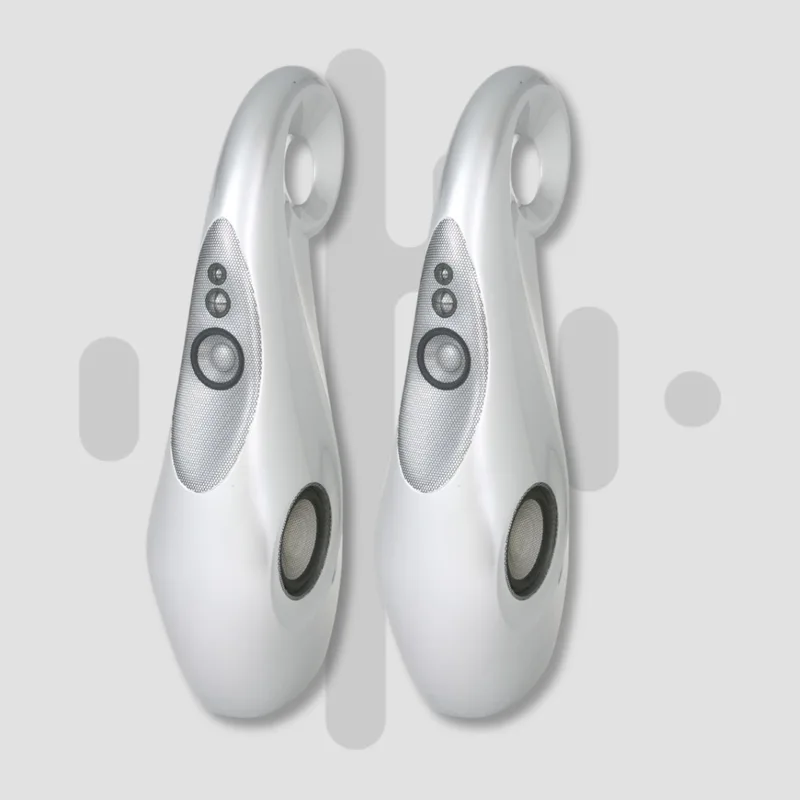
Kaya S12 photos
Features and specs
Specs
- Configuration: 2 way 2 driver system
- Cabinet material: RIMCast PU resin
- Cabinet colour: Piano Black, Lexus Pearl White, Oyster Matte
- Drive units HF: D26 – 26mm Tapered Tube loaded alloy dome
- Drive units LF: C100L – 1 x 100mm alloy cone unit
- Bass loading: Exponentially Tapered Tube enhanced bass reflex
- Sensitivity: 85dB @ 2.83VRMS at 1m on axis
- Nominal impedance: 8Ω (5.3Ω Min)
- Frequency range: 45 – 25,000 Hz (-6dB)
- First D26 Break Up mode: 44,000 Hz
- Harmonic distortion: < 0.5% over frequency range at 1W
- Cross over frequencies: 3,000 Hz
- Recommended amplifier power: 25W – 125W
- Dimensions: 400 mm (H) x 237 mm (W) x 254 mm (D)
- Net weight: 6 kg
- Shipping dimensions: 480 mm (H) x 250 mm (W) x 270 mm (D)
- Shipping weight: 8 kg (each)
Manufacturer's description
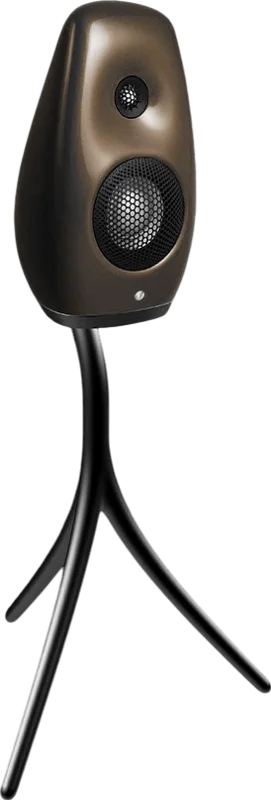
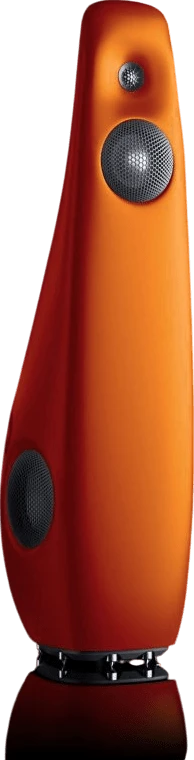
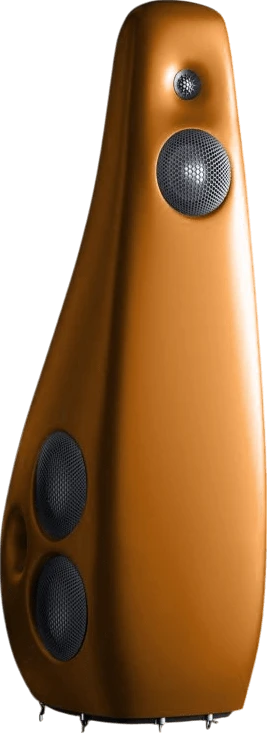
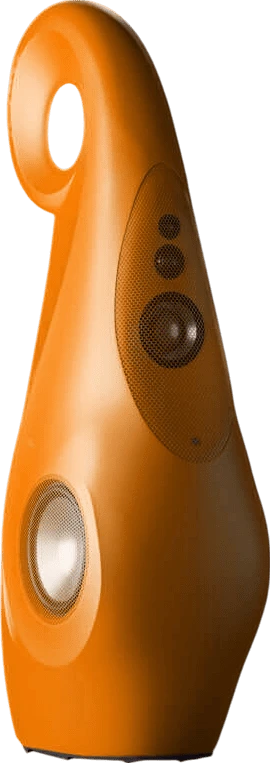

All used Vivid
Where to buy the Kaya S1214 dealers
About Vivid
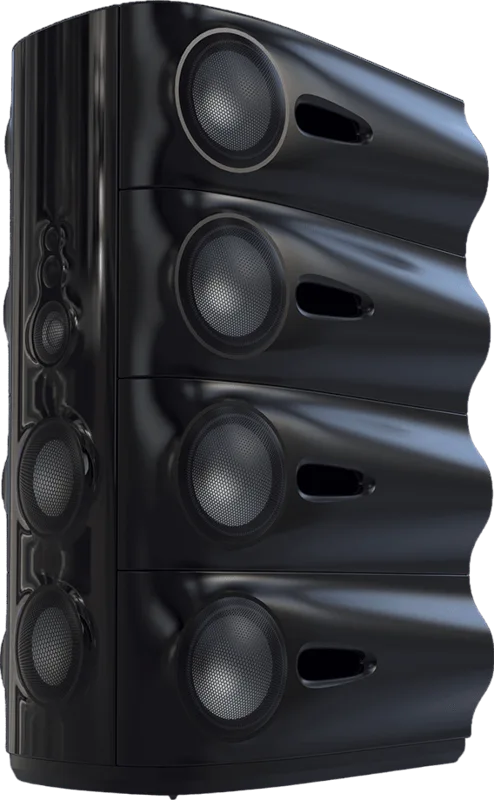
Vivid Audio is a British loudspeaker maker whose designs come from Laurence Dickie. Every model uses drivers, crossovers and enclosures that the company makes by hand. Each driver is backed by a tapered tube that absorbs the sound coming off its rear, and the bass drivers are arranged so their reaction forces cancel. The curved cabinet shapes keep resonance and reflection low. The Kaya models suit smaller rooms and home theaters, and the Giya series adds more drivers. The Moya M1 flagship is built around a stack of bass drivers for extended low frequencies.
Brand highlights
- Vivid employs a tapered tube loading technology, extending from the rear of each driver, to absorb backwave energy and minimize cabinet resonances, promoting clearer and more detailed sound reproduction.
- Reaction-canceling driver arrangements are a hallmark, strategically implemented to reduce cabinet vibration and improve bass clarity, enhancing overall sonic purity.
Our interview with Vivid
What makes you different from other brands?
Unlike the vast majority of our competitors, who simply use others' active components, we have, from inception, March 2001, designed and manufactured our very own bespoke, proprietary drive units. The resultant filter networks are ridiculously simple. By controlling the whole process, we are able to derive the exact response from each in it's system. A little appreciated advange too, is we are able to provide spare parts for an extended period.
Any vibrating device will impart that vibration to the substrate to which it is fixed. At Vivid Audio at no time do we couple drive units to the cabinet directly, each is decoupled by a carefully selected soft, 30 shore silicone, memory free O ring. In the case of bass units, we go one step futher - in addition to the decoupling O ring, each driver is apposed by another identical bass unit in a reaction cancelling configuration. Expensive, resulting in an inert cabinet. Note the lack of visible fixing harware.
A perfect acoustic solution.
(No matter how heavy you make a loudspeaker cabinet, all one is doing is shifting the damped resonances in band. Place your ear against any loudspeaker to appreciate this. The worst case example is the ubiquitous eccentricly loaded sub woofer.)
We strive for as lower mass as possible in an extremely stiff configuration. The lower the mass, the lower the energy strorage. The same requirement as aircraft, race cars etc. There are many other unique technologies we employ, jointly presenting the cleanest window into the music. Our web page details these.
What pairs best with your products?
It would be foolhardy of me to send you a short list - by definition would exclude many excellent brands of which we have no knowledge. Suffice to say: Unusually, we expend an exorbitant effort in perfecting the loudspeaker / room interface, no sharp perturbations, corners, discontinuities, etc., and the loudspeaker / amplifier interface, ensuring at the minimum impedance, the current and voltage waveforms are close to being in phase - an ideal situation. Our loudspeakers present an easy load to the amplifier. Quality rather than quantity is emphasized.