Welcome
A Class A amplifier keeps its output devices conducting all the time, so there is no crossover distortion and no switching. The price is efficiency: most of the power becomes heat, so these amps are big, warm to the touch and modest in watts. The list is the designs that run in Class A to full output, not the many amps that bias into Class A for the first watt or two.


Products on this list




What reviewers think
Product Strengths
- Impressively natural midrange, described as silky, sweet, big, rich, textured, and haunting
- Excellent bass reproduction, deep, precise, and weighty
- Fluid and gentle sound with impressive layered depth and width
- Provides a warm, rich, muscular, and refined sound, enhancing older recordings
- Simple design with high-quality components and reliable build quality, built to last
- Lacks features such as digital inputs, phono stage, balanced connections, and subwoofer output
Product Considerations
- Low power output (25W) may require efficient speakers, although it exceeds this in practice
- Runs warm and requires good ventilation
- Speaker terminals can be a little difficult to use with certain types of spade connectors
- A review mentioned a thumping sound on speakers upon power-up, but this was considered a possible defect warranting return
Comparisons (according to reviewers)
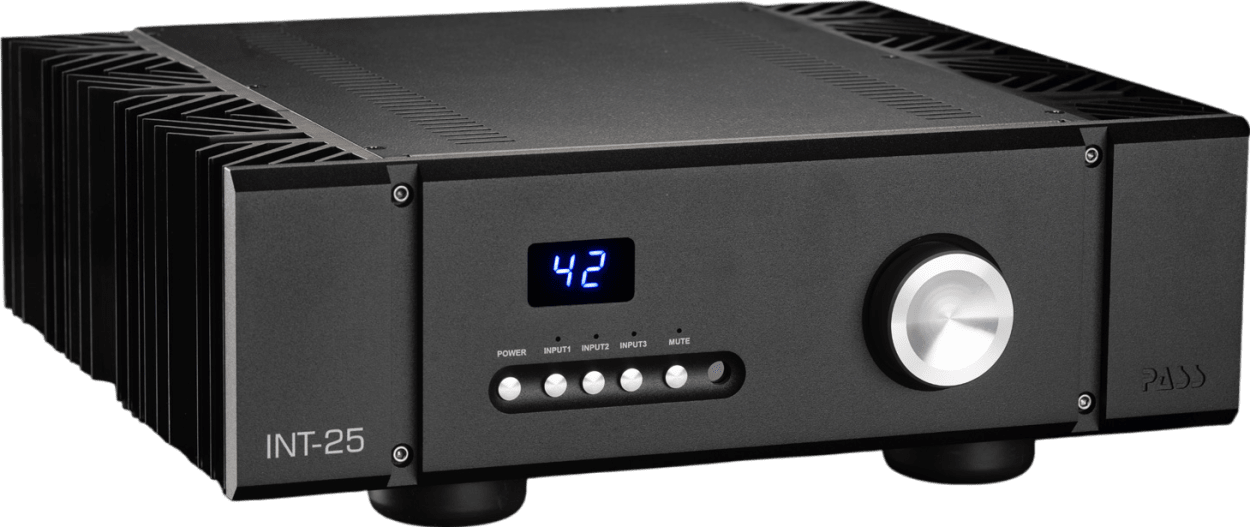
- Vs Pass XA25: INT-25 has a simplified front end of the INT-60 machine, integrating the XA25 power amp and preamp
- Vs Pass INT-60: INT-60 is more powerful and neutral, INT-25 has better tonal balance, smoother sound, and superior bass performance (with proper speaker matching)
- Vs Exposure 3010S2 monoblocks: INT-25 has more detail, fluid sound, and deeper—more controlled—bass, but Exposure has more power and easier speaker interaction
- Vs Exposure 3010S2D Integrated Amplifier: INT-25 provides more detail and fluidity, more faithful and convincing bass, and more seductive female vocals
- Vs Luxman 590AXII: Luxman is more detailed with a thinner mid-bass, INT-25 has more warmth and body, giving it more humanity and muscularity
- Vs Vinnie Rossi L2i SE: INT-25 has more muscle, warmth, and glow, the L2i SE is more clean-sounding, with super refinement and silence
- Vs Line Magnetic 219ia: INT-25 has a similar sound signature, but with more 'muscle' and no maintenance, as well as more texture and bass
Takeaway: The Pass Labs INT-25 is a high-quality, simple-to-use integrated amplifier with a musical and engaging sound. Its strengths in the midrange and bass make it a great choice for listeners who value warmth, texture, and a fatigue-free listening experience.
Video review
About the brand

What reviewers think
Product Strengths
- Potent transparency gives a direct view of what the microphones registered, unmitigated
- Exceptionally musical, providing a colorless, open, and resolute sound
- Excellent build quality
- More authoritative and powerful than its nominal 25-watt power rating would suggest
- Provides a detailed and airy musical reproduction similar to SET tube amps, but without maintenance and coloration
Product Considerations
- Took about four weeks of playing music to properly break in, and the sound changed with different speaker cables
- Isn't balanced in terms of design or connection
- Runs in Class A, which consumes a significant amount of power and is not very energy efficient
- The reviewer notes a tad of thinness to the lower midrange that might get grating over time
Comparisons (according to reviewers)
- vs Miyajima Laboratory Model 2010: Less wabi-sabi than the Miyajima, but it made the Quad's legendary midrange more solid, dynamic, and well defined
- vs ASR Emitter II MOSFET amp: The XA25 drove the old Quads better than the ASR, and better than any other amp heard
- vs First Watt F7: The XA25 was the more illuminated, open, feistier type that also dug substantially deeper and felt more anchored than the FirstWatt F7
- vs XA-30.8: The reviewer liked the sound of the smaller amp even better, and their back much preferred it, too
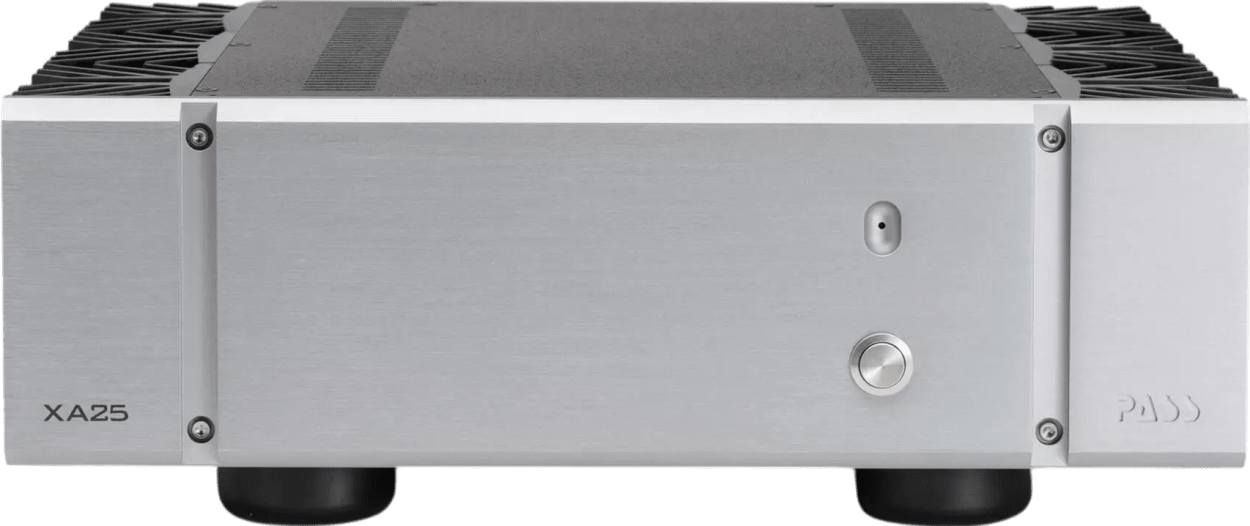
Takeaway: The Pass Labs XA25 is an audiophile amplifier that delivers a potent transparency and is exceptionally musical. It is a great option for those wanting high-end performance in a smaller, more affordable package.
Video review
About the brand

What reviewers think
Product Strengths
- Magical, beautiful sound that touches your heart and soul.
- Big bass foundation that is massive but tight, giving solid weight to the music.
- Mid-range is about as beautiful as possible.
- Top end is sweet and magical, treble is present and fluid with a warm sound signature.
- Sweet balanced sound which is bigger and more real than previous amps, also more intimate and tangible.
- Reliable and built in the USA with great customer service.
- Offers levels of focus and intimacy normally associated with the finest tube amplifiers, with greater control and power.
Product Considerations
- Runs warm or hot, may require good air conditioning in warmer climates.
- Electricity consumption is high.
- Heavy, each amplifier weighs 88lbs and is large, meaning careful placement and potentially specialized furniture might be needed.
- The design is basic.
Comparisons (according to reviewers)
- Vs XA30.8: The XA60.8 monoblocks produce a slightly wider and deeper soundstage—from a slightly quieter and darker background—with more sparkle in the top-end and more detailed and transparent sound, also they are slightly more dynamic.
- Vs Pass Labs X250.8: The XA60.8 has a slight preference for tone and timbre which is more natural and unforced.
Takeaway:
The Pass Labs XA60.8 monoblock amplifiers deliver a magical sound and are built to last. They provide a powerful, intimate listening experience.
Video review
About the brand


What reviewers think
Product Strengths
- Great sounding amp that is quiet
- Described as sounding very distortion-free and full
- Said to provide great transparency
- Sound is warm and relaxed, combining precision and detail without sterility
- Has XLR balanced outs
Product Considerations
- At only 25 watts per channel into 8 ohms, and 13 watts into 4 ohms, power may not be enough for some setups
- The power switch is on the amp's rear panel, which might be inconvenient
- May feel a tad slow compared to other amps when listening to modern electronic music
- As a class A design, it runs quite warm
- Can sound a little lacking in air, bloom, and 3-dimensionality for the first couple hours or so—running from a cold start
Comparisons (according to reviewers)
- Compared to the Atma-Sphere S-30 Mk.III, the J2 was quieter, and the highs were slightly more extended and seemed a smidgen purer
Takeaway: The First Watt J2 is a great sounding amplifier that sounds very good, especially with high-efficiency speakers, and combines precision and detail without sounding sterile. It is a versatile product from an audio master that offers balanced and single-ended connections.
Video review
About the brand


What reviewers think
Product Strengths
- Exceptionally clear and relaxed sound against a calm background
- Natural sound, especially with voices, rendering them silken, relaxed, and rich
- Realistic and organic musical flow
- Free from artificial hardness and tension
- Good soundstaging, forming a resolved and free stage
Product Considerations
- Limited output power which may underplay pulsating rhythms and punchy articulation
- Requires speakers of higher sensitivity ratings and sources with drier bass
- Bright power on indicator may be distracting
- Repairs to the preamp are difficult, since access demands that a fair amount of the chassis is dismantled first
- The controls can become noisy, and the latching mechanisms for the switches may seize up with age
Comparisons (according to reviewers)
- Compared to the Accuphase E212, the A21SE renders flute and piano less ordinary and with more harmonic content
Takeaway: The Sugden A21SE is a good choice for music lovers wanting realism, body, and rich mids because it's free of artificial edges. It's an amplifier that makes music sound great and keeps you listening without getting tired.
Video review
About the brand


What reviewers think
Product Strengths
- Exceptional build quality and aesthetics
- Engaging and natural sound
- Excellent phono stage
- Versatile functionality
Product Considerations
- Headphone output is average
- Price
Comparisons (according to reviewers)
- The Luxman has more bass impact, detail, and a wider soundstage than the Line Magnetic 219ia tube amplifier, and is considered more practical due to less heat and no expensive tubes
- The Luxman surpasses the McIntosh in sound, design, and build quality, offering more detail and a wider soundstage
- The Luxman is built to a higher standard and offers a sweeter, richer midrange—better instrument separation—compared to the Yamaha
Takeaway: The Luxman L-590AXII is a beautifully crafted, high-performing integrated amplifier that delivers an engaging and natural sound, and is packed with functional features. This product can be the centerpiece of a high-end system and provides a balanced and enjoyable listening experience.
Video review
About the brand


What reviewers think
Product Strengths
- Delivers detailed and accurate sound reproduction across the frequency range
- Possesses ample power and excellent control, able to drive demanding speakers
- iBias technology allows Class A operation without excessive heat or power consumption
- Combines high-end two-channel audio with modern video connectivity
- Equipped with a versatile range of digital inputs via the optional digital module, including USB, HDMI, optical, coaxial, and Ethernet
Product Considerations
- The remote control's layout and ergonomics are not intuitive, making menu navigation difficult
- Lacks Dolby and DTS decoding, limiting its utility as a full AV solution
- Offers no internal bass management for 2.1 setups, meaning reliance on a subwoofer to cover this
- The small display at the front might require some squinting for some people
- Some found the sound to be accurate and detailed, but missing some of the 'punch' and 'excitement' of older Krell amplifiers
Comparisons (according to reviewers)
- Vs Dan D'Agostino Momentum Preamplifier and Pass Labs XA200.5 monoblocks, the Krell K-300i is very good but the other components had an edge—but the key word here is value
- Vs Hegel and Primare, the Krell K-300i is a fantastic integrated amplifier which can easily stand aside any competitive integrated amplifier for the price range
- Krell provides a more intense presentation than the McIntosh's slightly sweeter rendition
Takeaway: The Krell K-300i is a well-equipped and powerful integrated amplifier that provides detailed sound and plenty of modern connection options. It's a great option for people wanting a streamlined system with high-end sound.
Video review
About the brand


What reviewers think
Product Strengths
- Warm, smooth, and engaging musical presentation, reminiscent of a good tube amplifier
- Phono stage is good, especially the MM option, and quiet in use, providing a warm and enjoyable sound
- Design stays true to the original 1985 A1, with updated components for improved reliability and performance
- Remote control is a welcome addition compared to the original, and the volume control feels solid and durable
- It delivers a bold and full sound, surprising for its small size and power rating, with impressive bass and three-dimensionality
- Connectivity options such as digital inputs and a headphone output are not available, limiting its versatility compared to modern integrated amplifiers
Product Considerations
- Runs very hot due to its Class A design, requiring adequate ventilation and caution to avoid burns
- Relatively low power output (25W) may not be sufficient for demanding speakers or large rooms, especially with loud, dense rock music
- Some reviewers found the original A1 to be more euphonic
- Close spacing of analogue inputs and the grounding post for the phono stage can be fiddly to access
Comparisons (according to reviewers)
- Vs Musical Fidelity M5si: The A1 is often more beguiling to listen to, offering a specially authored view of the recording that defies description
- Vs Naim NAIT XS3: The A1 renders bright recordings in a more luxurious and silky way, with less fierceness
- Vs Sugden A21a: The Sugden sounds brighter on certain tracks, while the A1 is warmer-sounding
- Vs Audiolab 9000a: The A1 offers a more lively, energetic, and bass-bold presentation, whereas the Audiolab has more neutrality
- Vs Musical Fidelity M2si: The A1 retrieves greater detail and presents a more believable soundstage
- Vs PrimaLuna EVO 300H: The PrimaLuna sounds better across the board, with more detail and a cleaner soundstage
Takeaway: The Musical Fidelity A1 is a charming and engaging amplifier that brings a unique, warm, and musical character to the listening experience. Its classic design and updated components make it a good choice for those seeking a taste of vintage hifi with modern reliability.
Video review
About the brand

What reviewers think
Product Strengths
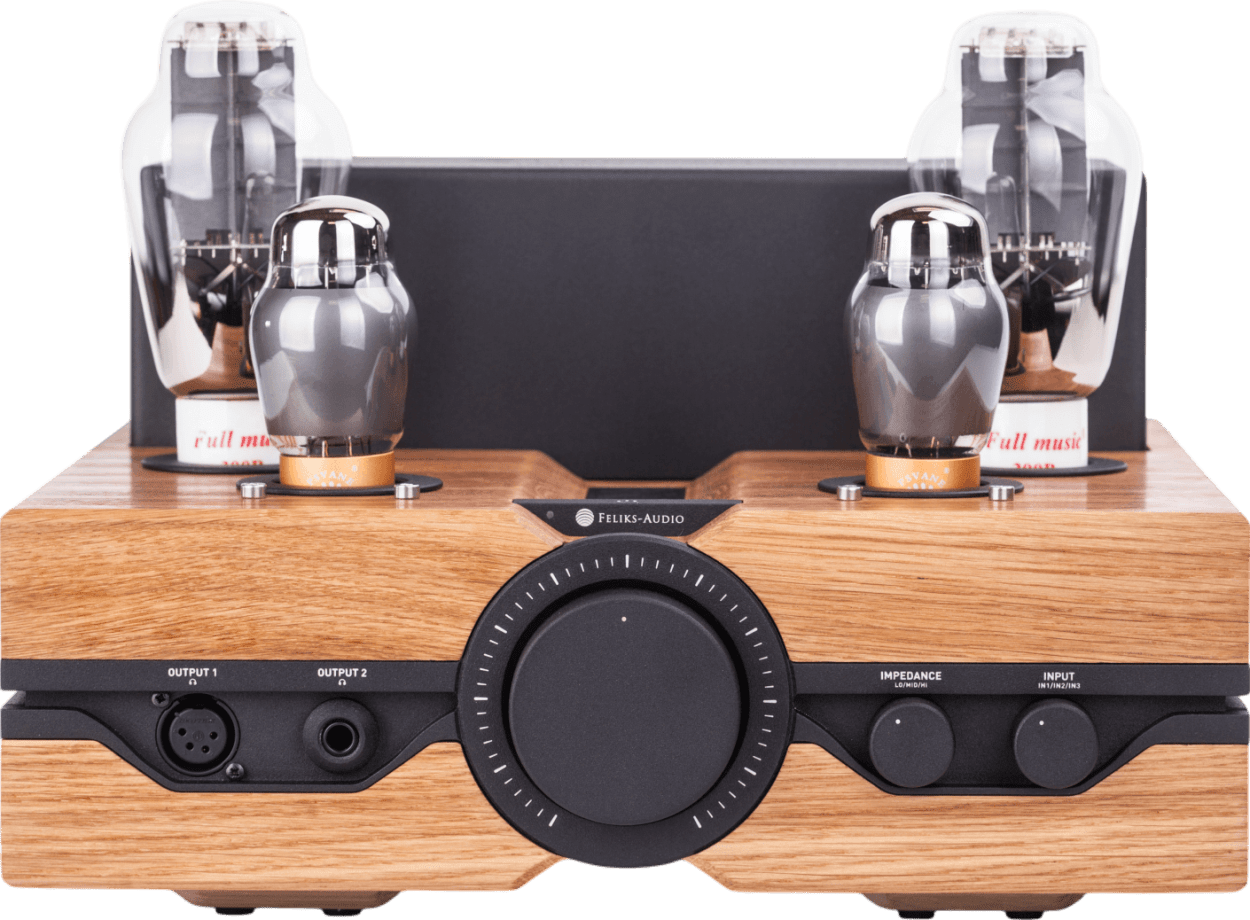
- Exceptional build quality with a blend of expertly crafted wood and metal, creating a visually striking and durable statement piece
- Dynamic, rich, and effortless sound with excellent detail, texture, and the right amount of tube magic
- Powerful output capable of driving demanding headphones while maintaining clarity and control
- Versatile performance with a variety of headphones (dynamic and planar) due to its output transformer design, often improving sound for warm or neutral headphones
- Value added by its ability to be used as a pre-amplifier in a stereo system
Product Considerations
- Large size and weight (around 15kg) require ample desk space and sturdy furniture
- Generates heat, which could be a concern in warmer environments without adequate ventilation
- Accidental switching of 'On/Off' is possible due to the touch-sensitive bar in the front not being intuitive, so use with care around pets
- Too powerful for some very sensitive IEMs, potentially resulting in overwhelming sound or audible hiss, though this is not the intended design for the amplifier
Comparisons (according to reviewers)
- Vs HIFIMAN Susvara, Envy empowers Susvara's natural presentation while giving it all the dynamics and slam needed
- Vs Cayin HA-300MkII, Envy exhibits more linear mid-to-high frequencies and offers a more transparent sound, while HA-300MkII has a warmer—more engaging midrange
- Vs AURIS Headonia 2A3, Envy performs at the same level, with technically incredibly strong aspects
- Vs Octave V 16, Envy completely demolishes the V 16 when it comes to energy, control, timbre, and resolution
- Vs Ferrum OOR, Envy is more powerful sounding, while also being more detailed with better tonality
Takeaway:
The Felix Audio Envy is a high-end headphone amplifier for audio enthusiasts who want the best quality sound to bring out the magic in their favorite headphones. Its stunning design and versatile performance make it a worthwhile addition to any serious audiophile setup.
Video review
About the brand


What reviewers think
Product Strengths
- Excellent build quality and tank-like construction, backed by a 20-year warranty
- More robust and flexible than any built-in headphone amplifier heard
- Operates in Class A, providing a clean and detailed sound signature and a neutral sound without being edgy or bright
- Enough power to drive demanding headphones
- Versatile connectivity with balanced (XLR), unbalanced (RCA), and mini-jack inputs, as well as balanced and unbalanced headphone outputs
Product Considerations
- May not pair perfectly with high-sensitivity in-ear monitors due to a faint hum/buzz
- Requires adequate ventilation to prevent thermal shutdown
- Preamp output level seemed uncomfortably high in comparison with other preamps, so all adjustments were made in the first 15 or 20 degrees of rotation with balanced inputs, even on the low output toggle
Comparisons (according to reviewers)
- Vs Bottlehead Crack Headphone Amplifier, the Bryston BHA-1 offers a cleaner sounding and more detailed presentation than tube amplifiers
- Vs Pass Labs HPA-1, the Bryston BHA-1 is cleaner sounding, provides more detail, and adds no coloration with easier-to-drive planar headphones
- Vs AURALiC Taurus, the Bryston BHA-1 tends to be a bit clearer, crisper, more dynamic and spacious, while the Taurus has a slightly warmer and fuller sound
- Vs Questyle CMA800R, the Bryston BHA-1 is generally clearer, while the Questyle is a tad fatter in sound
- Vs Musical Fidelity M1HPA, the Bryston BHA-1 provides greater presence and lower noise
- Vs Woo Audio WA22, the Bryston BHA-1 offers superior versatility and value, and the Woo Audio WA22 has a different balance—a little warmer and even more dynamic—while not quite as clean and resolute in the bass
Takeaway: The Bryston BHA-1 is a well-built and versatile headphone amplifier that delivers a clean, detailed sound and can drive a wide range of headphones. Its robust design and features make it a solid choice for audiophiles seeking a high-quality and reliable listening experience.
Video review
About the brand


What reviewers think
Product Strengths
- Audio masterpiece, with a stunning sound and appearance
- Highly configurable, with three headphone outputs that can be accurately fine-tuned to match connected headphones
- Can comfortably drive pretty much any headphone, regardless of whether it's using conventional unbalanced or balanced connectors
- Offers the user a lot of control over the sound that ultimately comes from headphones
- Presents music neutrally and is highly resolving, dynamic, open, and has a solid low end
Product Considerations
- Lacks analogue outputs
- The set-up is fiddly until one has done it for the first time
- Poor recordings will be rapidly shredded by this high end pair
Takeaway: The HA 200 is a beautifully designed and well-built headphone amplifier, offering a wide range of inputs and flexibility in sound customization. It delivers a refined, smooth, and natural sound, making it a great option for those who are serious about headphone listening.
Video review
About the brand