Welcome
A DAC turns the digital file into the voltage your amplifier needs. Phones and streamers have one built in; a separate one buys a better analogue output stage, more inputs, and a clock that keeps its timing under load. This list is ranked by how often reviewers have covered each unit, so it mixes affordable measurement-led designs with the converters that sit in reference systems. A few of the portables here also drive headphones directly.


Products on this list




What reviewers think
Product Strengths
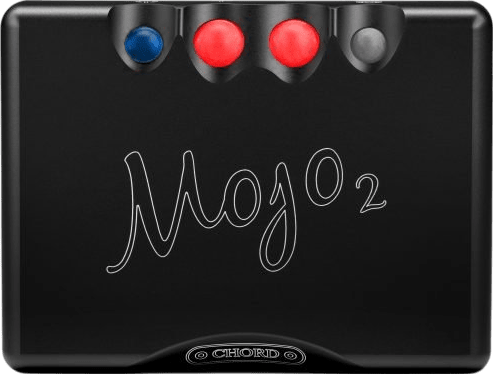
- Improved battery management offering faster charging rates and better efficiency than its predecessor
- Features a new USB-C data input for greater flexibility alongside other inputs
- Offers the world's first lossless DSP for tone adjustments without degrading sound quality, providing customization options
- Excellent resolution and dynamics with a large soundstage and extreme detail
Product Considerations
- The Mojo 2 can get warm when in a pocket for a period of time
- Complicated menu navigation with color-coded buttons that may require the manual
- Still uses Micro-USB for charging, which some find outdated
Takeaway: The Chord Mojo 2 is an exceptional DAC/headphone amplifier for those seeking high-resolution audio and customized sound in a portable format that is easy to move. Its sonic accuracy, detailed soundstage, and improved features provide a versatile and enjoyable listening experience, making it a worthwhile consideration for audio enthusiasts.
Video review
About the brand

What reviewers think
Product Strengths
- Delivers a different sound, often bigger and meatier with more detail, compared to cheaper DACs
- Detail retrieval is a consistent strength, digging out details missed by other DACs
- Offers clear, precise, and subtle performance, and improves clarity, precision, and subtlety
- Provides excellent timing and rhythmic dexterity
- FPGA technology and custom programming allows it to deliver a sound that is both neutral and incisive
- Compared to previous designs, it has additional isolation from external vibration, which further improves sound quality
Product Considerations
- The default switching power supply is inadequate and limits performance, with reviewers recommending an upgrade to a linear power supply
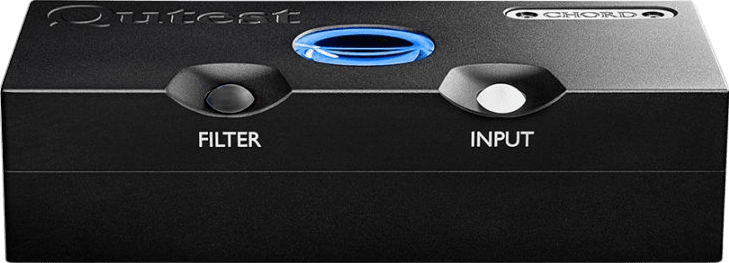
- Lacks features such as Bluetooth connectivity, a headphone amplifier, and a remote handset
- The sound can be 'sterile' and without emotions, which might not fit some user's preferences for a warmer, more 'analog-like' sound
- The small size and lack of a display–relying on color-changing buttons and a window–might not appeal to all users
- Tonality can feel leaner compared to some DACs, and some found that it sounded a bit thin and etched in the midrange and below when new
- Industrial design can be polarizing, and some find the looks ridiculous
Comparisons (according to reviewers)
- Vs PS Audio DirectStream, differences are more of a sideways move, with the Qutest preferred in some aspects, though the PS Audio was preferred for its larger soundstage
- Vs Chord 2Qute, Qutest offers more resolution, and a slightly bigger and more spacious presentation
- Vs Mytek Brooklyn, sound is very similar, though the Brooklyn's low frequencies may be a little leaner
- Vs iFi Audio Pro iDSD, Qutest has better low-frequency definition, but the iFi offers a palpable midrange and warmer lows
- Vs Denafrips Ares II, Qutest sounds tidier, more controlled and defined
Takeaway: The Qutest is a small but mighty DAC that delivers great detail, clarity, and a precise sound, and its custom design results in high-quality audio, offering musical enjoyment that is never harsh or flat. With its enhanced resolution and a touch of warmth, it can elevate the listening experience.
Video review
About the brand
What reviewers think
Product Strengths
- Awesome detail and clarity in sound reproduction
- Excellent selection of inputs and outputs, making it versatile for both portable and desktop setups
- Filters allow users to shape the frequency curve to tailor the sound based on listening preferences
- Solid construction with top-quality components and craftsmanship
- Fantastic dynamics—isolating moments of silence beautifully and giving them more room to breathe between notes
Product Considerations
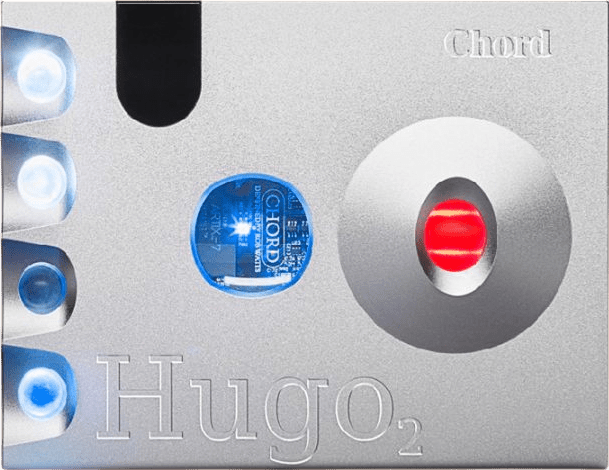
- The colored-ball control design can be confusing and requires decoding the instruction manual
- It's a big box, making it a struggle to get behind Chord's suggestion that the Hugo 2 displays "obvious portability"
- Some reviewers find the treble a little too sharp and punchy, and the balance is simply off
- Some reviewers mention the Micro USB ports are flimsy
- The default setting sound doesn't sound musical, and is cold and inhuman, according to some reviewers
Comparisons (according to reviewers)
- Vs original Hugo: The Hugo 2 has huge improvements in dynamic range, overall power, noise reduction, and timing accuracy
- Vs Benchmark DAC3 HGC: The Chord Hugo 2 doesn't quite deliver the best sound in this price range
- Vs Chord Mojo: The Hugo 2 is undefeatable in resolving image, and has greater emotion and musicality and better soundstage and imaging
- Vs Schiit Yggdrasil: The Hugo 2 is a more attractive and versatile package that sounds better
- Vs Astell&Kern A&ultima SP1000: The Hugo 2 clearly wins on resolution, instrumental placing, soundstaging, and imaging
- Vs ALO Audio Continental Dual Mono: The Hugo is more resolving and neutral than the CDM
Takeaway: The Hugo 2 is a well-equipped DAC/Amp combo capable of delivering a premium hifi sound quality with features, functionality, and sound quality. It offers awesome detail and clarity, and it has the determination to dig deep and hit hard.
Video review
About the brand

What reviewers think
Product Strengths
- Exceptional transparency, detail, and purity put performances on full auditory display
- The soundstage is vast, holographic, and immersive, creating a 'you-are-there' experience
- Tone/timbre and texture are natural, beautifully realized, and engaging
- Astounding dynamics, with swift transients and impressive contrasts
- The design is sculptural art masquerading as a superb headphone Amp/DAC
- Absence of unbalanced (RCA) outputs may require XLR-to-RCA adapters for some setups
Product Considerations
- The digital volume control might not be ideal for all systems, and can result in a less engaging sound compared to using an analog preamplifier
- Some found the pairing dry, so a Makua preamp was added
- As a standalone front end, it might not be ideal, but is great when an analog preamp is in the chain
Comparisons (according to reviewers)
- Tambaqui is just as resolving as the Bartók, but a bit more forgiving, while the dCS is bigger, pushing out soundstages deeper and wider
- On piano recordings, Tambaqui sounded true in the same manner as the HoloAudio May in OS mode, but with more dynamics and tonal brilliance, tighter, quicker bass, and denser images
- Soundstages were consistently deeper and wider than those projected by the DAC in the Hegel H590
- The Aqua Formula xHD is slightly leaner and also a little brighter than the Tambaqui
- It delivers every crunching guitar and bassdrum wallop on a massive stage, with scorching energy
Takeaway: The Mola Mola Tambaqui is a top-tier DAC known for its exceptional clarity, detail, and immersive soundstage, bringing recordings to life. It's a beautifully designed piece of equipment that can elevate any high-end audio system.
Video review
About the brand

What reviewers think
Product Strengths
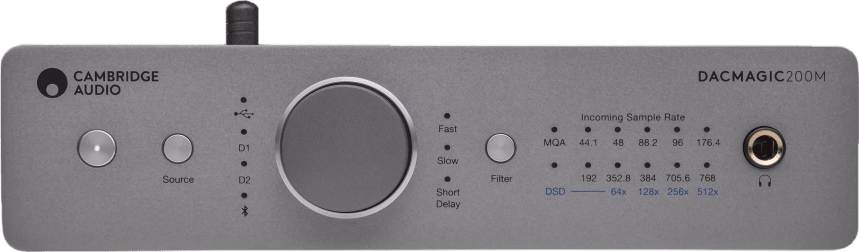
- Rich feature set is its ace card
- Presents a very clean, detailed, and dynamically punchy sound
- Tonal smoothness and expansive soundstage
- Balanced and unbalanced outputs, plus a headphone output
Product Considerations
- Front fascia is a wee bit cluttered
- Lacklustre feel of the volume control
- No remote control
- The headphone output is a useful convenience feature, but it doesn't live up to the unit's performance in other areas
- Auto-shut-off feature turns it off after a little while of not being used
Comparisons (according to reviewers)
- Vs Chord Mojo: Chord edges ahead in performance, delivering even greater subtlety and rhythmic precision, but it can't match the DacMagic 200M's impressive feature versatility
- Vs Schiit Bifrost: Bifrost offers more meat on music's bones, making the DacMagic 200M sound comparatively lighter weight, presenting a skinnier version of the music at hand
- Vs Denafrips ARES II: The DacMagic 200M sounds pale as it does its best to tease out music's kaleidoscope of tone colors
- Vs Audiolab M-DAC+: Rhythmically the DacMagic 200 does a good enough job, it can't compete with the next tier up of DACs costing close to twice its price
- Vs Pro-Ject Pre Box S2 Digital: The sound of the Pro-Ject DAC was not as different from that of the DacMagic
Takeaway: The DacMagic 200M is a feature-rich device with good sound, offering balanced and unbalanced outputs, plus a headphone output. Its versatile feature set makes it a great all-rounder at its price point.
Video review
About the brand

What reviewers think
Product Strengths
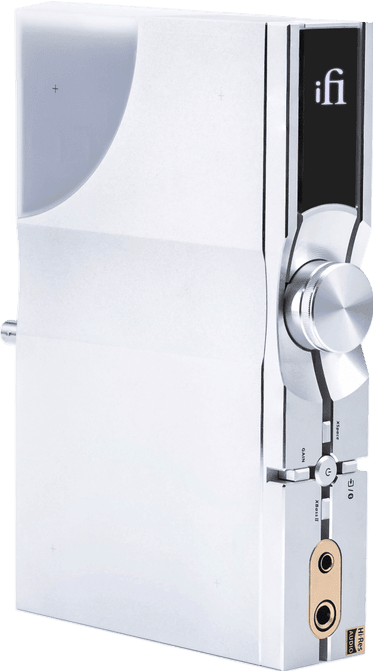
- The NEO iDSD 2 functions as a versatile all-in-one (AIO) solution, working as a DAC, headphone amplifier, and preamplifier
- It has a significantly more powerful amplifier section than its predecessor, making it better at driving a wider range of headphones
- Includes sound-shaping features such as XBass and XSpace, plus selectable digital filters, allowing users to customize the sound
- Comprehensive connectivity options include USB, S/PDIF (coaxial/optical), Bluetooth 5.4 with aptX Lossless, and both balanced XLR and single-ended RCA outputs
Product Considerations
- The amplifier section may not be powerful enough to drive some very power-hungry headphones to their full potential
- The Nexis app only works with a 2.4ghz WiFi signal
- There is a slight click or noise when switching inputs as a pre-amp
- Some reviewers would have preferred the inclusion of the iPower X power adapter instead of the iPower V2, considering the unit's price
- The variable volume output may not save the last used settings
Takeaway: The iFi Audio NEO iDSD 2 combines a high-quality DAC with a significantly improved headphone amplifier, making it a good all-in-one solution for desktop audio. With its wide range of features, solid build quality, and pleasing sound, the NEO iDSD 2 is a worthwhile upgrade.
Video review
About the brand

What reviewers think
Product Strengths
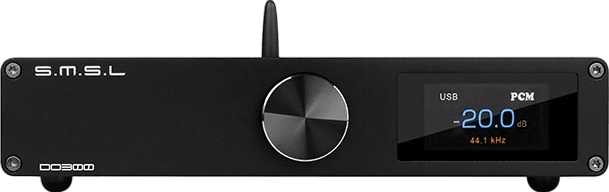
- The DO300 is packed with features like XMOS XU-316, PCM support up to 32-bit/768 kHz, DSD support to DSD512, I2S input, and Bluetooth 5.0 with LDAC, aptX HD, AAC, and SBC
- Offers a wide range of input and output options, including USB, Optical, Coaxial, AES/EBU, I2S, RCA, and XLR
- Provides a clean, detailed, and neutral sound signature with a smooth texture and no audible distortion or background noise
- Offers a variety of digital filters (PCM and DSD) and 'Sound Color' DSP settings to tweak the sound characteristics to personal preferences
- Good build quality, featuring a solid, well-built aluminum chassis
Product Considerations
- Stage depth and microdynamics are lacking compared to higher-end DACs
- Issues with DSD file playback have been noted, citing high replay gain and reduced dynamic range
- The matte black coating of the chassis tends to attract fingerprints and grease
- The rotary encoder (volume knob) is described as feeling cheap and mushy
- Lacks an auto-standby feature and a status LED when the LCD screen is turned off, potentially leading to the device being left on unintentionally
Comparisons (according to reviewers)
- Compared to the SMSL SU-9 Pro, the SU-9 Pro has a more laid-back midrange and a tidier bassline, while the DO300 has a more forward presentation, fuller bass, and warmer midrange
- Compared to the Topping E70 Velvet, the E70 Velvet is tonally somewhere in between the SU-9 Pro and DO300, slightly warmer than the SU-9 Pro but not as warm as the DO300
- Compared to the HIFIMAN EF400, the EF400 is more natural-sounding, making instruments sound more like themselves, but it's not as quiet or detailed as the DO300
- Compared to the SMSL M400, the DO300's treble is not as etched as the M400's, and it doesn't push upper-mids forward as much
- Compared to the SMSL DO200 MKII, the DO300 provides more nuance, separation, depth, and detail
- Compared to the Pro-Ject DAC BOX DS, the SMSL DO300 has better connectivity, detailed, dynamic, impactful sound, a wider soundstage, and better instrument separation
Takeaway: The SMSL DO300 is a feature-rich DAC that delivers a clean and enjoyable listening experience. It could be a great addition to an audio setup to provide versatile connectivity and a customizable sound.
Video review
About the brand

What reviewers think
Product Strengths
- Excellent sound quality, often described as clear, neutral, transparent, detailed, and dynamic, aiming for accuracy and sonic transparency
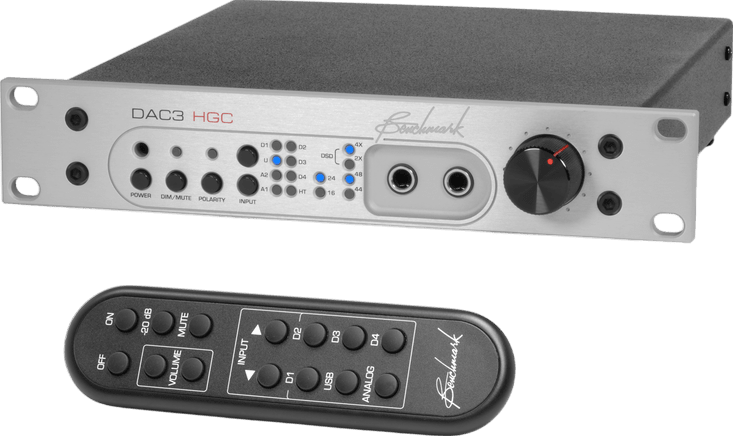
- Versatile, functioning as a DAC, headphone amplifier (with two outputs), and preamplifier
- Compact size, making it suitable for environments where space is limited
- Well-engineered with good build quality and robust construction, common with pro-audio equipment
- High SNR, retaining its full signal/noise ratio of 128dB, A-weighted
- Functions as a DAC, headphone amplifier, and preamplifier
Product Considerations
- Aesthetic appearance may be considered utilitarian or lacking a luxury feel, resembling lab equipment more than premium hifi
- User interface relies on a series of LED lights, which some reviewers find confusing and requiring constant reference to the manual
- Some advanced features or settings require physically moving jumpers inside the unit
- The included remote control may feel cheap or less refined compared to the unit itself
- Lacks some modern features such as streaming capabilities or app control
- It only takes DSD up to DSD64, meaning those looking for super high resolution audio may need to look elsewhere
Comparisons (according to reviewers)
- Vs Benchmark DAC1/DAC2: DAC3 offers improved tonal balance, with both the clarity of the DAC1 and the refinement of the DAC2
- Vs Chord DAVE: While DAVE is superior, DAC3 offers closer performance than expected at a fraction of the cost
- Vs Schiit Yggdrasil+: Similar price point, but DAC3 is described as different, as the Schiit Yggdrasil+ is more atmospheric and has a deeper soundstage
- Vs Sony TA-ZH1ES: The DAC3 performs its preamp functions better than the Sony
Takeaway:
The Benchmark DAC3 HGC is a versatile and well-engineered component that delivers excellent sound quality and value, combining a DAC, headphone amp, and preamp into one compact unit. If a DAC with clear and accurate sound is desired, the DAC3 HGC is worth considering.
Video review
About the brand
What reviewers think
Product Strengths
- Excellent sonic performance, characterized by neutrality, transparency, and detail retrieval
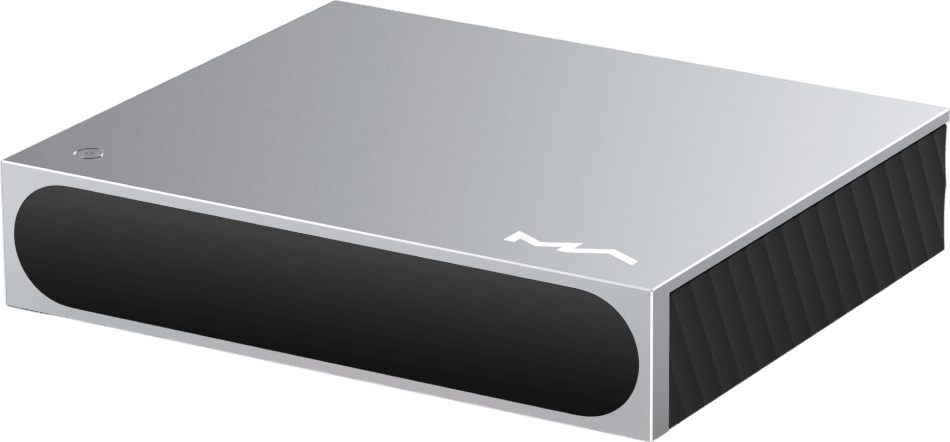
- The MA Remote app is intuitive and feature-rich, offering access to various streaming services and settings
- Solid build quality with an aluminum chassis, though the sides are plastic, and a bright, clear LCD screen
- Versatile connectivity with a wide array of inputs, including USB-C for external storage, HDMI ARC, optical, coaxial, and analog RCA inputs
Product Considerations
- Lacks wireless connectivity—no Wi-Fi or Bluetooth
- Does not come with a physical remote, the RM5 is sold separately
- Some users have experienced issues with navigating large local music libraries
- Some reviews mention the touch screen controls being a bit fiddly
- No digital output to support an external DAC
Comparisons (according to reviewers)
- Vs Bluesound Node (2021): Mini-i 4 has better detail retrieval and is cleaner sounding
- Vs EverSolo DMP-A6: DMP-A6 sounds more natural with bolder bass and better soundstaging, while Mini-i 4 sounds tonally and spatially flatter
- Vs Matrix Audio Mini-i 3 Pro: Mini-i 4 has a wider range of source repositories and USB storage reader
Takeaway: The Matrix Audio Mini-i 4 is a great sounding device for anyone wanting a DAC and streamer that can do it all. With its comprehensive set of features and focus on audio quality, enjoying music becomes easy.
Video review
About the brand

What reviewers think
Product Strengths
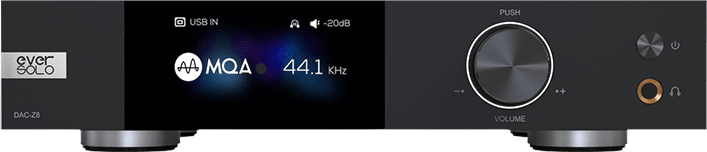
- Exceptional build quality, with a premium feel thanks to the aluminum chassis and attention to detail
- Clean, crisp, and clear sound, with a neutral presentation that resolves detail well
- Well-implemented headphone amplifier that can drive a wide range of headphones, and the headphone level reverts to the last used
- Bright and crisp LCD screen with VU meters adding to its visual appeal
- Versatile connectivity with USB-B, USB-C, optical, coaxial, and Bluetooth inputs, as well as balanced XLR and RCA outputs
Product Considerations
- Lacks HDMI ARC input, which would be useful for hybrid setups
- Some reviewers find the treble a little aggressive and fatiguing with certain recordings or speakers
- No Wi-Fi or Ethernet connectivity, meaning a computer or other network streaming device is needed
- No dedicated subwoofer output
- Not a tone control, those looking for a colored or editorialized sound should look elsewhere
Comparisons (according to reviewers)
- The Z8 has a more nuanced presentation and better separation than the Cambridge Audio DACMagic 200M
- The Z8 is smoother with a darker background on the headphone output, but the SMSL M500 MKII is warmer and fuller sounding on the line outputs
- The Z8 has a cleaner sound, darker background, and deeper soundstage on the line-outs than the Topping DX5, but the DX5 has more powerful headphone amplification
- Java Hi-Fi gives a slightly cleaner presentation with more authority in the bass than the Z8
Takeaway: The Eversolo DAC-Z8 is a well-built and versatile DAC that delivers a clean and detailed sound. It is a great option for users looking for a high-quality DAC with a range of features, including a headphone amplifier and preamp capabilities.
Video review
About the brand
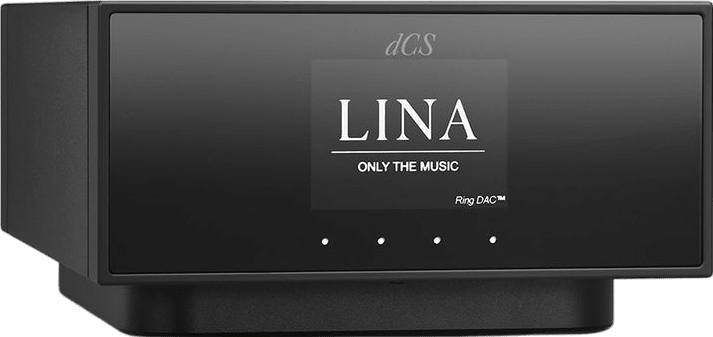

Compatible with all digital audio formats
Supports hi-res streaming from Roon, TIDAL, Qobuz, Spotify, Deezer, AirPlay & more
Features our renowned dCS Ring DAC TM and Digital Processing Platform
What reviewers think
Product Strengths
- Startling clarity
- An extraordinarily clear view of the 'reality' of the recording
- Subtlety is exposed, which made listening a fuller, more complex experience
- Sound quality is unmatched in terms of technology, design, build and finish
- A very fluid, massive and somewhat dynamic soundstage
Product Considerations
- The dCS Mosaic app is starting to feel clunky
- Basic display
- Some holes when it comes to features
- Audiophile sound is mostly faint clouds hovering between boxes
- It is wished the streamer had Wi-Fi compatibility, but dCS sees this as compromising on sound quality
Comparisons (according to reviewers)
- Vs Denafrips Terminator Plus—it replaced the Denafrips Terminator Plus
- Vs Chord Dave DAC—the Chord Dave gets very close in sound to the Lina, but the Dave leans a bit leaner and sharper where the dCS Lina is fuller, thicker, smoother with more density
- Vs Weiss 501—the dCS is a smooth sounding DAC indeed, but it is not one of those that sound overly smooth, the Weiss 501 sounds closest to an in-studio experience, where we get the master tape kind of sound
- Vs HiFi ROSE 150b—the ROSE feels and looks to be built to a similar level (at least the outside), and is gorgeous as well, it's not nearly as refined or together in the DAC department when comparing it to upper echelon products
- Vs dCS Bartok Apex—compared to the Bartók Apex, the Lina's sound (without the Master Clock) had a slightly different textural quality, not coarser or finer grained but as though performers were viewed under a different quality of light, the Lina's light felt slightly more brilliant than remembered with the Apex and maybe 3o cooler
Takeaway: The Lina DAC is a small but very technologically advanced DAC and delivers music with a bonafide life-force behind it. This DAC brings a larger soundstage and bigger sound to the room and is well worth the cost if you have a system that can stand toe to toe with it.
Video review
About the brand


What reviewers think
Product Strengths
- Rare ability to reproduce acoustic music, on a level with some of the best DACs.
- Modular design allows for a significant degree of future-readiness and upgradability.
- Instrument timbre is presented evenly, providing more musical data from instrumental tones to overtones, attacks—and decays.
- Clear sonic details without brightness, especially in the upper registers, result in a sound that is right.
Product Considerations
- Audible ticks and clicks may occur, although they do not affect the music and only occur during pauses or between tracks.
- A full-sized component, which may be a concern for those with limited space.
- Some perceive the Yggdrasil Less is More's presentation as sonically balanced and more evenly sorted per the recording, at the cost of the energy that presents a recording in ways emphasizing certain things in a recording.
- Sound differences between the different versions are nuanced and much harder to detect.
Comparisons (according to reviewers)
- Vs Benchmark DAC3 HGC: The reviewer prefers the Yggdrasil over the Benchmark, but notes that the Benchmark is relentlessly accurate to the signal it receives.
- Vs iFi Audio Pro iDSD Signature: The Yggy is slightly more detailed, slightly less warm, and also better dynamically.
Takeaway: The Schiit Yggdrasil is a well-regarded DAC known for its ability to reproduce music and its upgradability, making it a potentially smart choice for audiophiles. Different versions cater to different preferences, so doing some research is important.
Video review
About the brand

What reviewers think
Product Strengths
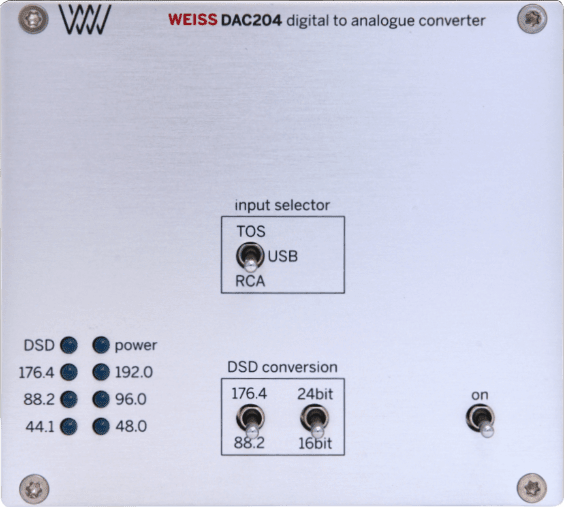
- Precise, accurate, and musical sound, delivering what the disc or file was created to sound like
- Excellent jitter suppression, getting the most out of digital sources
- Versatile, it can be used as a digital format converter
- Weighty, full-bodied—tape or vinyl-like—sound
Product Considerations
- The stock power supply can be improved with a higher quality 6 to 9 volt supply or the Weiss PSU-102
- High-resolution sampling frequencies via USB of 352.8 and 384 are down sampled to half their value at 176.4 and 192
- May be a bit too harsh, even for some systems
Comparisons (according to reviewers)
- Some reviewers preferred the Weiss DAC204 to the Chord Dave due to impressive detail and holographic 3D imaging, although the Weiss is not as sharp or dynamic
- The DAC204 is considered to be on the same level of sound quality as the Chord Hugo 2 and Chord Cutest
- The DAC204 sounds just like the 501, despite being significantly less expensive and lacking the DSP, preamp, display, and remote control features
- The Weiss DAC204 is more open, dynamic, and punchy, while the Meitner is all about the midrange with beautiful and rich vocals
- The Weiss DAC204 brought more of everything making music sound more present, more physical, and more engaging in comparison to the AudioQuest DragonFly Cobalt DAC
- The main difference noted between the Weiss and the Totaldac d1-unity was one of body and weight
Takeaway: The Weiss DAC204 is a compact and versatile DAC that delivers high-end sound quality. A good fit for those who want a DAC that provides natural, realistic reproduction and accuracy without extra features.
Video review
About the brand

What reviewers think
Product Strengths
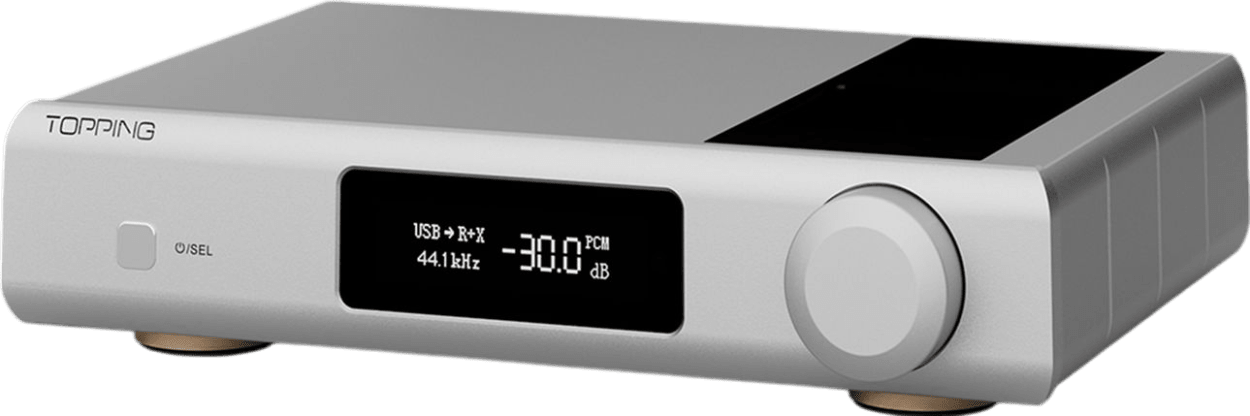
- Very detailed and resolving sound, capable of revealing nuances in music
- Fast, punchy, and dynamic sound, especially good for electronica, rock, and metal
- Produces a holographic soundstage with good depth and focus, better than some entry-level R2R DACs
- Has a very low noise floor, making it easy to focus on faint sounds
- Tonally neutral and linear frequency response, revealing the quality of the recording
Product Considerations
- The plastic remote control may feel cheap compared to the unit
- Some reviewers would prefer more warmth and life in the midrange
- Can sound analytical at times, lacking some refinement or lushness compared to some other DACs
Comparisons (according to reviewers)
- D90 Discrete is more detailed and resolving than the D90 SE/MQA
- D90 Discrete has higher resolution, dynamics, and snappiness, than the SMSL SU-10
- D90 Discrete has greater resolution, inner tone textures, and is snappier and punchier, than the Chord Cutest
- D90 Discrete is faster, more precise, and punchier, than the Holo Audio Scion 2
- D90 III Sabre has better transparency and dynamics, and is more forward-sounding, than the Topping D70 Pro Octo
- D90 III Sabre is more neutral, with a tidier and quicker bassline, and more etched tone edges, than the SMSL SU-10
Takeaway: The D90 offers impressive resolution, dynamics, and a holographic soundstage, making it a great option for those seeking a detailed and accurate listening experience. It has an honest, ultra-linear sound, especially good for audiophiles who don't want colorations.
Video review
About the brand


What reviewers think
Product Strengths
- Neutral sound signature, detail retrieval, and overall transparency praised.
- Versatile and extensive feature set is highlighted, including parametric EQ, customizable digital filters, crossfeed function, and various I/O options.
- Excellent build quality and robust construction are noted, with suitability for both professional and audiophile applications.
- The quality of the headphone output is also noted, particularly for IEMs and sensitive headphones, with reviewers praising its low noise floor.
- The included remote control and its functionality are liked.
Product Considerations
- Some reviewers found the headphone amplifier to be dynamically constrained, particularly with planar magnetic headphones, noting a lack of drive and a potentially bright character.
- The device's menu system and multi-knob navigation can be complex and require a learning curve to fully use its features.
- A few reviewers felt that the soundstage depth was limited compared to some competing DACs, describing it as relatively flat.
- Some reviewers stated that the stock power supply is not of audiophile grade.
Comparisons (according to reviewers)
- Vs SMSL VMV-D1SE: The ADI-2 is more natural and fluid in its presentation, with a wider soundstage, while the SMSL VMV-D1SE is more analytical and etched in detail.
- Vs Denafrips Pontus II: The Denafrips Pontus II offers a more enveloping soundstage, refinement, and micro-detail retrieval.
- Vs Chord Mojo: The Chord Mojo offers greater soundstage depth but cannot match the ADI-2 in terms of resolution.
- Vs Matrix X-Sabre Pro: The Matrix X-Sabre Pro has more incisive high-end detail, but the ADI-2 still delivers a smooth presentation and better three-dimensionality.
- Vs Schiit Modi 3: The ADI-2 offers more detail and smoothness with a cleaner sound than the Schiit Modi 3.
Takeaway: The RME ADI-2 DAC FS is a versatile and well-regarded DAC that provides a clean and detailed sound, making it a great centerpiece for both headphone and speaker setups. Its flexibility and comprehensive feature set allow users to tailor the sound to their preferences and equipment, providing a customized and high-quality listening experience.
Video review
About the brand