


Welcome
An integrated amplifier is the smart choice when you want great sound without the hassle. It packs three essential components—preamp, power amp, and usually a DAC—into one box, helping you save money and precious shelf space.
Breaking out each component separately does come with perks. You gain the freedom to upgrade piece by piece as your wallet allows, choosing exactly the features you need—whether that's specific DAC inputs or more powerful amplification.
Separate components can deliver better sound quality since each unit focuses solely on its job. The power supplies stay properly isolated, and the sensitive preamp circuitry steers clear of interference from the power amp's electromagnetic fields.
But here's the bottom line: If you want most of that performance while spending (sometimes way) less and taking up less space, an integrated amplifier is your best bet.
What to look for when choosing an amp


So you want to buy a new amplifier, but you are not sure what you should pay attention to. At ExtremeHiFi, we have the world's largest database for audio products. Here is a brief overview of the most important functions and design aspects that distinguish amplifiers and that you should pay attention to.
The first and most important aspect of an amplifier is how much power it has. Can it actually drive your speakers? The easiest way to check this is to look at what the manufacturer recommends for your speakers. At ExtremeHiFi, you can see the recommended performance in the specifications section and ask your manufacturer if they don't provide this information.
Certain types of speakers, such as horns, are often much more sensitive and in many cases require only a little wattage to become extraordinarily loud. Therefore, you shouldn't buy a 100W per channel amplifier for sensitive horns, as you won't use most of the dynamic range of the amplifier. You'll achieve better results with a lower-powered amplifier. However, if you have something like Focal Grande Utopias that require a few hundred watts, you should make sure that you buy an amplifier with sufficient power to drive the speakers properly, without being too quiet or distorted from overexertion.
In the upper market segment, many people prefer monoblock amplifiers. These amplifiers only have one channel, so you have to buy two of them. This can have some advantages in terms of quality. They take up more space and probably cost more than a corresponding stereo amplifier. However, since the amplifiers are spatially distant from each other, there is no possibility of electrical interference or so-called crosstalk between the two channels. In addition, they have their own power supply. So if one channel is heavily tasked, the other is not affected in any way. They have their own heat dissipation, and with monoblock amplifiers, you can generally achieve a slightly higher performance limit than with a stereo amplifier.
When deciding which amplifier to buy, there is a third criterion that can have a drastic influence on the sound that you actually get and on some compromises that you have to make. This is the class of the amplifier, where the three most common options are Class A, Class AB, and Class D.
Class A amplifiers have the reputation among audio experts to offer the best sound quality. This is mainly because Class A amplifiers are the purest form of audio amplification. They have a single or a group of transistors that amplify the entire cycle of the audio signal—completely positive and negative. This means that the behavior at different levels is extremely consistent, and many people think that Class A amplifiers sound best.
But that's a trend, not a rule. There are many terrible Class A amplifiers, but also many fantastic Class AB and Class D amplifiers.
In fact, most people do not use Class A amplifiers because the compromises that you have to make are quite large. They generate a huge amount of heat. If you need a stereo amplifier with 100W per channel, a Class A amplifier could permanently draw 800W from the socket, even at idle, and release this power as heat into your room. Especially if you have high power demands for your speakers, a Class A amplifier may simply not be practical.
Class AB amplifiers work similarly to Class A amplifiers. Instead of a single group of transistors that amplify the entire positive and negative cycle, they have one group that amplifies the positive cycle, another group that amplifies the negative cycle, and the summed output signal is the intended audio signal. This has the advantage that they are much more efficient. At idle, they don't consume as much energy as a Class A amplifier. They run much cooler, and you can often get much more power from a physically smaller device because you don't have to dissipate so much heat.
However, this also means that the distortion behavior of Class AB amplifiers in relation to the output level can be slightly different from that of Class A amplifiers. Nowadays, however, the quality difference between Class A and Class AB amplifiers has diminished significantly compared to earlier times, possibly even no longer existing. There are some fantastic Class AB amplifiers on the market.
So if you have very sensitive speakers, it can still be worthwhile to look at Class A amplifiers, as it is much easier to get a Class A amplifier with 20W per channel than one with 100 or 200W.
However, if you have power-hungry speakers, don't think that you have to sacrifice a lot when buying a Class AB amplifier, as some of the Class AB products on the market are really extraordinary.
Now, there is a third category of amplifiers that is becoming more and more popular, the so-called Class D. These amplifiers work completely differently than Class A and Class AB. Instead of amplifying the signal one-to-one, they actually turn it into a series of extremely high-frequency pulses. If you then use a low-pass filter that filters out the high-frequency components, the originally intended signal is reproduced.
Class D is particularly suitable for requirements with very high power and a small form factor. It is often found in subwoofers, in car radios, or in places where you need a lot of power in a small housing. This is because Class D is the most efficient amplifier type, often over 90 percent efficient. This means that they consume almost no more electricity than they actually output. They emit almost no heat.
Another important aspect to consider in addition to the amplifier class is whether you want a transistor or a tube amplifier. Tube amplifiers are usually Class A amplifiers but use tubes instead of transistors and are objectively less accurate than most transistor amplifiers. They have higher distortion and color the sound more than a typical transistor amplifier. But the reason why so many of them are still produced and why they are still so popular is that some of these distortions and colorations provide a really pleasant end result that many people prefer over a more neutral, linear, or accurate sound. So if you prefer a warmer, slightly colored, but more pleasant sound, a tube amplifier could be something for you.
Regardless of how powerful your required amplifier should be or which amplifier class you prefer, you should consider whether you need a power amplifier or an integrated amplifier. Power amplifiers are extremely common in audio technology and do not have their own volume control. They are called power amplifiers because they provide a fixed gain. They take an input signal that is amplified by a fixed amount, and that's all. For this reason, when buying power amplifiers, you should make sure that either your DAC has an integrated volume control that you can use, or that you use a separate preamplifier for the volume control.
Power amplifiers don't omit volume controls for cost reasons, but because for quality reasons you don't want to have the sensitive line-level circuit as close to a large, powerful amplifier as possible. For higher-quality setups, instead of an amplifier with an integrated volume control (which is referred to as an integrated amplifier), you usually use a separate power amplifier and then a preamplifier or a DAC with an integrated volume control, rather than having all the sensitive circuitry in the same device as the amplifier itself.
However, if you have limited space, you can look for an integrated amplifier, which combines the functions of the power amplifier and the preamplifier and often includes both the input circuit and the volume control. Sometimes the DAC itself is also housed in the same device.
There are so many different amplifiers on the market, which are all suitable for different tastes and preferences. The best way to find out what is actually suitable for your personal preferences is to read the reviews and see what people say about them. With ExtremeHiFi, this is very easy thanks to our rating system. You can go to each product page and take a quick look. This gives you an overview of what people think about it and which competing products you should pay attention to.
Products on this list




.svg)
What reviewers think
Product Strengths
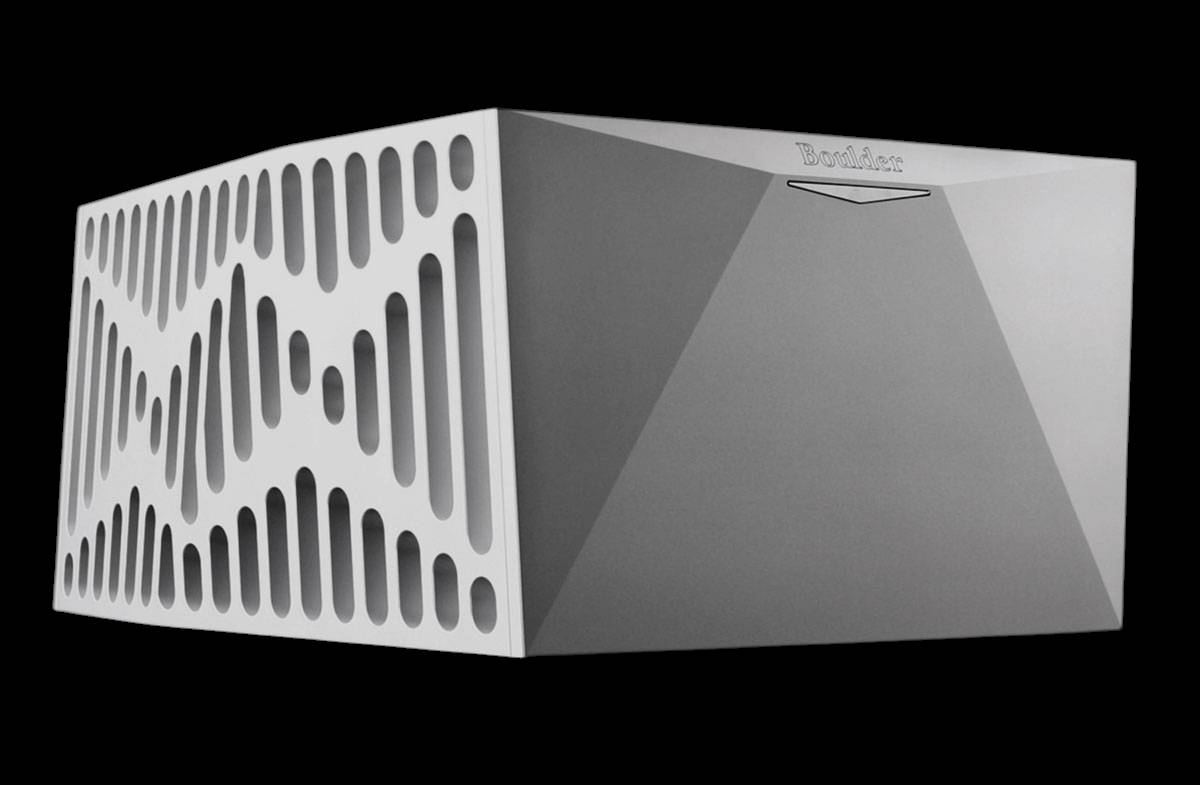
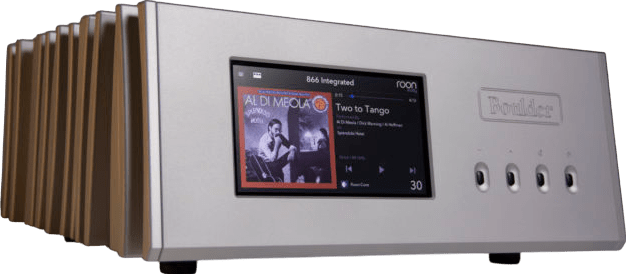
- More power than its predecessor and electronically and sonically superior to the Boulder 865.
- Unique, sophisticated, and accessible look.
- Very detailed, effortlessly so, and extended at both ends.
- Bass control is the best that one reviewer has ever heard.
- Provides excellent inner detail without an artificial balance.
Product Considerations
- Lacks a line-level output for subwoofers that only take line-level signals.
- The digital version lacks a provision to play a USB digital file emanating from a computer.
- Doesn't accept banana plugs, so ensure spades or adapters are ready.
- The base version has only three analogue inputs, which may be too few for some users.
- When switching inputs from 'Analog' to 'Network,' the 866 reverted to standby and required a few on/standby/on sequences before everything synched.
Takeaway: The Boulder 866 offers great sound and cool look all in one box. It's a powerful amp with nice features that can make music sound really good.
Video review
About the brand


What reviewers think
Product Strengths
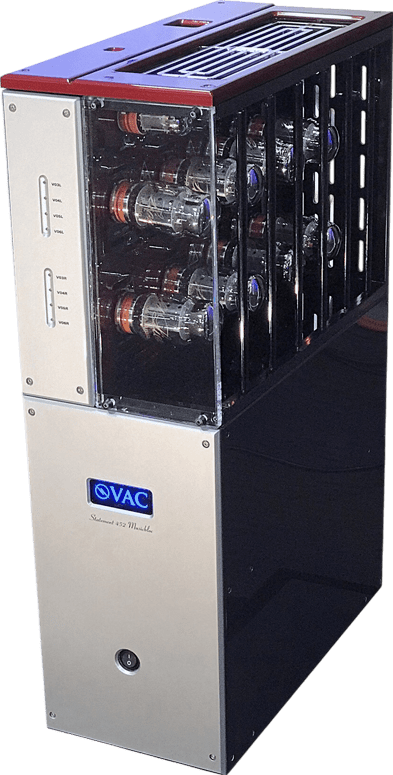
- Exceptional musical resolution with an organic, natural, and coherent voice, achieving both transparency and musicality
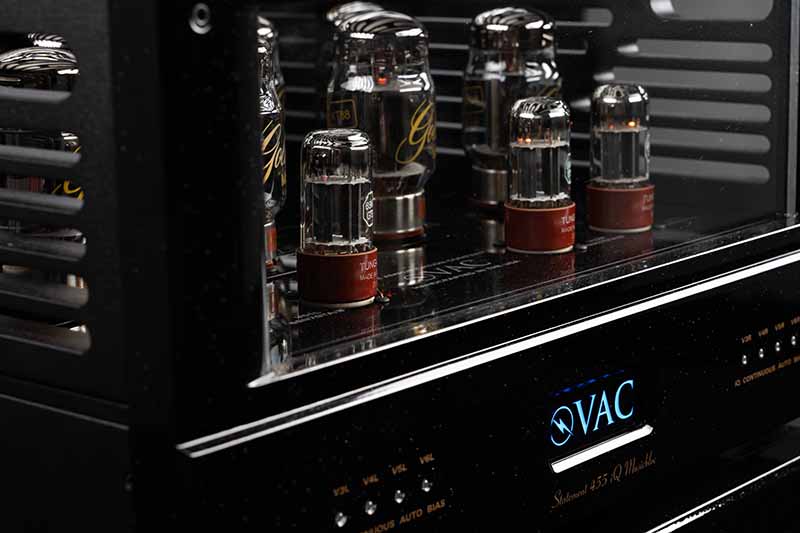
- A patented iQ Continuous Automatic Bias System continuously monitors and adjusts individual tubes
- Accurate timbre rendering with unassailable truthfulness, conveys tonal color in remarkably fine gradation of shading and articulation
- Authentic and credible spatial reconstruction of recordings, especially when paired with speakers known for their spatial accuracy
- A limitless sense of dynamic contrast—sounding powerful with a complete absence of strain
Product Considerations
- Large-scale microdynamic performance, small, low-level dynamic gestures smooth and level off dynamic contrasts
- The vertical tube layout could lead to uneven tube temperatures, with the top tubes running hotter
- Minimal specifications are included in the manual, lacking detailed information for potential buyers
- The amplifier is heavy, weighing 280 pounds in its flight case
- Retubing can be expensive
Comparisons (according to reviewers)
- It does not kick as hard as solid-state amps
- The VAC 452iQ exhibits a sheer dynamic scale that the ampsandsound Zion Monos cannot achieve
Takeaway: The VAC Statement 452 iQ Musicbloc is a top-tier tube amplifier known for its sonic purity, dynamic capabilities, and engaging musicality that brings recordings to life. It offers a unique blend of classic tube warmth with modern precision and control, and its iQ system is a great addition.
Video review
About the brand


What reviewers think
Product Strengths
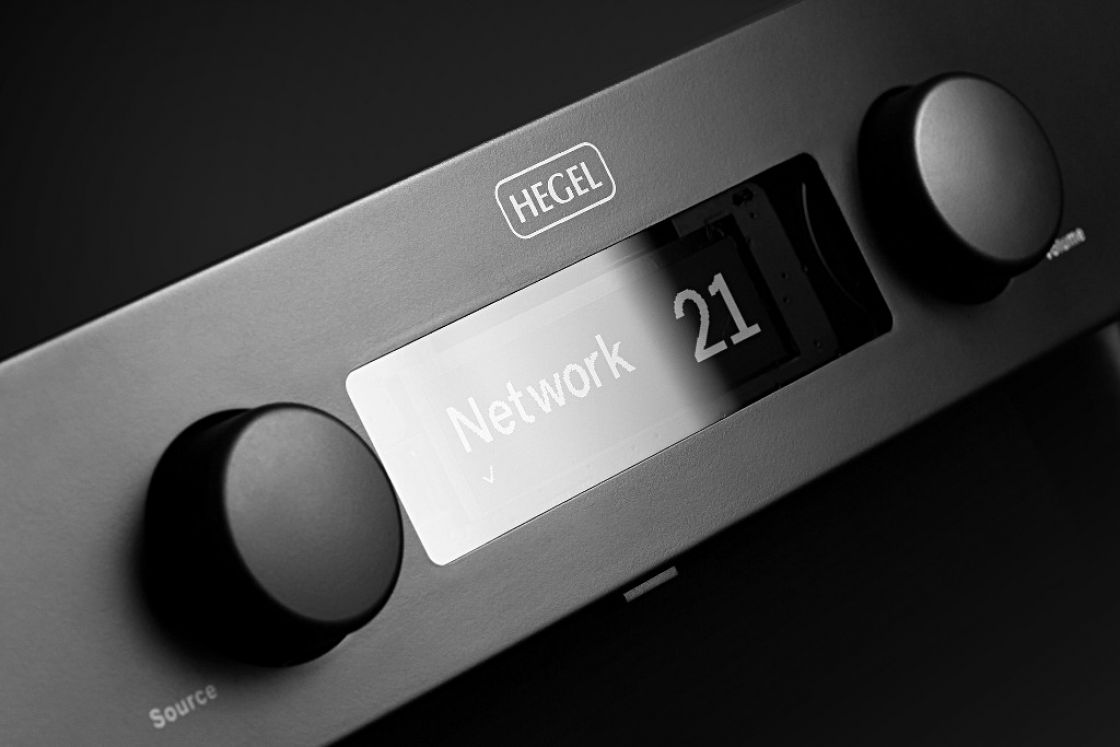
- Improved DAC from the H90, using the same DAC as the H120 and H190 models, which offers a massive step up in D/A conversion
- Well-balanced, neutral, and realistic sound, with better dynamics, transparency, and soundstage than its predecessor, the H90
- Streaming capabilities, such as Spotify Connect, AirPlay, and UPnP, make it a versatile all-in-one system
- SoundEngine 2 technology reduces distortion effectively
- Simple, clean, and understated aesthetic
- Requires LAN cable for network connection, as it has no wireless connectivity
Product Considerations
- Front panel is made of plastic
- USB input is limited to PCM resolutions of 24bit/96kHz
- Lacks Roon endpoint capability and does not support playback of DSD files
- Remote control is plastic; the metal RC8 remote is an additional cost needed to set start up and maximum volume levels
Comparisons (according to reviewers)
- Vs H90—H95 has a better power supply, a new board with streaming circuitry and digital-to-analog conversion, and an improved headphone output
- Vs H90—H95 also provides better dynamics, transparency, and soundstage
- Vs H120 & H190—H95 shares the DAC from these models but lacks some of their higher-end features and custom installation facilities
- Vs Primare I15 Prisma—the Primare I15 Prisma is a serious rival, offering a bolder sound and Prisma network platform
- Vs Schiit Ragnarok 2 Fully Loaded—H95's sound was slightly smoother
- Vs Cyrus ONE Cast—the H95 is sailing on much closer waters to the Cyrus ONE Cast, thanks to its thick blend of connectivity, features and ergonomics
Takeaway: The H95 is an integrated amplifier for those seeking modern streaming features and quality sound without overspending. It is an all-around good choice for building a simple home audio system.
Video review
About the brand

What reviewers think
Product Strengths
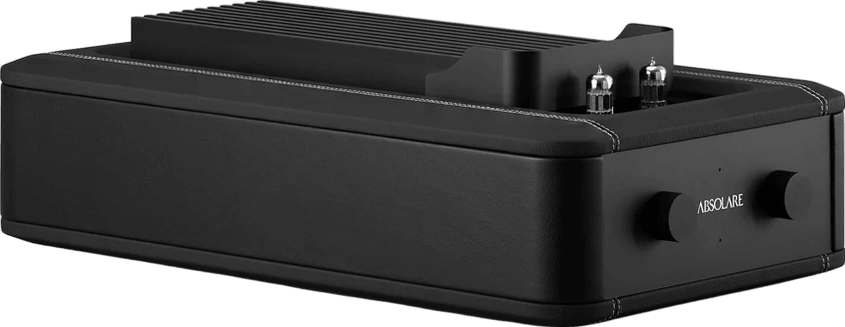
- Striking aesthetic with leather-clad exterior and customizable stitching offers a warm and welcoming feel
- Hybrid design combines a tube preamplifier section and solid-state dual mono power amplifier, providing a balance of tube and solid-state characteristics
- Delivers a huge soundstage with a hint of warmth, particularly benefiting digital presentations
- Produces an immersive listening experience with commendable soundstaging and separation at various listening levels
- Musical sound with emotive, smooth, rich, timely, sophisticated, detailed, and dynamic characteristics
- Connectivity options are available
Product Considerations
- Placement requires consideration due to its unusually deep proportions
- May lack punchiness for certain music genres like metal
- Minimalist faceplate has unmarked knobs
- There is no standby function
- Some listeners may find the treble a bit too polite
Comparisons (according to reviewers)
- Integrated sounds very much like Absolare's Passion preamplifier and Passion power amplifiers
- Integrated is as close in sound to a pure tube amplifier as one has heard from transistors
- Integrated combines much of the Passion 845's midrange magic to a more solid and powerful bottom end thanks to the transistor output stage
Takeaway: The Absolare Integrated Amplifier offers a unique blend of luxurious design and high-quality sound, providing a warm and engaging musical experience. Its hybrid design makes it a versatile option for audiophiles seeking a sophisticated and aesthetically pleasing centerpiece for their system.
Video review
About the brand

What reviewers think
Product Strengths
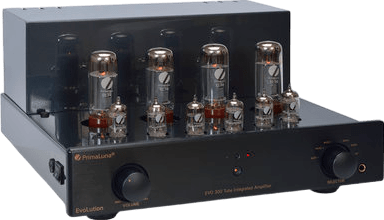
- Combines the tonal qualities of tubes with the power of solid-state amplification, combining the great aspects of both technologies
- Delivers a clean, detailed, dynamic, and musically insightful sound
- Well-built with high-quality components, including point-to-point wiring in the preamp section
- Includes a headphone amplifier powered by the same internal amp as the speakers, not an op-amp
- Multiple inputs and functions, including home theater bypass, subwoofer output, and tape output
Product Considerations
- Lacks balanced inputs and a pre-amplifier output
- The volume control can be very sensitive at low levels
- Optional MM phono stage requires additional purchase
- Requires good ventilation due to running warm
Comparisons (according to reviewers)
- Versus Cambridge Audio Edge NQ / 2 x Gold Note PA-10 setup, the EVO 300 Hybrid delivers a level of engagement that was captivating, the improvement over the normal setup slightly disconcerting
- Versus Schiit Jotunheim, the PrimaLuna bested it, with a slightly cleaner sound that let a touch more detail through
Takeaway: The PrimaLuna EVO 300 Hybrid offers a balance of tube warmth and solid-state power to give listeners the best of both worlds. Its detailed sound, robust build, and versatility make it a worthwhile addition to any audiophile's system.
Video review
About the brand

What reviewers think
Product Strengths
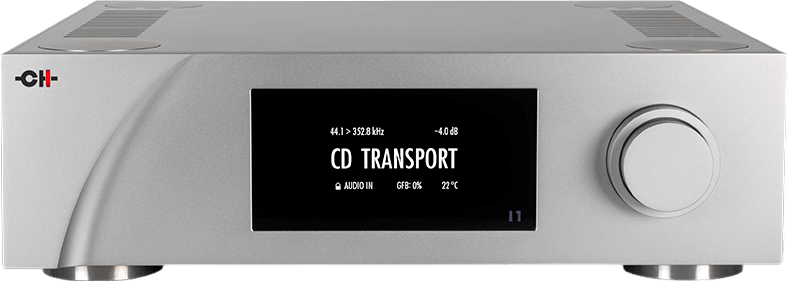
- Combines amplifier, line stage, and DAC functions into a single chassis
- Modular design allows for customization with optional boards (USB, Ethernet, Phono, Clock Sync)
- Hybrid digital/analog volume control minimizes resolution loss
- Fully featured Android control app allows full remote control
- Exhibits remarkable precision and accuracy, while still retaining a natural and well-designed sound
Product Considerations
- All analog signals are converted to digital (DXD 24 bit/384kHz) first
- The Android-based app may not appeal to users committed to Apple products
- Can be complex to install and configure
Comparisons (according to reviewers)
- The I1 is compared to CH Precision's A1 amplifier, L1 line preamplifier, and C1 DAC/controller, integrating the 'essence and soul' of these into one unit
Takeaway: The CH Precision I1 is a versatile and well-designed integrated amplifier that provides a high level of performance, integrating the most important functions of a high-end audio system in a compact form factor. It could be a worthwhile option for those seeking a capable all-in-one solution and who appreciate the adjustability, and upgradeability offered by its modular design.
Video review
About the brand

What reviewers think
Product Strengths
- Strikingly clean and detailed presentation
- Plenty of power to drive difficult speaker loads, with close to doubling of output as impedance halves
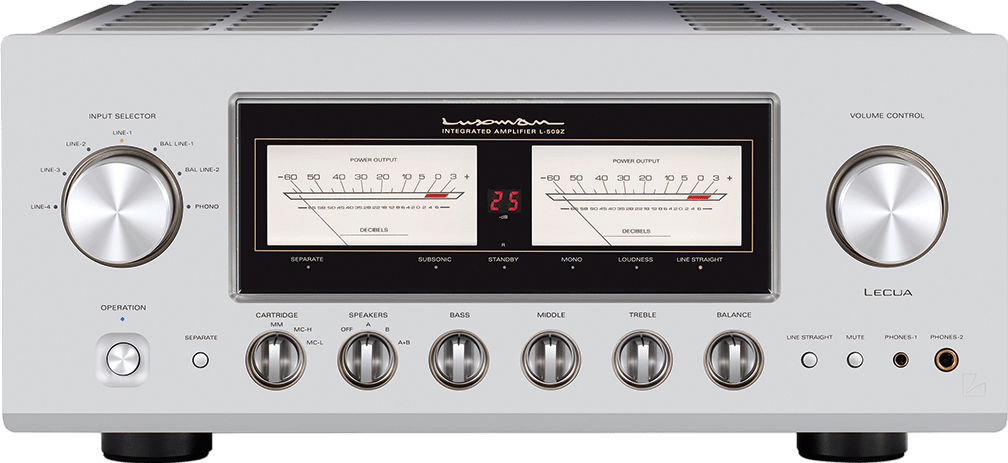
- Exceptionally well made with reassuringly solid casework and precise controls
- Adaptable phono stage offering easy switching between MM and two MC options
- Wonderfully unforced and natural performance at any listening level
Product Considerations
- Needs care in system matching to avoid a slight lack of richness/body, tone controls can help
- No impedance adjustment on the phono stage
- Very large physically, which may pose placement issues
- Plastic battery cover on the metal remote is a misstep in overall exemplary build
Comparisons (according to reviewers)
- Compared to Moon by Simaudio 641 or McIntosh MA8950, the L-509Z has a slight lack of richness and body to the sound
- Compared to McIntosh MA8950, the L-509Z requires separate source equipment—unlike the all-in-one MA8950
- Compared to Vitus RI 101 Mk II, the Vitus is a bit more dynamic and slightly brighter—but costs significantly more without a sound difference worth the price
- Compared to L-509X, the newer L-509Z is more dynamic and has more high-end sparkle
Takeaway: The Luxman L-509Z is a meticulously crafted and powerful integrated amplifier that delivers a refined and balanced sound. Its exceptional build quality and versatile features make it a worthwhile investment for audiophiles seeking a top-tier analog listening experience.
Video review
About the brand
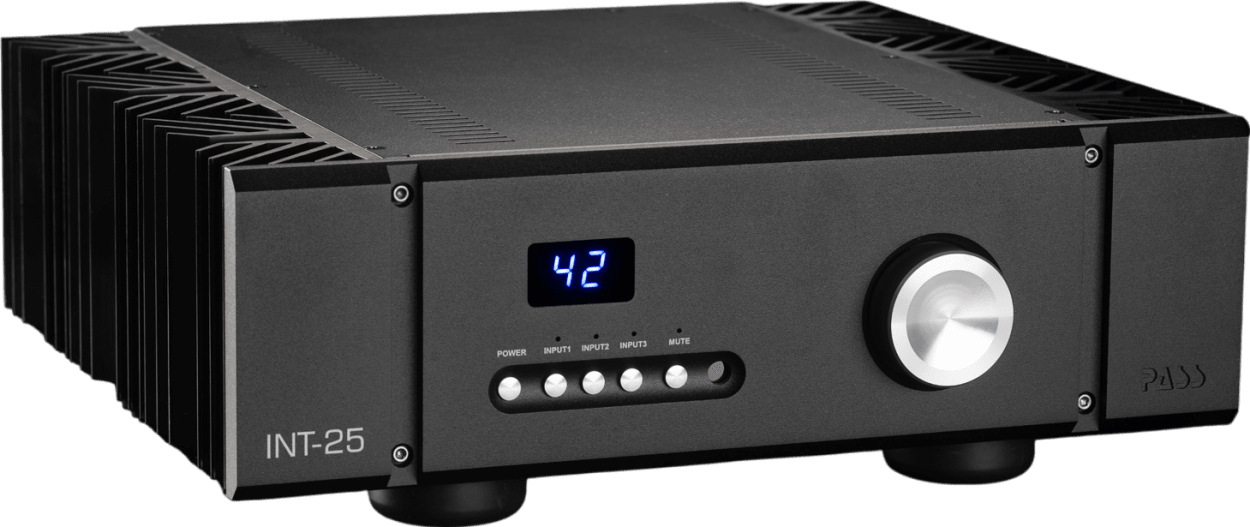

What reviewers think
Product Strengths
- Impressively natural midrange, described as silky, sweet, big, rich, textured, and haunting
- Excellent bass reproduction, deep, precise, and weighty
- Fluid and gentle sound with impressive layered depth and width
- Provides a warm, rich, muscular, and refined sound, enhancing older recordings
- Simple design with high-quality components and reliable build quality, built to last
- Lacks features such as digital inputs, phono stage, balanced connections, and subwoofer output
Product Considerations
- Low power output (25W) may require efficient speakers, although it exceeds this in practice
- Runs warm and requires good ventilation
- Speaker terminals can be a little difficult to use with certain types of spade connectors
- A review mentioned a thumping sound on speakers upon power-up, but this was considered a possible defect warranting return
Comparisons (according to reviewers)
- Vs Pass XA25: INT-25 has a simplified front end of the INT-60 machine, integrating the XA25 power amp and preamp
- Vs Pass INT-60: INT-60 is more powerful and neutral, INT-25 has better tonal balance, smoother sound, and superior bass performance (with proper speaker matching)
- Vs Exposure 3010S2 monoblocks: INT-25 has more detail, fluid sound, and deeper—more controlled—bass, but Exposure has more power and easier speaker interaction
- Vs Exposure 3010S2D Integrated Amplifier: INT-25 provides more detail and fluidity, more faithful and convincing bass, and more seductive female vocals
- Vs Luxman 590AXII: Luxman is more detailed with a thinner mid-bass, INT-25 has more warmth and body, giving it more humanity and muscularity
- Vs Vinnie Rossi L2i SE: INT-25 has more muscle, warmth, and glow, the L2i SE is more clean-sounding, with super refinement and silence
- Vs Line Magnetic 219ia: INT-25 has a similar sound signature, but with more 'muscle' and no maintenance, as well as more texture and bass
Takeaway: The Pass Labs INT-25 is a high-quality, simple-to-use integrated amplifier with a musical and engaging sound. Its strengths in the midrange and bass make it a great choice for listeners who value warmth, texture, and a fatigue-free listening experience.
Video review
About the brand
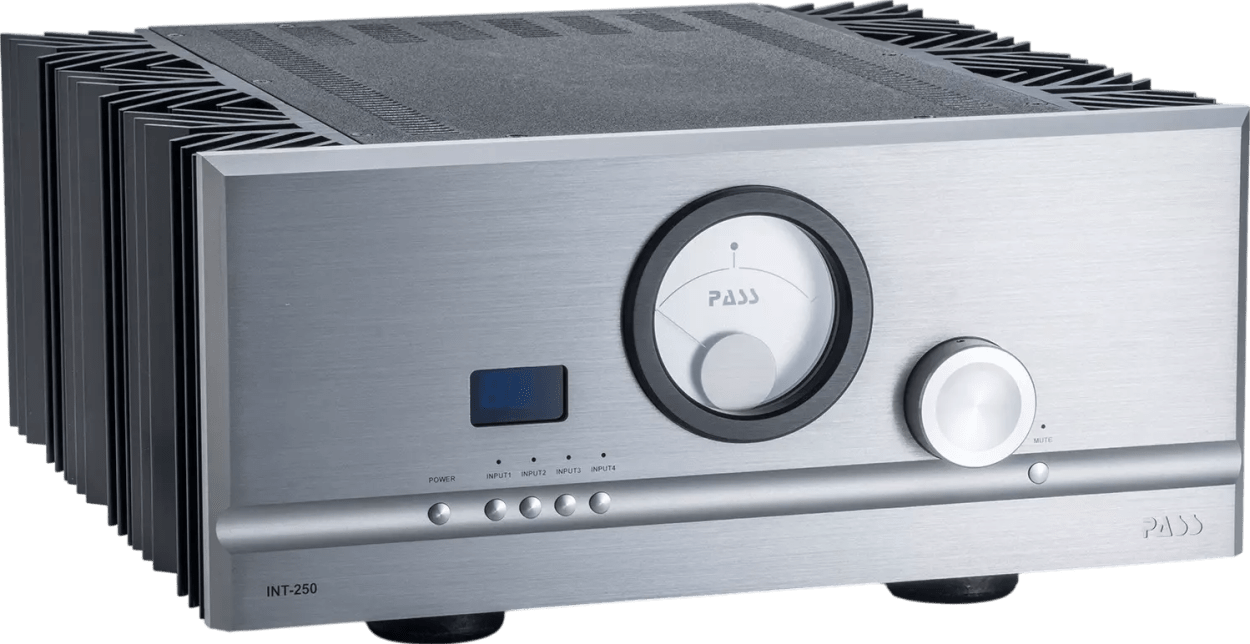
What reviewers think
Product Strengths
- The INT-250 offers a combination of finesse and strength, with some reviewers describing it as having SET-like qualities, with a rich, smooth, organic, and liquid sound.
- Exceptional bass performance—providing tremendous drive, slam, power, heft, and energy in the lower octaves—remains tight and detailed without bloat.
- Powerful output easily drives difficult speakers, and a Class A bias up to 15 watts.
- Superb build quality—using premium materials—and the amplifier is built to last with meticulous attention to detail.
- A large, expansive soundstage and precise imaging produces a three-dimensional soundstage that rivals flagship monoblocks.
Product Considerations
- The INT-250 is a large and heavy component, weighing over 100 lbs, requiring substantial support and careful placement.
- Considerable heat is generated due to its Class A operation, requiring adequate ventilation.
- The INT-250 does not have a digital section or phono stage, so you will need to purchase those separately if you need them.
- The top end is tamer compared to other amps.
- Its simple design may not appeal to buyers who want a flashier product.
Comparisons (according to reviewers)
- Compared to the Pass Labs INT-25, the INT-250 has more bass power, heft, and energy, creating a warmer and fuller presentation with a broader soundstage.
- Compared to the Vinnie Rossi L2i SE, the INT-250 is more juicy, relaxed, 3D, and ethereal, with more grunt to the lows but a tamer top end.
- Compared to the D'Agostino Momentum, the INT-250 has a richer tone and organic purity, but the Momentum has slightly superior 3D soundstage and imaging.
- Compared to the Devialet 1000 Pro, the INT-250 has a richness of tone and organic purity, with great layers of bass information, but the Devialet 1000 Pro has similar qualities in both.
- Compared to the MBL C51, Pass Labs' raw power was telling in midrange dynamics and mid/upper-bass grip.
- Compared to the Luxman LX-590AXII, Pass is big, heavy and warm.
Takeaway: The Pass Labs INT-250 is a powerful, well-built integrated amplifier that offers a rich and engaging sound, making it an ideal centerpiece for a high-end, music-focused audio system. It is a great choice for listeners who prioritize simplicity, quality, and a long-term investment in their audio setup.
Video review
About the brand
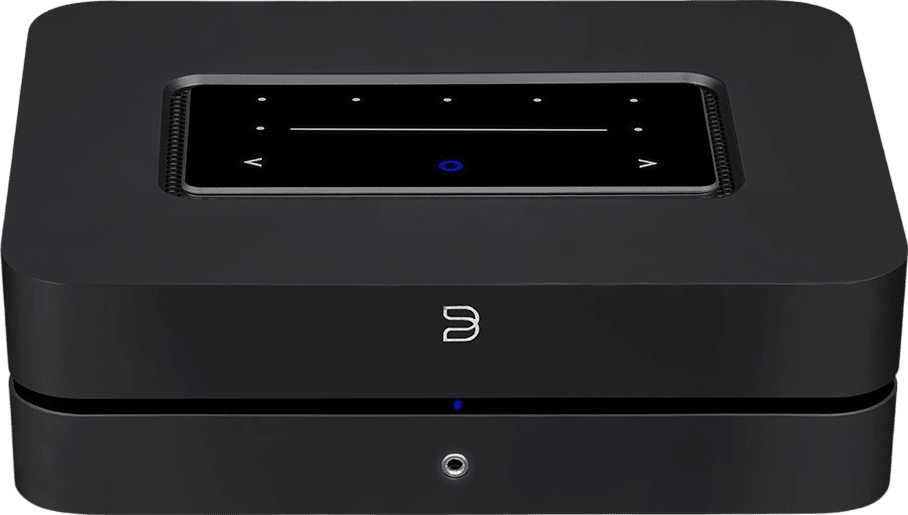

What reviewers think
Product Strengths
- Punchy and musical performer
- BluOS is a treat to operate
- Convenient design as a source and amplifier in one, only needing speakers to complete the system
- Engagingly musical performer—dynamically fluid and punchy, with plenty of energy
- More neutral sounding now, making gains in clarity and insight across the frequency range
- Connectivity options are through 3.5mm headphone-type connectors, shared with mini-TosLink connections
Product Considerations
- Tough competition from other streaming amplifiers
- No way to send data out to an external DAC
- The Powernode was occasionally hard on transients and dynamic bursts
- There is no included remote
Comparisons (according to reviewers)
- The Marantz has a wider-scale, roomier soundstage and greater subtlety
Takeaway: The Bluesound Powernode is a superb streaming amplifier that is better than ever, offering excellent sonic talent and a well-rounded feature set. It provides a convenient and high-quality music experience for anyone looking to simplify their home audio setup.
Video review
About the brand