


Welcome
Inside every device that plays your music, there's a tiny chip called a DAC that transforms digital data into actual sound. It's the crucial bridge between cold computer code and the warm waves that fill your ears.
While your phone or laptop already includes a basic DAC, upgrading to a dedicated unit can take your listening to the next level. The improvement sometimes isn't subtle—you'll hear music with greater instrument separation, decay, silence, and holographic soundstaging.
What makes premium DACs special is their high-end components and sophisticated processing that convert each note with exceptional precision. These standalone units also offer practical benefits, giving you multiple ways to connect your audio gear through USB, optical, or coaxial inputs.
For anyone who takes their music seriously and has invested in quality speakers or headphones, a dedicated DAC is worth considering. It's the missing piece that can help your audio system reach its full potential.
What to look for when choosing a DAC


So you're looking to buy a new digital-to-analog converter for your HiFi system. At ExtremeHiFi, we have the world's largest database of audio products including digital-to-analog converters, but it can still be a little bit confusing to work out what all the different design aspects actually mean and what you should be spending your money on.
So here's a quick rundown of the features and design aspects that set different DACs apart and what you should be looking for.
The key purpose of any DAC is to convert digital information—the 1s and 0s from your PC or digital source device—into an analog output waveform that you can feed into an amplifier and power your speakers.
The first thing to decide is what kind of DAC overall is going to be best suited to your tastes. R2R DACs are often regarded as sounding more warm and some would say "analog." So if that's the kind of sound that you're wanting, an R2R DAC may be an ideal choice. Conversely, a Delta Sigma DAC is typically regarded as sounding more accurate, linear, or some would say "analytical" depending on the design. And objectively (via measurements) that also holds up. The most accurate, objectively low distortion DACs you can currently get are all Delta Sigma DACs, but some people do still prefer the sound that you get out of an R2R DAC, even if the distortion might be slightly higher, and prefer the purity of that approach.
Once you've made your decision as to which of those two broad categories is likely best for you, you'll want to focus on different things to actually find the best DAC within that category. For an R2R DAC, because they don't need to do any digital processing whatsoever in many cases, you'll want to focus fully on the hardware, the quality of the actual physical implementation, and how accurate the manufacturer has been able to make that R2R ladder. R2R DACs need overbuilt power supplies and quite a bit more thorough implementations in many areas than Delta Sigma DACs do, and so check what the manufacturer's distortion specs are and look for ones that are as low as possible because that means that the manufacturer has been able to make their R2R converter as accurate as possible.
With a Delta Sigma DAC, while the hardware absolutely still matters, the quality of the power supply and the analog stage are key factors that you should be paying attention to, a huge factor that is not really present in R2R DACs is the stuff that you can't see—the digital signal processing. The best sounding Delta Sigma DACs in the world are, in my experience, many of the ones where the manufacturers have gone above and beyond to implement high performance oversampling, high performance modulators, high performance clocking integration, and all these factors that you can't necessarily see when just looking at the hardware.
And in fact it is quite important to mention just because two products use the same DAC chip in some cases, it does not mean that they are going to sound the same. You can find a $400 or $500 product which is using an ESS 9038 DAC chip, but you can find another $5,000 or $10,000 product using that same ESS 9038 chip which will sound clearly better because the DSP that they've implemented before the DAC chip, the clocking implementation that they've applied, the quality of the power supply, the analog stages, are all different or improved and this can lead to measurably and audibly better results.
But at the end of the day, once you've narrowed down your choice to a few products, read the reviews. That is the best way to find out what people are saying about a product, what people think of it, how good it is, and what other competing products you maybe should take a look at. And this has been made all the easier at ExtremeHiFi thanks to our review aggregation. You can look at any product quickly at a glance, get an understanding of what people are saying about it, what the general sentiment is, and what other products are worth taking a look at as well.
Beyond the sound itself though, there are some features and design aspects of DACs which may not directly affect the sound quality itself, but are things which you may not want to live without. You want to make sure that you actually can hook the DAC that you're considering buying up to your system. That means that you want to check whether your amplifier takes a balanced or a single-ended RCA input, as you'll want to make sure that your DAC has the matching outputs. You can connect a single-ended output of a DAC to a balanced input of an amplifier, but you cannot safely do this the other way around. Do not connect a balanced output from a DAC to a single-ended input of an amplifier because you do risk damaging the DAC itself then.
And for your inputs, you want to make sure that your source, whether it's a PC needing USB, a CD player using Toslink or SPDIF, or if you've got a high-performance streamer or DDC (maybe it's got I2S), you'll want to check that it's got the right port. And for I2S particularly, you'll want to make sure that the pinout is the same, since many different products, even if they use the same HDMI connector for I2S connectivity, they don't actually use the same pin layout.
So check the manuals for both of your products to ensure that they either match or can be adjusted to match.
You can use ExtremeHiFi's search tool to go through our entire database and filter and show only products which have all of the mix of features that you want and can't live without to find your ideal next purchase. And once you've got a list, you can check through all the reviews, see what people are saying, find how much a product costs used versus new, and find the nearest dealer to you to go and check it out.
Products on this list


.png)


.svg)
What reviewers think
Product Strengths
- Recognized for revealing a wealth of the finest microstructure of instrumental dynamic, timbral, and spatial cues
- Greater dynamic verve and more expressive rhythmically
- Presents transients that are sudden and powerful, but without the glassy edge
- Exhibits a very low noise floor, which serves to unmask fine micro-details
- Reduces a-musical digital distortions, leading to a more believable musical experience
- Lacks USB or Ethernet inputs, which may require using a separate USB converter like the Alpha USB
- Does not accept native DSD or DoP material, requiring DSD files to be converted to PCM format
Product Considerations
- Requires hours of manual alignment and listening by the designer
Comparisons (according to reviewers)
- Vs dCS Rossini, the Rossini has a much fuller—yet laid-back—sound signature compared to the Alpha DAC RS3
- Vs EMM Labs DV2 DAC, the DV2 is in the middle ground between the Rossini and Alpha DAC RS3 in terms of fullness, but is likely the most forward of the three DACs
Takeaway: The Alpha DAC RS3 is an exceptional DAC lauded for its resolution, low noise floor, and ability to reduce a-musical digital distortions. It can reveal nuances in music that are not apparent with other DACs, resulting in a more realistic and engaging listening experience.
Video review
About the brand


What reviewers think
Product Strengths
- Retains all the music's delicacy, refinement, and fluidity, being revealing without becoming clinical
- Offers a wide and deep soundstage, is timbrally spot-on and very natural, well-focused, richly textured, and well-endowed in terms of transient attack and dynamic impact
- Is significantly more revealing, without introducing any negative by-products, and is still the superbly musical and emotionally involving DAC that the C1 was, only better
- Capable of being more discerning of differences in sources and source material
Product Considerations
- Precise calibration is of paramount importance for any multi-bit DAC chip
- Files played directly from the Swiss device have a slightly contoured character
Comparisons (according to reviewers)
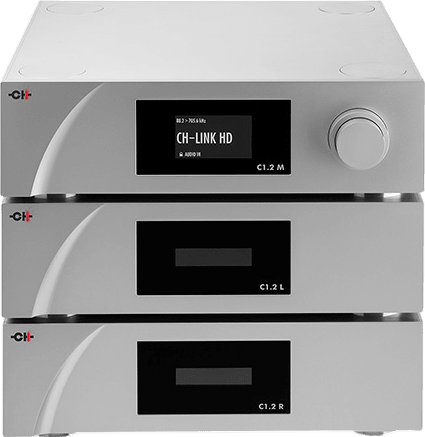
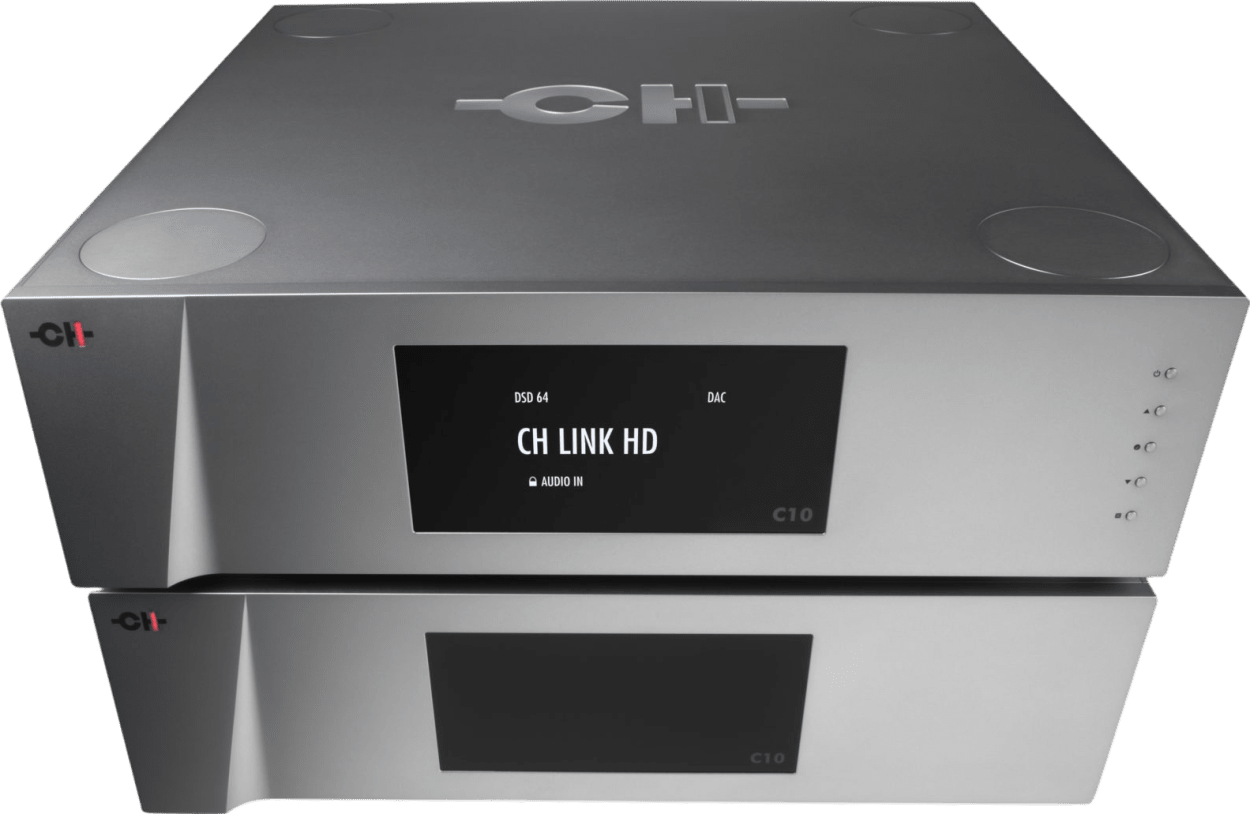
- The C1.2 is even more neutral and even more revealing than the C1, without sacrificing even the slightest hint of refinement, delicacy, fluidity, decay, or flow
- The original C1 DAC has always sounded fuller and more sonorous than other CH Precision products, for instance, the L1 preamp, with the C1.2 upgrade, the DAC has become more neutral and now sounds more in line with the L1
- The CH Precision device combines the opening of the sound with the lack of brightness better than the Ayon player
- The CH Precision delivers recordings in an uncommonly precise manner than the Weiss DA502 D/A converter
Takeaway: The C1.2 is a DAC that retains all of its virtues while becoming more neutral and revealing, and it is still superbly musical and emotionally involving. It is worth buying because of the overall enhancement in audio quality.
Video review
About the brand
What reviewers think
Video review
About the brand

What reviewers think
Product Strengths
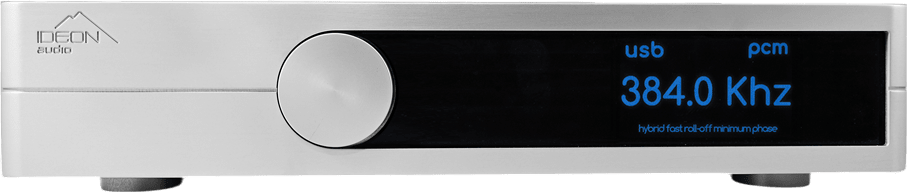
- The Ideon Absolute ε DAC received a very positive review and became Cost-No-Object DAC of the Year in 2021
- The Absolute Signature Time brought a further level of calmness to the event of playing music at home
- Dynamics, and especially bass reproduction, is greatly enhanced and is instantly noticeable with either of these devices installed in a system
- The Absolute Time devices help to develop more depth and width in the soundstage, add clarity, and emotion, especially to vocals
- The Absolute trio (DAC, Stream, Time) bring out the very best they can deliver, making it one of the best complete digital sources one can buy today
Product Considerations
- The price tag puts it in a category where diminishing returns and price-to-performance ratios are not primary concerns
- Textural information was noted as being a little smooth and a slight harshness was noted in the treble region
- The Absolute Time's S/PDIF reclocking has a sample rate ceiling of 192kHz, which could be a limitation if using an upsampling CD transport
- The Absolute Time Signature is better than two Standard Absolute Times, and one should always choose the Signature version over the Standard Time devices
- The need to buy USB cables to link to the product
Comparisons (according to reviewers)
- It annihilated the dCS Rossini Apex and Clock, even though it is less expensive
- The Ideon Absolute Epsilon DAC provided something along the lines of a twenty-five to thirty-five percent overall improvement over the benchmark-setting performance of the original Absolute Epsilon DAC
Takeaway: The Absolute can greatly improve the sound quality of a high-end system by enhancing timing accuracy and overall clarity, especially for those seeking the highest levels of performance. The resulting listening experience can make music sound effortless and natural.
Video review
About the brand

What reviewers think
Video review
About the brand

What reviewers think
Product Strengths
- Smooth, natural sound signature with impressive depth in the 3D soundstage.
- Allows music reproduction closest to a private performance in the listening room.
- Delivers a natural, smooth, and organic sound, reproducing every detail with maximum resolution.
- Exceptional clarity and black background of the sound.
- Performs excellently even with lower-quality content because of its smooth, clean playback and three-dimensional soundstage.
Product Considerations
- The price is far beyond the reach of most audiophiles.
- Comes with only one digital module as standard.
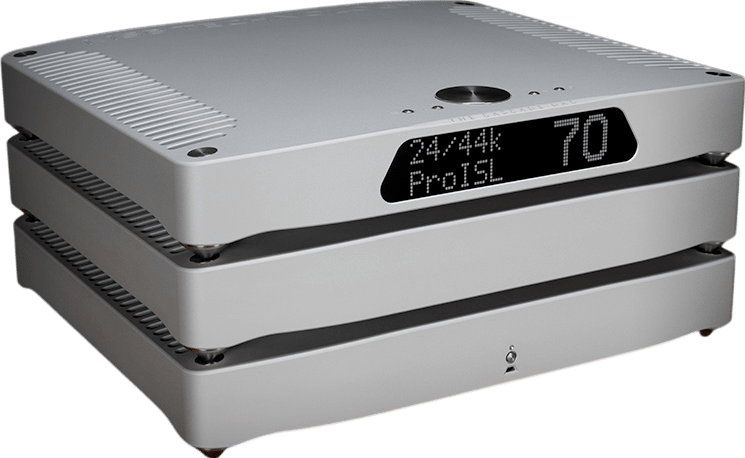
- For optimal performance, it's recommended to place the units on separate shelves.
- The reviewer only tested it as a DAC and did not evaluate its functionality as a preamplifier or streamer.
Comparisons (according to reviewers)
- Vs MSB Reference DAC—the Cascade represents a significant upgrade.
Takeaway: The MSB Cascade DAC sets new standards for sound quality and is a digital marvel, providing a unique and powerful listening experience. It offers incredibly smooth and natural sound, creating a live music sensation.
Video review
About the brand
What reviewers think
Product Strengths
- Another layer of resolution and openness compared to the Discrete
- Natural sound
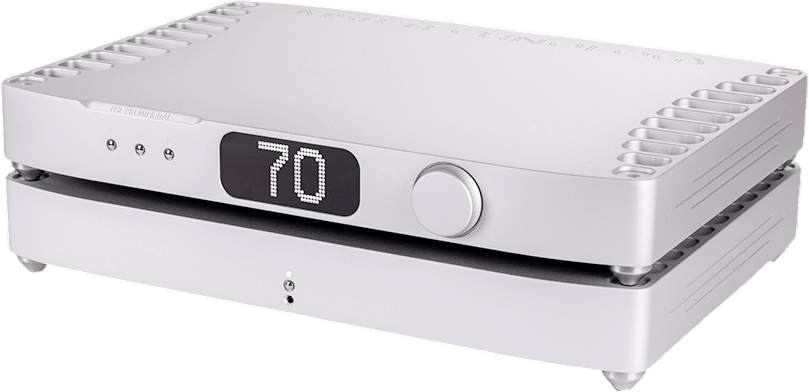
- Flexible due to modular design
- Connectivity options
Product Considerations
- Expensive
- Some reviewers found the remote control non-intuitive to use
Comparisons (according to reviewers)
- Compared to the MSB Discrete DAC, the Premier provides another layer of resolution and openness—giving that other 90th percentile of detail and extreme resolution
- Silence is not more silent than the Discrete; it produces a 'black' background from which music emerges, just like the Discrete
- The Premier was that much more engaging to listen to than the Discrete
- Compared to the Aries Cerat Kassandra II Reference DAC, the Premier's bass performance lacks the propulsive bass drive of the tube-based Aries Cerat
- Compared to the aqua acoustic quality Formula xHD DAC, the Premier lacks the rendering of pitch and note-to-note pitch relationships in the bass of the Aqua
- The Premier is more neutral than the Aries Cerat and the Aqua
Takeaway: The MSB Premier is a modular DAC that gives the user flexibility in terms of digital audio needs. It supports new formats and configurations to simply upgrade with a simple input change for better musical enjoyment through modules.
Video review
About the brand

What reviewers think
Video review
About the brand

What reviewers think
Product Strengths
- Musically satisfying digital solutions
- Impressive performance when proprietary technology is pushed in every direction
- Error and signal gating are reduced where it does the most good—at the source
- The Reference DAC is unique in terms of sonic and musical character, and stands alone
- It preserves the presence and personality of the players
Product Considerations
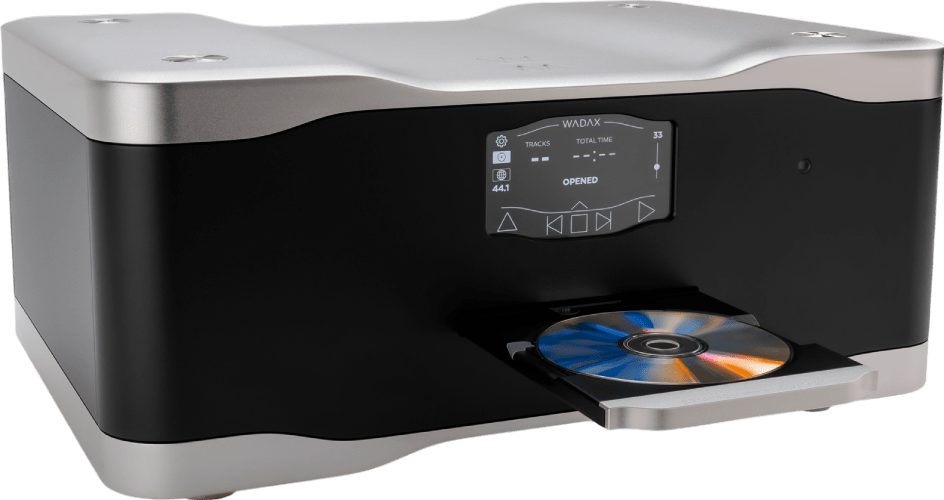
- The Reference DAC's considerable height will challenge most racks
- The retro-techno vibe of the Reference DAC may not appeal to everyone's aesthetic sensibilities
- The feet don't lock, and the whole thing loses both level and stability over time, suggesting a replacement or upgrade should reap dividends
- A pair of matching (type and length) power cords are required for best results, and another for the transport
Takeaway: The Wadax Atlantis DAC delivers natural musical reproduction due to its low noise floor and stability. It brings the performance to you and places you closer to it.
Video review
About the brand
What reviewers think
Product Strengths
- Stable sound, bringing substance and presence to both acoustic spaces and the images within them
- A natural sense of flow and musical structure, unforced yet substantial dynamic range, natural presence, tonality, and a communicative quality reminiscent of live music
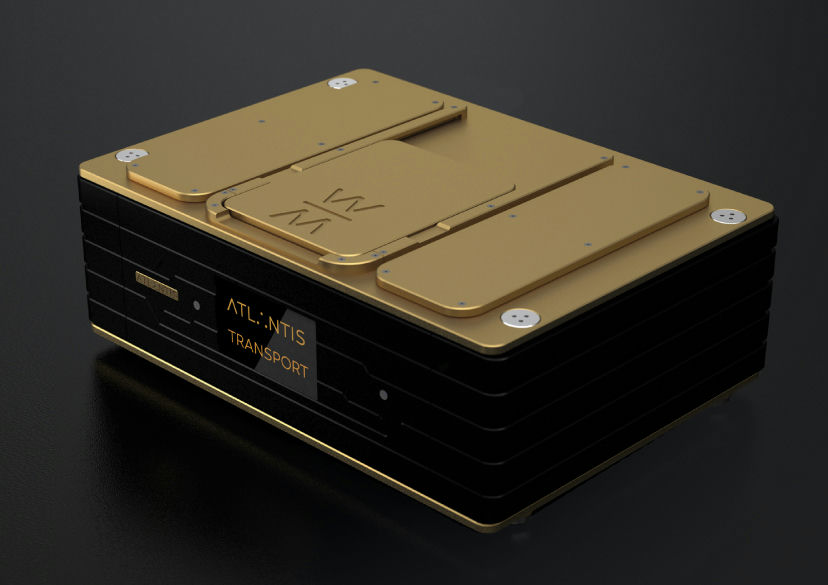
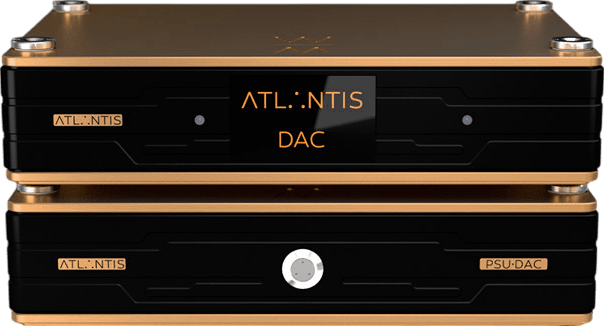
- The Atlantis Transport is a universal disc player being able to play all the various Red Book standards (CD, CD-R, CD-RW, etc.)
Product Considerations
- Leveling and stable support are crucial for optimal performance, the rigid chassis components benefit from an effective mechanical ground
- Cables matter significantly, even with Ethernet connections, influencing the overall musical result
- Early versions of the Atlantis Transport exhibited erratic sensitivity to control, which has since been resolved with software upgrades
Comparisons (according to reviewers)
- Vs Wadax Pre 1: The Atlantis Transport and DAC pairing surpass the Pre 1 Ultimate in musical accomplishment by a massive margin
- Vs Other DACs: Other digital systems sound threadbare and insubstantial in comparison, with hollow holographic images
Takeaway: The Atlantis DAC and Transport offers a musically satisfying experience and establishes a high standard for digital replay, making digital sound better than ever. The Atlantis reveals the expression and personality of the musicians within the recordings.
Video review
About the brand
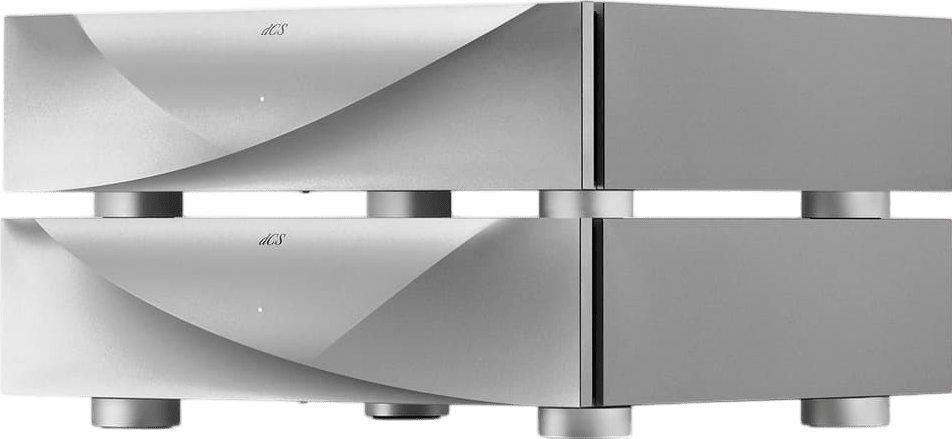

We created a dedicated DAC for each audio channel, along with an all-new version of our renowned dCS Ring DAC™ hardware. We also devised a patented clocking protocol, dCS Tomix, to ensure perfect synchronicity between the Mono DACs.
These innovations have enabled us to take our signature ultra-low distortion performance to a new level whilst significantly lowering noise floor, bringing listeners an even more compelling and visceral sonic experience.
Discover new depths of detail and emotion in your music, and prepare to fall in love with your favourite recordings all over again, with the sublime capabilities of these extraordinary components.
What reviewers think
Video review
About the brand
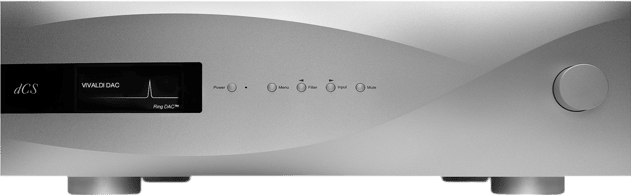
Featuring the latest generation dCS Ring DAC™ APEX, it delivers a performance unmatched in its realism, depth, and emotion
What reviewers think
Product Strengths
- Reproduces a sense of 'air' in recordings, accurately capturing ambient detail and instrument placement in the soundstage
- Significantly reduces distortion and improves linearity compared to its predecessor, resulting in enhanced dynamics, detail, and a more resolving sound
- Has excellent tonal purity, providing a beautiful and natural sound for both vocals and instruments
- Expands transparency by avoiding the artificial gloss and sheen, enabling the sonic power at its core
- Delivers authority, control, and the sheer drama and dynamics
Product Considerations
- Being a multi-box setup (DAC, Upsampler, Clock), requires careful setup and cable management
- While versatile with adjustable output voltage, optimal performance depends on proper gain and impedance matching with the preamplifier and amplifier
- The design, while impressive, is eleven years old
Comparisons (according to reviewers)
- Has a better ability to translate the still-fragmentary micro-universe of zeros and ones to the level of enhanced music listening than other DACs
- Compared to Ayon, Gryphon and Esoteric SACD players, dCS shows the signal smoothly, delivering a brighter, clearer sound
Takeaway: The dCS Vivaldi Apex DAC system brings music to life by uncovering more of the details within recordings. This system allows listeners to feel closer to their music, offering joy and an awakening of the senses.
Video review
About the brand

What reviewers think
Product Strengths
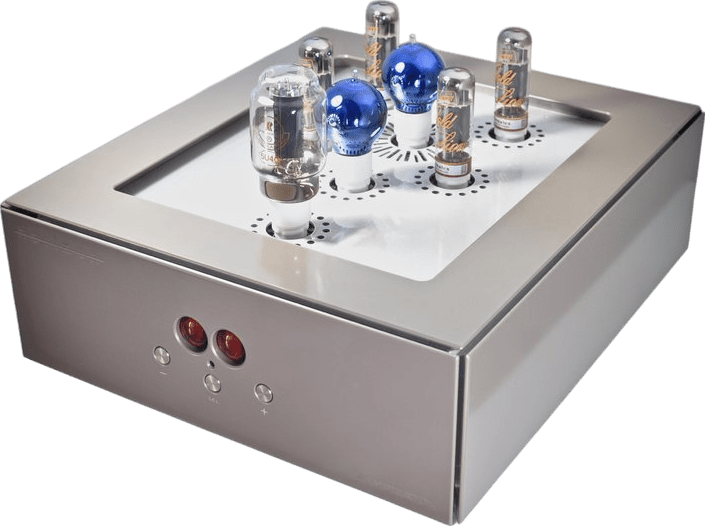
- Noticeable improvement over the Lampizator Poseidon, especially in low-end authority and resonance of notes
- Immersive, organic, and realistic sound quality, replicating a vinyl-like analog experience
- Excellent black background and tighter control, especially beneficial for electronic music compared to the Poseidon
- Pinpoint accuracy in instrument placement, even during complex musical passages, prevents individual instruments from being lost
- Excels in reproducing the ambience and textural information of recordings, creating a realistic and engaging listening experience
Product Considerations
- Soundstage is smaller but more focused compared to the Poseidon
- Stock tubes are good, but tube rolling is highly recommended to maximize the DAC's potential
- The DAC remote also controls the Poseidon, which could cause simultaneous switching if both are in the system
Comparisons (according to reviewers)
- Horizon 360 offers better low-end authority and tighter control than the Lampizator Poseidon, generally a step up, even with upgraded tubes on the Poseidon
- Horizon 360 and Ideon Audio Epsilon Ultima 2024 are standout performers, the Epsilon Ultima is more authoritative and detail-focused, while the Horizon 360 is more tonally realistic—recreating a live performance feel
Takeaway: The Lampizator Horizon 360 is an exceptional DAC that offers an immersive and realistic listening experience, especially for those who appreciate the nuances of live music and the warmth of analog sound. It's designed to draw listeners into the music and deliver a non-fatiguing, enjoyable listening session.
Video review
About the brand


What reviewers think
Video review
About the brand

What reviewers think
Product Strengths
- Converts digital signals into an analog waveform exceptionally well
- It is able to play all file types with the same finesse and sonic quality, allowing one to fully explore file types without reservation
- Presents a large and detailed soundstage with width, depth, and acoustic height
- It has a neutral and well-controlled low end with tight and impactful bass
- The FPGA (Field-Programmable Gate Array) can be easily upgraded when new algorithms are available
Product Considerations
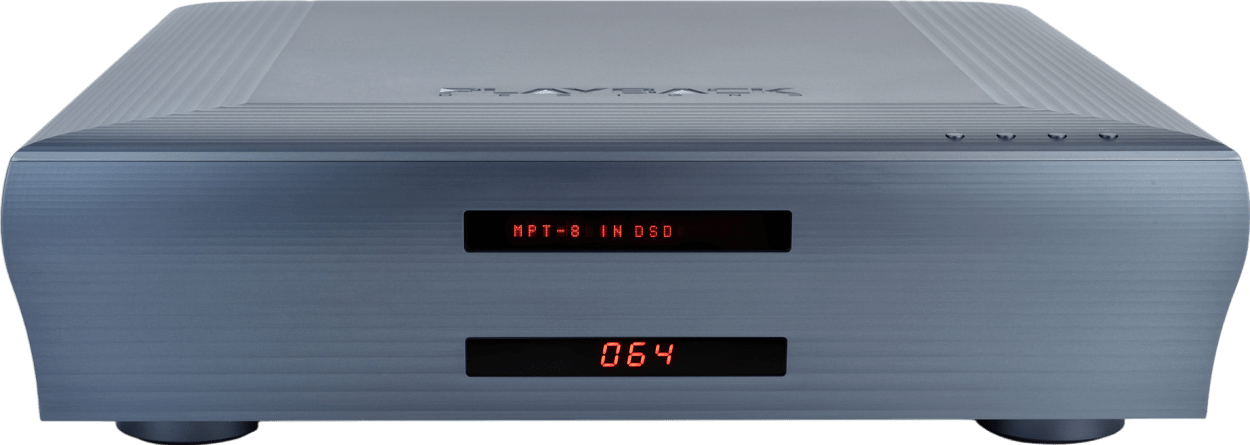
- The MPD-8 Dream DAC requires at least 500 hours of playback before evaluation, with noticeable improvements beyond that mark
- OSX users will be limited to DSD128 using DoP with the MPD-8
Comparisons (according to reviewers)
- Vs Holo Audio May KTE DAC: The Playback Designs MPD8 is another level of DAC
- Vs Playback Designs MPD-5 DAC: The Dream DAC is all about separation between analog and digital
Takeaway: The Playback Designs MPD-8 Dream DAC offers impressive sound quality and can draw listeners into the music for hours without fatigue. It is considered a reference-level DAC.
Video review
About the brand