HS8
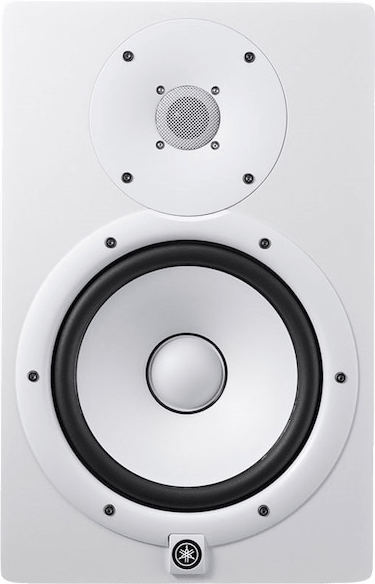
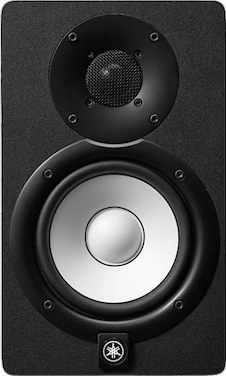
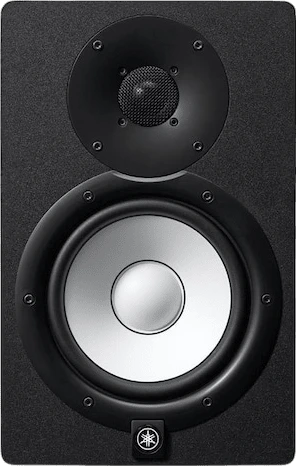
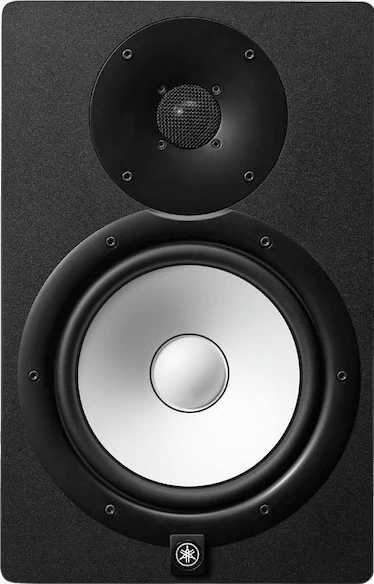
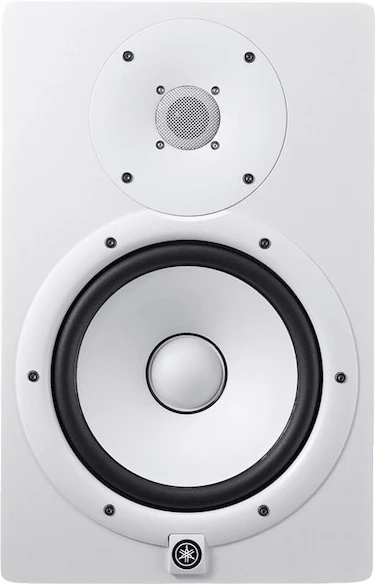
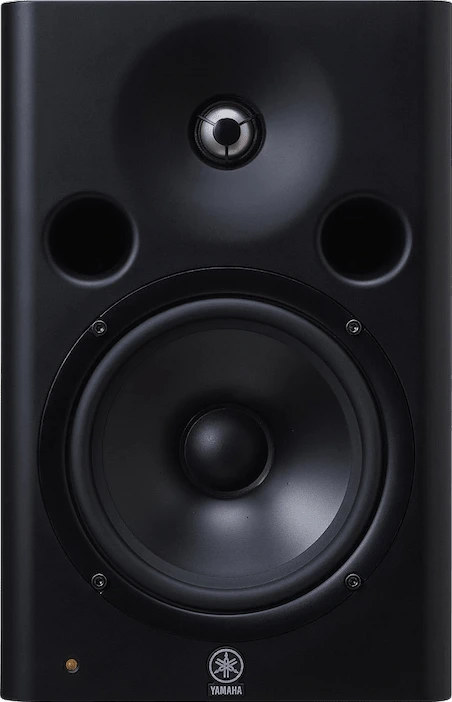
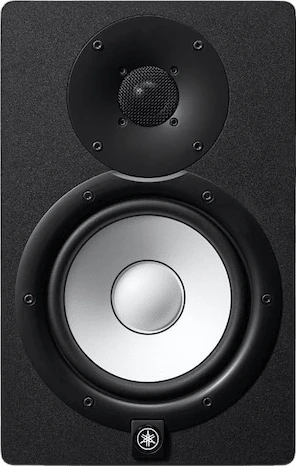
Yamaha's HS8 is an active studio monitor with 120 watts of built-in amplification, and it takes XLR or TRS cables. Room and high trim controls let you fit it to your space. Its clean, detailed sound and deep bass drew the most praise from reviewers.
New here? ExtremeHiFi is a free hifi encyclopedia: reviews, prices and used listings. We don’t sell anything.
Summary
Yamaha's HS8 is an active studio monitor with 120 watts of built-in amplification, and it takes XLR or TRS cables. Room and high trim controls let you fit it to your space. Its clean, detailed sound and deep bass drew the most praise from reviewers.
What reviewers love
The Yamaha HS8 is a solid studio monitor with a good reputation for mixing in bigger spaces, and it provides nice clarity and depth. With its powerful sound and versatile controls, the HS8 can be a great addition to a larger studio setup.
Product Strengths
- Good sound quality for mixing projects and production work
- Loud and powerful sound for their size, making them useful in larger rooms
- Clarity, smooth mid-range, and controlled highs
- A solid and professional look
- Multiple adjustment possibilities, including room control and high trim switches, to tailor the sound to the room
Product Considerations
- Room treatment is required, and they may not be suitable for smaller spaces
- They may pick up interference from Bluetooth or Wi-Fi signals
- Some vocals might be a tiny bit forward without any adjustments
- Not ideal as primary reference monitors
Comparisons (according to reviewers)
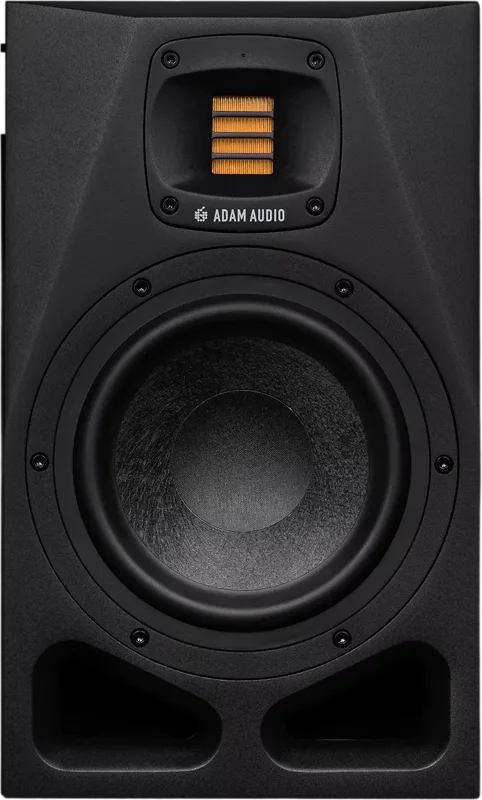
- Compared to the ADAM Audio T8V, the Adam T8V monitors sound fuller
Takeaway: The Yamaha HS8 is a solid studio monitor with a good reputation for mixing in bigger spaces, and it provides nice clarity and depth. With its powerful sound and versatile controls, the HS8 can be a great addition to a larger studio setup.
Written reviews0
Awards0

Bookshelf, floorstanding, in-wall, and powered speakers, compared on the specs that matter in a real room: bass extension, sensitivity, and tweeter type.
Buying tips that apply to the HS8
- Get placement right before anything else. Pulling speakers 2–3 feet (60–90 cm) from the wall behind them tames boomy bass; the listening seat should sit at the third point of an equilateral triangle, with toe-in adjusted to set the width of the image.
- Match speaker size to the room. Large towers in a small room often sound bloated, and nearfield listening at a desk favors small two-way designs.
- Each 3 dB of extra sensitivity halves the power needed for the same volume. For moderate listening levels, speakers rated 90 dB or more allow a smaller, cheaper amp.
- Treat the room before spending more on speakers. Bass traps in the corners and absorption at the first reflection points often do more than a step up in speakers.
- Used speakers lose value quickly, so two- or three-year-old models from established brands often sell well below their new price.
- Three-way designs free the midrange driver from bass duty, which can lower distortion in voices, though a well-designed two-way can image just as precisely.
- Tweeter dispersion matters more than its frequency response. Wide dispersion gives a bigger sweet spot but lights up more room reflections; controlled directivity suits lively rooms.
- Open-plan rooms lose bass. If the room opens onto other spaces, budget for a subwoofer instead of bigger main speakers.
- Audition with familiar music. Voicing varies a lot between brands, and a pair that excites on rock can grow tiring on strings.
- Many brands put their flagship tweeter into smaller models. A bookshelf speaker from a brand's top range often beats a cheaper tower in a small room.
Features and specs
Specs
- Type: 2-way bass-reflex bi-amplified nearfield studio monitor
- Woofer: 8" cone
- Tweeter: 1" dome
- Frequency Response: 38Hz - 30kHz (-10dB), 47Hz - 24kHz (-3dB)
- Amplification: 75W LF plus 45W HF bi-amp system (120W total)
- Inputs: XLR and TRS phone jack (balanced/unbalanced)
- Controls: ROOM CONTROL and HIGH TRIM response controls
Manufacturer's description
Active 2-way bass reflex near-field monitor with 8'' cone woofer and 1'' dome tweeter Frequency range 38 Hz - 30 kHz 75W LF plus 45W HF bi-amp system for 120W power amplification ROOM CONTROL and HIGH TRIM sound control XLR and jack inputs for balanced and unbalanced signals

Where to buy the HS8336 dealers
Lists this product is on
About Yamaha
Yamaha brings its instrument making to hifi, aiming for what it calls True Sound, with instruments and voices reproduced as they were meant to sound. The Japanese company was founded in 1887 and still makes pianos and other instruments. Many of its amplifiers and receivers keep phono stages next to modern features, and MusicCast links its components into a wireless multi-room system. The MusicCast Vinyl 500 turntable adds streaming for listening in other rooms. The HS8 heads our Best Studio Monitors for Listening to Music list, with the HS5 and HS7 right behind.
Brand highlights
- Yamaha leverages its deep expertise in musical instrument manufacturing to design audio equipment aiming for "True Sound," faithfully reproducing the intended sound of instruments and vocals, making them sound realistic.
- Yamaha products, particularly amplifiers and receivers, often offer a wide range of connectivity options, including legacy inputs (like phono stages) alongside modern features, catering to both traditional and contemporary audio setups.
- Yamaha's MusicCast ecosystem integrates seamlessly with their audio products, providing multi-room audio capabilities and access to streaming services, allowing users to easily expand their audio setups wirelessly.