Welcome
Studio monitors are active speakers voiced to be flat at close range, which is also a good description of a desktop hifi speaker. The affordable ones are a cheap way into accurate sound; the expensive ones are among the best speakers made at any price. Ranked by review count.


Products on this list





What reviewers think
Product Strengths
- Exceptional clarity, precision, and agility in sound reproduction
- Superb bass performance, clean and extended, especially considering its compact size
- Unfussy about listening room and position due to controlled low-frequency dispersion and DSP
- Active Wave Focusing creates a cardioid dispersion pattern, minimizing room influence
- Integration of DSP, DAC, and amplification allows for a highly controlled and optimized performance
Product Considerations
- Sound might be easier to admire than love, lacking some natural warmth or texture, depending on setup (Controller usage)
- Can be a bit too revealing, imperfections in recordings become more apparent
- Some report a less natural tone, especially with voices
- The limiter kicks in to reduce bass output at very high volumes on bass-heavy music
Comparisons (according to reviewers)
- Vs Devialet Phantom: Kii Three are great sounding monitors, in a completely different class
- Vs Bowers & Wilkins 800D: Bass sounds right, and it has been said that a DSPeaker doesn't sound any better than Dirac Live
- Vs Dynaudio Focus 20 XD: The Kiis are more intense, technically
Takeaway: The Kii Three is a sophisticated speaker that excels in clarity and bass performance while minimizing room interference, a unique design that pushes the boundaries of what's possible in loudspeaker technology. With its high level of control and integration, the Kii Three delivers an exceptional listening experience that audiophiles are sure to appreciate.
Video review
About the brand


What reviewers think
Product Strengths
- Excellent sound quality with clarity, detail, and impressive dynamics
- Good stereo imaging and a wide soundstage
- The active design with built-in amplifiers offers a 'force multiplier' effect, providing more than the sum of its parts
- Adjustable treble and bass for versatile placement and personal preference
- Attractive aesthetics with rounded edges and high-quality finishes available
Product Considerations
- The design avoids digital functionality in favor of sound quality, which means it lacks built-in streaming or DAC capabilities and relies on external sources
- Knowing that both speakers are at the same volume settings is an issue, and a remote control would be a useful addition
- The speaker cables are 3m on each side, which may not be enough for some
- Bass performance may require a sub-woofer, and bass could be a little strong in some rooms
- They can get a smidge confused on really busy tracks and may harden a touch in the upper mids and treble at high volumes
Comparisons (according to reviewers)
- AE1 Active offers faster transients and more precise imaging than KEF LS50 Wireless II, but LS50 Wireless II has fuller voice and richer piano tone
- AE1 Active offers better treble than Q Acoustics M20 HD, leading to an airier sound with more detail
- AE1 Actives sounded more balanced across the spectrum and presented a bigger soundstage than Marantz PM6006 amplifier and ELAC Debut B6.2 speakers
Takeaway: The Acoustic Energy AE1 Active is a well-regarded active speaker that offers a clear, detailed, and dynamic sound, making it an exciting proposition. With its versatile connectivity, flexible positioning, and the option to tailor the bass and treble, the AE1 Active is easy to set up and should fit any room requirements.
Video review
About the brand


What reviewers think
Product Strengths
- Good sound quality for mixing projects and production work
- Loud and powerful sound for their size, making them useful in larger rooms
- Clarity, smooth mid-range, and controlled highs
- A solid and professional look
- Multiple adjustment possibilities, including room control and high trim switches, to tailor the sound to the room
Product Considerations
- Room treatment is required, and they may not be suitable for smaller spaces
- They may pick up interference from Bluetooth or Wi-Fi signals
- Some vocals might be a tiny bit forward without any adjustments
- Not ideal as primary reference monitors
Comparisons (according to reviewers)
- Compared to the ADAM Audio T8V, the Adam T8V monitors sound fuller
Takeaway: The Yamaha HS8 is a solid studio monitor with a good reputation for mixing in bigger spaces, and it provides nice clarity and depth. With its powerful sound and versatile controls, the HS8 can be a great addition to a larger studio setup.
Video review
About the brand


What reviewers think
Product Strengths
- Classic neutral PMC voicing, detailed and natural
- Improved bass extension and accuracy due to PMC's Advanced Transmission Line (ATL) design
- Improved HF control for a larger sweet spot and better imaging, thanks to the D-Fins
- Simple setup with an all-analogue design
- Front ATL vent expands placement options, allowing placement closer to walls
- Connectivity is limited to balanced XLR analogue input
Product Considerations
- Some might miss EQ facilities because of the all-analogue design and lack of DSP
- Analytical nature may not suit all, as it is designed to reveal production differences in recordings
- Visually, the design is described as functional and plain, without the luxury wood treatment of domestic speakers
- The depth of the cabinet might be too large for some control rooms
Comparisons (according to reviewers)
- Compared to the TB2/TB2S-A II, the Result6 is a worthy successor, building on its positive characteristics with improved transparency and refinement
- Compared to the TwoTwo range, the Result6 offers a lower entry point into PMC's world, with cost savings from its all-analogue configuration
- Compared to Genelec The Ones, the Result6 offers a wide sound stage and sweet spot
- Compared to the Elac Navis ARB-51, the Result6 is more resolving, throwing a larger soundstage with faster and more articulate sound, but is also more expensive and less attractive
- Compared to the Focal Solo6, imaging is better with the PMC, but the Focals offer more performance control
Takeaway: The Result6 is a solid choice for those seeking a professional-grade, accurate, and detailed monitoring system with a wide sweet spot and impressive bass extension. It is particularly well-suited for audio engineers who prioritize sonic transparency and simple setup without relying on DSP-based features.
Video review
About the brand

What reviewers think
Product Strengths
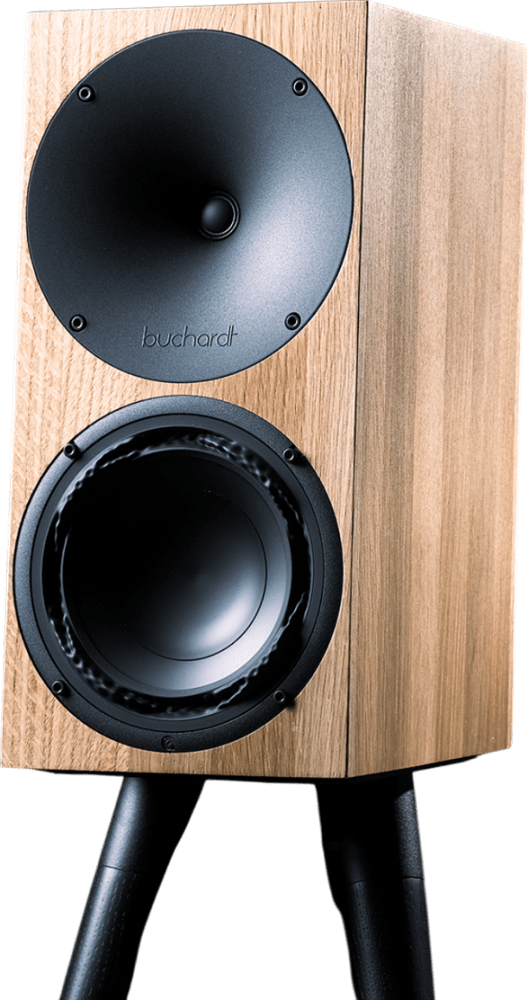
- Exceptional bass performance for its compact size, with bass that is fast, clear, and tight
- Multiple 'Master Tunings' offer customizable sound profiles, adapting to different room acoustics and user preferences
- A high-quality Purifi woofer and SB Acoustics tweeter contribute to clarity, detail, and low distortion
- A solid wood cabinet made in Denmark provides a luxurious look and feel
Product Considerations
- Bass output may diminish or be limited at high volumes to protect the drivers from damage
- A separate purchase of the Platin Stereo Hub may be required for full wireless functionality and room correction
- The 'Made in China' label applies to the electronics inside the cabinet
- While the A10 offers impressive bass, some may still prefer to add a subwoofer for a true full-range experience
Comparisons (according to reviewers)
- Vs Buchardt S400 Mark II, the A10 is more transparent with greater inner detail, clarity, and top-end extension—and deeper, tighter bass—while the S400 Mark II is more relaxed and forgiving with harsh recordings
- Vs Buchardt A500, the A10 has comparable performance, with possibly a crisper sound in some instances
Takeaway: The Buchardt Anniversary 10 is a compact yet powerful speaker that offers a customizable listening experience. Its impressive bass and versatile tuning options make it a great choice for those seeking a high-quality audio solution in a small to medium-sized room.
Video review
About the brand

What reviewers think
Product Strengths
- Full yet crisp sound profile
- Considered accurate
- Enhanced clarity and detail in the midrange
- Great speed and minute detail, and an excellent imaging and soundstage
- Stylish and well-built
Product Considerations
- Bass range is almost non-existent
- Cabinets can be damaged if not handled with care
- Tends to be bright, and possibly 'very bright' for some
- There is a high-pitched background hiss which is always present as long as the speakers are powered on
Comparisons (according to reviewers)
- Compared to the NS-10, the HS5 are far flatter in their response
- Compared to the JBL 305P MkII, the Yamaha HS5 excels in the higher bass and low midrange frequencies, revealing detail and clarity
- Compared to the KRK Rokit 5 G4, the HS5 are most likely the better option for the more serious engineers
Takeaway: The Yamaha HS5 is a great first speaker to buy for anyone doing video production or some music mixing sound engineering and offers a really great sound profile without being as big as eight inch monitors. If you want some monitors to show you what's wrong with your mix, the HS5 is a good contender in the current market.
Video review
About the brand

What reviewers think
Product Strengths
- Clear and precise sound reproduction, with transparent highs and well-defined mids
- Solidly built and durable construction
- An all-round performer and affordable
- The Yamaha HS7 is an all-round performer and affordable
Product Considerations
- Setup can be difficult because the tweeter is very bright and requires accuracy
- Placement is important and needs to be away from walls
- The sound is less three-dimensional
Comparisons (according to reviewers)
- The HS7s have a mid-range focus around 1k area, excelling with clarity and detail with vocals
- The A7Vs have a bigger cone which gives a touch more low-end, and offer more modern features compared to the HS7s
Takeaway: The HS7 is a well-engineered monitor that offers a balanced and articulate sound, revealing every detail in your audio. It is worth buying if you're serious about music production and want a reliable tool for mixing and mastering.
Video review
About the brand


What reviewers think
Product Strengths
- Side-mounted passive radiators make the speakers forgiving of low-end buildup when placed near walls and corners, offering positional flexibility
- Excellent transient response and detailed differentiation between midrange frequencies, making it easier to pick out conflicts between different instruments
- Inverted dome tweeter design provides accurate and smooth high frequencies that are less fatiguing than standard drivers and offer flexible listening position
- Wide and precise stereo image, making it easy to position mix elements around the stereo field
- Accurate and neutral overall sound presentation, revealing without sounding overly clinical, making them easy to work on over long periods
Product Considerations
- Some reviewers found the low-end lacking a tiny bit, and the sub-bass response is not as good as larger monitors—potentially requiring a subwoofer
- The power-saving mode can be annoying, as the speakers take a couple of seconds to activate, and the feature cannot be disabled
- Treble response can be sensitive, which may be fatiguing when working on recordings that require less than a sparkling top end
- Lacks wireless connectivity like Bluetooth
Comparisons (according to reviewers)
- Compared to Yamaha HS80M, the Shape 65 sounds better in the mid and top frequencies
Takeaway: The Focal Shape 65 is a well-built monitor with a clear and detailed sound that's great for mixing and mastering. It's an accurate tool that will help with making better music decisions.
Video review
About the brand


What reviewers think
Product Strengths
- Exceptional accuracy and neutrality allow a transparent window into the original performance, effortlessly revealing mix details
- Excellent bass performance extends down to 20Hz, which is unusual for its size
- Cardioid design minimizes room reflections, resulting in a wide sweet spot with great spatial imaging and a clear sonic landscape
- Built-in DSP and Room Matching features allow the speaker to adapt to the room, correct for room modes, and achieve a flat frequency response
- Combines amplification, DACs, and DSP into a single unit, simplifying setup and eliminating the need for external components
Product Considerations
- Getting the most out of the 8c requires some technical knowledge and effort with room correction and setup, especially with REW
- Connectivity is limited to AES/EBU and analog balanced inputs via XLR, which may require adapters for some home audio equipment
- The speakers are large and heavy, potentially requiring specific stands, and some reviewers found the aesthetics unappealing
Comparisons (according to reviewers)
- Compared to the Kii Three, the 8c has larger drivers and more refined high frequency directivity, more DSP control, and the dual 8" subwoofers perform with more power
- Compared to the Harbeth M40.1, the 8c has a similar easy-to-listen sound, but takes its level to another level with better vocal reproduction than the Harbeth
Takeaway: The Dutch & Dutch 8c is an all-in-one speaker system that delivers accurate, room-optimized sound. These speakers are a great fit for someone that values high-end sound without the hassle of a complex setup.
Video review
About the brand

What reviewers think
Product Strengths
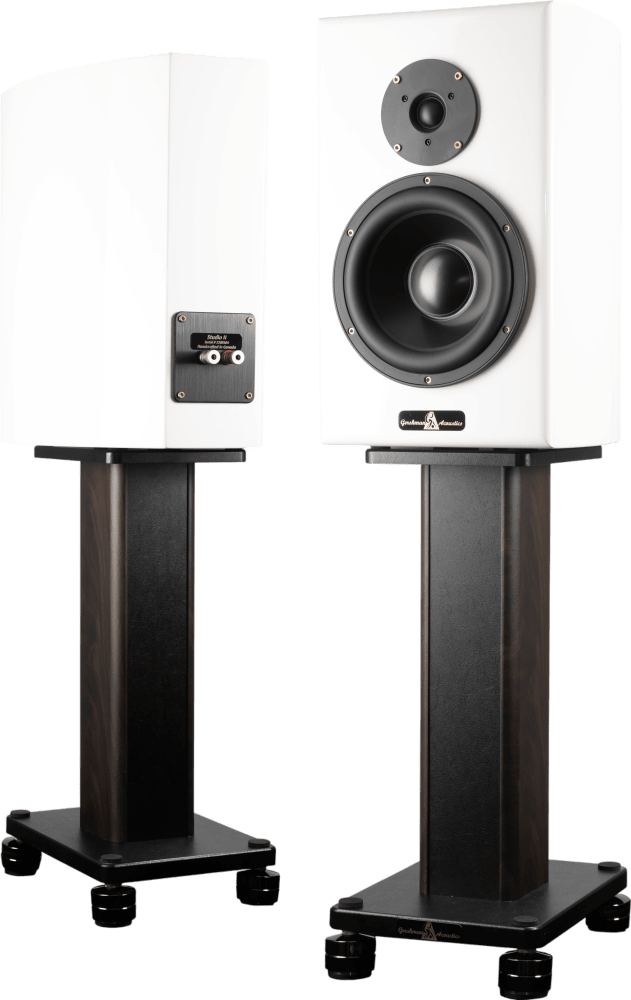
- Full-range sound, impressive bass response, and the ability to pressurize a room, often negating the need for a separate subwoofer
- Smooth, warm, and coherent midrange provides natural and engaging vocals and instruments for long listening sessions without fatigue
- Well-extended treble presents in a naturally smooth, enjoyable, and pleasing manner
- Excellent imaging and soundstage capabilities create a realistic and immersive listening experience
- Sound reproduction makes it a speaker that one can live with
- Connectivity options are available
Product Considerations
- Quality amplification with sufficient power and current is required to achieve optimal performance and control the woofer effectively
- The backplate for bass adjustment uses wood screws, making it easy to strip if not handled carefully
- Placement and setup, especially stand height and toe-in, are crucial for achieving the best high-frequency response, it can sound dull if not optimized
- May not be ideal for listeners who prefer a brighter, more forward sound signature or those who prioritize extreme loudness levels
- Grilles may cause micro-rattling at moderate to loud listening levels due to weaker magnets
Comparisons (according to reviewers)
- Vs Totem Acoustic Manny 2 Signature: The Studio 2 has a more forgiving presentation, denser midrange, and stronger bass
- Vs Klipsch Forte 3: The Studio 2 offers a more natural tone, especially in the midrange and upper bass, along with greater soundstage depth
- Vs Vienna Acoustics Mozart Symphony Editions: The Studio 2 beats them in bass and midrange
- Vs Harbeth (SHL5 and Compact 7 XTs): The Studio 2 cannot be matched by the Harbeth's articulate bass response
- Vs Celestion SL6-S: The Studio 2 has deeper roots in the trunk, and they got high branches and leaves, but they don't go all the way up to the highest branches and leaves at the tippy top
Takeaway:
The Studio 2 is a well-built bookshelf speaker that delivers a smooth, full-range sound with surprising bass and clear imaging, making for an engaging listening experience. With the right setup and quality components, these speakers can provide years of musical enjoyment in a variety of room sizes.
Video review
About the brand


What reviewers think
Product Strengths
- Excellent build quality and solid construction
- Ribbon tweeter provides clarity in the high-end without being fatiguing
- Powerful, clean, and bold low-end—especially suited for bass-heavy music
- Wide sweet spot for listening
- Good midrange response, making it easier to mix elements in the mix
Product Considerations
- Large size requires a larger room for optimal performance, and can be overpowering in small spaces
- No power indicator LED on the front panel
- Level knob on the back isn't stepped, making precise level matching challenging
- May not have enough punch for those looking for that in a monitor
- Placing the monitor in a small or untreated room will negatively affect its performance
Comparisons (according to reviewers)
- Frequency response skews a bit more towards the bass side of things, as opposed to the brighter signature of the ADAM Audio A7X
- Sounds as good or better than more expensive, older ADAM Audio monitors
- Offers a more extended low-frequency response than the T5V and T7V
Takeaway: The T8V is a capable studio monitor with a big sound and clear highs, and is especially great for those who produce bass-heavy music and have a larger space to accommodate them. With its detailed sound and wide sweet spot, it's a solid option.
Video review
About the brand

What reviewers think
Product Strengths
- Compact size relative to its 7' woofer, making it suitable for small to medium-sized studios
- Very powerful onboard EQ with a handy preset system and customizable settings via the S-Control application, offering room tuning capabilities
- Delivers a detailed, precise frequency response, and a wide dynamic range with a low endpoint
- Excellent sense of defined low and low-mid frequencies, providing an accurate representation of bass sounds
- S-ART ribbon tweeter provides crispness and contributes to a better stereo feel
Product Considerations
- Rear-mounted controls and OLED display are inconvenient to access
- Adjustments via USB using the S Control app are not instantaneous, unlike a plugin
- Vertical sweet spot is narrow, so sitting height is important for mid-to-high frequency delivery
- Some may find the treble delivery a little forward and obvious
- No combined XLR and TRS jack for the analog inputs
Comparisons (according to reviewers)
- Vs Yamaha HS7: The S2V provides much more clarity and detail, giving a more personal and detailed music experience
Takeaway: The S2V is a high-quality monitor suitable for critical listening, offering powerful EQ settings and a compact design to fit in different studio settings. They are very detailed and produce sounds at extremely high resolutions for a more accurate mix.
Video review
About the brand