M40.3 XD
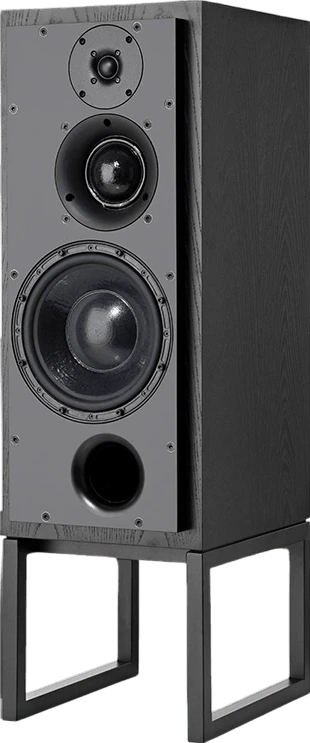
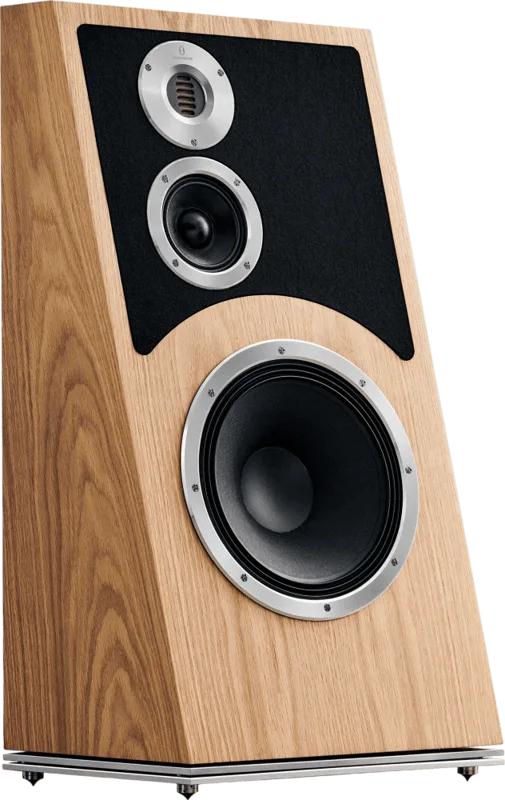
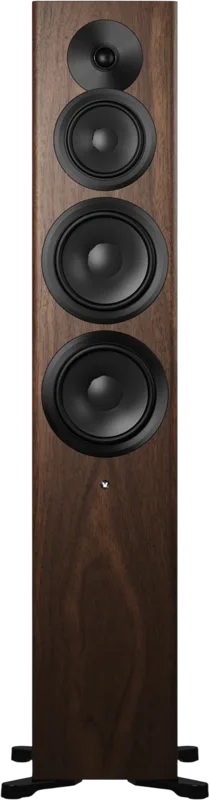
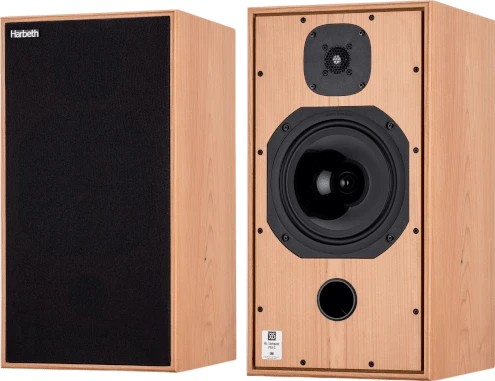
Harbeth's M40.3 XD is a floorstanding speaker with a 300mm bass driver, suited to a wide range of amplifiers. The review that covered it points to its weight, depth and dynamic power, and to a high level of detail.

New here? ExtremeHiFi is a free hifi encyclopedia: reviews, prices and used listings. We don’t sell anything.
Summary
Harbeth's M40.3 XD is a floorstanding speaker with a 300mm bass driver, suited to a wide range of amplifiers. The review that covered it points to its weight, depth and dynamic power, and to a high level of detail.
What reviewers love
The M40.3 XD speakers are a great choice for audiophiles who want a speaker that can handle any genre of music at any volume and reveal new details in their favorite recordings. They offer both power and grace, making them a worthwhile investment for those with a dedicated listening space.
Product Strengths
- The M40.3 XD has the weight and depth to play any kind of music at any volume level
- It moves serious air, yet keeps its composure
- It doesn't change its overall tonal balance going from whisper soft to brain damage loud
- High resolution allows listeners to discover previously missed information in music
Product Considerations
- The speakers are large (15 x 17 x 29.5 inches) and heavy (84 pounds each), making them awkward to move and requiring grippy gloves for handling
- Due to the nice finish and relatively thin wall cabinets, the speakers need to be handled with care
- They sound their best in a large-ish room
Takeaway: The M40.3 XD speakers are a great choice for audiophiles who want a speaker that can handle any genre of music at any volume and reveal new details in their favorite recordings. They offer both power and grace, making them a worthwhile investment for those with a dedicated listening space.
Written reviews0
Awards0

Bookshelf, floorstanding, in-wall, and powered speakers, compared on the specs that matter in a real room: bass extension, sensitivity, and tweeter type.
Buying tips that apply to the M40.3 XD
- Get placement right before anything else. Pulling speakers 2–3 feet (60–90 cm) from the wall behind them tames boomy bass; the listening seat should sit at the third point of an equilateral triangle, with toe-in adjusted to set the width of the image.
- Match speaker size to the room. Large towers in a small room often sound bloated, and nearfield listening at a desk favors small two-way designs.
- Each 3 dB of extra sensitivity halves the power needed for the same volume. For moderate listening levels, speakers rated 90 dB or more allow a smaller, cheaper amp.
- Treat the room before spending more on speakers. Bass traps in the corners and absorption at the first reflection points often do more than a step up in speakers.
- Used speakers lose value quickly, so two- or three-year-old models from established brands often sell well below their new price.
- Three-way designs free the midrange driver from bass duty, which can lower distortion in voices, though a well-designed two-way can image just as precisely.
- Tweeter dispersion matters more than its frequency response. Wide dispersion gives a bigger sweet spot but lights up more room reflections; controlled directivity suits lively rooms.
- Open-plan rooms lose bass. If the room opens onto other spaces, budget for a subwoofer instead of bigger main speakers.
- Audition with familiar music. Voicing varies a lot between brands, and a pair that excites on rock can grow tiring on strings.
- Many brands put their flagship tweeter into smaller models. A bookshelf speaker from a brand's top range often beats a cheaper tower in a small room.
Features and specs
Specs
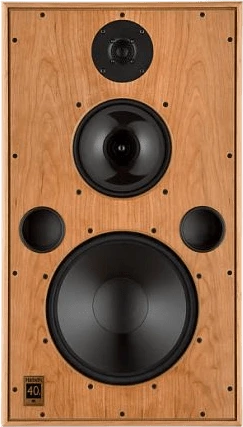
- Technical Features: 3-way vented: 300mm Harbeth bass unit; 200mm Harbeth RADIAL2™ mid; 25mm ferrofluid-cooled tweeter
- Frequency response: 35Hz – 20kHz, ±3dB free-space, grille on, smooth off-axis response
- Impedance: 6-8 ohms, easy to drive
- Sensitivity: 86dB/2.83V/1m axial
- Amplifier suggestion: Works with a wide range of amplifiers – suggested from 35W/channel
- Power handling: 650W programme
- Dimensions: 750 x 432 x 388 mm (+12mm for grille and binding posts)
- Connectors: Two 4mm Harbeth-branded binding posts
- Weight: 38kg each (without packing)
- Space needs: Ideally free-space away from walls
- Stands: Optimally to bring ears level with tweeters. (Tweeter: 660mm up from cabinet base)
Manufacturer's description
The result of a passionate and tireless quest for audio perfection. Built on the success of the global award-winning M40.2 40th Anniversary, this new generation Harbeth achieves a leap in performance delivery. Stunning realism, expansive bass and lifelike transparency delivers an ultimate experience for even the most critical listener. Adaptable to a wide range of listening environments, accurate across the entire audio band, emotionally engaging and easy to drive, the M40.3 XD takes the acclaimed Harbeth sound to a new level. Prepare yourself for true musical indulgence like you have never experienced before.

All used Harbeth
Where to buy the M40.3 XD77 dealers
About Harbeth
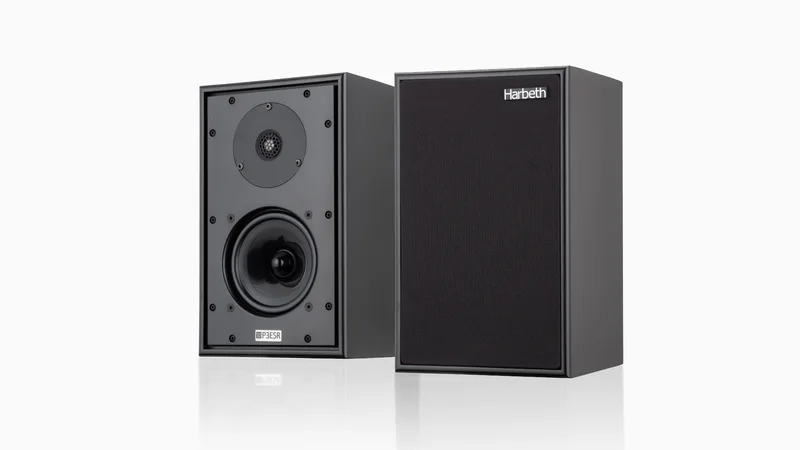
Harbeth is a British speaker maker founded by H.D. Harwood, who had led loudspeaker development at the BBC. His 1977 HL Monitor used a polypropylene bass-midrange cone he had patented, the first of its kind. Under designer Alan Shaw, who took over in 1986, Harbeth developed its own RADIAL cone material, and its cabinets use thin walls with damped panels. They are easy to drive and work with both tube and solid-state amplifiers, and the compact P3ESR XD suits small rooms while the M40.3 XD flagship suits large ones.
Brand highlights
- The brand prioritizes natural, neutral sound reproduction rooted in BBC design principles, updated with proprietary technology like RADIAL2 cone material.
- Harbeth's cabinets utilize thin-walled construction with specifically damped panels, allowing them to "breathe" and contribute to a warm, involving low end while maintaining a clean midrange.
- They are designed to be relatively easy to drive, working well with a wide range of amplifiers, including tube and solid-state options, emphasizing quality over high power.
- Alan Shaw meticulously refines existing designs over long periods, with "XD" versions incorporating small but significant improvements in crossover components and internal wiring for enhanced clarity and integration.