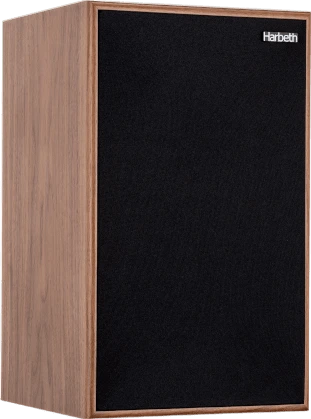
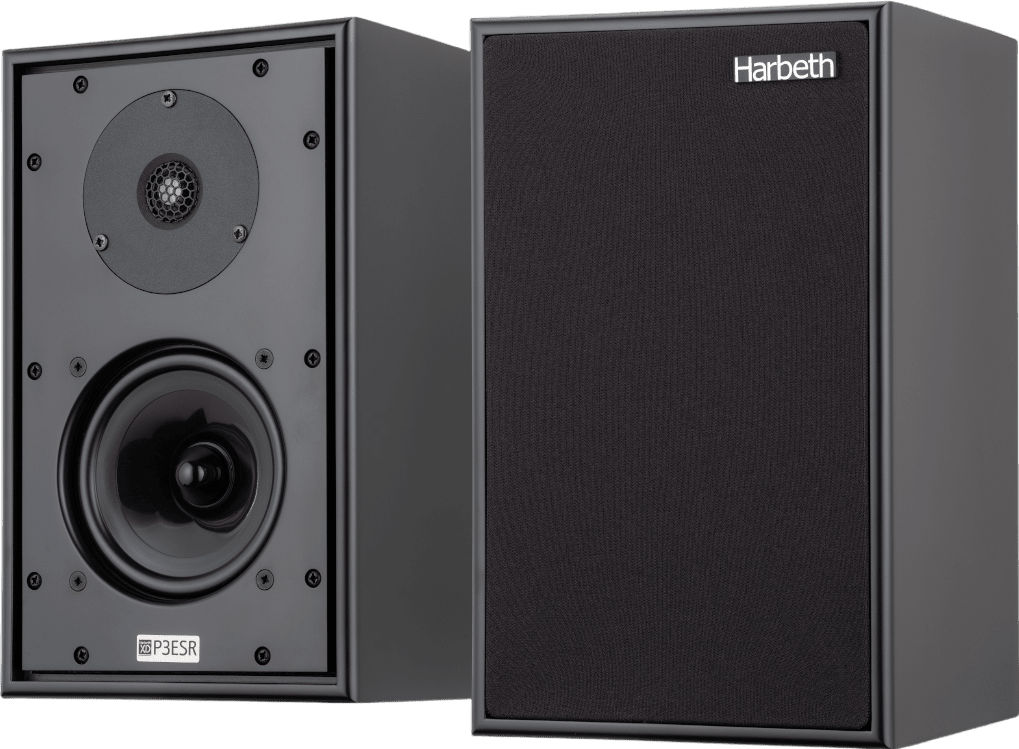
P3ESR XD
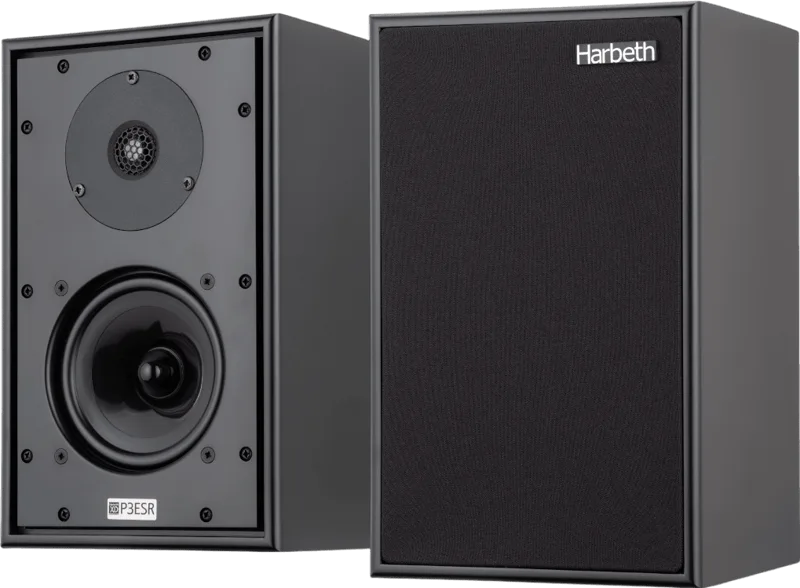
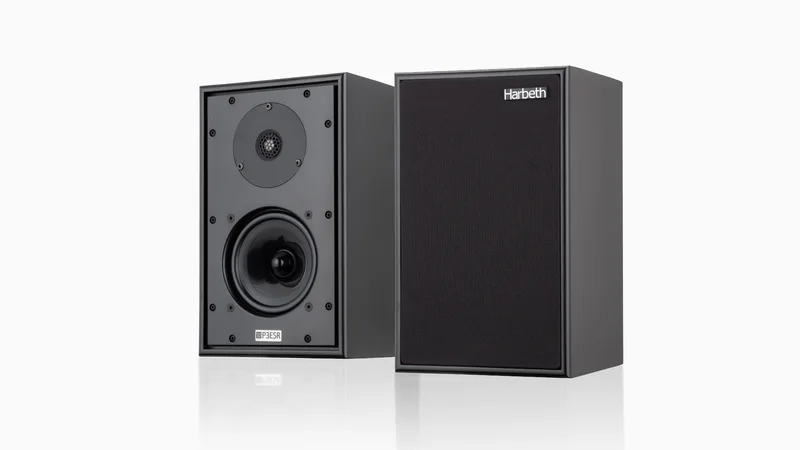
Harbeth's P3ESR XD is a compact bookshelf speaker made for a wide range of listening rooms, and it sits best on stands that bring your ears level with the tweeter. One review praised its bass as defined and accurate, with no mid-bass hump. It is an updated classic still made today.
New here? ExtremeHiFi is a free hifi encyclopedia: reviews, prices and used listings. We don’t sell anything.
Summary
Harbeth's P3ESR XD is a compact bookshelf speaker made for a wide range of listening rooms, and it sits best on stands that bring your ears level with the tweeter. One review praised its bass as defined and accurate, with no mid-bass hump. It is an updated classic still made today.
What reviewers love
The Harbeth Audio P3ESR XD is a great option for audiophiles who want high-quality sound in a smaller package, and it is a remarkable value for its price. With its adaptability and refined sound, the P3ESR XD can bring a warm embrace to the musical intentions of the artists and engineers.
Product Strengths
- Breathtaking transparency, accurate bass and dynamic integration across the audio spectrum
- Capable of being used in a wide range of listening environments and optimised to present an easy electrical load to even low powered amplifiers
- Superior fit and finish
- Clean and clear of tone
Product Considerations
- The numbers reveal a not especially efficient box with less than optimal bass response
- Requires close listening distance, and careful positioning
Comparisons (according to reviewers)
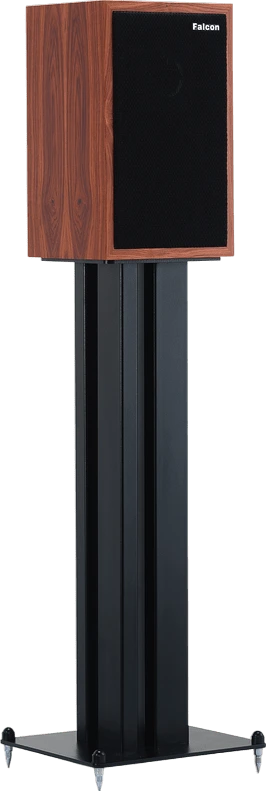
- The P3ESR XD was always a touch warmer than the Falcon Gold Badge LS3/5a, and better balanced but thicker than the 5a in the upper bass/lower midrange, this XD version is outstandingly clean in that region
Takeaway: The Harbeth Audio P3ESR XD is a great option for audiophiles who want high-quality sound in a smaller package, and it is a remarkable value for its price. With its adaptability and refined sound, the P3ESR XD can bring a warm embrace to the musical intentions of the artists and engineers.
Written reviews0
Awards0

Bookshelf, floorstanding, in-wall, and powered speakers, compared on the specs that matter in a real room: bass extension, sensitivity, and tweeter type.
Buying tips that apply to the P3ESR XD
- Get placement right before anything else. Pulling speakers 2–3 feet (60–90 cm) from the wall behind them tames boomy bass; the listening seat should sit at the third point of an equilateral triangle, with toe-in adjusted to set the width of the image.
- Match speaker size to the room. Large towers in a small room often sound bloated, and nearfield listening at a desk favors small two-way designs.
- Each 3 dB of extra sensitivity halves the power needed for the same volume. For moderate listening levels, speakers rated 90 dB or more allow a smaller, cheaper amp.
- Treat the room before spending more on speakers. Bass traps in the corners and absorption at the first reflection points often do more than a step up in speakers.
- Used speakers lose value quickly, so two- or three-year-old models from established brands often sell well below their new price.
- Three-way designs free the midrange driver from bass duty, which can lower distortion in voices, though a well-designed two-way can image just as precisely.
- Tweeter dispersion matters more than its frequency response. Wide dispersion gives a bigger sweet spot but lights up more room reflections; controlled directivity suits lively rooms.
- Open-plan rooms lose bass. If the room opens onto other spaces, budget for a subwoofer instead of bigger main speakers.
- Audition with familiar music. Voicing varies a lot between brands, and a pair that excites on rock can grow tiring on strings.
- Many brands put their flagship tweeter into smaller models. A bookshelf speaker from a brand's top range often beats a cheaper tower in a small room.
Features and specs
Specs
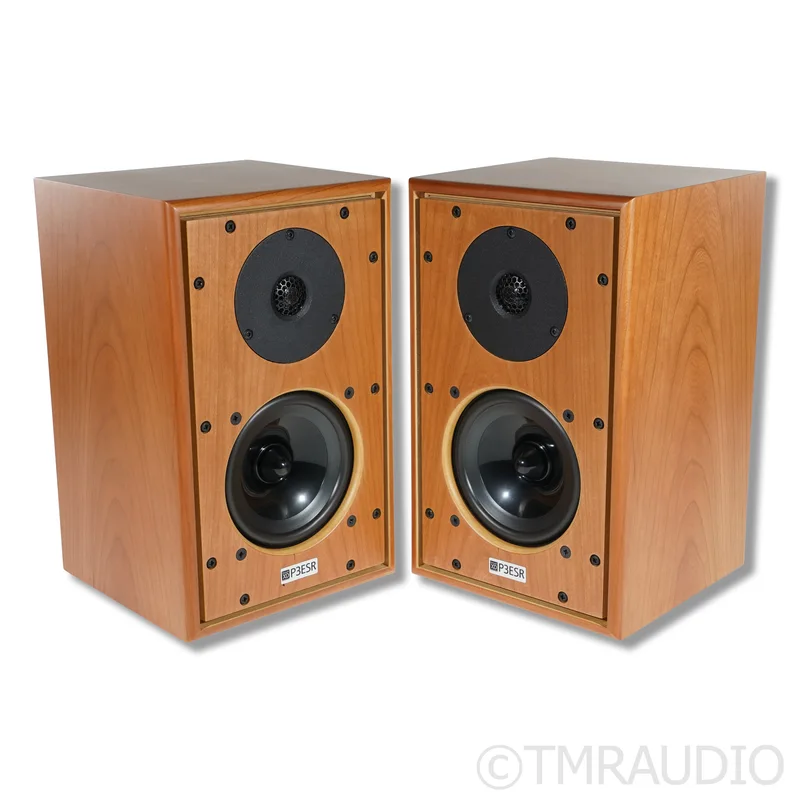
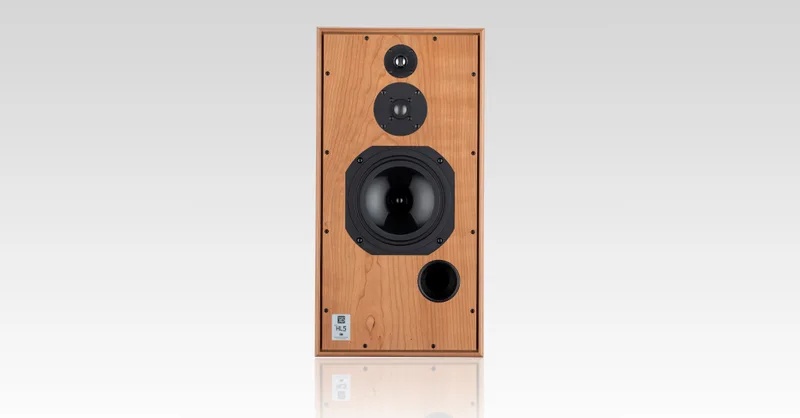
- Technical Features: 110mm Harbeth RADIAL2™ bass/mid; 19mm ferrofluid-cooled tweeter
- Frequency response: 75Hz – 20kHz, ±3dB free-space, grille on, smooth off-axis response
- Impedance: 6 ohms, easy to drive
- Sensitivity: 83dB/2.83V/1m axial
- Power handling: 50W programme
- Dimensions: 306 x 190 x 184 mm (+12mm for grille and binding posts)
- Connectors: Two 4mm Harbeth branded binding posts
- Weight: 6.1kg each (without packing)
- Space needs: Ideally > 0.30m from rear wall
- Stands: Optimally to bring ears level with tweeters. (Tweeter: 230mm up from cabinet base)
Manufacturer's description
Harbeth’s development team has, once again, redefined what is possible from this use anywhere loudspeaker. The completed redesign maximises the performance potential of the Harbeth exclusive 110mm RADIAL2™ Cone Technology – delivering breathtaking transparency, accurate bass and dynamic integration across the audio spectrum. Arguably one of the most advanced speakers in its class, the P3ESR XD is capable of being used in a wide range of listening environments and is optimised to present an easy electrical load to even low powered amplifiers. Get ready to re-experience your music collection from one of the most groundbreaking speakers ever released by Harbeth.

All used Harbeth
Where to buy the P3ESR XD77 dealers
Lists this product is on
About Harbeth
Harbeth is a British speaker maker founded by H.D. Harwood, who had led loudspeaker development at the BBC. His 1977 HL Monitor used a polypropylene bass-midrange cone he had patented, the first of its kind. Under designer Alan Shaw, who took over in 1986, Harbeth developed its own RADIAL cone material, and its cabinets use thin walls with damped panels. They are easy to drive and work with both tube and solid-state amplifiers, and the compact P3ESR XD suits small rooms while the M40.3 XD flagship suits large ones.
Brand highlights
- The brand prioritizes natural, neutral sound reproduction rooted in BBC design principles, updated with proprietary technology like RADIAL2 cone material.
- Harbeth's cabinets utilize thin-walled construction with specifically damped panels, allowing them to "breathe" and contribute to a warm, involving low end while maintaining a clean midrange.
- They are designed to be relatively easy to drive, working well with a wide range of amplifiers, including tube and solid-state options, emphasizing quality over high power.
- Alan Shaw meticulously refines existing designs over long periods, with "XD" versions incorporating small but significant improvements in crossover components and internal wiring for enhanced clarity and integration.