




Note that this is a discontinued product. You may want to visit the brand's page here to browse their newer products.
What reviewers think
Bloggers and YouTubers have tried this product—so we've summarized their strongest opinions below. Links to full reviews follow.
All
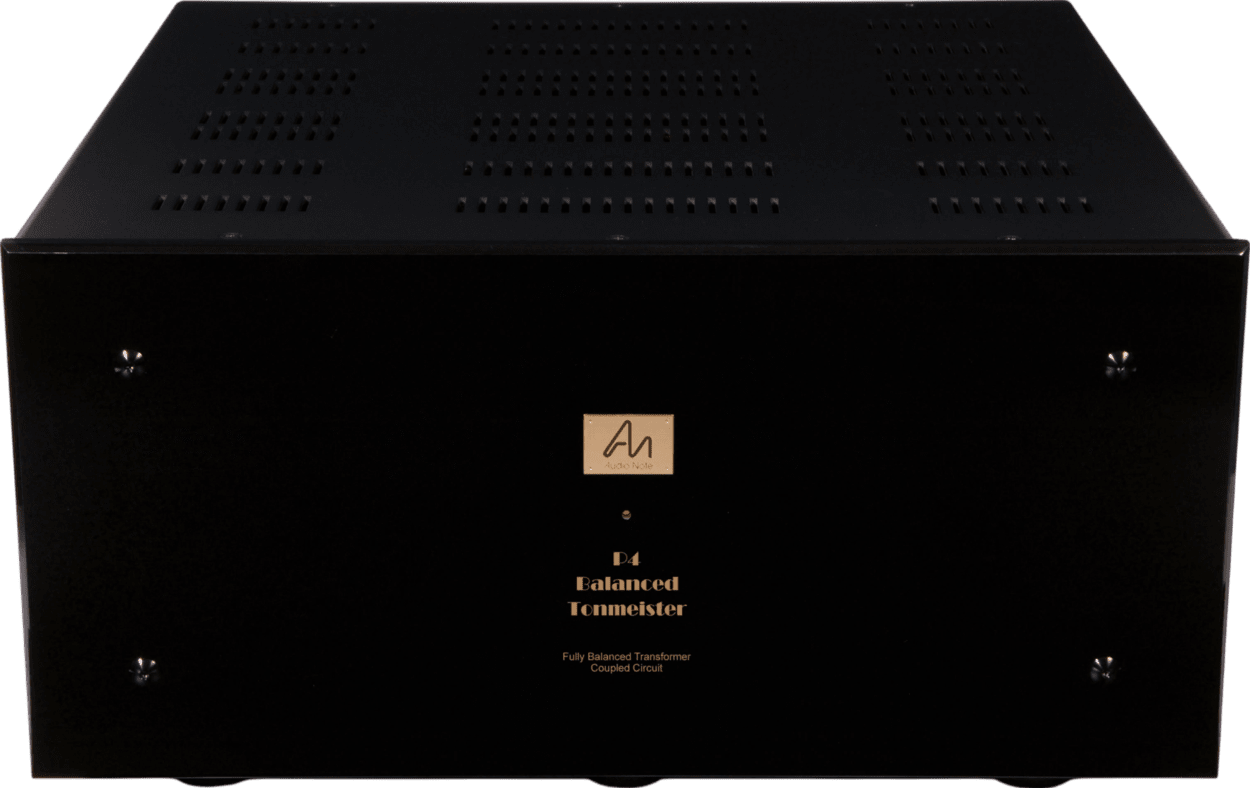
P4 Balanced Tonmeister
reviews

Manufacturer details
- Input Impedance: 2.4 KOhm
- Input Sensitivity: 1.6V for full output
- Maximum Output: 18 Watts RMS per channel into 4 or 8 Ohm loads
- Channel Balance: +/- 0.3dB
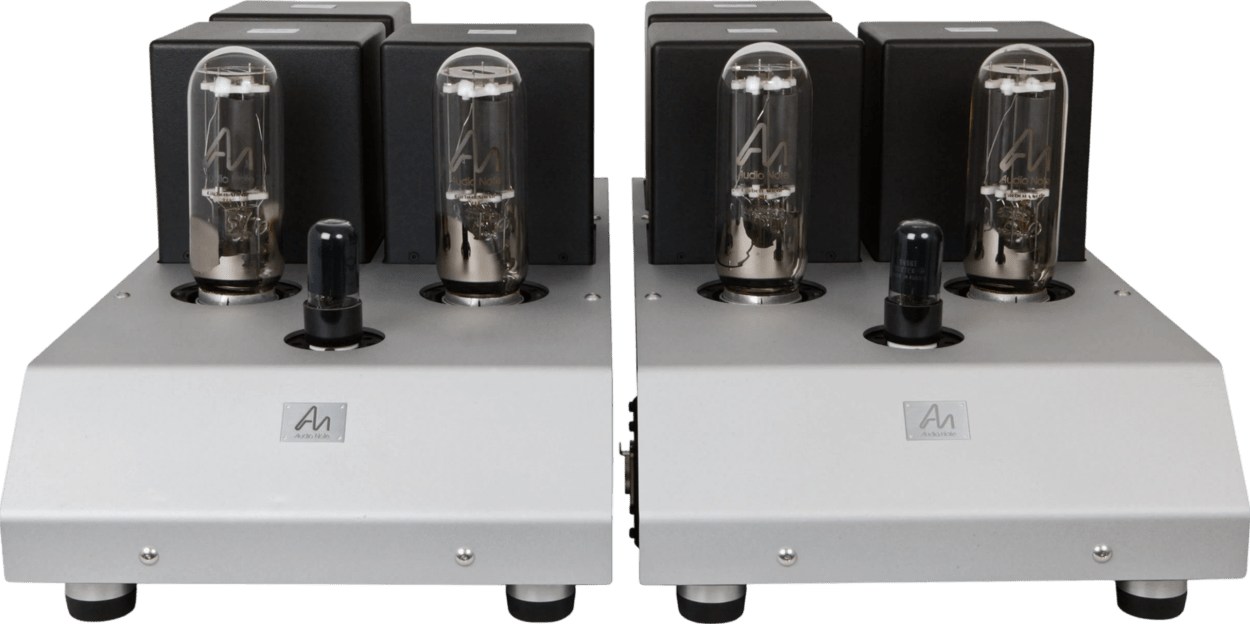
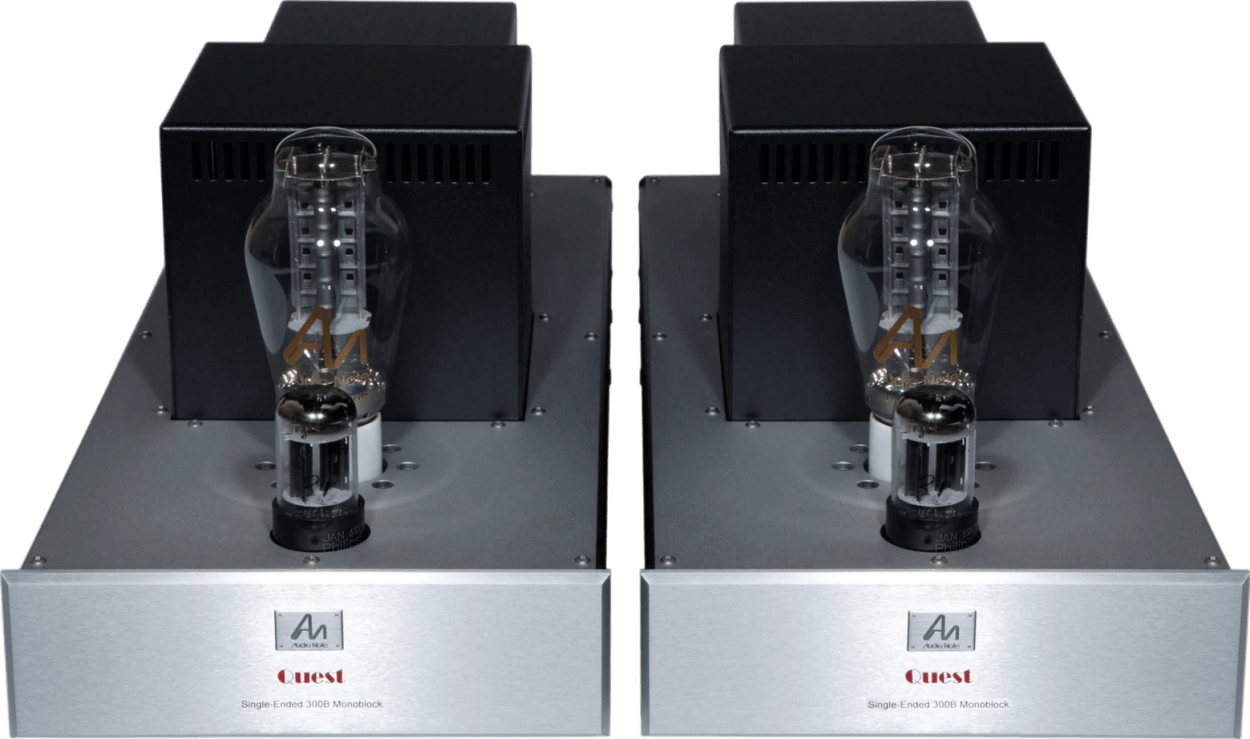
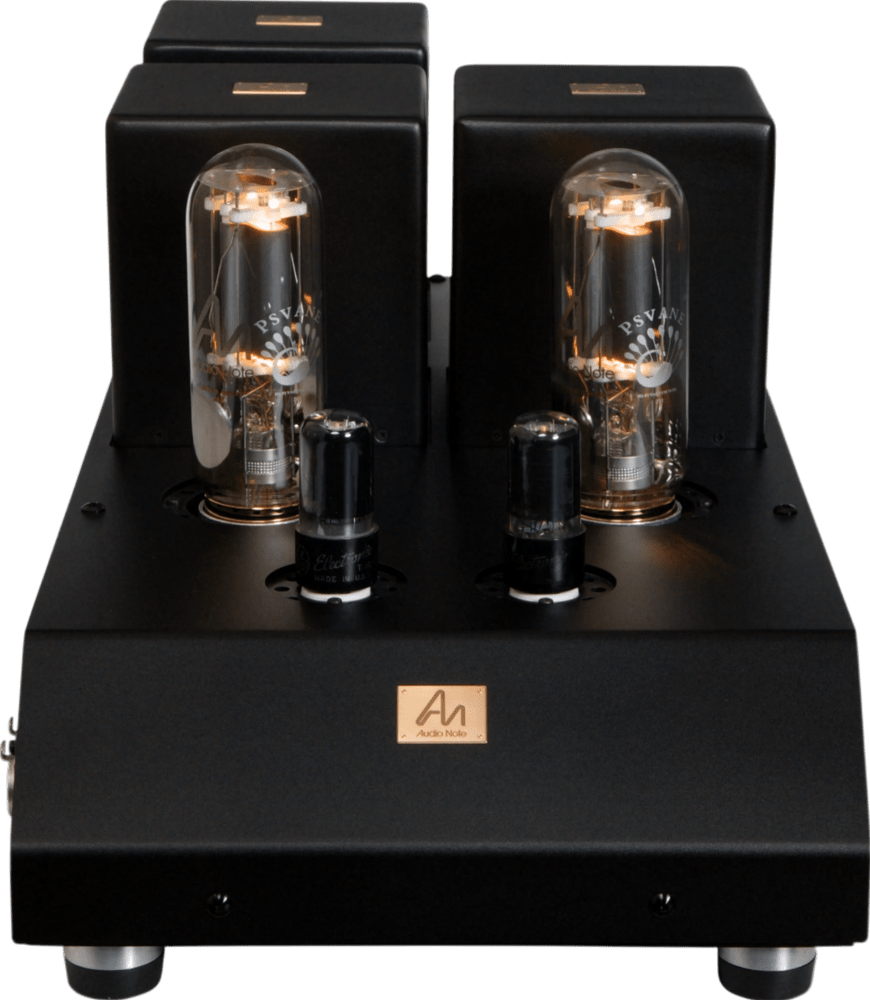
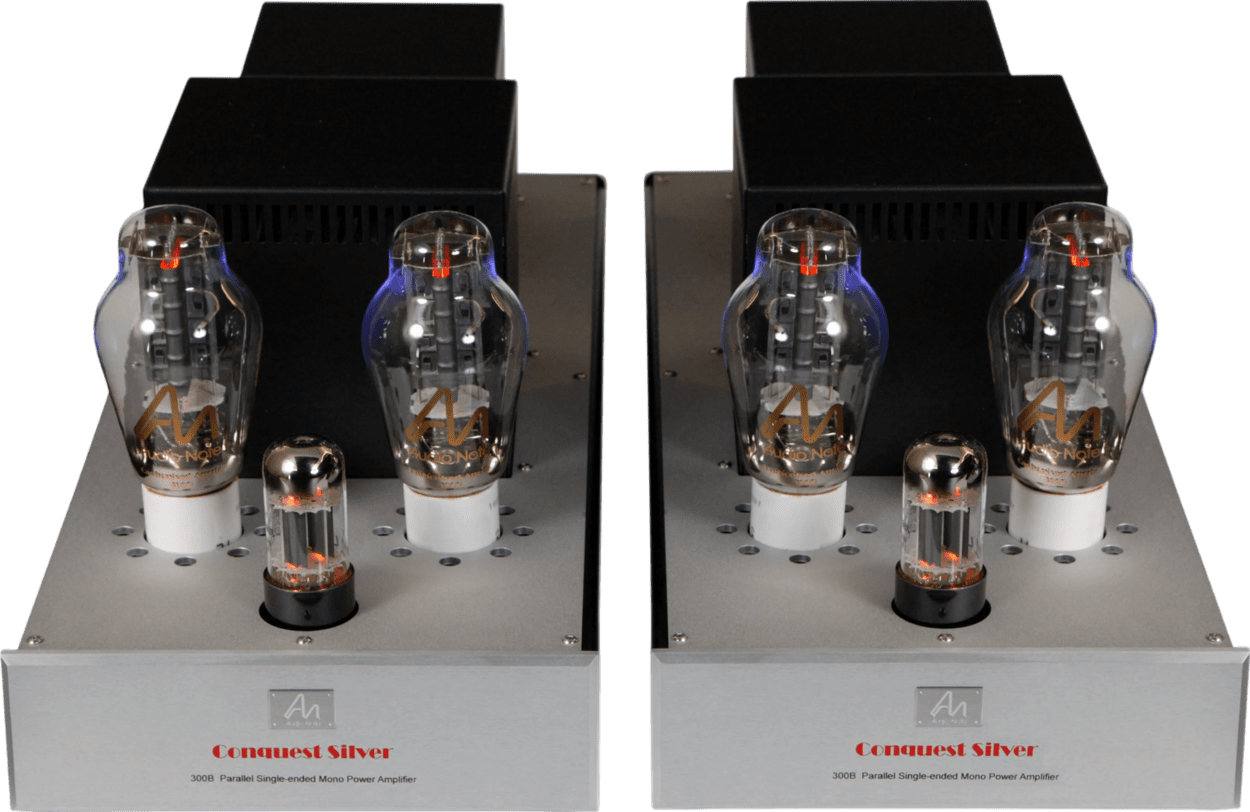
- Valve Complement: 2 x 5U4GB (1 per chassis), 4 x 300B (2 per chassis), 2 x 5687 (1 per chassis)
- Unit Weight: 25 kg (per amplifier)
- Unit Dimensions: 220 mm (h) x 460mm (w) x 530mm (d) (per amplifier)
- Mains Input: AC 100-120V / 220-240V 50/60Hz
- Max. Power Consumption: 200 Watts
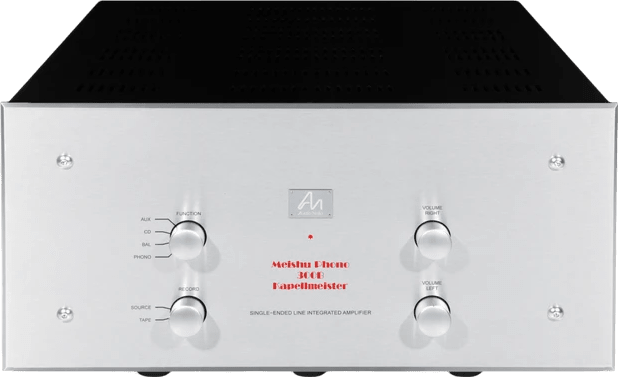
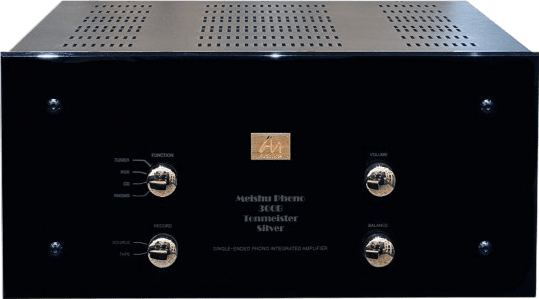
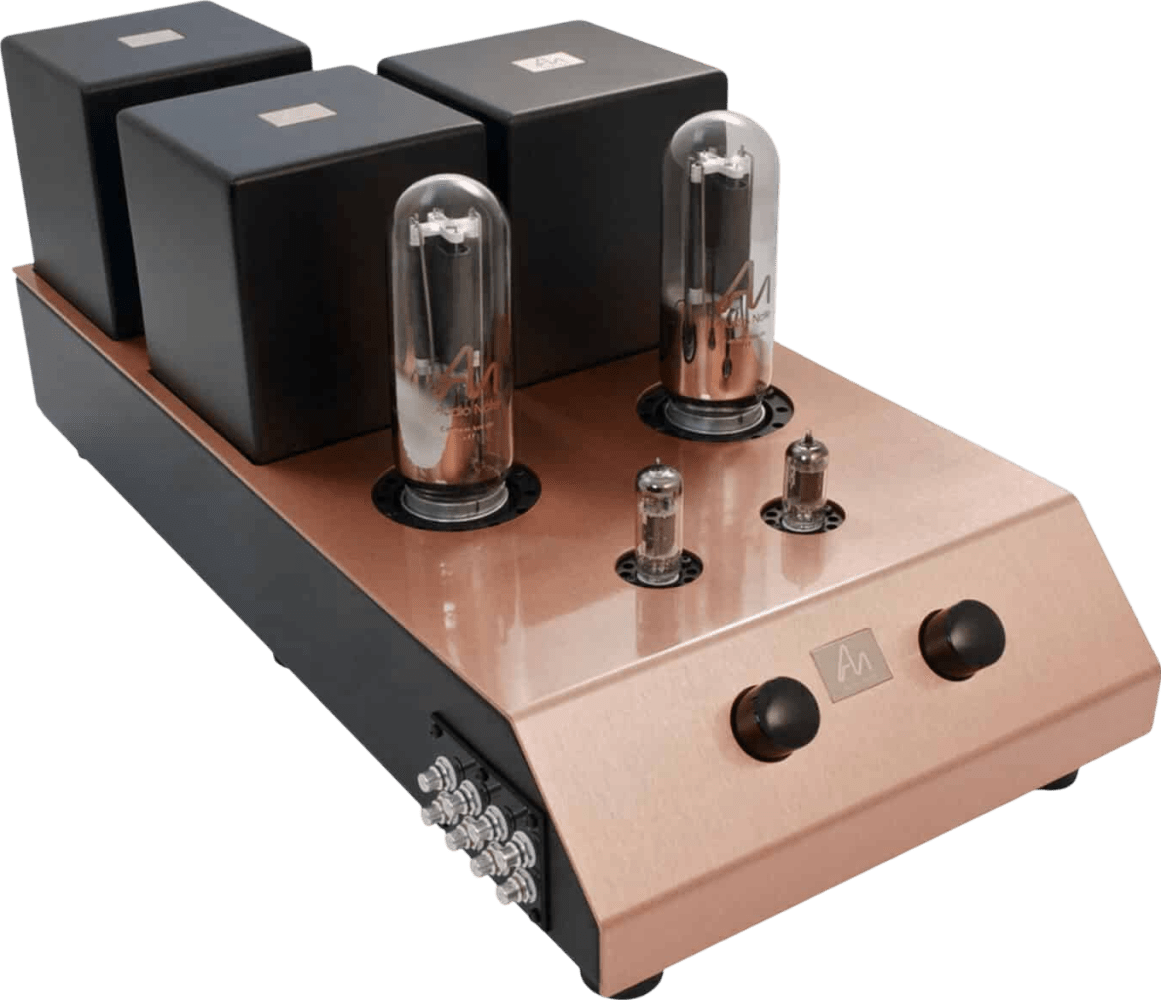
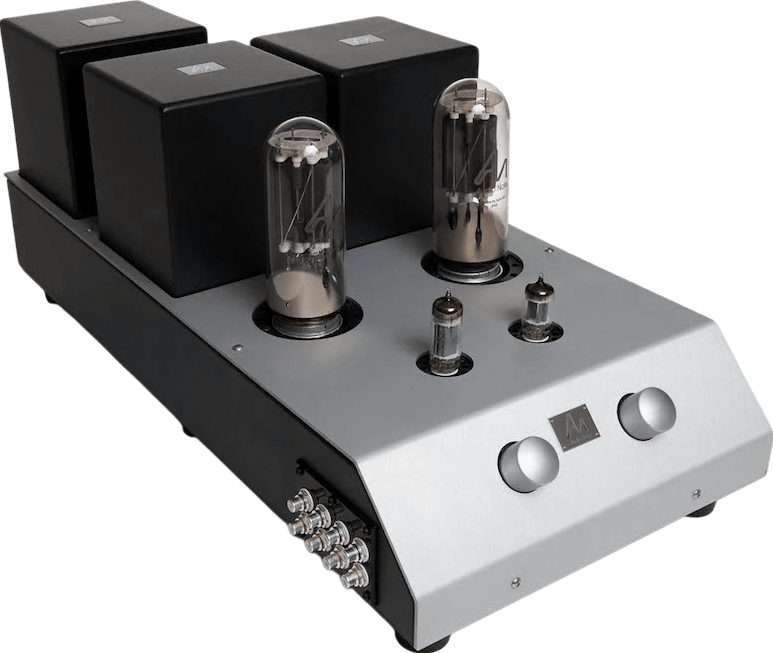
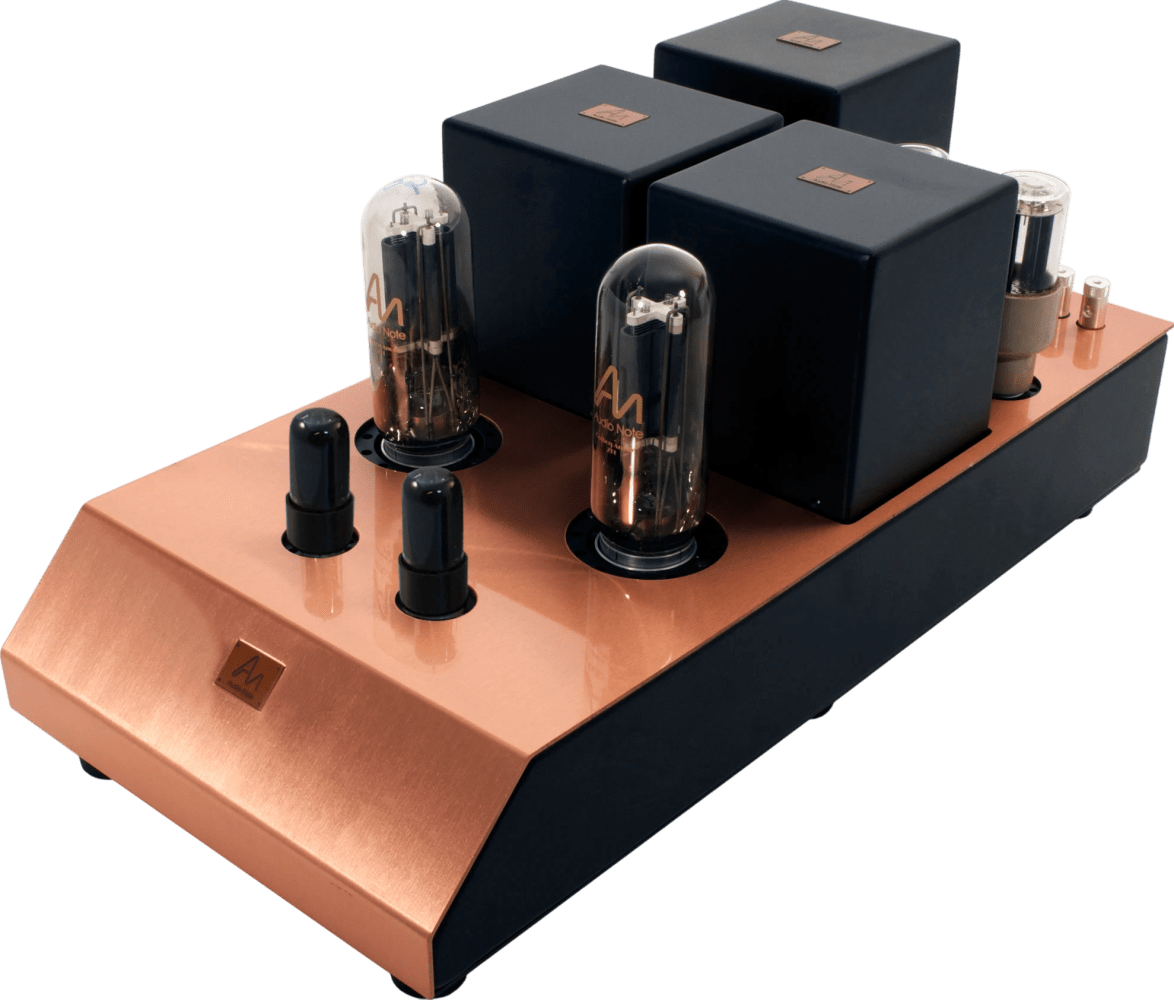
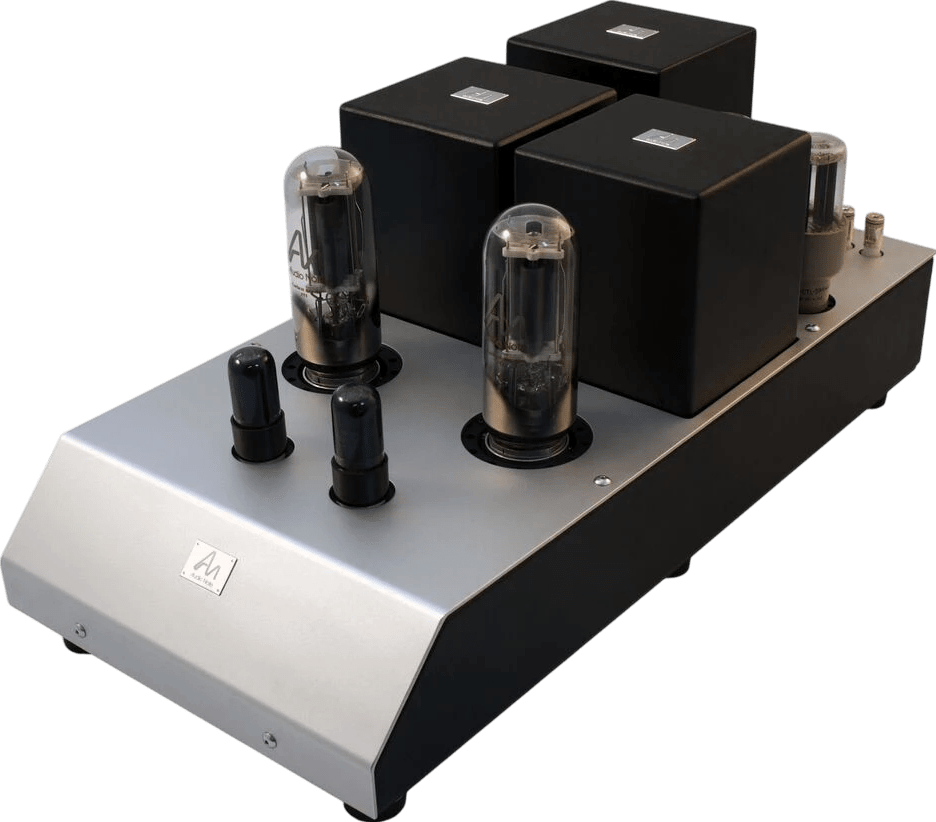
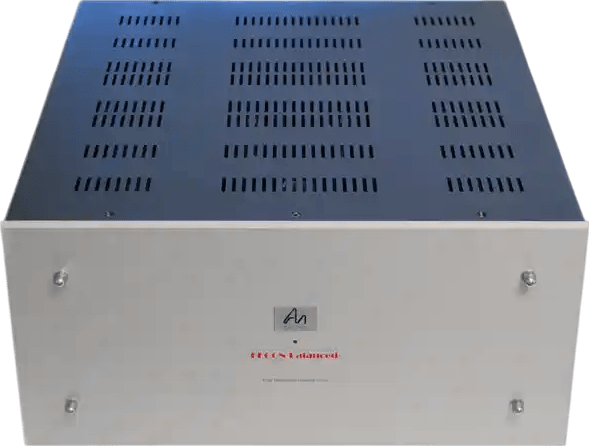
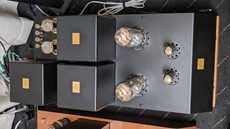
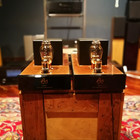
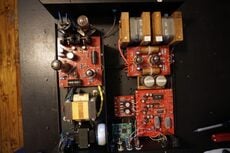
Each P4 BALANCED TONMEISTER amplifier is equipped with input and output transformers that are unparalleled in design, quality and performance at this price point in the field of Audio reproduction. The balanced / XLR input transformers are hand wound by Audio Note (UK), and feature a copper primary and secondary. The core material is of the highest quality, to offer the finest possible signal path from your preamplifier.
The output transformers are similarly specified, with a copper primary and secondary. The cores are our own Double C design and are manufactured from our own SHiB material. As would be expected, they are custom designed and manufactured by us, in-house in the U.K.
As is expected of an Audio Note (UK) Level 3 product, each amplifier is equipped with valve rectification...


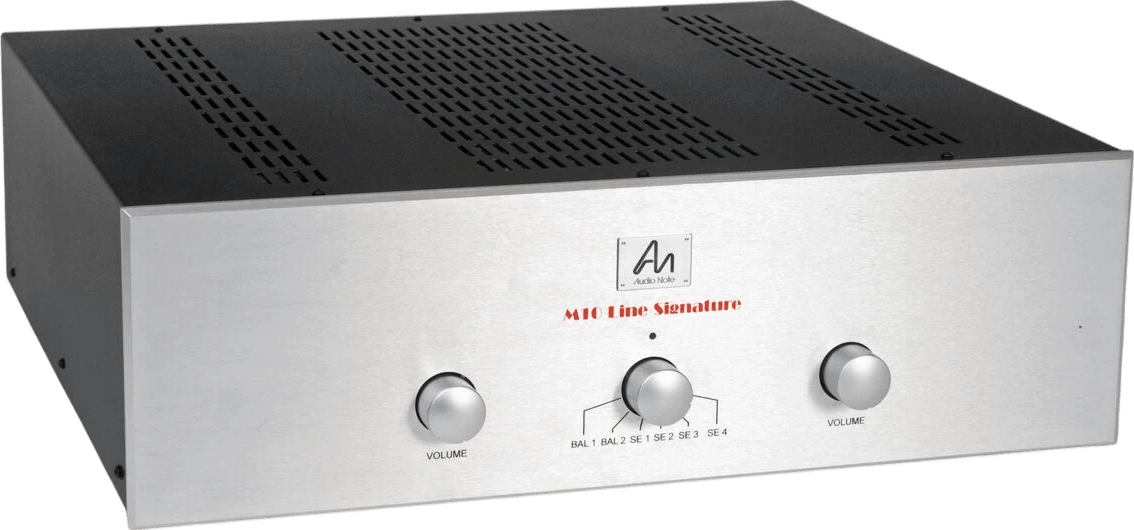




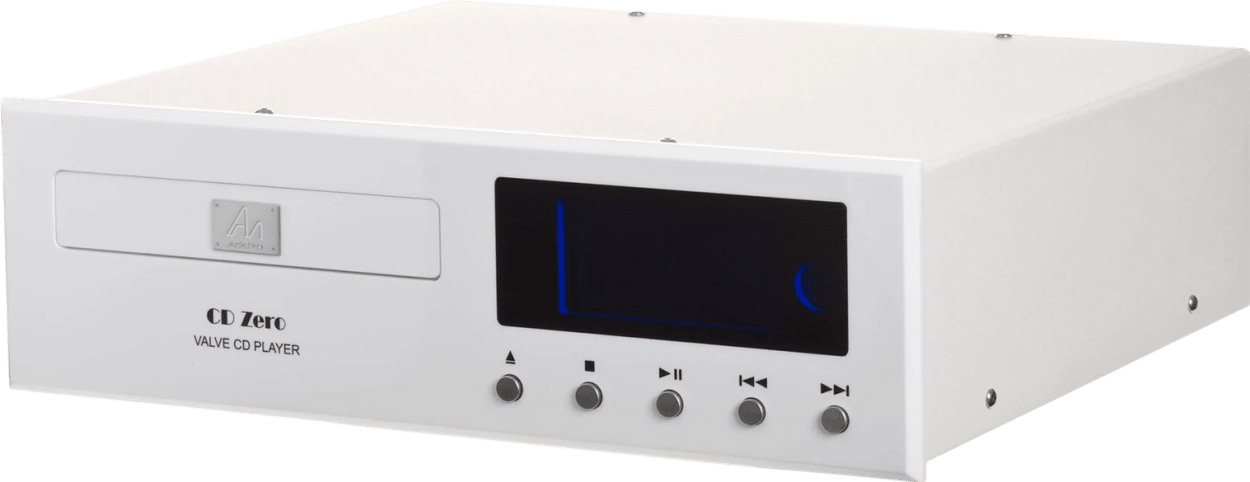
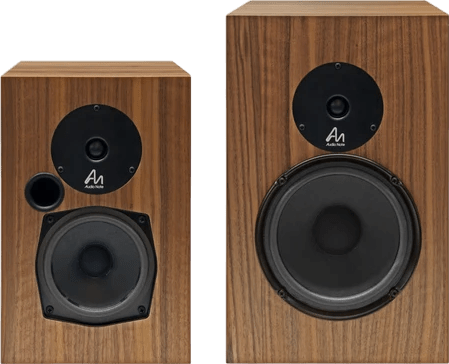

Brand highlights
Taking a step back to look at reviewers' thoughts of the brand's entire lineup—not just this product—what stands out most is the following:
- Audio Note prioritizes musicality above technical specifications, focusing on creating components that sound like real music—regardless of measurements.
- Audio Note designs components with long lifespans, avoiding frequent model iterations and focusing on component quality and core design principles, resulting in products that remain relevant for decades.
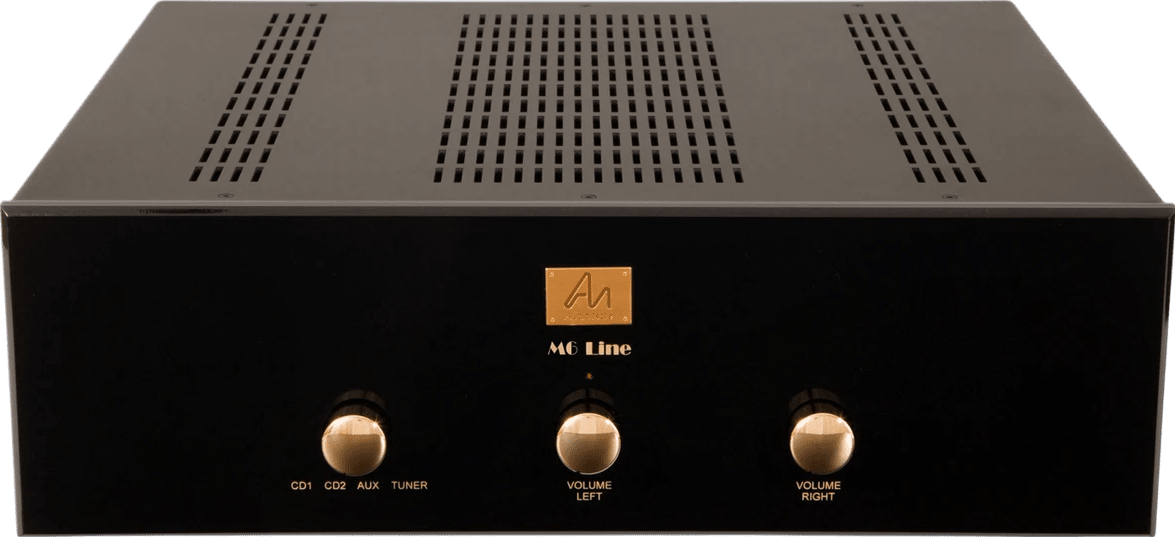
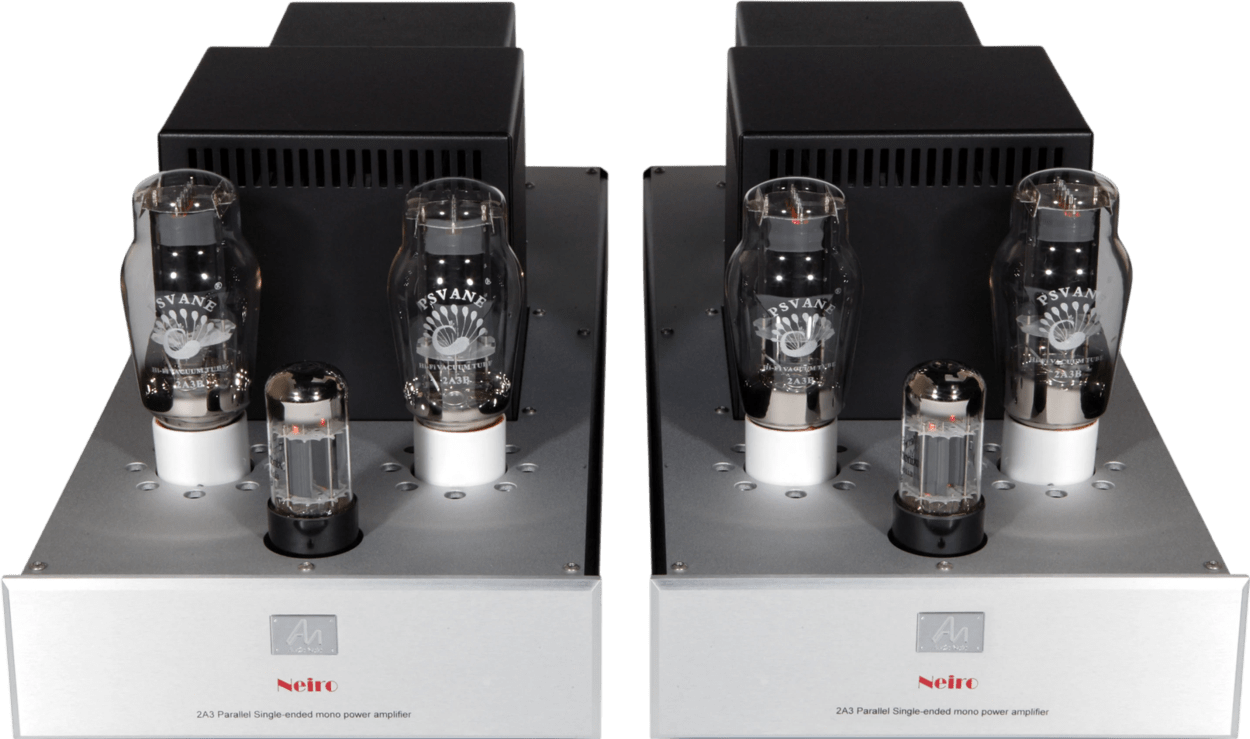
- They often use tube rectification and valve amplification and are Single Ended Output Stage, directly Heated Triode operation.
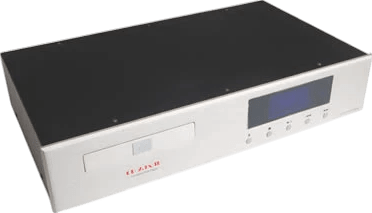
- Their CD players often use a Philips CD Pro 2LF CD mechanism that has been custom modified and improved in-house, focusing on performance rather than technical specs, and often avoid oversampling and digital filtering.
Select products
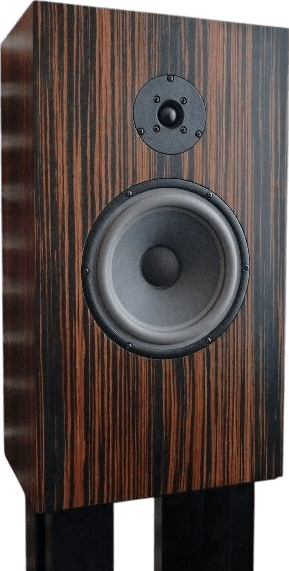
DAC 0.1x
- Positioning: Entry-level model in the Audio Note DAC lineup.
- Description: Features a 1x oversampling technology that avoids digital filtering, which is unique compared to higher models that may include more complex circuitry. Uses a Philips TDA1543 chip and a 6111WA valve output stage, making it ideal for small rooms or budget-conscious users who still want quality tube sound.
DAC 1.1x
- Positioning: Positioned as a step above the entry-level, offering enhanced performance.
- Description: Improves upon the 0.1x with an 18-bit AD1865 chip, providing a richer sound experience. Maintains the no-oversampling approach.
DAC 4.1x
- Positioning: High-end model designed for serious audiophiles.
- Description: Features advanced components like custom transformers and a sophisticated output stage, providing superior sound clarity and detail.
DAC 5
- Positioning: Flagship model representing the pinnacle of Audio Note's DAC technology.
- Description: Features the most advanced digital circuit and highest quality materials, including silver-wound transformers.


Our take on the brand
Look inside the brand
Our interview with the brand
What are two key technological innovations or strong opinions that differ you from other brands?
What's your approach to customer support?
What are your favorite tracks for showcasing the strength of your products?
What other products pair best with yours?

Used
Audio Note








What if you spend more?
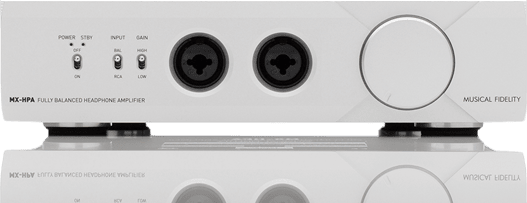


The MX-HPA’s technical performance is stunning. Typically, distortion from 20 Hz to 40 kHz is less than 0.005%. Signal-to-noise ratio is better than 120dB (‘A’ weighted). Frequency response is ruler flat from 10 Hz to 20 kHz (-0.1dB). The MX-HPA is capable of a short-term peak of 10 watts (for one cycle) and has two gain positions: 18dB (8X) and 24dB (15X). Inputs are either balanced or single-ended. The MX-HPA will automatically convert single-ended inputs to balanced. The MX-HPA is genuinely fully balanced from beginning to end.

.svg)
Product Strengths
- Exceptional build quality with an elegant, minimalist aesthetic
- Fully balanced design
- Exceptional signal-to-noise ratio (>120dB 'A' weighted)
- Versatile because it automatically converts single-ended inputs to balanced signals
- Dual gain settings for versatility with virtually any headphone impedance
Product Considerations
- May be overkill for entry-level headphones
- The twin-XLR alternative is not the only means of balanced connection
Takeaway: The Musical Fidelity MX HPA is a remarkable piece of equipment that represents a significant achievement in balanced amplification design. It delivers a listening experience that is hard to surpass with technical excellence and practical versatility.
Video review
Our take on the brand
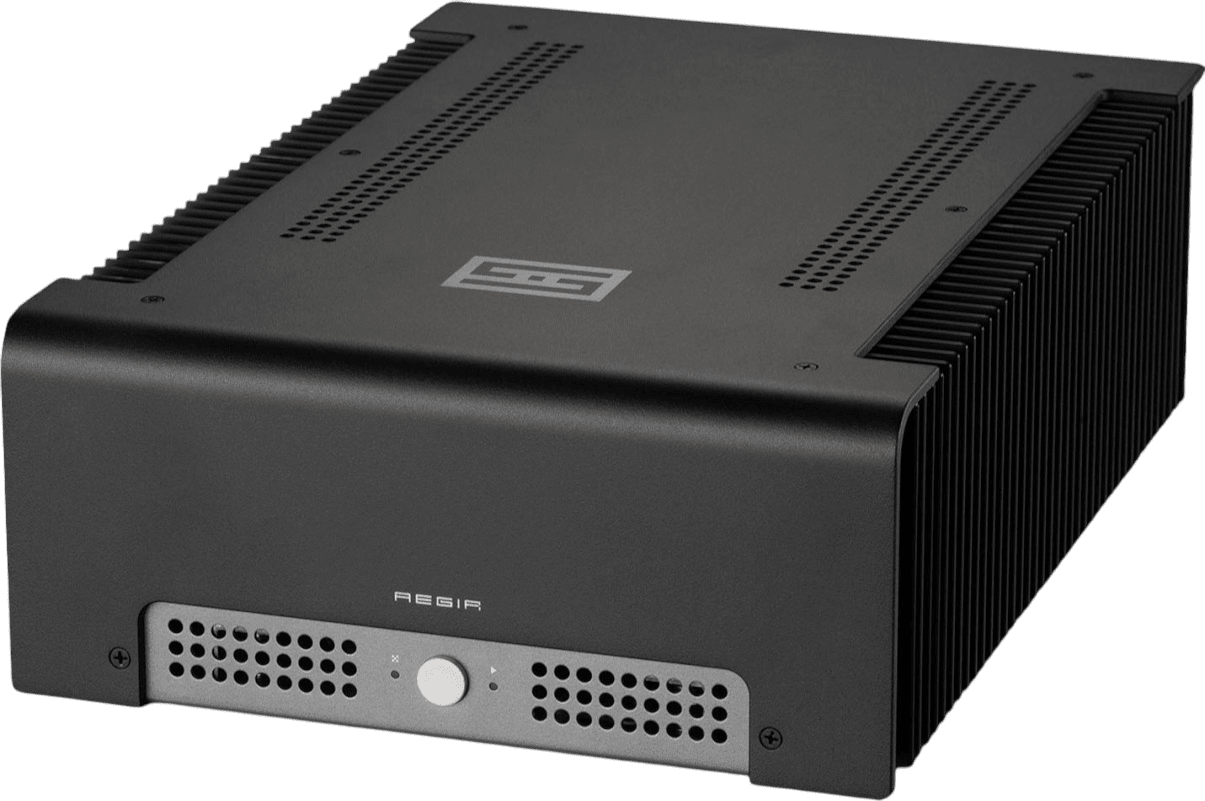

Our summary
Product Strengths
- Half-width size is desirable for storage, as two units can fit side-by-side on a typical hifi shelf
- Strong dynamic profile, dimensionality, and power for most performance speakers on the market
- Bass is much more controlled, and leading edges are significantly more defined, compared to the previous version
- Vocals feel lifelike and tangible
- Possesses a nice overall tone and a well executed lack of dryness or 'thin' character
Product Considerations
- A single Aegir 2 box delivers audiophile fun with efficient setups, but shines best in a dual mono two amp situation
- The top of the unit does heat up slightly with use
- May not be the perfect choice for high demand electrostatics
- Requires a balanced connection from the pre amp to bring out the best from the setup
- Takes a little longer to boot up compared to the original Aegir
Comparisons (according to reviewers)
- Vs Schiit Vidar: The Aegir 2 has a sound that is more rich and thick, but still defined
- Vs Aegir G1 (original): The Aegir 2 has increased dynamics and low end control compared to the original
Takeaway: The Schiit Audio Aegir 2 is a fun power amplifier that offers a strong dynamic profile and nice overall tone. It brings dimensionality and sufficient power for most performance speakers, making it an enjoyable addition to any audiophile setup.
Video review
Our take on the brand
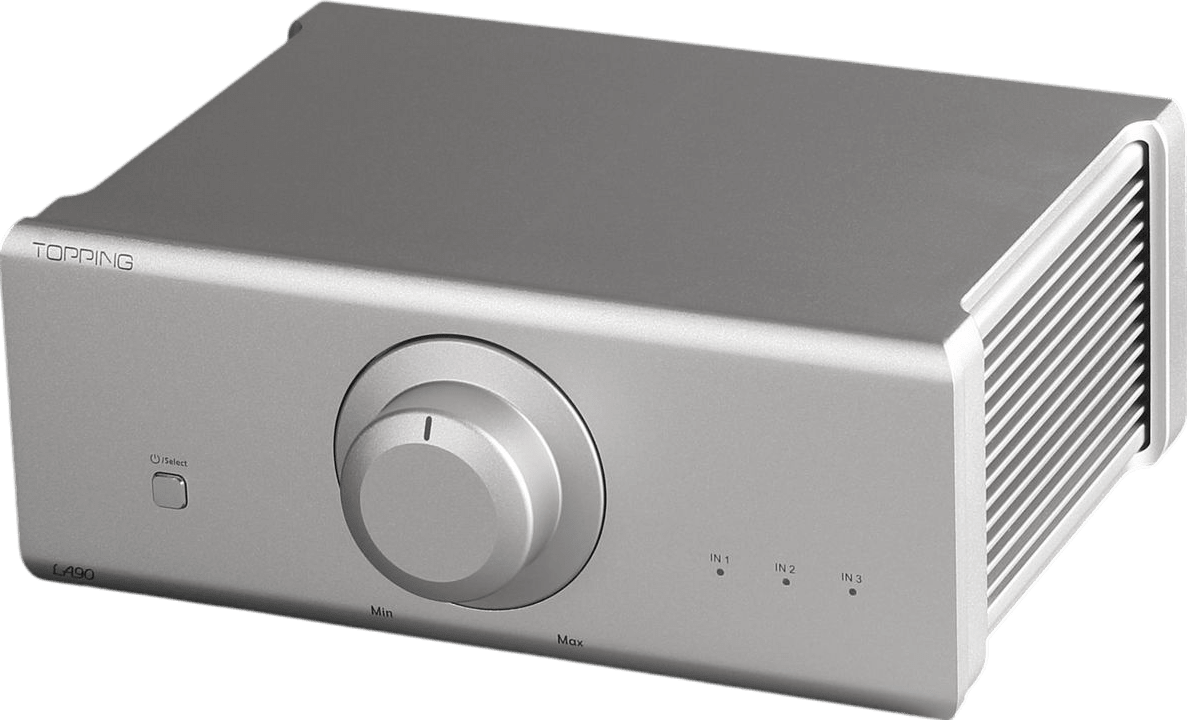

Our summary
Product Strengths
- Delivers a clean and detailed sound, allowing listeners to hear nuances in recordings
- Offers good instrument separation and imaging
- Has a low noise floor, creating a 'black background' and enhancing the listening experience
- Compact size for an A-B amplifier
- Does not have RCA inputs, requiring XLR or TRS balanced connections
Product Considerations
- May not have enough power for inefficient speakers or large rooms
- External power supply 'brick' is large
- No remote control
Comparisons (according to reviewers)
- The LA90 has a more neutral sound than Cambridge Audio AXA25, which is cleaner and more detailed
- The LA90 comes close to Benchmark AHB2's performance, but does not outperform it in bass impact and soundstage size, and the AHB2 also has more protection systems
- The LA90 offers more vocal clarity and fuller bottom end than Schiit Vidar, but the Vidar is more exciting on top
- Emotiva A1's have more power
Takeaway: The Topping LA-90 Discrete is a small amplifier that produces very clear sound with good detail, making it great for those who already have balanced audio equipment. It could be a nice upgrade for those seeking to hear all the subtleties in their music.
Video review
Our take on the brand
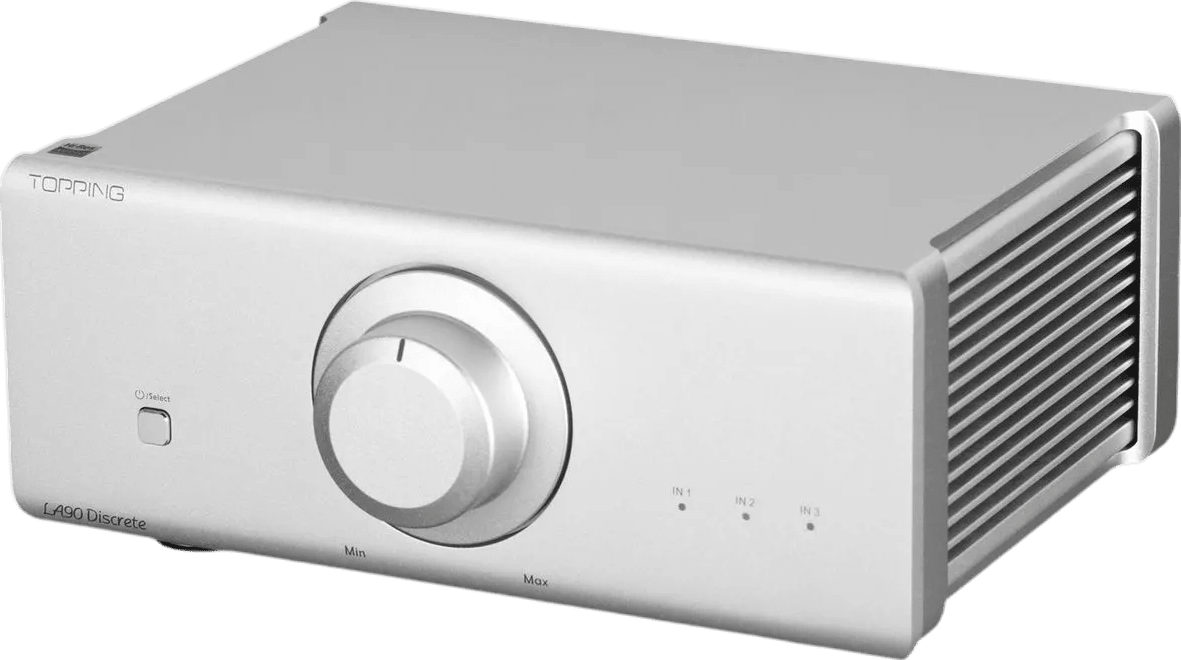
Product Strengths
- Impressive specs and measurements showcase extremely low noise and distortion
- Clean and transparent sound aims for a neutral reproduction of music
- Compact size and sleek design make it suitable for small spaces
- CNC machined aluminum chassis allows for maximum thermal flow to keep the unit running cool
Product Considerations
- Included external power supply is large and heavy, which can be a challenge to hide
- Power output may be limiting, especially with demanding speakers and for high dynamic range tracks
- Bass performance, while tight and controlled, may lack sub-bass extension and impact for some listeners
- Lack of a remote control limits its convenience as an integrated amplifier
Comparisons (according to reviewers)
- The Discrete version matches the Topping LA90 IC based unit's exemplary performance, but betters it in power handling
- The Topping LA90 comes close to the Benchmark AHB2 in noise floor and detail retrieval, but the AHB2 has more power, impactful bass, and a bigger soundstage
Takeaway: The Topping LA90 is a compact and technically proficient amplifier that delivers a clean and transparent sound and with impressive specs. It is best suited for those with efficient speakers and a preference for accurate sound reproduction without coloration.
Video review
Our take on the brand
What competes at this price?
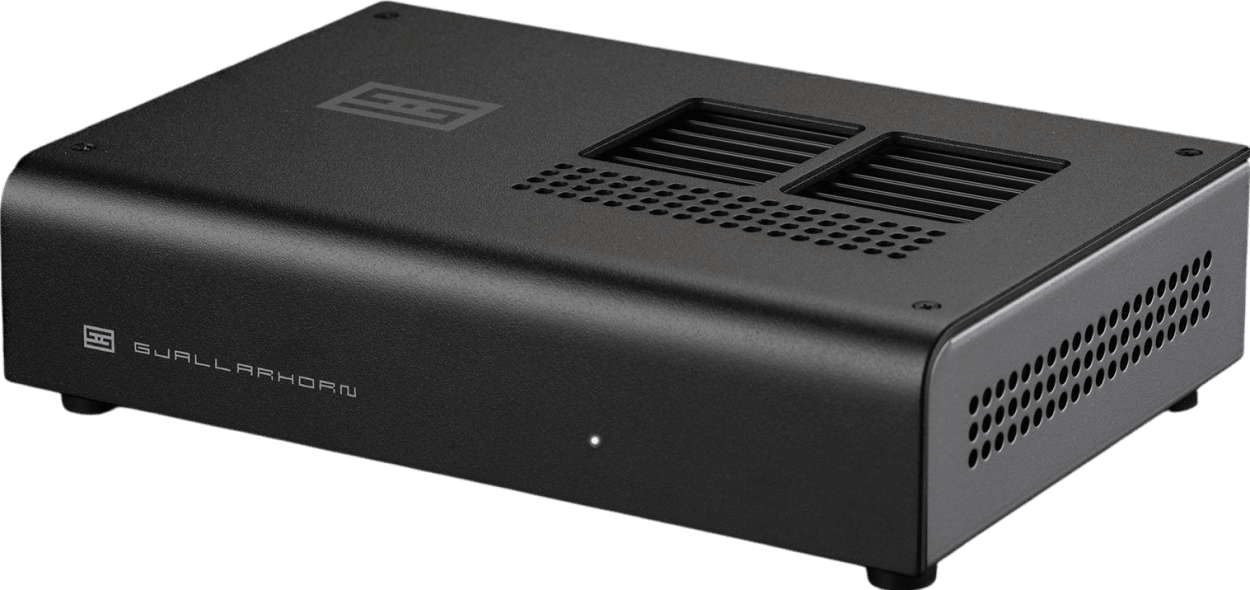

Our Summary
Product Strengths
- Impressive clarity, especially in the midrange, enhances detail in the music
- Bass performance is focused and precise, adding detail and punch to the lower frequencies
- A wide and expansive soundstage creates a sense of space and separation between instruments
- The amp is small and light, but is a fully linear class AB amplifier with a transformer inside
- It offers neutral presentation
- Requires a preamplifier with volume control, as it is a power amplifier without a volume knob itself
- Banana plugs are required for speaker connections, spades are not compatible
- In monoblock configuration, a preamplifier with balanced outputs is required
Product Considerations
- Requires a preamplifier with volume control, as it is a power amplifier without a volume knob itself
- Banana plugs are required for speaker connections, spades are not compatible
- In monoblock configuration, a preamplifier with balanced outputs is required
- 10 watts might not be enough for all listening setups and all environments
- It is important to pair this amp with speakers with high efficiency rating
Comparisons (according to reviewers)
- Versus the Cambridge Audio 651A—the Gjallarhorn had a wider and cleaner soundstage, provided a bigger bass performance, and separated the instruments in a more efficient manner, thus enhancing the clarity
- Versus the Rega Brio-R—the Gjallarhorn had a wider and cleaner soundstage, provided a bigger bass performance, and separated the instruments in a more efficient manner, thus enhancing the clarity
- Versus the Fosi Audio BT20A Pro—the Gjallarhorn had a bit more space and instrument separation
- Versus the Schiit Vidar—the Vidar has a lot more power, which is not the Gjallarhorn's intent
- Versus the Schiit Rekkr—the Gjallarhorn outperforms the Rekkr (2 watts), and is designed for more powerful home set ups rather than desktops
Takeaway: The Gjallarhorn is a versatile amplifier that excels in near-field setups and can be transformed into a powerful monoblock system, delivering clarity and balanced sound. It is a great choice for those seeking a compact yet capable amplifier for smaller spaces or desktop use, especially when paired with efficient speakers.
Video review
Our take on the brand

.png)
Our Summary
Product Strengths
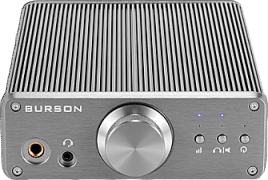
- Good sound quality, especially in the midrange, leads to vivid and well-formed vocals
- Versatile, it works well with both efficient headphones/IEMs and moderately powered speakers
- Compact design and good build quality, with the chassis acting as a heatsink
- Ability to roll op amps allows users to customize the sound signature
- Ample power for most headphones and nearfield speaker setups
- Only one RCA input, which may be limiting for some users
Product Considerations
- Speaker amplifier power (35-45W) might be insufficient for power-hungry speakers or larger rooms
- The base model op amps are sonically inferior to upgrade options
- Mild turn-off thump present
Comparisons (according to reviewers)
- The Funk has a narrower but deeper soundstage with better imaging and layering than the Arylic A08 Pro
- The Funk has superior imaging, but less potential power output depending on the Arylic's power supply than the Arylic A07/A08 Pro
- The Funk is preferred for desktop speaker setups with Vivid opamps when compared to Schiit Aegir
Takeaway: The Burson Funk is a solid choice for people wanting good sound from both their headphones and speakers in a single, convenient unit. The ability to change the sound by swapping op amps is a welcome feature for those who like to tinker and upgrade.
Video review
Our take on the brand

Our Summary
Product Strengths
- Great value for the money and an attractive price point
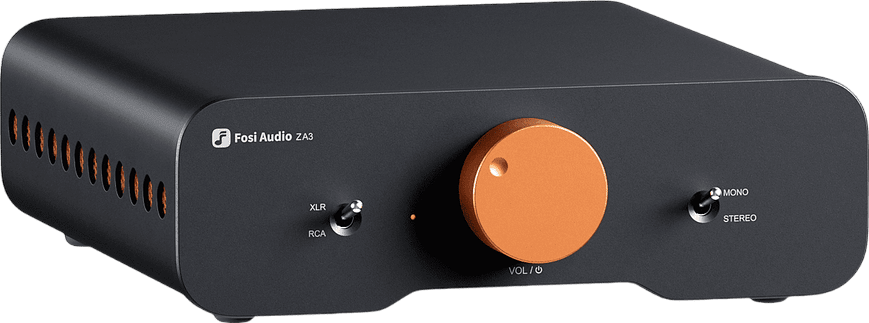
- Balanced input and single-ended RCA input
- Op amps are swappable
- Compact form factor
- Versatile with stereo and mono mode
Product Considerations
- The volume control was found to be touchy by some reviewers
- The included power brick is quite large, almost as big as the unit itself
- The binding posts are small
- The RCA input sounds inferior to the XLR input
- The amplifier does not high pass the mains when a subwoofer is plugged in
Comparisons (according to reviewers)
- Vs Fosi Audio V3: ZA3 is considered a more mature version with stylistic elements and new features like balanced inputs and mono mode, with a naturalness in the tonal quality
- Vs SMSL AO200 MKII: AO200 MKII delivers better clarity, definition, and resolution of the sound
Takeaway: The ZA3 is a versatile and compact amplifier that offers great value, especially for those starting their audio journey. Its ability to be used in both stereo and mono configurations and the option to upgrade components make it a flexible choice for various setups.
Video review
Our take on the brand
Our Summary
Product Strengths
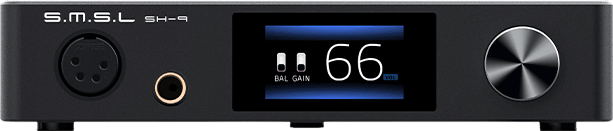
- Excellent build quality, featuring a CNC milled aluminum chassis and durable construction
- Achromatic Audio Amplifier (AAA) technology by THX, aiming for transparent sound reproduction without coloration
- Relay volume control provides precise channel matching
- Plenty of power to drive a wide range of headphones, from sensitive IEMs to demanding planars
- Balanced XLR inputs and outputs
Product Considerations
- No pre-amp output
- The notched volume control might not be to everyone's liking
- Gets quite warm during use, especially with the SU-9 DAC stacked on top
- Some reviewers noticed a clicking noise when adjusting the volume
- The three-feet design may not be as stable as a four-feet design
Comparisons (according to reviewers)
- Vs. SMSL SP200: Better unit at repelling noise, with a higher signal-to-noise ratio and lower total harmonic distortion—completely solved the SP200's issue with not having a pitch-black background
- Vs. Benchmark HPA4: Very close to the HPA4 in performance, with some minor differences observed only with high-end headphones
Takeaway: The SMSL SH-9 is a well-built and powerful headphone amplifier with a clean, transparent sound. It is a good choice for audiophiles looking for an accurate and detailed listening experience.
Video review
Our take on the brand


Our Summary
Product Strengths
- Budget-friendly headphone amplifier focused on quality
- Robust all-aluminum exterior, with rigid toggle switches, and smooth volume control, giving it the same fit and finish as SMSL's higher-end HO200
- Delivers a clean, neutral, and transparent sound, faithfully reproducing the source audio without adding coloration
- Extremely low noise floor
- Versatile due to its three gain levels (low, mid, high) and its ability to drive both sensitive IEMs and harder-to-drive headphones
Product Considerations
- Lacks balanced and unbalanced outputs for connecting to powered speakers, functioning solely as a headphone amplifier
- Does not have preamp capability
- Reviewers have noted average microdetails
- While the design looks smart and subdued, the tempered glass panel easily grabs fingerprints, requiring frequent cleaning
Comparisons (according to reviewers)
- Vs SMSL HO200: HO100 lacks RCA/XLR outputs and has lower wattage, but is more compact and is preferred if the extra power and outputs are not needed
- Vs FiiO K5 PRO: It has better driving power, a lower noise floor with IEMs, and lower distortion at maximum volume
- Vs JDS Labs Atom+: It has higher maximum power, handles maximum volume better with lower distortion, and offers better overall detail in the micro detail, and a more relaxing signature
Takeaway: The SMSL HO100 is a compact yet powerful headphone amplifier that delivers clean, neutral sound suitable for various headphones. It is well-built and offers excellent value for audiophiles seeking a high-quality listening experience.
Video review
Our take on the brand
How to buy
Amplifiers
Search all hifi products
Explore our database of 10,000+ new and 25,000+ used hifi products.

.png)