

Welcome
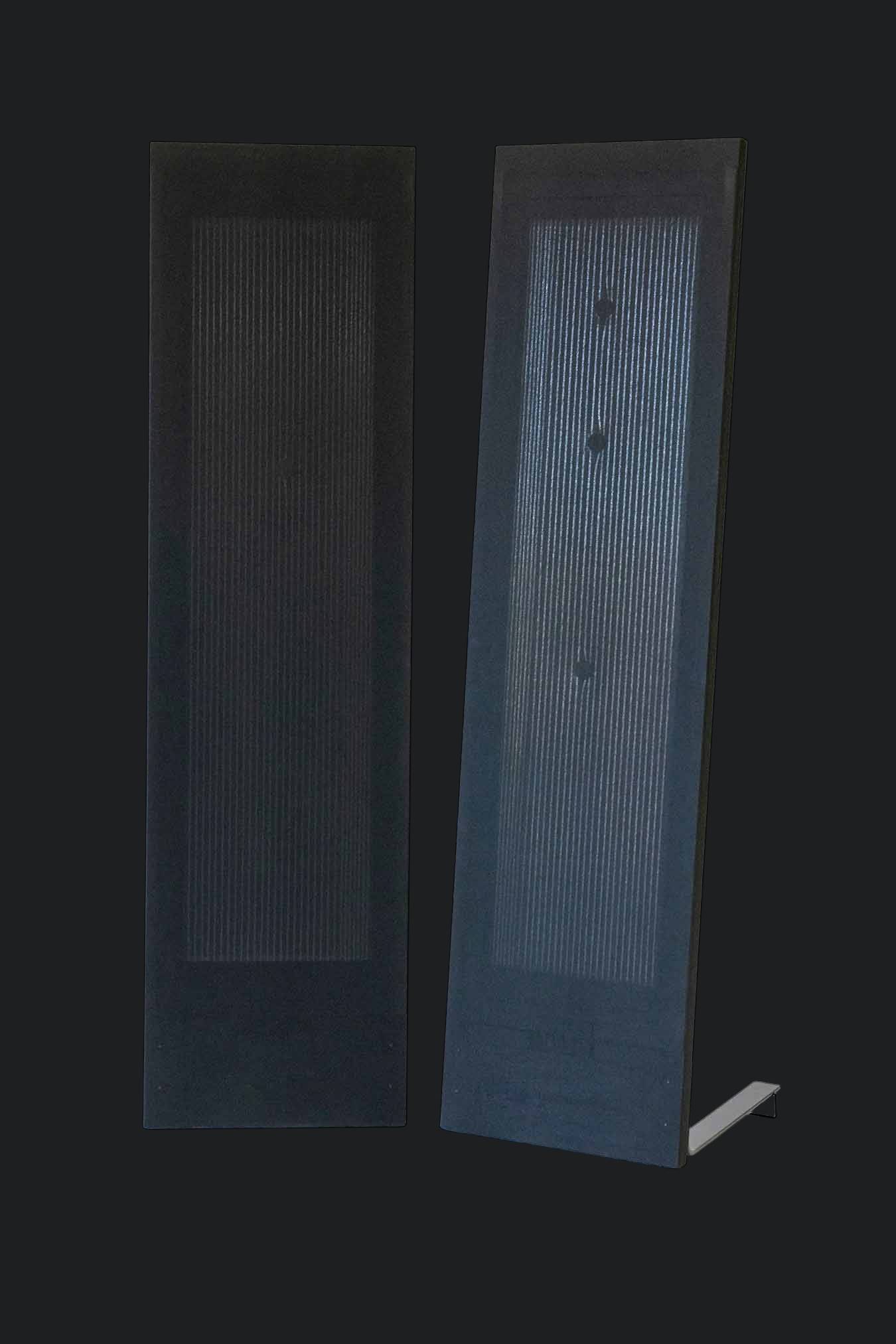
Costing roughly $1,000, the Magnepan LRS+ speakers reveal their true potential when used with a Hegel amplifier. Engineered to recreate the excitement of a live concert, these speakers immerse you in sound so detailed it feels like the band is performing right in your living space. Every subtle nuance is laid bare, much like being drawn into an intimate stage production—far removed from the typical output of standard speakers.
Central to their appeal is the unique open-back (dipole) design. Rather than confining sound to a narrow cone, these speakers project audio both forward and backward, creating an expansive soundstage that completely fills the room. This dual-direction dispersion not only envelops you in a rich audio environment but also adds a profound sense of depth and space.
Another advantage is the extensive surface area, which helps achieve optimal sound pressure almost immediately, minimizing driver distortion. The result is extremely crisp, precise transients—imagine hearing the instantaneous snap of a guitar string with remarkable clarity.
Of course, these speakers have their limitations. They aren’t intended for very high volume levels, as pushing them too hard may lead to distortion. Additionally, their bass response is somewhat modest, which might disappoint listeners seeking a powerful low-end impact. Instead, they provide a refined and intimate listening experience, ideally suited for smaller spaces rather than large rooms, home theaters, or bass-heavy music genres like hip hop.
For those aiming to go beyond the LRS+’s performance, the next step would be speakers that offer a similar vibrant character but with an even broader frequency range, more robust output, and superior clarity at higher volumes—a topic we’ll explore further.
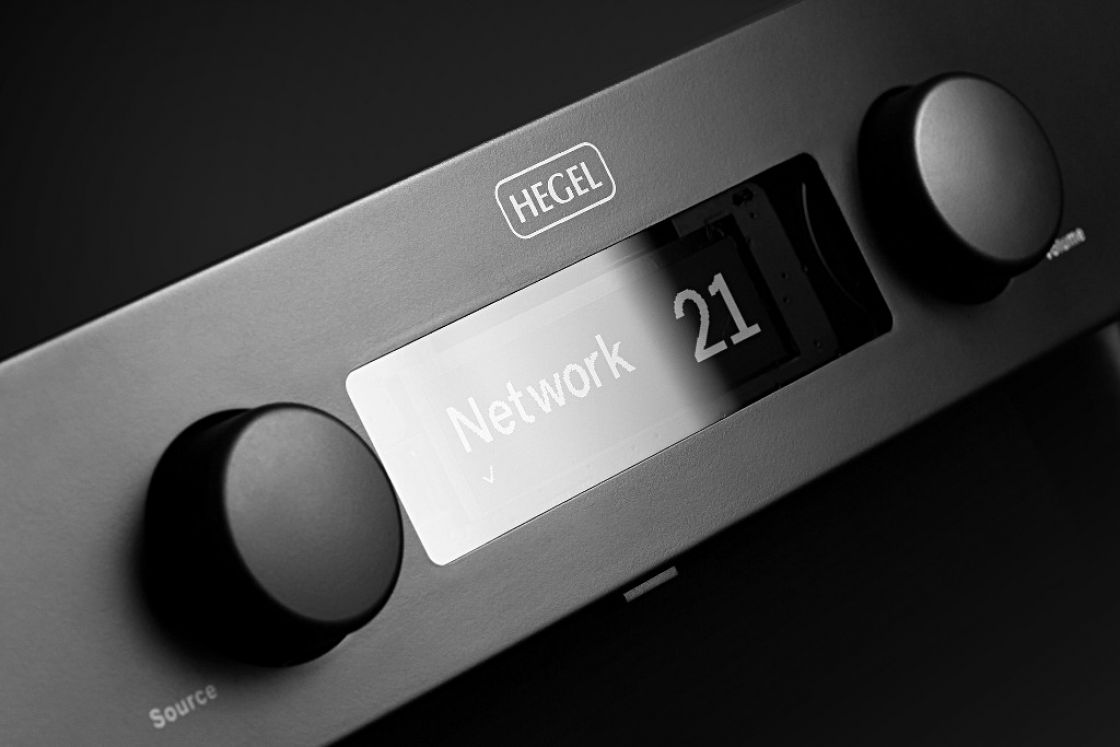
When setting up your system, pairing the Magnepan LRS+ with a Hegel integrated amplifier is highly recommended. You can choose between the Hegel H95 (around $2,200) and the H120 (approximately $3,200) depending on your power needs. The H120 provides a bit more volume and refinement, while the H95 strikes an excellent balance between cost and performance. And don’t forget—investing in high-quality speaker cables is crucial to complete your setup.


Products on this list




.svg)
What reviewers think
Product Strengths
- Creates a very open and transparent soundstage, which crosses the threshold of believability in a small to medium-sized room
- Low distortion, especially in the midrange and upper bass, making listeners realize how imperfectly transparent many speakers are
- Highly resolving, with impressive performance on acoustical instruments and vocal reproduction
- Offers a unique and remarkable experience due to the story and love behind the speaker's creation
- Presents a challenge, helping users understand speaker positions as the sound changes completely with movement
- Considered 'eminently affordable' and provides incredible sound for the price
Product Considerations
- Requires significant time to install, tweak, and dial in due to its dipole design, making positioning critical
- Bass is not powerful—it doesn't do pounding bass, and listeners won't feel the bass pounding on their chest, so a subwoofer might be needed, especially for rock, pop, dance, and electronic music
- Needs good power and high current to sound clean and not cause fatigue, it is not a powerful-sounding speaker
- The stand included is considered subpar and not very versatile
Comparisons (according to reviewers)
- Vs the original LRS, the LRS+ has ameliorated treble, has smoother upper mids, and has a reduced nosedive in the power range and midbass
Takeaway: The Magnepan LRS+ is a special speaker with an open soundstage, great details, and makes music sound real and enjoyable. Though not perfect, it is well worth buying because it offers an excellent way to experience a panel speaker without spending too much.
Video review
About the brand



What reviewers think
Product Strengths
- Improved DAC from the H90, using the same DAC as the H120 and H190 models, which offers a massive step up in D/A conversion
- Well-balanced, neutral, and realistic sound, with better dynamics, transparency, and soundstage than its predecessor, the H90
- Streaming capabilities, such as Spotify Connect, AirPlay, and UPnP, make it a versatile all-in-one system
- SoundEngine 2 technology reduces distortion effectively
- Simple, clean, and understated aesthetic
- Requires LAN cable for network connection, as it has no wireless connectivity
Product Considerations
- Front panel is made of plastic
- USB input is limited to PCM resolutions of 24bit/96kHz
- Lacks Roon endpoint capability and does not support playback of DSD files
- Remote control is plastic; the metal RC8 remote is an additional cost needed to set start up and maximum volume levels
Comparisons (according to reviewers)
- Vs H90—H95 has a better power supply, a new board with streaming circuitry and digital-to-analog conversion, and an improved headphone output
- Vs H90—H95 also provides better dynamics, transparency, and soundstage
- Vs H120 & H190—H95 shares the DAC from these models but lacks some of their higher-end features and custom installation facilities
- Vs Primare I15 Prisma—the Primare I15 Prisma is a serious rival, offering a bolder sound and Prisma network platform
- Vs Schiit Ragnarok 2 Fully Loaded—H95's sound was slightly smoother
- Vs Cyrus ONE Cast—the H95 is sailing on much closer waters to the Cyrus ONE Cast, thanks to its thick blend of connectivity, features and ergonomics
Takeaway: The H95 is an integrated amplifier for those seeking modern streaming features and quality sound without overspending. It is an all-around good choice for building a simple home audio system.
Video review
About the brand