




Note that this is a discontinued product. You may want to visit the brand's page here to browse their newer products.
What reviewers think
Bloggers and YouTubers have tried this product—so we've summarized their strongest opinions below. Links to full reviews follow.
Product Strengths
- Precise and clear presentation, delivering a sense of high-end refinement and detail
- Simple, classy design, easy to use with traditional rotary controls
- Well-judged features including a moving magnet phono stage and digital inputs (USB, coaxial, optical)
- Integrated, homogenous sound, not easily fazed by demanding material
- Ruggedly constructed and designed to deal with awkward dynamic loads that certain loudspeakers may present
Product Considerations
- May sound a bit dry or cool compared to warm tube amps or competitors, lacking some charm or dynamic expression
- Digital options can only be selected via the switch on the front panel
- Motorized volume moves a bit too much, even with a light press, so making small level changes is tricky
- The optional Bluetooth module costs extra
- No DSD support
Comparisons (according to reviewers)
- Copland made more of the music compared to Marantz Model 30, rendering the orchestral brass and wind instruments with increased presence
- Compared to Electrocompaniet ECI 80D or Naim Nait XS, Copland has a touch less charm, as these rivals render the sound with more dynamic expression and rhythmic drive
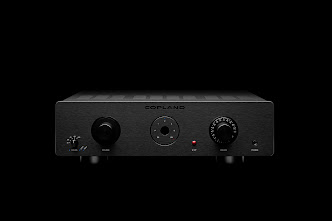
Takeaway: The CSA70 is a well-built and easy-to-use amplifier with a clean and detailed sound, and is good for playing many kinds of music. It has a good range of features, like a phono stage and digital inputs, making it a very complete package.
All
CSA70
reviews


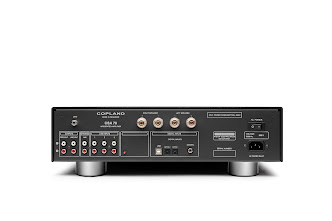
Manufacturer details
- Output power: 2*70W into 8 ohms load
- Minimum load: 2 ohms
- Analog Inputs: 1 Phono / MM (RCA), 3 unbalanced (RCA)
- Digital Inputs: 1 coaxial S/PDIF, 2 optical S/PDIF, 1 USB, 1 aptX HD Bluetooth (Optional Extra)
- Line outputs: 1unbalanced (RCA), 1Pre-out /unbalanced variable (RCA)
- Line input impedance: 50 K ohms
- Phono input impedance: 47 K ohms (MM)
- Phono input Capacitance: 200 pF
- Line Inputs sensitivity: 200 mV
- Phono sensitivity: 2.6 mV
- Frequency response: 10 Hz – 200 kHz -3dB
- T.H.D: Better than 0.01 %
- Signal / noise IHF-A: Better than 90dB
- Phase: Non-inverting
- Headphone amp.Gain: 22 dB @ 100 ohms load impedance
- Headphone amp. Out imp: 40 ohms
- Headphone amp. T.H.D: Better than 0.01 %
- Headphone amp. Freq. resp: 10 Hz – 150 kHz / -3dB
- Power consumption: Max.400 W
- Dimensions: 435mm (w) x 135mm (H) x 370mm (D)
- Shipping weight: 13 Kg
Contrary to its bigger brothers, CSA100/CSA150 the CSA70 does not employ tubes in the line stage. The CSA70 preamplifier section is a solid stage architecture with a vanishingly low distortion.
The CSA70 boasts the same power amplifier technology as the CSA100/CSA150 with a feedback structure inherently faster than conventional amplifiers and a wide large-signal frequency response. The amplifier is ruggedly constructed and designed to deal with the most awkward of dynamic loads that may be presented by the loudspeakers, and this contributes to the amplifiers excellent transient handling capability.



Brand highlights
Taking a step back to look at reviewers' thoughts of the brand's entire lineup—not just this product—what stands out most is the following:
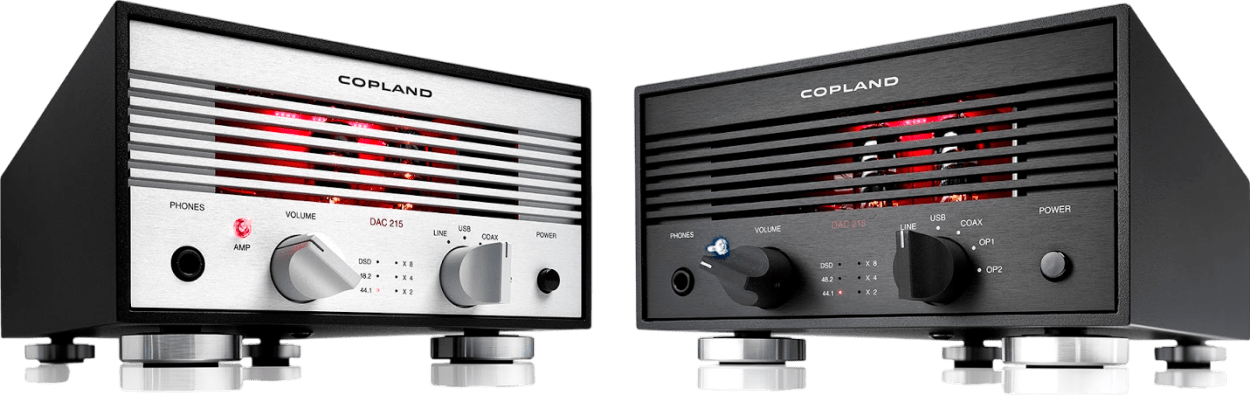
- Copland's hybrid designs uniquely blend tube preamplification with solid-state power amplification, aiming for a balance of warmth and detail.
- They offer auto-biasing in their tube amplifiers, which simplifies tube replacement and ensures consistent performance.
Select products
CSA70
- Positioning: A solid-state integrated amplifier for dedicated music lovers seeking dependable performance at an accessible price.
- Description: Offers a reliable 70W-per-channel output with a simple design featuring multiple digital and analog inputs and a built-in phono preamplifier that appeals to users with modest room and budget needs. Compared to the CSA100 and CTA407, it skips the tube-based line stage and advanced bias features, making it a straightforward choice for those with basic functionality requirements.
CSA100
- Positioning: A hybrid integrated amplifier that blends tube-based voltage amplification with transistor power for balanced sound.
- Description: Combines a tube line stage that adds warmth and dynamic headroom with a MOS-FET output stage delivering 100W per channel, offering a middle ground between simple solid-state and fully tube designs. Compared to the CSA70 and CSA150, its design provides richer musical character and enhanced digital connectivity.
CTA407
- Positioning: An integrated tube amplifier focused on delivering authentic tube sound with precise automatic biasing and diagnostics.
- Description: Features an auto-adjusting tube bias system and diagnostic LED indicators that ensure optimal performance across various tube types, offering a unique tube character that is hard to replicate in solid-state designs. Compared to the CSA series, its specialized tube circuitry and high-class A/AB operation position it as a choice for users prioritizing sonic warmth and advanced tube technology.
CSA150
- Positioning: A premium integrated amplifier with high power and extensive digital connectivity aimed at top-tier performance.
- Description: Incorporates a robust toroidal transformer and separate regulated power supply for the amplifier driver stages, delivering 150W per channel and a diverse range of digital inputs including multiple S/PDIF, USB, and Bluetooth options. Compared to the CSA70, CSA100, and CTA407, its advanced regulation, connectivity, and build quality make it suited for users with flexible use cases and demands for comprehensive functionality.

Our take on the brand
Look inside the brand
Our interview with the brand
What are two key technological innovations or strong opinions that differ you from other brands?
What's your approach to customer support?
What are your favorite tracks for showcasing the strength of your products?
What other products pair best with yours?








What if you spend more?


The amplifier is the interface between your signal sources and the speaker system, whatever is lost at this position is lost forever and conversely, whatever is introduced is also amplified. Amplifiers are also products for everyday use. Some successfully deviate from the conventional, they remind us of the strive for perfection – a human virtue we like to recognize and being close to.
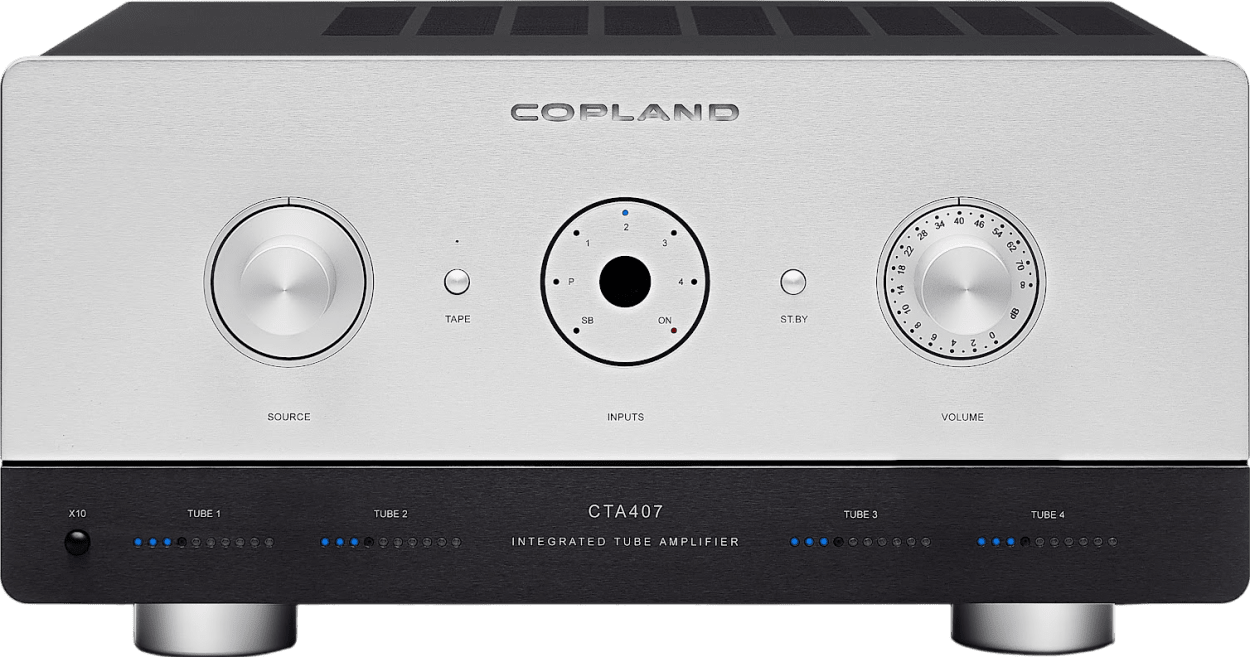
There is a distinctive mood of luxurious puritanism to be found in the appearance of most Copland amplifiers. However, with the CTA407 tube amplifier we have compromised simplicity, introducing a fair deal of electronics supporting the audio stages of the amplifier. The forty LED diodes on the front panel (10 for each tube) are the visual part of the CTA407 tube bias and diagnostic system. And yes, the LEDs can be turned off if you don't want to read the status of your power tubes on the fly.
The CTA407 will automatically adjust for any tube in the 6550/KT88/KT120/KT150 family. The CTA407 servo system is not only a lossless automatization of the bias adjustment – it is an integrated part of the CTA407 internal high pass filtering, closely matched to the transfer function of the amplifying circuitry and a vast improvement to the overall fidelity of the amplifier.
The CTA407 employs five line-level inputs including a tape monitor loop and a built-in RIAA phono circuit accommodating moving magnet, as well as high output moving coil cartridges. It is a development of the CTA405 amplifier, an object of desire for audiophiles worldwide since its launch more than a decade ago.
The push pull output stages consist of a pair of matched power tubes in fixed ultra linear configuration, providing the low distortion of triodes and the power of tetrode valves. A pair of 6550 or KT-family tubes in push-pull configuration can deliver more than 100W of audio power. Moderating the power output, the CTA407 delivers 2x50W in high biased class A/AB mode. In practice, this means that the amplifier can deliver most its power in class A state.
Due to the quality of the output transformers, superb linearity is achieved before feedback is employed, reducing the requirements for internal lag compensation networks, and ensuring high stability after the 18dB negative feedback loop is closed. The CTA407 can provide an extraordinarily accurate reproduction of music without tendency towards listening fatigue, featuring strong dynamics and a wide flexibility in the choice of speakers.
The vanishing low perceived noise from the amplifier itself is a bliss, especially for owners of high efficiency speaker systems. The CTA407 employs motor driven volume control and can be fully controlled by the Copland RC102A remote control unit.

.svg)
Our summary
Product Strengths
- The CTA407 balances accuracy and musicality, creating an amplifier that is greater than the sum of its parts.
- Utterly silent at idle, with neither noise from the amp itself nor through the speakers.
- It delivers the recording with surprising punch and attack within its power output limits.
- The amplifier is well-built, with every control feeling precise in use, exuding functionality.
- It offers a balanced, expressive, and composed performance.
Product Considerations
- The CTA407 is a big amplifier and requires plenty of room in any system.
- The buttons on the remote are prone to sticking.
- It has no headphone output.
- The moving magnet phono stage might not suit all users, as many prefer MM/MC onboard phono sections or separate phono stages.
Comparisons (according to reviewers)
- Vs Copland CTA405: The CTA407 traces back to the CTA405, specifically the CTA405 and not the CTA405a.
- Vs Copland CTA408: The CTA407 replaces both the 405a and the CTA408.
- Vs Yamaha A-S3200: The Copland amplifier doesn't have quite the same control over bass frequencies when playing loudly.
- Vs Audio Research I/50: The Copland amp seems more dynamic and plays with more authority in the bass range.
- Vs Rotel Michi X5: The Copland amplifier doesn't have the same endless power.
Takeaway: The Copland CTA407 delivers a sophisticated and controlled sound, with a rich and nuanced tonal character. It is a well-engineered tube amplifier that offers a balance of power and refinement for an engaging listening experience.
Video review
Our take on the brand
.png)
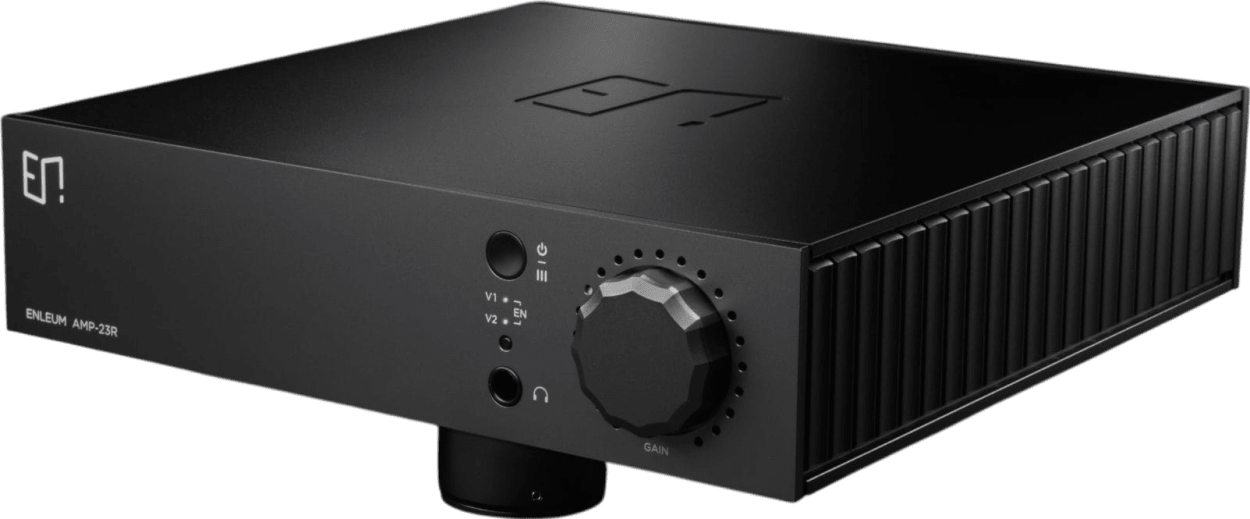
Enleum was launched as a new brand with the AMP-23R. While our legacy AMP-13R had already been praised all around the world for its performance and unique design, we pushed the boundaries to create the AMP-23R with a new circuit that truly enhances the existing performance. We have drastically improved the PCB circuit board design, chosen new internal components and upgraded our JET2 Bias design. And the reviews and awards are unanimous. The AMP-23R's physical size and footprint may be compact, but with the all new chassis and thermal heatsink design, we've launched a product that's fit for the next generation reference compact amplifier. The unique design is the DNA of our new Enleum Brand and was already awarded the Red Dot Award: Product Design 2021 and iF Design Gold Award 2022. The AMP-23R proudly showcases Enleum's expertise in technology and design.
Our summary
Product Strengths
- Addictive sound signature, unlike any other amp, with otherworldly instrument and voice reproduction
- Delivers serious magic with Fleetwood Deville and Klipsch Heritage speakers, revealing obscure details and creating a massive soundstage
- Dynamics for days
- Combines the qualities of a nice SET amp without the downsides, like noise or tube replacement
- Exceptional build quality and design with high-quality parts
- Only has two RCA inputs, no XLR balanced connections
Product Considerations
- Heavy speaker cables can cause the amp to tilt
- The volume dial functions as a gain dial, which may be different than what some users are accustomed to
- May not be suitable for hard-to-drive speakers in the 85db range that dip into 2–4 ohms
Comparisons (according to reviewers)
- The AMP23R offers more texture, layering, mid-bass, and vocal presence than Nagra INT
- The AMP23R is more organic, ethereal, and dynamic than Kinki Studio EXM1
- It sounds better than the Vinnie Rossi L2iSE, so long as the speakers are easy to drive
- The Enleum has more delicacy and finesse than Pass Labs and Cary Audio
- The AMP23R stacks up with the finest gear such as ampsandsound Bryce monoblocks
- Pass Labs First Watt SIT-3 offers a bit more organic, warmer presentation
Takeaway: The Enleum AMP-23R is a small but mighty integrated amplifier with a unique and addictive sound signature, and it is built with high-quality components. It's a great choice for those with sensitive speakers looking for a reference-quality system in a compact package.
Video review
Our take on the brand

Product Strengths
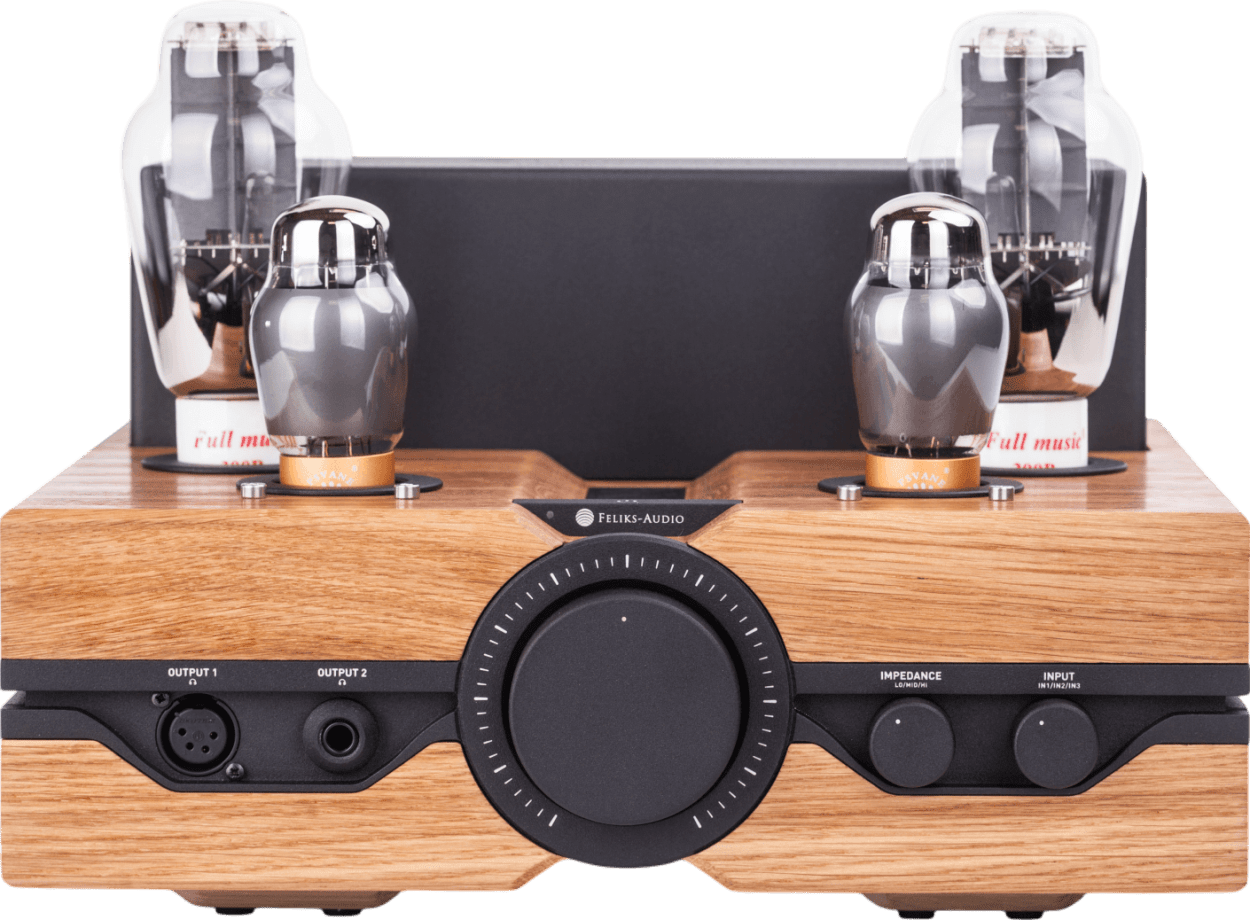
- Exceptional build quality with a blend of expertly crafted wood and metal, creating a visually striking and durable statement piece
- Dynamic, rich, and effortless sound with excellent detail, texture, and the right amount of tube magic
- Powerful output capable of driving demanding headphones while maintaining clarity and control
- Versatile performance with a variety of headphones (dynamic and planar) due to its output transformer design, often improving sound for warm or neutral headphones
- Value added by its ability to be used as a pre-amplifier in a stereo system
Product Considerations
- Large size and weight (around 15kg) require ample desk space and sturdy furniture
- Generates heat, which could be a concern in warmer environments without adequate ventilation
- Accidental switching of 'On/Off' is possible due to the touch-sensitive bar in the front not being intuitive, so use with care around pets
- Too powerful for some very sensitive IEMs, potentially resulting in overwhelming sound or audible hiss, though this is not the intended design for the amplifier
Comparisons (according to reviewers)
- Vs HIFIMAN Susvara, Envy empowers Susvara's natural presentation while giving it all the dynamics and slam needed
- Vs Cayin HA-300MkII, Envy exhibits more linear mid-to-high frequencies and offers a more transparent sound, while HA-300MkII has a warmer—more engaging midrange
- Vs AURIS Headonia 2A3, Envy performs at the same level, with technically incredibly strong aspects
- Vs Octave V 16, Envy completely demolishes the V 16 when it comes to energy, control, timbre, and resolution
- Vs Ferrum OOR, Envy is more powerful sounding, while also being more detailed with better tonality
Takeaway:
The Felix Audio Envy is a high-end headphone amplifier for audio enthusiasts who want the best quality sound to bring out the magic in their favorite headphones. Its stunning design and versatile performance make it a worthwhile addition to any serious audiophile setup.
Video review
Our take on the brand

Product Strengths
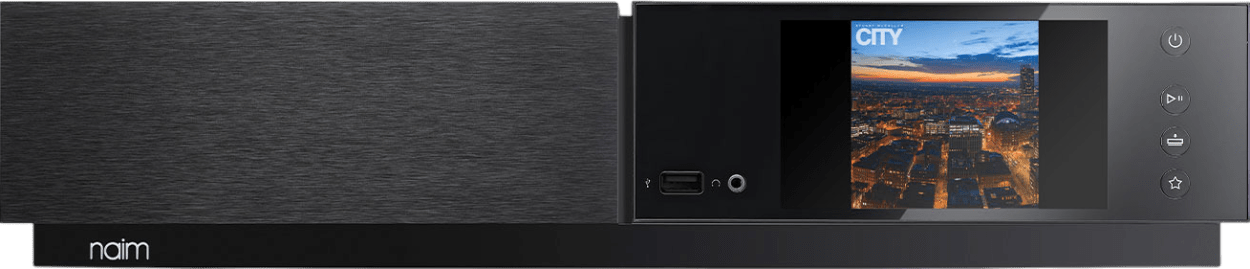
- Combines comprehensive functionality, connectivity and usability with good performance, and elegant design
- Exceptional sound quality is described as refined, muscular, detailed, confident, transparent, and natural
- Easy to use, has a great control app, a remote, and an intuitive interface that removes itself from the system
- Well-built with premium materials, including CNC-machined aluminum casework, finned heat sinks, and a hefty toroidal transformer
- Has a musicality that makes it hard to be objective about, the music flows as you listen and makes you want to repeat
Product Considerations
- Overheating may occur due to undersized heatsinks under demanding conditions
- Naim's speaker connectors may be unique, although banana plugs are an acceptable workaround
- Although a detail performer, it isn't the quietest digital source or imaging performer in the market
Comparisons (according to reviewers)
- Vs Uniti Star: The Nova has a more substantial amplifier section, with greater current delivery and stability into tricky loads
- Vs SuperUniti: The Nova offers a more dynamic, detailed, fluid, and natural sound–with a bigger soundstage
- Vs Chord Electronics CPM2800 MkII: The Nova is closer spiritually to separates like the Chord CPM2800 MkII than to other all-in-one systems
- Vs NAD M10: The Naim Unit Nova has full unwavering control of the entire frequency range, from the deepest chest-thumping bass to the most delicate highs
- Vs Naim Uniti Atom: The Nova has more power to get a good result in bigger rooms, whereas the Atom needs to be in a smaller room
Takeaway: The Naim Uniti Nova is a well-designed and easy-to-use all-in-one system that combines comprehensive functionality with very good sound quality. It's a good choice for those who want a convenient and high-performing audio solution without the complexity of separates.
Video review
Our take on the brand
What competes at this price?
Our Summary
Product Strengths
- Ample power is provided with 150 watts into 8 Ohms and 230 watts into 4 Ohms
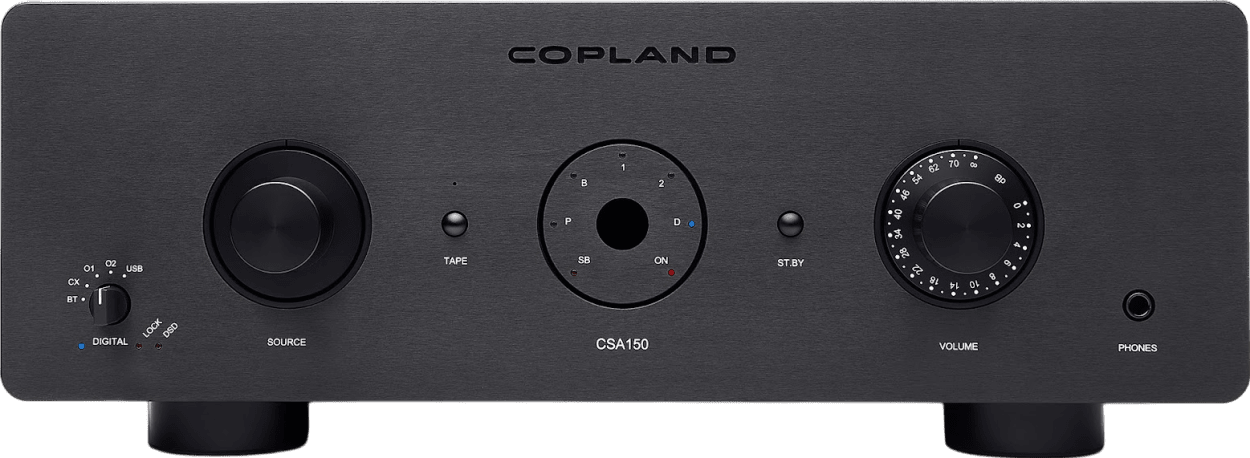
- A hybrid sound is created, blending warmth and solid-state control, by combining a 6922 vacuum tube in the pre-amplifier stage with MOSFET output transistors
- A built-in DAC, based on the Sabre ES 9018 Reference module, handles PCM and DSD formats
- A clean and intuitive front panel layout features a rotary input selector, digital input selector, and a headphone jack
- A smooth, organic sound, lacking harshness, makes even poor recordings more enjoyable
Product Considerations
- Phase is inverted at the speaker terminals due to the electrical design of the tube line stage, requiring users to connect loudspeaker cables the wrong way round
- The internal DAC may lack the spatial extension and tonal purity of higher-end, separate DACs
- The turntable input is only adapted for MM cartridges and MC cartridges pickups with high output voltage
- Some users may find the input selection process—separate selectors for analog and digital—slightly complicated
Comparisons (according to reviewers)
- Vs Creek Voyage i20: The CSA150 offers extra power and a more pleasing tonality, allied to a subtly more musical character
- Vs Hegel H390: The Copland CSA150's bass is not quite as tightly directed, but it's offset by the amplifier's timbre
- Vs Yamaha A-S2200: The CSA150 sounds warmer and fuller with the piano, but the Yamaha amplifier offers a little more insight and greater richness of detail
Takeaway: The CSA150 is a versatile and powerful amplifier that offers a blend of classic and modern features. It's designed to provide long-term listening enjoyment with a smooth and engaging sound that brings out the best in music.
Video review
Our take on the brand


Our Summary
Product Strengths
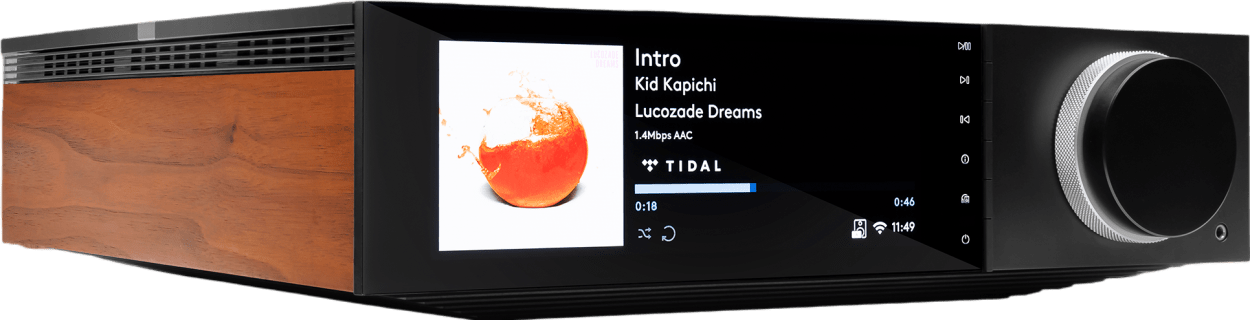
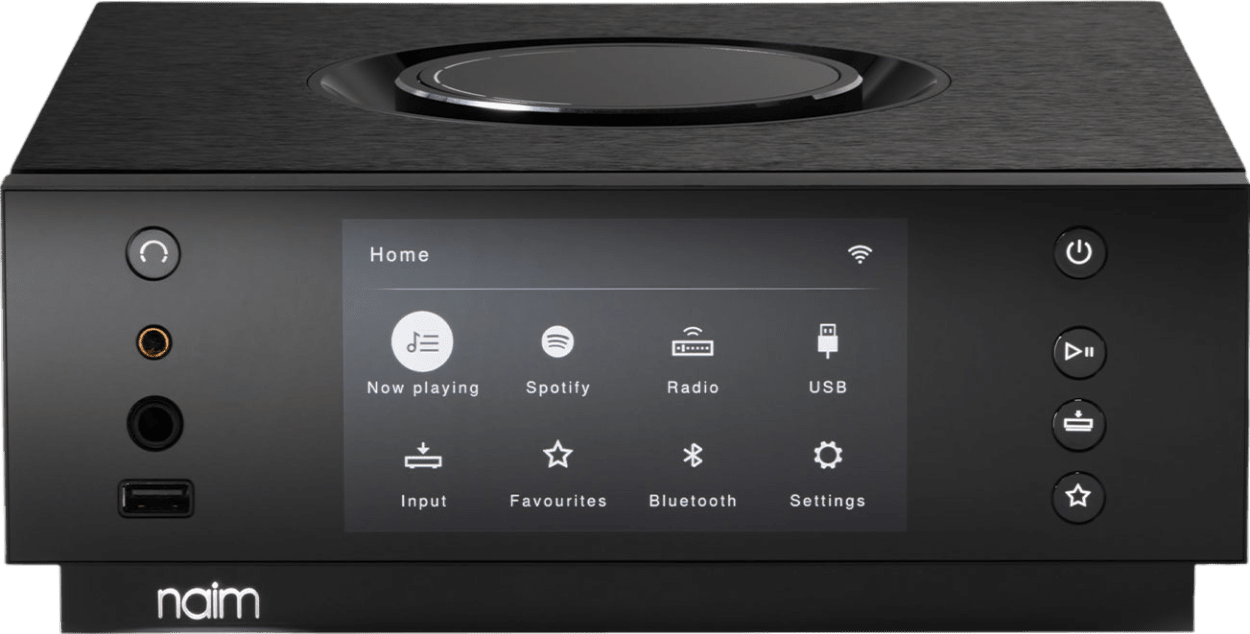
- Packs many features into a small frame, offering an 'all-in-one' solution by integrating streaming, DAC, preamp, and amplification
- The sound quality is clear, detailed, smooth, refined, articulate, and neutral, with good soundstage and imaging
- Offers a wide array of input options (analog and digital) and streaming service compatibility, making it versatile
- Its Class D amplification (Hypex NCore) is powerful (150Wpc) and efficient, running cool compared to traditional amps
- The industrial design and aesthetics are highlighted positively, with its sleek look, swappable side panels, and user-friendly interface, enhancing its lifestyle appeal
Product Considerations
- The headphone preamp may not satisfy serious headphone enthusiasts without a dedicated amp
- There is a noted lack of bass management
- The StreamMagic app lags behind the likes of Bluesound and Yamaha MusicCast in terms of its interface
- Some reviewers found a slight softening of the bottom end
- One review notes some power supply noise in bench tests, but at inaudible levels
Comparisons (according to reviewers)
- Offers wider soundstage, depth, and polish than the Naim Uniti Atom, but the Naim Uniti Atom has a greater sense of musicality and tighter rhythmic fabric
Takeaway: The Cambridge Audio Evo 150 is a versatile and attractive all-in-one system with excellent sound quality and a comprehensive feature set, making it a great choice for those seeking a simple yet high-performing audio solution. It provides a streamlined experience without sacrificing sound fidelity.
Video review
Our take on the brand

Our Summary
Product Strengths
- Offers a comprehensive and flexible specification, functioning as a headphone amplifier and streaming preamp
- Produces superb sound quality, described as clear, pure, detailed, dynamic, and musical, without being overly analytical, regardless of genre or recording quality
- Features a well-made, elegant, and attractive design with a beautiful screen for album art and a satisfying volume control
- Supports a comprehensive range of streaming services and digital formats including AirPlay 2, Chromecast, Spotify Connect, Tidal Connect, Qobuz, Bluetooth, UPnP, and Internet Radio, and is Roon Ready
- Intuitive and stable app, especially for those who know what they want to listen to
Product Considerations
- The price is high relative to other headphone amplifiers/DACs on the market
- The front display is not a touchscreen
- Some might prefer a more analytical sound presentation
- The HDMI ARC connection is absent
- The Naim app lacks polish compared to dedicated music apps
Comparisons (according to reviewers)
- Vs Cambridge Audio Evo 150 and NAD M10—the Uniti Atom Headphone Edition is specifically focused on headphone use
- As a headphone amp, it is every bit as good as the Chord Hugo TT2
- Naim puts less of itself into the performance as opposed to McIntosh MHA200
Takeaway: The Uniti Atom Headphone Edition is a great self-contained system for headphone listening, with an easy-to-use interface and a beautiful design. It is a quality product that can be a centerpiece for your home audio.
Video review
Our take on the brand


Our Summary
Product Strengths
- Sonic clarity, detail resolution, and control
- Sturdy build and fine finish with solid casework and nicely damped
- Flexible product offering integrated, pre-amp, or pre-power combo options
- Balanced nature means that no particular genre of music is favored above any other
- Impressively equipped with a wide range of inputs including RCA, XLR, Coax, Optical, USB B, and Bluetooth 5.0 with aptX HD and LDAC
Product Considerations
- Dynamic contrasts could be stronger
- Rhythmic drive could be stronger
- Phono stage a little flat-footed
- The display graphics on the screen can be on the small side to read from across a room
- Treble could be more exciting and dynamic
Comparisons (according to reviewers)
- Vs Audiolab 6000A: Offers better instrumental separation, clarity of guitar strings, and a fuller bass response
- Vs Naim Nait XS3 or Rega Elicit Mk5: Delivers less entertainment and rhythmic drive
Takeaway: The Audiolab 9000A is a capable and flexible amplifier offering sonic clarity and a range of features to slot easily into most systems. It charms and delights, never forcing music onto your ears but always upgrading the sound for great speaker performance.
Video review
Our take on the brand

Our Summary
Product Strengths
- Ground-breakingly different than its predecessor (Elicit-R) and the Elex R, integrating the Athos sound and signature
- Combines musicality with a real sense of propulsion
- Taut, punchy, clear sound with impressive clarity and detail
- Excellent built-in moving magnet phono stage, delivering enjoyable results across various music genres
- Internal DAC is of good quality, sitting comfortably beside the analogue line stages in quality, with lively and punchy character, strong detail levels, and dynamic contrasts
- Lacks USB input or Bluetooth connectivity
Product Considerations
- May run hotter than usual
- Can sound a little bright tonally, requiring careful speaker choice
- Volume control steps on the remote may be too large for precise adjustments
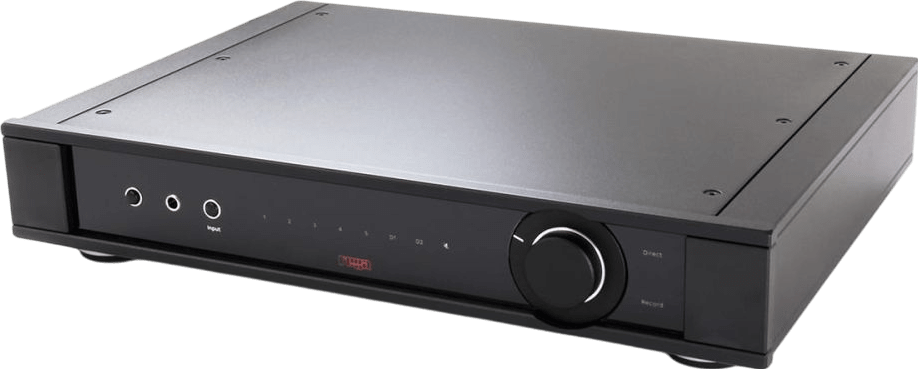
- Functional looking rather than stylish
Comparisons (according to reviewers)
- Vs. Roksan K2: The Elicit MK5 is a brawny amplifier with a full package for the audiophile journey
- Vs. Exposure 3510: The Elicit has a decent headphone option and the MM input, while the Exposure would suit if one already has a decent phono stage and a DAC in place
- Vs. Cambridge Audio Edge NQ / 2 x PA-10: While the Edge / PA-10 setup justifies its higher sticker, the Rega Elicit MK5 has a ballsier take on music
Takeaway: The Rega Elicit MK5 is a well-built amplifier that delivers a detailed, clear, and punchy sound, making music sound great and alive. With its integrated DAC and phono stage, it is ready to be the heart of any great listening setup.
Video review
Our take on the brand
How to buy
Amplifiers
Search all hifi products
Explore our database of 10,000+ new and 25,000+ used hifi products.