

.png)


Note that this is a discontinued product. You may want to visit the brand's page here to browse their newer products.
What reviewers think
Bloggers and YouTubers have tried this product—so we've summarized their strongest opinions below. Links to full reviews follow.
Product Strengths
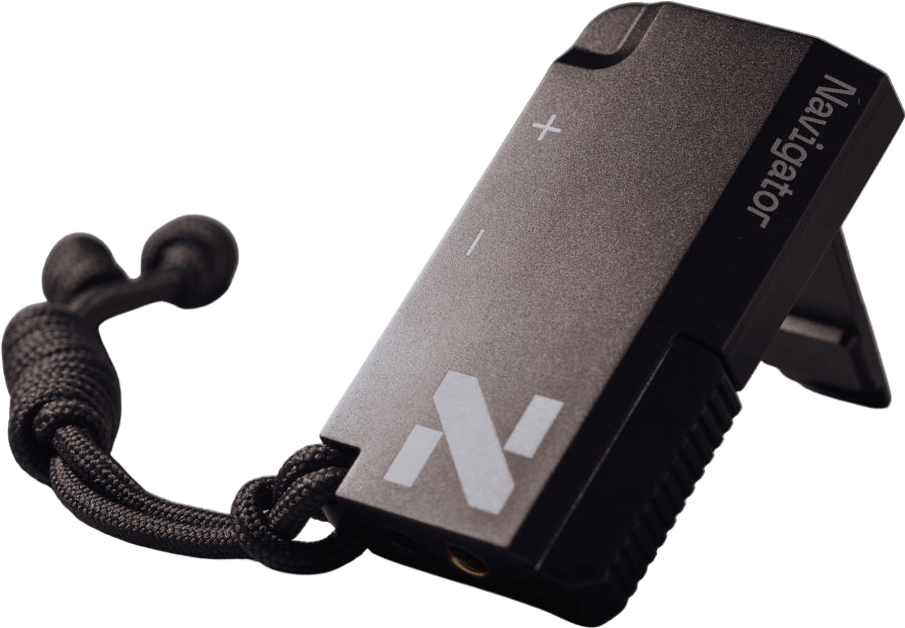
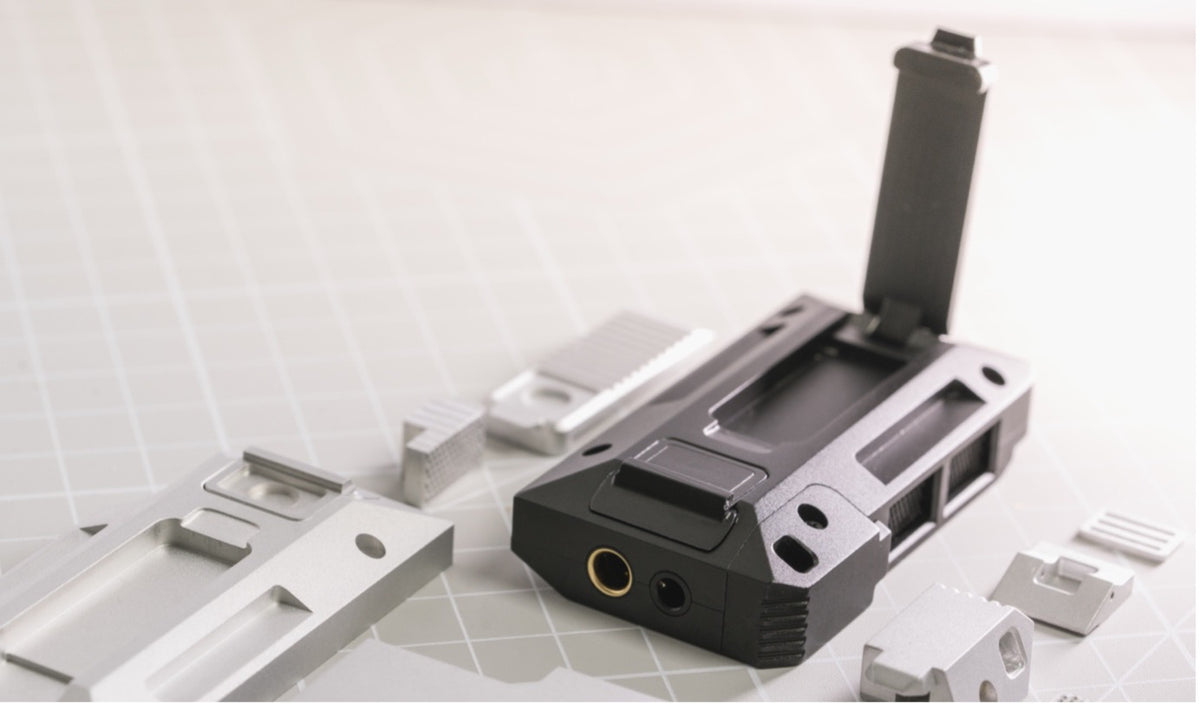
- Thoughtful, EDC-centric design and aesthetic, with a CNC-machined exterior impervious to daily wear
- Satisfying, independent volume control with good travel and tactility
- Excellent size-to-power ratio, outputting 320mW into a 32ohm load
- Universal compatibility between Windows, Android and Apple-powered devices works like a charm, allowing users to enjoy immediate playback without the need to install pre-requisite drivers
- The external Series 6000 Aluminium exterior is defined by bold, pronounced lines juxtaposed by stepped, sloping curves
Product Considerations
- Included female USB-C to USB-C interconnect flimsy with non-existent strain reliefs
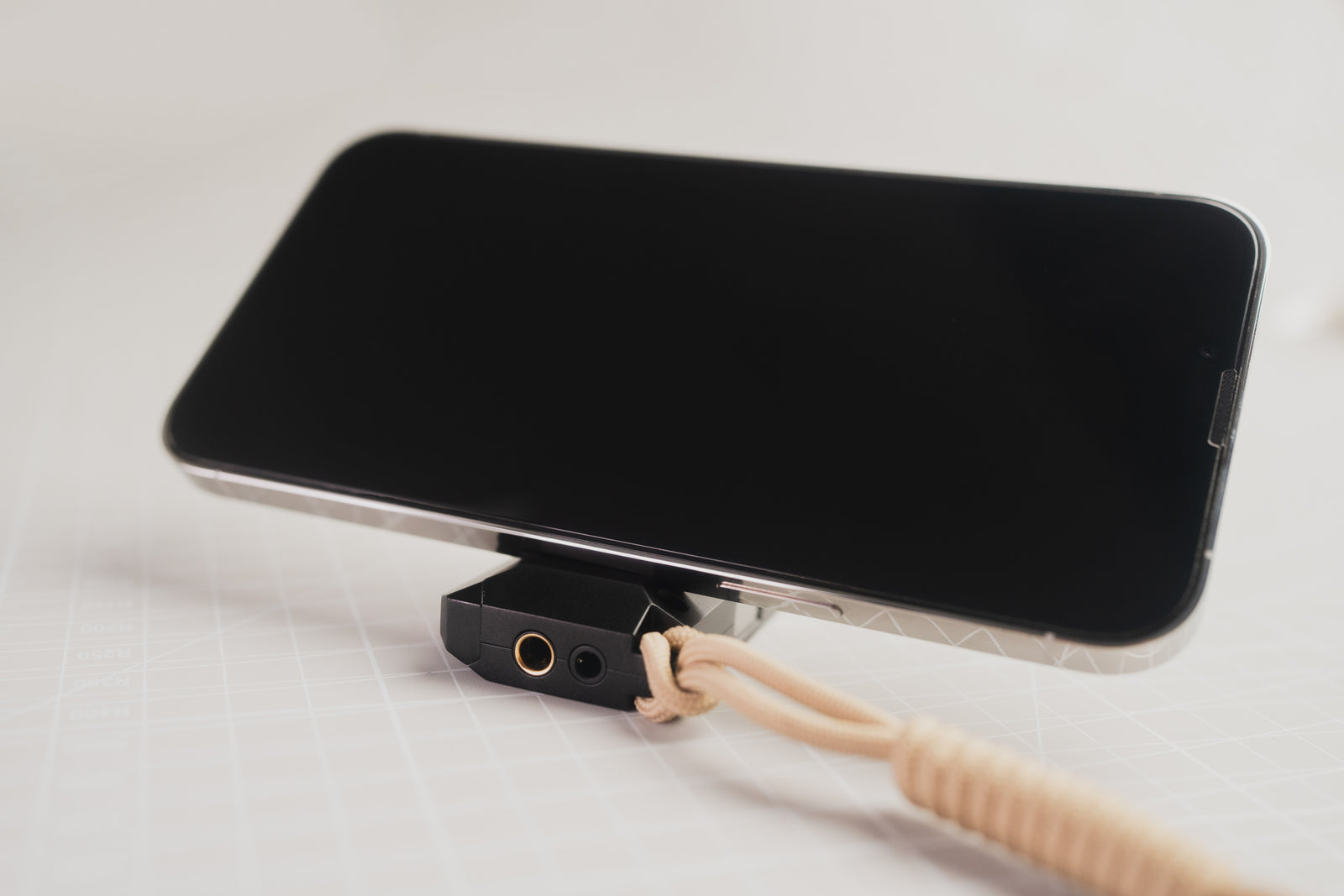
- Integrated kickstand ‘stand’ area lacks width and depth for thicker phones
- Lack of LED indicator to differentiate file types being streamed/played back
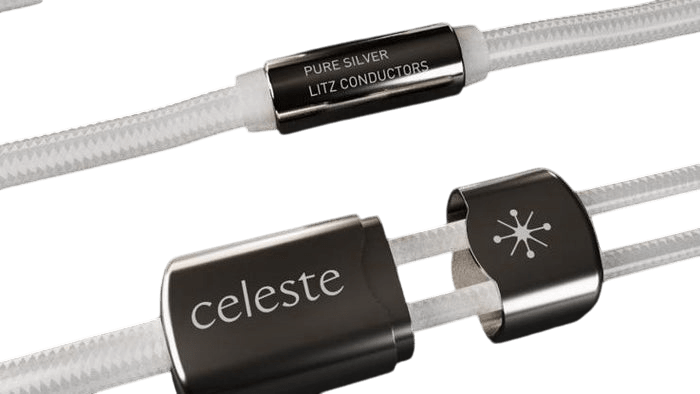
- The provided cable is ultra-flexible and supple, making it easy for listeners to adjust the resting position of the Navigator to their liking, sadly, the cable’s strain-reliefs and inherent thinness don’t inspire confidence in its overall longevity
Takeaway: The Navigator embraces form, function, and freshness. It is a pocket powerhouse, the quintessential grab-and-go DAC/AMP fit for everyday use and futureproofed for a lifetime.
All
The DITA Navigator
reviews



Manufacturer details
- Dual DAC
- Dual FPGA independent crystal oscillator clocks
- Output: 340 mW @32Ω
- Supports: MQA 16x Native, PCM 768kHz/32bit, DSD256 Native
- 3.5mm Output: Up to 110mW @32Ω
- 4.4mm Output: Up to 340mW @32Ω




Brand highlights
Taking a step back to look at reviewers' thoughts of the brand's entire lineup—not just this product—what stands out most is the following:
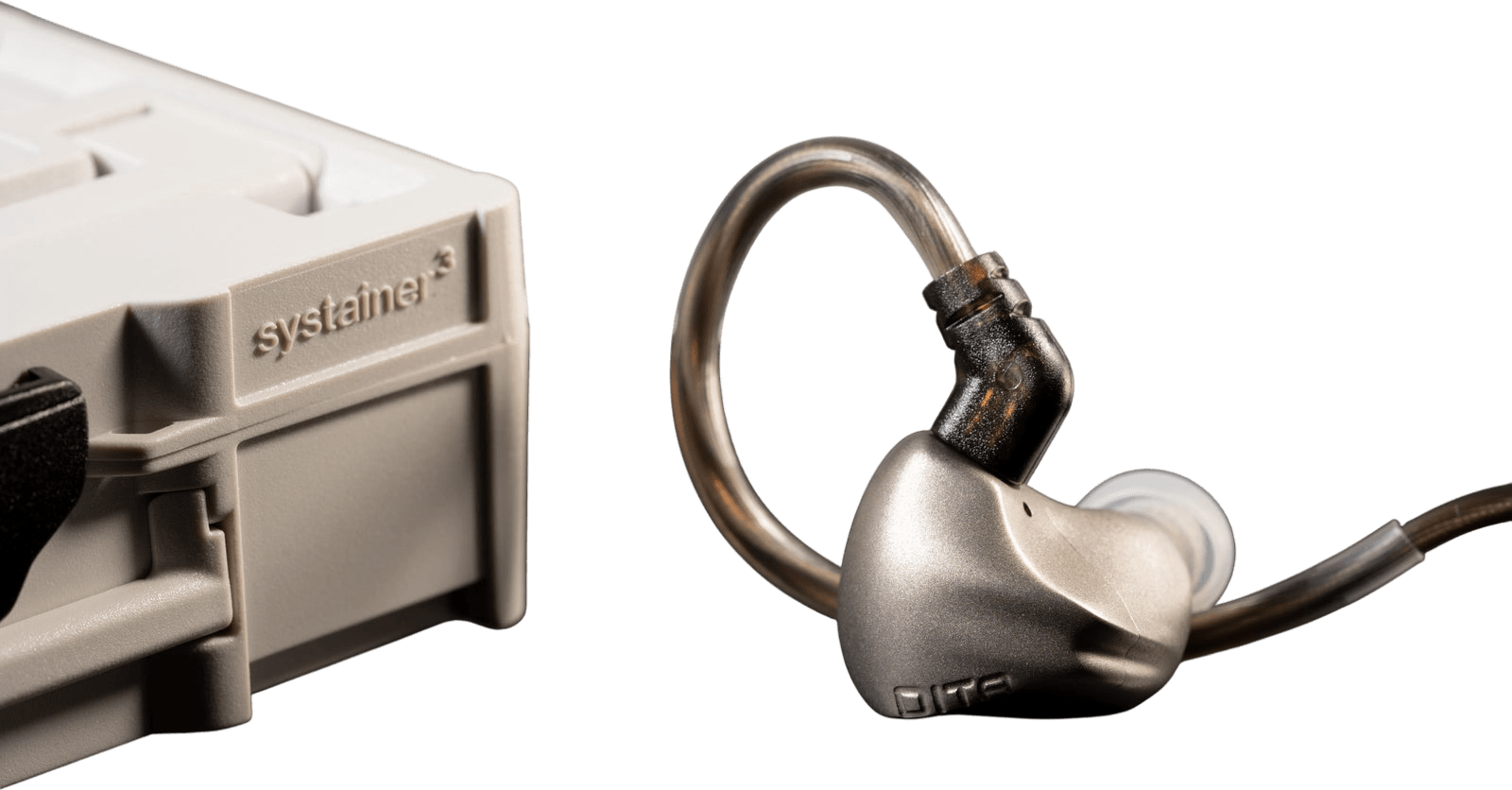
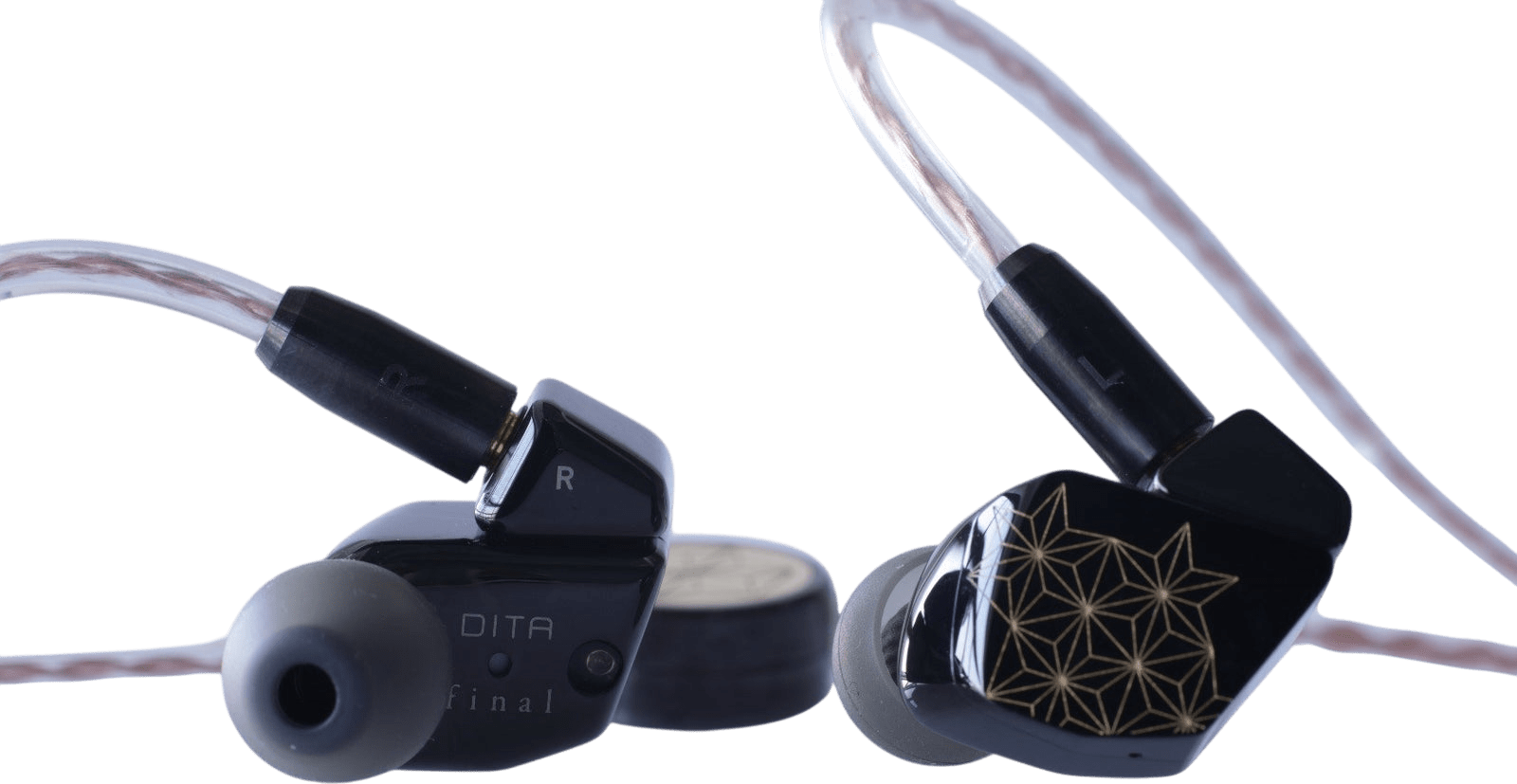
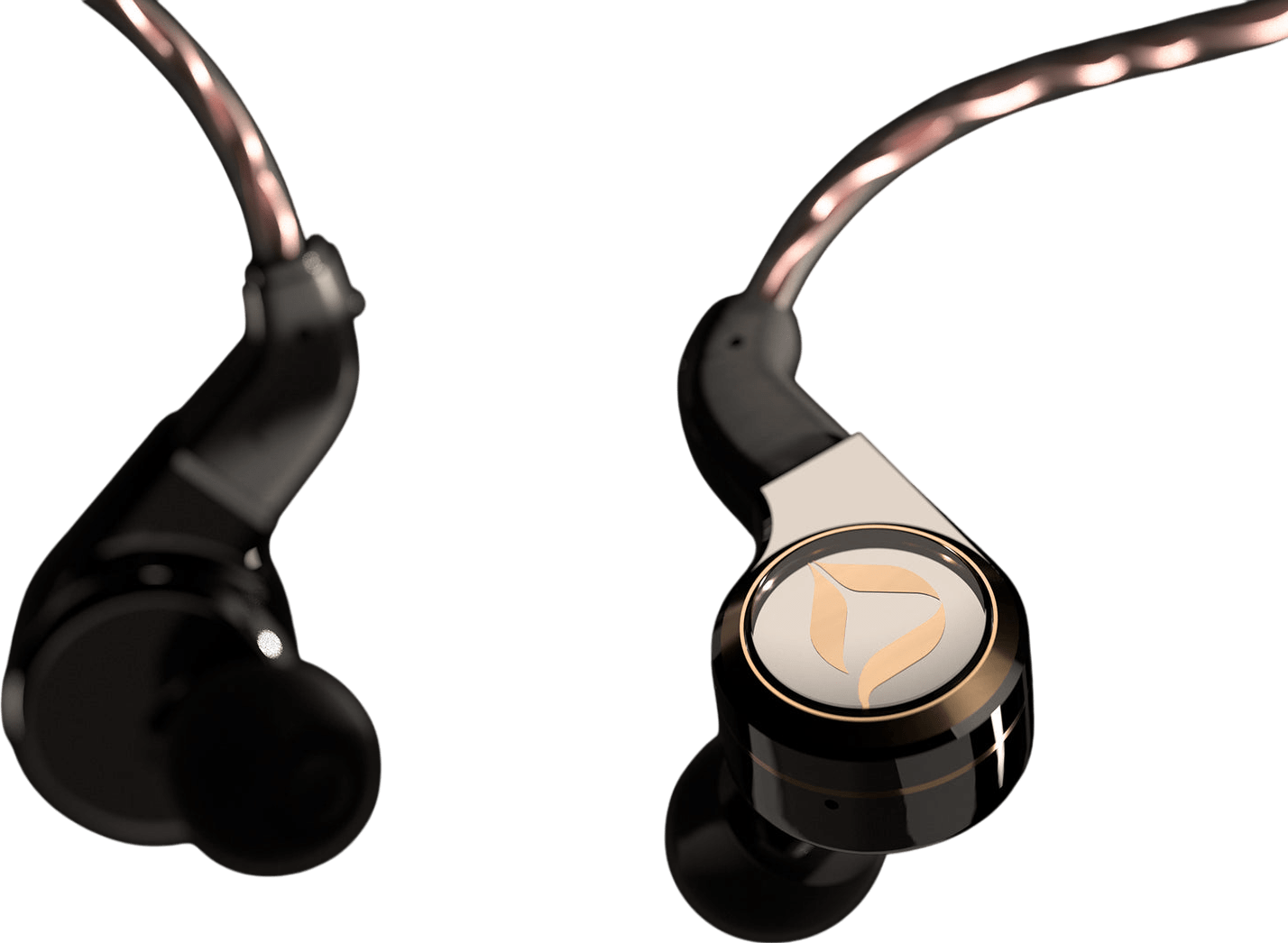
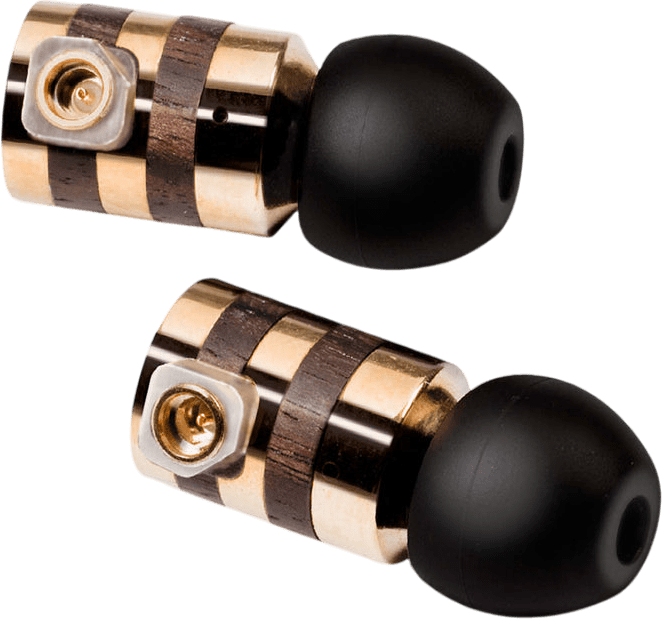
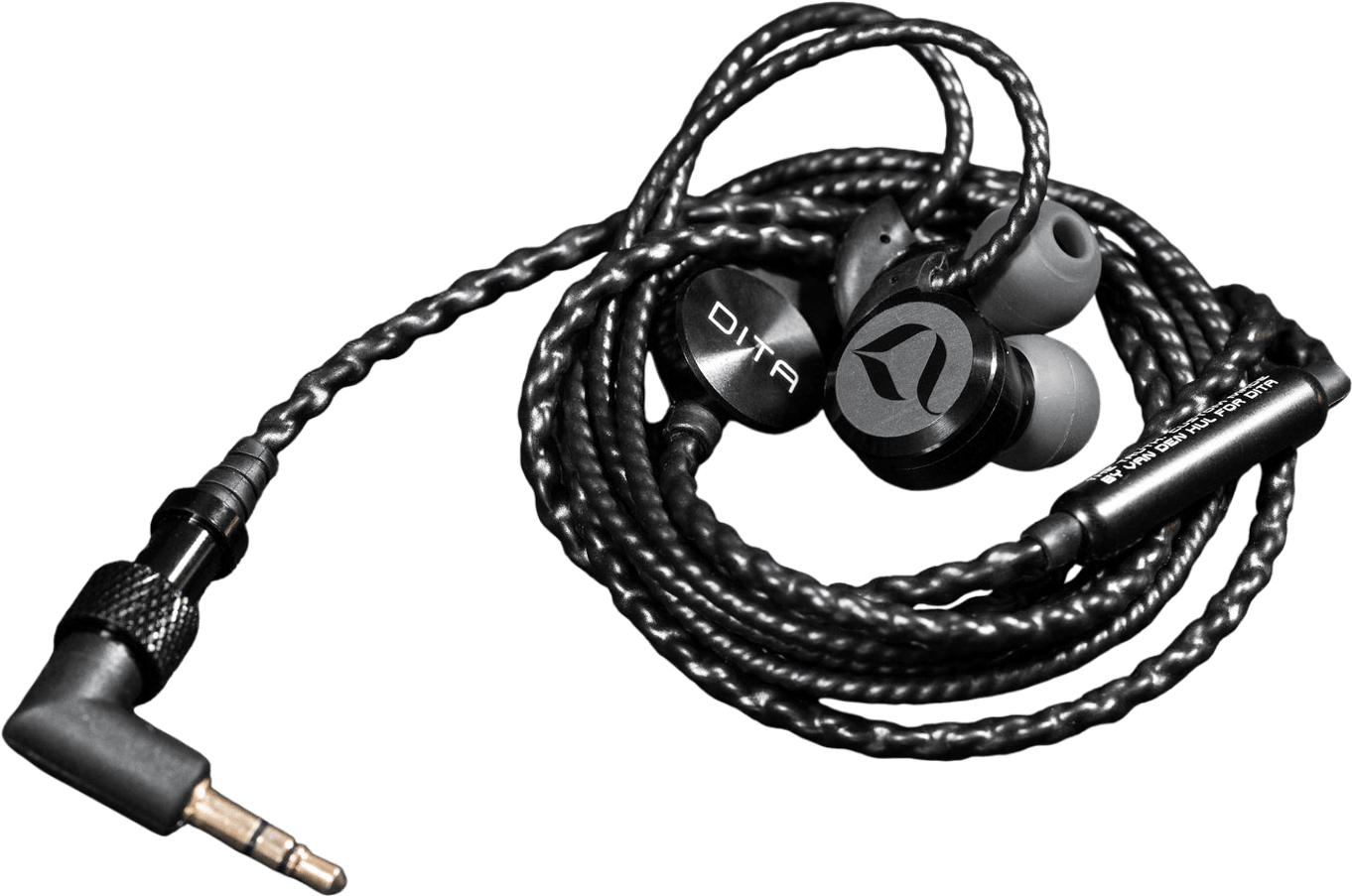
- DITA Audio is distinguished by its commitment to single dynamic driver IEMs, even in their flagship models, focusing on maximizing driver efficiency through structural and material innovations.
- The brand stands out for its design philosophy where each product feels like it came from "a luxury watch factory" with fine inner structures and a zero tolerance for errors.
Select products
Prelude
- Positioning: The entry-level earphone designed for high performance at an affordable price.
- Description: Features a dual magnet design in its dynamic driver and comes with an integrated DAC-Amp dongle for clear, precise sound. Compared to the more advanced models in the lineup, it offers a simplified tuning ideal for small rooms and on-the-go use without the premium materials seen in higher-end options.
Project M: Candy
- Positioning: The mid-tier earphone that blends fun aesthetics with the signature sound of its predecessor.
- Description: Shows off a playful design with visible acoustic chambers and tubes that maintain the classic Project M sound signature. Compared to the entry-level Prelude and the more refined flagship models, it offers a balance between vibrant style and full accessory support.
Dream
- Positioning: The flagship model in the Classics series featuring a refined dynamic driver and premium cable integration.
- Description: Uses a custom dynamic driver that delivers smooth mids and deep bass paired with a high-quality cable from Van Den Hul. Compared to the Dream XLS and other models, it offers a well-tuned performance and premium build without the extra industrial enhancements found in the higher-priced options.
Dream XLS
- Positioning: The premium flagship earphone that integrates advanced driver technology with a unique titanium chassis.
- Description: Features an ultra-linear dynamic driver housed in a CNC-milled titanium chassis, which boosts resolution and soundstage breadth. In comparison to the Dream and Final collaborations, it delivers enhanced dynamics and precision.
Final x DITA: Shichiku Kangen
- Positioning: The high-end collaborative model that combines meticulous craftsmanship with innovative driver technology.
- Description: Powered by a true beryllium dynamic driver and paired with a custom OSLO cable, ensuring a coherent and detailed sound signature. Compared to the other models in the lineup, it emphasizes artisanal build and technological excellence.

Our take on the brand
Look inside the brand
Our interview with the brand
What are two key technological innovations or strong opinions that differ you from other brands?
What's your approach to customer support?
What are your favorite tracks for showcasing the strength of your products?
What other products pair best with yours?

Used
DITA Audio
What if you spend more?


.svg)
Product Strengths
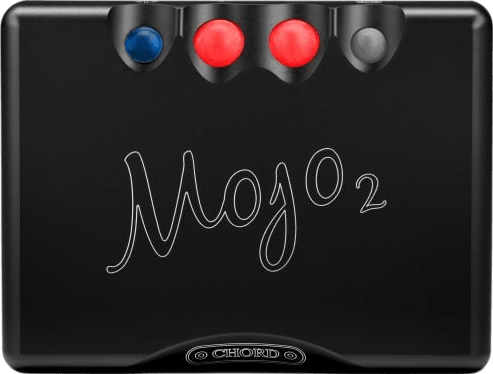
- Improved battery management offering faster charging rates and better efficiency than its predecessor
- Features a new USB-C data input for greater flexibility alongside other inputs
- Offers the world's first lossless DSP for tone adjustments without degrading sound quality, providing customization options
- Excellent resolution and dynamics with a large soundstage and extreme detail
Product Considerations
- The Mojo 2 can get warm when in a pocket for a period of time
- Complicated menu navigation with color-coded buttons that may require the manual
- Still uses Micro-USB for charging, which some find outdated
Takeaway: The Chord Mojo 2 is an exceptional DAC/headphone amplifier for those seeking high-resolution audio and customized sound in a portable format that is easy to move. Its sonic accuracy, detailed soundstage, and improved features provide a versatile and enjoyable listening experience, making it a worthwhile consideration for audio enthusiasts.
Video review
Our take on the brand

Product Strengths
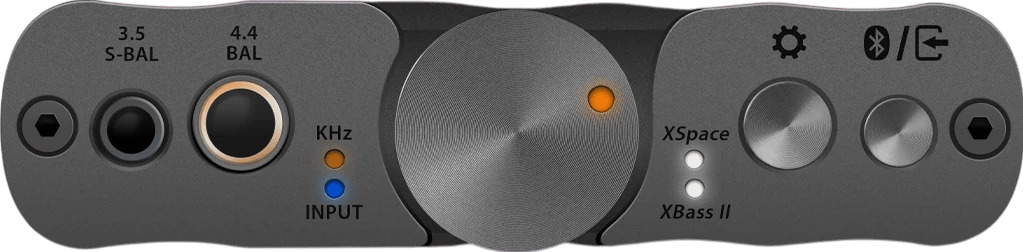
- Versatile connectivity with both wireless (Bluetooth 5.1 with various codecs) and wired options (USB, S/PDIF, analog inputs) makes it suitable for various setups—from desktop to portable usage
- Eloquent, informative, and entertaining sound quality, able to produce clear, non-artificial sound across different headphones
- Features such as XBass II and XSpace provide additional sound shaping options for the user to customize the sound to their liking
- The aluminum build provides a robust and premium feel, with a design that's described as sleek and comfortable to handle
Product Considerations
- The user interface is not very intuitive
- Decent headphones are needed to reveal its quality
- The OLED screen can be difficult to read
- Battery life is around six to eight hours
Comparisons (according to reviewers)
- Compared to the hip-dac2, the Gryphon offers better sound quality, more features, and flexibility
- Compared to the iFi GO bar, the Gryphon is bigger and has a built-in battery, and the GO bar is much smaller and draws power from the source device
- Compared to the iDSD Diablo, the Diablo has more power for very demanding headphones, Gryphon has more functions
- Compared to the Zen DAC, the xDSD Gryphon has a more sophisticated and detailed sound
Takeaway: The iFi xDSD Gryphon is a portable and versatile device delivering high-quality sound with extensive features that cater to audiophiles. Its ability to improve sound quality from various sources and its robust build make it a worthwhile investment for music lovers on the go.
Video review
Our take on the brand
What competes at this price?
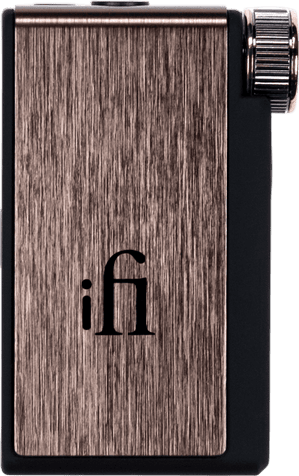

Our Summary
Product Strengths
- Detailed and expansive presentation, offering a sonic upgrade to phones, especially when portability is a priority
- Versatile, with both wired and wireless connectivity options, including balanced and unbalanced headphone outputs
- Impressively small size and lightweight design, making it pocket-friendly and convenient for on-the-go use
- Sound quality is generally linear, with fast and accurate bass, flat and clean mids, and a detailed treble that is not harsh
- XBass and XSpace features offer customized listening experiences
- Build quality and aesthetics are generally well-received, with its design standing out from other devices
- ChronoDial volume knob is particularly praised for its tactile feel and functionality
Product Considerations
- Black rubberized plastic casing can feel a bit flimsy to some users
- Some reviewers noted hiss with sensitive IEMs, especially on the balanced output
- Battery life estimation can be unreliable
- No dedicated app for the device, limiting EQ and DSP options
- Lacks a clip, making it less convenient for truly portable use
Comparisons (according to reviewers)
- Compared to the Audiolab M-DAC Nano, the Go Blu offers a wider soundstage, better separation, and dynamic sensitivity, though the M-DAC Nano is fractionally punchier in the bass
- Compared to the AudioQuest DragonFly Cobalt, the Go Blu is a wireless proposition, unlike the DragonFly Cobalt, which is a USB plug-in DAC
- Compared to the FiiO Q3, the iFi GO blu highs are a bit too brilliant, but everything else sounded quite impressive
- Compared to the NuPrime Hi-mDAC, the iFi GO Blu mids sound a lot like it, even if voices are slightly less natural
- Compared to the Hidizs S9 Pro and Aune BU2, the GO Blu provides a relaxed sound and has better build and functionality compared to the Hidizs S9 Pro, but is better when using bluetooth compared to Aune BU2, however when competing on wired terms, the Aune is clearer
Takeaway: The iFi GO blu is a tiny but mighty device that delivers impressive sound and versatility—improving the wireless music experience. It is easy to use and has some cool features, making it a good pick for anyone looking for a portable upgrade for their headphones.
Video review
Our take on the brand

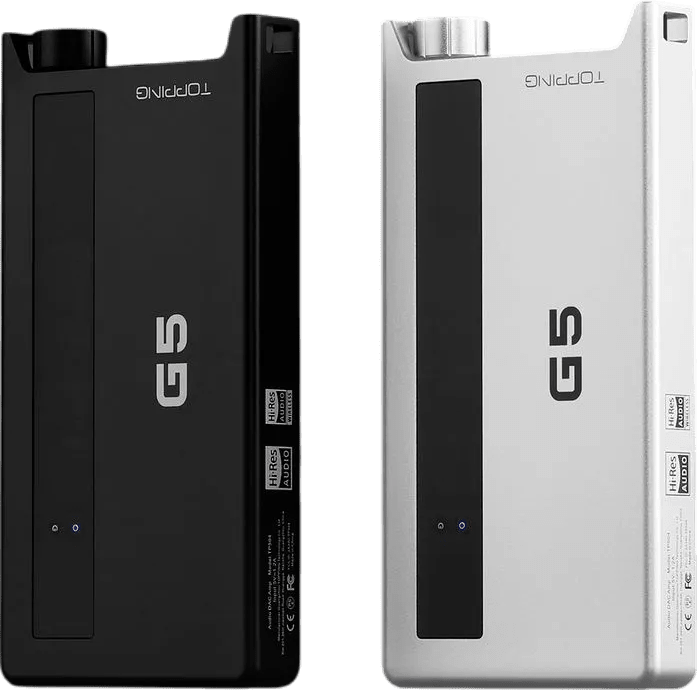

Our Summary
Product Strengths
- Phenomenal sound quality.
- Very usable and enjoyable interaction due to a physical volume knob.
- Plenty of power for almost everything and can drive just about anything.
- Versatile; it can be used as a desktop all-in-one, a Bluetooth portable DAC/amp, a portable amplifier, and even a DAC for speakers.
Product Considerations
- Susceptible to EMI noises, which can be a deal breaker; static noises, pops, and crackle sounds can occur when a phone is placed directly on top of it.
- Not a completely balanced architecture; the 3.5mm & 4.4mm headphone outputs sound the same.
- Charging port may not indicate charging on anything higher than an 18W charging block, and some chargers may not work.
Comparisons (according to reviewers)
- Vs FIIO BTR-7: Sounds more refined and has more detail and resolution.
- Vs SMSL C200: The C200 sounds significantly warmer with a fuller, juicier bass line and a little bit more airy, while the G5 is more focused on clean and clear edges, tidy, well-focused—and clean.
- Vs SMSL M500 MK2: The M500 MK2 sounds overall better with dynamics at the same level as the G5 and fuller, warmer tonality—and a bigger, more spacious soundstage.
- Vs Moondrop Moonriver 2: The treble is more refined, better details up top, and a sharp edge without being overboard like the Moonriver 2 can.
Takeaway: The G5 is a well-built and versatile portable DAC/amp with a neutral, clean, and dynamic sound. It is great for those looking for an all-in-one solution that can drive almost any headphone or IEM.
Video review
Our take on the brand
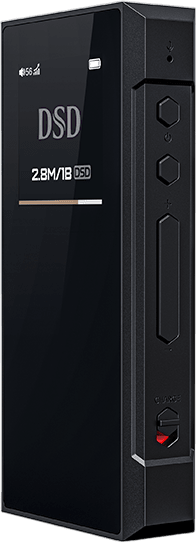

Our Summary
Product Strengths
- Fantastic build quality, aggressive contemporary design
- Includes a solid, workable leatherette case
- Delivers fun, V-shaped tuning with thumping bass, direct midrange, and bold treble
- Delivers fun, detail, dynamics, precision and a bold sound character
- Versatile, functioning as a Bluetooth receiver, a dongle DAC, and a desktop DAC amp combo
Product Considerations
- Buttons rattle a bit
- Larger than past models like the BTR5
- Mediocre battery duration
- Sharp edges
- FiiO only recommends headphones of up to 150Ω
Comparisons (according to reviewers)
- Compared to the Questyle M15, the M15 has a more balanced sound and even more textures and resolution
- Compared to the iFi Audio Go Blu, the BTR7 wins in sound staging depth
Takeaway: The BTR7 is a competent Bluetooth DAC/AMP that will handle IEMs and headphones alike and also works as a capable USB dongle. With a dedicated smartphone app for EQ and solid sound quality, it is an excellent value.
Video review
Our take on the brand
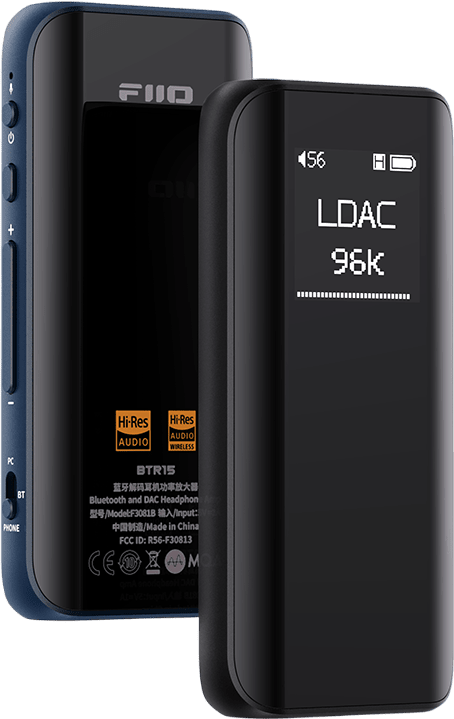
Our Summary
Product Strengths
- The BTR15 offers more driving power at 340mW(@32Ω), which is higher than both the BTR7 and the BTR5 2021
- The BTR15 features the newest 3rd XMOS USB controller and newer QCC5125 Bluetooth Codec compared to the 2nd gen XMOS and the QCC5124 on the BTR7
- The BTR15 can be used as a wired USB DAC, supporting decoding of up to 32bit/384kHz and DSD256
- Qualcomm’s 51XX series chipsets are known for their premium quality, high efficiency, and stability, and are a common choice in many high-performance Bluetooth devices
- FiiO implemented battery degradation prevention by implementing a measure to stop it from charging when it’s fully charged
Product Considerations
- The unit feels cheaper than the BTR5
- Battery life is said to be poor
- The slippery surface also makes the device prone to slipping from the hand, so care is needed here
Comparisons (according to reviewers)
- The BTR15 significantly outperforms both the BTR5 2021 and BTR7 in terms of power output
- Compared to the BTR5, the BTR15 is more expressive and lively in the midrange
- The BTR15 demonstrates significant improvements in staging performance and imaging
Takeaway: The BTR15 is a compact, versatile device with both wireless and wired functionality, making it a good option for audiophiles and casual listeners alike. The inclusion of a balanced output and parametric EQ further enhances the user experience, allowing for more customized sound.
Video review
Our take on the brand
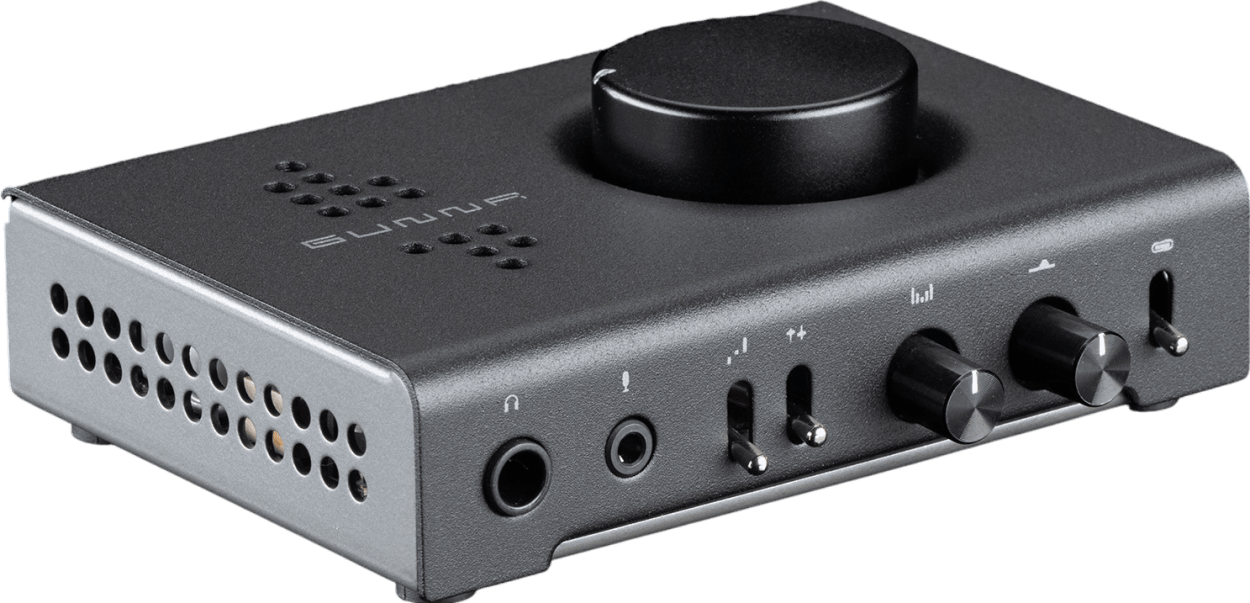

Our Summary
Product Strengths
- Has a microphone input, which is not a common feature on amp/DACs
- Has more power output than previous models
- Can be run over USB-C, making it portable
- Has width and presence knobs to control the soundstage size and to help accentuate certain sounds
- Good default audio tonality—a clean sounding amp deck
- Connectivity options are standard
Product Considerations
- The precision of the controls in relation to the case openings leaves something to be desired
- The width and presence knobs may not have a significant impact on the separation or layering of sounds in some games
- Turning the width and presence knobs too far can negatively impact the frequency response
- There is no physical mic gain adjustment knob
- Lacks game chat mix
Comparisons (according to reviewers)
- Vs Mayflower ARC MK2, the Schiit Gunner is better and cheaper
- Vs Schiit Hel, the Schiit Gunner has more power output, portability, audio shaping controls, negative gain mode for IEMs, and a more muted aesthetic
- Vs Schiit Magni Unity, the Schiit Gunner is not quite up to the Magni Unity for music listening, which puts out more power and has a thicker sound
- Vs Schiit Fula, the Fula is more portable, has a 3.5mm out, optical in, mic in, and a headphone out with a knob
Takeaway: The Schiit Gunner is a good amp/DAC that is great for gaming and listening to music, especially if a microphone input is needed. The portability and extra controls make it a versatile choice.
Video review
Our take on the brand




How to buy
Amplifiers
Search all hifi products
Explore our database of 10,000+ new and 25,000+ used hifi products.