



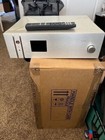
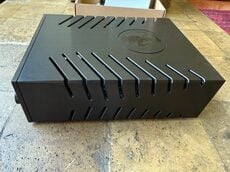
Note that this is a discontinued product. You may want to visit the brand's page here to browse their newer products.
What reviewers think
Bloggers and YouTubers have tried this product—so we've summarized their strongest opinions below. Links to full reviews follow.
Product Strengths
- Offers versatile 3-in-1 functionality as a DAC, preamplifier, and headphone amplifier
- Delivers remarkable sonic performance with clarity and precision
- Supports an extensive range of high-resolution formats, including PCM up to 32bit/768kHz and DSD up to DSD512
- Has a chameleon DAC that allows adjustments to the digital filters
- Features extensive connectivity options, including multiple digital inputs (USB, AES/EBU, RCA, TOS-Link), balanced XLR and unbalanced RCA outputs, and a professional-grade 6.3mm headphone output
Product Considerations
- The single knob approach for controls can be a hassle to use
- User experience with the software app can be frustrating and can kill musical enjoyment
- The DS10 EVO cannot automatically switch on and switch to the network input
- Every input retains the last used volume individually, which can lead to unexpected loud playback
Comparisons (according to reviewers)
- The DS-10 held up nicely as one of the more exciting sounding DACs in a blind test when compared to iFi Audio Neo Stream, with a smidge more excitement that for some will be translated to more edge with some music
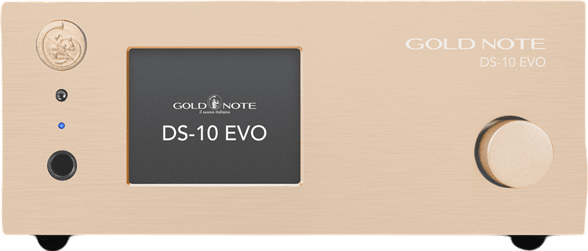
Takeaway: The Gold Note DS-10 EVO is a versatile device that combines a DAC, preamp, and headphone amp into one unit, offering a wide range of features and high-resolution audio support for audiophiles. Its distinct and exciting sound can spice up the listening experience when paired with the right system.
All
DS-10 EVO
reviews


Manufacturer details
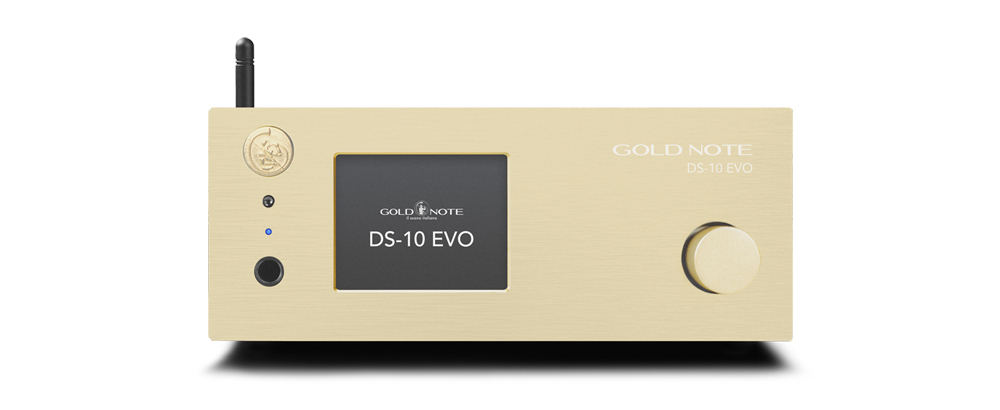
- D/A Converter Chip: AKM AK4493
- Frequency Response: 20Hz-20kHz +/-0.1dB
- THD: 0.001% max
- Signal to Noise Ratio: 125dB
- Dynamic Range: 120dB
- Network Connectivity: LAN/WLAN (WiFi) 802.11a/b/g/n/ac Dual Band (10/433Mbps)
- Digital Inputs: 1x RCA coaxial (PCM up to 24bit/192kHz), 1x AES/EBU balanced (PCM up to 24bit/192kHz), 2x TOS-Link (PCM up to 24bit/192kHz), 1x USB-B (up to DSD512 and PCM up to 32bit/384kHz), 1x USB-A
- Analogue Input: 1x 3.5mm mini-jack (input impedance 10kΩ)
- Output Impedance: 50Ω
- Power Consumption: 35W
- Dimensions: 200mm W x 80mm H x 260mm D
- Weight: 4kg net, 5kg boxed








Brand highlights
Taking a step back to look at reviewers' thoughts of the brand's entire lineup—not just this product—what stands out most is the following:
- Gold Note distinguishes itself through its holistic "systems thinking" approach, meticulously designing each component to synergistically function within a complete Gold Note audio ecosystem.
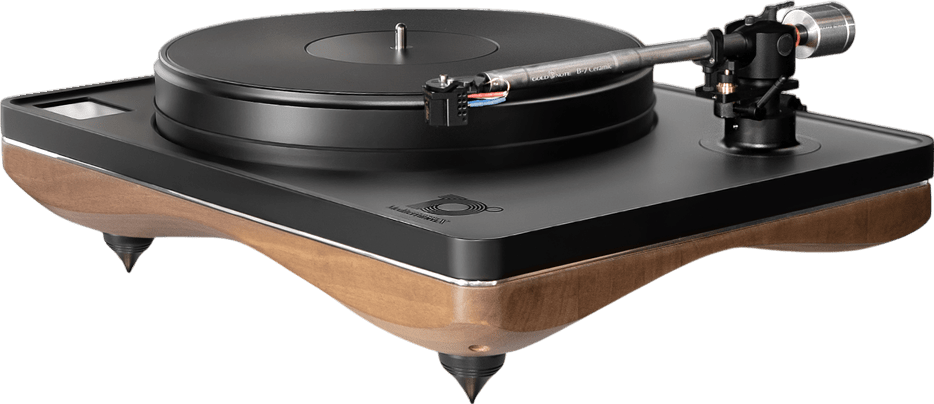
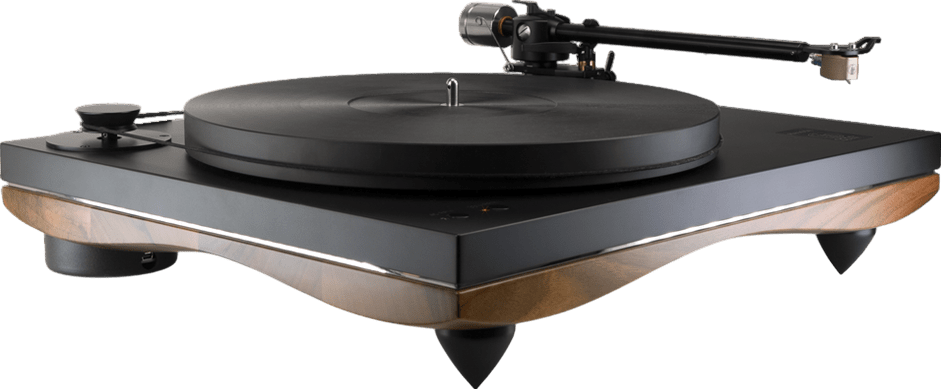
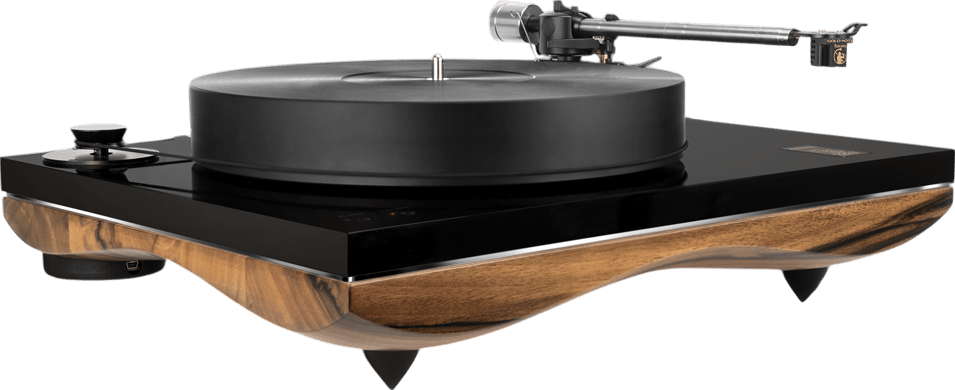
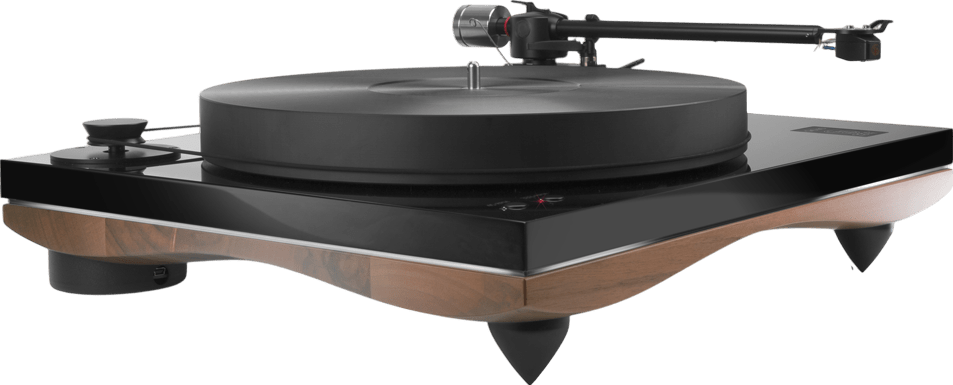
- The brand's unique design philosophy, inspired by the Italian Renaissance and the Catenary Curve concept, combines aesthetic beauty with functional vibration control and structural integrity.
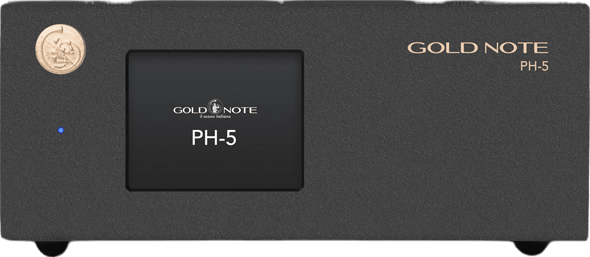
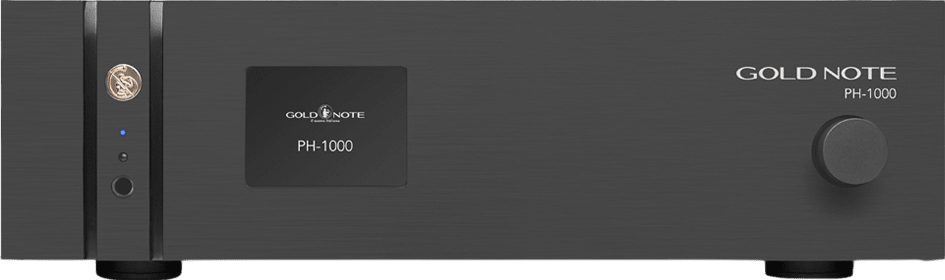
- Gold Note's phono stages, such as the PH-5 and PH-1000, offer exceptional cartridge matching capabilities, boasting a wide range of gain, impedance loading, and EQ curve options accessible via an intuitive touchscreen interface.
- They offer upgrades that are usually power supplies or tube output stages, often providing a running change in production.
Select products
T-5
- Positioning: The entry-level turntable in Gold Note's lineup.
- Description: Features a compact and practical design with a 15mm ultra-clear glass platter that minimizes noise and enhances detail extraction. Unlike more advanced models like the Valore 425 Plus, uses a manual speed change system, making it ideal for budget-conscious users who prioritize simplicity and portability in smaller spaces.
Valore 425 Plus
- Positioning: A mid-range model offering a balance of performance and affordability.
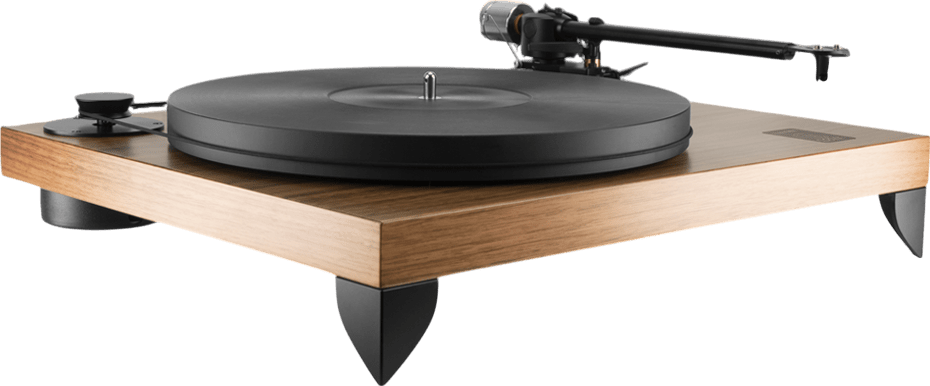
- Description: Features a 23mm POM platter and a high-torque synchronous motor for stable rotation. Compared to the Giglio, offers a more compact form factor.
Giglio
- Positioning: A high-end turntable with a focus on traditional craftsmanship and modern technology.
- Description: Stands out with its catenary curve-inspired plinth and high-density POM platter, providing exceptional structural rigidity and sound precision. It offers more advanced motor control and vibration reduction compared to the Valore 425 Plus.
Bellagio Conquest
- Positioning: The flagship model, representing the pinnacle of Gold Note's turntable technology.
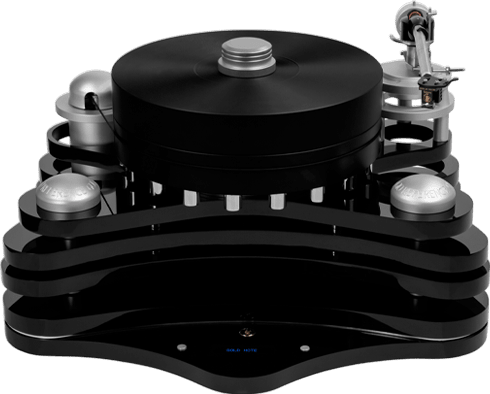
- Description: With its massive structure and unique thirteen-plinth design, delivers groundbreaking stability and vibration control. It features the longest spindle ever made for a turntable, setting it apart from the Mediterraneo X with its focus on ultimate audio performance and structural innovation.

Our take on the brand
Look inside the brand
Our interview with the brand
What are two key technological innovations or strong opinions that differ you from other brands?
The design of our turntables in the mid and high range relies on a very unique geometry that’s mathematically defined as the catenary curve, a shape that is found across nature (from spider webs to rope statistics) and firstly described by Galileo Galilei in the 17th century. The curve was first leveraged to design load-bearing structures such as arches and bridges since it offers the best rigidity/mass ratio. For turntables, it's an optimal as it provides really high rigidity with minimal mass giving the turntable great stability and resilience while minimising the amount of mass that could store potential energy (such as vibration). As a side effect, it creates a beautiful shape that elevates the design — this is a very Italian approach, developing creative solutions that serve boh performance and aesthetics.
Another key feature is the electric control of the motor leveraging a built-in power conditioning stage with a triple AC-DC-AC conversion to feed the motor with ultra-clean current, which is crucial as our turntables feature synchronous motors (calibrated on the AC).
Lastly, the design of the bearing/spindle is developed to achieve the strictest of tolerance with higher quality materials, and you won’t find similar designs on any turntables in the same price range since it’s extremely expensive to manufacture — it’s a core feature of our turntables that enables superior sound quality even though it’s completely hidden from the eye.
What's your approach to customer support?
We have a dedicated inbox for customer support [email protected] that is monitored 24/7 and a response time of around 24h. Customer should always contact Gold Note directly, our customer support will then manage their enquiry appropriately and put them in touch with the relevant contacts (such as our local distributor) if needed.
We used to rely primarily on our local partners in the past to provide quick support, however we have recently moved to a more centralised approach since we wish to establish a direct contact with our customers and ensure they get all the information directly from the source.
Today we can in fact guarantee fast response time and - since we are the manufacturer - more precise information to determine whether the product needs a simple firmware update, a hardware fix or a replacement.
What are your favorite tracks for showcasing the strength of your products?
Since we manufacture all sorts of sources — from turntable to streamers — we usually to suggest a mix of genres and it’s really hard to narrow it down to just three tracks:
For classical, we love "Dance of the Tumblers" from the Snow Maiden by the Minnesota Orchestra conducted by Eiji Oue (Reference Recordings,1998).
For electronic, our go to is "The Expert" by Yello (Polydor, 2021).
For jazz and vocals, it’s hard to pick between Cassandra Wilson’s "Strange Fruit" (Blue Note, 1995) and "Blues in My Heart” by Fiona Boyes (Reference Recordings, 2020).
What other products pair best with yours?
As a system manufacturer, we design our products to be part of a Gold Note system and therefore that’s the highest degree of synergy you can reach. The idea of designing full systems is generally frowned upon as the main objection inevitably is: if you design all sorts of products, how can you beat a specialist that only makes amplifiers?
The answer is somewhat counterintuitive and I believe it’s not fully understood by the public yet so I’ll briefly summarise it here — engineering audio systems is fundamentally to design ways to manage signals, whether digital or analogue. The knowledge compounds by researching all areas of signal transmission and amplification, and can then be used to improve on designing electronics, loudspeakers or tonearms.
For example: researching and designing a cable leads to gaining insights that can then be deployed when designing PCBs; R&D on phono stages where dealing with low voltage signals and ultra-low noise components will inform the design of amplifiers. This positive loop goes on affecting all areas and increasing the knowhow of the team, leading to better products.

Used
Gold Note








What if you spend more?



.svg)
Product Strengths
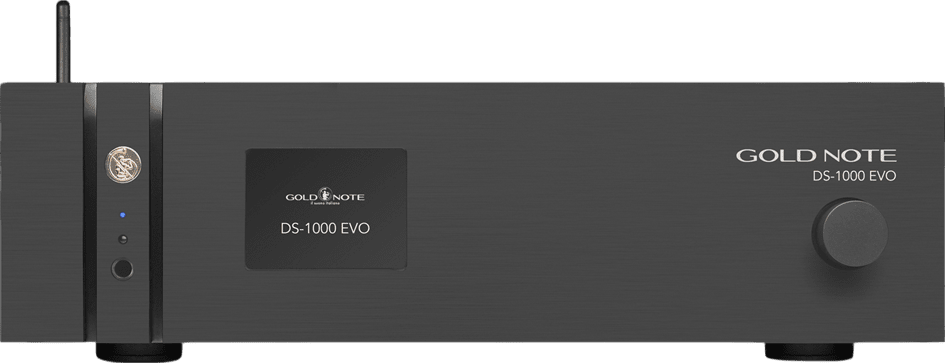
- High-resolution streaming DAC with comprehensive capabilities, including Airplay, Tidal, Spotify, Qobuz, vTuner, and Deezer playback
- Excellent detail retrieval and soundstage depth
- High-quality built-in digital-to-analogue converter employs two AKM AK4493 dual-mono converter chips
- Beautifully assembled and solid build quality
- Comprehensive connectivity options including USB-B, USB-A, RCA, AES/EBU, dual Optical, dual-band Wi-Fi, and LAN
Product Considerations
- The color display can be inconsistent in displaying the artwork
- A firmware update may be required to address the artwork display issue
- Substantial size requires adequate rack space
- 30W power consumption might be considered high for some users
Takeaway: The DS-1000 EVO is a streaming DAC and digital audio hub that is simple to set up and use, offering a combination of convenience and high-end audio performance. With its detailed sound and comprehensive features, it could be a valuable addition to a sophisticated audio system.
Video review
Our take on the brand

Product Strengths
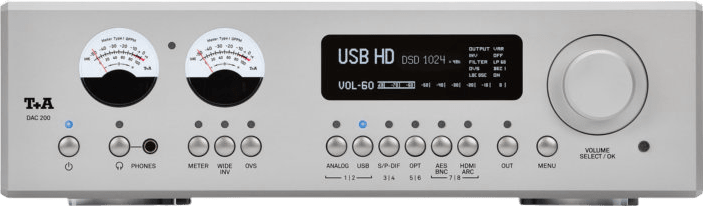
- Exceptional sound quality is achieved with precise and accurate reproduction, enhanced clarity and depth
- Versatile input options include S/PDIF, TOSLink, AES/EBU, BNC, USB, and optional HDMI, offering compatibility with various digital devices
- Excellent build quality is exhibited in its solid, retro-German appearance with high-quality materials
- Separate PCM and DSD processing use path separation technology with independent converters optimized for each media type
- Effective de-jittering employs T+A's De-Jitter Masterclock to minimize timing errors from connected digital components
Product Considerations
- A network audio input is absent, limiting standalone use without the MP200 music player
- Limited analog connectivity means the desired balanced analog input could enhance the preamplifier section's capabilities
- Remote control is reported to be far from intuitive, despite its solid build
- Output voltage in fixed mode may be lower than expected, requiring the use of the variable output setting
Comparisons (according to reviewers)
- Compared to iFi Pro iDSD, the DAC 200 outperforms as a reference
- Compared to Linn Organik series DACs and MSB Premier DAC, the lush playback recalls more expensive options
Takeaway: The T+A DAC 200 is a versatile and high-performing DAC with many inputs that delivers great sound quality. Its robust build quality and comprehensive features make it a great choice for audiophiles seeking a top-tier digital-to-analog converter.
Video review
Our take on the brand
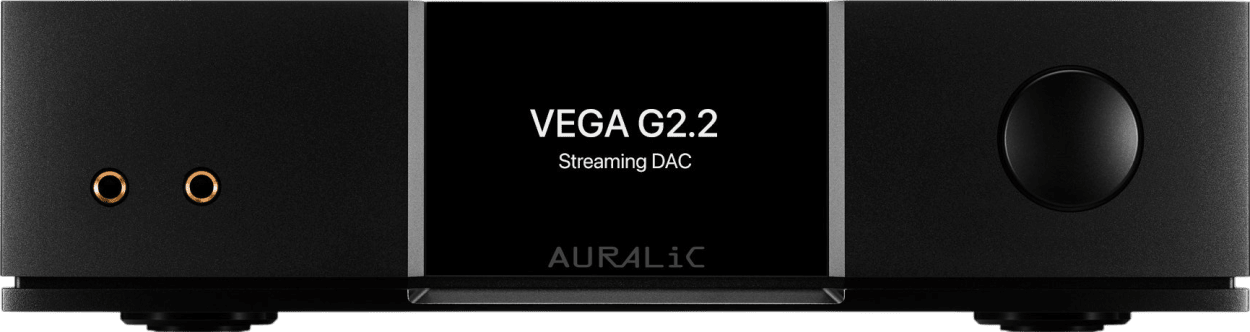
Product Strengths
- Excellent sound quality with detail and an expansive soundstage
- Functions as a preamplifier with both digital and analogue inputs and analogue volume control
- Features Direct Data Recording (DDR) technology using a memory buffer to reclock audio data
- Has a dual-chassis design with copper shielding for electrical isolation
- Gains greater clarity and clout with everything from driving rock to complex classical music
Product Considerations
- The AURALiC control app (Lightning DS) is only compatible with Apple iOS devices and not Android
- Has only one analogue input, which might be limiting for some users
Comparisons (according to reviewers)
- Vega G2.2 preferred to a DAC that cost 5x more
Takeaway: The Vega G2.2 is a great streaming DAC and preamplifier that is easy to use. It can be slotted into a system to immediately bring more clarity, soundstage, and depth to music.
Video review
Our take on the brand
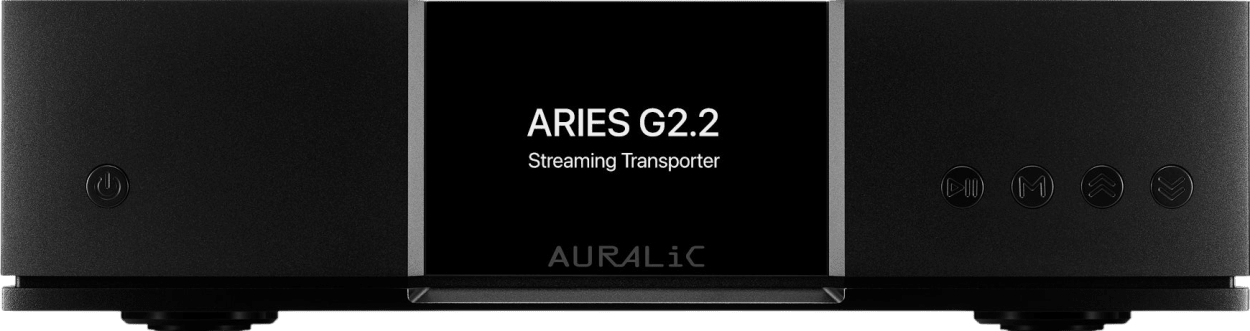

Product Strengths
- Completely redesigned interior with 90% new electronic components and cutting-edge technologies elevate performance
- New 'Purer-Power' low-noise linear power supply, with twice the capacity of the previous version and an even lower noise design, ensures a clean and stable power supply
- Upgraded Tesla G3 streaming platform is eight times faster than its predecessor
- New Direct Memory Access (DMA) technology connects the audio input and output directly to the processor, helping to reduce latency and jitter by a claimed 90%
- Lightning DS App is considered excellent and second to none for library and playlist management, and is extremely fast and responsive
Product Considerations
- The Lightning DS app is only available on Apple iOS devices, which may be limiting for Android users
- The digital filter options within the Lightning DS app are considered marginal
- A reviewer missed the Vega/Altair selection knob from previous models for menu management
- The benefits of the ARIES G2.2 may only be fully realized with a high-quality system, making it a significant investment
Comparisons (according to reviewers)
- Compared to the ARIES G2.1, the G2.2 offers a significant upgrade in performance with demonstrably lower noise, more detail, and a larger—more detailed—image, almost doubling the amount of musical data revealed
- Melco was more open and with better timing, while AURALiC had a smaller image, deeper bass, and possibly stronger bass
- Adding the ARIES G2.2 to the VEGA G2.2 allows the VEGA G2.2 to relax slightly
Takeaway: The AURALiC ARIES G2.2 is a high-end streamer offering a clear upgrade over previous models with a focus on reducing noise and increasing processing power, perfect for detail and nuance. With excellent software and solid construction, it is a great foundation for a top-tier system to enjoy music.
Video review
Our take on the brand
What competes at this price?
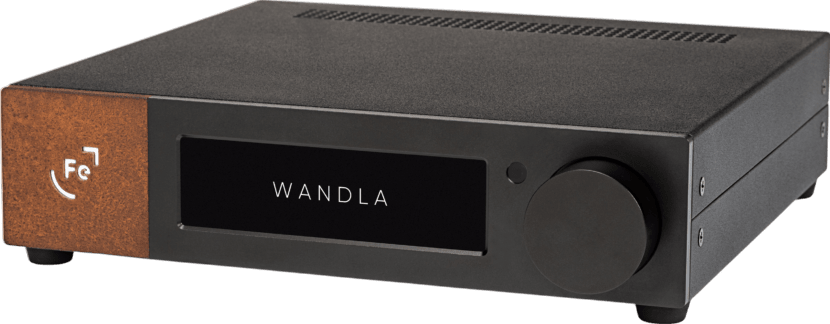

Our Summary
Product Strengths
- Unique features and impressive performance in a compact form factor
- Exceptional build quality
- Larger, responsive, and intuitive touchscreen UI
- Considered by one reviewer to be the best sounding DAC they have heard under $3,000
- Genuinely neutral and lifelike sound signature, without compromising resolving capability
Product Considerations
- Expensive, at $2,800 or 2,800 euros, which is a significant investment
- Limited display viewing angles, due to using a TN panel instead of an IPS, VA, or OLED
- Hypsos power supply is a subtle upgrade, not necessarily worth the extra cost unless already owning other Ferrum products
- Stock power supply is not as good as the Hypsos
Comparisons (according to reviewers)
- Compared to Gustard X18, Wandla lacks the sterile presentation, offering a more genuine neutral sound
- Compared to EverSolo DAC Z8, Wandla is closer to a true neutral sound signature and overall more realistic sounding
- Compared to Holo May KTE, Wandla was happily trading blows on outright soundstage size, and resolution was pretty much on par
- Compared to Chord Dave, Wandla provides similar sound and performance at a more attractive price
- Compared to Rockna Wavedream Signature, Wandla has similar liquidity and refinement but at a fraction of the price
Takeaway: The Wandla is an impressive DAC focused on sound quality, offering a number of unique features and customizability options. It is a great option for those looking for high end sound in a small package.
Video review
Our take on the brand

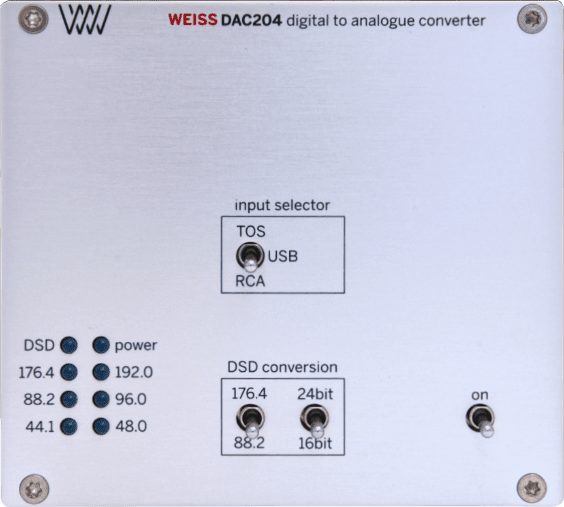

Our Summary
Product Strengths
- Precise, accurate, and musical sound, delivering what the disc or file was created to sound like
- Excellent jitter suppression, getting the most out of digital sources
- Versatile, it can be used as a digital format converter
- Weighty, full-bodied—tape or vinyl-like—sound
Product Considerations
- The stock power supply can be improved with a higher quality 6 to 9 volt supply or the Weiss PSU-102
- High-resolution sampling frequencies via USB of 352.8 and 384 are down sampled to half their value at 176.4 and 192
- May be a bit too harsh, even for some systems
Comparisons (according to reviewers)
- Some reviewers preferred the Weiss DAC204 to the Chord Dave due to impressive detail and holographic 3D imaging, although the Weiss is not as sharp or dynamic
- The DAC204 is considered to be on the same level of sound quality as the Chord Hugo 2 and Chord Cutest
- The DAC204 sounds just like the 501, despite being significantly less expensive and lacking the DSP, preamp, display, and remote control features
- The Weiss DAC204 is more open, dynamic, and punchy, while the Meitner is all about the midrange with beautiful and rich vocals
- The Weiss DAC204 brought more of everything making music sound more present, more physical, and more engaging in comparison to the AudioQuest DragonFly Cobalt DAC
- The main difference noted between the Weiss and the Totaldac d1-unity was one of body and weight
Takeaway: The Weiss DAC204 is a compact and versatile DAC that delivers high-end sound quality. A good fit for those who want a DAC that provides natural, realistic reproduction and accuracy without extra features.
Video review
Our take on the brand

Our Summary
Product Strengths
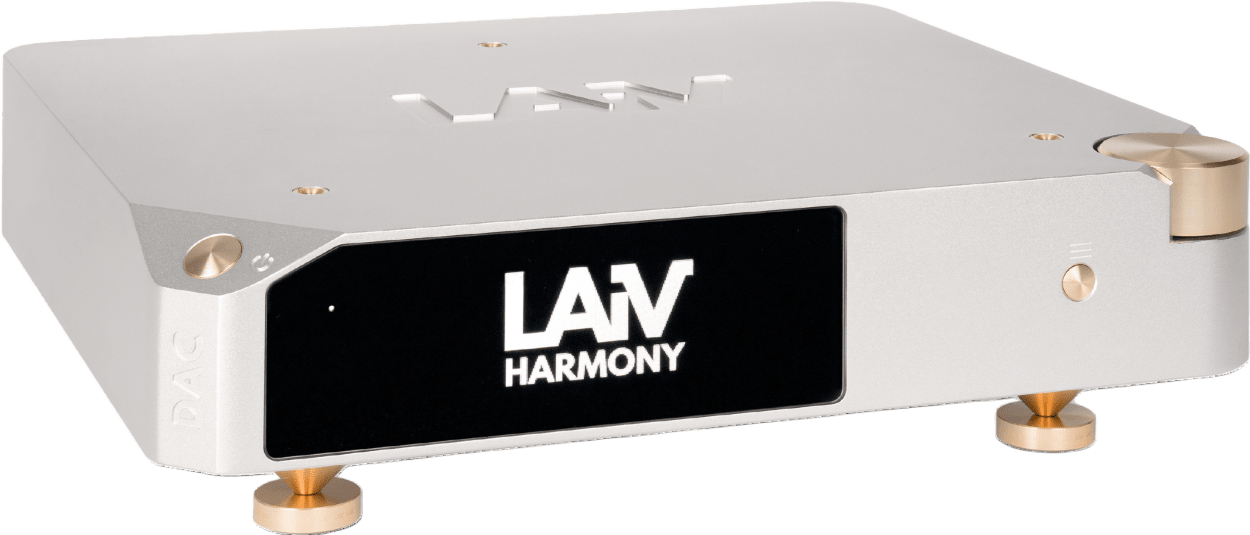
- Exemplary build quality, with a chassis milled from a single block of aluminum and high-quality components.
- Delivers a large soundstage with very good imaging and detail.
- Produces a harmonically rich presentation that R2R enthusiasts seek.
- The unboxing experience is premium, with a metal certificate of authenticity and a remote control made from solid metal.
Product Considerations
- The high output impedance (1200 ohms on XLR) might cause issues when pairing with amplifiers that have unusually low input impedance.
- Optical and coaxial inputs might not deliver the same performance as USB and I2S inputs.
- It is DAC-only unit, so it does not have preamp functionality or volume control.
- Spiked feet could scratch surfaces.
Comparisons (according to reviewers)
- Vs Denafrips Ares II: The Harmony DAC has more instrument separation and a little bit more detail through USB or I2S.
- Vs Gustard R26: The Harmony DAC is fuller in the bass and lower mid-range with a warmer presentation and wider soundstage through USB or I2S.
- Vs Denafrips Venus II: The Venus sounds bigger with more tangibility to where performers reside and more space between them.
- Vs Denafrips Pontus II: The Harmony DAC shares similarities but is slightly more resolving and realistic.
- Vs SMSL Raw Pro: The Harmony DAC is more enjoyable to listen to overall, although the Raw Pro is more detailed.
- Vs HIFIMAN EF400 and EF500: The Harmony DAC is an upgrade in detail retrieval, staging, and treble quality.
Takeaway: The Harmony DAC stands out with its build, engaging sound, and focus on providing a high-quality digital-to-analog conversion. Its ability to create a large soundstage and deliver rich detail makes it a solid option for audiophiles looking for an immersive listening experience.
Video review
Our take on the brand
Our Summary
Product Strengths
- Wonderfully detailed sound signature and plenty of clarity create a rediscovering of your music
- Impressive flagship-level hardware delivers flagship-level results due to the ES9038 Pro chip
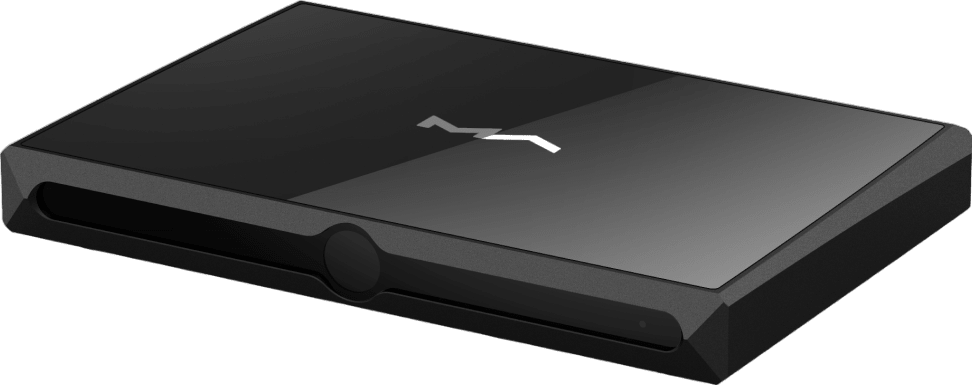
- The chassis is well-built with a premium feel due to the use of metal and tempered glass
- A low noise floor exists due to the isolation of power, digital, and analog circuitry in separate compartments inside the chassis
- Versatile streaming capabilities are available, including Tidal Connect, Spotify Connect, and Roon Ready certification
Product Considerations
- The screen is small and may not be useful unless you are sitting right next to the unit
- The tempered glass top is a fingerprint magnet
- Menu navigation is not the most intuitive, and there is a bit of a learning curve
- The touch-sensitive buttons have a short lag before the screen displays the change
- Some reviewers feel it does not support a few streaming services natively
Comparisons (according to reviewers)
- Compared to the McIntosh C2600 II preamp with a built-in DAC, the Matrix offers more clarity and transparency
- Compared to the Matrix Element I, the difference is night and day
Takeaway: The X-Sabre 3 is a well-built DAC streamer that provides detailed and clear sound. It is a versatile device that can enhance the listening experience.
Video review
Our take on the brand

Our Summary
Product Strengths
- Wide variety of digital input sources and balanced XLR and RCA analogue outputs
- The MiND 2 streaming platform and app offer a reliable user experience
- Delivers clean and subtle sound with good dynamic performance
Product Considerations
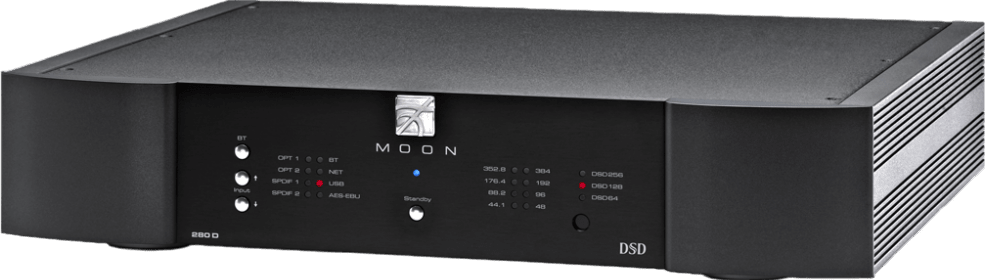
- Lacks a front panel display for detailed information
- Does not have a headphone output
- The remote is limited, requiring the MiND Controller app for full functionality
- There's no USB-A input
- Bluetooth connection may drop out occasionally
Comparisons (according to reviewers)
- The 280D sounds almost identical to Cambridge Audio's Edge NQ
- Compared to Leema's Stream IV, vocals, especially female artists, came through with a luxuriant, more refined sense
- Compared to the Meitner MA-1, the Moon Neo's soundstages were somewhat more broad and deep, and was warmer and richer
Takeaway: The Simaudio Moon 280D is a high-performing streaming DAC that offers a wide range of digital input sources and outputs. The MiND 2 streaming platform and app provide a reliable and enjoyable user experience, making it worth considering for those wanting a DAC with great sound quality.
Video review
Our take on the brand
How to buy
DACs
Search all hifi products
Explore our database of 10,000+ new and 25,000+ used hifi products.