

.png)


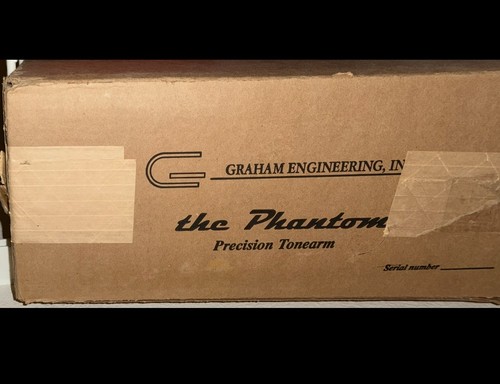
Note that this is a discontinued product. You may want to visit the brand's page here to browse their newer products.
What reviewers think
Bloggers and YouTubers have tried this product—so we've summarized their strongest opinions below. Links to full reviews follow.
Product Strengths
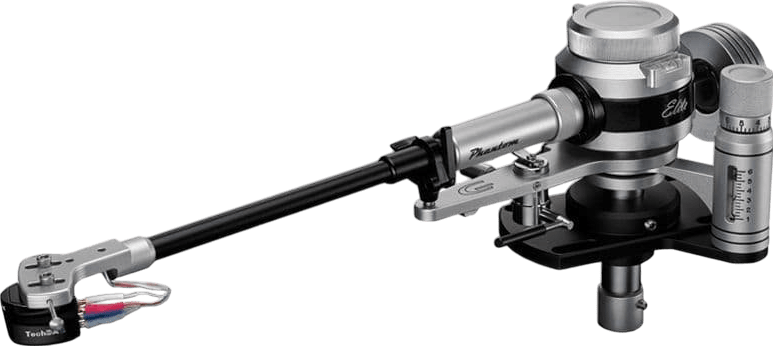
- Uses an inverted unipivot bearing featuring Graham's patented Magneglide magnetic stabilization system, which mitigates the typical unipivot 'wobble' and ensures that the arm will not deviate from correct azimuth as it pivots across the record
- Easy to adjust every parameter of phono-cartridge setup more precisely, more quickly, and more repeatedly than with any other tonearm
- Vertical tracking angle can be adjusted during play
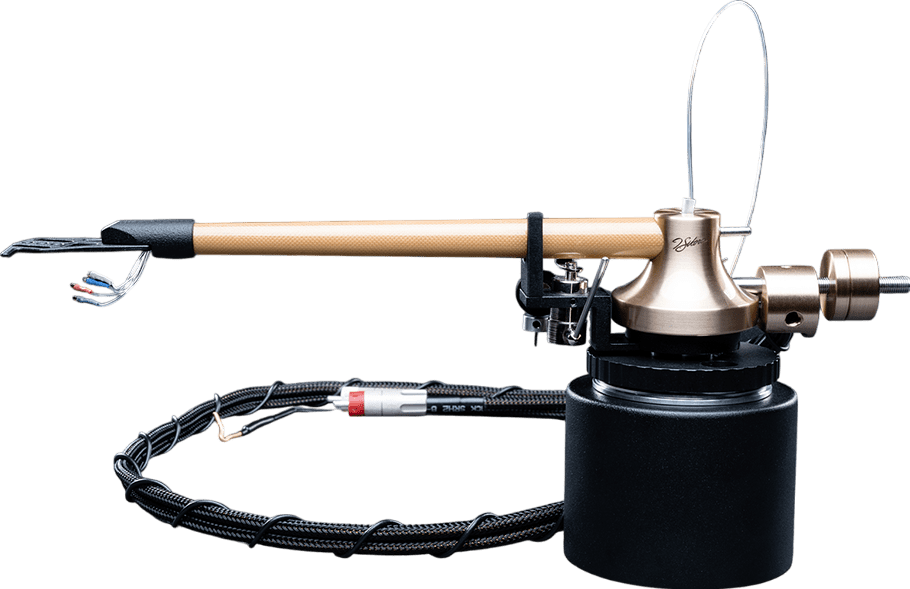
- The Elite's completely redesigned pivot-housing assembly is made from brass and tungsten in a 'constrained-layer combination'
- The use of high-density materials is claimed to ensure high absorption of energy and tighter manufacturing tolerances, for ultralow-friction pivoting that's free from chatter
Product Considerations
- There are improvements in materials and implementation of the pivot assembly, however, Graham's past improvements have always been real and audible—even if occasionally not what one would call dramatic—after all, the design began and remains at a very high level of excellence
Comparisons (according to reviewers)
- Vs SAT CF1-09 tonearm: As good as the Elite's overall performance was in every parameter, the SAT's bottom-end extension, drive, and definition remain unchallenged
- Vs Phantom II: There has not been occasion directly to compare the Elite to the Phantom II—the last Graham reviewed has now been discontinued to make way for the Phantom III, which has not been heard—so a comment on the sonic improvements cannot be made
Takeaway: The Graham Phantom Elite is a well-engineered and executed tonearm that builds upon the classic Phantom design with upgraded materials and features, which makes it an excellent choice for achieving precise phono-cartridge setup. It is a statement product in which every aspect of design, execution, and performance has been thoroughly thought through and addressed.
All
Phantom Elite
reviews


Manufacturer details
- Armwand Lengths: 9, 10, and 12-inch
- Construction: Damped titanium armtube
- Bearing Type: Unipivot with Magneglide magnetic stabilization
- Pivot Assembly: Constrained-layer damping of two different metals with tungsten insert
- Internal Wiring: Litz-based construction
The pivot assembly has been redesigned, and now incorporates an entirely new pivot assembly utilizing constrained-layer damping of two different metals, both having a high weight to size ratio. A new, high-density, non-magnetic tungsten insert insures zero-tolerance bearing contact and high energy absorption.
Likewise, the pivot top has been reconfigured, and results in superior external energy rejection, while ensuring chatter-free, extremely low-friction pivoting. The patented Magneglide™ stabilizing system ensures pivoting in a true vertical plane, with no azimuth deviation as the arm traverses warps. Since the arm is also in true neutral balance – again the result of magnetic stabilization controlling azimuth in a unipivot arm – the tracking force will be consistent, regardless of arm motion over warps.


Brand highlights
Taking a step back to look at reviewers' thoughts of the brand's entire lineup—not just this product—what stands out most is the following:
Select products
Graham Engineering Phantom III SE:
- Positioning: An entry-level tonearm offering patented stabilization at an accessible price.
- Description: Provides essential magnetic stabilization and a basic unipivot design that delivers consistent playback in modest settings. Compared to the Phantom III and Elite, its simpler build suits buyers with tighter budgets who need standard performance for smaller rooms and limited mounting features.
Graham Engineering Phantom III:
- Positioning: A mid-range tonearm that refines traditional design with improved internal components.
- Description: Features refined pivot housing, upgraded wiring, and enhanced Magneglide stabilization to yield clearer dynamics and soundstaging. Compared to the entry-level SE and the premium Elite, its balanced technical improvements provide a middle ground in cost, performance, and adaptability for varied turntable setups.
Graham Engineering Phantom Elite:
- Positioning: A high-end tonearm featuring the latest refinements and engineered precision for superior playback.
- Description: Features an advanced pivot assembly with constrained-layer damping and a removable, rigid titanium armtube that delivers excellent energy control and alignment accuracy. Compared to the Phantom III and SE, its state-of-the-art design commands a higher investment.

Our take on the brand
Look inside the brand
Our interview with the brand
What are two key technological innovations or strong opinions that differ you from other brands?
What's your approach to customer support?
What are your favorite tracks for showcasing the strength of your products?
What other products pair best with yours?

Used
Graham Engineering
















What if you spend more?
What competes at this price?

.png)

.svg)
Our Summary
Product Strengths
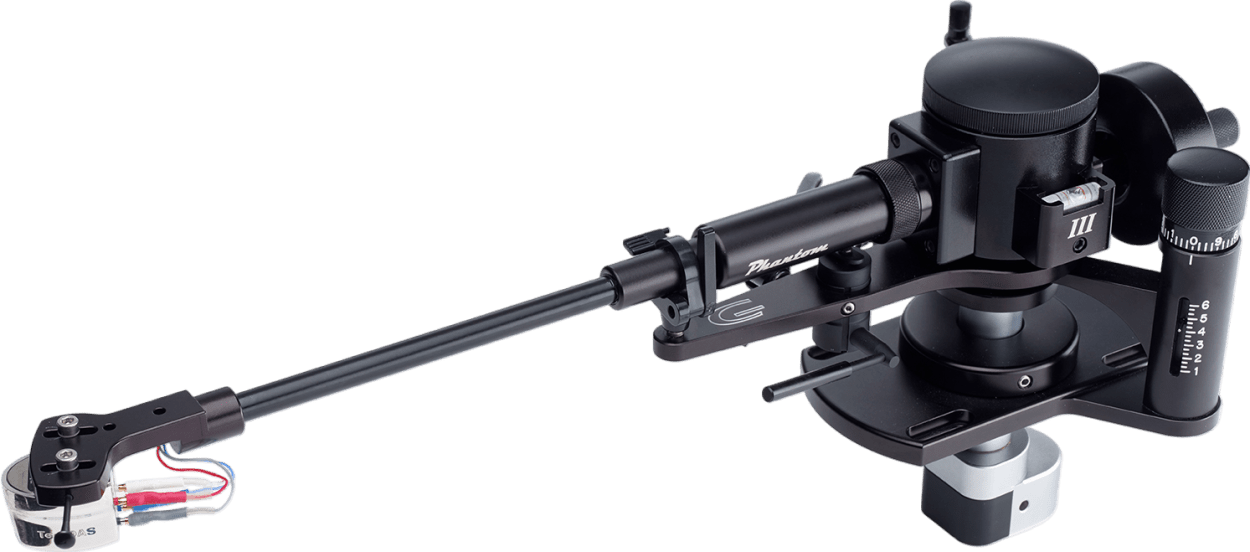
- The Phantom III does not impose a consistent signature or coloration on the music, leaning towards an ideal of neutrality that allows cartridges to express their individual character more overtly
- Offers a proportionate blend of resolution, detail, bass response, soundstaging, and imaging—creating 'wholeness' in musical reproduction
- Provides stable and repeatable adjustments for fine-tuning tracking force, azimuth, overhang, zenith angle, and VTA/SRA
- Facilitates easy daily operation
Product Considerations
- The price point may be prohibitive for some
- Initial leveling may need to be checked and adjusted after a few weeks due to settling
Comparisons (according to reviewers)
- Vs Graham Engineering Phantom II Supreme: The Phantom III's bass reproduction was far more robust and controlled
Takeaway: The Graham Engineering Phantom III is a high-quality tonearm that allows for precise adjustments and stable performance, letting the true character of cartridges shine through. Its ability to trace grooves accurately and portray subtle differences in recordings makes it a worthwhile investment for serious audiophiles.
Video review
Our take on the brand


Our Summary
Product Strengths
- The Discovery RS brings a 'naturalness' and 'effortless' quality to the music, making it more 'soulful' and 'engaging'
- The Discovery RS opens up the soundstage, providing a broader and more expansive listening experience
- The Discovery RS delivers a significant reduction in 'groove rush,' resulting in nearly complete silence between cuts and in the lead-in groove
- The Discovery RS provides more refined and better-delineated bass extension with a more faithful sense of speed and texture
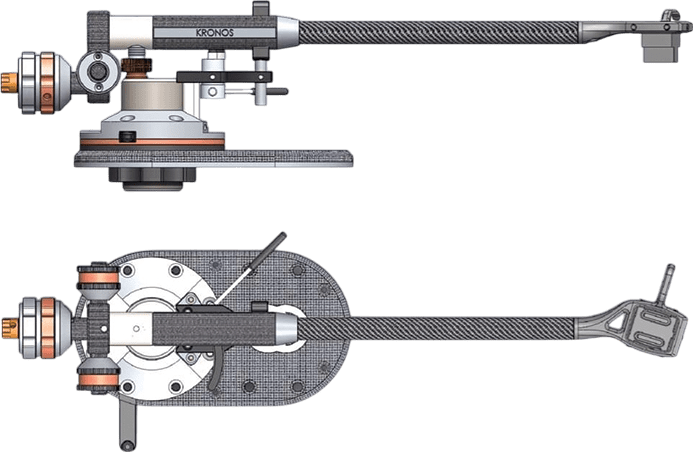
- The Discovery RS is designed with a unique resonance suppression system to minimize unwanted mechanical and acoustical contributions
Product Considerations
- One reviewer had trouble getting the right alignment, because the cartridge was too light for the tonearm
- The upgrade offer for existing Kronos owners won't be available much longer, so do not miss out
Comparisons (according to reviewers)
- Compared to the Black Beauty tonearm, the Discovery RS brought a significant improvement to the entire sonic tapestry of the turntable
Takeaway: The Discovery RS is an exceptional tone arm with innovative technology that really gets the music out of your records. It provides a monumental improvement in LP playback.
Video review
Our take on the brand

Our Summary
Product Strengths
- Unique, highly engaging, and factual rendition of the music
- Design builds on the best aspects of the KV12 tonearms, and takes performance to an even higher level by reducing weight and increasing rigidity
- New, unique bearing is made of zirconium oxide, and improved damping guarantees maximum stabilization of the tonearm with unsurpassed tracking
- Most of the aluminum elements of the arm are replaced with bronze, contributing to an increase in stability and a further reduction of resonances to an exceptional level
- Ability of unique playful interaction with the cartridge and turntable opened up a deeper interaction with the music, that is normally associated with pricier tonearms
Product Considerations
- Significantly more expensive than other models in its category
- Returning the tonearm after testing it without the hope of purchasing it will be difficult
- Even poor releases are clearly shown for their weaknesses
Comparisons (according to reviewers)
- Vs KV12: KV9 Max offers even better resolution, even better differentiation, even better insight into the smallest details and subtleties of every recording, or into even the most delicate tonal shifts and texture changes
- Vs KV12: KV12 is the clear winner when it comes to macro-dynamics
- Vs KV12: On the Dead Can Dance's Spiritchaser, what the KV9 Max did with the powerful, deep, almost subsonic electronic bass was brilliant—truly impressive, but the KV12 added even more mass and powerful slam to these deepest, lowest sounds
Takeaway: The J. Sikora KV9 MAX Zirconium is a high-performing tonearm that delivers exceptional sound quality, with great detail and clarity. This tonearm could be a worthwhile investment for those seeking the best in analog audio reproduction.
Video review
Our take on the brand
How to buy
Turntable Tonearms
Search all hifi products
Explore our database of 10,000+ new and 25,000+ used hifi products.