



Note that this is a discontinued product. You may want to visit the brand's page here to browse their newer products.
What reviewers think
Bloggers and YouTubers have tried this product—so we've summarized their strongest opinions below. Links to full reviews follow.
Product Strengths
- Manages to be a sonic outlier, with an engaging and easy-to-love sound
- Robustly assembled with familiar-looking materials and techniques
- Low-end performance delivers an immense foundation of hard-hitting bass lines
- Headphone section performs well, providing detailed, spacious, and tonally satisfying sound
- Demonstrated excellent control over speakers paired with it, especially those with a sparkling top end that loves current
Product Considerations
- The absence of a USB input might be an issue
- Warm-leaning speakers could be too much of a good thing
- The tubes take a couple of songs to warm up, and the sound to reach its peak fullness
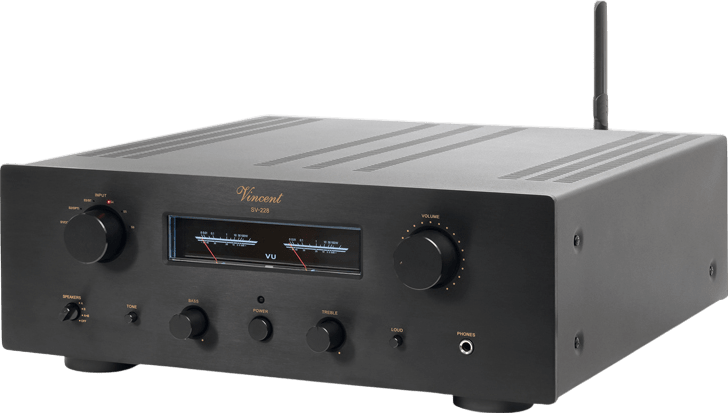
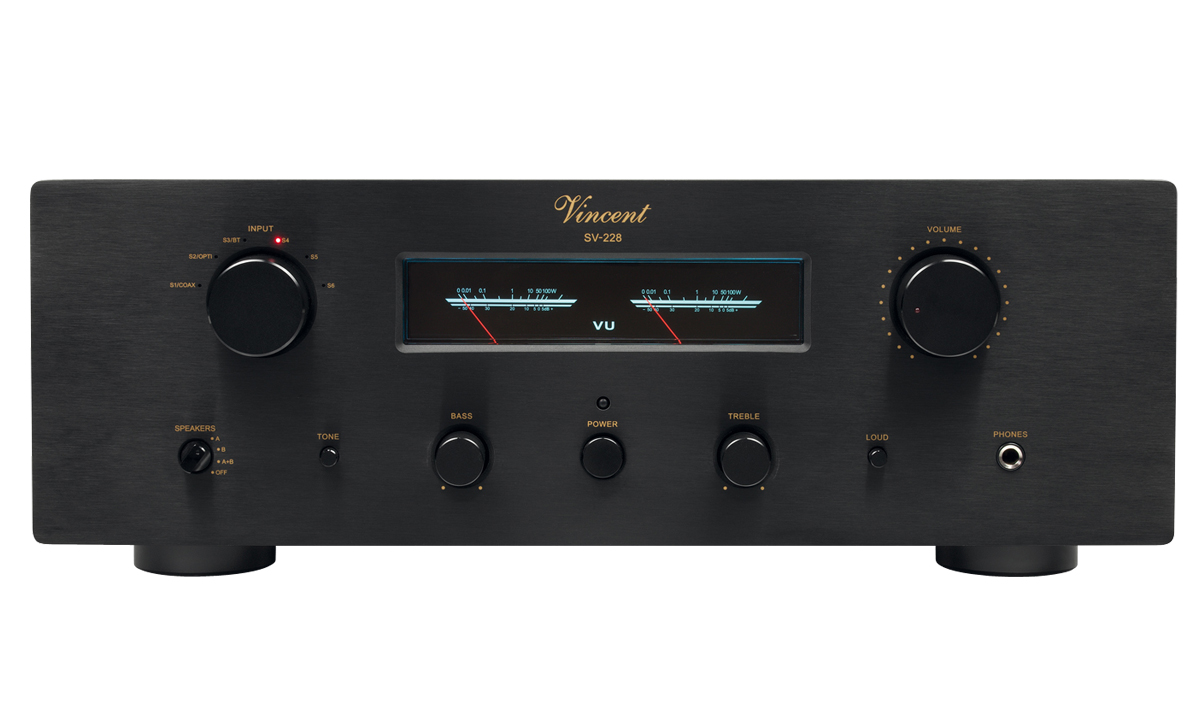
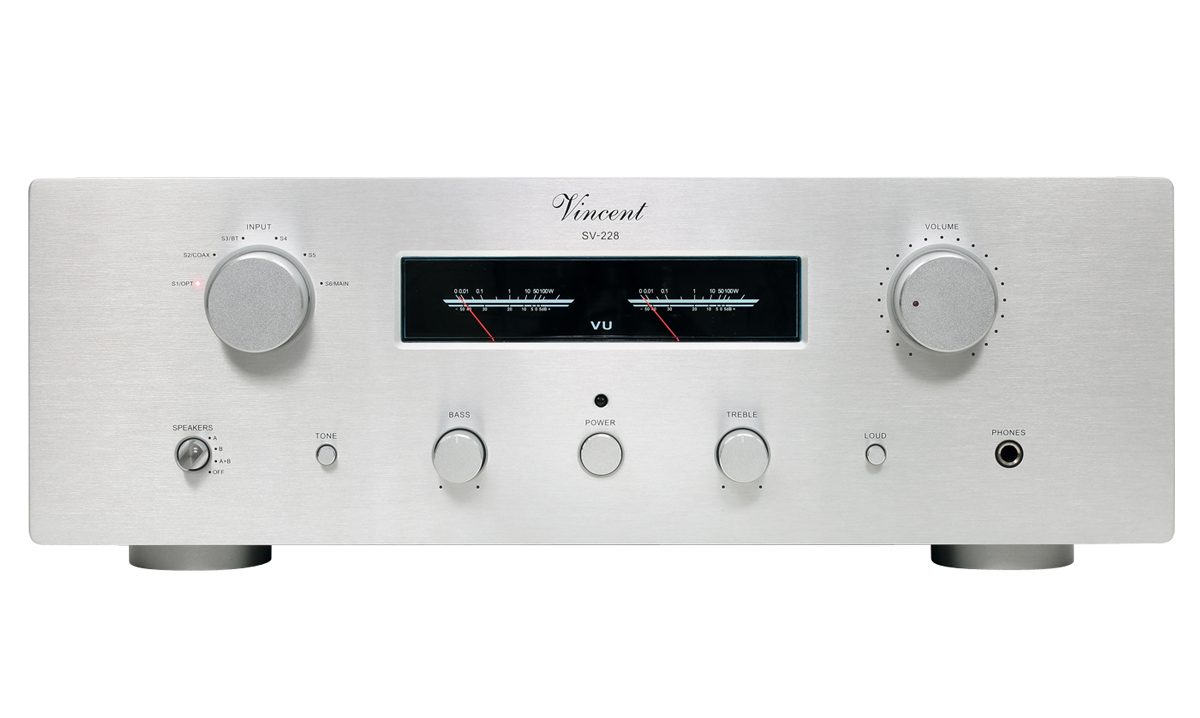
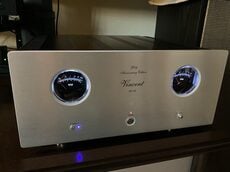
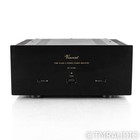
Takeaway: The Vincent SV-228 is a classically styled, muscular amp that could be the ticket for those looking for a bit of digital convenience and low-maintenance tube magic. Its rightness of tone and lush presentation make it a compelling package.
All
SV-228
reviews


Manufacturer details
- Frequency Response: 20 Hz – 20 kHz (+/- 0.5 dB); 20 Hz – 50 kHz (+/- 2 dB)
- Nominal Output Power RMS / 8 Ohm: 2 x 100 Watt
- Nominal Output Power RMS / 4 Ohm: 2 x 180 Watt
- Total Harmonic Distortion: < 0.1 % (1 kHz, 1 W)
- Input Sensitivity: 560 mV
- Signal to Noise Ratio: > 90 dB
- Input Impedance: 47 kOhm
- Max. Power Consumption: 350 Watt
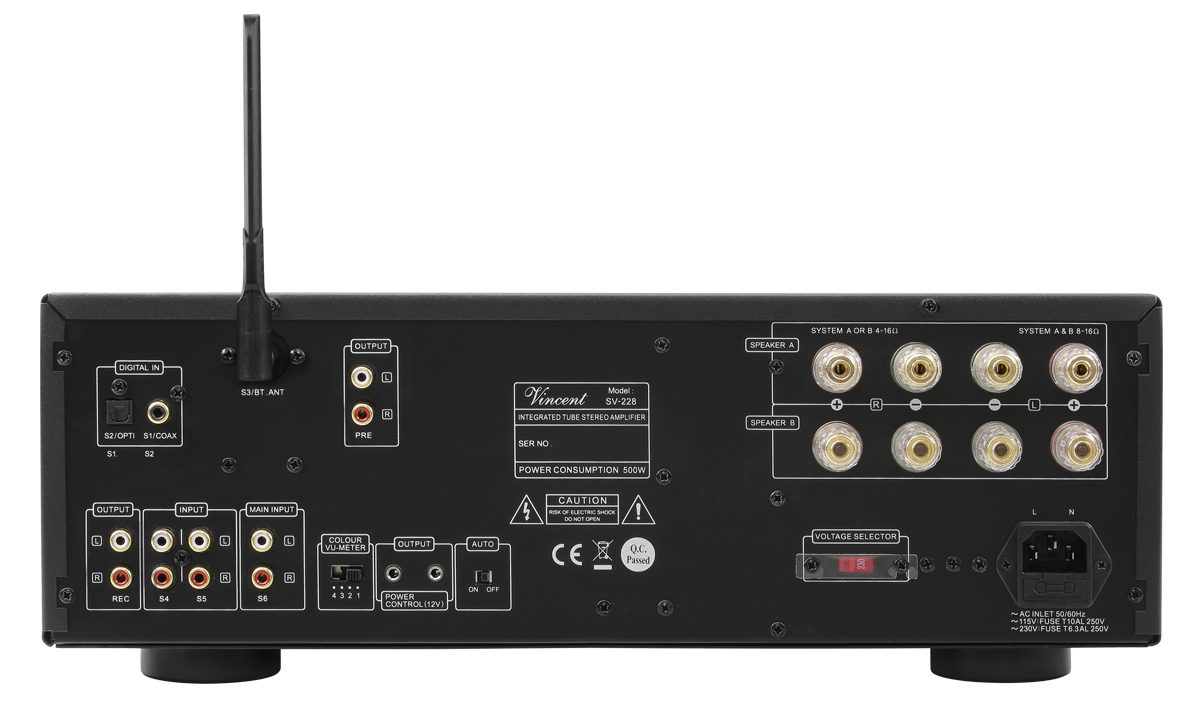
- Inputs: 2 x Stereo RCA, 1 x Coaxial, 1 x Optical, 1 x Bluetooth, 1 x Stereo Main In
- Outputs: 1 x Stereo Pre Out, 1 x Stereo Rec Out, 4 x 2 Speaker Terminals
- Tubes: 1 x 6N4, 2 x ECC82
- Playable Digital Formats: WAV, FLAC, APE, LPCM, MP3, AAC, AC3, WMA
- Weight: 15.5 kg
- Dimensions (W x H x D): 430 x 152 x 450 mm

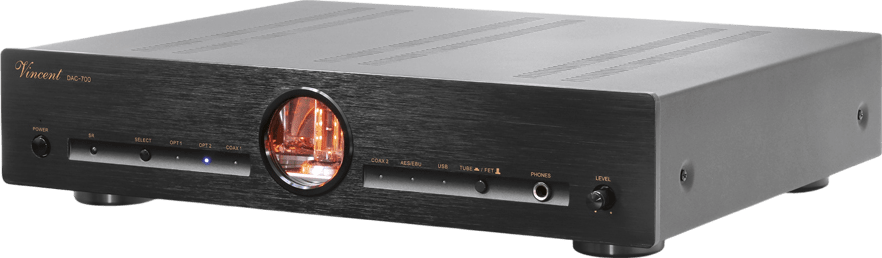
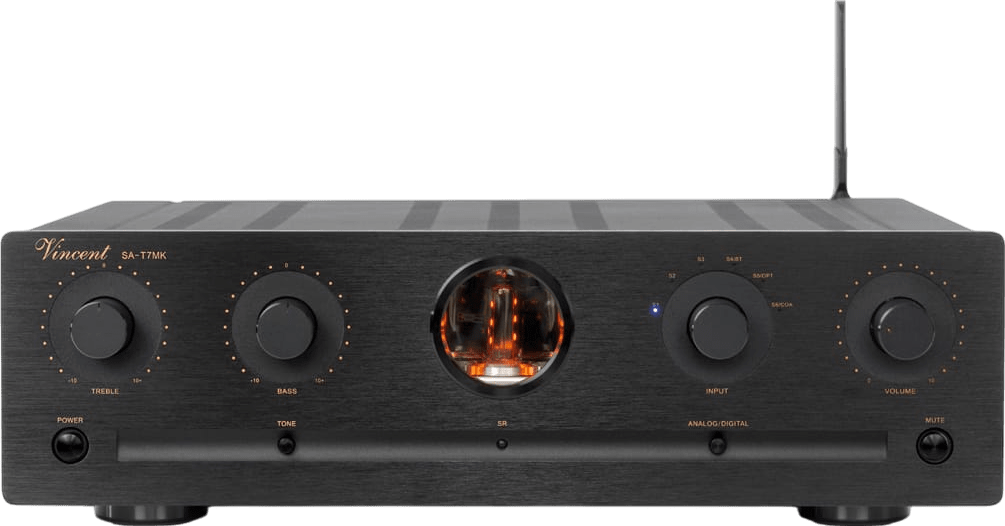
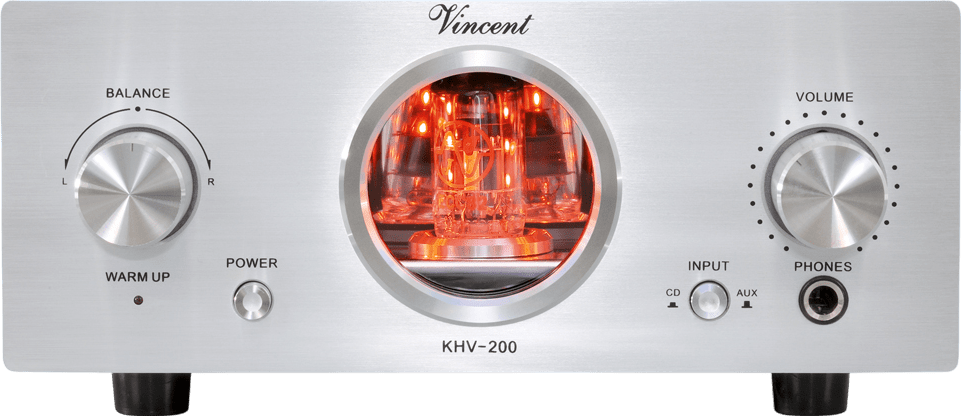

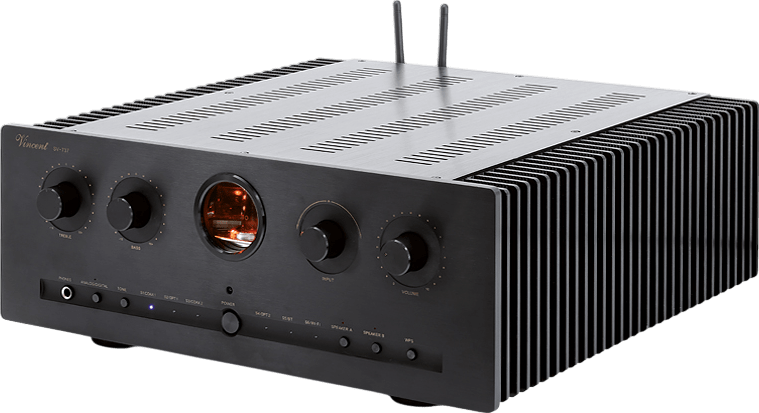




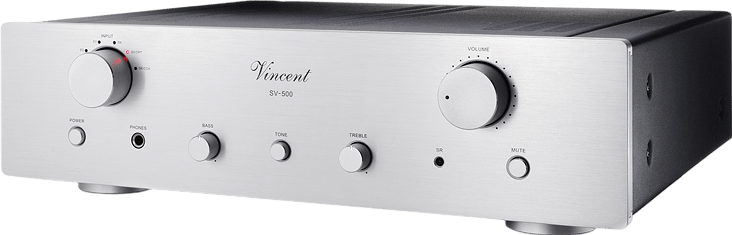
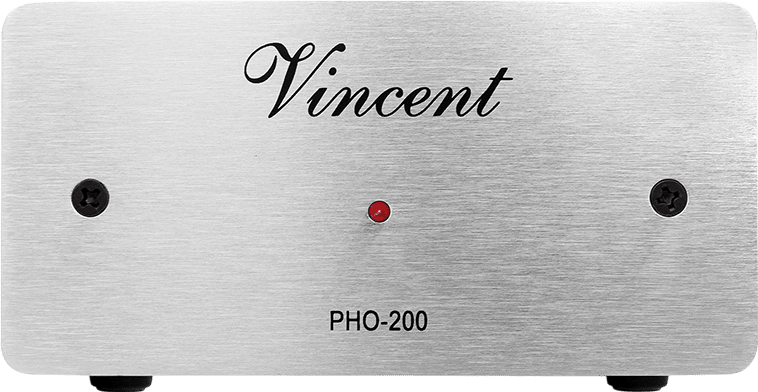
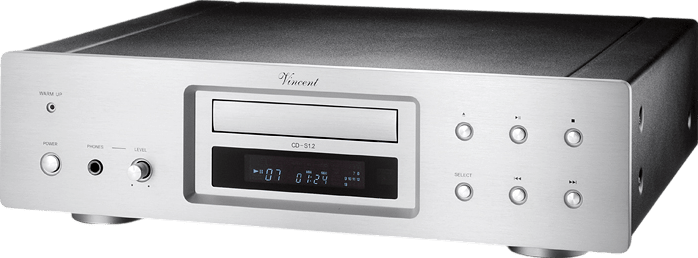
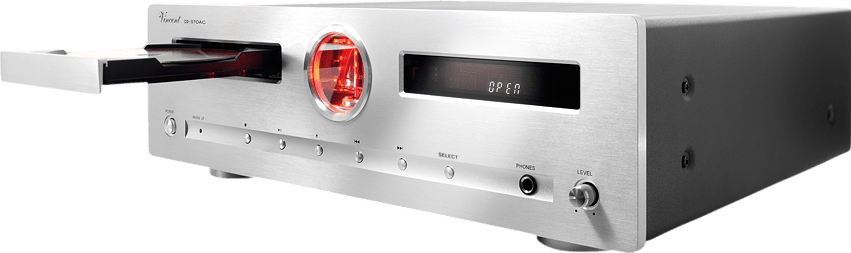

Brand highlights
Taking a step back to look at reviewers' thoughts of the brand's entire lineup—not just this product—what stands out most is the following:
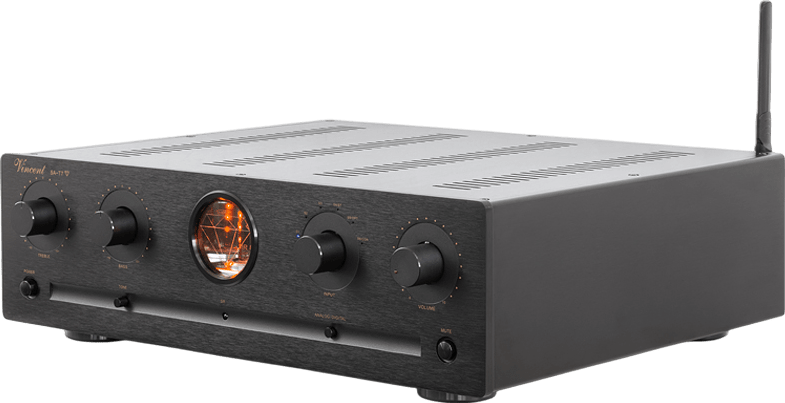
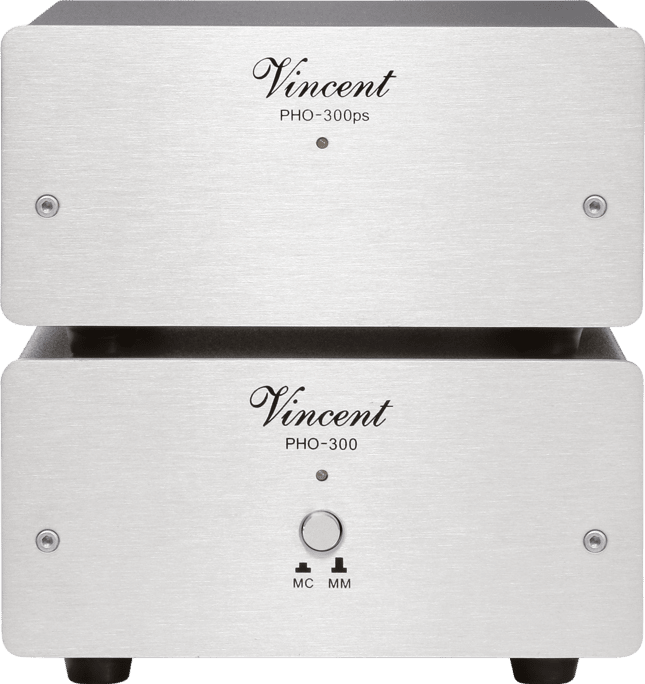
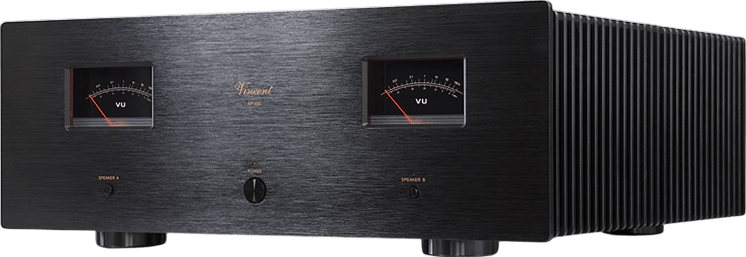
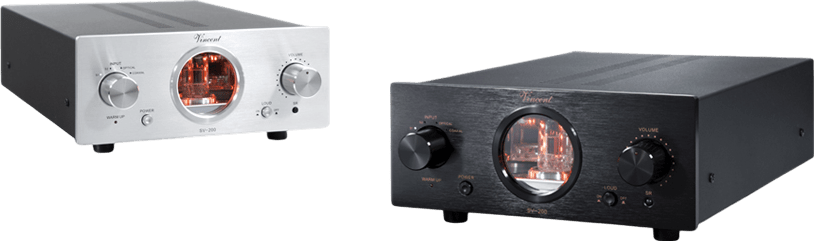
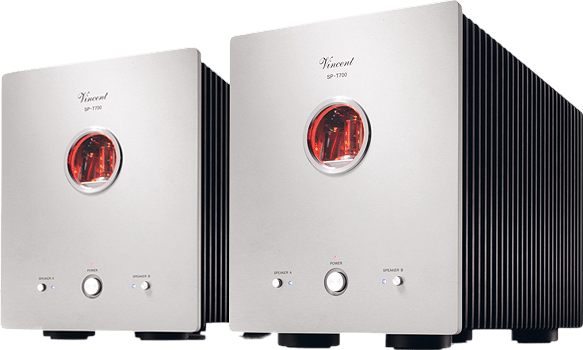
- Vincent's designs utilize a hybrid approach, often pairing vacuum tubes in the preamplifier stage with solid-state components in the output stage, seeking to combine sonic warmth with reliable power delivery.
- Vincent Audio often employs a separate, custom-made linear power supply in a second chassis, rather than a switch-mode "wall-wart," even in more affordable models.
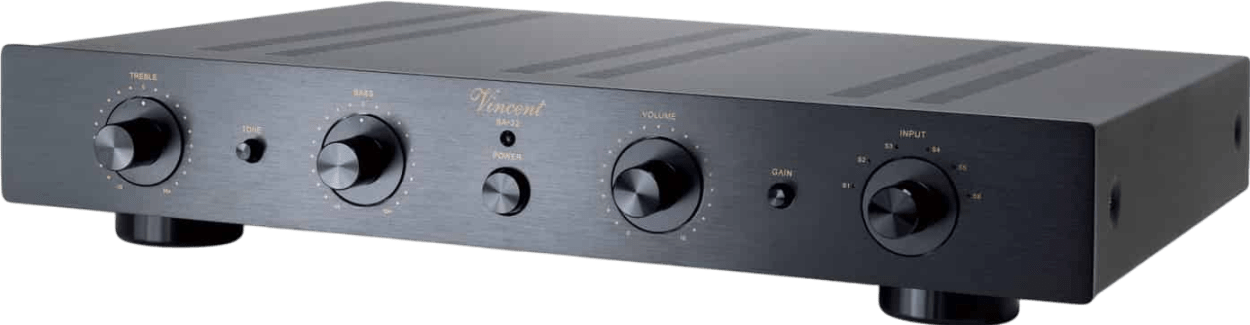
- Many Vincent products include tone controls, which can be bypassed, offering flexibility in tailoring the sound to different recordings and listening environments.
- The brand's components frequently incorporate a built-in DAC, offering a convenient all-in-one solution for digital sources.
Select products
SV-200
- Positioning: The entry-level model in Vincent's TubeLine series, offering a compact design.
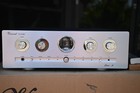
- Description: Features a compact size and high dynamic range, making it ideal for small rooms or setups where space is limited. Uses two 6N1 tubes for sound conditioning, providing a warm and natural sound, which is a step up from typical solid-state amplifiers. Compared to the SV-237MKII and SV-700, it offers less power but maintains a high-quality sound.
SV-237MKII
- Positioning: The mid-range model in the TubeLine series, known for its modern design and enhanced connectivity.
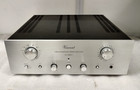
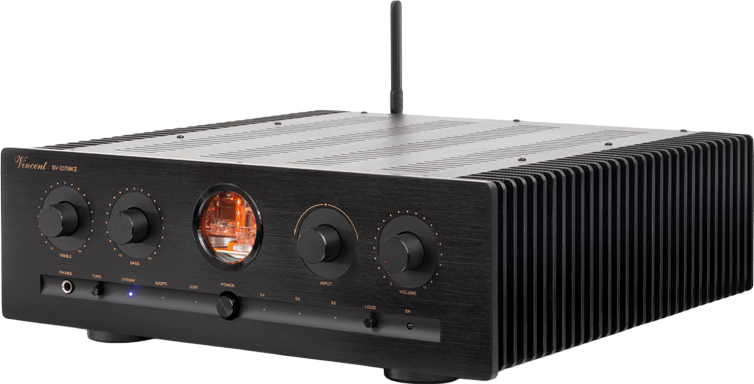
- Description: Features a modern design and Bluetooth connectivity, making it suitable for users who value aesthetics and wireless streaming. Uses two 6N1P NOS tubes in the preamp section, offering a natural and musical sound, which is more refined than the SV-200. While it provides more power than the SV-200, it is less powerful than the SV-737.
SV-700
- Positioning: A high-performance model in the TubeLine series, offering a symmetrical design for improved sound quality.
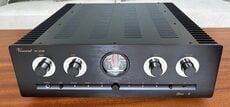
- Description: Features a symmetrical design, which minimizes crossfeed and distortion, providing precise bass and clear mid and high frequencies. Uses a Shunt Regulated Push-Pull concept with three tubes per side, offering superior sound quality compared to the SV-237MKII. Offers more power and sophistication than the SV-237MKII, but is less advanced than the flagship SV-737.
SV-737
- Positioning: The flagship model of Vincent's integrated amplifiers, offering the highest power and advanced features.
- Description: Features high power output and advanced connectivity options, including built-in WiFi for music streaming. Incorporates a newly developed preamp section benefiting from the SA-T7, providing a groundbreaking sound experience with more power than the SV-700.

Our take on the brand
Look inside the brand
Our interview with the brand
What are two key technological innovations or strong opinions that differ you from other brands?
What's your approach to customer support?
What are your favorite tracks for showcasing the strength of your products?
What other products pair best with yours?

Used
Vincent








What if you spend more?



.svg)
Our summary
Product Strengths
- Hybrid design combines tube preamp and solid-state power amp for a balance of warmth and solid bass
- Delivers the first 10 watts in pure Class A mode, which is unusual for an affordable amplifier and affects sound quality
- Built-in Burr-Brown DAC is a good match for the overall sound signature of the unit
- Exceptional build quality, described as 'built like a tank' with high-quality components
- Tone controls are effective and don't degrade the soundstage significantly
- Lacks a USB input for the DAC
Product Considerations
- Headphone jack performance is not ideal for lower impedance headphones
- Some reviewers wished for more digital inputs
Comparisons (according to reviewers)
- Compared to a Yamaha amplifier, the SV-237MKII adds a subtler touch of warmth and slightly emphasized mid-bass
- One reviewer preferred the sound of the SV-237MKII over the PS Audio Stellar Strata
- Compared to the Exposure 2510, the Exposure 2510 outshines it for resolving ability and a more even-handed tonality
- Compared to the Willsenton R8, it shares the SV237 MKII's rich tonality but is slightly less warm, and the R8 is more revealing in the mids and highs
- Compared to the NAD M33 Integrated Amplifier, the Vincent SV-237MKII has the musical abilities of a great amplifier, regardless of the price—nothing is missing
Takeaway: The SV-237MKII is a well-built amplifier that delivers a warm and engaging sound. It offers a unique hybrid design with versatile features, making it a great option for audiophiles seeking a balance of tube and solid-state benefits.
Video review
Our take on the brand
Product Strengths
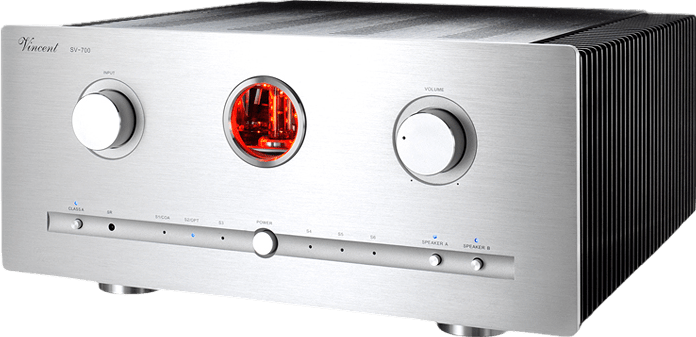
- The SV-700 is a hybrid integrated amp with tubes in the preamp section, allowing for tube rolling and sound variation
- It can operate in Class A (50 watts per channel) or Class AB (100 watts per channel), with the sound improving considerably in Class A
- It uses a dual mono topology design, potentially improving sound quality
- Multiple inputs are offered, including RCA, balanced, optical, and coax
- The unit has a vintage look in silver, an aesthetic the reviewer appreciates
Product Considerations
- The amp gets hot when operating in Class A and can act as a room heater
- The remote control's volume adjustment can be a little jumpy, making fine-tuning difficult
- The built-in DAC might not be of interest to all users, as some may prefer their own
- It is manufactured in China, but engineered and designed in Germany
Comparisons (according to reviewers)
- Vs Marantz 2275: In Class A, the SV-700 drastically increases the three-dimensionality of the sound compared to the Marantz
Takeaway: The Vincent SV-700 is a hybrid integrated amp that offers a noticeable improvement in sound quality, especially in Class A mode. It is a good option for those seeking a tube sound with modern features.
Video review
Our take on the brand

Tomorrow's Hi-Fi, Today
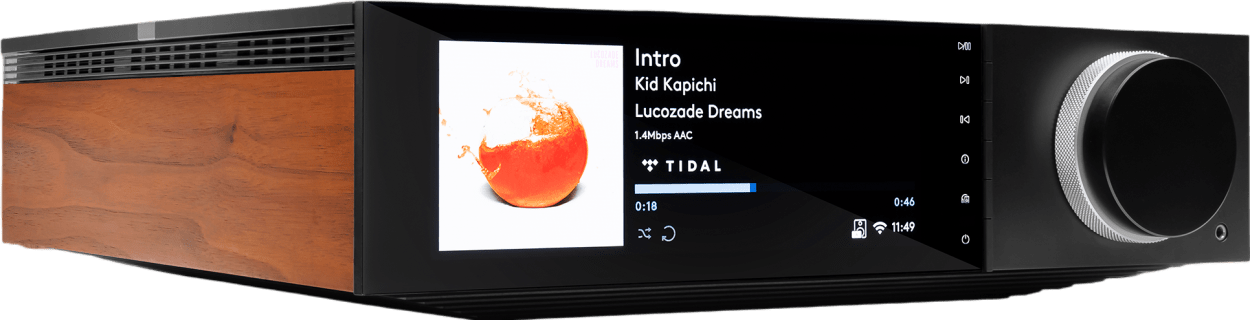
With Evo 150, we've brought your audio past and present into the future. With outstanding Hypex NCore Class D amplification and our class-leading StreamMagic streaming platform on board, all you need to do is add speakers to enjoy superb high-resolution audio quality from one elegant, discreet box.
And thanks to its suite of digital and analogue inputs, as well as its high-quality digital-to-analogue converter, Evo can be the heart of your hi-fi system for years to come.
Evo 150
Easy to Set Up, Easy to Upgrade
It couldn't be simpler. Connect Evo 150 to the mains and to your speakers. Open StreamMagic, connect to the network, then fire up your favourite music streaming service. Pick a tune, press play and adjust the volume to suit. When you're ready, you can dig deeper to set Evo 150 up just how you want it, adding functionality as you go.
Evo 150 playing through the StreamMagic App
StreamMagic App
Our StreamMagic app offers full control of Evo, plus access to the world's most popular and high-resolution music streaming services. It's clear, logical and stable – so Evo will do precisely what you want. Alternatively, you may prefer to use the app of your favourite streaming service. Evo's ready for you to listen whichever way you choose.
Model watches TV with Evo in view
Connectivity to Suit Your Needs
Thanks to its suite of digital and analogue inputs, including a built-in phono stage, Evo can be the heart of your system – add a turntable, say, or EVO CD. Video sources can play too, just connect your TV's HDMI output to Evo's ARC input. No matter where your music comes from, Evo 150's ready for it.
Model listens to Evo via headphones
Bluetooth Convenience. Hi-Res Sound Quality
Often nothing's more convenient than streaming via Bluetooth. Evo takes it to the max with aptX HD Bluetooth, which features wireless, high-definition music streaming from compatible devices – including our Alva turntables. And because Evo also transmits with Bluetooth aptx HD, it's perfect for private listening on compatible Hi-Res wireless headphones.
Evo in a lifestyle setting with a turntable and books
Made By Music
Evo 150 uses the best audio components, such as the ESS SABRE ES9018k2m Reference DAC. And then we bring every one of our 55+ years of audio know-how to bear. The result is a performance that celebrates the talent of musicians and producers – one that retains the original raw emotive power and detail.
Model turns the volume knob on Evo
Complete Control
Evo is intuitive and straightforward to operate, no matter if you're using its supplied remote control, our simple yet thorough StreamMagic app, or its physical controls – including the large dual-concentric dial on the unit's fascia.
Evo on a shelf in a lifestyle setting
Neat and Easy Placement
At 317mm wide, roughly the size of a vinyl album sleeve, Evo will sit neatly where you need it to. But thanks to its award-winning deisgn and all-around good looks, it really deserves to be centre stage.
Model adds a vinyl record to Alva
Great for Record Lovers
If you want to connect a turntable, Evo 150's built-in phono stage makes it perfect for decks with with moving magnet cartridges, but no integral pre-amp. That's on top of Bluetooth compatibility with our own Alva turntables.
Evo CD
A New Life for CD
Available separately, Evo CD is the compact disc transport developed to exclusively partner Evo all-in-one players. It shares the same eye-catching design, is crafted from the same premium materials and is engineered to the same exacting standards. Evo CD extracts every piece of musical detail from your discs, then passes it seamlessly to Evo. Your CD collection is now set to join the hi-fi evolution.
Detail shot
Designed to Thrill, Built to Last
Evo's confident sound, timeless looks and premium materials mean that you've found your new long-term musical partner – bringing pleasure to both your ears and eyes for many years to come.
Product Strengths
- Packs many features into a small frame, offering an 'all-in-one' solution by integrating streaming, DAC, preamp, and amplification
- The sound quality is clear, detailed, smooth, refined, articulate, and neutral, with good soundstage and imaging
- Offers a wide array of input options (analog and digital) and streaming service compatibility, making it versatile
- Its Class D amplification (Hypex NCore) is powerful (150Wpc) and efficient, running cool compared to traditional amps
- The industrial design and aesthetics are highlighted positively, with its sleek look, swappable side panels, and user-friendly interface, enhancing its lifestyle appeal
Product Considerations
- The headphone preamp may not satisfy serious headphone enthusiasts without a dedicated amp
- There is a noted lack of bass management
- The StreamMagic app lags behind the likes of Bluesound and Yamaha MusicCast in terms of its interface
- Some reviewers found a slight softening of the bottom end
- One review notes some power supply noise in bench tests, but at inaudible levels
Comparisons (according to reviewers)
- Offers wider soundstage, depth, and polish than the Naim Uniti Atom, but the Naim Uniti Atom has a greater sense of musicality and tighter rhythmic fabric
Takeaway: The Cambridge Audio Evo 150 is a versatile and attractive all-in-one system with excellent sound quality and a comprehensive feature set, making it a great choice for those seeking a simple yet high-performing audio solution. It provides a streamlined experience without sacrificing sound fidelity.
Video review
Our take on the brand

Product Strengths
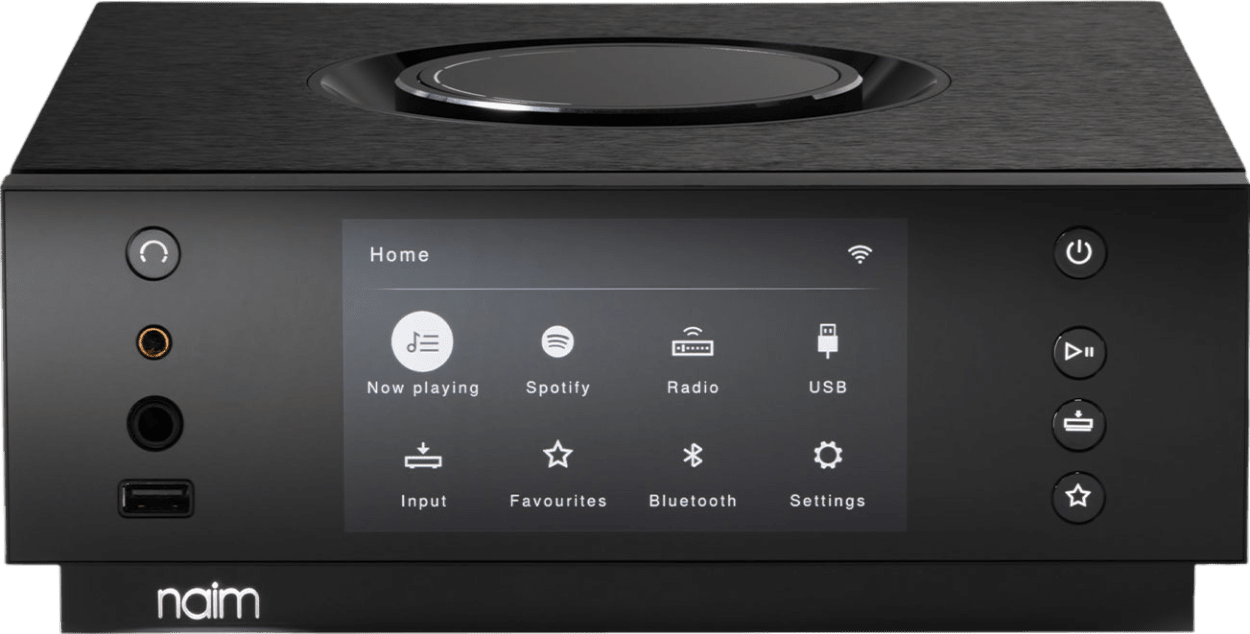
- Offers a comprehensive and flexible specification, functioning as a headphone amplifier and streaming preamp
- Produces superb sound quality, described as clear, pure, detailed, dynamic, and musical, without being overly analytical, regardless of genre or recording quality
- Features a well-made, elegant, and attractive design with a beautiful screen for album art and a satisfying volume control
- Supports a comprehensive range of streaming services and digital formats including AirPlay 2, Chromecast, Spotify Connect, Tidal Connect, Qobuz, Bluetooth, UPnP, and Internet Radio, and is Roon Ready
- Intuitive and stable app, especially for those who know what they want to listen to
Product Considerations
- The price is high relative to other headphone amplifiers/DACs on the market
- The front display is not a touchscreen
- Some might prefer a more analytical sound presentation
- The HDMI ARC connection is absent
- The Naim app lacks polish compared to dedicated music apps
Comparisons (according to reviewers)
- Vs Cambridge Audio Evo 150 and NAD M10—the Uniti Atom Headphone Edition is specifically focused on headphone use
- As a headphone amp, it is every bit as good as the Chord Hugo TT2
- Naim puts less of itself into the performance as opposed to McIntosh MHA200
Takeaway: The Uniti Atom Headphone Edition is a great self-contained system for headphone listening, with an easy-to-use interface and a beautiful design. It is a quality product that can be a centerpiece for your home audio.
Video review
Our take on the brand
What competes at this price?
Our Summary
Product Strengths
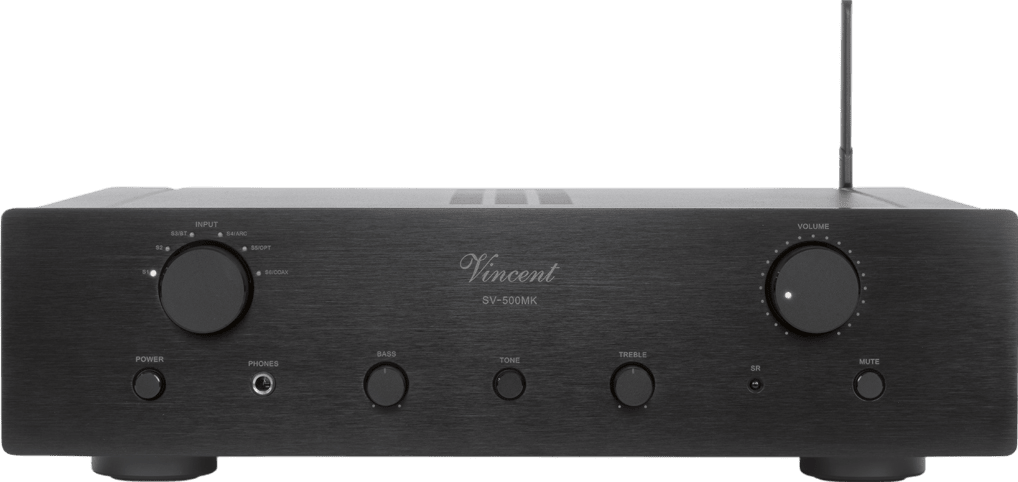
- Builds upon the foundation of its predecessor, the SV-500, by adding HDMI and Bluetooth connectivity
- Features a hybrid vacuum tube and solid-state design, combining tube warmth with solid-state power
- Integrated DAC supports digital input signals, and a built-in Bluetooth module supports modern codecs like aptX and AAC
- Offers versatility by functioning as a standalone preamplifier or DAC, in addition to being an integrated amplifier
Product Considerations
- The omission of a phono pre-amplifier is a mistake
- Absence of a subwoofer output feels like another lost opportunity
- The trademark Vincent porthole that allows one to see inside the amplifier and the glowing tubes is also not part of the package
Comparisons (according to reviewers)
- Vs Vincent Audio SV-737: The SV-500 MK may not offer the power of the SV-737, but 50 watts might be enough for a lot high-sensitivity bookshelf and floor standing loudspeakers
Takeaway: The SV-500 MK is a versatile amplifier with modern features like HDMI and Bluetooth, combined with the classic warmth of tubes. Its hybrid design and multiple functionalities make it worth considering for those seeking a balance of old and new.
Video review
Our take on the brand


Our Summary
Product Strengths
- Delivers a vividly detailed and balanced sound, handling complicated mixes with skill
- Able to extract a lot of information from digital audio files with apparent ease
- A volume lock prevents accidental volume adjustments when the device is in a pocket or bag
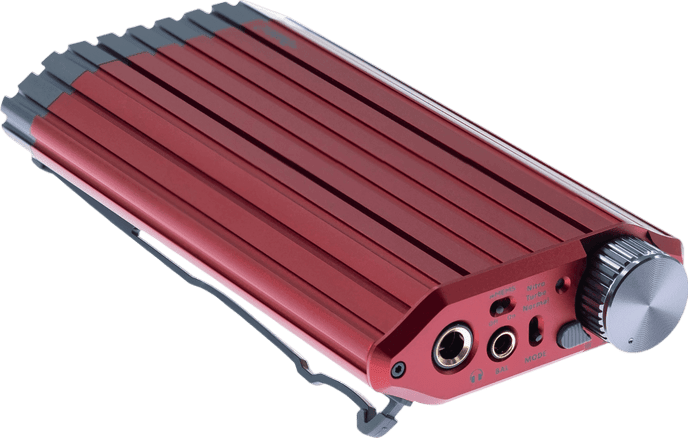
- Extensive specification including Bluetooth 5.4 with aptX Lossless compatibility and multiple inputs/outputs for versatile connectivity
Product Considerations
- Some reviewers feel the device is not very pocket-friendly due to its size and sharp edges, making it better suited as a transportable—rather than a truly portable—device
- The gain is set too high, making precise volume control difficult, especially with sensitive IEMs
- Using IEMatch adds output impedance, which can negatively affect the tonal balance and dynamics of some IEMs
- The length of the included USB-C cable is short, making it difficult to position the device on a desk
Comparisons (according to reviewers)
- Compared to the iDSD Diablo 1, the Diablo 2 offers slight sonic improvements and better build quality, but at a higher price
- Compared to the iDSD Signature, the iDSD Signature is considered by some to offer a better result for less money, with a more realistic instrument and vocal timbre, larger soundstage, and customizable features like crossfeed and bass boost
- Compared to the FiiO Q7, the iDSD Diablo 2 has a vivid sound, where the FiiO Q7 has a smooth and wide sound
Takeaway: The iDSD Diablo 2 is a powerful and versatile DAC/amp that enhances headphone listening with its detailed sound and extensive features. It is a good choice for users who want a high-quality audio experience on the go or at their desk.
Video review
Our take on the brand

Our Summary
Product Strengths
- Joyful sound signature with detailed output
- Can power a wide range of headphones, due to Ultima technology
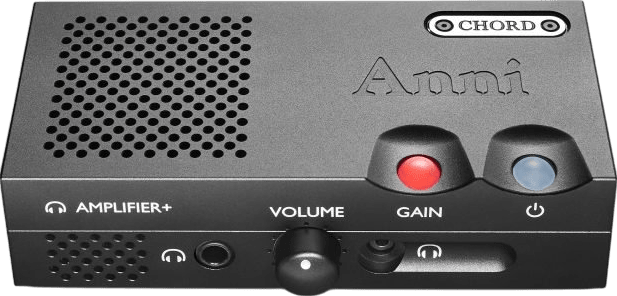
- Compact design, stacks perfectly with the Qutest and Huei
- Employs trickle-down Ultima technology to allow delivery of enormous peak current outputs
- Solid build quality using CNC-milled aluminum casework and good heat dissipation
- Connectivity options include headphone and speaker outputs
Product Considerations
- No gain switch for the headphone output
- Default gain level a bit high for sensitive IEMs
- More power limitations with speakers than headphones—best for smaller, efficient speakers or nearfield listening
- Runs hot, requiring good ventilation
- The volume control feels a little wobbly and might be difficult to use in a very precise way, and there is some channel imbalance at very low volumes
Comparisons (according to reviewers)
- Qutest/Anni pairing justifies its price premium thanks to a more composed and insightful presentation that offers notably more low-end authority, dynamic punch and tonal richness
- Cyrus ONE HD is plusher, showing that Anni has strong niche appeal
- The iFi xDSD Gryphon has digital inputs and built-in DAC, while Anni can power speakers
Takeaway: The Chord Electronics Anni is a compact and well-built amplifier that delivers a joyful and detailed sound, making it a great addition to a desktop setup for headphone and nearfield speaker listening. Its use of trickle-down Ultima technology ensures high-quality performance in a small package, and its ability to stack with other Chord devices makes it a good choice for those already invested in the ecosystem.
Video review
Our take on the brand

Our Summary
Product Strengths
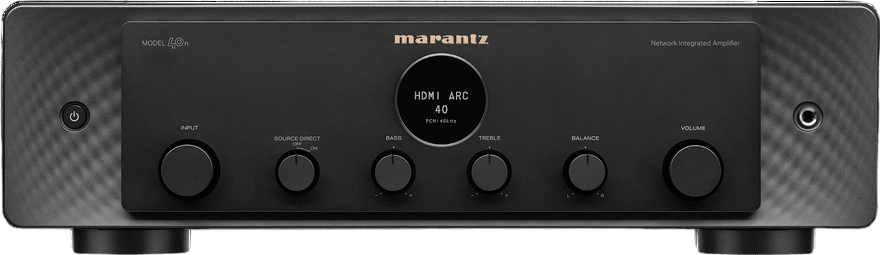
- High-quality build and aesthetics, with a metal casing and elegant fascia made to a high standard
- A clear, powerful, and spacious sound, with a presentation that is appealing right from the beginning
- Plenty of power on tap, specified at 70W per channel into 8 ohms and 100W per channel into 4 ohms
- Fantastic connectivity, with three pairs of line-level inputs, an MM phono stage, and outputs for a recorder and subwoofer
- Capable network DAC/streamer with digital controls
Product Considerations
- The dimpled effect flanking the extruded front panel gives the unit a further distinctive look, but the finish feels like plastic upon closer inspection
- The HEOS app isn't bespoke to the 40n, many of the product's set-up options can only be accessed through the unit using the included remote control
- Bluetooth pairing took longer than expected, and there were occasions when the app stopped being able to see or display the music server when switching inputs
- The lettering on the remote control is impossible to read in dim light, and the buttons are too similar in size, resulting in fumbling in the dark
Comparisons (according to reviewers)
- The Marantz Model 40n is a different proposition compared to the Marantz PM7000N, Marantz is keen to reposition itself as a luxury hifi brand and that intent is clear in the 40n's gorgeous build and aesthetics
- Rival systems such as the Cambridge Audio Evo 150 and Naim Uniti Atom do a better job of engrossing listeners in the music, being more insightful, musically engaging, and dynamically exciting by degrees
- Is super-sexy and distinctive styling, a higher level of fit and finish, a much better remote, and access to Sound United's HEOS streaming/multiroom audio platform wanted—or more coaxial and optical digital inputs, Dirac Live room-correction capabilities, more power, a more efficient topology, and access to Lenbrook's BluOS streaming/multiroom audio platform
- At first glance it's hard to distinguish the Model 40n from its slightly costlier Marantz Model 30 sibling
Takeaway: The Marantz Model 40n is a stylish and feature-packed streaming amplifier that offers a musical and inviting performance. With its versatile connectivity options and impressive sound quality, the Model 40n is a great choice for modern, lifestyle hifi systems.
Video review
Our take on the brand

Our Summary
Product Strengths
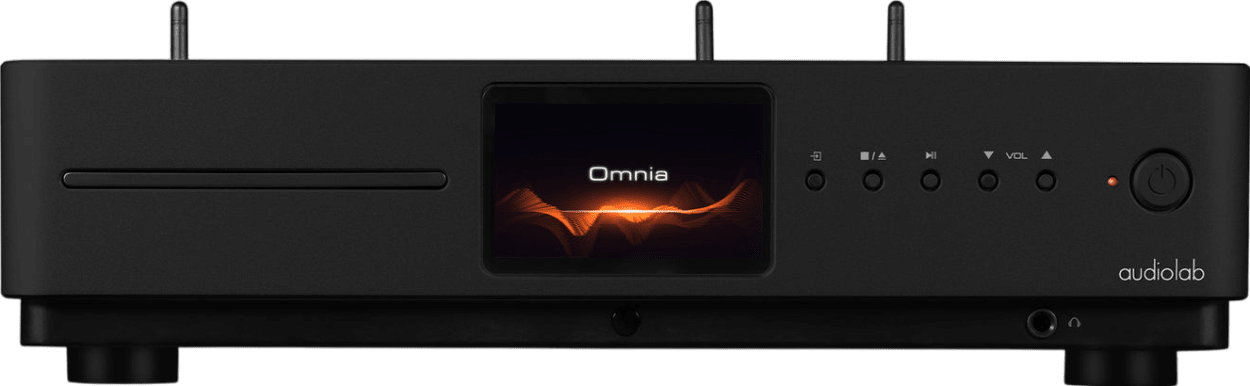
- Offers a comprehensive set of features including CD player, streamer, Bluetooth, headphone amplifier, phono amplifier, and power amplifier, all in one box
- Sounds very good across digital and analogue inputs, the combination of digital decoding and amplification is exceptionally cohesive
- Has a sturdy, well-built casework that feels every inch of its price tag, and is built to last
- Provides clear, detailed and large, spacious sound with an easy-going presentation, and can be part of an expansive wireless multi-room system
- Incorporates a high-quality ESS Sabre DAC and amplifier based on the Audiolab 6000A design
Product Considerations
- The software interface using DTS Play-Fi is a little slow, and Play-Fi is still not gapless, Play-Fi is not delivering at the same level of user experience as competitor solutions
- Rivals have greater dynamic punch, rhythmic accuracy, and energy
- Some reviewers find that the unit can be a bit sensitive with scratched CDs
- Remote and fascia controls aren't all that responsive
- There is no album art displayed on the screen during streaming
Comparisons (according to reviewers)
- Compared to the Technics SA-C600, the Technics may not be as big-scaled, open or reveal as much detail as the Audiolab Omnia, but it's more adept at conveying enthusiasm, rhythmic precision and dynamic punch
- In direct competition with the Cambridge Audio Evo 75, the Audiolab Omnia ties Audiolab styling touches into something that is not slavishly retro and gives away absolutely nothing in terms of feel, solidarity and design
- Compared to the NAD C700, the Audiolab Omnia has functionality they cannot get anywhere near—indeed functionality that leaves everything else under two grand looking rather limited
Takeaway: The Audiolab Omnia is a versatile and well-built all-in-one system that offers a wide range of features and delivers enjoyable sound, making it a great option for those seeking convenience without sacrificing audio quality. It's especially appealing for those who still value CD playback.
Video review
Our take on the brand
How to buy
Amplifiers
Search all hifi products
Explore our database of 10,000+ new and 25,000+ used hifi products.