

Welcome
GaNFET amplifiers are revolutionizing high-end audio, bringing the best of both worlds: the warm, organic sound of vintage tube amps with the razor-sharp precision of modern electronics.
Thanks to their lightning-fast switching speeds, these gallium nitride transistors capture subtle harmonics that silicon chips miss, breathing life into every note.
The result? Vocals and acoustic instruments sound startlingly real – you can hear better nuance and texture. While traditional silicon amps can sometimes sound sterile and cold, GaNFETs deliver a rich, natural warmth in the crucial midrange frequencies.
It's a difference that might seem subtle at first listen, but spend time with a high-end system, and you'll never want to go back.
What to look for when choosing an amp


So you want to buy a new amplifier, but you are not sure what you should pay attention to. At ExtremeHiFi, we have the world's largest database for audio products. Here is a brief overview of the most important functions and design aspects that distinguish amplifiers and that you should pay attention to.
The first and most important aspect of an amplifier is how much power it has. Can it actually drive your speakers? The easiest way to check this is to look at what the manufacturer recommends for your speakers. At ExtremeHiFi, you can see the recommended performance in the specifications section and ask your manufacturer if they don't provide this information.
Certain types of speakers, such as horns, are often much more sensitive and in many cases require only a little wattage to become extraordinarily loud. Therefore, you shouldn't buy a 100W per channel amplifier for sensitive horns, as you won't use most of the dynamic range of the amplifier. You'll achieve better results with a lower-powered amplifier. However, if you have something like Focal Grande Utopias that require a few hundred watts, you should make sure that you buy an amplifier with sufficient power to drive the speakers properly, without being too quiet or distorted from overexertion.
In the upper market segment, many people prefer monoblock amplifiers. These amplifiers only have one channel, so you have to buy two of them. This can have some advantages in terms of quality. They take up more space and probably cost more than a corresponding stereo amplifier. However, since the amplifiers are spatially distant from each other, there is no possibility of electrical interference or so-called crosstalk between the two channels. In addition, they have their own power supply. So if one channel is heavily tasked, the other is not affected in any way. They have their own heat dissipation, and with monoblock amplifiers, you can generally achieve a slightly higher performance limit than with a stereo amplifier.
When deciding which amplifier to buy, there is a third criterion that can have a drastic influence on the sound that you actually get and on some compromises that you have to make. This is the class of the amplifier, where the three most common options are Class A, Class AB, and Class D.
Class A amplifiers have the reputation among audio experts to offer the best sound quality. This is mainly because Class A amplifiers are the purest form of audio amplification. They have a single or a group of transistors that amplify the entire cycle of the audio signal—completely positive and negative. This means that the behavior at different levels is extremely consistent, and many people think that Class A amplifiers sound best.
But that's a trend, not a rule. There are many terrible Class A amplifiers, but also many fantastic Class AB and Class D amplifiers.
In fact, most people do not use Class A amplifiers because the compromises that you have to make are quite large. They generate a huge amount of heat. If you need a stereo amplifier with 100W per channel, a Class A amplifier could permanently draw 800W from the socket, even at idle, and release this power as heat into your room. Especially if you have high power demands for your speakers, a Class A amplifier may simply not be practical.
Class AB amplifiers work similarly to Class A amplifiers. Instead of a single group of transistors that amplify the entire positive and negative cycle, they have one group that amplifies the positive cycle, another group that amplifies the negative cycle, and the summed output signal is the intended audio signal. This has the advantage that they are much more efficient. At idle, they don't consume as much energy as a Class A amplifier. They run much cooler, and you can often get much more power from a physically smaller device because you don't have to dissipate so much heat.
However, this also means that the distortion behavior of Class AB amplifiers in relation to the output level can be slightly different from that of Class A amplifiers. Nowadays, however, the quality difference between Class A and Class AB amplifiers has diminished significantly compared to earlier times, possibly even no longer existing. There are some fantastic Class AB amplifiers on the market.
So if you have very sensitive speakers, it can still be worthwhile to look at Class A amplifiers, as it is much easier to get a Class A amplifier with 20W per channel than one with 100 or 200W.
However, if you have power-hungry speakers, don't think that you have to sacrifice a lot when buying a Class AB amplifier, as some of the Class AB products on the market are really extraordinary.
Now, there is a third category of amplifiers that is becoming more and more popular, the so-called Class D. These amplifiers work completely differently than Class A and Class AB. Instead of amplifying the signal one-to-one, they actually turn it into a series of extremely high-frequency pulses. If you then use a low-pass filter that filters out the high-frequency components, the originally intended signal is reproduced.
Class D is particularly suitable for requirements with very high power and a small form factor. It is often found in subwoofers, in car radios, or in places where you need a lot of power in a small housing. This is because Class D is the most efficient amplifier type, often over 90 percent efficient. This means that they consume almost no more electricity than they actually output. They emit almost no heat.
Another important aspect to consider in addition to the amplifier class is whether you want a transistor or a tube amplifier. Tube amplifiers are usually Class A amplifiers but use tubes instead of transistors and are objectively less accurate than most transistor amplifiers. They have higher distortion and color the sound more than a typical transistor amplifier. But the reason why so many of them are still produced and why they are still so popular is that some of these distortions and colorations provide a really pleasant end result that many people prefer over a more neutral, linear, or accurate sound. So if you prefer a warmer, slightly colored, but more pleasant sound, a tube amplifier could be something for you.
Regardless of how powerful your required amplifier should be or which amplifier class you prefer, you should consider whether you need a power amplifier or an integrated amplifier. Power amplifiers are extremely common in audio technology and do not have their own volume control. They are called power amplifiers because they provide a fixed gain. They take an input signal that is amplified by a fixed amount, and that's all. For this reason, when buying power amplifiers, you should make sure that either your DAC has an integrated volume control that you can use, or that you use a separate preamplifier for the volume control.
Power amplifiers don't omit volume controls for cost reasons, but because for quality reasons you don't want to have the sensitive line-level circuit as close to a large, powerful amplifier as possible. For higher-quality setups, instead of an amplifier with an integrated volume control (which is referred to as an integrated amplifier), you usually use a separate power amplifier and then a preamplifier or a DAC with an integrated volume control, rather than having all the sensitive circuitry in the same device as the amplifier itself.
However, if you have limited space, you can look for an integrated amplifier, which combines the functions of the power amplifier and the preamplifier and often includes both the input circuit and the volume control. Sometimes the DAC itself is also housed in the same device.
There are so many different amplifiers on the market, which are all suitable for different tastes and preferences. The best way to find out what is actually suitable for your personal preferences is to read the reviews and see what people say about them. With ExtremeHiFi, this is very easy thanks to our rating system. You can go to each product page and take a quick look. This gives you an overview of what people think about it and which competing products you should pay attention to.
Products on this list




.svg)
What reviewers think
Product Strengths
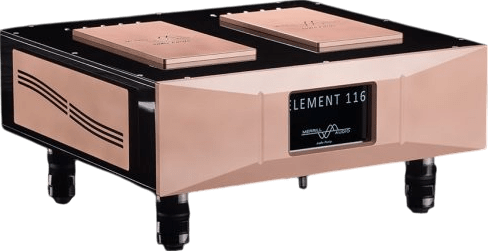
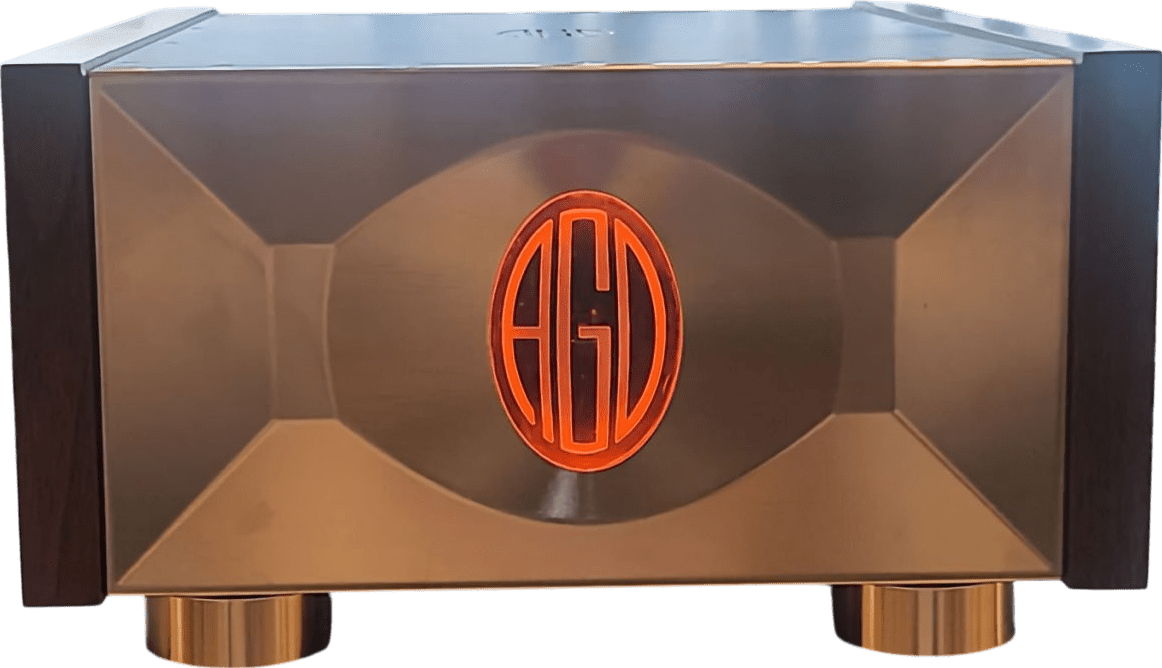
- The Element 116 provides a quantum leap forward in both detail and immediacy, thanks to a zero feedback, open loop proprietary design
- Offers a more tactile experience with an immediacy and sense of 3-dimensionality
- Helps lift the top and bottom off the frequency spectrum, allowing the timbral characteristics of both instrumental and vocal sources to sound wonderfully realistic and natural
- The noise floor is very low, revealing a seemingly limitless frequency spectrum and truthful reveal of timbres
- The chassis has an elegant, state-of-the-art appearance
Product Considerations
- Requires a 20A IEC power cord
Comparisons (according to reviewers)
- Expounds on the same fundamental qualities of speed, accuracy and spatial resolution as the Merrill Veritas
- Offers more presence and faithfulness to the recorded musical sources than the Merrill Veritas
- Has tighter punch in the lower frequencies than the Merrill Veritas
Takeaway: The Element 116 delivers some of the best amplification and is competitive with many designs priced well above its price. Its detail, immediacy, and revealing of timbres provide a very tactile sonic experience.
Video review
About the brand


What reviewers think
Product Strengths
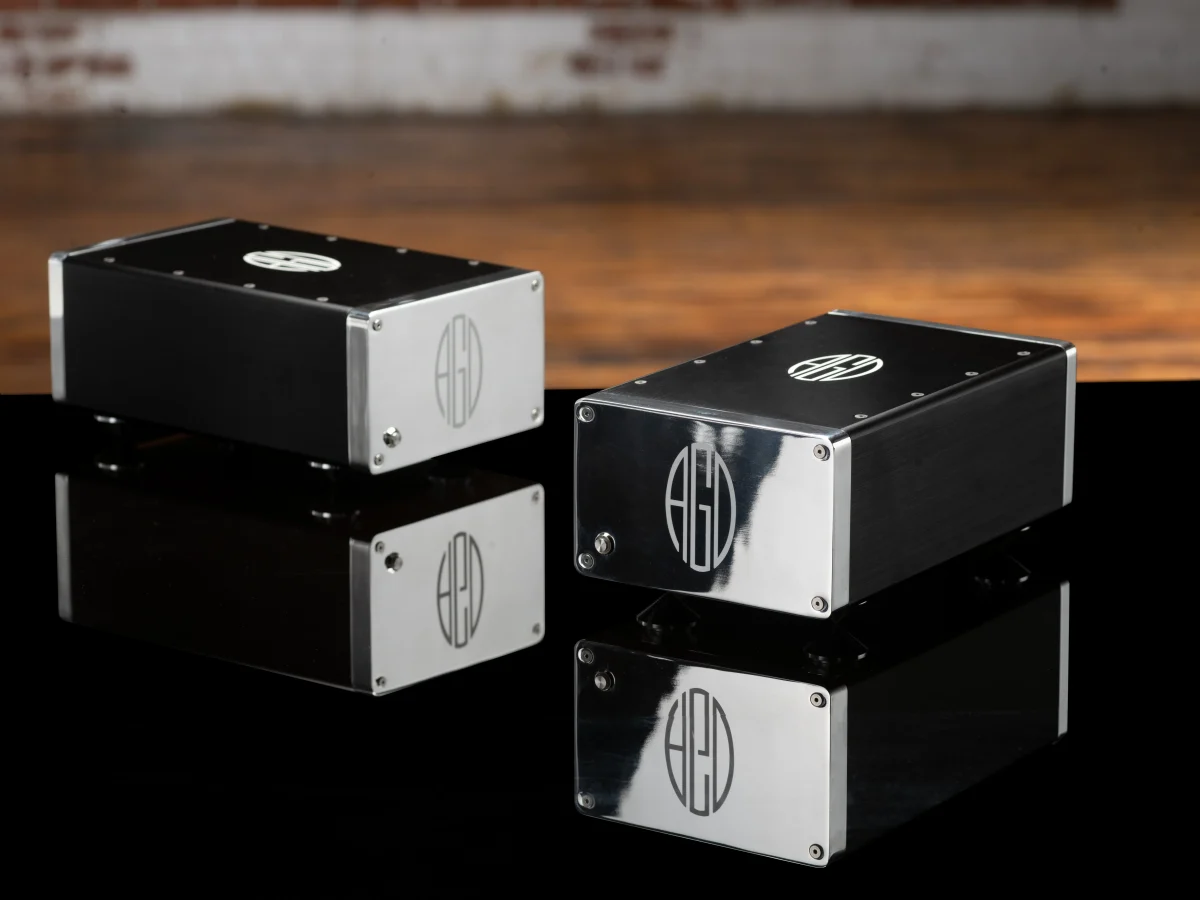
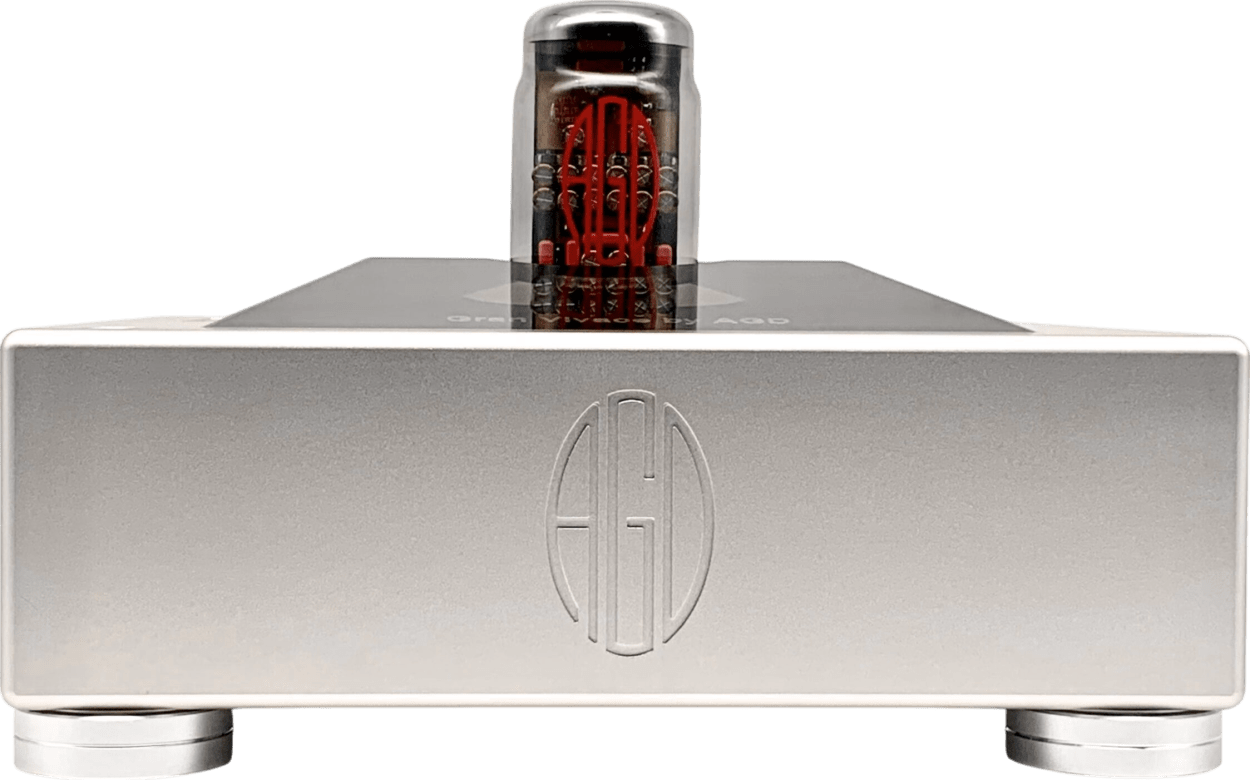
- The AGD Solo monoblocks are described as 'simply extraordinary' with a bold enclosure
- The AGD Solo offers more power and headroom compared to other AGD amplifiers
- The increased frequency of the comparator wave at 800kHz allows the AGD amplifiers to produce a musical delivery with no noticeable undershoot or overshoot of the input signal wave form
- The SOLO delivers an expansive depth and soundstage, excelling in creating air and space around instrumental sources while defining detailed timbral character
- The AGD Solo has an upgradable output stage module which allows users to future-proof their purchases
Product Considerations
- The 'brute force' approach to power supply using a more traditional linear topology based on a classic transformer is less efficient and larger in size than SMPS types
- One reviewer felt they 'felt' mids more when experienced through the DUET, and that mids were ever so slightly forward with the DUET, with subsequently greater presence
- At $23,500 (per pair), the AGD Solo monoblock amplifiers are a significant investment
Comparisons (according to reviewers)
- Vs AGD Duet: The Solo offers more power and available headroom
- Vs AGD Duet: The Solo has more expansive depth and soundstage compared to the Duet—it also excels more in creating air and space around instrumental sources while defining detailed timbral character
- Vs AGD Duet: The Solo expands the discernable frequency spectrum, particularly in the lower frequencies
- Vs AGD Duet: Transient speed was an exceptional forte of the SOLO that, in the reviewer's experience, no other Class D amplification, indeed any amplifier at this price point, can generate
Takeaway: The AGD Solo is a powerful amplifier that delivers realistic musical reproduction with impressive detail and expansive soundstage. Its upgradable design ensures it can remain a top-tier choice for years to come.
Video review
About the brand
What reviewers think
Product Strengths
- Exceptional low-frequency performance with well-defined, articulate, and fast bass
- Excels at conveying the speed of instrumental attack and rendering decay and trail
- Recreates spatial information with accuracy, providing well-defined placement and size of images
- Delivers midrange tonality with vibrant color, demonstrating a genuine expression of instrumental texture
- The GaNTube design allows for easy upgrades by simply replacing the tube module
Product Considerations
- Micro-dynamics may be slightly reticent in nuance and expressiveness compared to some pricier amplifiers
- The GaNTube is exposed and potentially vulnerable to being smashed or knocked over
- May not be the best choice for those seeking excitement or sparkle in the high frequencies, as it offers a super smooth and refined high-frequency response
- Touch control for standby mode can be difficult to use
- The 'tube' look is for aesthetics only
Comparisons (according to reviewers)
- The Parasound offers a slight edge in micro-dynamic performance compared to Parasound Halo JC 1+ monos
- Gran offers similar bass performance to Audionet MAX monoblocks at almost half the price
- Gran Vivace shares liquidity and tone with the newest generation of amplifiers from Mola Mola
- VAC flagship has more unreservedly natural tonality compared to VAC Statement 452iQ Musicbloc monos, but is much more expensive
- The Grand Vivace has slightly better control in the bass reproduction and a slightly wider soundstage than AGD Audience
- The Grand Vivace has smoother highs and a more fleshed-out midrange compared to Luxman M900U, but the Luxman has a deeper soundstage
Takeaway: The Gran is a powerful and controlled amplifier that offers excellent soundstaging, imaging, and a unique design with a GaN tube that is not seen in other products. It is both an engineering marvel and a great-sounding amplifier.
Video review
About the brand
What reviewers think
Product Strengths
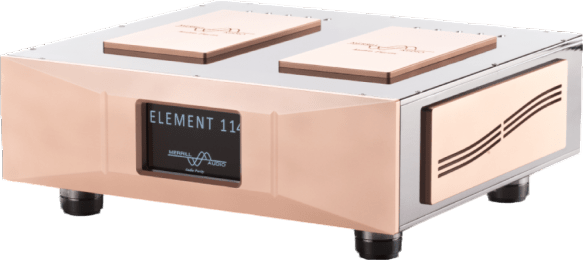
- Fast and insightful amplification allows experiencing exactly what is on the recording
- Slam, speed, and control
- Very low noise floor allows the listener to hear only the music
- Tank-like and solid build quality with excellent quality components
Product Considerations
- Polished finish might be a bit blingy for some
- Pretty unforgiving to the point of being unable to listen to a handful of tracks with poorly recorded or mastered tracks, or files of low resolution
- Touch screen doesn't look great and is superfluous
- No master power switch means the amp is left on constantly
Takeaway: The Element 114 is a high-quality amplifier that delivers a very transparent and controlled sound and will reveal all the details in the music. It is best for listeners who want to hear recordings as they are.
Video review
About the brand
What reviewers think
Product Strengths
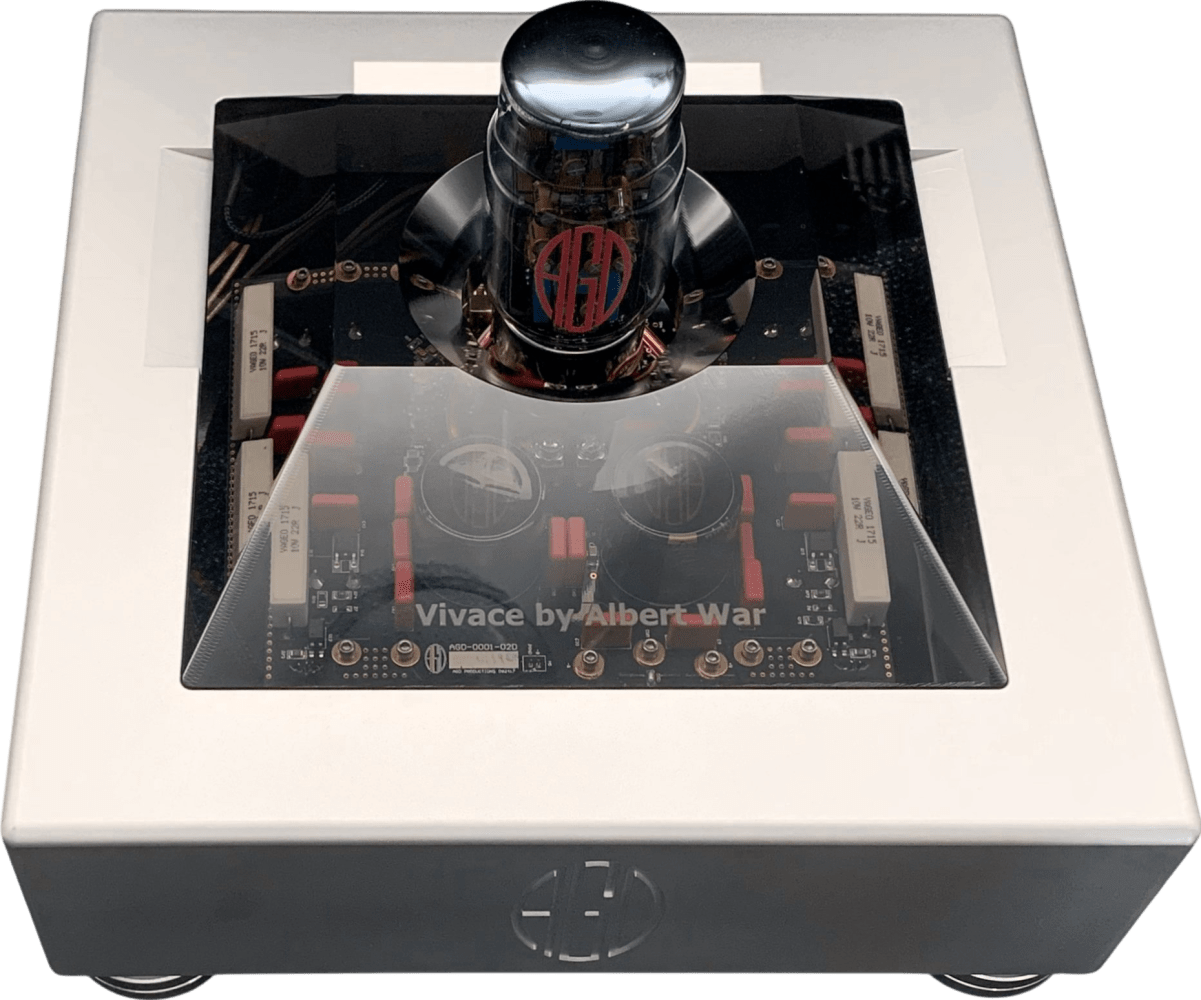
- Elegant design with a beveled, tinted, and engraved acrylic cover, illuminated by orange LEDs, making it visually appealing and demands to be put on display
- The Gallium Nitride power MOSFETS in the Class D power stage encased in the GaNTub have a very high slew rate with little overhang ripple, with extremely fast switching and immediate note attack
- The GaNTube™ modules are replaceable, offering modularity and a future upgrade path with more powerful versions or different types
- Dynamics approach those of live music due to low noise floor and wide dynamic range
- Inner detail, tonal color, and microdynamics excel
Product Considerations
- The vulnerability of the GaNTube—exposed and waiting to be smashed or knocked over
- The 'tube' is pure decoration
- Music with the Audion monoblocks is lighter weight
- Some may see the design as quirky
Comparisons (according to reviewers)
- Vs AGD Audion: The Vivace has a larger power supply and greater power output, leading to musicians seeming more firmly anchored, a greater sense of physicality, and more prominent venue atmosphere compared to the Audion
- Vs Kinki Studio EX-M1: The Vivace sounded less thick, faster, more insightful, shinier, and smoother, plus it was more mechanical in top FR and had its upper bass a bit boosted to score lower notes on overall clarity and pronunciation
- Vs Trilogy 925: The Vivace was speedier, more open, effortless, sunnier, articulate, tonally more even, and texturally less juicy in favour of greater complexion
Takeaway: The AGD Productions Vivace is an amplifier with superb sound and elegant design. With its unique GaNTube technology, it delivers a captivating musical experience that should make its owners proud.
Video review
About the brand
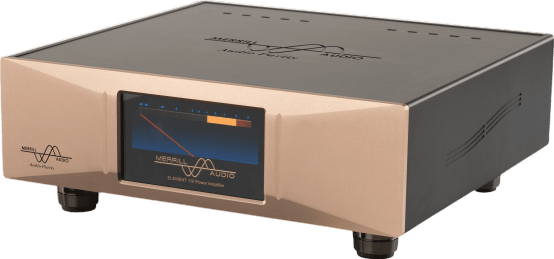
What reviewers think
Product Strengths
- Able to drive reference Sound Lab electrostatic speakers effectively
- Designed and developed under Merrill's 'Project Oganesson', highlighting their sonic abilities and the methods used to achieve them
- The exterior looks good, especially the brightly colored front panel 7' Capacitive Touch Screen Display (CTSD)
- Complete transparency and lack of colorization
- Gaia III's feet from isoAcoustics were hand selected for their superior dampening and to isolate the amplifiers from surrounding vibrations
Product Considerations
- Not a member of the 'easily affordable' high-end audio equipment club
- There is no power switch
- These amplifiers are designed to be powered on and left on
Comparisons (according to reviewers)
- Element 110 is a scaled-down version of the Element 116, using lower-priced components, heatsinks, and other constituents, and lower power, but it has the same transient response
- The Element 110 monoblocks did not scale the same sonic heights as the Element 118s, but the Element 110 monoblocks have many characteristics that impressed
Takeaway: The Merrill Audio Element 110 is an impressive amplifier that delivers music with transparency and without unwanted coloration. It is a powerful and efficient choice for audiophiles looking for high-quality sound reproduction.
Video review
About the brand
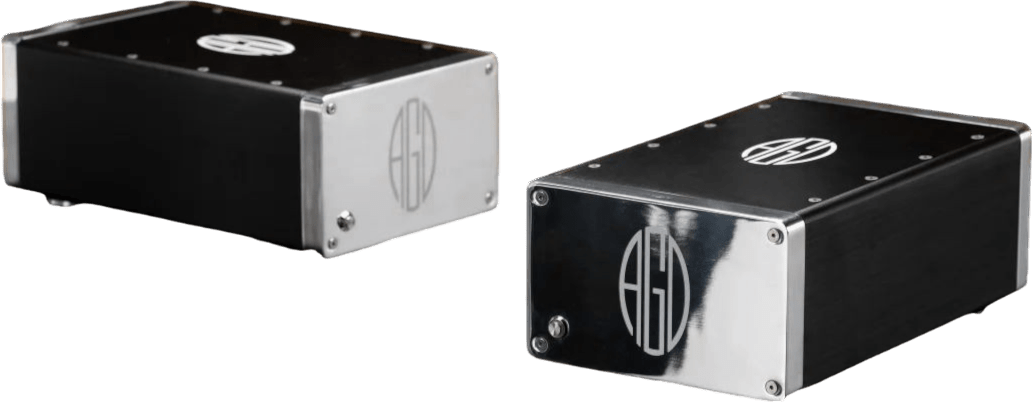
What reviewers think
Product Strengths
- Compact size, lightweight, and runs cool compared to traditional high-end amplifiers
- Exceptionally quiet operation, with reviewers noting a complete absence of hum or buzz
- Delivers a clean, crisp, and neutral sound signature without added coloration
- Upgradeable design, allowing users to update the amplifier with new GaN modules as technology evolves
- Produces a Single Ended Triode-like midrange and top end
Product Considerations
- The polished finish is a fingerprint magnet, requiring the use of gloves for handling
Comparisons (according to reviewers)
- Vs AGD Audion MKIII: The Duets offer a cleaner and more refined sound with improved bass and greater immediacy and snap compared to the Audion MKIII
- Vs Daniel Hertz Maria: The AGD Duets seem to have a little more inner resolution
- Vs Pass Labs X250.8: The AGD Duets performed to a higher level
- Vs Peachtree GaN 1/VTV GaN amps: AGD amps seem to be on another level in regards to design, and the sound is more refined and beautiful
- Vs Aavik U-150, Luxman 595, Yamaha A-S 3200, Axxess Forte 1, Line Magnetic 219ia: The AGD Duets performed to a higher level
Takeaway: The AGD Duet amplifiers offer a blend of cutting-edge technology, exceptional sound quality, and user-friendly design. They are a great option for those seeking a high-end audio experience in a compact and energy-efficient package.
Video review
About the brand

What reviewers think
Video review
About the brand
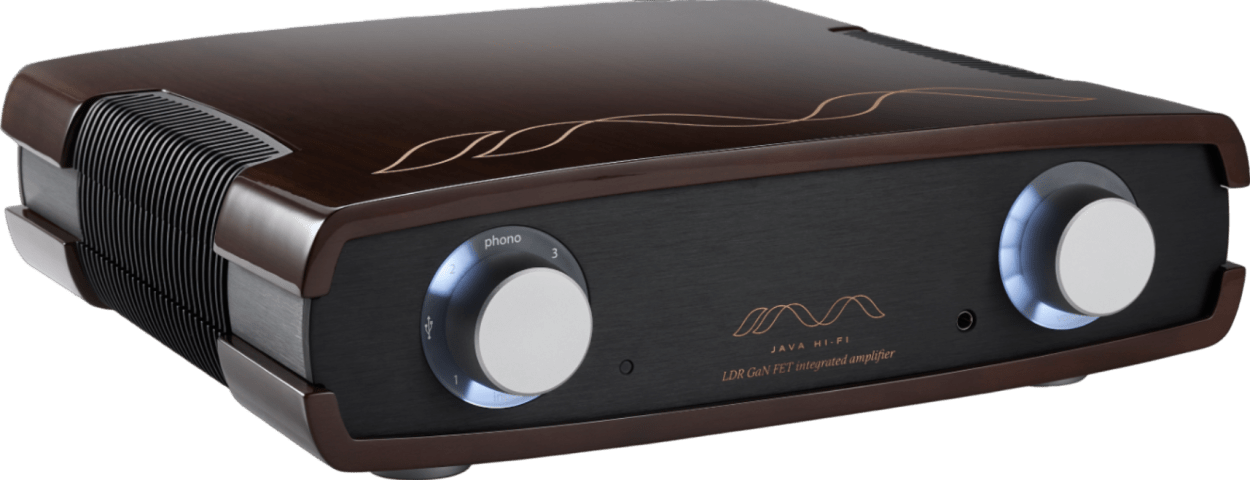

What reviewers think
Product Strengths
- Gorgeous casework and beautiful design
- Neutral, clean and transparent sound quality
- Excellent DAC, featuring Burr-Brown chips
- Powerful amplifier section
- The connectivity options are limited
Product Considerations
- High price point
- There are not a lot of inputs
- MM phono stage only
- The feel of the knobs is not good
Comparisons (according to reviewers)
- Vs Leben CS600—the Java Hi-Fi Single Shot sounds less ripe and less rich
- Vs Riviera Labs Levante—the Java Hi-Fi Single Shot sounds much flatter
- Vs Ayre KX-8 Preamplifier/VX-8 Power Amplifier—the Ayre combo offered a greater sense of texture, tone and dimension
Takeaway: The Java Hi-Fi Single Shot Integrated Amplifier combines great sound with an elegant design, and it has enough power to drive most speakers. It is an excellent choice for those who want a high-quality, stylish audio system without the complexity of separate components.
Video review
About the brand
What reviewers think
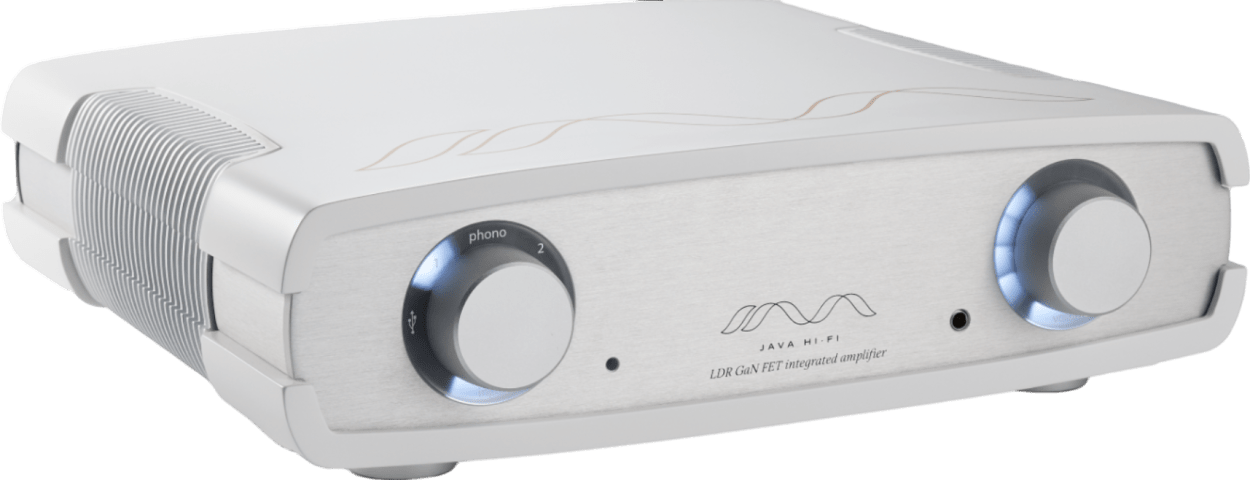
Product Strengths
- Clean, neutral, and transparent sound signature that neither adds nor takes away from the source material, ensuring high fidelity music reproduction
- Excellent built-in DAC using dual Burr-Brown PCM1794A chips, comparable to some standalone DACs
- Well-implemented built-in MM phono stage, outperforming entry-level outboard phono stages and suitable for higher-end MM cartridges
- Gorgeous casework with customizable finish options, blending wood and metal for an elegant appearance
- High power output (200W into 8 ohms, 400W into 4 ohms) capable of driving a wide range of speakers with ease
- Single Shot only has single-ended RCA inputs, the Double Shot variant is needed for balanced inputs
Product Considerations
- The built-in phono stage lacks loading and gain options, potentially limiting compatibility with some moving coil cartridges
- The DAC section is USB input only and might not be as keen on very high sample rates (above 192kHz)
- Some reviewers would like to see a COAX digital input
- The lights on the front panel might be too bright for some listeners, even though there is a dimmer switch
Comparisons (according to reviewers)
- Vs Ayre 8-Series separates: Ayre provided a greater sense of dimensional fullness
- Vs Leben CS600: Leben coaxes more emotion, because it places more emphasis on tone color and body
Takeaway: The Java Hi-Fi Single Shot is a beautifully designed, all-in-one integrated amplifier that delivers a neutral and transparent sound, suitable for those who appreciate high-fidelity audio and want a streamlined system. Its versatility and excellent built-in components make it a worthwhile investment for a high-quality audio experience.
Video review
About the brand
What reviewers think
Product Strengths
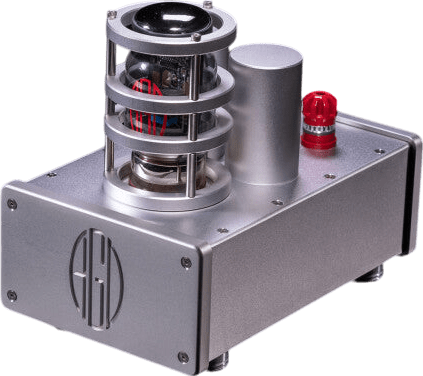
- Uses GaN (Gallium Nitride) MOSFET transistors for fast switching speed and high efficiency
- Compact size and low heat output compared to traditional amplifiers
- Offers 'tube rolling' capability by allowing users to swap out the GaN MOSFET power amplification unit within the glass tube
- Delivers a detailed and clear sound, with some reviewers noting a near-neutral presentation
- Impressive bass control, grip, and texture, especially considering its size
Product Considerations
- Some reviewers noted a lack of visceral weight in the low frequencies compared to higher-powered Class A/AB amplifiers
- One reviewer found brushes on jazz recordings to be irritating due to the amplifier's detailed and neutral presentation
- The aesthetic, while attractive to many, may confuse those strictly on either the tube or transistor fence
Comparisons (according to reviewers)
- Vs PS Audio BHK300: The Audion offered greater definition in the bass, while the BHK shook the room more with bass energy
- Vs Gryphon Essence: The Audion has a lighter disposition than the Gryphon, bringing a sense of openness with a sprinkling of sweetness
- Vs Merrill Audio Element 116: The Audion comes close to the sound quality of the Merrill Audio Element 116 monoblocks
- Vs AGD Vivace: The Audion achieves as much prominence in the bass as that larger amp did with its greater power supply
Takeaway: The AGD Audion is a compact and efficient amplifier that delivers high-quality sound with exceptional detail and control. Its unique design and 'tube rolling' capabilities offer a compelling option for audiophiles seeking a modern take on amplification.
Video review
About the brand
What reviewers think
Product Strengths
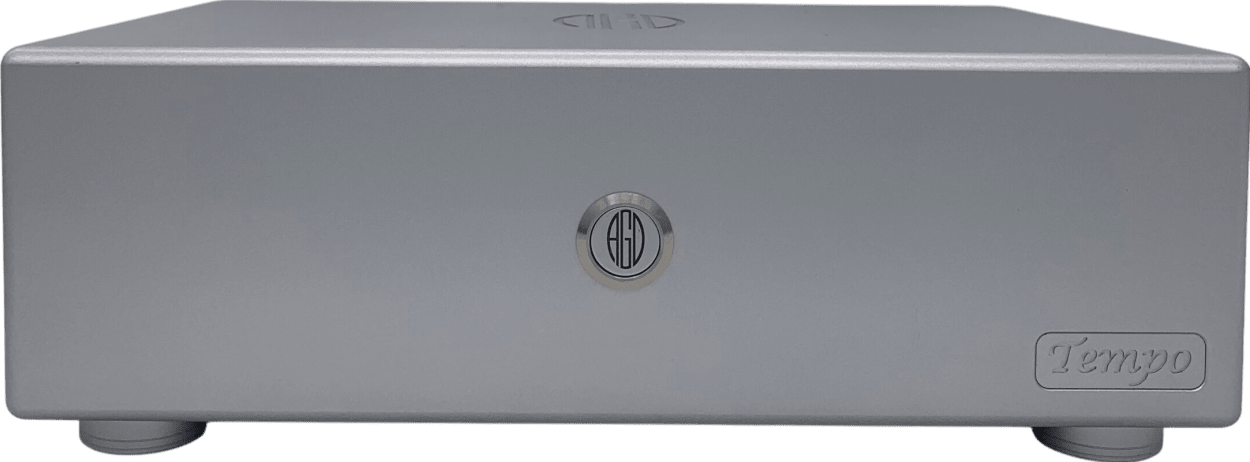
- GaN technology allows for efficient power usage, with 94% of energy being turned into sound
- Compact size challenges the notion that high-quality amps need to be large
- Design and packaging create pride of ownership
- It can be run in bridged mode to deliver 400 watts into one channel
- Stability and ability to handle complex impedance loads
Product Considerations
- The slight sonic signature may not be for everyone
- If truly outrageous amounts of power are needed to drive speakers, a second AGD Tempo amp might be needed to run in a bridged configuration
- High-frequency noise was discovered when XLR cables were not connected between them
- Power cords can make a large difference, the included power cord doesn't flatter the amp
- Some traditionalists may find it hard to accept that it's a Class-D amplifier
Comparisons (according to reviewers)
- Compared to Peachtree Audio GaN400, the AGD Tempo reports to have better overall specifications
- Compared to Parasound Halo A21+, the AGD Tempo is simply superior
- Compared to Bricasti M30 monoblock amplifiers, the level of which the most subtle detail exists approaches reference Bricasti M30 monoblock amplifiers
Takeaway: The AGD Productions Tempo is a cutting-edge amplifier that offers a new take on audiophile amplification and rivals more expensive amplifiers. It can drive speakers easily while being energy efficient.
Video review
About the brand

What reviewers think
Product Strengths
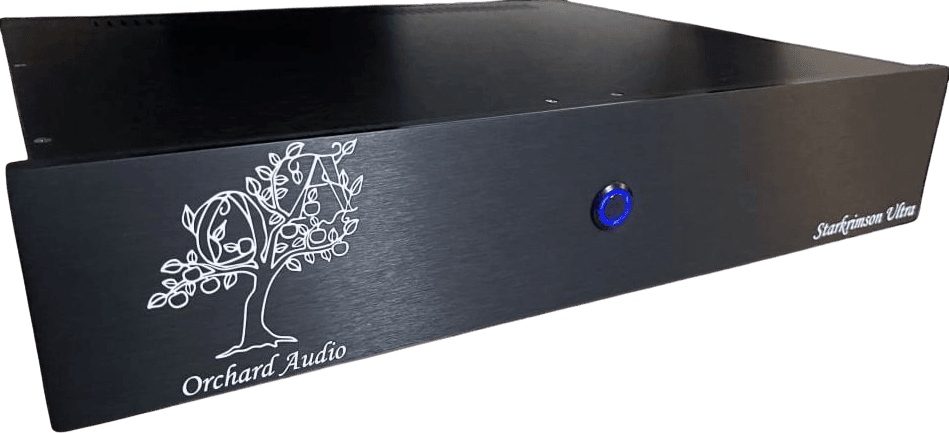
- Exceptionally transparent sound output quality
- Exceptionally powerful, capable of outputting 500W into a 4-Ohm load
- Delivers a remarkably clean, transparent sound with very little noise or distortion
- The amplifier's ability to reproduce bass is awe-inspiring and delivers deep, powerful bass without distortion
- Runs cool and weighs very little for its sound output, making it easy to move around
Product Considerations
- Options can be a little pricy, such as the 12v trigger and RCA inputs
- The Starkrimson Stereo Ultra may lead to further system upgrades
- Depending on your sources, the Starkrimson Stereo Ultra will play exactly what you feed it, good or bad, and if your source components are slow, the Starkrimson Stereo Ultra will not speed them up
- Power on only after all connections are properly made, including the power cord, analog inputs, and speaker outputs, and wait five minutes after powering it off before removing any of the connections
Comparisons (according to reviewers)
- Compared to the Krell S550i integrated amp, the Starkrimson Stereo Ultra showed a much faster and finer resolution of the upper frequencies of the human voice and a far greater ability to play more of the microdetails of a recording
Takeaway: The Starkrimson amplifier is well-built and provides a level of speed and transparency to hifi music that makes listening to music very fun. Its GaN modules can be upgraded and it is available in several configurations.
Video review
About the brand


What reviewers think
Product Strengths
- Natural and lively sound, especially in the phono preamp section, outperforming some standalone phono preamps
- Clear and detailed sound, with an absence of background noise and enhanced clarity in vocals and instruments
- Unique GaN + PWM amplification design delivers a quieter background and more thrust in dynamic passages
- Built-in phono stage is high-performing and well-suited for MM cartridges
- Versatile functionality includes USB-C input, multiple digital inputs, preamp outputs, and a headphone amplifier section with dual ESS9068 DAC chips
Product Considerations
- The remote is considered simple and plastic for the price point
- Digital direct amplification only works with digital input signals
- Clarity may not appeal to those who prefer the warmth of tubes
- The lights inside may not be for everyone, some find it off-putting
- Sibilance was found to be smeared
Comparisons (according to reviewers)
- Vs HiFi Rose RS-520—the Carina GaN has a better punch to it with more authority
- Vs Schiit Audio Mani phono stage—the built-in phono stage trampled all over that Schiit
- Vs Rega Elex-R Mk3—the two phono stages were very comparable in performance, but Carina GaN sounded more relaxed and at ease
Takeaway: The Peachtree Carina GaN is a versatile and feature-rich integrated amplifier with a clear, detailed, and powerful sound. It is a great choice for those seeking a modern, all-in-one solution with a high-performing phono stage and a unique digital amplification design.
Video review
About the brand
What reviewers think
Product Strengths
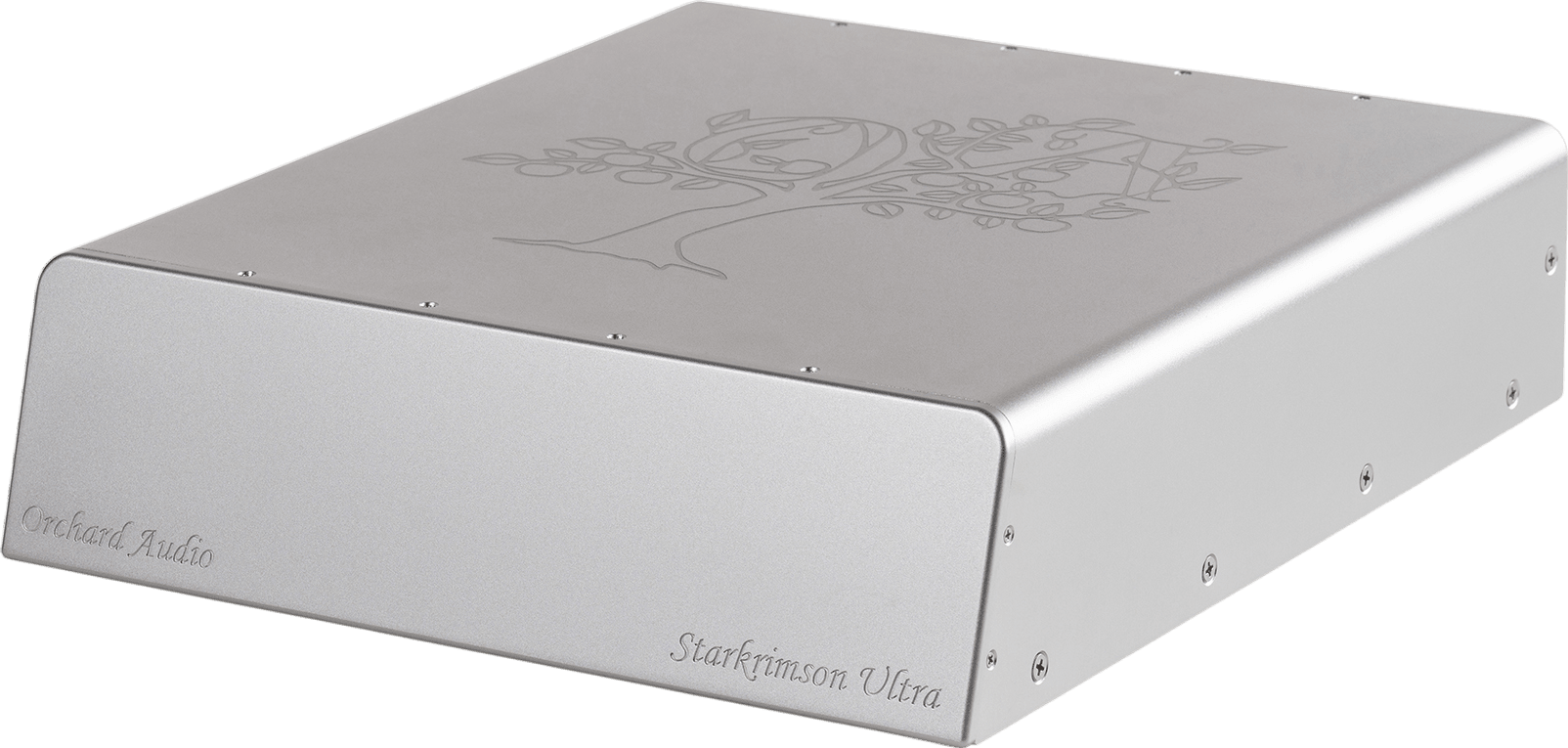
- Offers clean, transparent, and powerful sound, with extraordinarily low noise and distortion
- Provides abundant power on tap
- Demonstrates a neutral sonic character, adding nothing and taking away nothing from the music
- Features a compact and lightweight design, making it easy to place near speakers and move around
- Operates with high efficiency and cool running due to GaN transistors and a universal power supply
- Has only balanced (XLR) inputs, requiring RCA-to-XLR adapters if your preamp lacks balanced outputs
Product Considerations
- The physical appearance of the amplifiers is simple and may not appeal to those prioritizing aesthetics
- Some reviewers would have liked a front-panel power switch and pilot light
- When paired with Magnepan LRS+ speakers, it lacked low-end punch without a subwoofer
Comparisons (according to reviewers)
- It sounded a little more transparent and colorful than the Benchmark AHB2, while the Benchmark sounded a bit more mellow
- The Ultra Premium model provides more power, headroom, and expanded dynamics than the Orchard Audio Starkrimson Mono Premium Amps
Takeaway: The Starkrimson Mono Ultra Premium amplifiers offer a powerful and neutral sound experience in a compact design. They are a great option for audiophiles seeking a transparent and dynamic sound without unnecessary coloration.
Video review
About the brand

What reviewers think
Product Strengths
- Runs cool and weighs very little for its sound output
- Delivers exceptionally transparent sound output quality and is exceptionally powerful
- Uses GaN modules that can be upgraded
- Shows a much faster and finer resolution of the upper frequencies of the human voice, and a far greater ability to play more of the microdetails of a recording
Product Considerations
- Depending on your sources, the Starkrimson Stereo Ultra will play exactly what you feed it—good or bad
- If your source components are slow, the Starkrimson Stereo Ultra will not speed them up
- The Starkrimson Stereo Ultra may lead to further system upgrades
- It must not be powered on until all connections are properly made
- One must wait five minutes after powering it off before removing any of the connections
Takeaway: The Starkrimson is a very transparent and powerful amplifier that can reveal new levels of detail in music. It is a great choice for audiophiles looking for exceptional sound quality and the ability to upgrade its components
Video review
About the brand
What reviewers think
Product Strengths
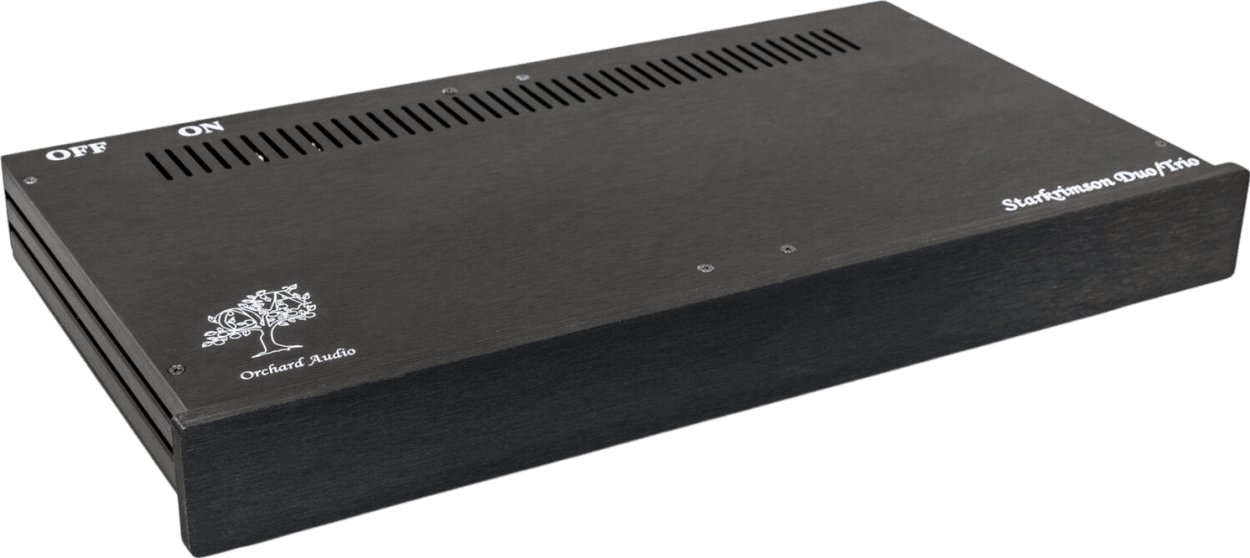
- Clean and clear music with a very dead black background, allowing the music to breathe and swell naturally
- Very firm and deep bass response, sounding incredibly powerful
- Delivers a muscular sense of control over musical dynamics and instrumental transients, confirming an abundance of reserve power
- Accurate and transparent sound, reflecting changes in equipment and cables
- Sound signature similar to a really good class AB or class A amplifier, with natural and transparent sound and very good power and control
Product Considerations
- Some users may find the lack of an on/off light and remote control disconcerting
- At 105 dB range, the bass control gets weaker and the bass gets less pronounced
- Synergy-wise, it does not work well with R2R pre-stages
- Some found it a little less dynamic and a little too soft, but still good and engaging
- Needs to be powered on only when something is plugged into the outputs to avoid damage
Comparisons (according to reviewers)
- Vs Starke Sound ZA3s: Starkrimson is the next step above in clarity and power for home theater applications
- Vs SMSL A10A: There was an immediate change in soundstage and clarity when Starkrimson replaced the SMSL
- Vs Peachtree Nova: Starkrimson offered a riveting sound presentation, as opposed to the Peachtree Nova, which was less bold, but somewhat more nuanced
- Vs Class AB amp up to $3,000: Starkrimson has better noise control, accuracy, and transparency
Takeaway: The Starke Sound amplifier is a simple unit which produces a clean sound, with good detail and power. This amplifier is a great choice for audiophiles looking for a high-quality listening experience.
Video review
About the brand
What reviewers think
Product Strengths
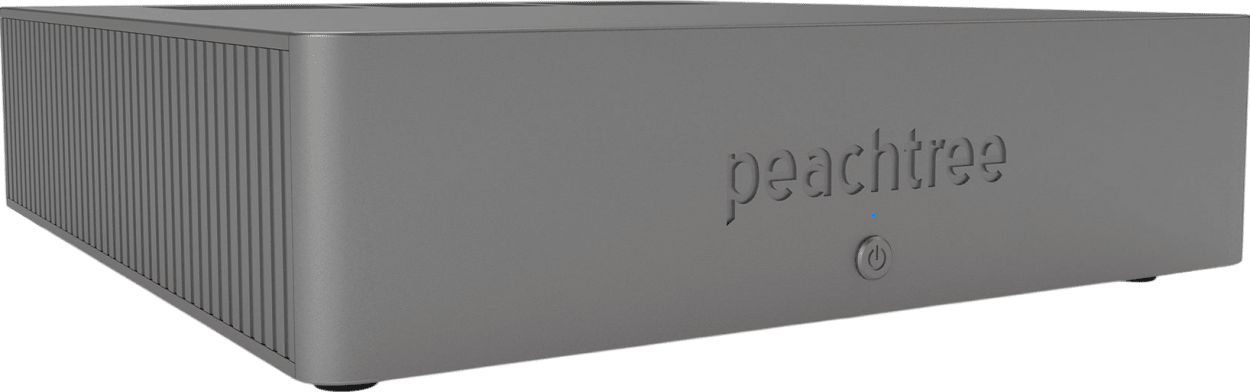
- GANFET transistors switch faster, are more heat resistant, and produce less distortion than MOSFET transistors
- A monstrous 400-watt regulated power supply
- Designed to work specifically with a source with a variable output, be it a silver disc-spinning device or one of today's best yet affordable HD music streamers
- Offers a level of audiophile performance that well exceeds any reasonable expectations that come with the amp's modest price tag
- Offers a super clean minimal setup when paired with the Bluesound Node
Product Considerations
- Has only one digital coaxial input, limiting connectivity options and expansion
- Lacks volume indication on the unit itself, requiring reliance on the source's volume control
- Some reviewers noticed a high-pitched noise coming from early prototypes, which was later fixed by Peachtree
- Isn't the type of amp that makes a poorly recorded song sound better
- Is a non-standard size
Comparisons (according to reviewers)
- Vs Bluesound Power Node: Setup has a much more substantial mid-range, better low-end control, and ever so slightly better speed with rhythmic transient attack
- Vs NAD M10 V2: Is the more dynamically relaxed
- Vs Hegel H190: Reviewers actually preferred the more forward presentation of midrange
Takeaway: The GAN1 is a forward-thinking piece of tech that prioritizes simplicity and sound quality for those who want to just stream music. It provides outstanding value and impressive performance, especially for those looking for a minimalist, high-fidelity system.
Video review
About the brand

What reviewers think
Product Strengths
- A very quiet background allows detailed music to emerge clearly
- Plenty of power (150W into 8 Ohms) exhibits good control, speed and dynamics
- GaN (Gallium Nitride) technology is used for efficient power throughput and performance, which shakes the bad reputation of Class D amps
- A neutral sound signature aims to reproduce the recording accurately
- Compact size allows for flexible placement and short speaker cables
- Balanced XLR cable connections are required, RCA connections need a separate adapter (sold by Orchard Audio)
Product Considerations
- Visually, the amps may not appeal to those seeking 'audiophile eye candy'
- A power cable is not included unless specified
- A power indicator light is absent
- In certain system pairings, the sound can be analytical or bright
Comparisons (according to reviewers)
- Starkrimson provides micron-precise separation, while the First Watt F5 thickens things up a touch
- Starkrimson offers more power and benefits from being a monoblock chassis, while the Gold Note IS-10 does not
- Starkrimson offers more power and better control over the bass, as well as speed, compared to the Nakamichi PA-5 Stasis
Takeaway: The Orchard Audio Starkrimson Mono Premium amps deliver power and performance in a small size, and are especially good for audiophiles that seek a neutral sound, lots of detail, and excellent value. These amps could be a great fit for anyone wanting a modern and efficient hifi experience.
Video review
About the brand

What reviewers think
Product Strengths
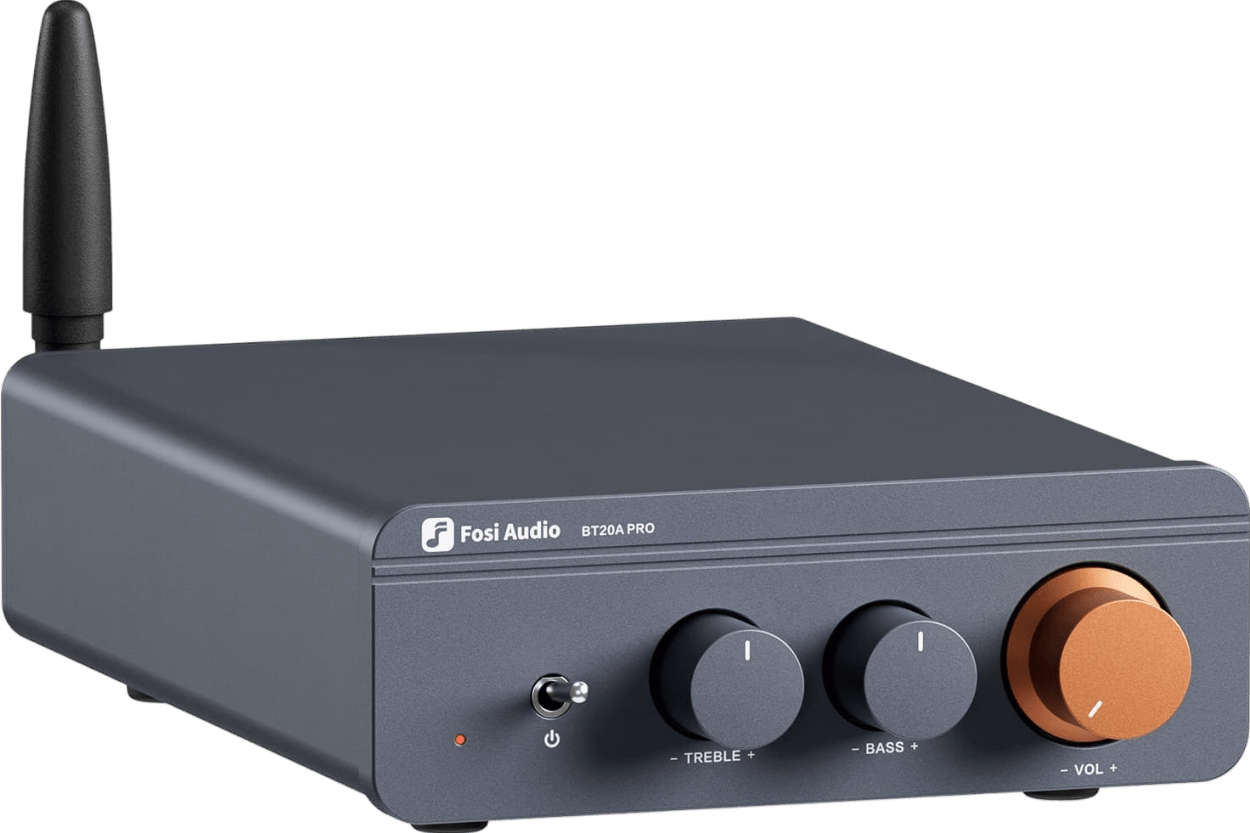
- Good sound quality for the price
- Small and compact size, making it versatile for various setups
- Includes bass and treble tone controls for sound customization
- Bluetooth connectivity for wireless streaming
- Upgraded internals compared to the original BT20A, including a TPA3255 amp chip
Product Considerations
- Power output may not reach advertised levels without an upgraded power supply (48V recommended)
- Bluetooth is limited to SBC and AAC codecs
- No remote control included
- Speaker binding posts may be too small for larger gauge wires or spade connectors
- One reviewer pointed out potentially shady past Amazon review practices of the company
Comparisons (according to reviewers)
- The V3 has a slightly smoother presentation overall, while the BT20A Pro has a bit more 'oomph' or loudness
- The Pro has more power, preamp output, lower THD—better aesthetics
Takeaway: The Fosi Audio BT20A Pro is a compact and affordable amplifier that delivers surprisingly good sound and offers useful features like Bluetooth and tone controls. It's a great option for those looking for a budget-friendly way to power their speakers in a small space.
Video review
About the brand


What reviewers think
Product Strengths
- Delivers a naturally smooth midrange and treble, which is particularly good on vocals, trumpet, and violins
- Small (13 × 11 × 3 inches) and light (14 pounds), which is very convenient
- Runs cool (five watts at idle)
- Gives a strong, warm lower midrange and bass
- The sound of male vocals is a specialty of this amp with lower midrange delivered with very good warmth and humanity
Product Considerations
- Music sounds dull and uninteresting
- Reaches its power limits, with sound starting to get murky at concert level volumes
- Harmonics and low-level resolution are limited, resulting in cymbals sounding like AM radio hiss
- The bass range is very full, like rolling thunder, while the detail and dynamic punch is quite limited
- Harmonics are limited, the natural fade out of a bell, triangle or other percussion happens far too quickly—robbing the sound of depth and character
Comparisons (according to reviewers)
- Vs Parasound JC 5: Described as 'bottom up' in voicing compared to the JC 5's 'top down' approach, with the JC 5 presenting a more honest representation but the Atma-Sphere being more fun
- Vs Atma-Sphere M-60s: The comparison was found to be 'somewhat spooky' with the classic Atma-Sphere OTL presentation transported to a Class D amplifier
- Vs Benchmark AHB2: The Atma-Sphere may have a slightly warmer sound
Takeaway: The Atma-Sphere Class D amplifier is a well-built amplifier that delivers a smooth and engaging sound, and is especially great if you enjoy vocal music. Its efficient design makes it a cool-running option for audiophiles seeking a high-quality listening experience.
Video review
About the brand
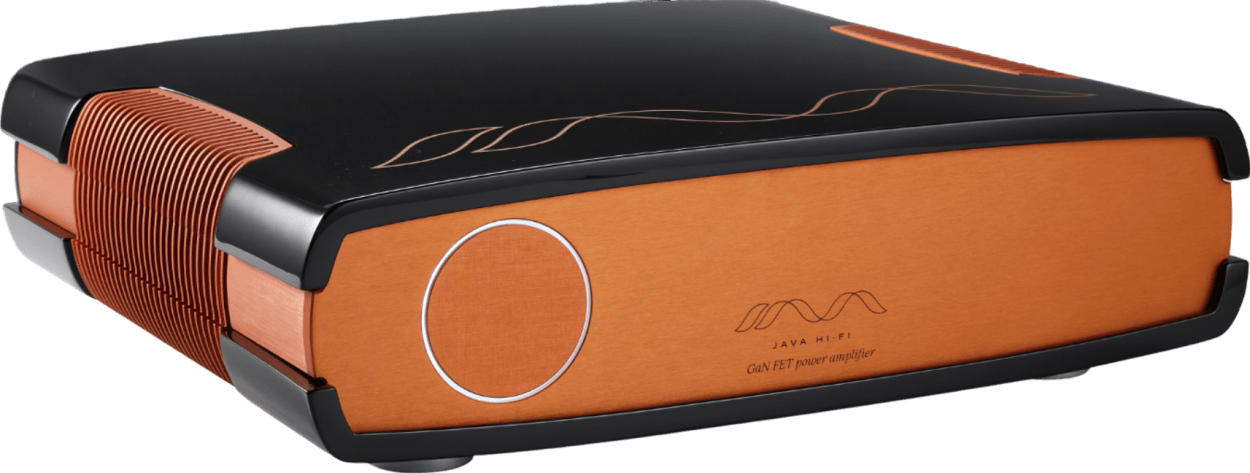
What reviewers think
Video review
About the brand
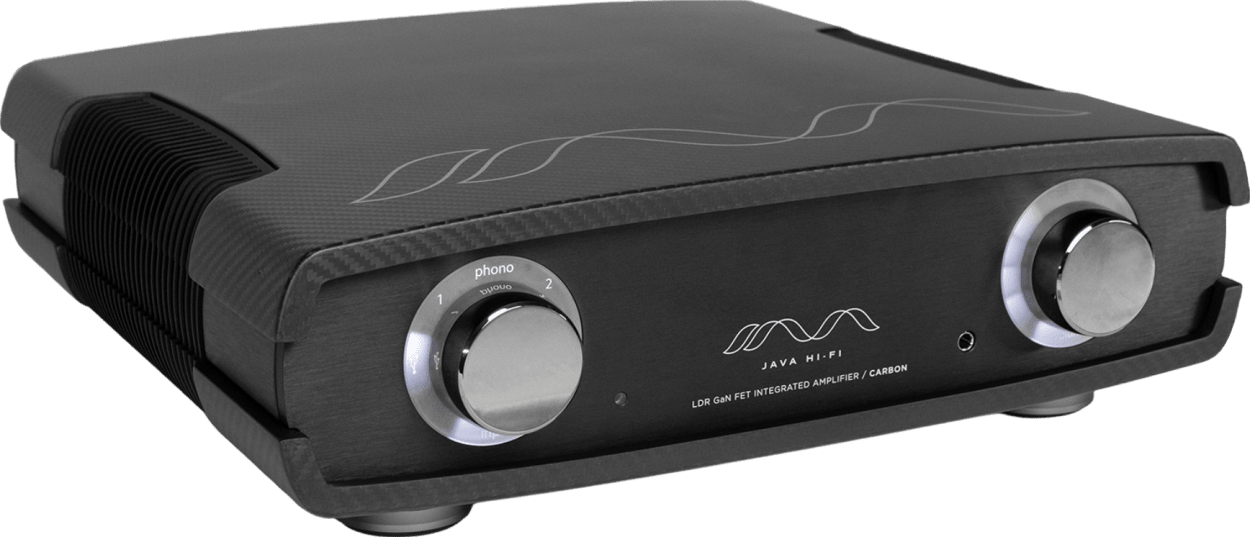
What reviewers think
Product Strengths
- Delivers a tight, coherent musical pace with stellar clarity
- Achieves a significant amount of the three-dimensional characteristics of tubes with the sonic slam and control of solid-state amplifiers
- Delivers subtle texture and nuance when required and high sound pressure levels without losing composure
- The amplifier's ability keeps instruments locked in their own spaces without ever losing focus
- Fast and neutral sound that appears to be true to the source
Product Considerations
- The volume knob is not very responsive at first use, which can be annoying initially
- The remote is functional, but not as aesthetically pleasing as the amplifier itself
- The DAC only has a USB input
- It's a fingerprint magnet
- No MC phonostage
Comparisons (according to reviewers)
- The Double Shot power amplifier takes clarity and pace further than the Single Shot integrated, because of its larger, dedicated power supply
- Compared to Boulder or Constellation amplifiers, the Double Shot has the least colored tonality
- Compared to the Merrill/Lab 12 partnership, the Double Shot integrated was perhaps better sounding overall—a little less quick and a little softer around the edges
Takeaway: The Java Double Shot is a stylish and powerful amplifier that delivers neutral and detailed sound. It has useful features like a DAC and phono stage to enjoy all music sources.
Video review
About the brand
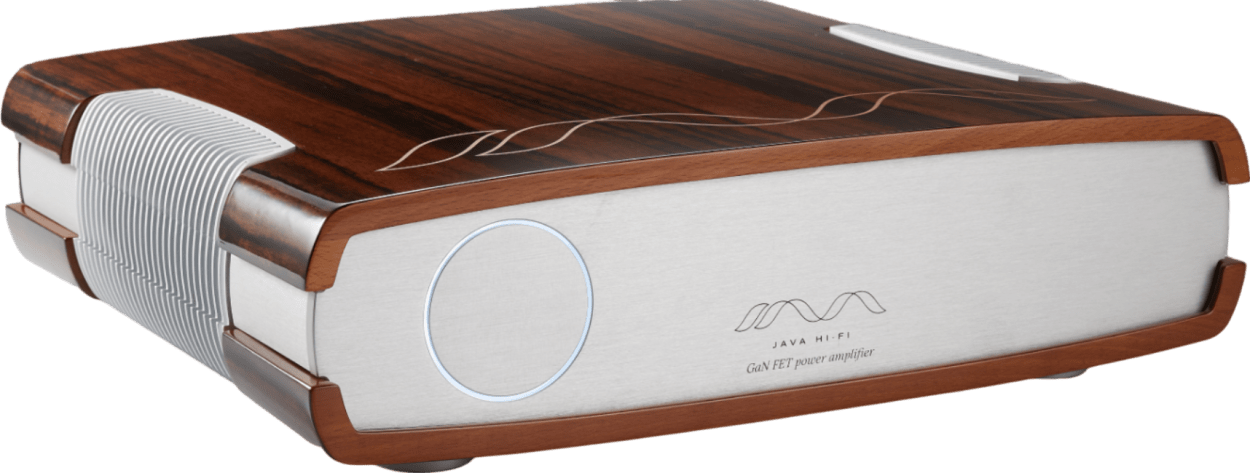
What reviewers think
Video review
About the brand
What reviewers think
Product Strengths
- The Single Shot has a neutral, clean, and dynamic sound quality that allows every aspect of the music to have the spotlight
- It offers effortless, clean, clear, and rich power that makes music sound alive, with speed of light transients and explosive dynamics
- It is an exceedingly fine product, with a design and build quality that confirms it is a work of love and art
- The unit operates with dead silent background
- The onboard phono stage is of high quality, better than entry level outboard phonos
Product Considerations
- A COAX digital input would be desirable
- The built-in DAC sounded a bit thin in a rather lofty system context
- Its high-end is transparent and faithful to a recording, so it does not sugarcoat anything, nor does it add any kind of overemphasis
- The lights around the knobs are quite bright, especially at night, but this can be partially solved with the use of the 'Night Mode' button on the remote
- The Single Shot only has an MM phono input, which may be a limitation for users with MC cartridges
Comparisons (according to reviewers)
- Vs Leben CS600: The Leben coaxes more emotion, while the Java Single Shot sounds a bit less ripe and rich in comparison
- Vs Riviera Labs Levante: The Riviera offers a more crazily dimensional presentation compared to the Java, which sounds much flatter in comparison
- Vs TEAC UD-701N: Java's DAC stands up pretty well, and quality differences would likely come down to more of a user preference, with the TEAC winning over only due to streaming convenience and multiple digital inputs
- Vs Michi X5 and Viva Solistina: The Single Shot elicits a similar feeling of contentedness as the Michi X5 and Viva Solistina
- Vs Electrocompaniet DAC: Java is very similar, but does not seem quite as lit up or as defined when it comes to note edges or tones
- Vs Viva Solista: Java Single Shot sounds better than the Advance Paris for the money
Takeaway: The Java Hi-Fi Single Shot is a well-designed integrated amplifier that delivers a neutral and dynamic sound. It is a great option for music lovers who appreciate a high-quality, all-in-one system.
Video review
About the brand

.png)
What reviewers think
Video review
About the brand
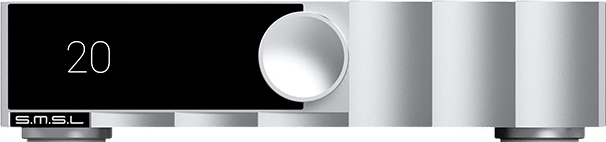

What reviewers think
Video review
About the brand