

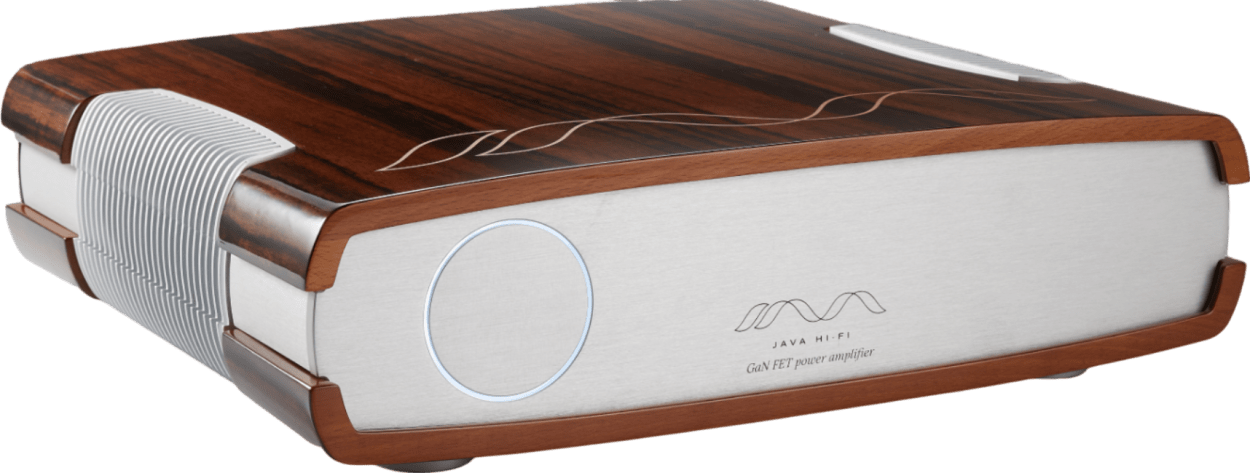


Note that this is a discontinued product. You may want to visit the brand's page here to browse their newer products.
What reviewers think
Bloggers and YouTubers have tried this product—so we've summarized their strongest opinions below. Links to full reviews follow.
All
GaN FET (Single)
reviews

Manufacturer details
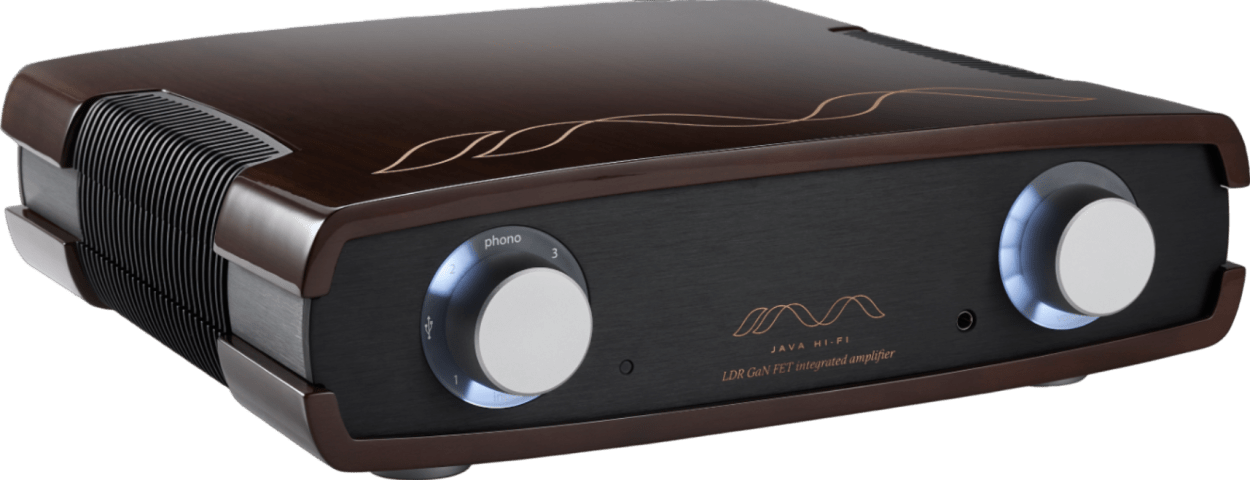
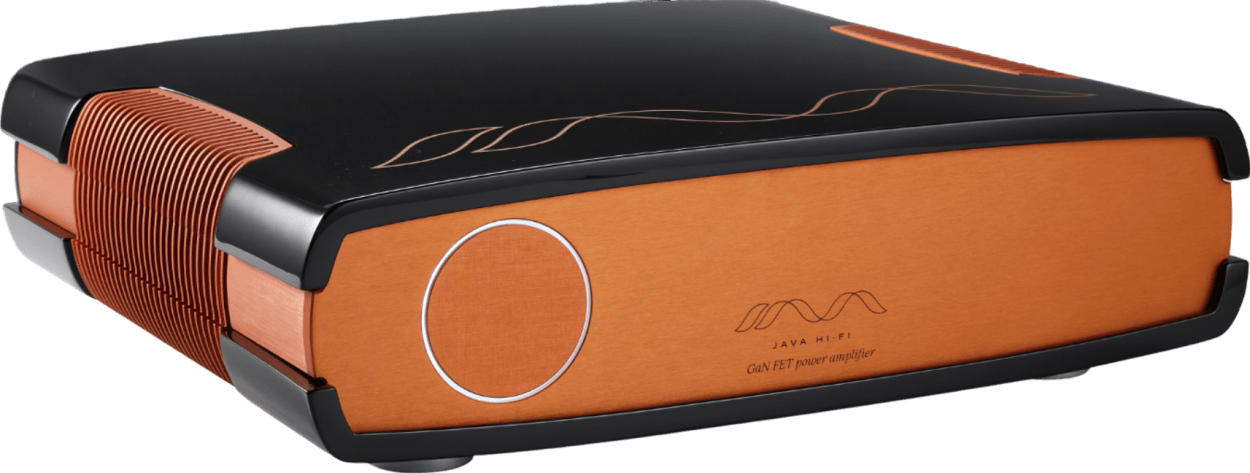
- Dimensions: 44 cm x 41.5 cm x 13 cm (w/d/h)
- Weight: 8.2 kgs (18 lbs)
- Power Output: 200 watts/8 ohms, 400 watts/4 ohms
- Inputs: 1 x pair RCA line-level (single-ended), 1 x pair XLR line-level (balanced)



Brand highlights
Taking a step back to look at reviewers' thoughts of the brand's entire lineup—not just this product—what stands out most is the following:
- Java hifi uses GaN FET (Gallium Nitride) transistors in Class D amplifier circuits, known for their speed, efficiency, and neutral sonic character, effectively eliminating the "sizzle" traditionally associated with Class D amplification.
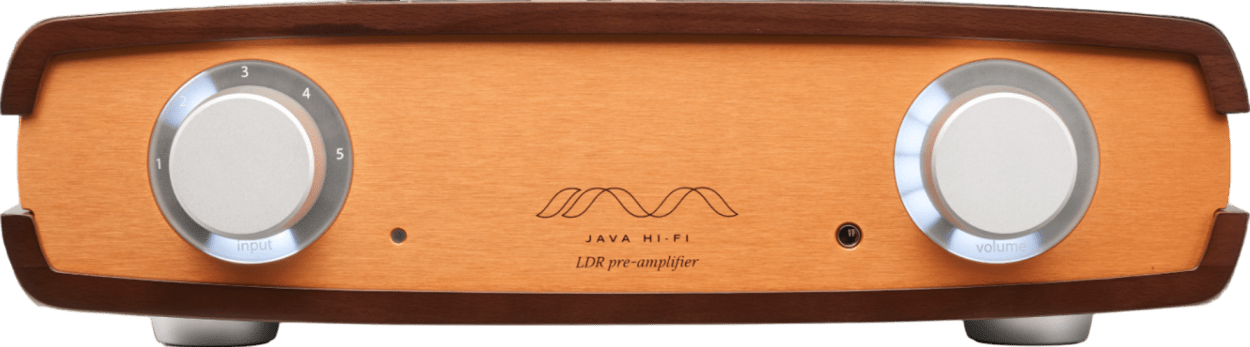
- Their products feature a highly customizable aesthetic, offering a range of casework finishes and front panel colors to seamlessly integrate into any décor, moving beyond the standard "black or silver box" approach.
- Java hifi incorporates LDR (Light Dependent Resistor) technology in their preamplifier stages, isolating the signal path from control electronics for a shorter, cleaner signal path and vanishingly low distortion.
Select products


Our take on the brand
Look inside the brand
Our interview with the brand
What are two key technological innovations or strong opinions that differ you from other brands?
What's your approach to customer support?
What are your favorite tracks for showcasing the strength of your products?
What other products pair best with yours?

Used
Java Hi-Fi
What if you spend more?
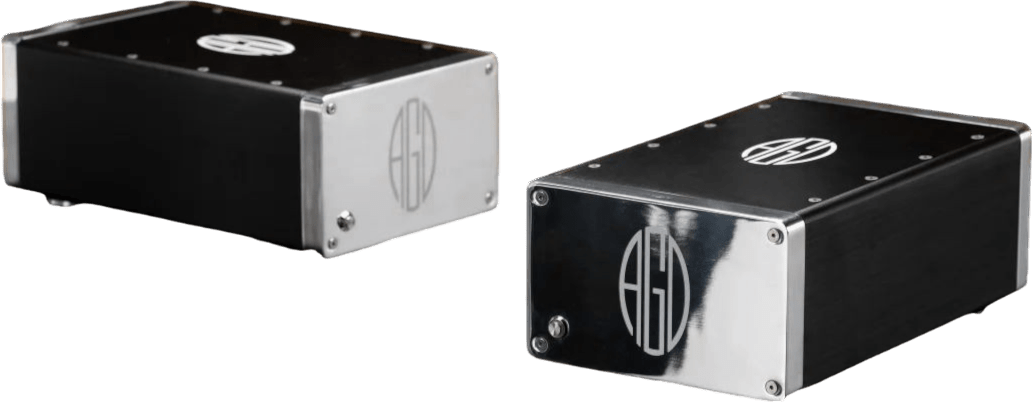


The AGD DUET Monoblock Amplifier, is the newest addition to our state of the art Hi-End Power Amplifiers family. The AGD DUET is our first compact Monoblock Amplifier utilizing 100% Gallium Nitride Power MOSFET design for both the output power stage and the power supply.

.svg)
Our summary
Product Strengths
- Compact size, lightweight, and runs cool compared to traditional high-end amplifiers
- Exceptionally quiet operation, with reviewers noting a complete absence of hum or buzz
- Delivers a clean, crisp, and neutral sound signature without added coloration
- Upgradeable design, allowing users to update the amplifier with new GaN modules as technology evolves
- Produces a Single Ended Triode-like midrange and top end
Product Considerations
- The polished finish is a fingerprint magnet, requiring the use of gloves for handling
Comparisons (according to reviewers)
- Vs AGD Audion MKIII: The Duets offer a cleaner and more refined sound with improved bass and greater immediacy and snap compared to the Audion MKIII
- Vs Daniel Hertz Maria: The AGD Duets seem to have a little more inner resolution
- Vs Pass Labs X250.8: The AGD Duets performed to a higher level
- Vs Peachtree GaN 1/VTV GaN amps: AGD amps seem to be on another level in regards to design, and the sound is more refined and beautiful
- Vs Aavik U-150, Luxman 595, Yamaha A-S 3200, Axxess Forte 1, Line Magnetic 219ia: The AGD Duets performed to a higher level
Takeaway: The AGD Duet amplifiers offer a blend of cutting-edge technology, exceptional sound quality, and user-friendly design. They are a great option for those seeking a high-end audio experience in a compact and energy-efficient package.
Video review
Our take on the brand
Our summary
Product Strengths
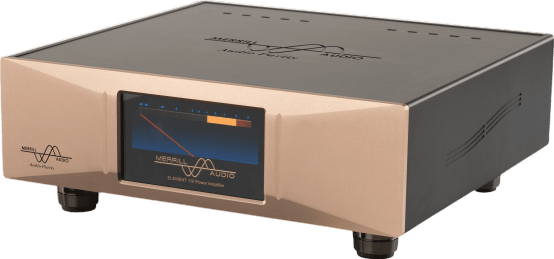
- Able to drive reference Sound Lab electrostatic speakers effectively
- Designed and developed under Merrill's 'Project Oganesson', highlighting their sonic abilities and the methods used to achieve them
- The exterior looks good, especially the brightly colored front panel 7' Capacitive Touch Screen Display (CTSD)
- Complete transparency and lack of colorization
- Gaia III's feet from isoAcoustics were hand selected for their superior dampening and to isolate the amplifiers from surrounding vibrations
Product Considerations
- Not a member of the 'easily affordable' high-end audio equipment club
- There is no power switch
- These amplifiers are designed to be powered on and left on
Comparisons (according to reviewers)
- Element 110 is a scaled-down version of the Element 116, using lower-priced components, heatsinks, and other constituents, and lower power, but it has the same transient response
- The Element 110 monoblocks did not scale the same sonic heights as the Element 118s, but the Element 110 monoblocks have many characteristics that impressed
Takeaway: The Merrill Audio Element 110 is an impressive amplifier that delivers music with transparency and without unwanted coloration. It is a powerful and efficient choice for audiophiles looking for high-quality sound reproduction.
Video review
Our take on the brand
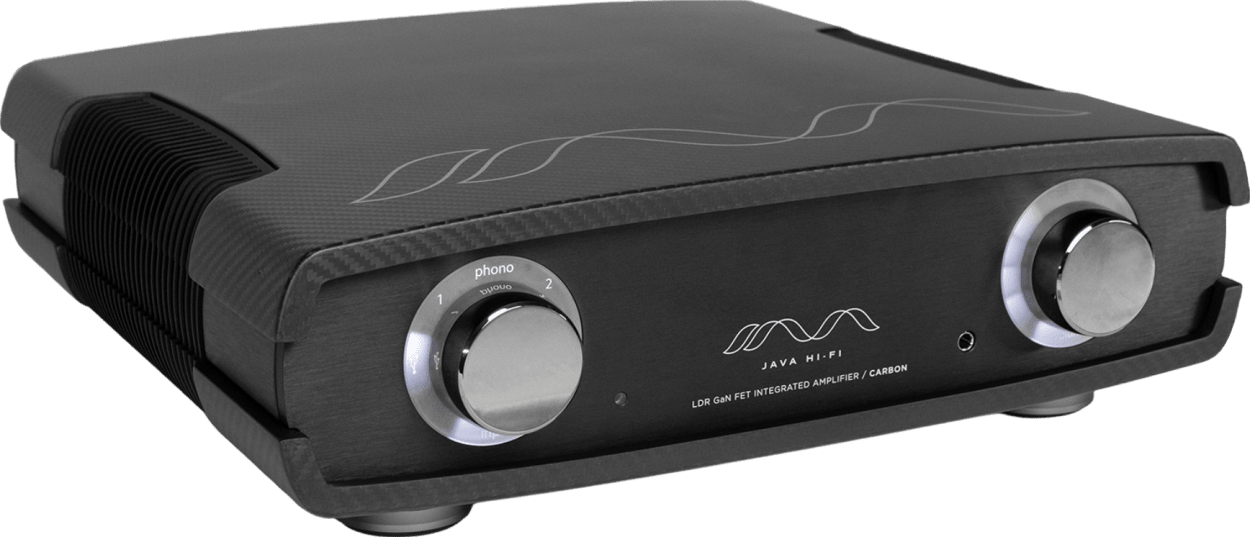

Solid 9mm carbon fibre outer casework 2ETI Research Kryo speaker binding posts 3IsoAcoustics Gaia IV feet 4Solid 8mm anodised aluminium front panel 5Innovative inverted PCB assembly for vibration and resonance control of audio circuit 6Dimensions: 44 cm x 41.5 cm x 13 cm (w/d/h) 7Weight: 11.6kgs (25.5 lbs)
Product Strengths
- Delivers a tight, coherent musical pace with stellar clarity
- Achieves a significant amount of the three-dimensional characteristics of tubes with the sonic slam and control of solid-state amplifiers
- Delivers subtle texture and nuance when required and high sound pressure levels without losing composure
- The amplifier's ability keeps instruments locked in their own spaces without ever losing focus
- Fast and neutral sound that appears to be true to the source
Product Considerations
- The volume knob is not very responsive at first use, which can be annoying initially
- The remote is functional, but not as aesthetically pleasing as the amplifier itself
- The DAC only has a USB input
- It's a fingerprint magnet
- No MC phonostage
Comparisons (according to reviewers)
- The Double Shot power amplifier takes clarity and pace further than the Single Shot integrated, because of its larger, dedicated power supply
- Compared to Boulder or Constellation amplifiers, the Double Shot has the least colored tonality
- Compared to the Merrill/Lab 12 partnership, the Double Shot integrated was perhaps better sounding overall—a little less quick and a little softer around the edges
Takeaway: The Java Double Shot is a stylish and powerful amplifier that delivers neutral and detailed sound. It has useful features like a DAC and phono stage to enjoy all music sources.
Video review
Our take on the brand
Product Strengths
- Offers a remarkably smooth, unforced, and natural presentation with a touch of warmth
- Excels in detail retrieval and textured presentation of instruments and vocals, making the music feel alive
- Presents a wide and holographic soundstage, especially when paired with speakers that are already strong in this area
- Demonstrates agility, precision, and clarity, combined with a naturalness that eluded earlier generations of Chord amplifiers
- Scales dynamically and has the ability to punch hard when required
Product Considerations
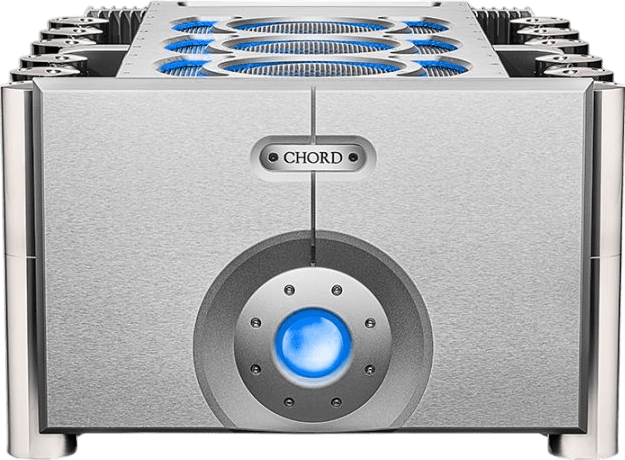
- Has a minimalist design with just four line-level inputs, lacking features like phono stages, tone controls, headphone outputs, or DAC modules
- Some may find its sonic signature prioritizes articulation over qualities such as richness and authority, potentially sounding thin if partnered poorly
- Balance control has no center indent or marked position
- The polychromatic lighting may be an issue for the color-blind
- Remote operation can be affected by direct sunlight
Comparisons (according to reviewers)
- Vs Rega Elex-R Mk3, the Chord Ultima Integrated delivers undeniably elevated sound in all respects, with greater dimensionality and smoother vocals
- Vs Bryston 7B 3 monoblocks, the Chord Ultima Integrated offers a weightier and more thunderous delivery, especially in the midrange and vocals, with more inner warmth in tone
- Vs Benchmark AHB2, the Chord Ultima Integrated provides a more energetic and fun listening experience, with Thor-like bass impact and overall superior dynamics
- Vs Accuphase E-270, the Chord Ultima Integrated is warmer, rounder, more powerful, and refined, with a more fluid and emotionally engaging performance
Takeaway: The Chord Ultima Integrated is a unique and well-built amplifier that combines a visually pleasing design with a captivating sound, full of detail and dynamic precision. It brings music to life with an engaging and immersive experience, making it a worthy addition to any audiophile's setup.
Video review
Our take on the brand
What competes at this price?
Our Summary
Product Strengths
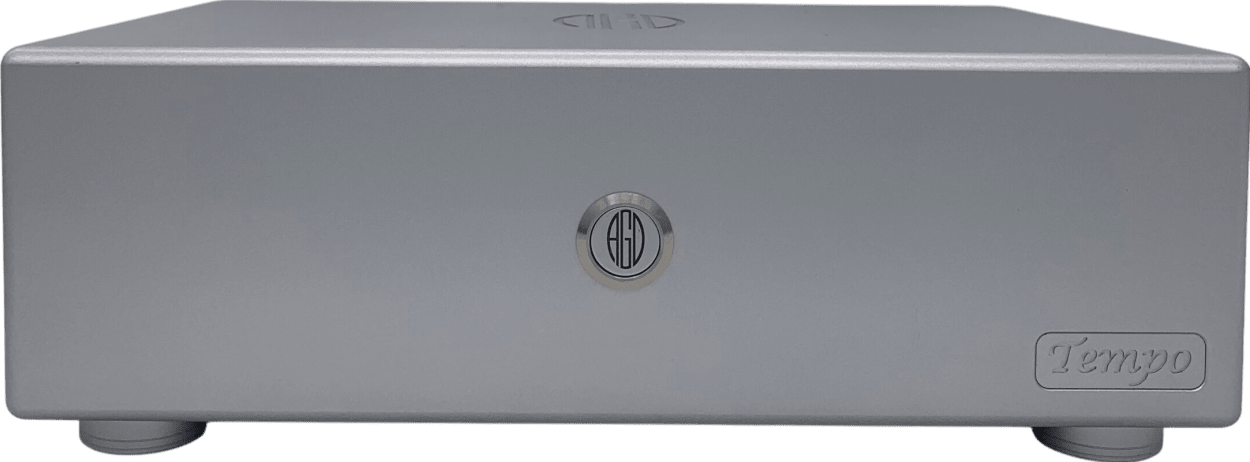
- GaN technology allows for efficient power usage, with 94% of energy being turned into sound
- Compact size challenges the notion that high-quality amps need to be large
- Design and packaging create pride of ownership
- It can be run in bridged mode to deliver 400 watts into one channel
- Stability and ability to handle complex impedance loads
Product Considerations
- The slight sonic signature may not be for everyone
- If truly outrageous amounts of power are needed to drive speakers, a second AGD Tempo amp might be needed to run in a bridged configuration
- High-frequency noise was discovered when XLR cables were not connected between them
- Power cords can make a large difference, the included power cord doesn't flatter the amp
- Some traditionalists may find it hard to accept that it's a Class-D amplifier
Comparisons (according to reviewers)
- Compared to Peachtree Audio GaN400, the AGD Tempo reports to have better overall specifications
- Compared to Parasound Halo A21+, the AGD Tempo is simply superior
- Compared to Bricasti M30 monoblock amplifiers, the level of which the most subtle detail exists approaches reference Bricasti M30 monoblock amplifiers
Takeaway: The AGD Productions Tempo is a cutting-edge amplifier that offers a new take on audiophile amplification and rivals more expensive amplifiers. It can drive speakers easily while being energy efficient.
Video review
Our take on the brand


Our Summary
Product Strengths
- Clean, neutral, and transparent sound signature that neither adds nor takes away from the source material, ensuring high fidelity music reproduction
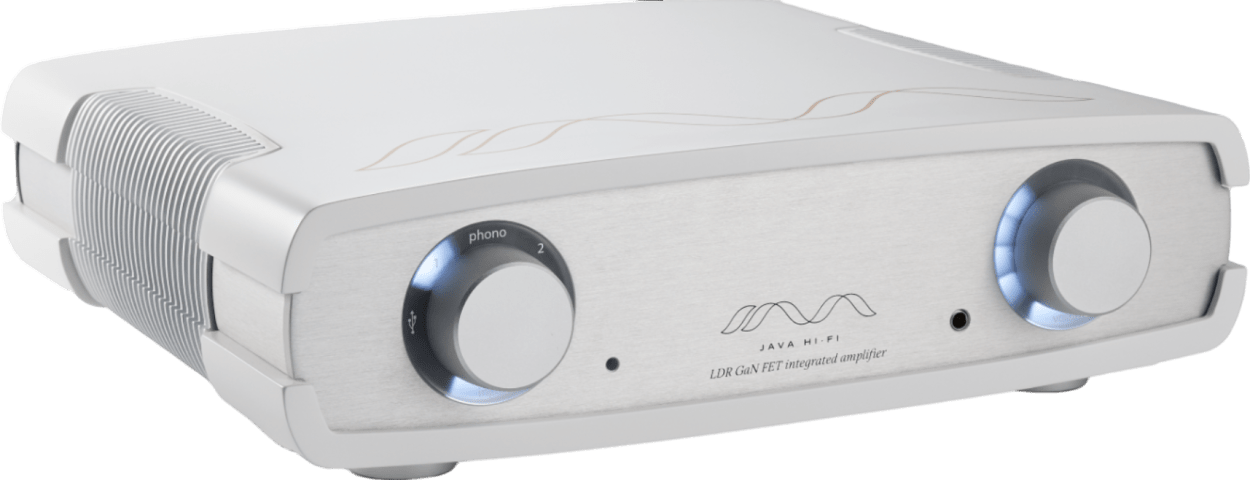
- Excellent built-in DAC using dual Burr-Brown PCM1794A chips, comparable to some standalone DACs
- Well-implemented built-in MM phono stage, outperforming entry-level outboard phono stages and suitable for higher-end MM cartridges
- Gorgeous casework with customizable finish options, blending wood and metal for an elegant appearance
- High power output (200W into 8 ohms, 400W into 4 ohms) capable of driving a wide range of speakers with ease
- Single Shot only has single-ended RCA inputs, the Double Shot variant is needed for balanced inputs
Product Considerations
- The built-in phono stage lacks loading and gain options, potentially limiting compatibility with some moving coil cartridges
- The DAC section is USB input only and might not be as keen on very high sample rates (above 192kHz)
- Some reviewers would like to see a COAX digital input
- The lights on the front panel might be too bright for some listeners, even though there is a dimmer switch
Comparisons (according to reviewers)
- Vs Ayre 8-Series separates: Ayre provided a greater sense of dimensional fullness
- Vs Leben CS600: Leben coaxes more emotion, because it places more emphasis on tone color and body
Takeaway: The Java Hi-Fi Single Shot is a beautifully designed, all-in-one integrated amplifier that delivers a neutral and transparent sound, suitable for those who appreciate high-fidelity audio and want a streamlined system. Its versatility and excellent built-in components make it a worthwhile investment for a high-quality audio experience.
Video review
Our take on the brand

Our Summary
Product Strengths
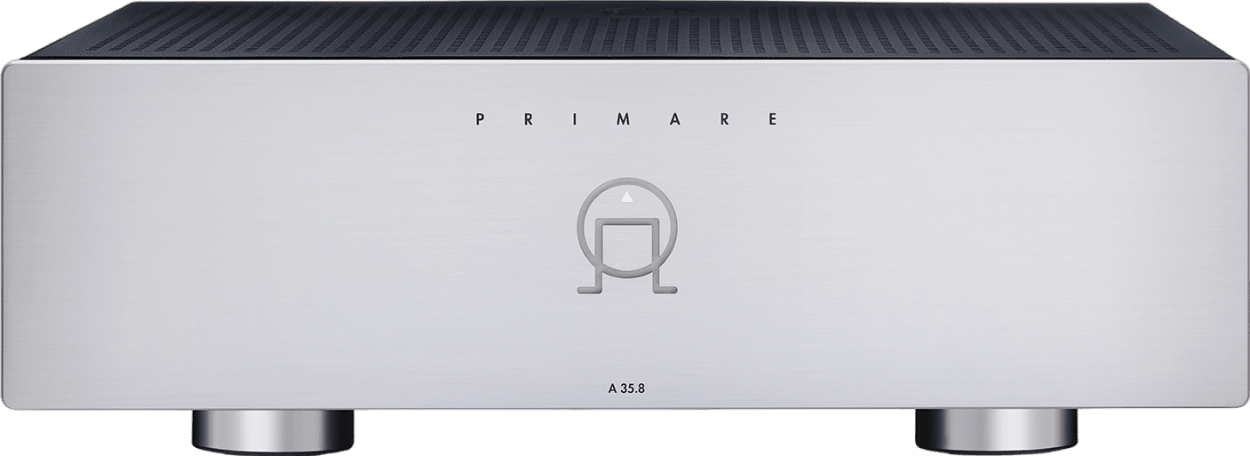
- The A35.8 provides eight channels of 'unimpeachable Class D power in a fairly compact and very flexible package'
- Flexible configuration options for power output to speakers are available, such as bi-amping and bridging
- Each stereo pair can be bridged separately to make four times 375 watts (8 Ohms) from the eight times 150 watts
- Fault-free sound quality
- High quality fit and finish
- The A35.8 offers flexible connectivity options
Product Considerations
- The 20-amp power inlet is the seldom-seen variety with three horizontal blades
- The speaker output posts are spaced too widely for dual-banana plugs
- Cabling can be tricky
- A high current power cord is needed
- Lower gain is present, though this doesn't necessarily need to be an issue
Comparisons (according to reviewers)
- Vs NAD M28, the A35.8 gets you one more channel and more versatility for a 10% price increase
- Vs Benchmark AHB2, the Benchmark presented a more neutral tonal balance and undistorted soundstage
- Vs NAD C 298 stereo amplifiers, the Primare seemed slightly more forward, often conveying an appealing liveliness
Takeaway: The A35.8 power amplifier is a flexible and versatile product worth considering for anyone seeking a high-quality multi-channel setup. Its ability to bridge channels offers many ways to configure your speaker system.
Video review
Our take on the brand
.png)
Our Summary
Product Strengths
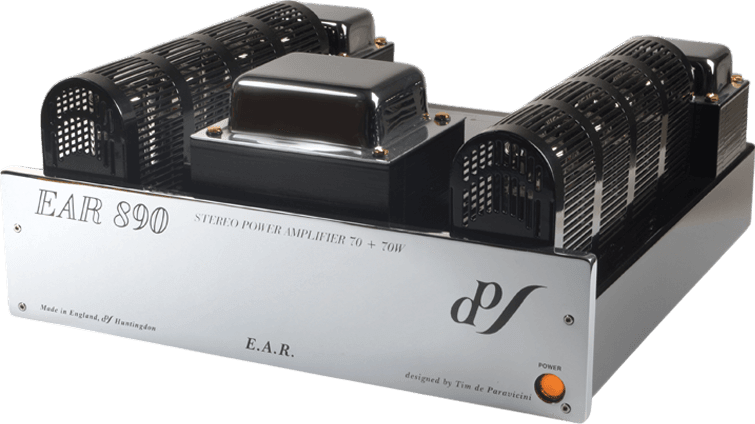
- The EAR 890 produces 70Wpc in stereo, and can be bridged to 140W in monoblock
- Neutral sound that gets out of the way and lets the user enjoy the music
- Complex and dense music textures are handled with ease, and dynamically demanding passages are sailed through
- Articulate midrange
- Detailed and realistic bass
Product Considerations
- Removing/installing tube cages is difficult and time-consuming
- The loudspeaker binding posts are positioned too close to the output transformers, making it hard to tighten them properly
- Some assembly work appeared amateurish, specifically the use of silicone in various locations, such as fastening chassis wires
- The amplifier can operate quite hot
- May not have as much bass impact compared to solid state amps
Comparisons (according to reviewers)
- The EAR 890 monoblocks achieve SET-like definition along with the authority and swagger necessary for most full-size speaker systems, when compared to Cary Audio 300B SET amps
- The EAR 890 is as textured as the top LAMM designs, but with noticeably better neutrality and more power
- The EAR 890 surpassed the deHavilland KE50As with a more articulate midrange, producing more color and separation in the microtones of instruments
Takeaway: The EAR 890 is easy to set up and sounds good with very little tweaking, making it easy to just sit back, relax, and enjoy the music. It's a good choice for people who want a tube amp that is both musical and powerful for their home listening experience.
Video review
Our take on the brand

Our Summary
Product Strengths
- Delivers amazing quality of sound and detail
- Bulletproof amplification
- Has a rhythmically soulful sound with a tremendously rich and natural midrange
- The A51's bass is well-defined, extremely textured, and robust
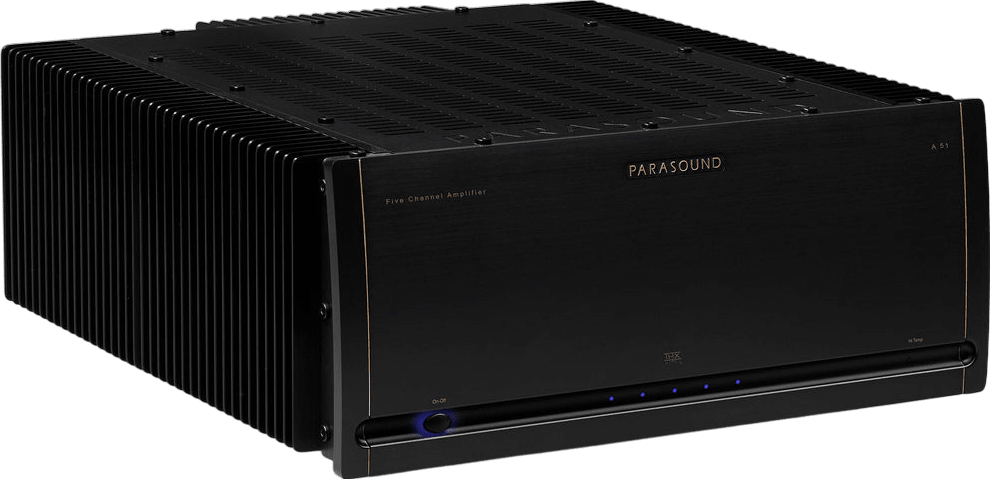
- With 250 watts on tap, the Parasound A51 will power virtually anything
Product Considerations
- Due to its class A/AB design, the A51 does get a bit warm and should be installed in a properly ventilated space and/or rack
- The A51 is large and heavy, and is best moved and/or positioned by two people
Comparisons (according to reviewers)
- Compared to Rotel, the Rotel makes the M&K Sound system slightly bright with a bit of sibilance, while the Parasound is more neutral
- Compared to Acurus A250, the Parasound had tighter bass, which is probably attributed to a better damping factor
Takeaway: The Parasound Halo A51 is a high-performance amplifier with great sound quality, detail, and build quality, making it an excellent choice for audiophiles and home theater enthusiasts. Its ability to deliver power and control to speakers makes it a valuable addition to any high-end audio system.
Video review
Our take on the brand
Questions? Ask the brand's dealers.




How to buy
Amplifiers
Search all hifi products
Explore our database of 10,000+ new and 25,000+ used hifi products.