


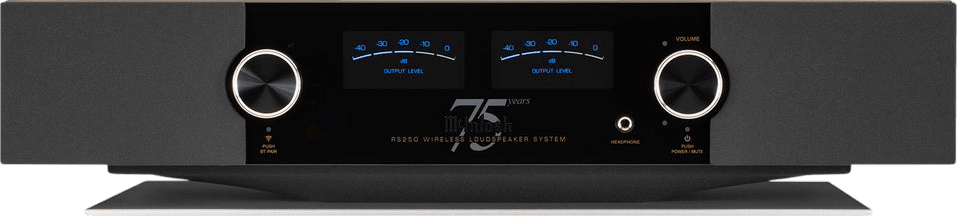


Note that this is a discontinued product. You may want to visit the brand's page here to browse their newer products.
What reviewers think
Bloggers and YouTubers have tried this product—so we've summarized their strongest opinions below. Links to full reviews follow.
Product Strengths
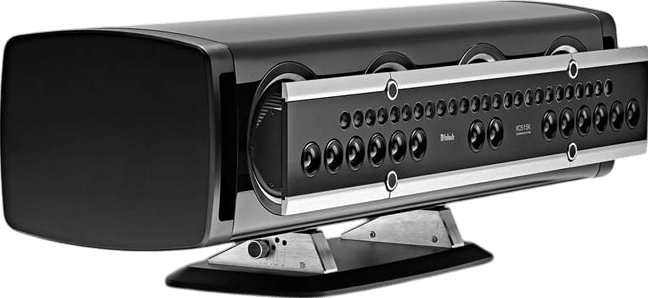
- Genuine stereo sound from an all-in-one system, which can replace a stereo setup or soundbar
- Easy to use and install, with no dedicated app required for streaming via Airplay, Cast, or Spotify Connect, installation can be done in under 1 minute via iOS or Google Home
- Can be integrated with Google Voice Assistant or Apple HomeKit for voice control
- Three-way speaker design with dual mid-range woofers, tweeter, and dedicated bass driver for clear and communicative sound across the frequency band
- Supports Tidal Hi-Fi lossless audio quality playback up to 24 bit 192 kHz and is Roon ready
- Excellent connectivity, including Apple Airplay 2, Chromecast, Bluetooth 5.0 (AAC, AptX HD, AptX low latency), phono in, subwoofer out, optical in, and HDMI in
Product Considerations
- At $3,000, it is a higher price tier compared to the average soundbar
- Larger footprint than the RS-150, and may be thicker than the average soundbar, requiring consideration for placement
- Not designed for portability due to its weight of 13.3kg
Comparisons (according to reviewers)
- Vs RS-150: RS-250 offers stereo sound, more input connections, and is designed for bigger applications, whereas RS-150 is a mono system primarily for desktop or personal use
Takeaway: The RS-250 offers audiophile quality without the need for extensive technical knowledge, providing great stereo sound and versatile connectivity in an easy-to-use package. It is an impressive all-in-one system suitable for replacing a soundbar or a traditional stereo setup.
All
RS250
reviews



Manufacturer details
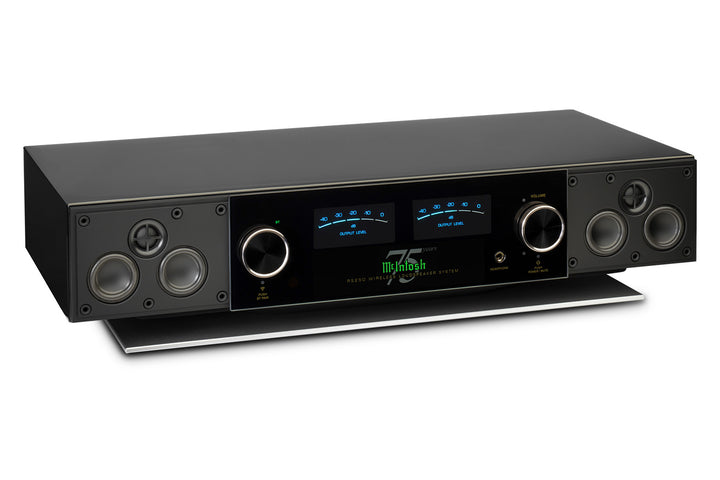
- Power Output: 650 Watts (400 Watts to Tweeters/Midranges, 250 Watts to Woofers)
- Number of Channels: 2
- System Driver Complement: Two 20mm Titanium Dome Fluid-filled Tweeters, Four 50mm Titanium Inverted Dome Midranges, Two 4 x 6 inch Long Throw Woofers
- Frequency Response: 40Hz to 20kHz
- Crossover Frequency: 275Hz and 4,000Hz
- Enclosure Finish: High Gloss Black
- Grille Finish: Black Knit Cloth
- Unit Dimensions (W x H x D): 24-13/16" (62.99cm) x 5-3/4" (14.48cm) x 12-5/8" (32cm)
- Unit Weight: 29.5 lbs (13.3 kg)
- Shipping Weight: 35 lbs (15.8 kg)
- Shipping Dimensions (W x H x D): 24-7/16" (62.99cm) x 10-13/16" (14.48cm) x 16-1/2" (41.91cm)











Brand highlights
Taking a step back to look at reviewers' thoughts of the brand's entire lineup—not just this product—what stands out most is the following:
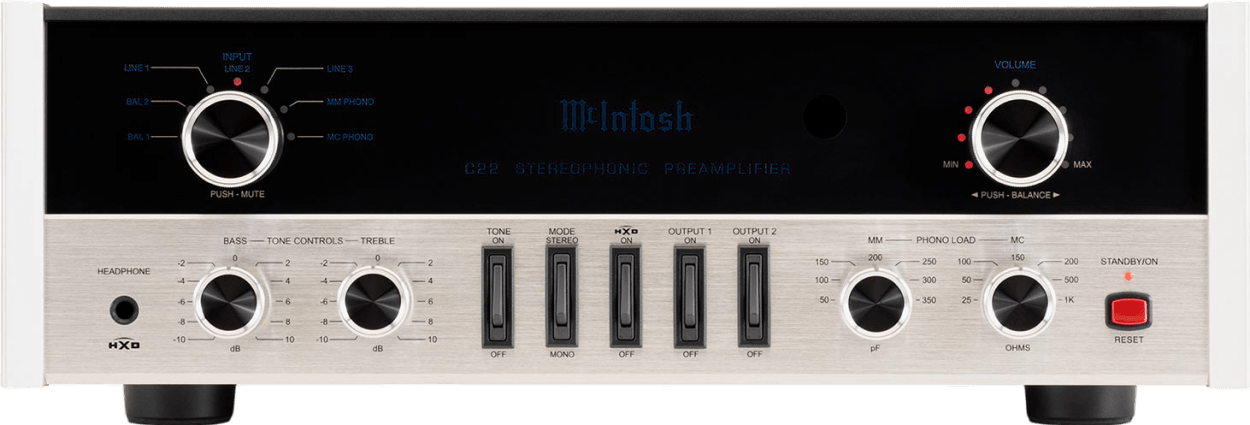
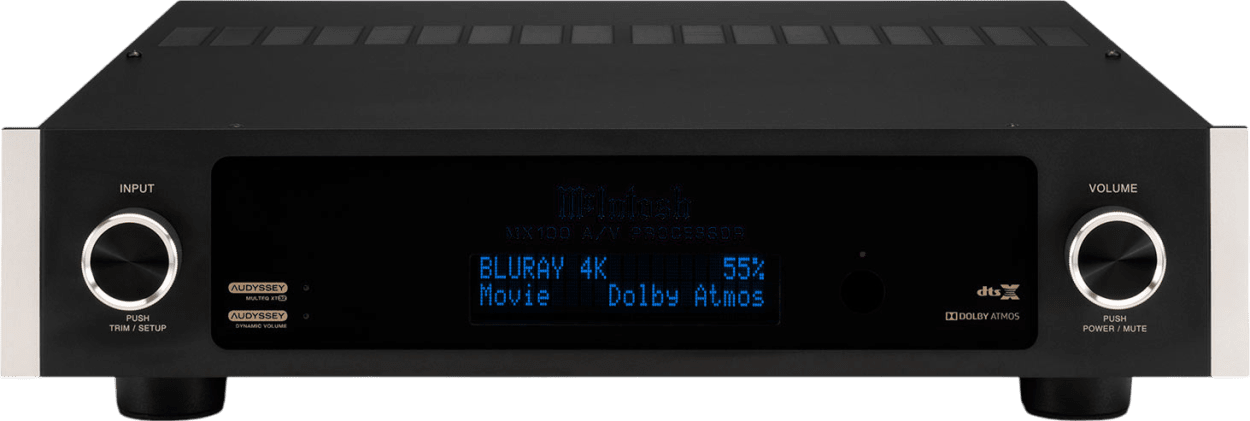
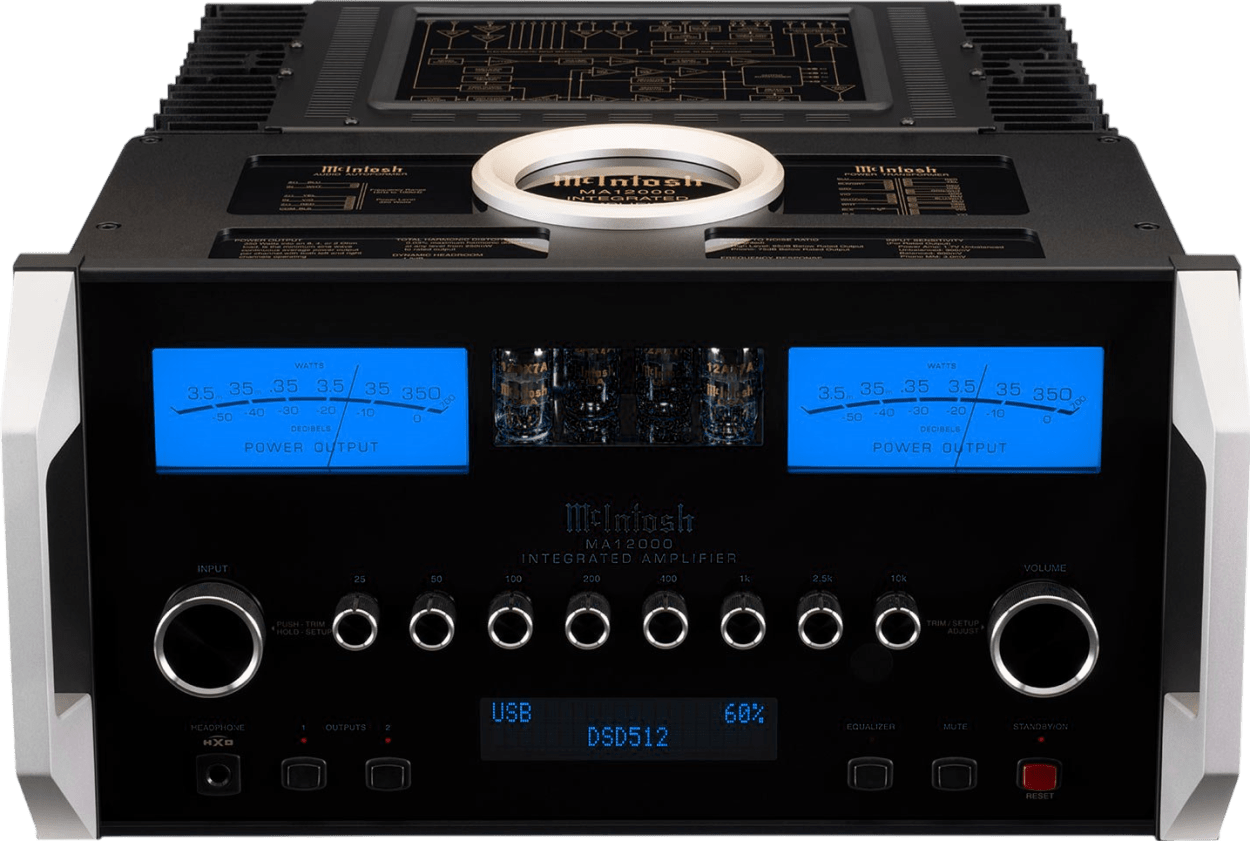
- McIntosh products blend classic, retro aesthetics, reminiscent of their 1970s designs, with modern materials and cutting-edge internal components, offering a unique visual appeal.
- The brand's amplifiers are known for their substantial power output, often exceeding specifications, and their ability to drive a wide range of speakers across varying impedance levels due to their unique Autoformer technology.
- McIntosh offers a high degree of customization and control through features like multi-band equalizers, adjustable input sensitivity, and advanced settings accessible via dedicated apps or web interfaces.
- They distinguish themselves with a focus on long-term reliability and customer satisfaction, with products built to last for decades and supported by a dedicated dealer network.
Select products
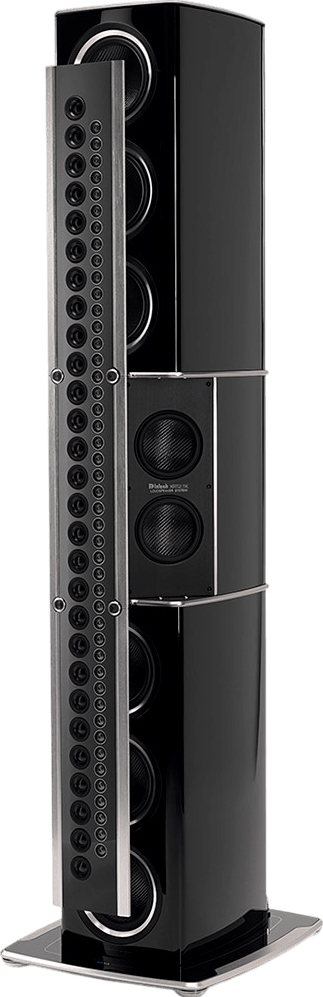


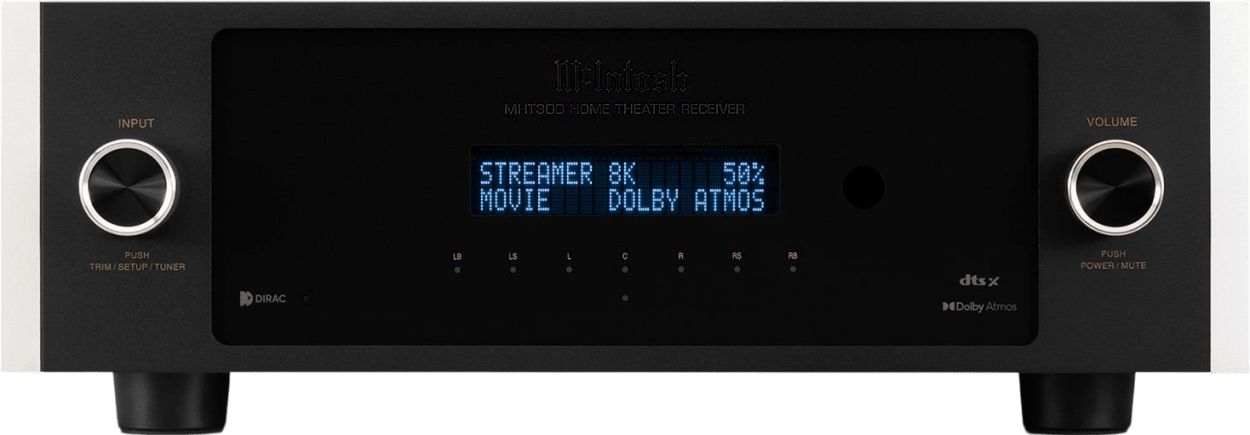
MHT300
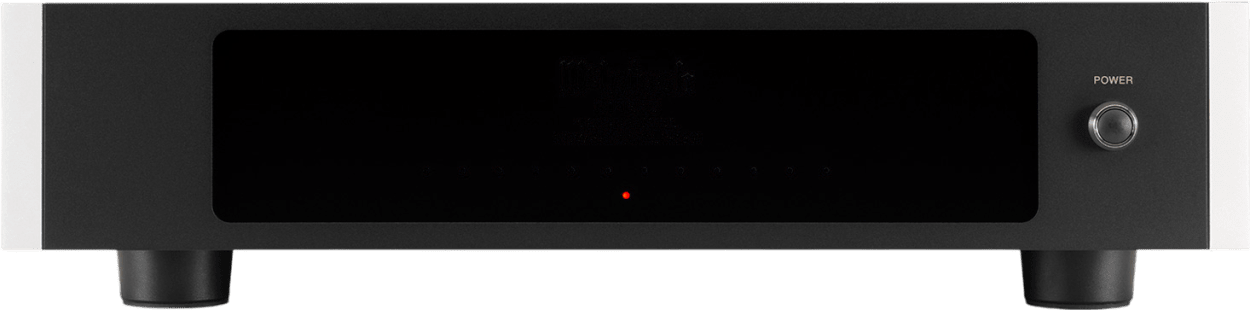
- Positioning: Positioned as a versatile home theater receiver in McIntosh's lineup, suitable for custom installations or standalone display.
- Description: Supports 8K/60Hz and 4K/120Hz video, making it ideal for modern home theaters. Unlike other McIntosh products, it offers 7.2 channel audio with expandability to 7.2.4, providing flexibility for future upgrades. This makes it perfect for users looking to integrate advanced video capabilities and immersive audio in a custom home theater setup.
MHA200
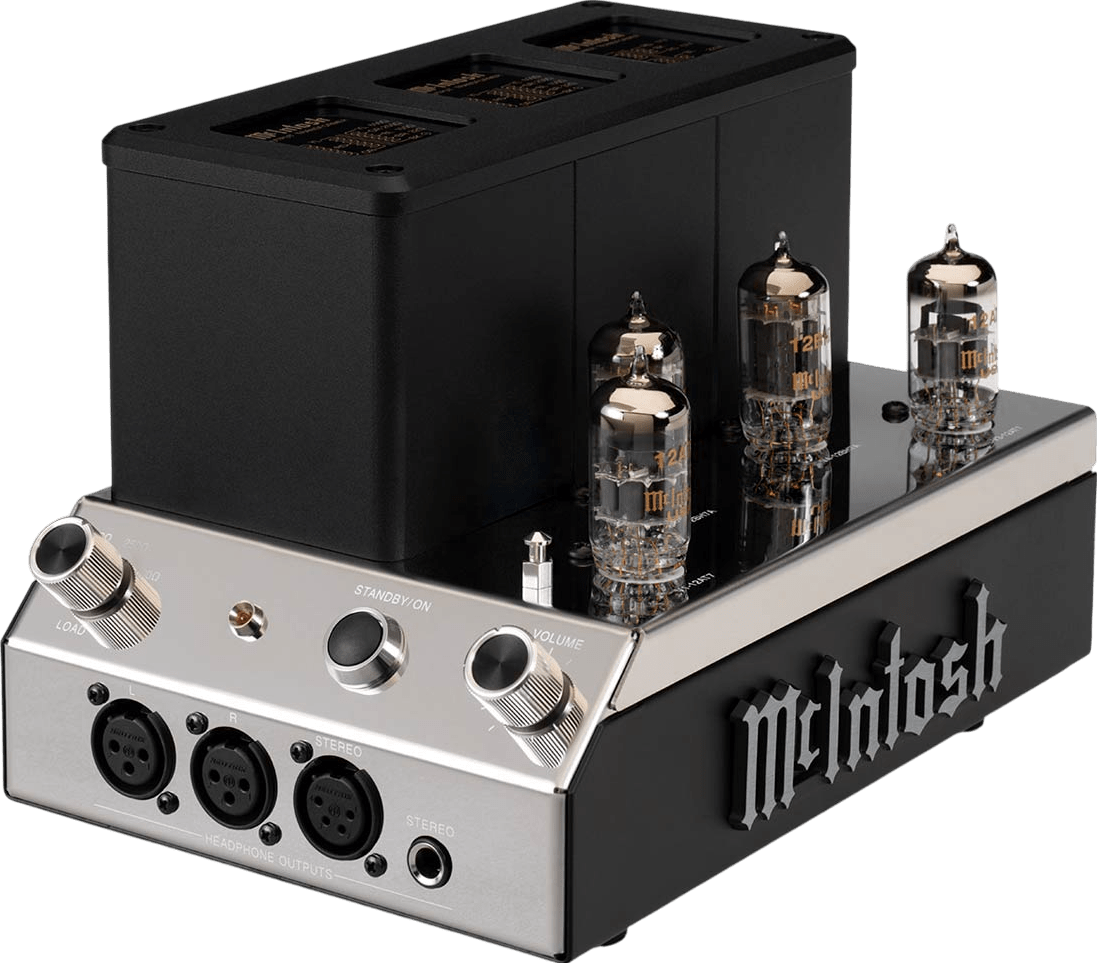
- Positioning: A compact, high-quality headphone amplifier designed for personal audio enthusiasts.
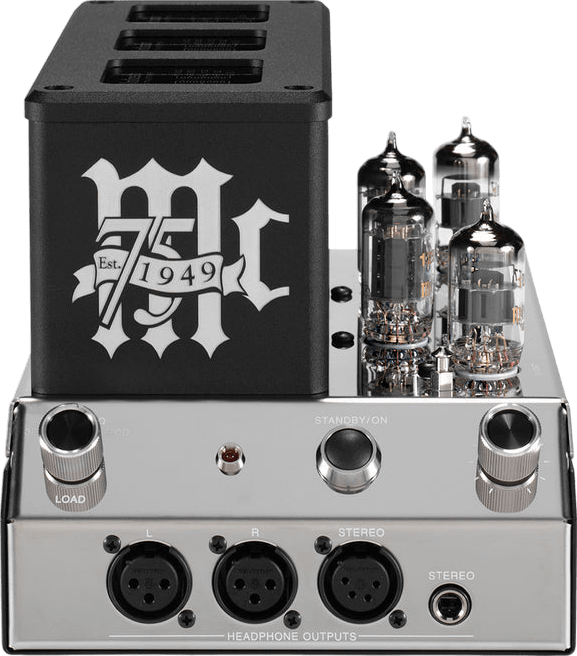
- Description: Uses vacuum tube amplification, delivering a warm and detailed sound that is distinct from solid-state amplifiers like the MC462. Its compact size and multiple impedance settings make it versatile for various headphone types.
MC462
- Positioning: A powerful stereo amplifier, offering robust performance for high-end home audio systems.
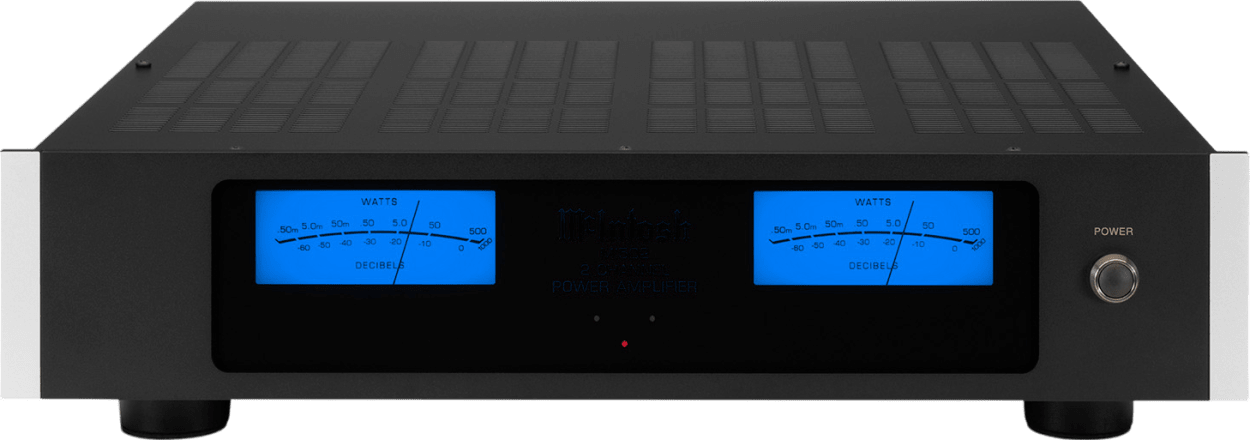
- Description: Features a Quad Balanced design with McIntosh Autoformers, providing 450 Watts per channel with low distortion. Compared to the MC1502, it offers a solid-state solution with increased dynamic headroom.
MC1502
- Positioning: A high-power vacuum tube amplifier, ideal for audiophiles seeking classic tube sound.
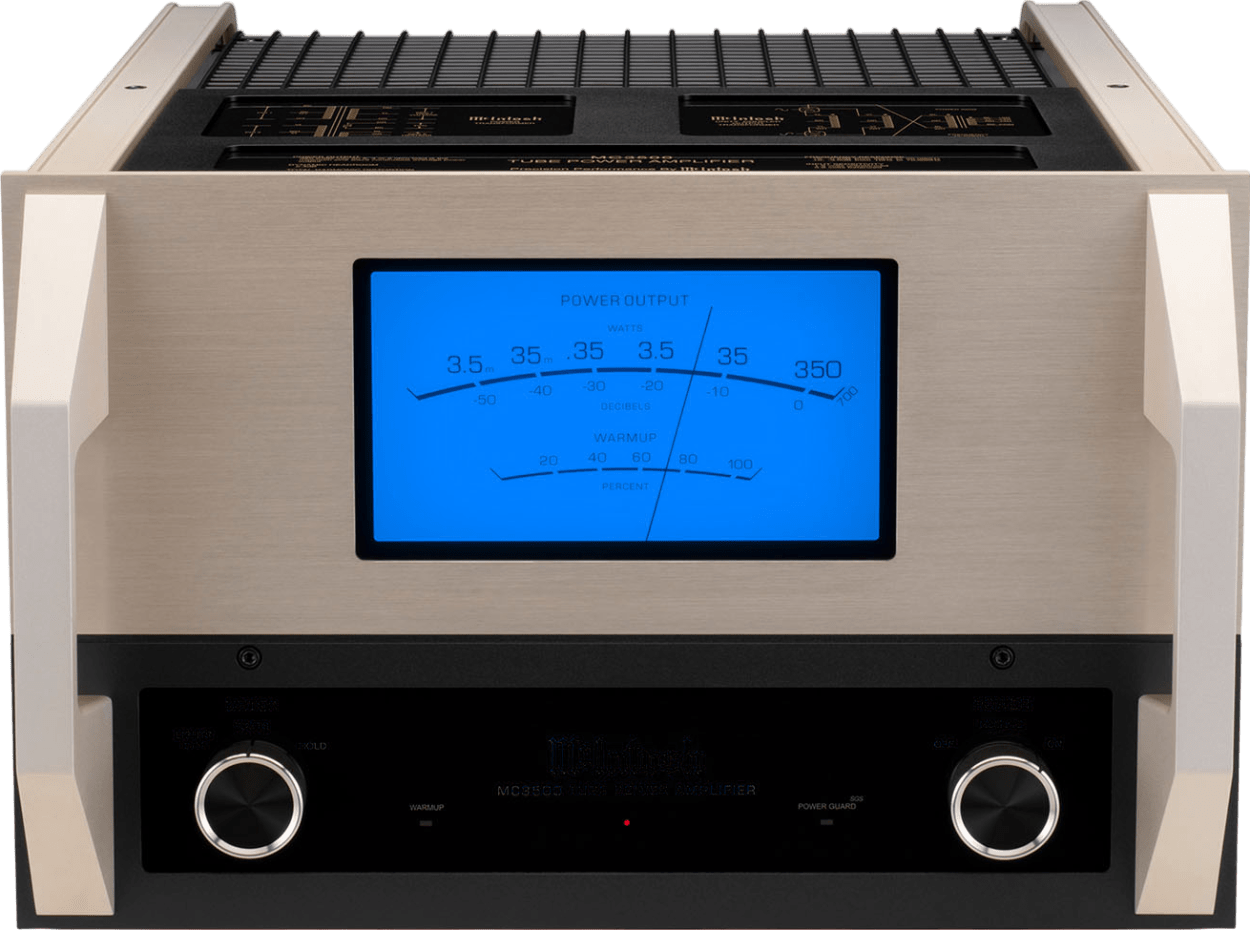
- Description: Delivers 150 Watts per channel using vacuum tubes, offering a rich, warm sound that contrasts with the solid-state clarity of the MC462. Its Unity Coupled Circuit ensures consistent performance across various speaker impedances.
MC901
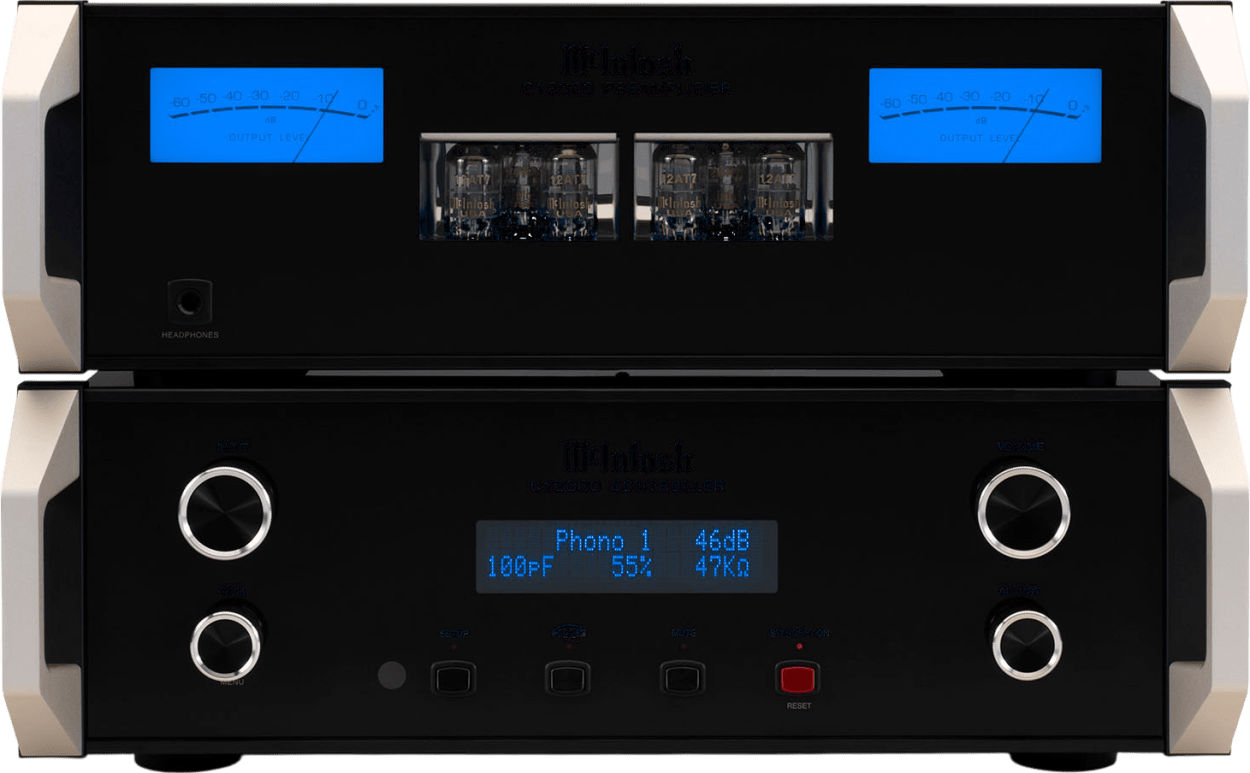
- Positioning: A unique dual mono amplifier, combining both vacuum tube and solid-state technologies.
- Description: Integrates a 300 Watt vacuum tube amplifier with a 600 Watt solid-state amplifier, providing the best of both worlds for bi-amping loudspeakers. This hybrid approach is unlike any other McIntosh product.
MC21KW
- Positioning: A flagship monoblock amplifier, representing the pinnacle of McIntosh's power amplification.
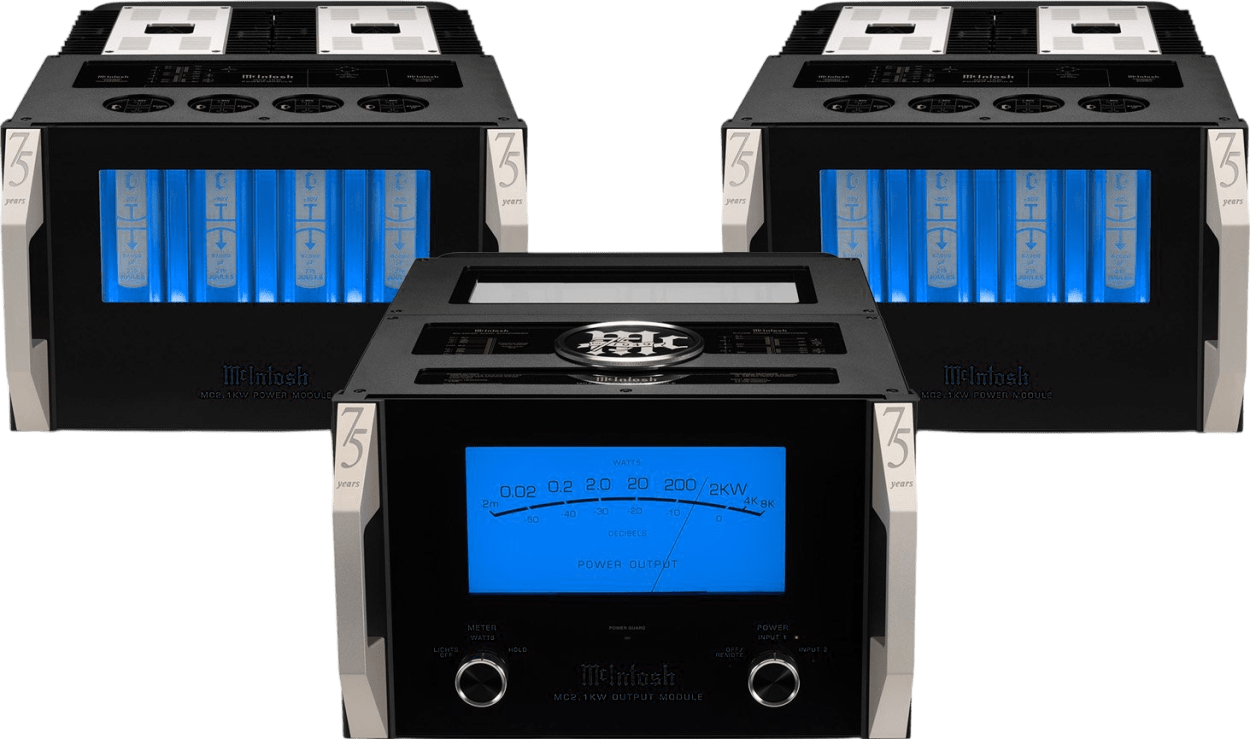
- Description: Delivers 2,000 Watts of power, making it suitable for the most demanding audio setups. Its tri-chassis design and advanced technologies like Autoformer and Power Guard set it apart from other amplifiers.

Our take on the brand
Look inside the brand
Our interview with the brand
What are two key technological innovations or strong opinions that differ you from other brands?
What's your approach to customer support?
What are your favorite tracks for showcasing the strength of your products?
What other products pair best with yours?

Used
McIntosh









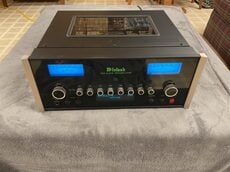
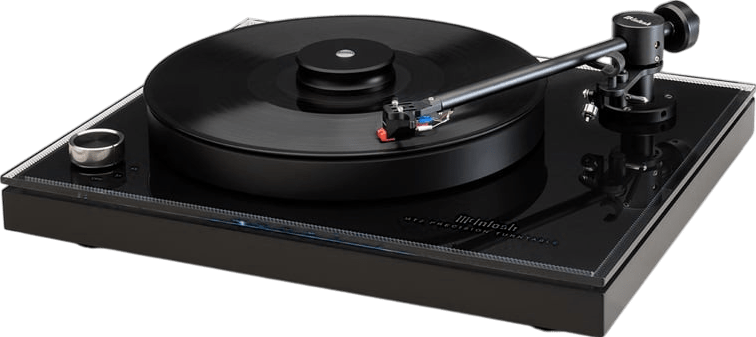
What if you spend more?
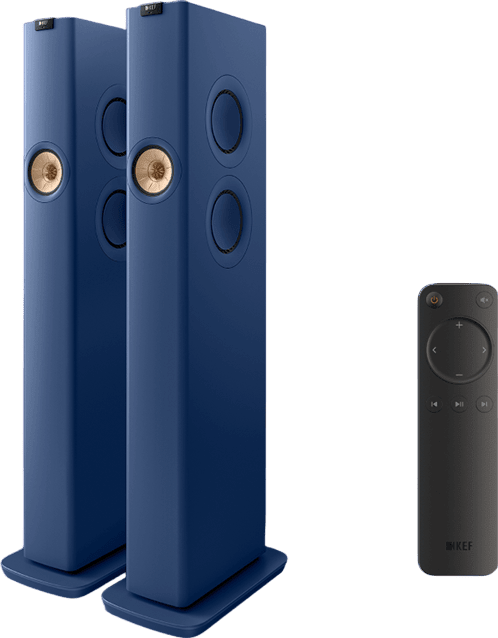


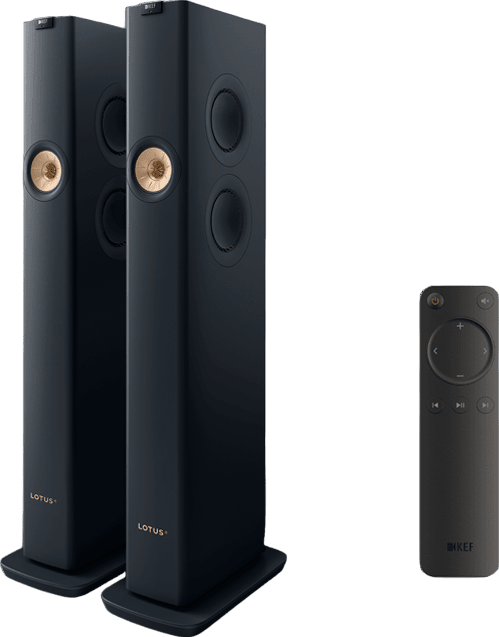
Bring the track spirit into your home with LS60 Wireless Lotus Edition, created in partnership with and inspired by the British Racing Green of the iconic brand.

.svg)
Product Strengths
- Striking, sleek, and modern design that complements modern interiors
- Incorporates KEF's Uni-Q driver array and Metamaterial Absorption Technology (MAT) for neutral, open, detailed sound, reducing unwanted sound from the rear of the tweeter
- Includes Uni-Core force-canceling woofers that reduce cabinet vibrations, contributing to balanced and detailed bass
- The KEF Connect app allows for adjustments to fit the listening environment
- Offers high connectivity and is a true stand-alone system
Product Considerations
- Bass can be a bit too much out of the box, requiring adjustments via the app or placement considerations
- Not well-suited for those who have many signal sources to connect to
- Some reviewers found the bass lacked definition in the upper bass, with unclear instrument placement, even after adjusting EQ settings
- The included remote control is considered basic or cheap
- Mandatory online registration and administrator-level internet connection requirements for the app may be a drawback for privacy-conscious users
Comparisons (according to reviewers)
- Compared to the Bang & Olufsen Beolab 28, the LS60 Wireless can achieve similar sound quality with adjustments, at a lower price point, although the Beolab 28 sounds 'more right' straight out of the factory
- Compared to the KEF LS50 Wireless II, the LS60 Wireless is preferred stylistically, achieves near full-range playback, and has a more slim design, although it costs more and also provides much deeper bass
- Compared to the Q Acoustics Active 400 Towers, the LS60 Wireless has no issues with products not working
Takeaway: The KEF LS60 Wireless are stylish, all-in-one speakers that deliver a balanced, detailed sound with advanced technology. They are a convenient, high-performing solution for those seeking a streamlined audio setup.
Video review
Our take on the brand


Our summary
Product Strengths
- Integrated technology allows direct high-resolution listening without extra devices
- The speaker uses the same Pascal Class D amplification and processing technology from Dynaudio's Pro line Core series
- Discrete amplification channel per driver: 110 watts for the tweeter and 280 watts for the woofer
- Dirac Live room correction is available, which can tune some of the annoying sounds of a garage, for example, using the soft dome tweeter
Product Considerations
- Running a digital coaxial cable from one speaker to the next results in the signal being sent at 24-96 kilohertz, which is a lower quality than what the master speaker receives (24-192)
- There is no HDMI arc or e-arc connection
- Drilling holes may be required to attach the speaker to stands
- Setting up the speaker with the app is not as quick or seamless as Bluesound
- A microphone is required to do Dirac room calibration
Comparisons (according to reviewers)
- Vs PSB Alpha IQs: Plays louder with a higher level of amplification
- Vs Dynaudio Core 7: The Core 7 has more power and a slightly better tweeter and woofer, but is not as aesthetically pleasing and needs a Bluesound Node
- Vs Dynaudio Evoke: It is similar to an Evoke speaker, but with a bigger woofer
Takeaway: The Focus recMsY5ljWopDD7UU is a sophisticated wireless speaker that pulls technology from Dynaudio's Pro line and features Dirac room calibration. It is ideal for someone looking for high-resolution listening without extra devices and who values sophisticated sound and aesthetics.
Video review
Our take on the brand
Product Strengths
- Excellent sound quality, with reviews noting neutral and balanced sound, meticulous detail retrieval, and delicate micro-dynamics
- Good imaging and soundstage, with the ability to create a wide and immersive soundstage with precise imaging
- Sleek design, with their elegance and ability to complement modern interiors
- Powerful and well-controlled bass, thanks to the Uni-Core driver technology
- Wide array of connectivity options, including HDMI eARC, optical, coaxial, RCA, Ethernet, Wi-Fi, AirPlay 2, Google Chromecast, Spotify Connect, Tidal Connect, Amazon Music, Deezer, and Qobuz
Product Considerations
- Relatively expensive compared to other active speaker systems
- Some reviewers noted occasional signal dropouts between the primary and secondary speakers when connected wirelessly
- The KEF Connect app is essential for full functionality and optimal setup, which may not appeal to users who prefer physical controls
- Bass output can be sensitive to room placement and may require adjustments to avoid boominess
- Connecting multiple external devices can result in significant cable clutter, despite being marketed as wireless
Comparisons (according to reviewers)
- Vs Bang & Olufsen Beolab 28: The LS60 offers comparable performance at roughly half the price, though the Beolab 28 is noted as sounding better out-of-the-box without EQ
- Vs KEF LS50 Wireless II: The LS60 offers improved performance and near full-range playback, but at a higher price, the LS50 Wireless II offers similar clarity with a slightly warmer sound
- Vs Klipsch Forte 4: The LS60 is more suited for home theater use and surface more detail
- Vs Q Acoustics Q Active 400 Towers, Dali Oberon 7C Wireless, and Bowers & Wilkins Formation Duos: The LS60 is considered a better, more refined and adjustable package
- Vs Hegel H190 & KEF LS50 Meta with KEF KC-62 Subwoofer: The LS60 communicates the forward force of music better and has features such as Tidal Connect and room EQ
- Vs Lindemann TD-AI1120, KEF LS50 Meta & KEF KC-62 Subwoofer: The LS60 cannot be matched in scale and effortless dynamics
Takeaway: The KEF LS60 Wireless is a fantastic, all-in-one speaker system that sounds great and looks stylish. They are easy to set up and use, and will fill a room with music for years to come.
Video review
Our take on the brand
Our summary
Product Strengths
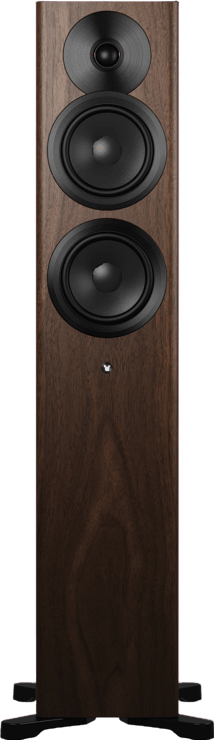
- Transparent presentation, effortless dynamics, pinpoint imaging, and bass extension
- Sounds more neutral, more open and slightly better focused, especially in the lower octaves
- Detail is defined, and the dynamic performance is highly nuanced and sensitive
- Dirac Live compatibility allows for highly customizable and smooth sound
- Plays with an authority normally associated with speakers twice their size
Product Considerations
- The status LED on the front does not replace a display
- Setup is not exactly intuitive
- Without Dirac Live, the bass can sometimes be too strong for music listening
- A dedicated midrange unit would give both strings and woodwinds more depth and body
- Dirac adjustment slightly reduces volume levels, as some frequencies are attenuated
Comparisons (according to reviewers)
- Vs KEF LS60 Wireless: The bass response is tighter and better defined
- Vs KEF LS60 Wireless: The soundstage is more open and transparent
- Vs KEF LS60 Wireless: The stereo perspective is more sharply defined, and the soundstage is larger
- Vs ELAC Navis ARF-51 & NAD C 658: A deeper soundstage is created, with better front-to-back layering and image specificity
- Vs ELAC Navis ARF-51 & NAD C 658: During intense passages, the presentation was more transparent
- Vs KEF LS60 Wireless: Piano sounds better because nuances are more clearly defined and the treble reproduction is airier
Takeaway: The Dynaudio Focus 30 is a great system because it sounds very detailed with pinpoint imaging. The Focus 30 is perfectly suited as a wireless speaker for those seeking excellent sound in their home.
Video review
Our take on the brand
What competes at this price?

Our Summary
Product Strengths
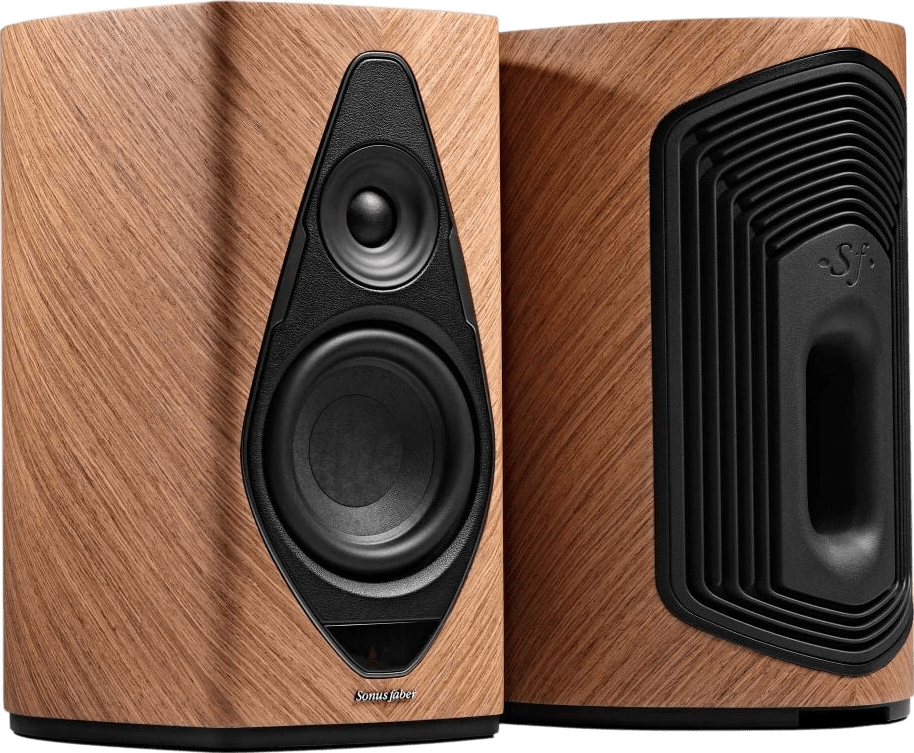
- Gorgeous sound is clear, smooth, detailed, and dynamic
- Elegant design is dashingly elegant, minimalist aesthetic, and painstakingly crafted for equal parts style and substance
- Impressive bass extension and output, described as deep and firm, surprising for their size
- Clear midrange makes voices sound purposeful, characterful, and entirely present
- Versatile connectivity with streaming and input options, including Chromecast, AirPlay 2, phono pre-amp, and HDMI ARC/eARC
Product Considerations
- Some reviewers experienced streaming and HDMI ARC reliability issues
- Input and control layout can be inconvenient and awkward
- Prototype unit had operational bugs
- No bass level adjustment is available, though it could be added in mobile app
Comparisons (according to reviewers)
- Vs KEF LS50 Wireless II—the KEF LS50 Wireless II is a similarly high-end option
- Vs PSB Alpha iQ—the PSB Alpha iQ is a more compact wireless speaker package than the Sonus Faber and is comparatively lighter on bass
Takeaway: The Sonus Faber Duetto speakers are well-suited for those seeking amazing sound and a beautiful design in one package. These speakers are easy to connect and use, and fill the room with rich, detailed audio.
Video review
Our take on the brand


Our Summary
Product Strengths
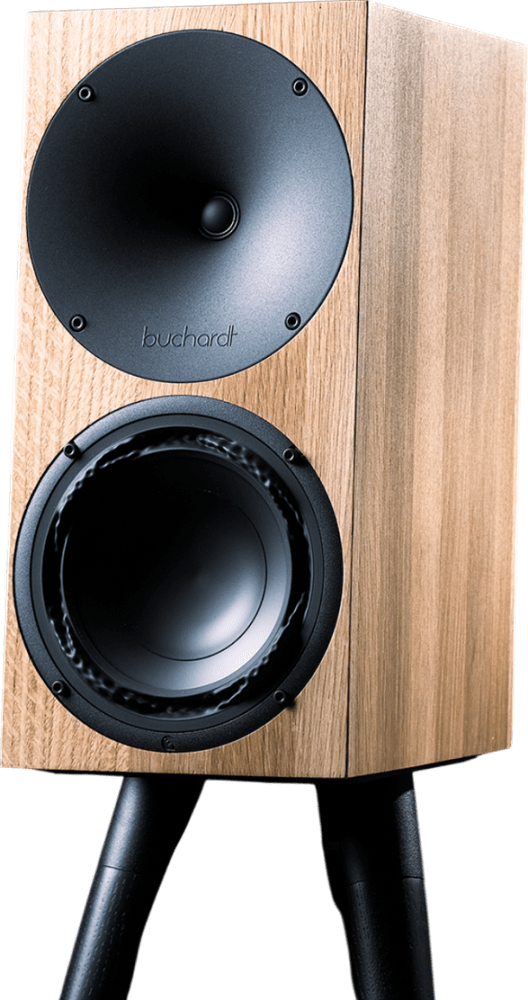
- Exceptional bass performance for its compact size, with bass that is fast, clear, and tight
- Multiple 'Master Tunings' offer customizable sound profiles, adapting to different room acoustics and user preferences
- A high-quality Purifi woofer and SB Acoustics tweeter contribute to clarity, detail, and low distortion
- A solid wood cabinet made in Denmark provides a luxurious look and feel
Product Considerations
- Bass output may diminish or be limited at high volumes to protect the drivers from damage
- A separate purchase of the Platin Stereo Hub may be required for full wireless functionality and room correction
- The 'Made in China' label applies to the electronics inside the cabinet
- While the A10 offers impressive bass, some may still prefer to add a subwoofer for a true full-range experience
Comparisons (according to reviewers)
- Vs Buchardt S400 Mark II, the A10 is more transparent with greater inner detail, clarity, and top-end extension—and deeper, tighter bass—while the S400 Mark II is more relaxed and forgiving with harsh recordings
- Vs Buchardt A500, the A10 has comparable performance, with possibly a crisper sound in some instances
Takeaway: The Buchardt Anniversary 10 is a compact yet powerful speaker that offers a customizable listening experience. Its impressive bass and versatile tuning options make it a great choice for those seeking a high-quality audio solution in a small to medium-sized room.
Video review
Our take on the brand

Our Summary
Product Strengths
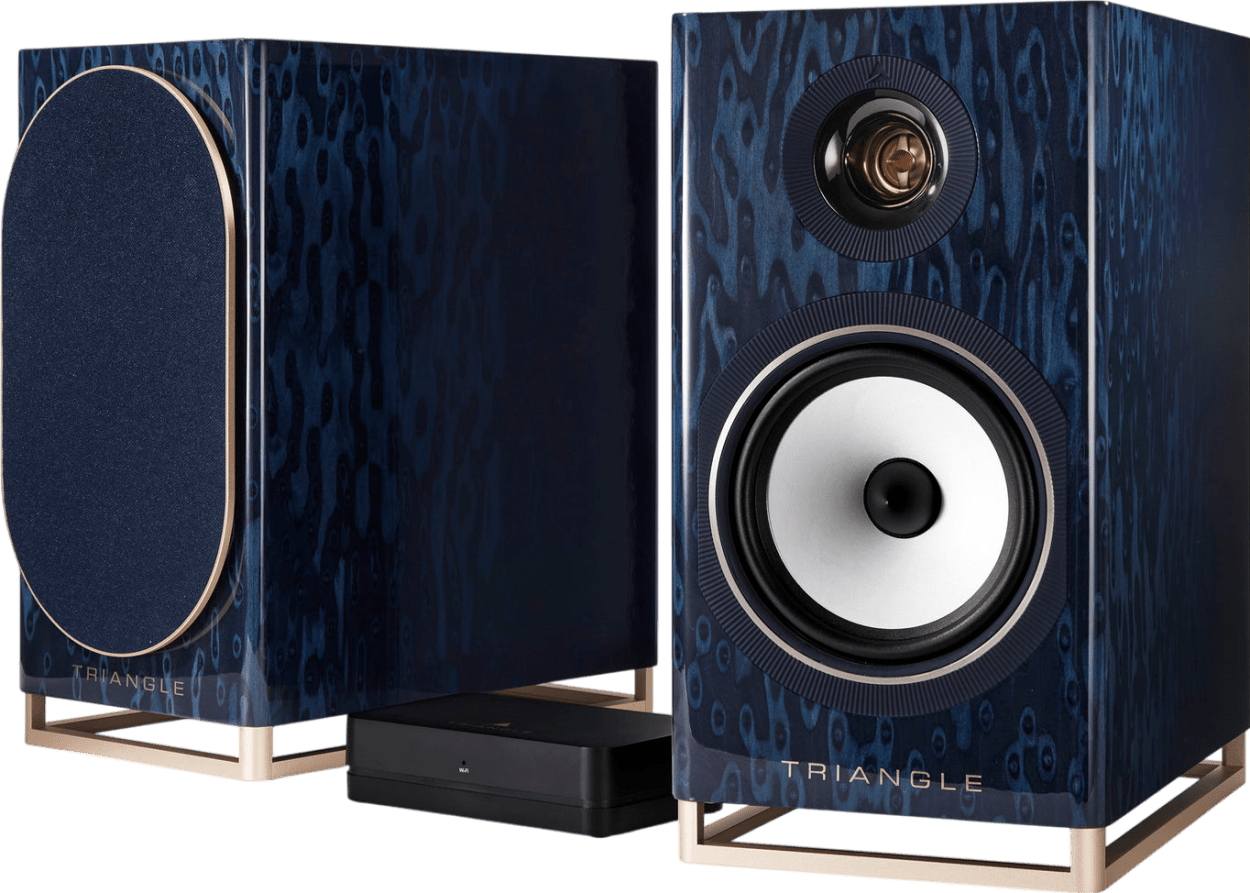
- Excellent wireless stability, pairing easily and remaining connected even with other wireless activity
- Big, confident, and enjoyable sound, with surprising bass extension for its size
- Aesthetically pleasing design, with unique and attractive finish options
- Versatile connectivity options through its media hub, including multiple digital and analog inputs, plus Bluetooth, AirPlay, and Chromecast
Product Considerations
- The absence of a dedicated streaming app may require reliance on third-party apps or external streamers
- The system could benefit from a slightly more refined sonic presentation, needing a touch more sweetness and natural warmth
- There can be some audible amplifier noise at idle/start-up, depending on proximity
- The base of the speakers can be quite large, potentially requiring dedicated stands for proper placement
- No wired subwoofer output
Comparisons (according to reviewers)
- Compared to KEF LS50 Wireless II, the Capella will appeal to those who would rather have a more classic, wood-cabineted speaker on show than the ultra-modern aesthetic of the Brit boxes
- Compared to Triangle Borea BR03 BT, the Triangle Capella active speaker system is much more ambitious, with more advanced drivers and superior fit and finish
- Compared to Buchardt A10, the Triangle Capella and Buchardt A10 are more similar than different, but still pretty different, as they use the same concept
Takeaway: The Triangle Capella is a convenient and stylish all-in-one system that delivers a big and enjoyable sound. It's a great choice for those seeking hifi audio without the complexities of traditional separates.
Video review
Our take on the brand
Our Summary
Product Strengths
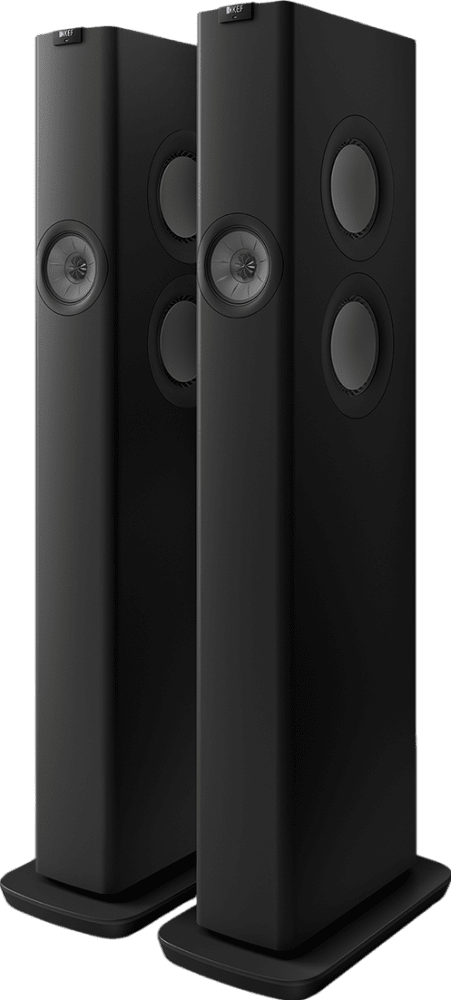
- Phenomenal performance combines with great aesthetics and ease of use
- The Uni-Q driver provides a great, all-encompassing sense of sound and captures every element of the track
- Offers a wealth of customization via the KEF Connect app, including EQ settings, wall mode, and bass extension
- Every driver is paired with a custom amplifier, eliminating the need to choose separate components
- Integrates multiple streaming options including Spotify Connect, AirPlay 2, Bluetooth, and Chromecast
Product Considerations
- Bluetooth 4.2 may be seen as outdated
- The included remote control is basic
- Bass can be too much straight out of the box and may require adjustment
- Some may not like the decision being taken away of choosing a specific amplifier or DAC
- Output may be limited for very large rooms
Comparisons (according to reviewers)
- LS60 uses a lot of similar technology found in the KEF Blades
- LS60 can play much louder and deeper, and are more dynamic and even more open than KEF LS50 Wireless II
- LS60 goes deeper in the bass than Bowers & Wilkins Formation Duo
- LS60 has more outstanding range and bass dynamics than DALI Rubicon 6 C and PIEGA Premium Wireless 701
Takeaway: The KEF LS60 Wireless is a convenient and great-sounding speaker system with a slim design and comprehensive features that's easy to set up and customize for various listening preferences. It's a good choice if you want a simple, high-quality audio solution without needing separate components.
Video review
Our take on the brand

Our Summary
Product Strengths
- High-quality audio and intuitive smart functionality
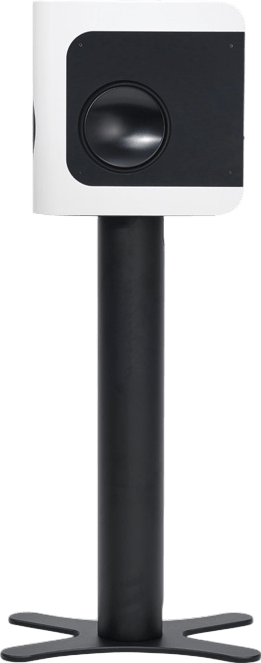
- Can be used in various setups—as a single speaker, stereo pair, multi-speaker surround system (including Dolby Atmos), or multiroom system
- Cardioid speaker design provides more precise bass and limits acoustic room interaction
- 'Audiophile-grade' sound due to Active Wave Focusing, ensures perfect time alignment over the entire frequency spectrum
- Versatile connectivity with Wi-Fi, Bluetooth, XLR, TRS, AES/EBU, Dante, and KiiLink/KiiCONTROL
Product Considerations
- Some consumer streaming features may not be fully implemented initially due to licensing demands
- Needs space on either side to allow the side-mounted bass driver room to 'breathe'
Comparisons (according to reviewers)
- The SEVEN is smaller and better suited to compact studio spaces, compared to the Kii THREE
- The SEVEN has less low-frequency reproduction, but not by much when used normally, compared to the Kii THREE
- The SEVEN is designed as a standalone smart speaker system, while combining the THREE and SEVEN requires workarounds
Takeaway: The Kii SEVEN is a smart speaker that delivers exceptional sound in a compact size. For an all-in-one system that sounds great and sidesteps cable clutter, this could be a great option.
Video review
Our take on the brand
How to buy
Speakers
Search all hifi products
Explore our database of 10,000+ new and 25,000+ used hifi products.