





Note that this is a discontinued product. You may want to visit the brand's page here to browse their newer products.
What reviewers think
Bloggers and YouTubers have tried this product—so we've summarized their strongest opinions below. Links to full reviews follow.
Product Strengths
- Warm, smooth, and engaging musical presentation, reminiscent of a good tube amplifier
- Phono stage is good, especially the MM option, and quiet in use, providing a warm and enjoyable sound
- Design stays true to the original 1985 A1, with updated components for improved reliability and performance
- Remote control is a welcome addition compared to the original, and the volume control feels solid and durable
- It delivers a bold and full sound, surprising for its small size and power rating, with impressive bass and three-dimensionality
- Connectivity options such as digital inputs and a headphone output are not available, limiting its versatility compared to modern integrated amplifiers
Product Considerations
- Runs very hot due to its Class A design, requiring adequate ventilation and caution to avoid burns
- Relatively low power output (25W) may not be sufficient for demanding speakers or large rooms, especially with loud, dense rock music
- Some reviewers found the original A1 to be more euphonic
- Close spacing of analogue inputs and the grounding post for the phono stage can be fiddly to access
Comparisons (according to reviewers)
- Vs Musical Fidelity M5si: The A1 is often more beguiling to listen to, offering a specially authored view of the recording that defies description
- Vs Naim NAIT XS3: The A1 renders bright recordings in a more luxurious and silky way, with less fierceness
- Vs Sugden A21a: The Sugden sounds brighter on certain tracks, while the A1 is warmer-sounding
- Vs Audiolab 9000a: The A1 offers a more lively, energetic, and bass-bold presentation, whereas the Audiolab has more neutrality
- Vs Musical Fidelity M2si: The A1 retrieves greater detail and presents a more believable soundstage
- Vs PrimaLuna EVO 300H: The PrimaLuna sounds better across the board, with more detail and a cleaner soundstage
Takeaway: The Musical Fidelity A1 is a charming and engaging amplifier that brings a unique, warm, and musical character to the listening experience. Its classic design and updated components make it a good choice for those seeking a taste of vintage hifi with modern reliability.
All
A1
reviews


Manufacturer details
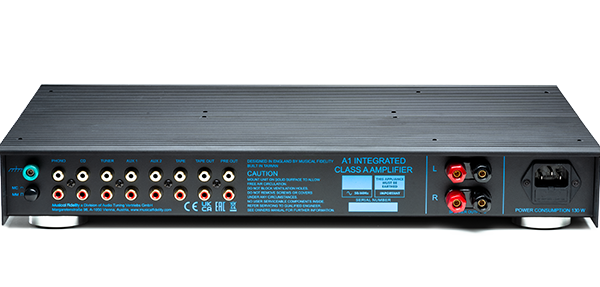
- Amplifier Power: 25 Watts per channel into 8 Ohms
- Voltage: 42.5 Volts peak to peak
- Current: 25 Amps peak to peak
- Damping Factor: 150
- Gain (volume max): 32dB (Direct Mode), 42dB (Normal Mode)
- Output devices: 2 per channel
- Signal/noise ratio: 82dB
- Channel separation: 85dB
- Frequency response: +0, -1dB, 10Hz to 40 kHz
- Line level sensitivity: 300mV rms nominal, 8V rms max
- Line level inputs impedance: 25k Ohms
- Tape Out impedance: 220 Ohms
- Pre Out impedance: 100 Ohms
- MM sensitivity: 5mV nominal
- MM capacitance/impedance/gain: 100pF/50k Ohms/40dB
- MM signal/noise ratio: 75dB
- MC sensitivity: 450μV nominal
- MC impedance/gain: 1k Ohm/60dB
- MC signal/noise ratio: 70dB
- Dimensions (WxHxD): 440 x 68.3 x 283.3 mm
- Weight: 10.5kg
- Max. Consumption: 130W, 0W in standby










Brand highlights
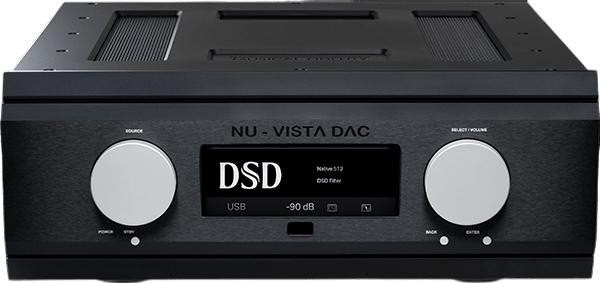
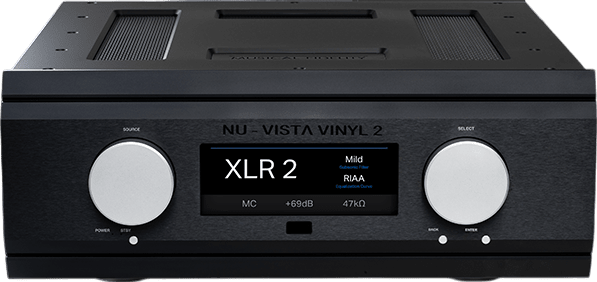
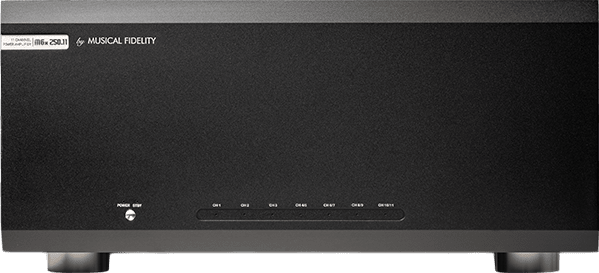
Taking a step back to look at reviewers' thoughts of the brand's entire lineup—not just this product—what stands out most is the following:
- They place a significant emphasis on achieving a distinctive, energetic sound, even at the expense of absolute neutrality, leading to a more engaging and enjoyable listening experience.
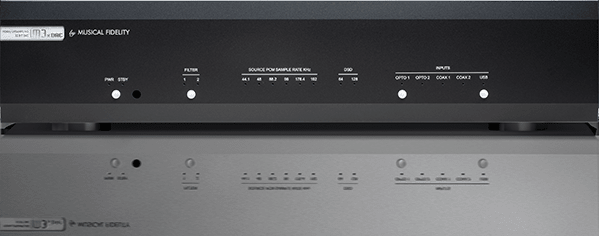
- Musical Fidelity often integrates advanced features, like sophisticated equalization or balanced inputs/outputs, into their designs to enhance versatility and cater to audiophiles' evolving needs.
Select products
V90-BHA
- Positioning: The entry-level balanced headphone amplifier in Musical Fidelity's lineup.
- Description: Offers excellent sound quality with balanced audio technology. Features balanced XLR inputs and outputs, which minimize noise and interference, providing a cleaner sound. This makes it ideal for users with a limited budget who want to enhance their headphone listening experience.
M2si
- Positioning: An affordable integrated amplifier designed for audiophiles seeking high-quality sound without extra features.
- Description: Delivers a pure and dynamic sound, drawing on technology from Musical Fidelity's premium models. Stands out with its fully discrete power amplifier and independent power supplies, offering a performance akin to a pre/power configuration in a single unit.
M8xi
- Positioning: A super integrated amplifier, positioned as a high-performance model in the M8 series.
- Description: Known for its powerful and articulate sound, featuring dual mono power amps and a high-quality DAC. It offers significant power output and low distortion. Provides extensive connectivity options, including digital inputs, catering to users with diverse system compatibility needs.
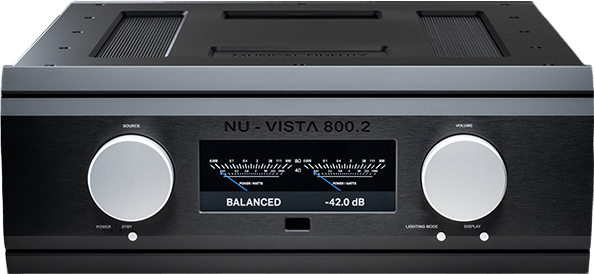
Nu-Vista 800.2
- Positioning: The flagship integrated amplifier in the Nu-Vista series, representing the pinnacle of Musical Fidelity's offerings.
- Description: Combines the unique Nu-Vista tube technology with modern design, delivering an exceptionally smooth and powerful sound. Features dual mono power amps and a locally decoupled output stage, providing remarkable stability and control over any loudspeaker.

Our take on the brand
Look inside the brand
Our interview with the brand
What are two key technological innovations or strong opinions that differ you from other brands?
What's your approach to customer support?
Musical Fidelity (like other Audio Tuning brands) is structured in a pretty traditional way, whereby support and advice are best administered on a local level. Of course, they have a technical team positioned at HQ to help all their partners around the world, and in some more extreme cases you may need to be put straight through to this team. But it's the job of the distributor to support the territory in the best way it can.
What are your favorite tracks for showcasing the strength of your products?
I can tell you this, as we've done this recently for others. These are personal choices:
Simon Quarry – the chief designer – selected these three.
- Low Desert Punk – Brant Bjork
- Moon Love – Electric Moon
- Psychic Chasm – Ozric Tentacles
Heinz Lichtenegger – the brand owner – selected these two:
- Tosca – Puccini, Leontyne Price, Di Stefano, Taddei / Vienna Philharmonic with Herbert von Karajan (Decca, 1963)
- Don Juan – Richard Strauss, Tod und Verklaerung, Also Sprach Zarathustra / Vienna Philharmonic with Herbert von Karajan (Decca, 1960)
What other products pair best with yours?
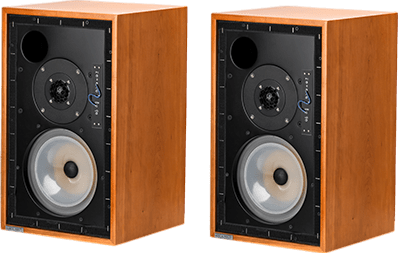
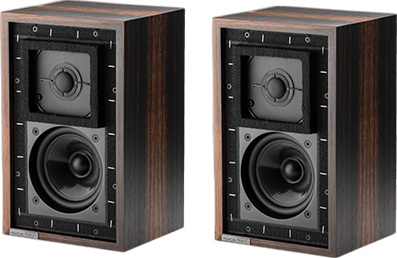
This is a tough one! Partly because of the diverse range of products on offer from Musical Fidelity. For example, with the A1, we have a lot of success pairing this amp with Klipsch Heresy or Forte IV – but in smaller rooms, our own-brand LS3/5A are a wonderful choice. For Nu-Vista, we pair very nicely with Piega – which requires some deeper power reserves to really get going. So I would say it's very difficult to pair the sonic ID with one brand in particular. Musical Fidelity pairs pretty nicely with a wide range of products, giving customers a great degree of choice.

Used
Musical Fidelity








What if you spend more?
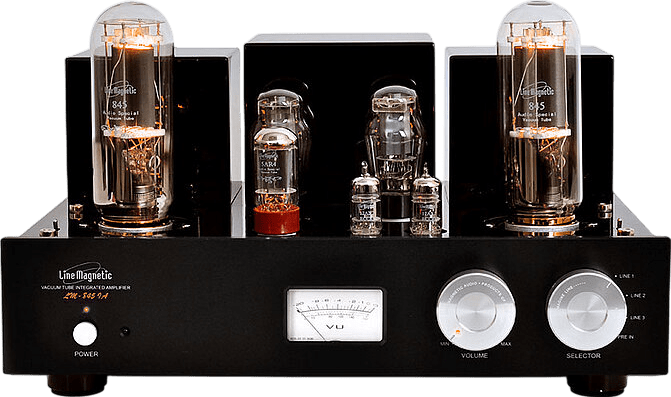


The LM-845IA is a quality upgrade of the old LM-518 amplifier. It delivers twenty-two watts per channel. Single ended design, Pure Class A, Integrated Stereo Amplifier with 845 output power tubes. The rear-illuminated front panel meter is used to adjust the polarization of the tubes. The use of high quality components (Realcap capacitors, ALPS potentiometer) wired in the air for the most part is the guarantee of exemplary reliability. Its transformers output are of EI type, specially disigned for power supply.

.svg)
Product Strengths
- Pellucid sound, rich tone, and textural detail are characteristic of a well-designed single-ended triode (SET) amplifier.
- Forceful and tuneful bass defies the stereotype of slow or puffy bass in SET amps.
- Expansive soundstage allows instruments and voices to float free of speakers.
- High build quality includes point-to-point wiring and quality components, such as an ALPS potentiometer and RealCap capacitors.
- Dynamic slam and a physically involving sound
Product Considerations
- The 845 tubes operate at high temperatures, potentially causing burns if touched and significantly increasing room temperature.
- No balance control
- Some found the stock tubes to impart an aggressive or steely tone that could be improved with tube rolling.
- Careful matching with speakers is required, one reviewer noted inexplicably harsh sound when paired with certain speakers.
Comparisons (according to reviewers)
- The LM-845IA has changes to internal components and redesigned output transformers, compared to the LM-518IA.
- The LM-845IA has a lighter touch and more refinement, while the Gold Note PA-10 monoblocks sound more solid in the bass.
- The LM-845iA offers a more powerful punch, while the Kora TB140 sounds lighter on its feet and faster.
- The Ayre EX-8 edges out the LM-845iA in clarity and detail.
- The Cambridge Audio Edge NQ sounds similar, but can't quite match the realism or the directness of the Line Magnetic.
Takeaway: The Line Magnetic LM-845IA is a powerful tube amplifier that offers a unique and engaging listening experience. It's a good choice for audiophiles who want a robust and resolving sound with dynamic contrasts.
Video review
Our take on the brand
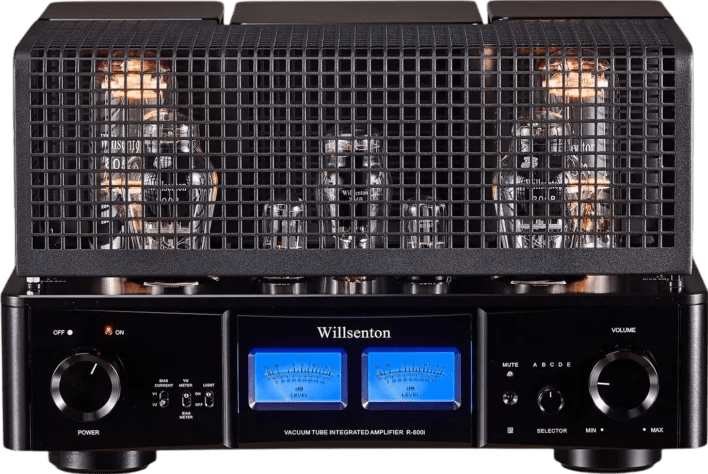

The R-800i series uses two 300B tubes to drive various vacuum tubes for single-ended class A amplification. It comprises a dual triode ECC83S and two 6SN7 signal amplification and driving tubes. The pre-stage part employs a 274B tube for rectification, allowing each channel to achieve an output power of 15W/30W/50W.
R800i – 211
The R-800i – 211 uses two 300B tubes to drive 211 vacuum tubes for single-ended class A amplification. It comprises a dual triode ECC83S and two 6SN7 signal amplification and driving tubes. The pre-stage part employs a 274B tube for rectification, allowing each channel to achieve an output power of 15W.
R800i – 845
The R-800i – 845 uses two 300B tubes to drive 845 vacuum tubes for single-ended class A amplification. It comprises a dual triode ECC83S and two 6SN7 signal amplification and driving tubes. The pre-stage part employs a 274B tube for rectification, allowing each channel to achieve an output power of 30W.
R800i – 805
The R-800i – 805 uses two 300B tubes to drive 805 vacuum tubes for single-ended class A amplification. It comprises a dual triode ECC83S and two 6SN7 signal amplification and driving tubes. The pre-stage part employs a 274B tube for rectification, allowing each channel to achieve an output power of 50W.
This series features a dual power transformer design, with the filament using an EI-type transformer and the high voltage employing a toroidal transformer design. The output transformers use two wide-frequency EI types to achieve a sweet sound. It incorporates a dual protection circuit design, an all-aluminum alloy body for the utmost refinement, handcrafted point-to-point soldering, an external, independent BIAS ADJ current monitoring meter, a 30-second mute delay function, ALPS motorized potentiometers, an all-aluminum alloy remote control, and balanced pure post-stage input functionality, allowing for independent pre-stage signal input. The body is made from aviation-grade aluminum alloy. The external independent dB level current display meter and current adjustment points. High-grade ALPS motorized potentiometers made in Japan. High-end speaker connectors are made in Germany, and CNC-machined copper terminals.
Product Strengths
- Produces 48 watts of pure single-ended Class A power, suitable for low to medium sensitivity speakers
- Superbly well constructed with heavy gauge metal and no plastic; even the remote control is all metal
- Has a warm tonal balance with a full, harmonically rich midrange and no electronic glare, allowing for long listening sessions without fatigue
- Delivers a huge, massive soundstage that extends way beyond the speakers left and right—with immense soundstage depth
- Tube rolling can significantly improve its performance
Product Considerations
- The amplifier is quite heavy, weighing 42 kilograms (around 100 pounds), making it difficult to move
- Generates a lot of heat due to its Class A operation, requiring good ventilation and potentially increasing electricity bills
- The remote's volume adjustment jumps too much, making fine-tuning difficult
- Willsenton is not a brand with a long history, so long-term reliability is unknown, but the unit can be serviced in the owner's country
- The signal-to-noise ratio is higher compared to some other amplifiers
Comparisons (according to reviewers)
- Vs Willsenton R8: The R800i is better in all regards, more refined, with more midrange clarity and nuance in the bass
- Vs Hegel H190: The R800i has a thumping bassline, a colossal soundstage, and an acoustic mass in the midrange, while the Hegel H190 has greater clarity and tighter control in the bottom end
- Vs Sugden A21 Signature: The R800i is very Sugden-esque in its sonic character, and it reminds the reviewer a lot of the A21 Signature but with more power
- Vs Exposure 21 pre and 18 super monoblocks: R800i has bigger scale, adding harmonic richness
- Vs Luxman SQN150: The R800i's soundstage is double the size of the Luxman
Takeaway: The R800i is a powerful, well-built tube amplifier that delivers a warm, engaging sound with a massive soundstage, making it great for those who love a classic tube sound. With its ability to drive most speakers and potential for tube rolling, it is an amplifier that could be enjoyed for years to come.
Video review
Our take on the brand
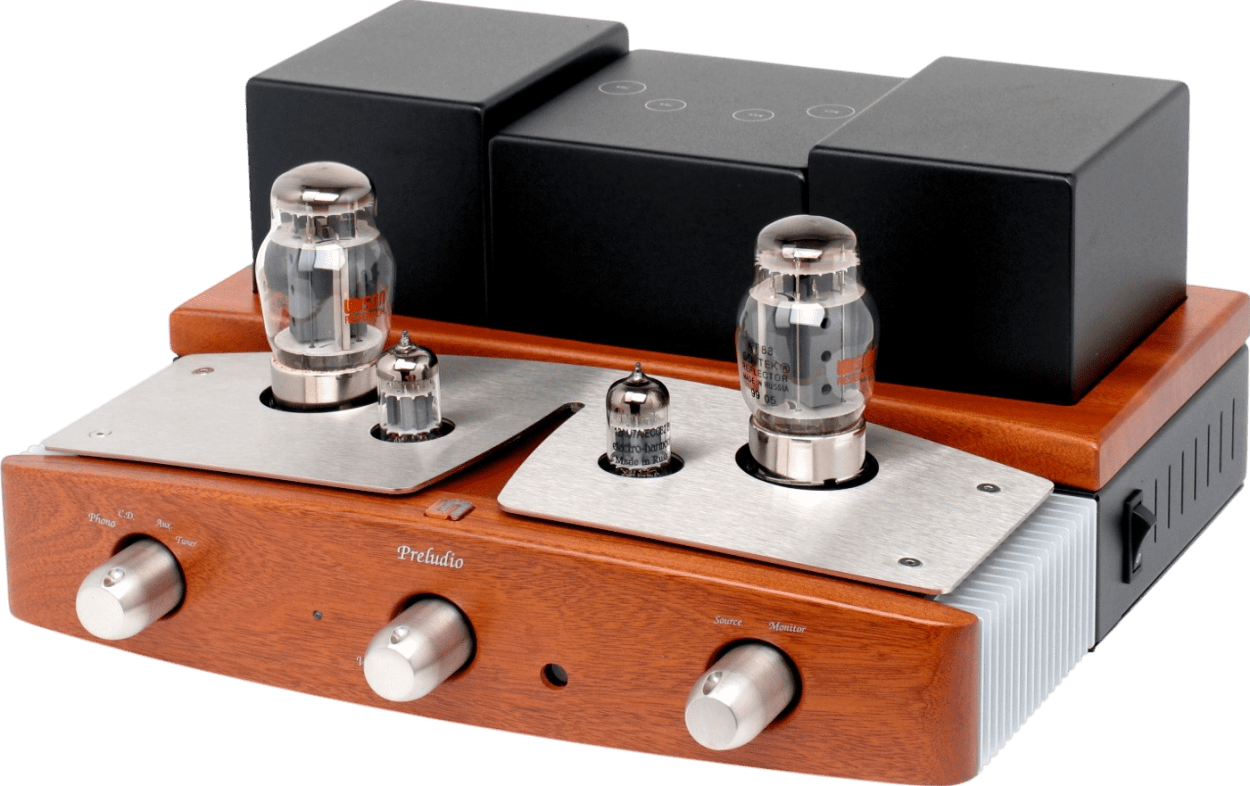

Product Strengths
- Sweet sounding treble and expressive, emotional midrange
- Detailed across the board, and remarkably easy to listen to
- Strong rhythm, lively sound, excellent articulation, and a very good sense of being there
- Fast dynamics and good three dimensionality
- Voices and instruments are very naturally reproduced
- Connectivity options...
Product Considerations
- Fussy about speakers, ideally speakers should have a sensitivity rating of at least 90dB
- Outputs only 14W per channel, so partnering speakers must be compatible
- May lack a little bass and absolute power
- Not necessarily going to suit everyone's needs, it still has limitations, and will probably not suit those looking for a powerhouse amplifier or for playing rock or classical music at high levels
- Can develop a trace of hardness in loud passages that seems to restrict dynamics a little
Comparisons (according to reviewers)
- Vs Simply Italy, the Preludio is superior and is worth the extra over the cheaper model if funds permit
Takeaway: The Preludio is a well-built amplifier that offers a classy sound with good detail and natural voice reproduction. If partnered with compatible speakers, it can provide an intimate and emotive listening experience.
Video review
Our take on the brand

Our summary
Product Strengths
- Beautifully constructed with a distinctly vintage look and high-quality components, offering pride of ownership
- Sweet sounding amplifier with a lovely clear presentation and great tonal character
- Provides a rich valve fluidity and charm, making music a wonderful experience from any angle
- Has a bass boost selector which gives users the option of boosting the bass response by 0, +3 or +5dB
- Point-to-point soldering
Product Considerations
- Only 15W of power, requiring careful speaker selection based on sensitivity and room size
- Does not have a phono stage built-in, so a separate phono stage is required for vinyl
- Lacks remote control
- Some audiophiles might find it 'dull', 'lacking detail', or even 'sluggish'
- Gets quite hot, so needs space around it
Comparisons (according to reviewers)
- Vs Leben CS600: Noticeably lacking the CS600's wide-open presence and rock solid imaging
- Compared to a similarly priced solid-state amp, instruments had a depth and sense of solidity, fullness and presence that simply made them seem more real
- Vs Unison Research amp: The Unison Research sounded faster and more open and dynamic
Takeaway: The Leben CS300XS brings valve goodness to music with its beautiful design and clear sound, making it a great starting point for a cracking system. It focuses on the music, offering a wonderful listening experience.
Video review
Our take on the brand
What competes at this price?
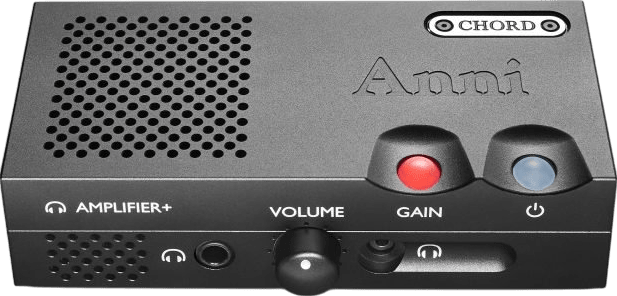

Our Summary
Product Strengths
- Joyful sound signature with detailed output
- Can power a wide range of headphones, due to Ultima technology
- Compact design, stacks perfectly with the Qutest and Huei
- Employs trickle-down Ultima technology to allow delivery of enormous peak current outputs
- Solid build quality using CNC-milled aluminum casework and good heat dissipation
- Connectivity options include headphone and speaker outputs
Product Considerations
- No gain switch for the headphone output
- Default gain level a bit high for sensitive IEMs
- More power limitations with speakers than headphones—best for smaller, efficient speakers or nearfield listening
- Runs hot, requiring good ventilation
- The volume control feels a little wobbly and might be difficult to use in a very precise way, and there is some channel imbalance at very low volumes
Comparisons (according to reviewers)
- Qutest/Anni pairing justifies its price premium thanks to a more composed and insightful presentation that offers notably more low-end authority, dynamic punch and tonal richness
- Cyrus ONE HD is plusher, showing that Anni has strong niche appeal
- The iFi xDSD Gryphon has digital inputs and built-in DAC, while Anni can power speakers
Takeaway: The Chord Electronics Anni is a compact and well-built amplifier that delivers a joyful and detailed sound, making it a great addition to a desktop setup for headphone and nearfield speaker listening. Its use of trickle-down Ultima technology ensures high-quality performance in a small package, and its ability to stack with other Chord devices makes it a good choice for those already invested in the ecosystem.
Video review
Our take on the brand

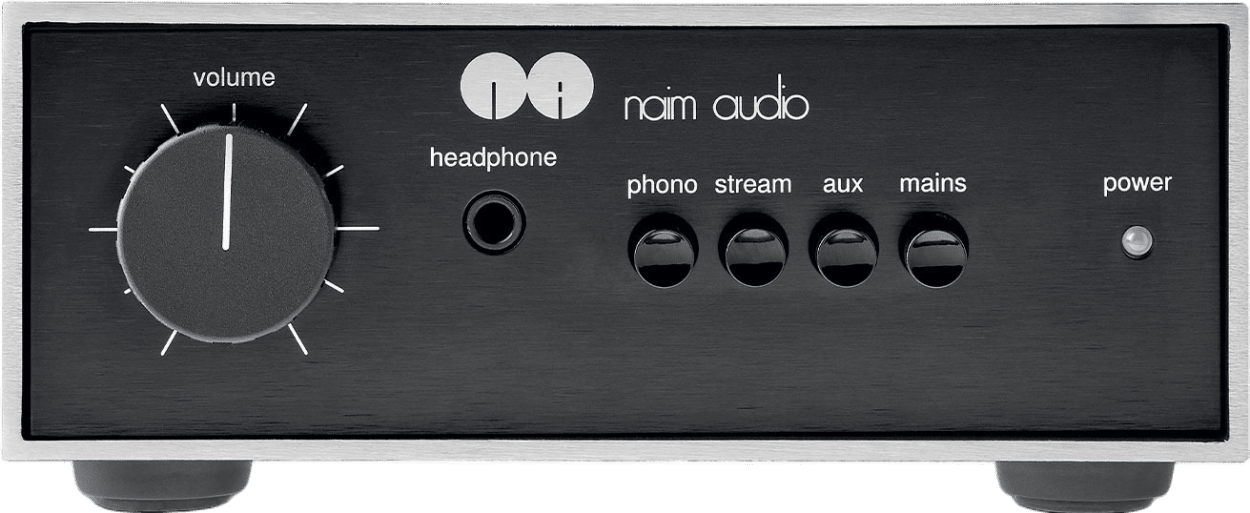

Our Summary
Product Strengths
- Retains the enthusiastic sonic character of the original Nait 1, described as zippy, energetic, and likeable, with ample detail and clarity
- Has an all-new discrete transistor MM phono stage
- Has a new headphone amplifier borrowed from the NSC 222 streaming preamp
- Possesses ample grunt to drive a wide variety of speakers
- Features a retro-modern design that is charming and timeless, with solid build quality
Product Considerations
- Has no remote control
- The volume dial makes subtle volume adjustments difficult, going from quiet to loud too quickly
- Uses DIN connectors for the line-level analogue inputs, requiring adaptors for RCA connections, but no DIN cable is included
- On powering up, a thump is followed by a plop when switching in from standby
Comparisons (according to reviewers)
- Vs Naim Nait XS 3: Nait 50 is punchier, cleaner, more precise, and lively
- Vs Naim Uniti Atom: NAIT 50 feels more old school Naim
Takeaway: The Naim Nait 50 offers a fun and engaging listening experience with a retro design that will fit in any listening room, either old or new. It can serve as a workhorse in a reference system and headphone rig.
Video review
Our take on the brand

Our Summary
Product Strengths
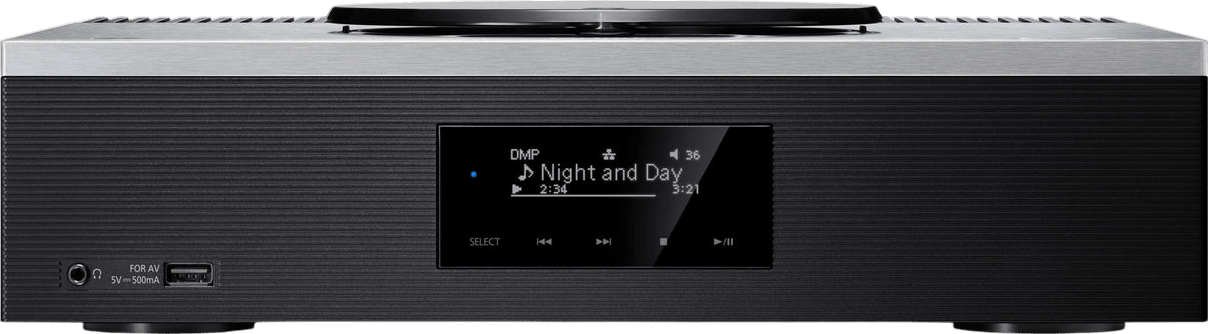
- Versatile connectivity, including network streaming, CD player, phono stage, and digital inputs
- Entertaining, expressive, and punchy sound
- Easy to use, with a well-designed app and a sensible remote handset
- Good MM phono stage
- Compact and elegant design
Product Considerations
- Setting up without the app can be clumsy
- The headphone output may not be ideal
- The line-level input could sound better
Takeaway: The SA-C600 is a well-featured and easy-to-use system with great sound, so listeners can enjoy their music from many different sources. It is a compact and convenient way to enjoy high-quality audio without clutter.
Video review
Our take on the brand
.png)
Our Summary
Product Strengths
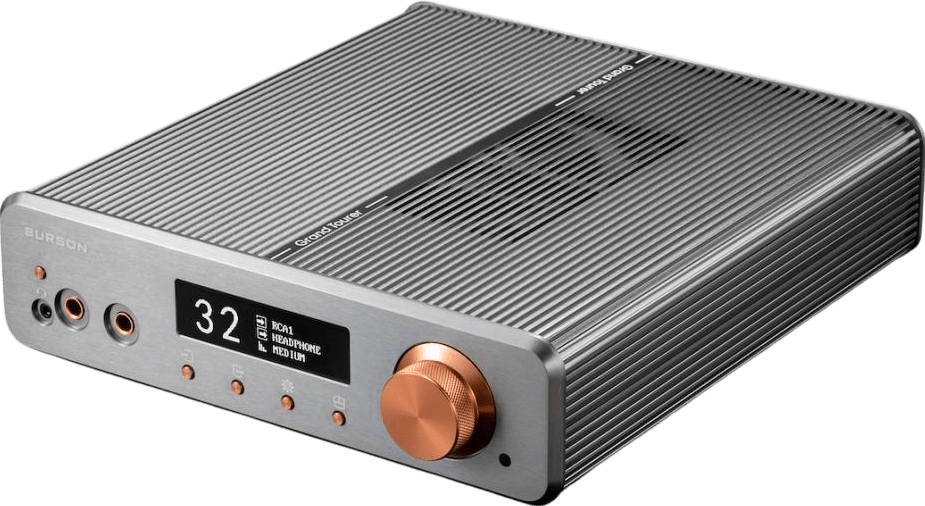
- Very clean, transparent sound, faithfully mirroring the source material and capable of resolving micro-details
- Ample power to drive even the most demanding headphones, with refined power that allows nuances to play on the micro scale, especially with high-performance DACs
- Great soundstage size
- The noise floor has been lowered with the newest power modules resulting in more clarity
Product Considerations
- May run hotter
- High listening volumes can cause ears to ring
- Some reviewers found that the soundstage depth was limited compared to some other amplifiers
- Can reveal harshness in recordings or other equipment in the chain
- Noise may be present when used with very sensitive IEMs
Comparisons (according to reviewers)
- Treble is more natural compared to the Old Soloist 3XGT, while bass and midrange are more textured
- The newer version has greater separation and clarity compared to the Old Soloist 3XGT, while the older version sounds a little thicker overall
- Much more clear than Exposure 21 pre and 18 super monoblocks
- It has better clarity, grip and control than Hegel H190
- It can match the Denafrips Hades Thalo in clarity
- The SP-2 upgraded Soloist goes toe-to-toe with the Enleum AMP23R
Takeaway: The Soloist recgviNbkfbno9pQR is a very capable headphone amplifier that provides a clean and powerful sound, suitable for a wide range of headphones. The lower noise and detail retrieval make it a very good choice for audiophiles seeking a high-performance listening experience.
Video review
Our take on the brand


Our Summary
Product Strengths
- The Fezz Audio Alfa Lupi offers clarity, purity, and spice in its sound
- It creates a speaker-defying sound image that feels defined and spread out
- Nimble dynamic swings and billowy sound image make for an engaging world of sound
Product Considerations
- Any 10 Watt amp needs to be paired with speakers that come alive with little power
- Driving the Fezz Audio amp too far results in a hardening and flattening of the sound image
Takeaway: The Fezz Audio Alfa Lupi makes sweet music with the right speakers, offering delicacy, control, and delight. It is a simple and easy-to-use amp that creates an engaging world of sound.
Video review
Our take on the brand
How to buy
Amplifiers
Search all hifi products
Explore our database of 10,000+ new and 25,000+ used hifi products.



.png)