




Note that this is a discontinued product. You may want to visit the brand's page here to browse their newer products.
What reviewers think
Bloggers and YouTubers have tried this product—so we've summarized their strongest opinions below. Links to full reviews follow.
Product Strengths
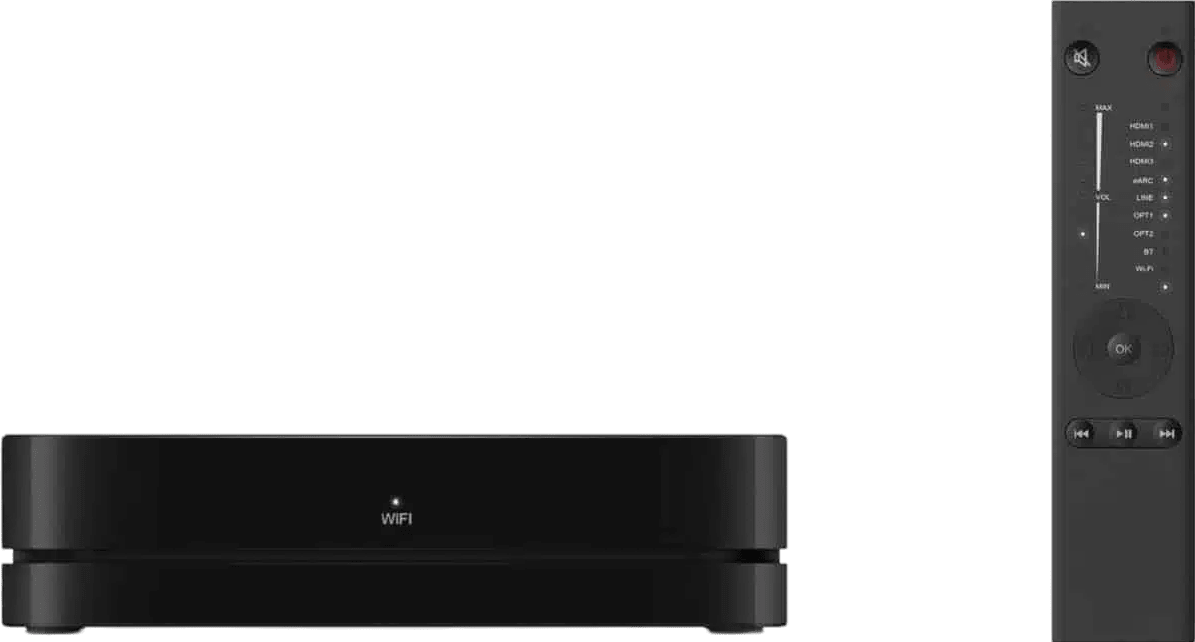
- The active Legend 5.2 Silverback speakers provide high fidelity with just two speakers, two mains cables, and a wireless control hub
- The Legend 5.2 Silverback offers downloadable DSP-implemented speaker voicings and a room acoustic correction app for customization
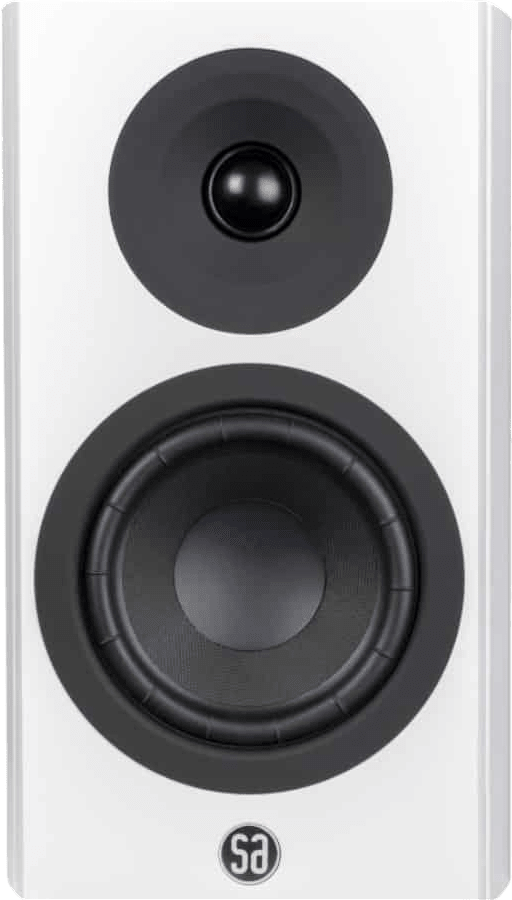
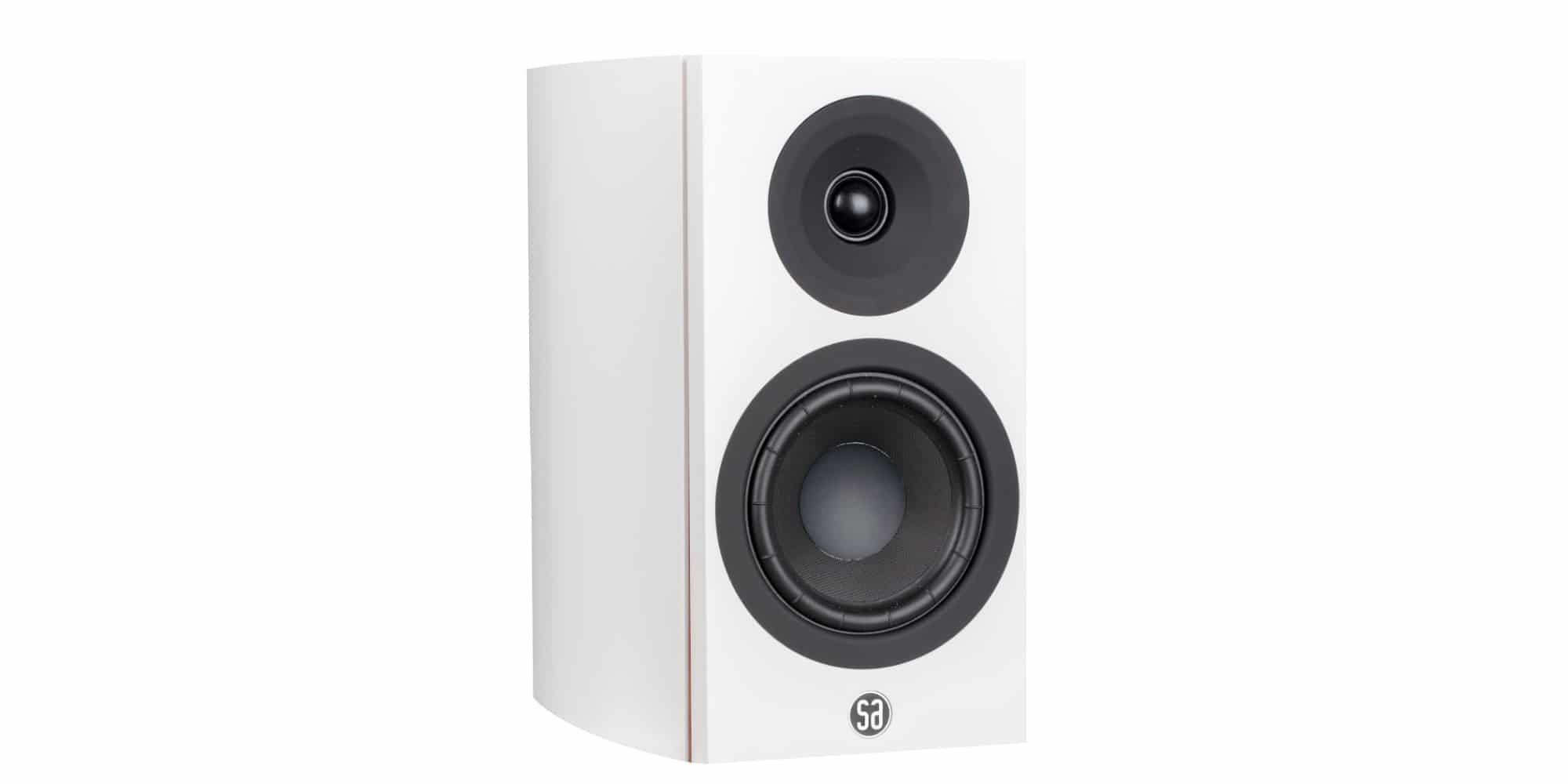
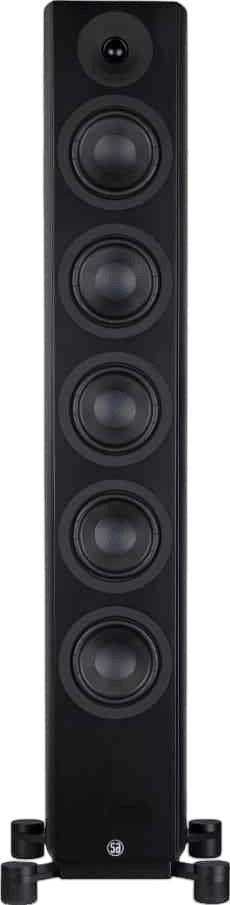
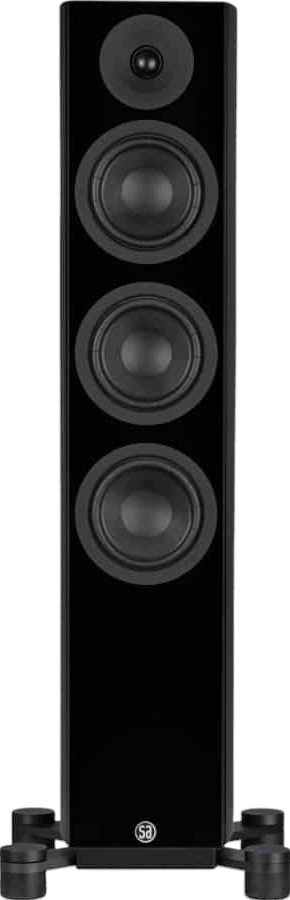
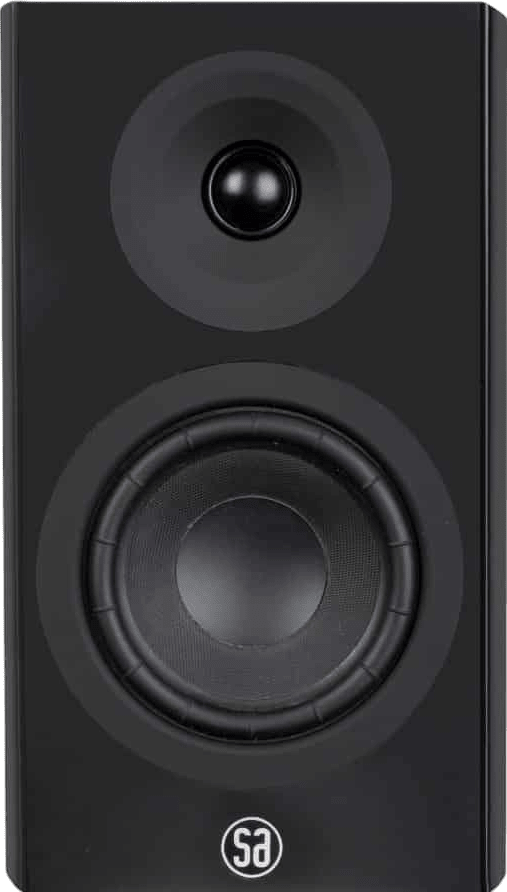
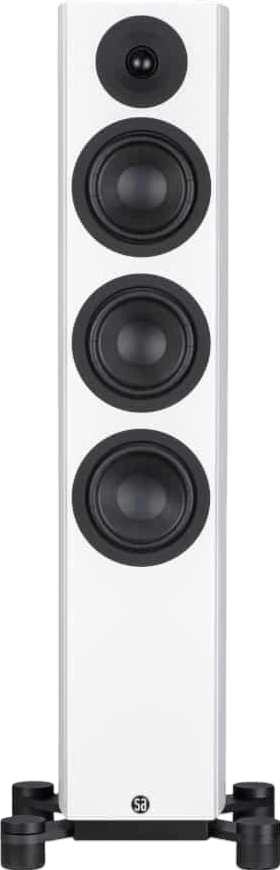
- The enclosure has gently curved side panels and a thick (29mm) baffle separated from the rest of the enclosure by a 5mm groove inlayed with walnut, beautifully finished in black or white satin
- The Legend 5.2 Silverback delivers a melding of bandwidth, resolution and attack with pin-point timing, an expansive, 3D soundstage and superb separation
Product Considerations
- To ensure a stable connection to the speakers, the Platin hub should be at least three feet from other transmitters, such as a WiFi router
- The Platin Hub does not offer gapless playback via UPnP
- All incoming signals are converted to a digital signal for processing
Takeaway: The Legend 5.2 Silverback speakers offer a streamlined audiophile experience with high-fidelity sound and customizable DSP settings that are easy to use and set up. They offer excellent sound quality and remove clutter.
All
Legend 5.2 Silverback
reviews



Manufacturer details
- Total amplifier power: 150 Watt (2-way active. Two amplifiers in each speaker)
- Frequency range +/- 1.5 dB: 40-25.000 Hz
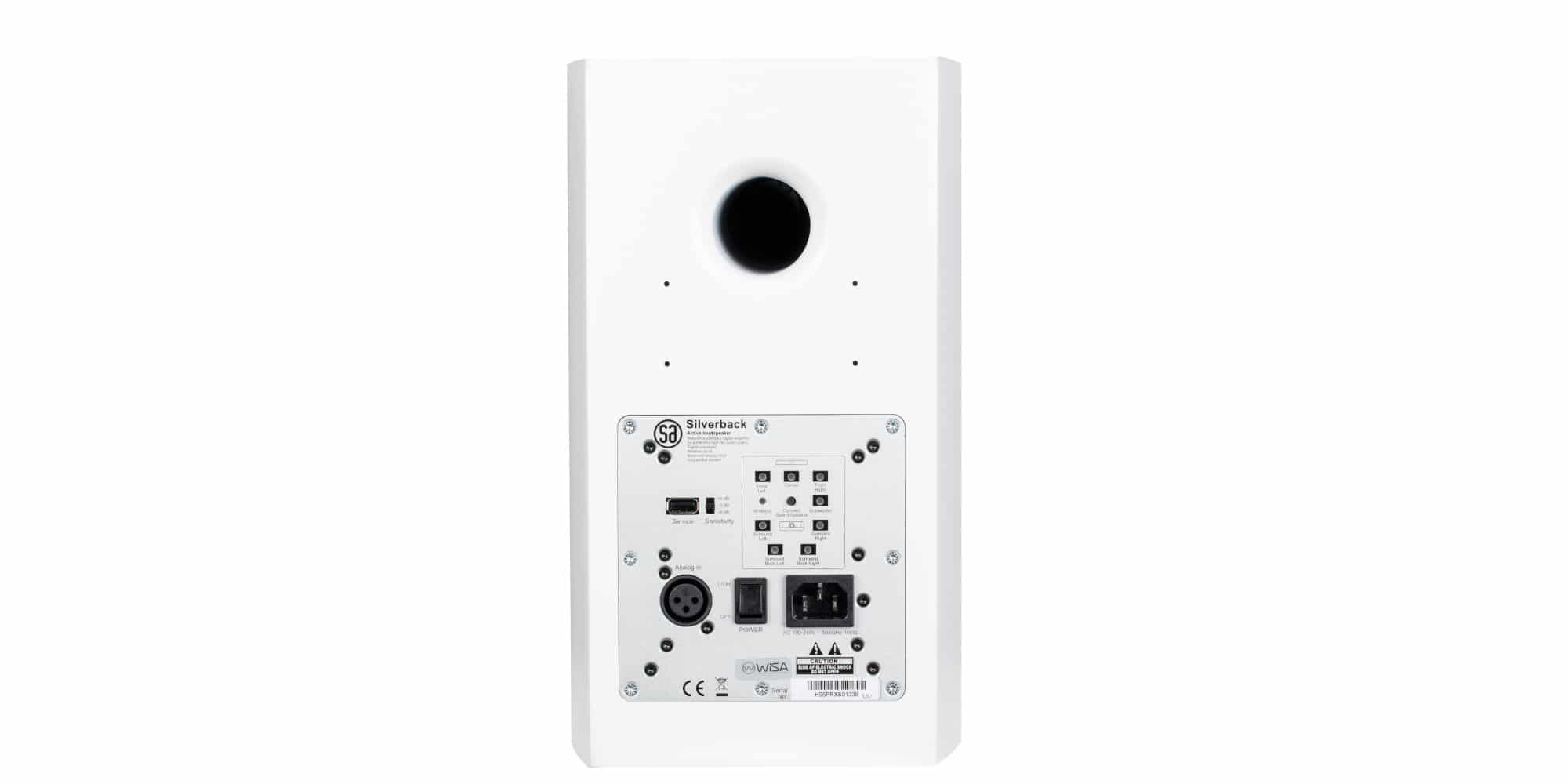
- Cabled analog input: Balanced XLR
- Tweeter: Legend DXT
- Woofer: Legend 15/4
- Principle: Active 2-way bass reflex
- Upgradable DSP: Yes
- Built-in wireless WiSA receiver: Yes
- Upgradable to wireless 7.1 home theatre: Yes
- Input Voltage: 100-240 Volts AC
- Standby power: 2 Watts
- Packing: Pairs
- Weight loudspeaker: 6.7 kgs (14.77 lbs)
- Dimensions (WxHxD): 19 x 32 x 26.5 cm
- Recommended placement: Shelf, on wall (using W.5 bracket), on stand
- Finish: Satin White and Satin Black















Brand highlights
Taking a step back to look at reviewers' thoughts of the brand's entire lineup—not just this product—what stands out most is the following:
- System Audio designs speakers for flexible placement, particularly excelling in on-wall and near-wall configurations, optimizing performance through a combination of driver technology and DSP.
- SA's active Silverback series features a modular design, allowing users to upgrade their existing passive speakers to active versions, providing a pathway for system evolution.
- The brand leverages DXT (Diffraction eXpansion Technology) acoustic lens around the tweeter to enhance dispersion, increase sweet spot, and improve integration with other drivers.
Select products
SA-Signature 40
- Positioning: The entry-level integrated amplifier designed for straightforward performance in smaller rooms.
- Description: Offers a clear digital amplification design that provides reliable sound quality without excessive extra features. Compared to the other models, it meets basic connectivity requirements with affordable build quality, making it suited for users with tighter budgets and modest functionality needs.
SA-Saxo 40
- Positioning: A mid-range unit that improves on basic performance while adding extra connectivity options.
- Description: Features a refined digital-to-analog conversion process that enhances sound clarity and overall resolution. When compared to the Signature 40, it delivers additional functionality and a slightly broader soundstage.
SA-Legend 40 Silverback
- Positioning: A compact yet robust amplifier aimed at users seeking balanced performance and build quality.
- Description: Uses advanced analog circuitry that delivers a warm and consistent sound, setting it apart from entry-level models. Relative to both the Signature and Saxo 40 units, it offers a richer sound experience and more reliable power handling while keeping connectivity simpler than the higher-tier variants.
SA-Legend 60 Silverback
- Positioning: A high-end integrated amplifier that balances enhanced power output with premium analog design.
- Description: Uses improved analog power circuitry for greater dynamic range and reliable performance in medium to large rooms. Compared to the 40-series, it delivers increased output and more robust performance, though it offers fewer modern connectivity options than the flagship Saxo 60.
SA-Saxo 60
- Positioning: The flagship integrated amplifier that combines advanced technology with robust, high-power performance.
- Description: Integrates state-of-the-art digital-to-analog conversion and extended connectivity, making it suitable for larger spaces and versatile setups. In contrast with the Legend 60 and other lower-tier models, it delivers superior output and functionality such as enhanced HDMI support.

Our take on the brand
Look inside the brand
Our interview with the brand
What are two key technological innovations or strong opinions that differ you from other brands?
What's your approach to customer support?
What are your favorite tracks for showcasing the strength of your products?
What other products pair best with yours?

Used
System Audio







What if you spend more?




.svg)
Our summary
Product Strengths
- Integrated technology allows direct high-resolution listening without extra devices
- The speaker uses the same Pascal Class D amplification and processing technology from Dynaudio's Pro line Core series
- Discrete amplification channel per driver: 110 watts for the tweeter and 280 watts for the woofer
- Dirac Live room correction is available, which can tune some of the annoying sounds of a garage, for example, using the soft dome tweeter
Product Considerations
- Running a digital coaxial cable from one speaker to the next results in the signal being sent at 24-96 kilohertz, which is a lower quality than what the master speaker receives (24-192)
- There is no HDMI arc or e-arc connection
- Drilling holes may be required to attach the speaker to stands
- Setting up the speaker with the app is not as quick or seamless as Bluesound
- A microphone is required to do Dirac room calibration
Comparisons (according to reviewers)
- Vs PSB Alpha IQs: Plays louder with a higher level of amplification
- Vs Dynaudio Core 7: The Core 7 has more power and a slightly better tweeter and woofer, but is not as aesthetically pleasing and needs a Bluesound Node
- Vs Dynaudio Evoke: It is similar to an Evoke speaker, but with a bigger woofer
Takeaway: The Focus recMsY5ljWopDD7UU is a sophisticated wireless speaker that pulls technology from Dynaudio's Pro line and features Dirac room calibration. It is ideal for someone looking for high-resolution listening without extra devices and who values sophisticated sound and aesthetics.
Video review
Our take on the brand
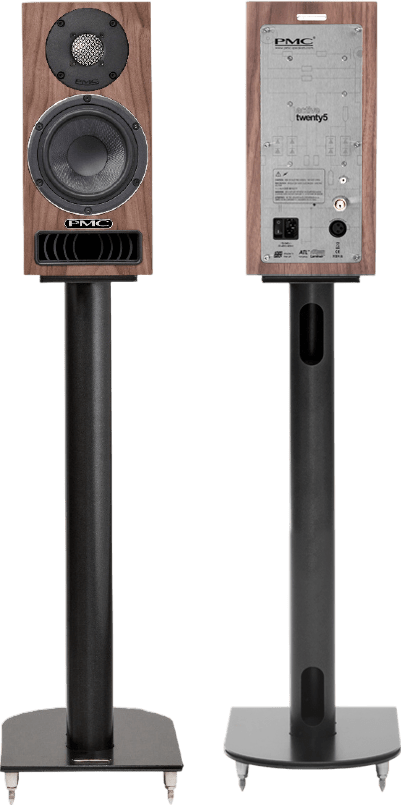

The Active twenty5.21i is the smallest in the range, but its impact and portrayal of any piece of music is far from small, thanks to PMC's ATL bass loading and 2x100W active amplification.
Small but mighty – that's the Active twenty5.21i: it may be the most compact model in the new Active twenty5i range, but it benefits from the same cutting-edge active amplification as the other models in the line-up, combining an active crossover with 100W of power for each driver. It also benefits from PMC's Advanced Transmission Line technology, delivering bass impact you'd expect from a much larger design.
It is ideal for small-to-medium listening environments where you still want detailed bass, ultra-realistic mids and delicate highs with maximum musicality. It's equally happy to be mounted on a stand or a bookshelf and is an excellent choice for effects speakers in an immersive sound system.
The Active twenty5i series is an elegantly simple solution for any music lover: add a preamplifier or streamer with a volume control for a complete music system.
Our summary
Product Strengths
- Neutral sound signature is suitable for critical listening and reveals details in recordings
- Transmission line design allows surprisingly deep and well-defined bass for its compact size
- Clarity, resolution, and the ability to separate instruments are noted
- Wide and airy soundstage creates a sense of space and immersion
- High frequencies are described as refined, open, and airy, with good extension and controlled sibilance
Product Considerations
- Revealing nature means it can expose flaws in recordings and upstream equipment
- Soundstage depth was an area one reviewer struggled with
- Speaker is neutral to cool-ish, not a full, rich sounding speaker
- Revealing nature also makes placement sensitive
Comparisons (according to reviewers)
- Versus the GoldenEar BRX, the PMC twenty5.21i was cooler in balance, but faster
- Compared to the Harbeth P3 ESR, the Harbeth has heart, body, and soul, making one feel like there are human beings making music
- The PMC twenty5.21i bass is faster and clearer than ProAc, which seems slower and lumpier in comparison
Takeaway: The PMC Active twenty5.21i is a compact speaker that delivers a detailed and neutral sound with impressive bass for its size. It's a great choice for those who want accurate sound reproduction and appreciate hearing all the nuances in their music.
Video review
Our take on the brand
Our summary
Product Strengths
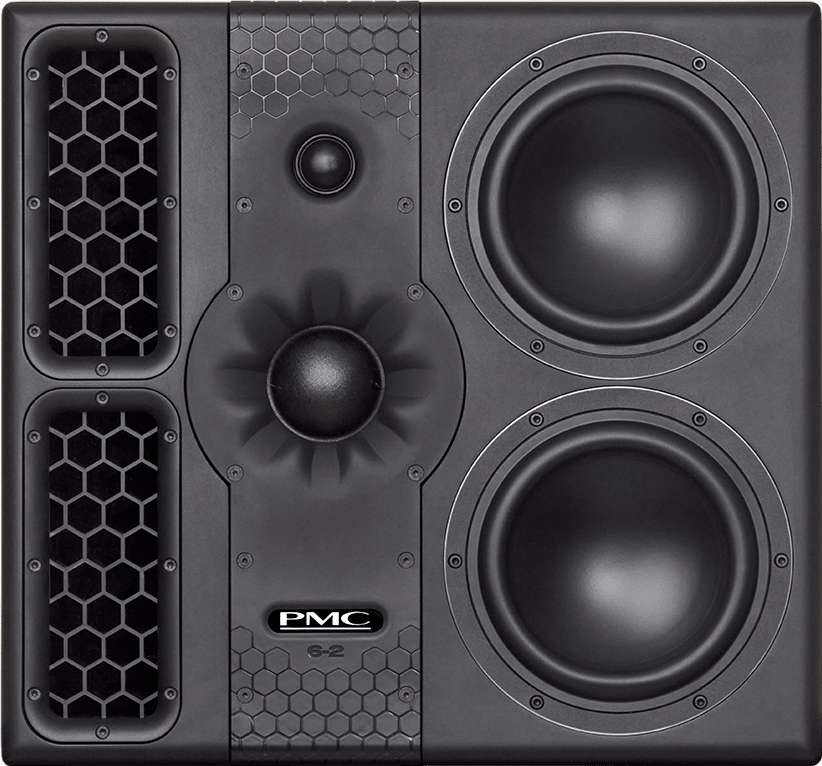
- Extremely clear sound, making them better for mixing and mastering than many other monitors
- Sound like main monitors, offering a large sound footprint not typically found in near-field or mid-field monitors
- Wide bandwidth accuracy and dependability at any volume level
- Midrange performance is particularly notable for realistic, unhyped accuracy, especially on naturally recorded human voices
- Bass performance combines extended bandwidth with great dynamic, pitch, and temporal accuracy
Product Considerations
- Require a significant break-in period
- To get the most out of them, an interface that can connect via AES is needed, as the conversion when using analog is not as transparent
- Correct placement is crucial; at least four and a half feet of distance is needed between the listener and the monitor to be able to get all of the sound that it's trying to give
- SoundAlign software, while useful for EQ adjustments, may introduce unwanted digital artifacts to the sound
- Expensive, these monitors are at the higher end of this sector and share that space with some well-respected designs
Comparisons (according to reviewers)
- Vs ATC SCM25a: The reviewer finds an absence of 'not hearing the box' evident in the 6-2 compared to the ATCs
- Vs Neumann KH310s: The 6-2s outperform them in every respect, sounding much better, with other monitors sounding colored by comparison
- Vs ATC 150s: The reviewer prefers these PMC6-2s over the ATC 150s
Takeaway: The PMC6-2 is a high-performance studio monitor that delivers exceptional clarity and detail. For those seeking accurate and dependable sound at all volumes, these monitors are worth consideration.
Video review
Our take on the brand
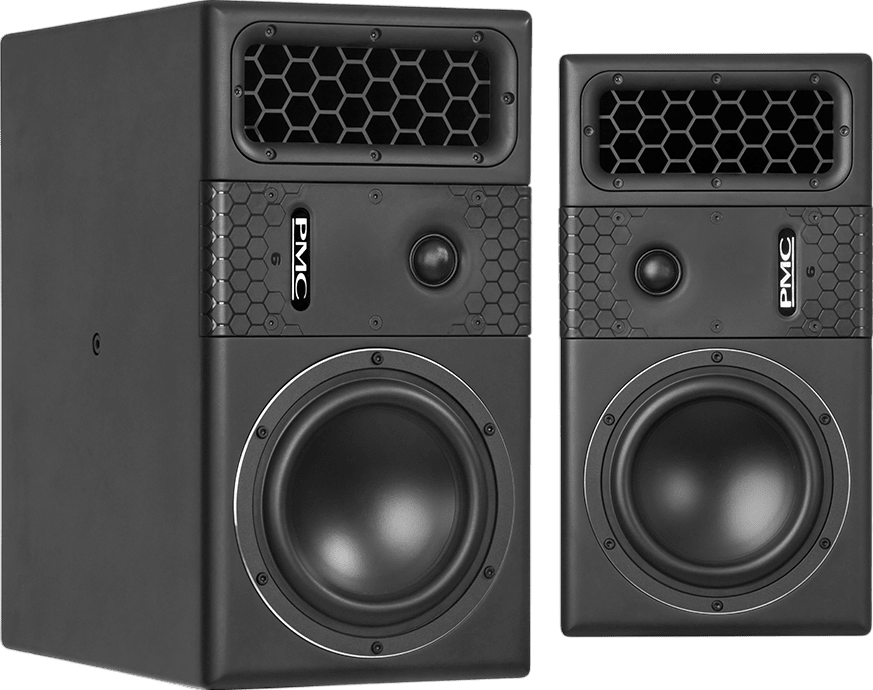
The PMC6 is packed with innovation and providing the same sonic signature as our renowned larger monitors, it's ideal for smaller control rooms or for use in larger immersive systems, where its astounding resolution allows critical mix decisions to be made with absolute confidence.
With 20mm of excursion, the bespoke 6-inch bass driver is designed specifically to integrate with our latest ATL™ bass-loading and Laminair™ airflow technologies. The combination outperforms most 8-inch monitors, offering unparalleled bass extension, headroom, dynamics, and low distortion at all levels.
The high end is courtesy of a one-inch precision-built fabric soft-dome tweeter, with a shallow waveguide that creates wide, tonally consistent dispersion and rock-solid imaging. Both the bass and treble drivers are precisely and individually controlled by a pair of 200W ultra-low-distortion, high-damping-factor Class-D amplifiers.
Whether in portrait or landscape placement, the PMC6's sophisticated DSP engine automatically adjusts the crossover, ensuring optimum tonal accuracy, phase and imaging. The monitor can be calibrated using the rear-panel controls or with PMC's intuitive browser-accessible SoundAlign™ software.
The PMC6 can be upgraded by adding a PMC8 SUB to create a full-range, free-standing PMC6 XBD system. Activating the 'XBD' DSP mode ensures the perfect marriage of the two units, creating a clean LF extension down to 25Hz.
"Active 2-way nearfield reference monitor with ATL™ bass loading Frequency response: 39Hz - 25kHz (- 3dB @1m full space, on-axis) Max. cont. SPL: 106dB @1m (half space value calculated as +3dB from full space measurement. Un-weighted input,20-20kHz Pink Noise (IEC) with 12dB CF for 2 hours AES2-1984 duration) State-of-the-art Class-D amplifiers: HF 200W, LF 200W Analogue/AES3 digital input (16/24-bit, 18 -192kHz sample rate) Digital 'through' output (AES3 24-bit 96kHz) SoundAlign™ network control interface for single or group EQ & settings Sophisticated DSP crossover, driver protection, EQ, and delay/polarity options Automatic portrait/landscape placement DSP correction PMC6 + PMC8 SUB creates PMC6 XBD, with LF down to 25Hz Ceiling-mount yoke allows suspension in multi-channel or immersive systems"
Our summary
Product Strengths
- Detailed and accurate sound reproduction
- Extended bass response due to PMC's Advanced Transmission Line (ATL) technology
- Exceptional stereo imaging allowing for precise mixing and monitoring
- Easy configuration through the SoundAlign web interface, offering versatile adjustments
- Attractive and versatile design suitable for both portrait and landscape orientations
Product Considerations
- Minor dip in the frequency response around 300Hz, potentially due to transmission line harmonics, though it doesn't affect the overall performance
- High mids may be revealing and fatiguing to some users
- Users need to ensure proper network connectivity for using the SoundAlign app
Comparisons (according to reviewers)
- Vs ATC SCM20ASL Pro Mk2, the PMC6 has a stronger low-end, while the ATC offers unmatched clarity and articulation in smaller rooms
- Vs PSI Audio A21-M, the PMC6 is more powerful
- Vs Genelec 8341A, the Genelec has a wider frequency response
Takeaway: The PMC6 is an impressive nearfield monitor that provides trustworthy sound to work on your audio and mixes. It's a valuable studio tool because it allows users to make mix choices with confidence.
Video review
Our take on the brand
What competes at this price?

Our Summary
Product Strengths
- Gorgeous sound is clear, smooth, detailed, and dynamic
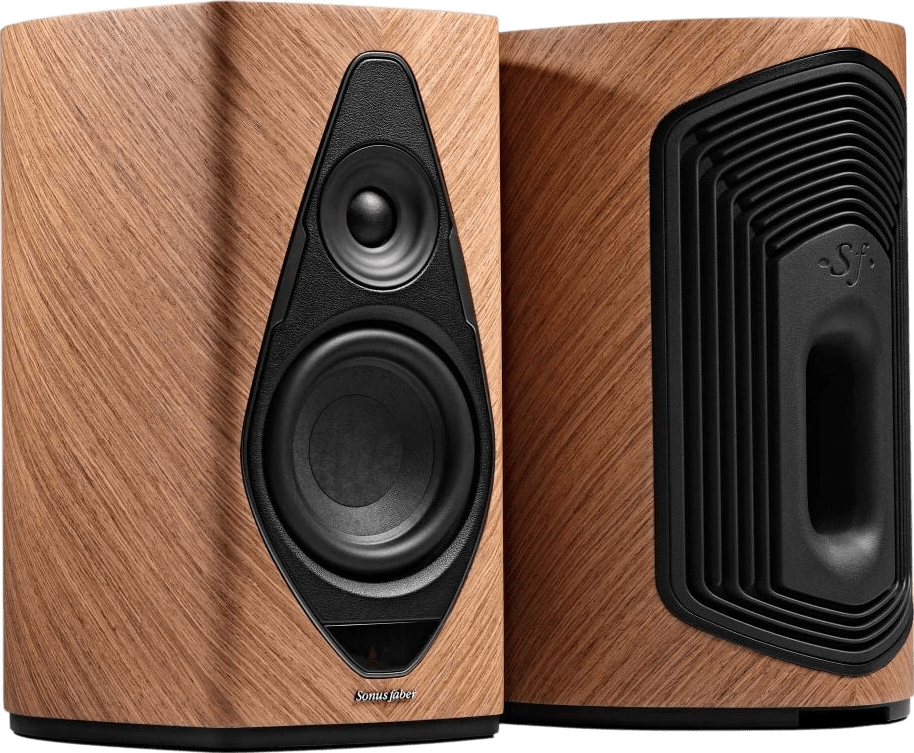
- Elegant design is dashingly elegant, minimalist aesthetic, and painstakingly crafted for equal parts style and substance
- Impressive bass extension and output, described as deep and firm, surprising for their size
- Clear midrange makes voices sound purposeful, characterful, and entirely present
- Versatile connectivity with streaming and input options, including Chromecast, AirPlay 2, phono pre-amp, and HDMI ARC/eARC
Product Considerations
- Some reviewers experienced streaming and HDMI ARC reliability issues
- Input and control layout can be inconvenient and awkward
- Prototype unit had operational bugs
- No bass level adjustment is available, though it could be added in mobile app
Comparisons (according to reviewers)
- Vs KEF LS50 Wireless II—the KEF LS50 Wireless II is a similarly high-end option
- Vs PSB Alpha iQ—the PSB Alpha iQ is a more compact wireless speaker package than the Sonus Faber and is comparatively lighter on bass
Takeaway: The Sonus Faber Duetto speakers are well-suited for those seeking amazing sound and a beautiful design in one package. These speakers are easy to connect and use, and fill the room with rich, detailed audio.
Video review
Our take on the brand


Our Summary
Product Strengths
- Exceptional bass performance for its compact size, with bass that is fast, clear, and tight
- Multiple 'Master Tunings' offer customizable sound profiles, adapting to different room acoustics and user preferences
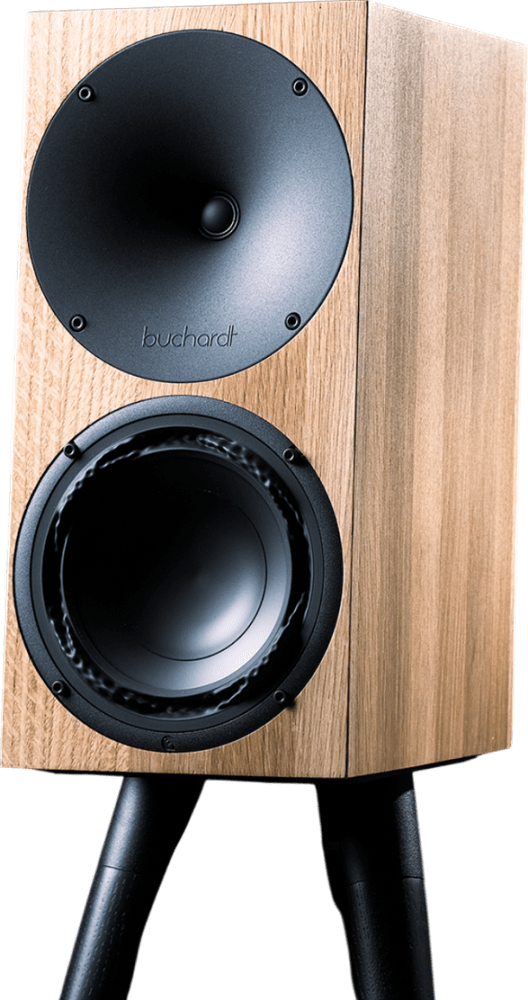
- A high-quality Purifi woofer and SB Acoustics tweeter contribute to clarity, detail, and low distortion
- A solid wood cabinet made in Denmark provides a luxurious look and feel
Product Considerations
- Bass output may diminish or be limited at high volumes to protect the drivers from damage
- A separate purchase of the Platin Stereo Hub may be required for full wireless functionality and room correction
- The 'Made in China' label applies to the electronics inside the cabinet
- While the A10 offers impressive bass, some may still prefer to add a subwoofer for a true full-range experience
Comparisons (according to reviewers)
- Vs Buchardt S400 Mark II, the A10 is more transparent with greater inner detail, clarity, and top-end extension—and deeper, tighter bass—while the S400 Mark II is more relaxed and forgiving with harsh recordings
- Vs Buchardt A500, the A10 has comparable performance, with possibly a crisper sound in some instances
Takeaway: The Buchardt Anniversary 10 is a compact yet powerful speaker that offers a customizable listening experience. Its impressive bass and versatile tuning options make it a great choice for those seeking a high-quality audio solution in a small to medium-sized room.
Video review
Our take on the brand

Our Summary
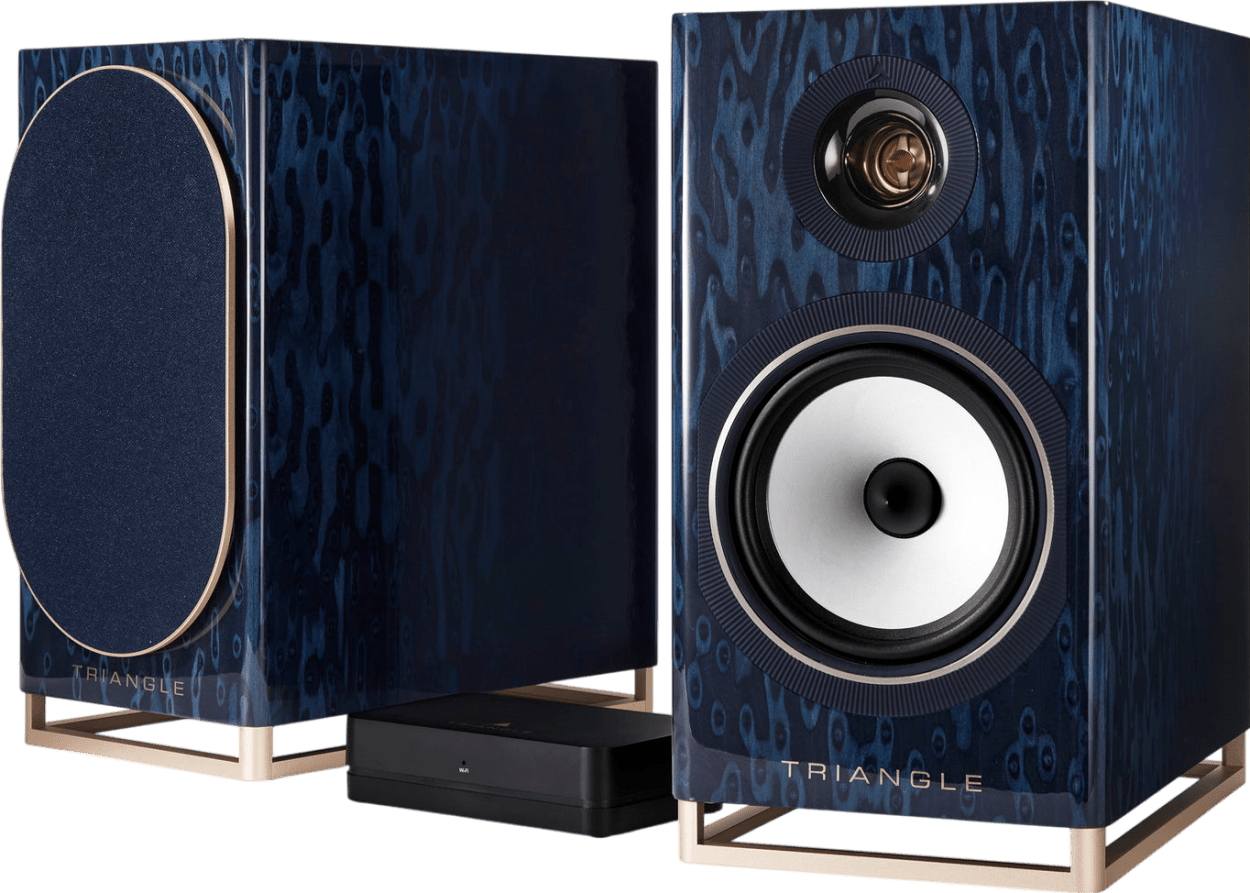
Product Strengths
- Excellent wireless stability, pairing easily and remaining connected even with other wireless activity
- Big, confident, and enjoyable sound, with surprising bass extension for its size
- Aesthetically pleasing design, with unique and attractive finish options
- Versatile connectivity options through its media hub, including multiple digital and analog inputs, plus Bluetooth, AirPlay, and Chromecast
Product Considerations
- The absence of a dedicated streaming app may require reliance on third-party apps or external streamers
- The system could benefit from a slightly more refined sonic presentation, needing a touch more sweetness and natural warmth
- There can be some audible amplifier noise at idle/start-up, depending on proximity
- The base of the speakers can be quite large, potentially requiring dedicated stands for proper placement
- No wired subwoofer output
Comparisons (according to reviewers)
- Compared to KEF LS50 Wireless II, the Capella will appeal to those who would rather have a more classic, wood-cabineted speaker on show than the ultra-modern aesthetic of the Brit boxes
- Compared to Triangle Borea BR03 BT, the Triangle Capella active speaker system is much more ambitious, with more advanced drivers and superior fit and finish
- Compared to Buchardt A10, the Triangle Capella and Buchardt A10 are more similar than different, but still pretty different, as they use the same concept
Takeaway: The Triangle Capella is a convenient and stylish all-in-one system that delivers a big and enjoyable sound. It's a great choice for those seeking hifi audio without the complexities of traditional separates.
Video review
Our take on the brand
Our Summary
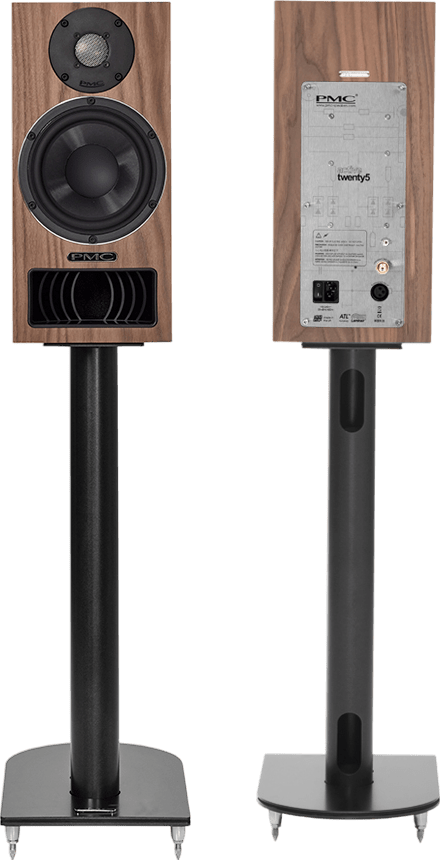
Product Strengths
- Advantage of direct amplifier connection to the drive unit, which eliminates the crossover network, preventing power loss and phase issues
- Dynamics and imaging capabilities are difficult to match with passive speakers and separate amplifiers at a similar price
- Details are revealed with transparency and vitality, combined with precise timing, resulting in considerable musical appeal with decent recordings
- Bass extension is very impressive for its size
- Soundstage escapes the cabinets
Product Considerations
- Careful amplifier matching is required to avoid a fatiguing sound with colder amplifiers
- May seem expensive for a bookshelf two-way speaker
Comparisons (according to reviewers)
- Vs passive twenty5.22i with a decent amplifier, the active twenty5.22i offers better imaging and dynamic capabilities at a lower overall price
Takeaway: The PMC active twenty5.22i loudspeakers offer impressive sound quality and dynamics, making them an excellent choice for those seeking a revealing and engaging listening experience. They represent the development of consumer sound in recent times.
Video review
Our take on the brand
Our Summary
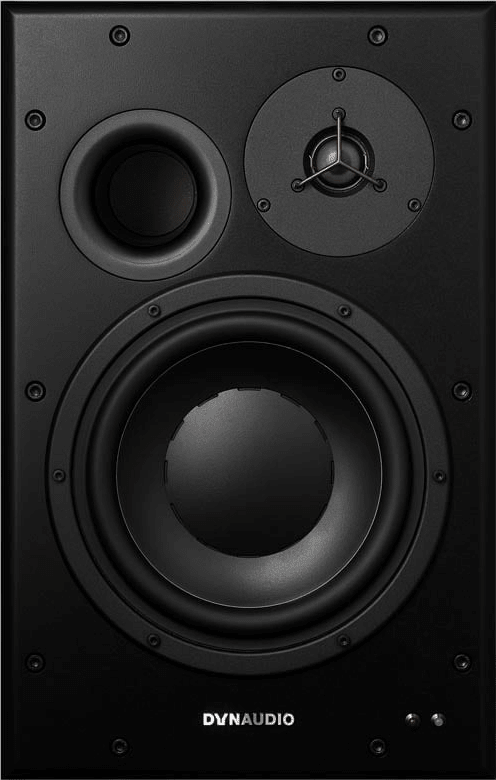
Product Strengths
- Delivers greater tightness and precision from the crossover point on down
- Delivers an extended high-frequency range, with greater detail and more openness without harshness
- Stereo imaging is amongst the best
- Has no sweet 'spot', which allows the engineer, producer, and client a fairly similar listening experience
- Has a smoothly extended bass response that reveals what is really going on in that elusive bottom octave
Product Considerations
- The BM-15As may be overkill for a smaller mixing environment and better suited for larger rooms
- High end is as clean and accurate as the BM-12s, but the mids were a little lacking
- While they have a slightly forward characteristic, it doesn't get in the way of accurate monitoring
Comparisons (according to reviewers)
- Vs Dynaudio BM-12 MK3s—BM-15A has more bass extension and pure raw SPL power
- Vs Dynaudio BM-12 MK3s—BM-12 MK3s have more detail in the mid-range
- Vs Dynaudio BM-12 MK3s—BM-15A are far louder and put out substantially larger amount of energy in the bass and subs
- Vs Genelec, Focal, Neumann, and Event—the Dynaudio BM series are in the same class as these monitors
Takeaway: The BM15A is a speaker that gives great stereo imaging with a wide frequency range, and produces an accurate sound which is nice to listen to for long periods. Full-range monitoring in a smaller studio is possible with these speakers.
Video review
Our take on the brand
Questions? Ask the brand's dealers.
How to buy
Speakers
Search all hifi products
Explore our database of 10,000+ new and 25,000+ used hifi products.