



Note that this is a discontinued product. You may want to visit the brand's page here to browse their newer products.
What reviewers think
Bloggers and YouTubers have tried this product—so we've summarized their strongest opinions below. Links to full reviews follow.
Product Strengths
- The VPI Fatboy tonearm shined a wonderful new light on the reviewer's entire vinyl collection
- The Fatboy Gimbal and Unipivot models offer a liquidity and ease to the sound that allows the listener to just relax and take it all in
- Mids especially had a wonderful rich texture and palpability that flowed from the music when using the Fatboy
- Highs had a proper splash of attack and inner detail without edge and strain when played on the Fatboy
- Micro and macro dynamics also improved as special cues and sudden transients had the reviewer's hair standing on end
Product Considerations
- One reviewer heard through the grapevine that Harry Weisfeld preferred the Gimbal over the Unipivot, but the reasons were not well explained
Comparisons (according to reviewers)
- Vs JMW-12.7: The Fatboy realized improvements well beyond expectations considering the excellent performance of the JMW-12 3DR, and even before that with the JMW-12.7
Takeaway: The Fatboy has improvements across the board and now has a permanent home in the reviewer's system. After investing in the Fatboy, the reviewer is more satisfied and overjoyed with the sound of their analog front end.
All
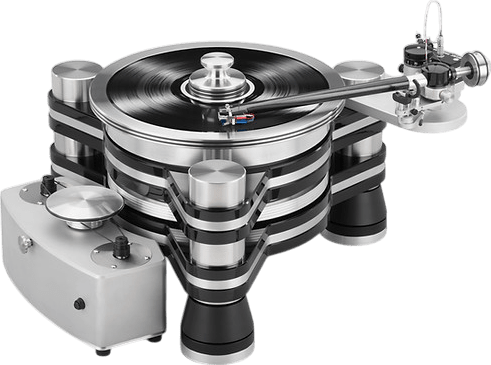
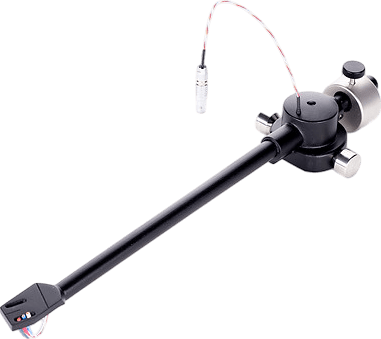
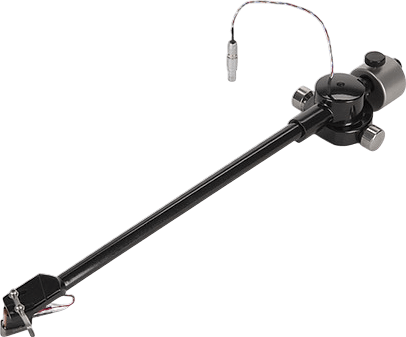
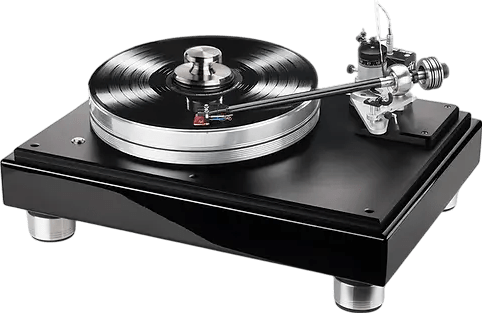
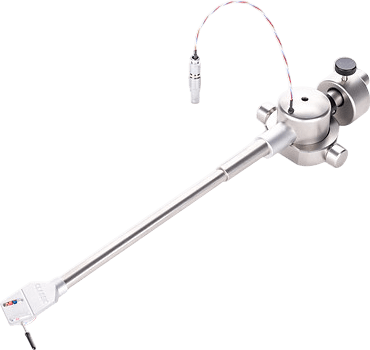
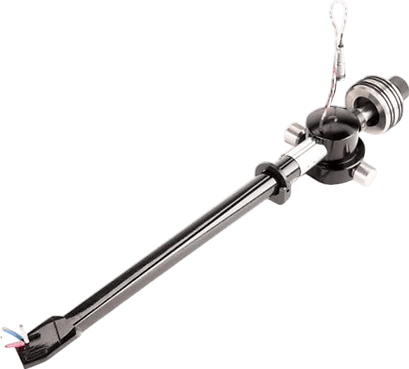
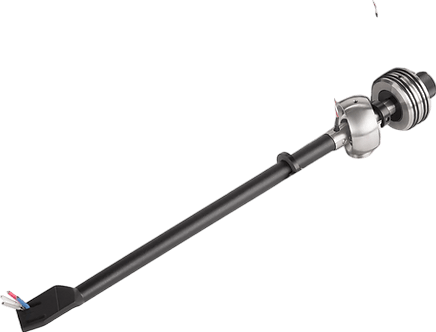
Fatboy Gimbal 9-3D
reviews


Manufacturer details
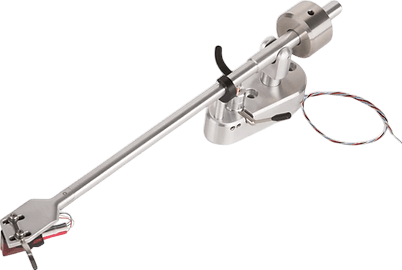
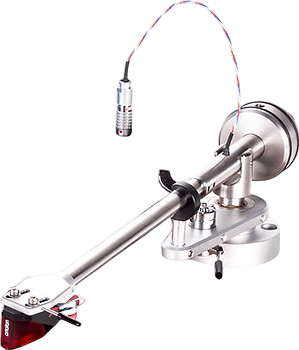
Bearing Type: Full Gimbal Bearing
Pivot to spindle: 223 mm
Internal Wire: Nordost Reference Wire
Effective length: 240.07.0 mm
Effective mass: 10.2g.
Overhang: 17.7mm
Offset angle: 22.85 degrees
Average RMS distortion: 0.36%
Material: 3D Technology Consisting of but not limited to Epoxy resin and Delrin materials, copper, aluminum and steel
Product Notes: Adjustable Counterweight, Azimuth, VTA, and Limo Connection.




Brand highlights
Taking a step back to look at reviewers' thoughts of the brand's entire lineup—not just this product—what stands out most is the following:
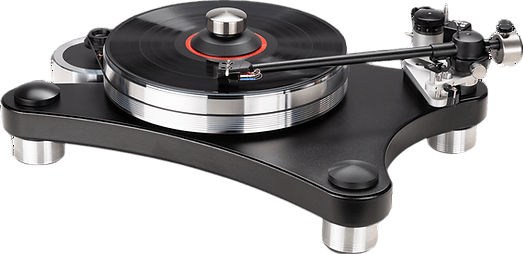
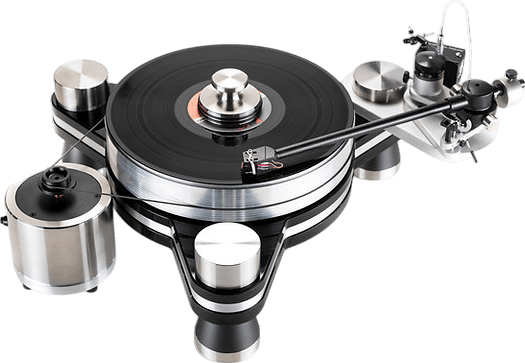
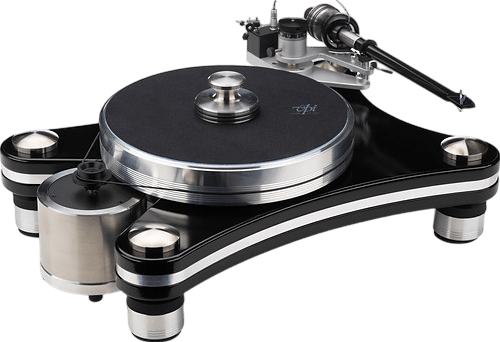
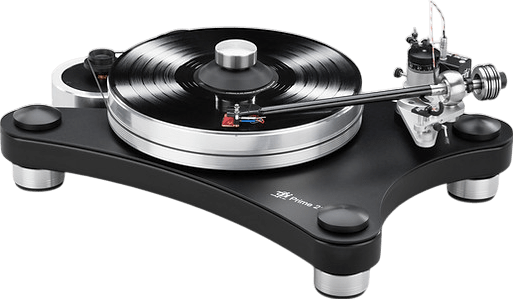
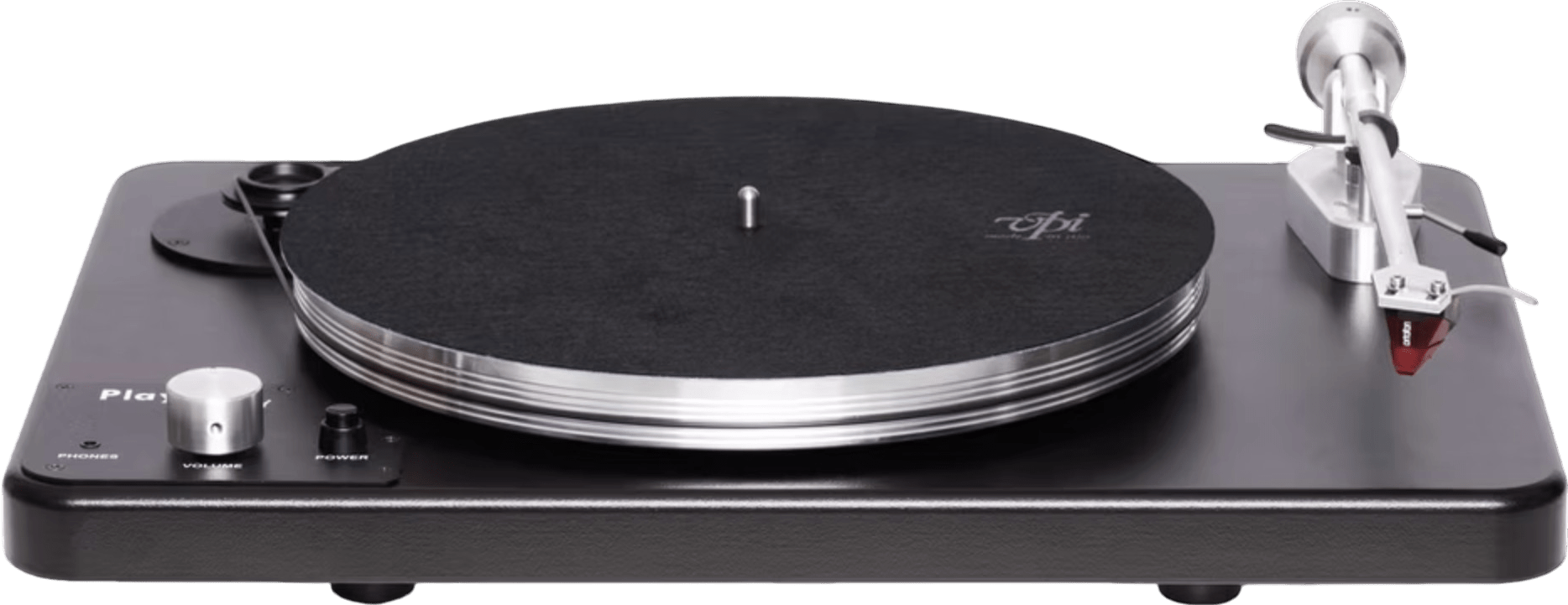
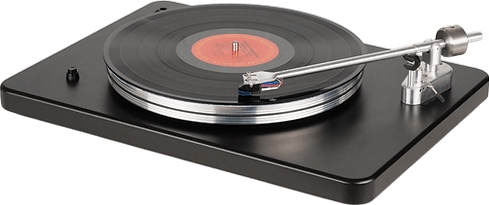
- VPI turntables utilize a multi-layered plinth construction, often combining acrylic, stainless steel, and MDF, to create a highly inert and resonance-controlled base.
- They embrace 3D printing technology in their tonearm designs, allowing for complex shapes and optimized resonance control within a one-piece structure.
- The brand provides a family-owned business experience, with readily available support and a direct connection to the designers, emphasizing long-term product viability and customer care.
Select products
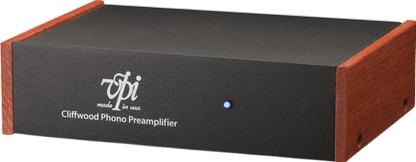
VPI Cliffwood
- Positioning: The entry-level turntable, designed for those new to high-fidelity audio.
- Description: Offers a solid performance with its aluminum platter and Cliffwood tonearm, making it a great choice for beginners. Unlike the more advanced models like the Prime X, it focuses on simplicity and ease of use, which is ideal for small rooms and those with a limited budget. It lacks the advanced isolation and tonearm options found in higher-end models, making it less suitable for those seeking extensive customization or the highest sound quality.
VPI Prime X
- Positioning: A high-performance turntable that sits above the Scout 21, offering advanced features for serious audiophiles.
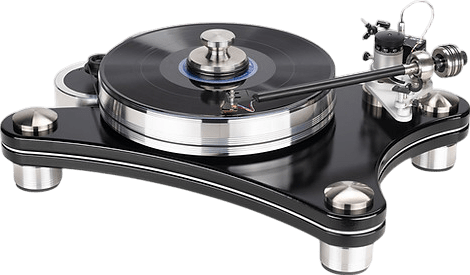
- Description: Stands out with its 3D-printed JMW-12 tonearm and HW-40 isolation feet, providing superior sound isolation and detail retrieval compared to the Scout 21. It lacks the multi-tonearm capability of the Avenger, which might be a consideration for users looking for maximum flexibility.
VPI Avenger
- Positioning: A top-tier model designed for audiophiles seeking maximum flexibility and performance.
- Description: Features a unique three-layer chassis and ability to mount up to three tonearms, making it a standout choice for those who want to experiment with different audio setups. It offers superior isolation and sound quality compared to the Signature DS.
VPI Titan
- Positioning: The flagship model, offering groundbreaking performance and technology.
- Description: Features a pneumatic air-suspension system and analog-based oscillators for exceptional stability and sound purity, setting it apart from the Avenger and other models. Its high cost and advanced features make it suitable for those who are deeply invested in high-end audio and have the space to accommodate its large footprint.

Our take on the brand
Look inside the brand
Our interview with the brand
What are two key technological innovations or strong opinions that differ you from other brands?
Technologically, two standout innovations set VPI apart:
Our use of 3D printing technology and our proprietary 3-phase BLD motor and processing system. The 3D-printed tonearms represent a major leap forward in precision, damping, and performance—offering sonic benefits that traditional manufacturing struggles to match. Our 3-phase motor system, paired with advanced control processing, delivers superior speed stability and vibration isolation. Both are significant engineering achievements in turntable design and performance.
From a broader philosophy, what truly differentiates us is our identity—we're a family-owned company, still run by the original family, now heading into a third generation. Every table is made in America, built by a small but dedicated team, and reflects a hands-on, personal commitment to craftsmanship and legacy that's hard to find today.
What's your approach to customer support?
We always recommend that customers first reach out to their original retailer—dealer or distributor—as they are often the quickest path to help. However, if the dealer is unavailable or the issue goes beyond their scope, we're absolutely here and ready to jump in.
Customers can contact us directly by email or phone, and we do our best to respond as quickly as possible. What sets us apart is our commitment to hands-on support—if needed, we'll FaceTime or Zoom with customers to walk them through setup, troubleshooting, or fine-tuning. We've even invited customers to the factory when they're nearby. We take support personally because we take our customers personally—when you buy a VPI, you're part of the family.
What are your favorite tracks for showcasing the strength of your products?
- Take Five – Dave Brubeck: The rhythm, the horn work, and the overall layering make this an ideal track for evaluating instrumental balance and clarity. Personally, it holds a special place—it was a favorite of mine and my wife back when we were dating, and my father, Harry Weisfeld (VPI's founder), used it to teach me about soundstage and timing. It's both a sentimental and technical go-to.
- Dr. Ackbar – Bob and Ray's Stereo Spectacular: This is a wild, lesser-known gem. It's a spoken-word journey through a castle/laboratory that plays with spatial cues and stereo effects in a way that's perfect for system testing. When your setup is dialed in, you should feel like you're physically in the space—with voices and effects coming from pinpoint locations around you.
- 64 Dodge – Greg Brown: This track gives me everything I need when checking a system—vocals, guitar tone, and fine detail. I grew up listening to it, so I know exactly how it should sound. When something's off, I can hear it immediately; when it's right, this track just sings.
What other products pair best with yours?
Tough to pick just one, but Nordost cables are often paired with VPI by both customers and retail partners—and for good reason. The synergy between Nordost and our turntables brings out incredible detail and clarity. That said, two standout system pairings we've seen a lot this past year include:
System 1:
- VPI Industries
- VAC Amplifiers
- Acora Speakers
- Cardas Cables
System 2:
- VPI Industries
- Audio Research
- Wilson Audio
- Nordost Cables
Each of these combinations delivers a beautiful blend of musicality, precision, and dynamic range—exactly what analog lovers are chasing.

Used
VPI








What if you spend more?



.svg)
Our summary
Product Strengths
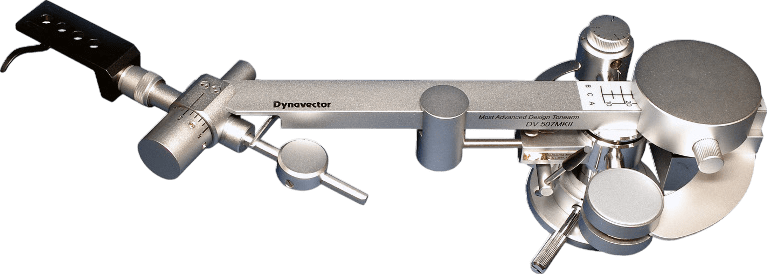
- Unique bi-axis design separates horizontal and vertical movements, offering a stable platform for the cartridge and excellent tracking ability, even with warped records
- Extremely well-built, matching the high standards of SME tonearms in terms of fit and finish, with a robust and solid construction
- Cartridge swapping is made easy due to the detachable headshell and simple setup process
- Demonstrates wide cartridge compatibility, working well with both low and high compliance cartridges
- Sonically neutral and uncolored, allowing the characteristics of different cartridges to shine through
Product Considerations
- Heavy, best suited for turntables with solid plinths, making it potentially incompatible with suspended turntables
- DIN plug/cable exits straight down, requiring adequate clearance (around 70mm)
- VTA adjustments are not micrometric
- The detachable headshell, while convenient, introduces a joint in the armtube
- Soundstaging may not be as wide or airy as some other tonearms, tending to present a strong central image
Comparisons (according to reviewers)
- The DV 507 MkII matches SME standards in fit and finish and allows each cartridge to give its best
Takeaway: The Dynavector 507 MkII is a well-engineered, versatile tonearm with a unique design that promotes excellent tracking and neutral sound. Its solid build, easy cartridge swapping, and wide compatibility make it a worthwhile investment for serious vinyl enthusiasts.
Video review
Our take on the brand

Our summary
Video review
Our take on the brand
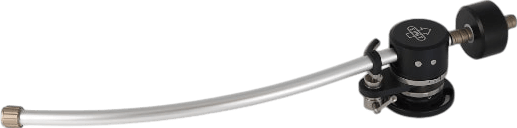

Professional 12-inch tonearm for EMT Tondose, as an option also for other connections (SME, Ortofon A)
Our summary
Product Strengths
- The EMT 912-HI tonearm, along with the EMT JSD 6 cartridge, made every record sound dramatically more exposed, clearer, and punchier
- The EMT 912-HI tonearm looks sleek, sexy, and more refined in machining and finish compared to earlier EMT arms
- The EMT 912-HI tonearm seems better built than the 997s
Product Considerations
- Adjustments took a couple of weeks to settle in comfortably with the new EMT sound
- Comparing the 909 remake with the original 929 is essential to identify differences and limitations
- The EMT 912-HI with fixed headshell costs $6995 with fixed wire, $7409 with the DIN connector
Comparisons (according to reviewers)
- The EMT 912-HI arrived and, together with the EMT JSD 6 cartridge, threw everything he thought he knew out the window, compared to when he was using Thomas Schick 10.5' tonearm
Takeaway: The EMT 912-HI tonearm can significantly improve the sound of records, making them clearer and more dynamic. Its sleek design and improved build quality make it a luxurious addition to any high-end audio system.
Video review
Our take on the brand
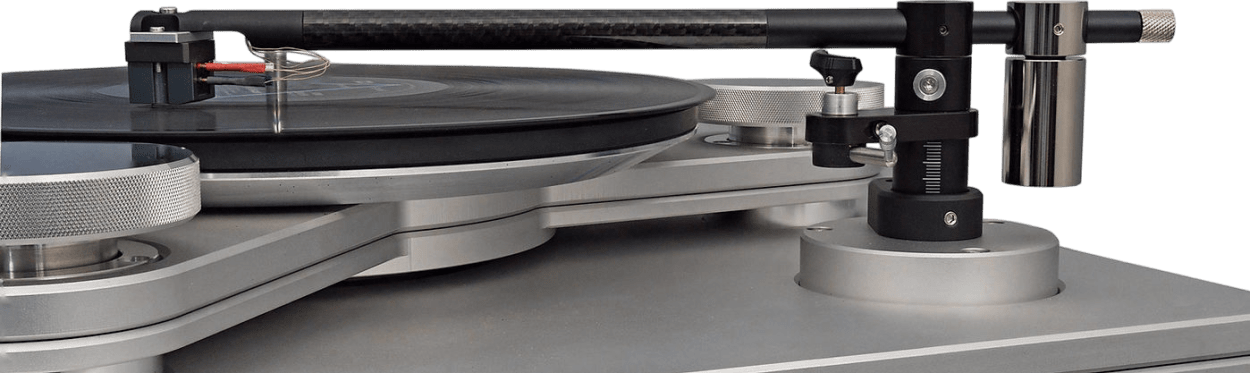

The design skills of Frank Schröder are no where more apparent than in the CB tonearm. Visually simplicity with timeless aesthetic conceals cutting edge technology and mechanical wizardry.
Simple principles of physics applied in a masterful way like balancing the mass of the tonearm on the bearing to reject vibrations conducted through the mounting plate that originate from other turntable components such as the motor, plinth, bearing or airborne feedback, any force acting on that point will effectively eliminates external excitation by generating equal forces to all sides of the arm, maintaining the dynamic stability of the system and preventing a deflection of the cantilever effectively ignoring the incoming disturbance.
Another issue are the disturbances generated constantly by the cartridge. Problem here is energy reflected back to the cartridge due to the stiff bearings of tonearms. Here the issue is addressed with adjustable counterweight coupling to sink some of this energy and a wand that is super stiff and very well damped coupling those vibrations to the magnetic centring of the lateral bearing, operating as an eddy current brake, absorbing all the vibrations that reach it.
Different type of materials are used to create an impedance mismatch for all the vibrations travelling the path. This reduces energy coupling without being visually noticeable. The use of magnetic force is exploited in the anti-skating compensation. Here a system of 3 magnets takes care of this without any dangling weight or spring eliminating yet another source of signal contamination.
Tonearm effective mass is controlled by the use of different material cartridge mounting plates allowing the use of almost any cartridge on the arm. Last but not least the use of continuous wire from cartridge to preamplifier with no intermediate contact or joints maintains cartridge signal integrity.
Our summary
Product Strengths
- The design allows for fine-tuning to maximize sound quality
- Instructions are included outlining how to tune by various degrees of screw tightening
Product Considerations
- There are options for screw tightening
Takeaway: The Schröder CB tonearm allows adjustments to get the best sound. It's designed to work with modern turntables.
Video review
Our take on the brand
What competes at this price?

Our Summary
Product Strengths
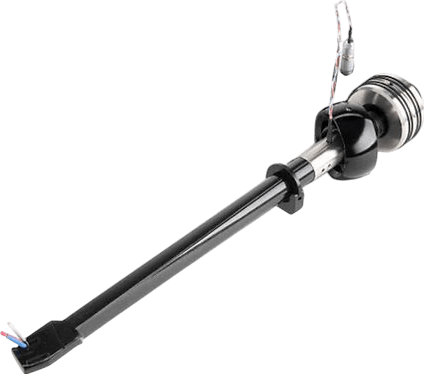
- The Fatboy brings each cartridge's strengths to the fore as well as revealing the sonic differences among the cartridges
- The tonearm's preciseness and linearity parallels and complements the sound of the Vanquish table
- The tonearm's strongest suit is its dynamics and that special ability to rapidly move and shift between dynamic levels
- The Fatboy's ability to recreate a ginormous soundstage
- The Fatboy's slightly heavier mass also allows for the use of lower compliance and heavier massive cartridges
Product Considerations
- The Fatboy falls slightly short of ultimate in the areas of finesse, refinement, and total sense of ease
- There's also some decrease in bass texture
- The tonearm can also at times sacrifice harmonic integrity for detail
- Setting up the dual pivot version of the Fatboy tonearm, in particular azimuth, can be a little tricky and trying
- The character of the new VPI 3D printed Fatboy tonearm lies ever so slightly to the yang side of neutral, no part of the frequency spectrum is emphasized to the detriment of another
Comparisons (according to reviewers)
- Compared to VPI's earlier all JMW Aluminum-based tonearm, the Fatboy is superior when it comes to resolution, speed, and dynamics—and eliminates much of the sonic signature from the previous 3D printed tonearm
- Compared to earlier 3D generation VPI arms, the new Fatboy tonearm is a sizable step up from VPI's earlier 3D printed arms
Takeaway: The VPI Fatboy tonearm is a stunning product and could easily be many audiophiles' final tonearm. The Fatboy's slightly heavier mass allows for the use of lower compliance and heavier massive cartridges.
Video review
Our take on the brand


Our Summary
Product Strengths
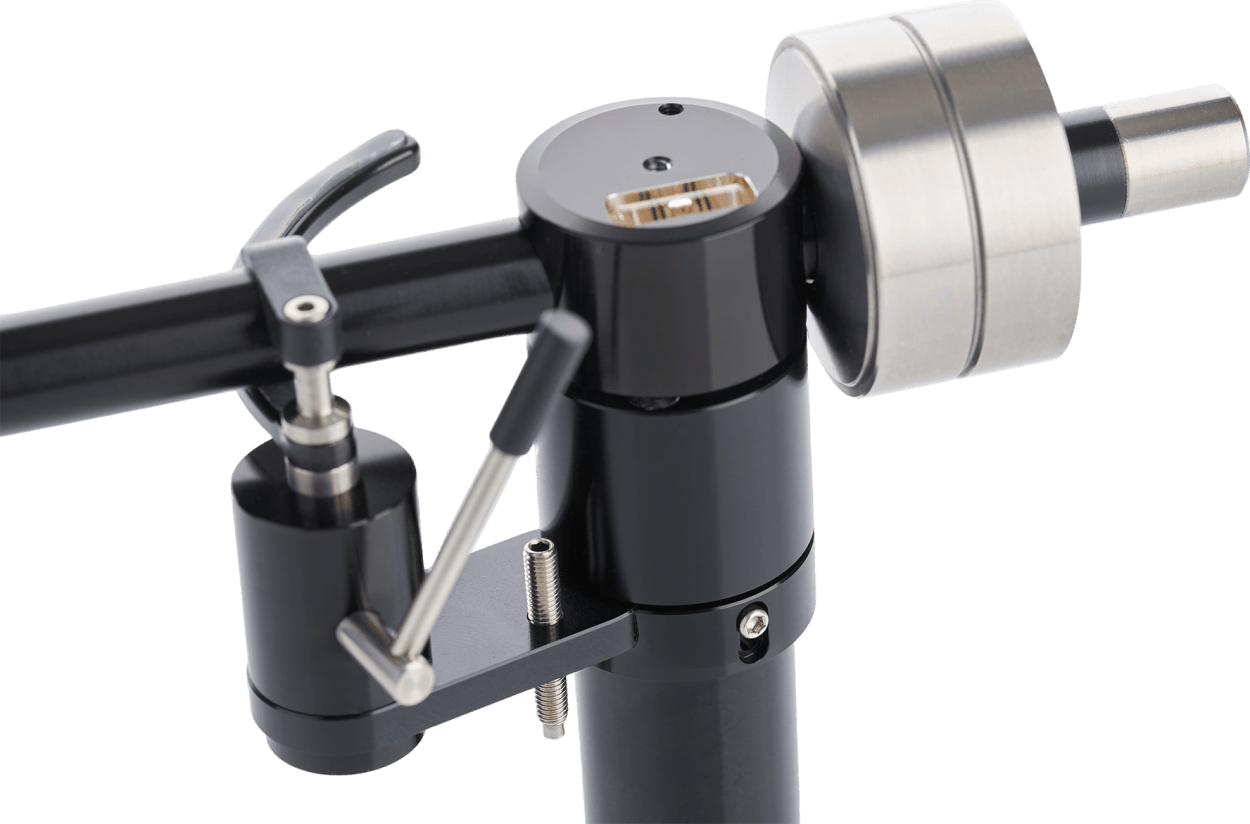
- The 9W2 tonearm is beautifully made with superb execution, smooth bearings and no play in the two dimensions
- Excellent fit and finish, with quality in the packaging and clear instructions
- The AMG Giro provides a very low noise floor, allowing more details to be revealed in recordings
- Musically satisfying, the Giro has a sense of lively confidence and direct musical communication, is quick, clean, and presents players with verve and vitality
- Offers the ability to adjust each geometrical aspect of cartridge setup and alignment, including VTA/SRA, overhang and offset, azimuth and bias
Product Considerations
- The Giro's controls do not always respond to one's first fingertip touch
- Azimuth and bias adjustments may be exacting, as they are devoid of any sort of incremental scale or zero point
- The bottom end definitely loses weight as it goes deeper, but it's not as great a loss as first impressions suggest
- The Teatro moving-coil cartridge was found to be unusually sensitive to dust accumulation on the stylus' tip
- The 9W2 arm only uses one grub screw to hold the arm in place, and some feel two screws are a more effective method of holding an arm in place
Comparisons (according to reviewers)
- Vs Rega RP10: the AMG Giro is richer and warmer sounding, has a slightly quieter noise floor, a bit more weight and power at the bottom end, as well as a bit more dynamic oomph
- Vs AMG Viella: The AMG Viella has a bit more weight and scale and better detail retrieval—advantage of a 12 inch arm over 9 inch?
Takeaway: The AMG Giro turntable and 9W2 tonearm are beautifully made with stunning levels of fit and finish, offering clear set up instructions and sound quality to match. It provides deep levels of musical pleasure to make you forget about the gear and immerse yourself in the beauty of the music.
Video review
Our take on the brand

Our Summary
Product Strengths
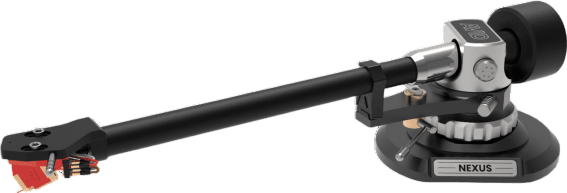
- Expertly produced to be one of the most versatile hi-end arms on the market for real-world use
- The build translates into musical delivery, achieving high levels of low frequency grip and dynamics
- Made of an ultra-rigid Grade-9 titanium designed to resist torsion and bending
- Fitted with high-specification ball bearings and incorporates high-precision bearing shafts to ensure minimal friction and precise movement
Product Considerations
- The headshell is a one piece design, being permanently fixed to the main wand for rigidity, meaning there's no easy way to adjust azimuth
- Setting anti-skate is a bit more manual than most
- The review sample had a quirk where flicking the cueing lever would cause the arm to stop halfway down—requiring assistance
Comparisons (according to reviewers)
- The Nexus at £4,500 is still around a grand cheaper than what SME was charging for its Series V before it went off sale
Takeaway: The Nexus tonearm is a superbly engineered and simple to use piece of equipment designed to work with a wide-range of pick-ups and it can hold its own on any turntable that's up to its standards. It's a worthwhile option for those seeking a versatile hi-end tonearm.
Video review
Our take on the brand

Our Summary
Product Strengths
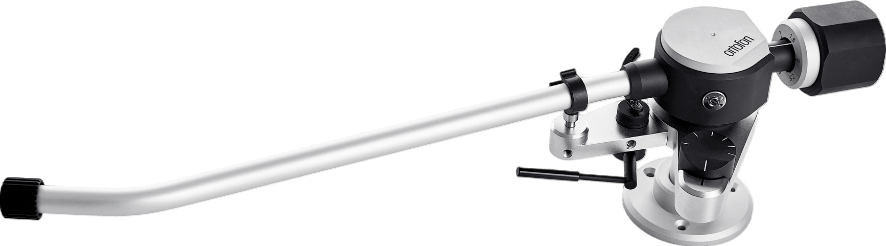
- Jewel-like quality and non-fiddly competence
- Precision machining, ease of setup, and an attractive price for such a well-designed and manufactured arm, make for an attractive combination of enticements
- Provides removable head shell convenience and versatility without paying a sonic price for it
Product Considerations
- The AS-309R has an unusually long 323.5 mm effective length and pivot to spindle distance of 311 mm, so be sure the turntable can handle it
Comparisons (according to reviewers)
- Vs Pro-Ject EVO 12 Premium HG—in terms of build quality and feel, the Pro-Ject is 1080p, while the Ortofon is definitely 4K or 8K, the Ortofon is in a different precision league
Takeaway: The AS-309R is a well-designed and manufactured 12' tonearm with easy setup and precision. It would make an excellent choice if head shell swappability is a priority.
Video review
Our take on the brand

Our Summary
Product Strengths
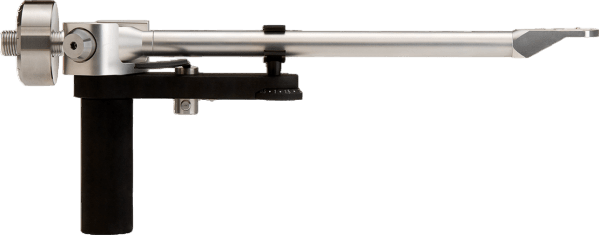
- The Arko tonearm allows the 7075 aluminium arm to float delicately above the record with as near as possible to no resistance
- The 7075 grade aluminium used from the gimbal base all the way through to the headshell helps filter unwanted resonance away from the cartridge and down through the sub chassis
- The Arko/Kendo combination work beautifully, the Kore then stiffens the chassis to keep things tight and pacey
- The overall result is a fast and detailed sound that's not fatiguing, with a smooth warmth
Takeaway: The Arko tonearm elevates the Selekt LP12 with its meticulous construction and resonance-dampening design, working in tandem with other components to deliver a detailed and enjoyable listening experience. Records sound amazing with the Arko.
Video review
Our take on the brand
How to buy
Turntable Tonearms
Search all hifi products
Explore our database of 10,000+ new and 25,000+ used hifi products.


.png)