

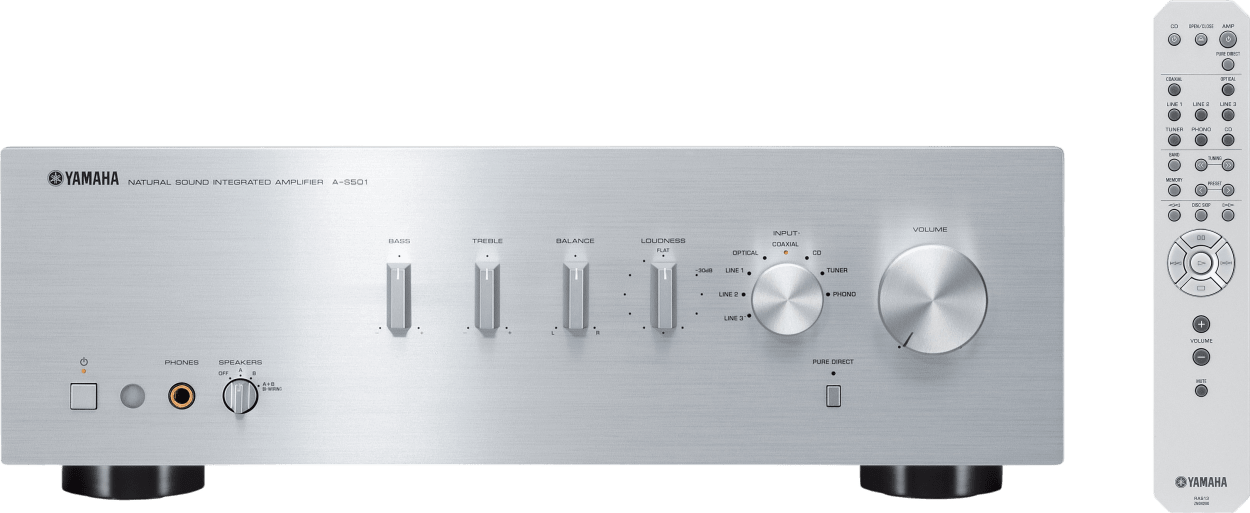


Note that this is a discontinued product. You may want to visit the brand's page here to browse their newer products.
What reviewers think
Bloggers and YouTubers have tried this product—so we've summarized their strongest opinions below. Links to full reviews follow.
Product Strengths
- Excellent build and finish with a chunky, solid feel
- Good features list including plentiful line level inputs, a moving magnet phono stage, headphone output, and digital inputs
- Spacious and detailed sound
- Good power output of 85 watts per channel
- Controls work with crisp precision
Product Considerations
- Lacks the composure and excitement of the best amplifiers in its class
- Can sound a touch confused and lose track of subtle instrumental strands when things get complicated
- The record selector found on the previous A-S501 is no longer present and is a disappointing omission
- Fixed power cable
Comparisons (according to reviewers)
- Vs Marantz PM6005: Marantz PM6005 sounds much more settled, confident, and dynamically more exciting
Takeaway: The Yamaha A-S501 is a well-built and feature-rich amplifier that offers a spacious and detailed sound. It could be a great choice for those who appreciate a robust and tonally even presentation in their music.
All
A-S501
reviews



Manufacturer details
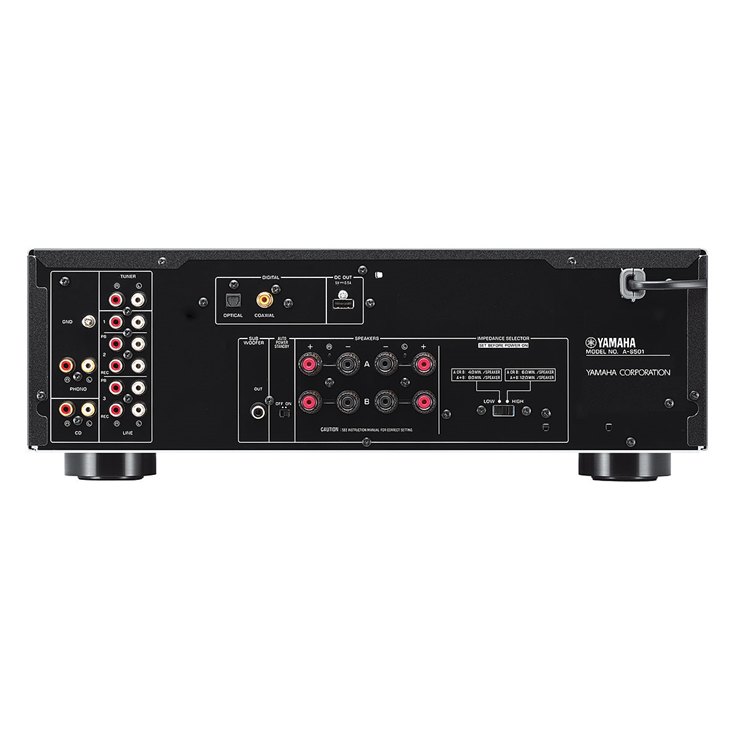
- Power Output: 2 x 85W (RMS), 2 x 120W (max)
- Features: ToP-ART (Total Purity Audio Reproduction Technology)
- Construction: Fully balanced design (input to output)
- Base: ART (Anti-Resolution and Tough)
- Components: Custom power transformer, 12,000 uF block capacitors, extruded aluminum heat sink
- Connections: Gold-plated speaker terminals, RCA (CD, Phono), coaxial inputs
- Digital Inputs: Yes (for TV or Blu-ray Player)
- Front Panel: Aluminum

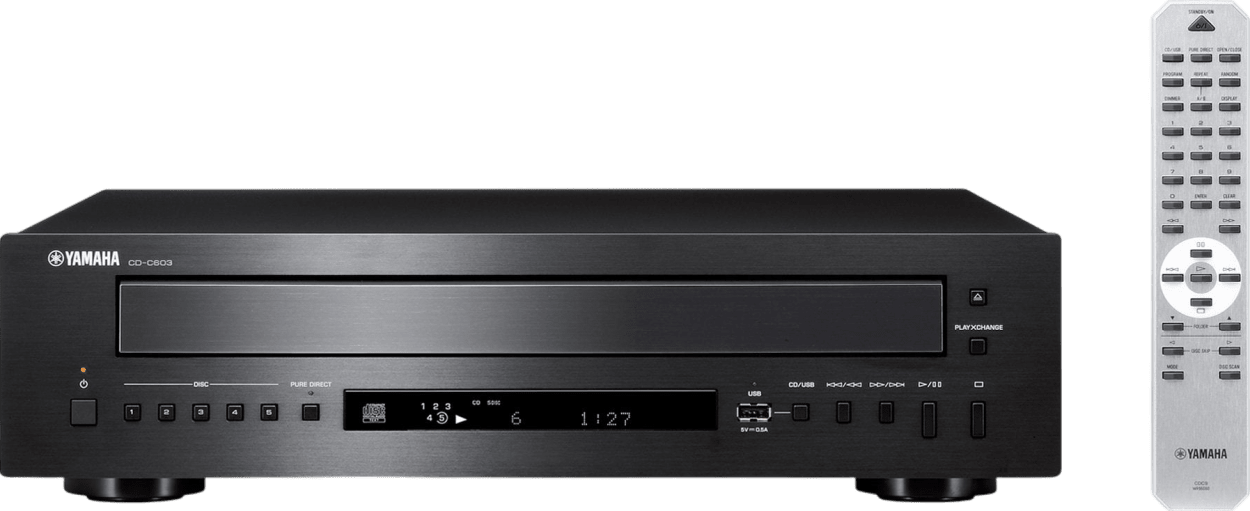
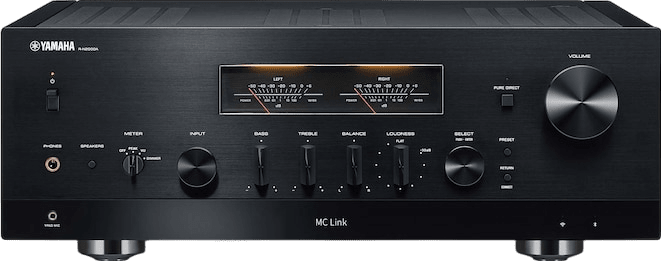
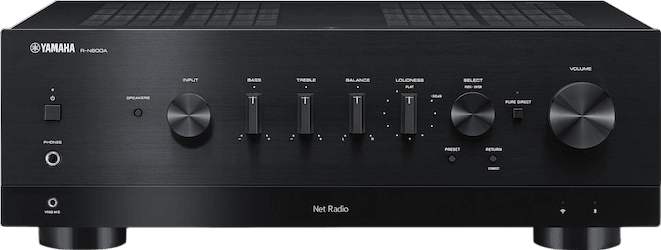

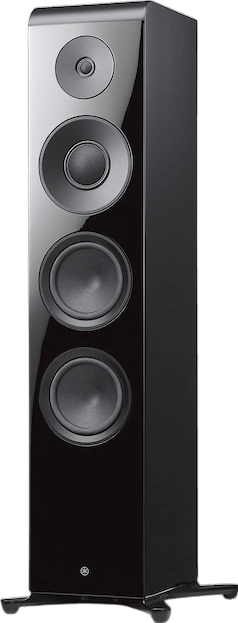





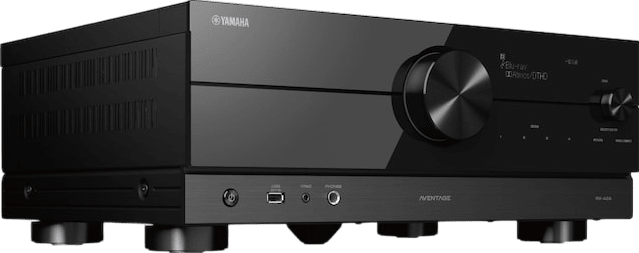
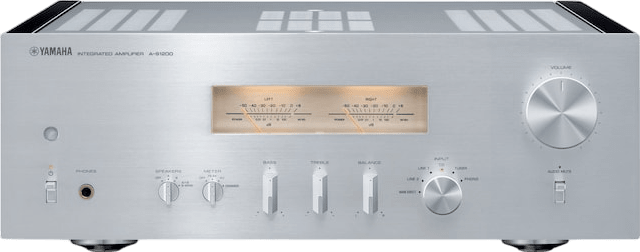


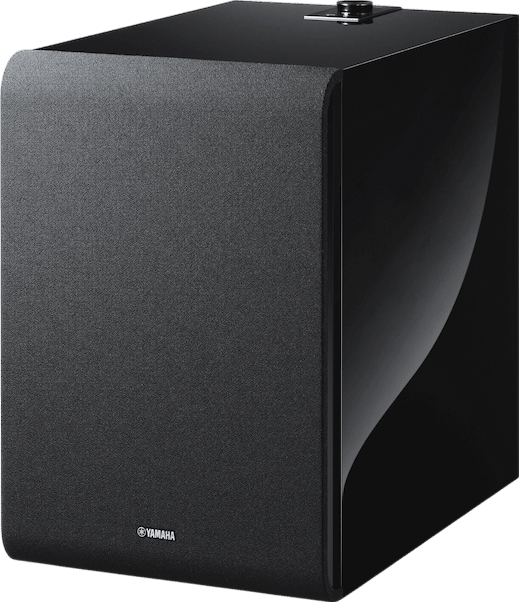


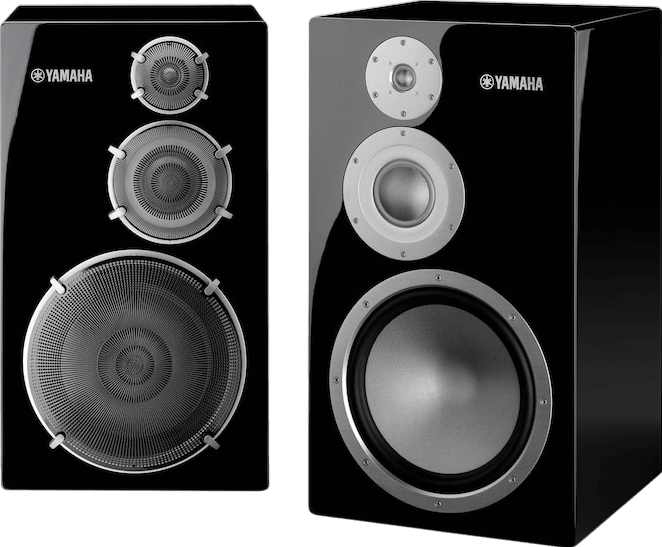
Brand highlights
Taking a step back to look at reviewers' thoughts of the brand's entire lineup—not just this product—what stands out most is the following:
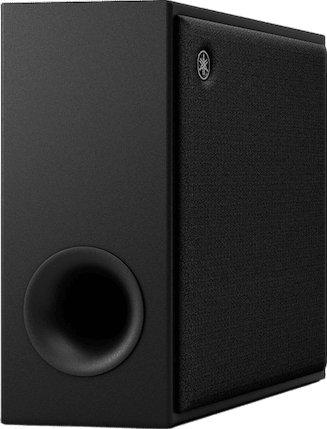
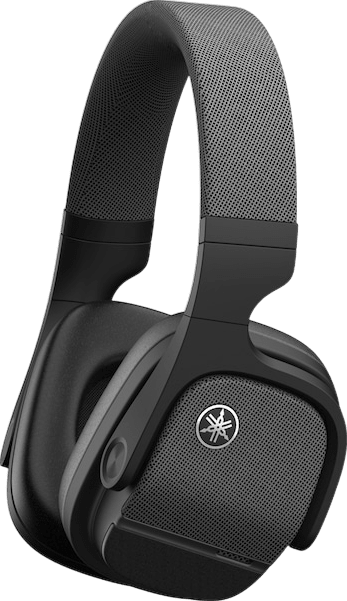
- Yamaha leverages its deep expertise in musical instrument manufacturing to design audio equipment aiming for "True Sound," faithfully reproducing the intended sound of instruments and vocals, making them sound realistic.
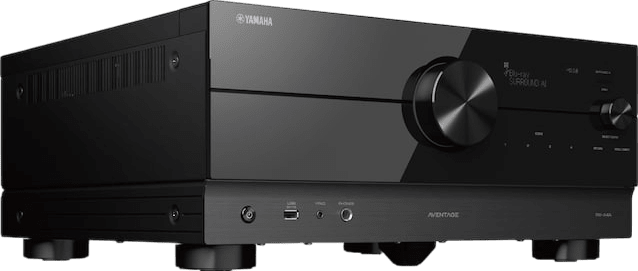
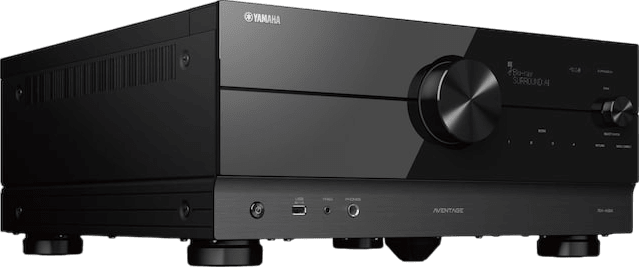
- Yamaha products, particularly amplifiers and receivers, often offer a wide range of connectivity options, including legacy inputs (like phono stages) alongside modern features, catering to both traditional and contemporary audio setups.
- Yamaha's MusicCast ecosystem integrates seamlessly with their audio products, providing multi-room audio capabilities and access to streaming services, allowing users to easily expand their audio setups wirelessly.
Select products


Our take on the brand
Look inside the brand
Our interview with the brand
What are two key technological innovations or strong opinions that differ you from other brands?
What's your approach to customer support?
What are your favorite tracks for showcasing the strength of your products?
What other products pair best with yours?

Used
Yamaha
What if you spend more?



.svg)
Product Strengths
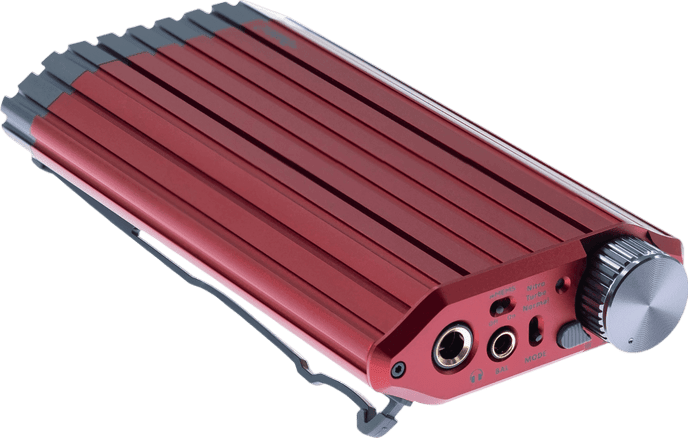
- Delivers a vividly detailed and balanced sound, handling complicated mixes with skill
- Able to extract a lot of information from digital audio files with apparent ease
- A volume lock prevents accidental volume adjustments when the device is in a pocket or bag
- Extensive specification including Bluetooth 5.4 with aptX Lossless compatibility and multiple inputs/outputs for versatile connectivity
Product Considerations
- Some reviewers feel the device is not very pocket-friendly due to its size and sharp edges, making it better suited as a transportable—rather than a truly portable—device
- The gain is set too high, making precise volume control difficult, especially with sensitive IEMs
- Using IEMatch adds output impedance, which can negatively affect the tonal balance and dynamics of some IEMs
- The length of the included USB-C cable is short, making it difficult to position the device on a desk
Comparisons (according to reviewers)
- Compared to the iDSD Diablo 1, the Diablo 2 offers slight sonic improvements and better build quality, but at a higher price
- Compared to the iDSD Signature, the iDSD Signature is considered by some to offer a better result for less money, with a more realistic instrument and vocal timbre, larger soundstage, and customizable features like crossfeed and bass boost
- Compared to the FiiO Q7, the iDSD Diablo 2 has a vivid sound, where the FiiO Q7 has a smooth and wide sound
Takeaway: The iDSD Diablo 2 is a powerful and versatile DAC/amp that enhances headphone listening with its detailed sound and extensive features. It is a good choice for users who want a high-quality audio experience on the go or at their desk.
Video review
Our take on the brand
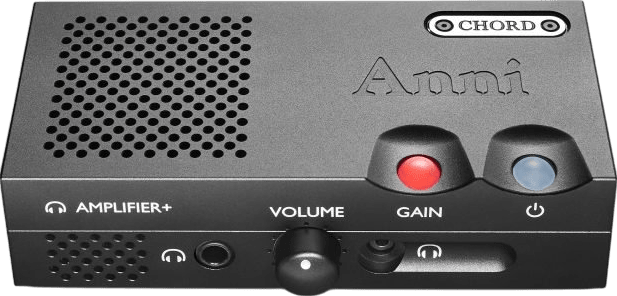
Anni is our first-ever desktop integrated amplifier. Capable of driving both headphones and compact loudspeakers, Anni benefits from the company's proprietary ULTIMA circuit topology and is perfectly positioned to exploit the full potential of today's high-performance headphones, desktop monitors and high-resolution audio sources.
The new Anni desktop integrated amplifier forms part of the Qutest range and seamlessly complements the resolving abilities of the multi-award-winning Qutest standalone DAC and Huei phono stage. As a system, the Qutest components provide an unrivalled desktop audio solution, offering class-leading digital and analogue technologies for the modern music lover. The company's compact QSS (Qutest Stand System) modular equipment rack provides the perfect support, too.
Anni offers the recently announced dual-feed-forward error-correction circuit topology whether using headphones or compact loudspeakers. Anni's advanced technology allows it to drive any headphone load, error-monitored and compensated amplification at all times.
Benefitting from both 3.5 mm headphone outputs and ¼-inch (6.35 mm) outputs, so two can listen simultaneously, plus 4 mm banana-type loudspeaker outputs, Anni delivers 10 watts of quality ULTIMA amplification, controlled by a fascia-mounted volume control that also doubles as an input selector switch for Anni's two line-level inputs. A two-stage gain control for loudspeakers provides additional flexibility with a wide range of desktop monitors.
Product Strengths
- Joyful sound signature with detailed output
- Can power a wide range of headphones, due to Ultima technology
- Compact design, stacks perfectly with the Qutest and Huei
- Employs trickle-down Ultima technology to allow delivery of enormous peak current outputs
- Solid build quality using CNC-milled aluminum casework and good heat dissipation
- Connectivity options include headphone and speaker outputs
Product Considerations
- No gain switch for the headphone output
- Default gain level a bit high for sensitive IEMs
- More power limitations with speakers than headphones—best for smaller, efficient speakers or nearfield listening
- Runs hot, requiring good ventilation
- The volume control feels a little wobbly and might be difficult to use in a very precise way, and there is some channel imbalance at very low volumes
Comparisons (according to reviewers)
- Qutest/Anni pairing justifies its price premium thanks to a more composed and insightful presentation that offers notably more low-end authority, dynamic punch and tonal richness
- Cyrus ONE HD is plusher, showing that Anni has strong niche appeal
- The iFi xDSD Gryphon has digital inputs and built-in DAC, while Anni can power speakers
Takeaway: The Chord Electronics Anni is a compact and well-built amplifier that delivers a joyful and detailed sound, making it a great addition to a desktop setup for headphone and nearfield speaker listening. Its use of trickle-down Ultima technology ensures high-quality performance in a small package, and its ability to stack with other Chord devices makes it a good choice for those already invested in the ecosystem.
Video review
Our take on the brand

Our summary
Product Strengths
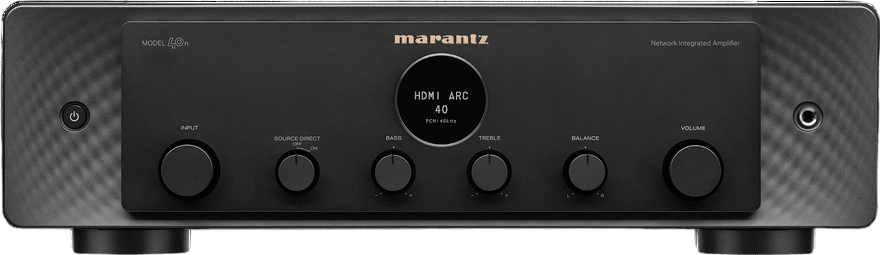
- High-quality build and aesthetics, with a metal casing and elegant fascia made to a high standard
- A clear, powerful, and spacious sound, with a presentation that is appealing right from the beginning
- Plenty of power on tap, specified at 70W per channel into 8 ohms and 100W per channel into 4 ohms
- Fantastic connectivity, with three pairs of line-level inputs, an MM phono stage, and outputs for a recorder and subwoofer
- Capable network DAC/streamer with digital controls
Product Considerations
- The dimpled effect flanking the extruded front panel gives the unit a further distinctive look, but the finish feels like plastic upon closer inspection
- The HEOS app isn't bespoke to the 40n, many of the product's set-up options can only be accessed through the unit using the included remote control
- Bluetooth pairing took longer than expected, and there were occasions when the app stopped being able to see or display the music server when switching inputs
- The lettering on the remote control is impossible to read in dim light, and the buttons are too similar in size, resulting in fumbling in the dark
Comparisons (according to reviewers)
- The Marantz Model 40n is a different proposition compared to the Marantz PM7000N, Marantz is keen to reposition itself as a luxury hifi brand and that intent is clear in the 40n's gorgeous build and aesthetics
- Rival systems such as the Cambridge Audio Evo 150 and Naim Uniti Atom do a better job of engrossing listeners in the music, being more insightful, musically engaging, and dynamically exciting by degrees
- Is super-sexy and distinctive styling, a higher level of fit and finish, a much better remote, and access to Sound United's HEOS streaming/multiroom audio platform wanted—or more coaxial and optical digital inputs, Dirac Live room-correction capabilities, more power, a more efficient topology, and access to Lenbrook's BluOS streaming/multiroom audio platform
- At first glance it's hard to distinguish the Model 40n from its slightly costlier Marantz Model 30 sibling
Takeaway: The Marantz Model 40n is a stylish and feature-packed streaming amplifier that offers a musical and inviting performance. With its versatile connectivity options and impressive sound quality, the Model 40n is a great choice for modern, lifestyle hifi systems.
Video review
Our take on the brand

Our summary
Product Strengths
- Offers a comprehensive set of features including CD player, streamer, Bluetooth, headphone amplifier, phono amplifier, and power amplifier, all in one box
- Sounds very good across digital and analogue inputs, the combination of digital decoding and amplification is exceptionally cohesive
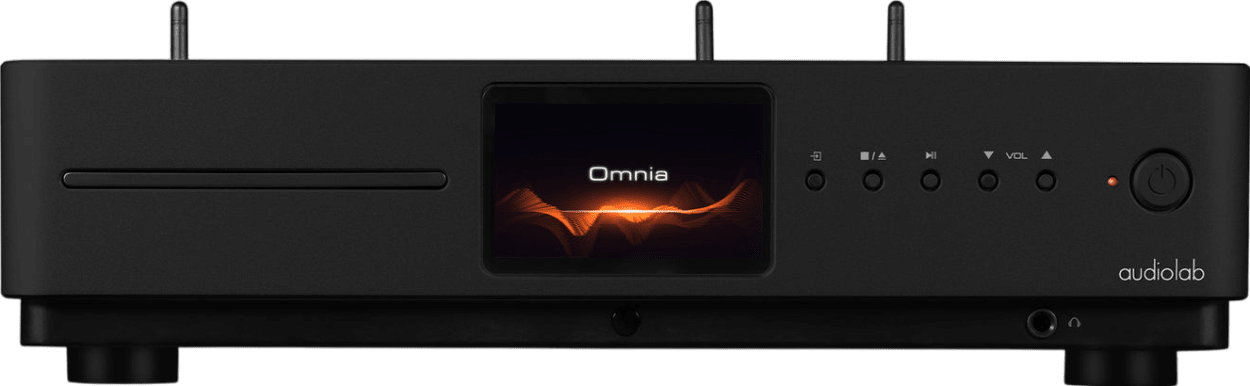
- Has a sturdy, well-built casework that feels every inch of its price tag, and is built to last
- Provides clear, detailed and large, spacious sound with an easy-going presentation, and can be part of an expansive wireless multi-room system
- Incorporates a high-quality ESS Sabre DAC and amplifier based on the Audiolab 6000A design
Product Considerations
- The software interface using DTS Play-Fi is a little slow, and Play-Fi is still not gapless, Play-Fi is not delivering at the same level of user experience as competitor solutions
- Rivals have greater dynamic punch, rhythmic accuracy, and energy
- Some reviewers find that the unit can be a bit sensitive with scratched CDs
- Remote and fascia controls aren't all that responsive
- There is no album art displayed on the screen during streaming
Comparisons (according to reviewers)
- Compared to the Technics SA-C600, the Technics may not be as big-scaled, open or reveal as much detail as the Audiolab Omnia, but it's more adept at conveying enthusiasm, rhythmic precision and dynamic punch
- In direct competition with the Cambridge Audio Evo 75, the Audiolab Omnia ties Audiolab styling touches into something that is not slavishly retro and gives away absolutely nothing in terms of feel, solidarity and design
- Compared to the NAD C700, the Audiolab Omnia has functionality they cannot get anywhere near—indeed functionality that leaves everything else under two grand looking rather limited
Takeaway: The Audiolab Omnia is a versatile and well-built all-in-one system that offers a wide range of features and delivers enjoyable sound, making it a great option for those seeking convenience without sacrificing audio quality. It's especially appealing for those who still value CD playback.
Video review
Our take on the brand
What competes at this price?

Our Summary
Product Strengths
- Impressive sound performance delivers clear and vibrant audio across different genres
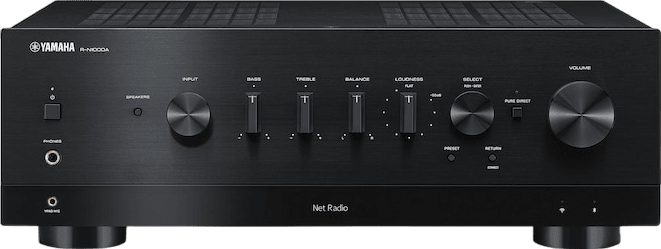
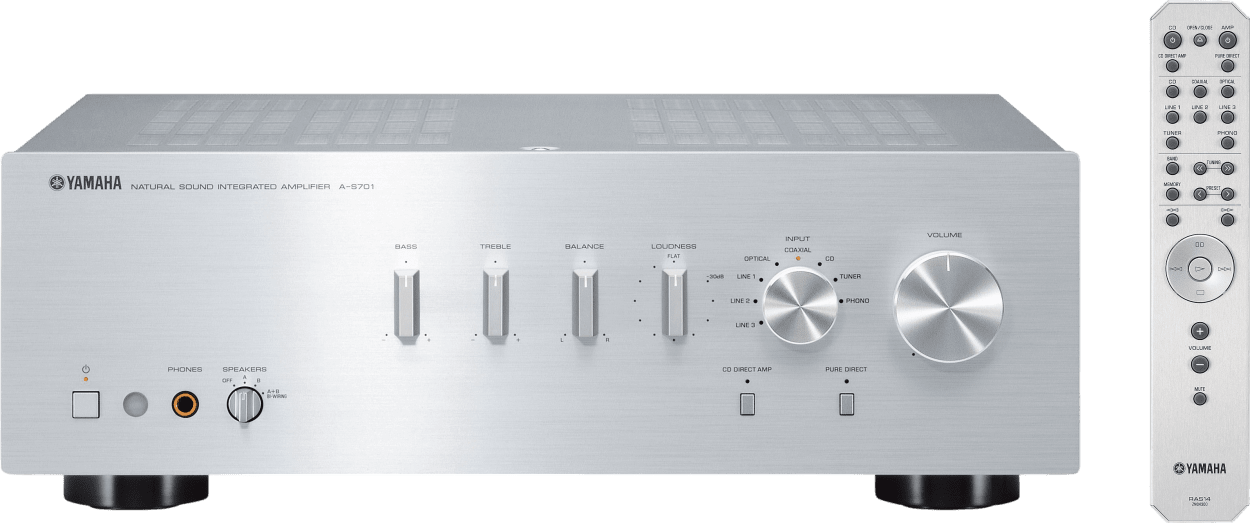
- Features Pure Direct Mode, Variable Loudness Control, and ToP-ART (Total Purity Audio Reproduction Technology) for a cleaner sound
- Sleek and minimalist design with a brushed aluminum front panel provides a professional and clean appearance
- Offers versatile connectivity options including digital coaxial, optical inputs, a phono input (MM or high-output MC cartridges), auxiliary inputs, and a subwoofer output
Product Considerations
- Lacks built-in Bluetooth or Wi-Fi connectivity, requiring an external adapter for wireless streaming
- Remote control design feels a bit dated
- Unit is quite large, so ensure there is enough space in a setup
- Tone controls may feel limiting for those who prefer extensive customization
- Minimalist display might leave some users wanting more information at a glance
Comparisons (according to reviewers)
- The Yamaha A-S701 compared to Yamaha supplies in the '70s and '80s continues the tendency of sounding great if taken care of
Takeaway: The Yamaha A-S701 is a solid amplifier that provides a sensible balance between sound quality, connectivity, and user convenience. It is a worthy contender for anyone looking to upgrade their current audio setup.
Video review
Our take on the brand

Our Summary
Product Strengths
- Impressive sound quality, especially considering its price, with a dynamic, powerful, and natural sound
- Good power delivery, with measured output exceeding manufacturer specifications, leading to enhanced control over the sound transducers
- Incorporates design principles from Yamaha's ToP-ART flagship models, featuring Class AB topology, mirror-symmetrical circuitry, and short signal paths
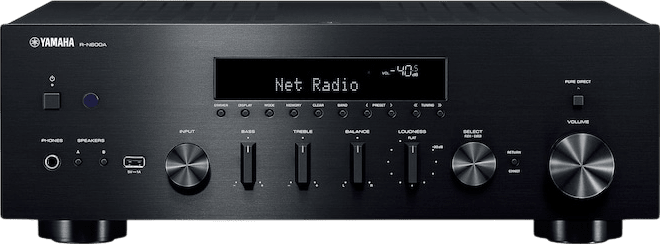
- Features a variety of connections, including phono, DAC, subwoofer output, and network streaming capabilities (MusicCast, AirPlay 2, Wi-Fi, and Bluetooth)
Product Considerations
- Current delivery may be somewhat limited, as power decreases at lower impedance
- Lacks YPAO room calibration, which is available in the higher-end R-N800A
- Does not have HDMI connectivity, which is only available on the R-N1000A
- The interface may take some getting used to
Comparisons (according to reviewers)
- The R-N600A quickly surpasses the Creek 4040A due to Yamaha's significantly oversized amplifier stage
- The Moonriver holds its ground but is four times the price of the R-N600A; the Yamaha sounds a bit brighter and more energetic, though not as detailed or refined in soundstage depth
- The R-N600A gets closer to the sound quality of the Yamaha R-N2000A than one might expect, possibly closer than Yamaha intended
- The R-N600A has a congested layout, while the R-N800A has distinct separations of input and output boards
Takeaway: The Yamaha R-N600A is an affordable all-in-one hifi package with unexpected power and a range of useful features. It is a great choice for those looking for excellent sound quality and versatile connectivity without spending a fortune.
Video review
Our take on the brand

Our Summary
Product Strengths
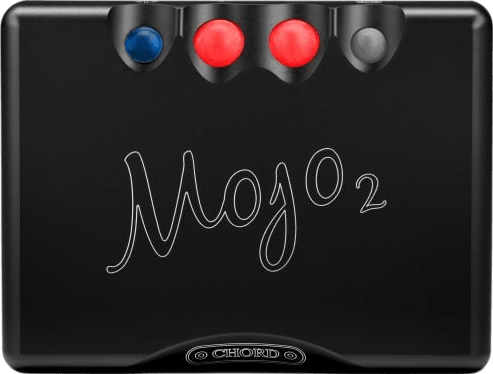
- Improved battery management offering faster charging rates and better efficiency than its predecessor
- Features a new USB-C data input for greater flexibility alongside other inputs
- Offers the world's first lossless DSP for tone adjustments without degrading sound quality, providing customization options
- Excellent resolution and dynamics with a large soundstage and extreme detail
Product Considerations
- The Mojo 2 can get warm when in a pocket for a period of time
- Complicated menu navigation with color-coded buttons that may require the manual
- Still uses Micro-USB for charging, which some find outdated
Takeaway: The Chord Mojo 2 is an exceptional DAC/headphone amplifier for those seeking high-resolution audio and customized sound in a portable format that is easy to move. Its sonic accuracy, detailed soundstage, and improved features provide a versatile and enjoyable listening experience, making it a worthwhile consideration for audio enthusiasts.
Video review
Our take on the brand

Our Summary
Product Strengths
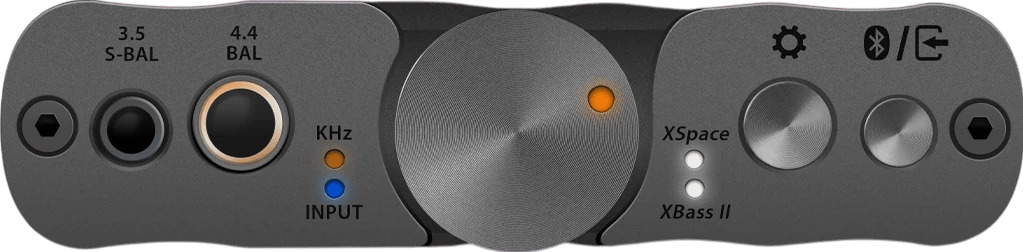
- Versatile connectivity with both wireless (Bluetooth 5.1 with various codecs) and wired options (USB, S/PDIF, analog inputs) makes it suitable for various setups—from desktop to portable usage
- Eloquent, informative, and entertaining sound quality, able to produce clear, non-artificial sound across different headphones
- Features such as XBass II and XSpace provide additional sound shaping options for the user to customize the sound to their liking
- The aluminum build provides a robust and premium feel, with a design that's described as sleek and comfortable to handle
Product Considerations
- The user interface is not very intuitive
- Decent headphones are needed to reveal its quality
- The OLED screen can be difficult to read
- Battery life is around six to eight hours
Comparisons (according to reviewers)
- Compared to the hip-dac2, the Gryphon offers better sound quality, more features, and flexibility
- Compared to the iFi GO bar, the Gryphon is bigger and has a built-in battery, and the GO bar is much smaller and draws power from the source device
- Compared to the iDSD Diablo, the Diablo has more power for very demanding headphones, Gryphon has more functions
- Compared to the Zen DAC, the xDSD Gryphon has a more sophisticated and detailed sound
Takeaway: The iFi xDSD Gryphon is a portable and versatile device delivering high-quality sound with extensive features that cater to audiophiles. Its ability to improve sound quality from various sources and its robust build make it a worthwhile investment for music lovers on the go.
Video review
Our take on the brand

Our Summary
Product Strengths
- Punchy and musical performer
- BluOS is a treat to operate
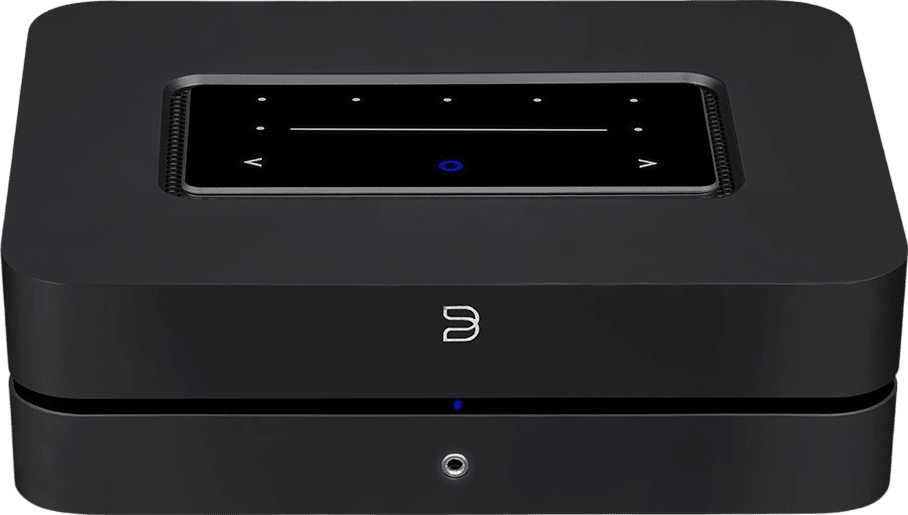
- Convenient design as a source and amplifier in one, only needing speakers to complete the system
- Engagingly musical performer—dynamically fluid and punchy, with plenty of energy
- More neutral sounding now, making gains in clarity and insight across the frequency range
- Connectivity options are through 3.5mm headphone-type connectors, shared with mini-TosLink connections
Product Considerations
- Tough competition from other streaming amplifiers
- No way to send data out to an external DAC
- The Powernode was occasionally hard on transients and dynamic bursts
- There is no included remote
Comparisons (according to reviewers)
- The Marantz has a wider-scale, roomier soundstage and greater subtlety
Takeaway: The Bluesound Powernode is a superb streaming amplifier that is better than ever, offering excellent sonic talent and a well-rounded feature set. It provides a convenient and high-quality music experience for anyone looking to simplify their home audio setup.
Video review
Our take on the brand




How to buy
Amplifiers
Search all hifi products
Explore our database of 10,000+ new and 25,000+ used hifi products.

.png)