

Welcome
Inside every device that plays your music, there's a tiny chip called a DAC that transforms digital data into actual sound. It's the crucial bridge between cold computer code and the warm waves that fill your ears.
While your phone or laptop already includes a basic DAC, upgrading to a dedicated unit can take your listening to the next level. The improvement sometimes isn't subtle—you'll hear music with greater instrument separation, decay, silence, and holographic soundstaging.
What makes premium DACs special is their high-end components and sophisticated processing that convert each note with exceptional precision. These standalone units also offer practical benefits, giving you multiple ways to connect your audio gear through USB, optical, or coaxial inputs.
For anyone who takes their music seriously and has invested in quality speakers or headphones, a dedicated DAC is worth considering. It's the missing piece that can help your audio system reach its full potential.
What to look for when choosing a DAC


So you're looking to buy a new digital-to-analog converter for your HiFi system. At ExtremeHiFi, we have the world's largest database of audio products including digital-to-analog converters, but it can still be a little bit confusing to work out what all the different design aspects actually mean and what you should be spending your money on.
So here's a quick rundown of the features and design aspects that set different DACs apart and what you should be looking for.
The key purpose of any DAC is to convert digital information—the 1s and 0s from your PC or digital source device—into an analog output waveform that you can feed into an amplifier and power your speakers.
The first thing to decide is what kind of DAC overall is going to be best suited to your tastes. R2R DACs are often regarded as sounding more warm and some would say "analog." So if that's the kind of sound that you're wanting, an R2R DAC may be an ideal choice. Conversely, a Delta Sigma DAC is typically regarded as sounding more accurate, linear, or some would say "analytical" depending on the design. And objectively (via measurements) that also holds up. The most accurate, objectively low distortion DACs you can currently get are all Delta Sigma DACs, but some people do still prefer the sound that you get out of an R2R DAC, even if the distortion might be slightly higher, and prefer the purity of that approach.
Once you've made your decision as to which of those two broad categories is likely best for you, you'll want to focus on different things to actually find the best DAC within that category. For an R2R DAC, because they don't need to do any digital processing whatsoever in many cases, you'll want to focus fully on the hardware, the quality of the actual physical implementation, and how accurate the manufacturer has been able to make that R2R ladder. R2R DACs need overbuilt power supplies and quite a bit more thorough implementations in many areas than Delta Sigma DACs do, and so check what the manufacturer's distortion specs are and look for ones that are as low as possible because that means that the manufacturer has been able to make their R2R converter as accurate as possible.
With a Delta Sigma DAC, while the hardware absolutely still matters, the quality of the power supply and the analog stage are key factors that you should be paying attention to, a huge factor that is not really present in R2R DACs is the stuff that you can't see—the digital signal processing. The best sounding Delta Sigma DACs in the world are, in my experience, many of the ones where the manufacturers have gone above and beyond to implement high performance oversampling, high performance modulators, high performance clocking integration, and all these factors that you can't necessarily see when just looking at the hardware.
And in fact it is quite important to mention just because two products use the same DAC chip in some cases, it does not mean that they are going to sound the same. You can find a $400 or $500 product which is using an ESS 9038 DAC chip, but you can find another $5,000 or $10,000 product using that same ESS 9038 chip which will sound clearly better because the DSP that they've implemented before the DAC chip, the clocking implementation that they've applied, the quality of the power supply, the analog stages, are all different or improved and this can lead to measurably and audibly better results.
But at the end of the day, once you've narrowed down your choice to a few products, read the reviews. That is the best way to find out what people are saying about a product, what people think of it, how good it is, and what other competing products you maybe should take a look at. And this has been made all the easier at ExtremeHiFi thanks to our review aggregation. You can look at any product quickly at a glance, get an understanding of what people are saying about it, what the general sentiment is, and what other products are worth taking a look at as well.
Beyond the sound itself though, there are some features and design aspects of DACs which may not directly affect the sound quality itself, but are things which you may not want to live without. You want to make sure that you actually can hook the DAC that you're considering buying up to your system. That means that you want to check whether your amplifier takes a balanced or a single-ended RCA input, as you'll want to make sure that your DAC has the matching outputs. You can connect a single-ended output of a DAC to a balanced input of an amplifier, but you cannot safely do this the other way around. Do not connect a balanced output from a DAC to a single-ended input of an amplifier because you do risk damaging the DAC itself then.
And for your inputs, you want to make sure that your source, whether it's a PC needing USB, a CD player using Toslink or SPDIF, or if you've got a high-performance streamer or DDC (maybe it's got I2S), you'll want to check that it's got the right port. And for I2S particularly, you'll want to make sure that the pinout is the same, since many different products, even if they use the same HDMI connector for I2S connectivity, they don't actually use the same pin layout.
So check the manuals for both of your products to ensure that they either match or can be adjusted to match.
You can use ExtremeHiFi's search tool to go through our entire database and filter and show only products which have all of the mix of features that you want and can't live without to find your ideal next purchase. And once you've got a list, you can check through all the reviews, see what people are saying, find how much a product costs used versus new, and find the nearest dealer to you to go and check it out.
Products on this list





.svg)
What reviewers think
Product Strengths
- Exceptional build quality with a combination of black brushed aluminum and copper-plated sides
- Produces a big and deep soundstage with great layering and instrument pinpointing
- Dynamics are very good, lively sounding, punchy when needed, and refined when refinement is needed
- Detailed and natural, with great spatial abilities, it sounds clean, well-timed, and almost free of sibilance issues
- A true NOS DAC, meaning perfect time domain, without pre or post echo's
Product Considerations
- Automatic input switching can be a 'nightmare', 'stupid design choice' and 'really annoying', it hangs on to the last input until the device is fully powered down
- Lacks manual input switching, a remote control, a screen, or oversampling filter selection, making it 'quirky' in terms of functionality
- Highs may have a bit of roll-off
- The bright LEDs on the front panel might be an issue for some
- Reading the print beside the LED indicators of input and sampling rate from a distance may be challenging
Comparisons (according to reviewers)
- The Cyan II throws out a much wider and deeper soundstage with more tangible localization of performers and has fleshed out bass and mid-range, compared to the Topping D90
- Cyan II is considerably cleaner in the bass and lower midrange with more precise stereo imaging, compared to the Denafrips Ares 12-1, but the Denafrips is weightier in the lower frequencies, has a richer tone, provides more texture to notes and a more revealing top end
- The Cyan II is a little weightier in the bass and fuller in the mid-range, whereas the Gustard R26 is a bit more detailed and precise, especially on top
- Cyan edges it out in soundstage and dynamics, and feels more natural, compared to the Chord Mojo 2
- The Denafrips Aeris 15 sounds softer and warmer, the Holo Audio Cyan 2 has a punchier but firmer bassline, and the Aeris 15 has more high frequency extension
- Cyan 2 will present it more behind your speakers, and some things will appear to be more focused and denser and deeper behind the speakers, whereas Harmony Live Deck will push them a bit forward, as the Harmony Live Deck is a tonally more forward sounding deck
Takeaway: The Cyan is a well-built DAC that produces great sound quality. With excellent soundstaging, good dynamics, and a natural sound, the lack of features is easily forgiven.
Video review
About the brand


What reviewers think
Product Strengths
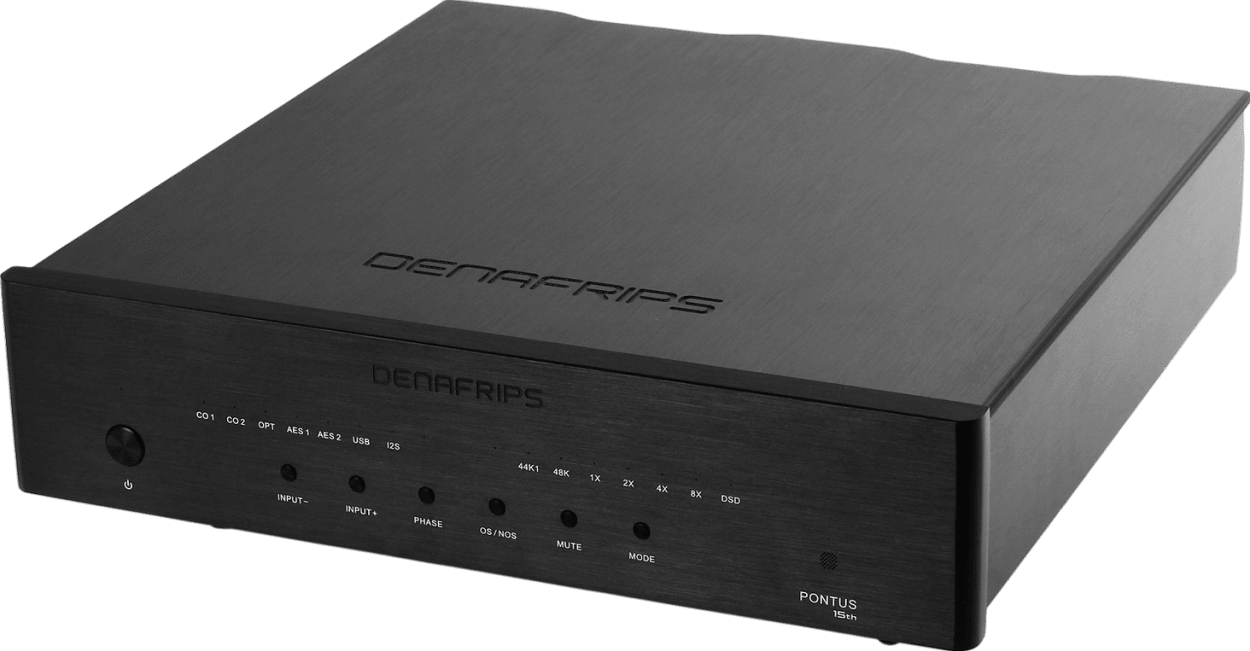
- Flawless build quality and built like a tank with an all-metal body and tactile buttons
- Delivers a linear presentation and keeps the soul of the music intact, sounds inviting, smooth, and transparent
- Provides an open, deep, and wide soundstage
- Excels in micro detail and nuanced sound and airiness with excellent clear vocals
- Is an upgrade from the original Pontus and provides better layering
- Offers great connectivity with all the digital inputs needed, including I2S
Product Considerations
- Denafrips makes incremental changes, which can be annoying if a newer version is released soon after purchase
- Does not include a remote, and one must be purchased separately
- May be a little bright for a lean or bright sound system, it is best in a neutral to warm system
- There is no middleman/distributor anymore, which may mean loss of personal touch from customer to the company—especially with warranty issues
Takeaway: The Pontus 15th Anniversary Edition is a well-built DAC that delivers a refined and detailed sound with a wide soundstage, making it a great choice if you have a warm or neutral system that needs some sparkle. It has excellent connectivity options.
Video review
About the brand
What reviewers think
Video review
About the brand

What reviewers think
Product Strengths
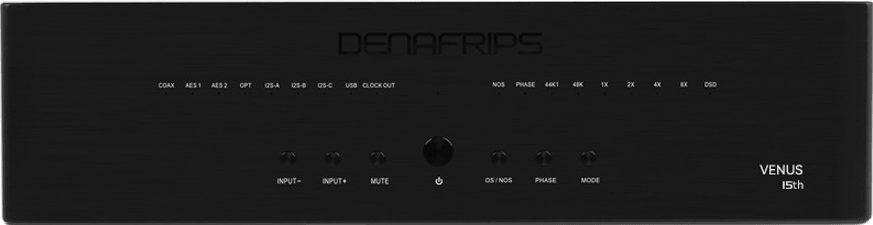
- Drop-dead gorgeous design aesthetic
- Music comes alive, offering a real taste of what reference-quality digital audio can sound like
- Reproduces layers of detail and offers a warm tonal balance, low noise floor, and superb top-to-bottom coherency
- Soundstage is recreated with excellent depth and width, and the imaging is spot on, with musicians and instruments locked firmly in place
- Connected to the Unison Research Triode 25 Integrated Amplifier and Linear Tube Audio MZ3, it was one of the best sounding DAC/amplifier combinations heard in many years, undeniably captivating
Product Considerations
- The display seems half-baked with non-functional bands restricting the functional real estate
- The remote makes a rattling noise, which some may find disconcerting initially, but is by design
- Outputs are extremely hot
- May be overhyped, the sound quality not quite matching up to the hype, or more importantly, matching up to the price tag
Comparisons (according to reviewers)
- Vs SMSL VMV-D1SE: The Spring 3 has better refinement and more of that airy quality on top
- Vs Denafrips Pontus 2: The Spring 3 was a little cleaner in the mid-range, with better bass definition and control, but the Denafrips had a warmer—more full-bodied—presentation and deeper soundstage
Takeaway: The Spring 3 KTE is a beautiful DAC that can bring listeners closer to their music. It may be worth buying to experience high-quality digital audio.
Video review
About the brand
What reviewers think
Product Strengths
- Analog-like sound, minimizing digital harshness and glare
- Exceptional bass performance, providing impactful and controlled low frequencies
- Holographic image of the musical performance, with great separation between instruments and vocals
- Smooth, rich, and textured sound
- PLL may cause delays when locking onto signals from sources via some inputs other than USB, though PLL can be disabled, or USB input can be used
Product Considerations
- Can be perceived as neutral, and may not provide as immediate 'wow' factor as some DACs
- Warm-up period needed from cold start to achieve full sound quality
Comparisons (according to reviewers)
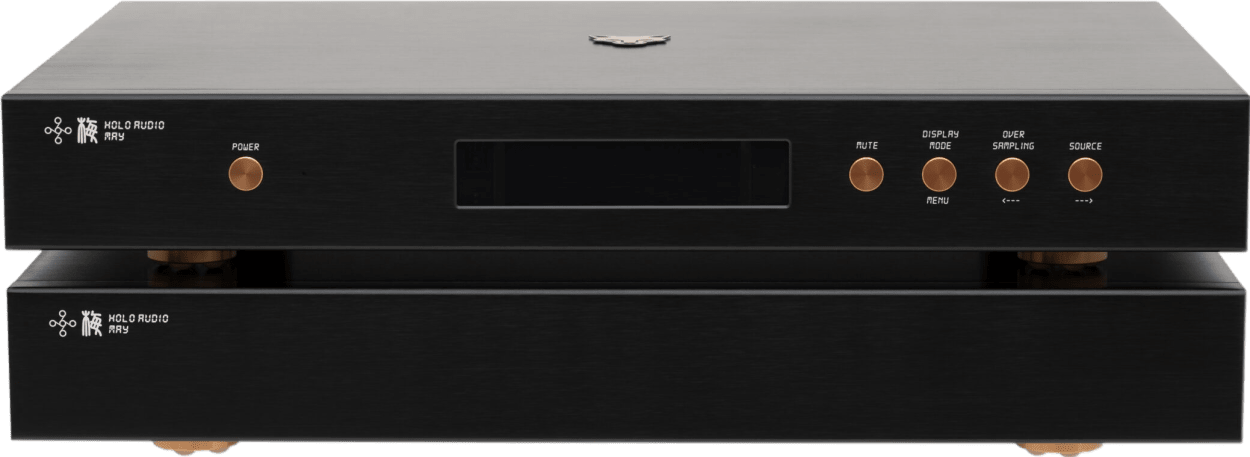
- Compared to Weiss DACs (e.g., 501), the May is richer, more spatial, and has fuller bass/mids—sounding more analog
- Compared to Denafrips Pontus 15th, the May is wider, deeper, and smoother with more bass impact, and the Pontus is cleaner, crisper, and detailed
- Compared to aqua acoustic quality La Voce S3 DAC, the May has a blacker background, more musically relevant detail, and refined tonal nuance
Takeaway: The HoloAudio May is a high-performing DAC that brings an analog-like warmth and richness to digital music, and its spacious and detailed sound makes listening more enjoyable. It is a great option for listeners seeking a refined sound with strong bass and natural presentation.
Video review
About the brand

What reviewers think
Product Strengths
- Acoustically transparent and neutral, without inducing coloration or deviations from linearity
- World-class detail retrieval and lightning-fast transient response
- Open wide soundstage with precise layering and positioning of notes
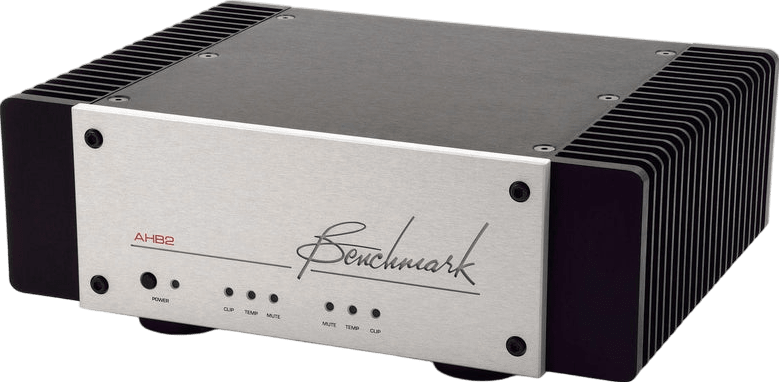
- Bullet-proof protection systems will save your speakers and the amp itself from any harm
- Runs very cool even under heavy loads
- Only accepts balanced XLR inputs
- The rear panel is somewhat crowded in terms of layout
Product Considerations
- Cannot beautify your music or roll-off the upper treble
Comparisons (according to reviewers)
- Vs Cambridge Audio Edge W: Provides a smidge more air, sounded ever-so-slightly more detailed, and provides more coherence
- Vs Bryston 4B Cubed: The differences between the Bryston and the other amps seemed so significant that reviewers ran through level matching a few more times to ensure there was no mistake
Takeaway: The AHB2 is an honest and transparent amplifier that delivers clean and highly detailed sound, allowing listeners to experience music with precision and accuracy. Neutrality and detail retrieval make the AHB2 an excellent choice.
Video review
About the brand


What reviewers think
Product Strengths
- Technically and audibly impressive
- Very revealing and provides a lot of detail
- A filter with a 'tube/valve' option makes the sound relaxed and forgiving
- Automatic switch-on feature when it detects a signal
Product Considerations
- Some people find the D90 to be a bit too harsh in the top end, or brighter than other DACs
- The D90 pre doesn't have an AC trigger in and out 12 volt like some other models
- The remote control could be improved for seamless integration with the preamplifier
Comparisons (according to reviewers)
- Compared to the SMSL D400EX, the SMSL D400EX sounds a little bit more musical, slightly warmer in the midrange, whereas the D90 is incredibly revealing
- Sometimes the Sugden is preferred, but the D90 is superior for detail and precision
- Compared to the Topping D10, the D90 offers more pronounced detail and a fuller echo
Takeaway: The D90 is a highly detailed and precise DAC that reveals nuances in audio, making it an excellent choice for audiophiles who want to experience their music with maximum clarity. The valve sound option is also great for relaxed listening.
Video review
About the brand

What reviewers think
Product Strengths
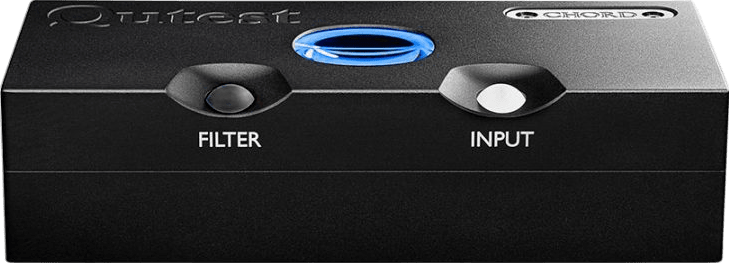
- Delivers a different sound, often bigger and meatier with more detail, compared to cheaper DACs
- Detail retrieval is a consistent strength, digging out details missed by other DACs
- Offers clear, precise, and subtle performance, and improves clarity, precision, and subtlety
- Provides excellent timing and rhythmic dexterity
- FPGA technology and custom programming allows it to deliver a sound that is both neutral and incisive
- Compared to previous designs, it has additional isolation from external vibration, which further improves sound quality
Product Considerations
- The default switching power supply is inadequate and limits performance, with reviewers recommending an upgrade to a linear power supply
- Lacks features such as Bluetooth connectivity, a headphone amplifier, and a remote handset
- The sound can be 'sterile' and without emotions, which might not fit some user's preferences for a warmer, more 'analog-like' sound
- The small size and lack of a display–relying on color-changing buttons and a window–might not appeal to all users
- Tonality can feel leaner compared to some DACs, and some found that it sounded a bit thin and etched in the midrange and below when new
- Industrial design can be polarizing, and some find the looks ridiculous
Comparisons (according to reviewers)
- Vs PS Audio DirectStream, differences are more of a sideways move, with the Qutest preferred in some aspects, though the PS Audio was preferred for its larger soundstage
- Vs Chord 2Qute, Qutest offers more resolution, and a slightly bigger and more spacious presentation
- Vs Mytek Brooklyn, sound is very similar, though the Brooklyn's low frequencies may be a little leaner
- Vs iFi Audio Pro iDSD, Qutest has better low-frequency definition, but the iFi offers a palpable midrange and warmer lows
- Vs Denafrips Ares II, Qutest sounds tidier, more controlled and defined
Takeaway: The Qutest is a small but mighty DAC that delivers great detail, clarity, and a precise sound, and its custom design results in high-quality audio, offering musical enjoyment that is never harsh or flat. With its enhanced resolution and a touch of warmth, it can elevate the listening experience.
Video review
About the brand

What reviewers think
Video review
About the brand
What reviewers think
Product Strengths
- Detailed and natural sound without harshness or fatigue
- Seamless streaming section with high-quality integration
- Refined, smooth presentation while ensuring musicality
- Great noise performance, being absolutely quiet
- Good sound quality and refinement, with detailed sound and incredible soundscape
Product Considerations
- The included remote control is plasticky and low quality
- May have compatibility issues with older components using USB 2.0
- Preamp section may not deliver the best performance when running directly into a power amplifier, a good preamplifier is recommended
Comparisons (according to reviewers)
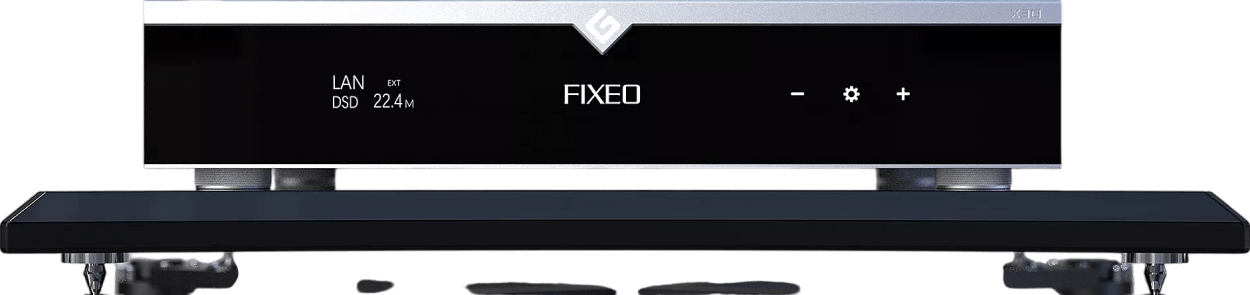
- Vs Gustard X26 Pro: More resolution, more sophisticated, better heat dissipation, and improves on every aspect
- Vs LAiV Harmony DAC: Greater resolution, dynamics, and improved transients, whereas the Harmony offers better tonality
- Vs Gustard R26: Delivers a smoother, more refined sound and outshines the R26 in streaming capabilities
- Vs Denafrips Terminator: Edged out the Terminator in detail and PRaT (Pace, Rhythm, and Timing)
- Vs Gustard A26: Surpasses the A26 with its exceptional detail and fluidity
- Vs Chord DAVE: Exactly as resolving as the Chord DAVE and exactly as fast and impactful sounding
Takeaway: The DAC-X30 offers performance and value, making it an option for those seeking high-end sound quality. The superb detail retrieval, refined sound, and streaming capabilities are a joy to experience.
Video review
About the brand

What reviewers think
Product Strengths
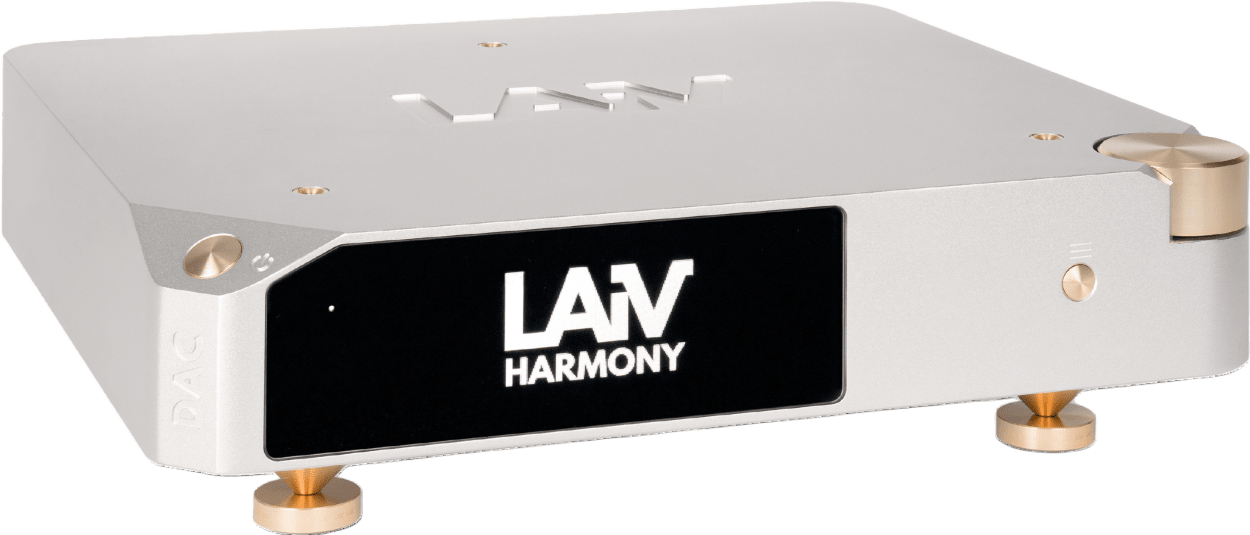
- Exemplary build quality, with a chassis milled from a single block of aluminum and high-quality components.
- Delivers a large soundstage with very good imaging and detail.
- Produces a harmonically rich presentation that R2R enthusiasts seek.
- The unboxing experience is premium, with a metal certificate of authenticity and a remote control made from solid metal.
Product Considerations
- The high output impedance (1200 ohms on XLR) might cause issues when pairing with amplifiers that have unusually low input impedance.
- Optical and coaxial inputs might not deliver the same performance as USB and I2S inputs.
- It is DAC-only unit, so it does not have preamp functionality or volume control.
- Spiked feet could scratch surfaces.
Comparisons (according to reviewers)
- Vs Denafrips Ares II: The Harmony DAC has more instrument separation and a little bit more detail through USB or I2S.
- Vs Gustard R26: The Harmony DAC is fuller in the bass and lower mid-range with a warmer presentation and wider soundstage through USB or I2S.
- Vs Denafrips Venus II: The Venus sounds bigger with more tangibility to where performers reside and more space between them.
- Vs Denafrips Pontus II: The Harmony DAC shares similarities but is slightly more resolving and realistic.
- Vs SMSL Raw Pro: The Harmony DAC is more enjoyable to listen to overall, although the Raw Pro is more detailed.
- Vs HIFIMAN EF400 and EF500: The Harmony DAC is an upgrade in detail retrieval, staging, and treble quality.
Takeaway: The Harmony DAC stands out with its build, engaging sound, and focus on providing a high-quality digital-to-analog conversion. Its ability to create a large soundstage and deliver rich detail makes it a solid option for audiophiles looking for an immersive listening experience.
Video review
About the brand