




Note that this is a discontinued product. You may want to visit the brand's page here to browse their newer products.
What reviewers think
Bloggers and YouTubers have tried this product—so we've summarized their strongest opinions below. Links to full reviews follow.
Product Strengths
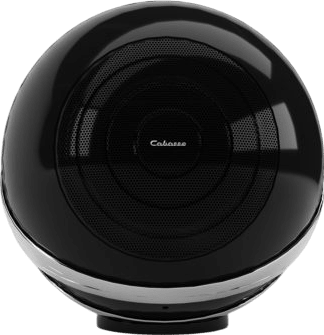
- Coaxial speaker design provides coherent sound with a broad dispersion angle
- Features a large bass driver for generous infrabass and authoritative sound
- Includes an RF remote control
Product Considerations
- The mobile app is not as user-friendly as those developed by market leaders
- Lacks depth in the soundstage when using only one speaker
- High frequencies are silky and slightly withdrawn
Comparisons (according to reviewers)
- Vs Devialet Gold Phantom, The Pearl has better high-frequency reproduction thanks to its soft dome tweeter, and more responsive lows
- Vs Devialet Classic Phantom, The Pearl ensures a better restitution of the lows
- Vs Sonos Play:5, The Pearl has better low-frequency performance by itself, without needing a separate subwoofer
- Vs KEF LS 50 Wireless, the LS 50 Wireless is a more affordable stereo option, but The Pearl can get louder
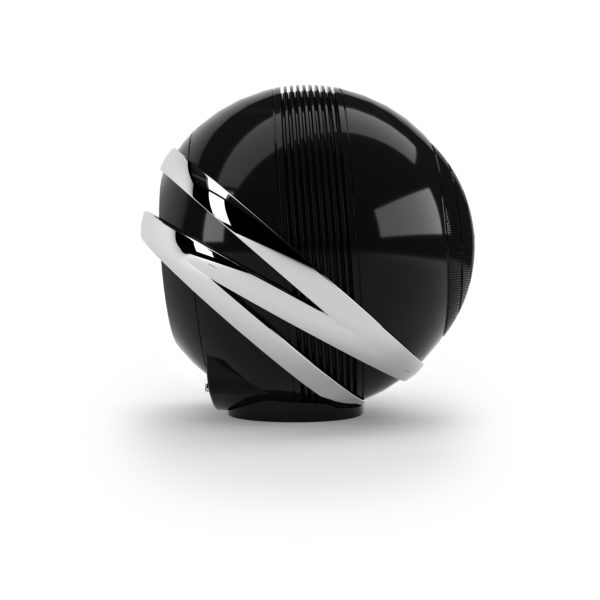
Takeaway: Cabasse's The Pearl has a solid sound and an eye-catching design. With its substantial lows, this speaker could be great for filling a room with sound.
All
The Pearl (Speakers)
reviews


Manufacturer details
- Maximum Sound Level: 118 dB mono 124 dB in stereo
- Bandwidth: 14 – 27 000 Hz
- Drivers: Medium-tweeter 13 cm (5") coaxial BCI, Woofer 25 cm (13") 25HELD
- Amplification: Tweeter 300W RMS/600W peak, Medium 300W RMS/600W peak, Bass 1000W RMS/2000W peak
- THD+N: 0.005% (1W, 4Ohm)
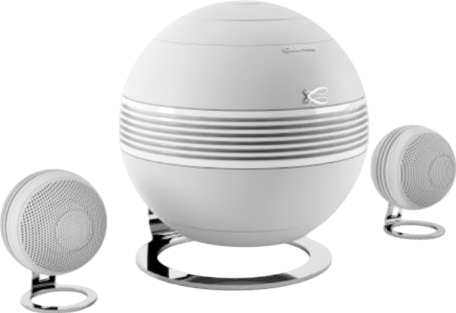
- Dimensions: 326 x 327 x 323 mm (12.6" x 12.6" x 12.6")
- Weight: 18 kg (40 lbs)
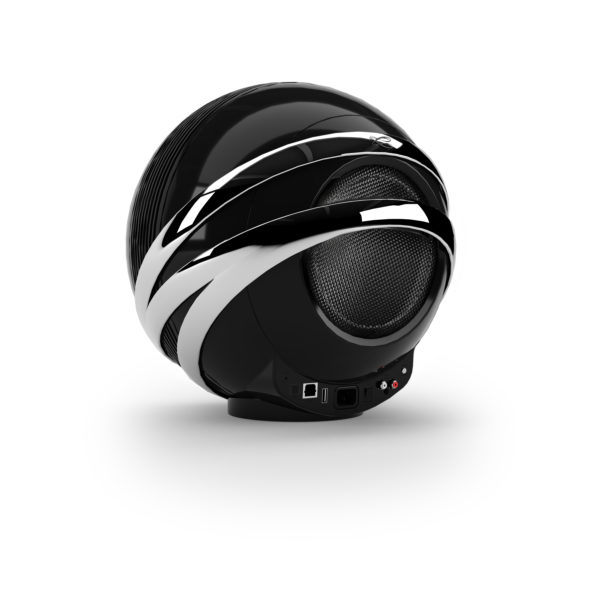
- Connectivity: Ethernet/WiFi, Bluetooth, SPDIF Optical, RCA Analog, USB








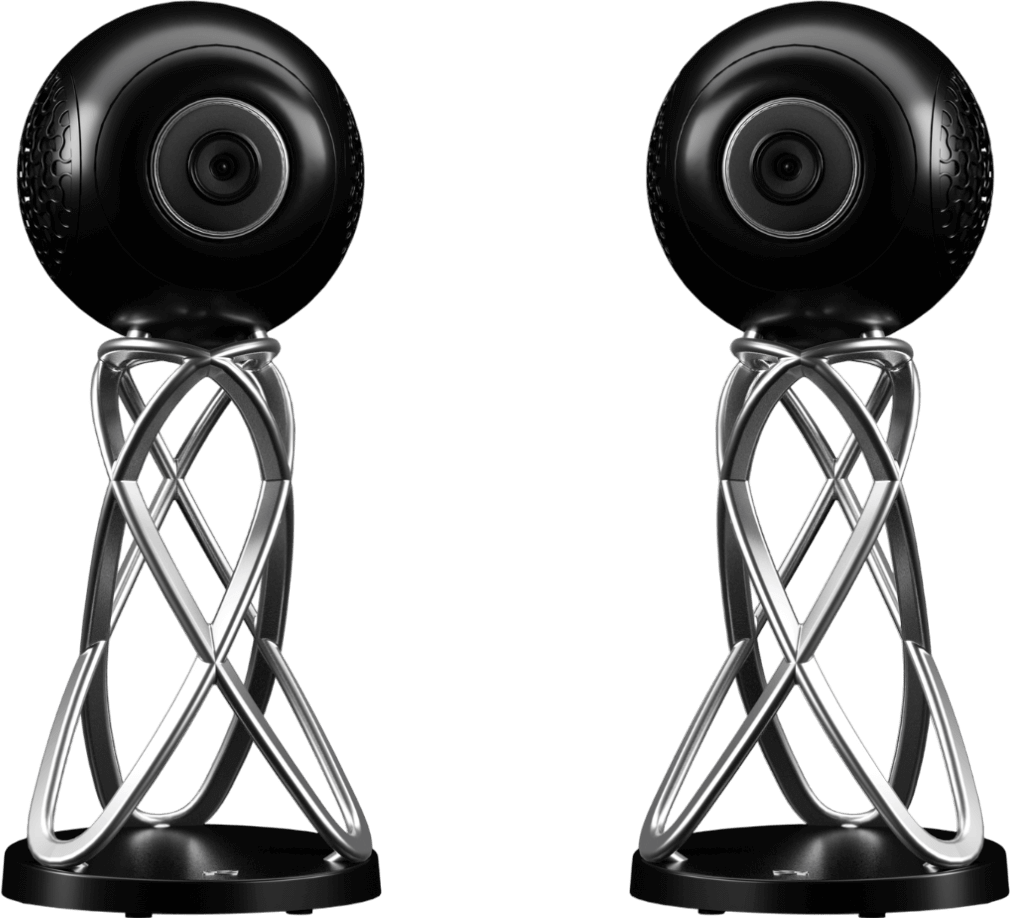

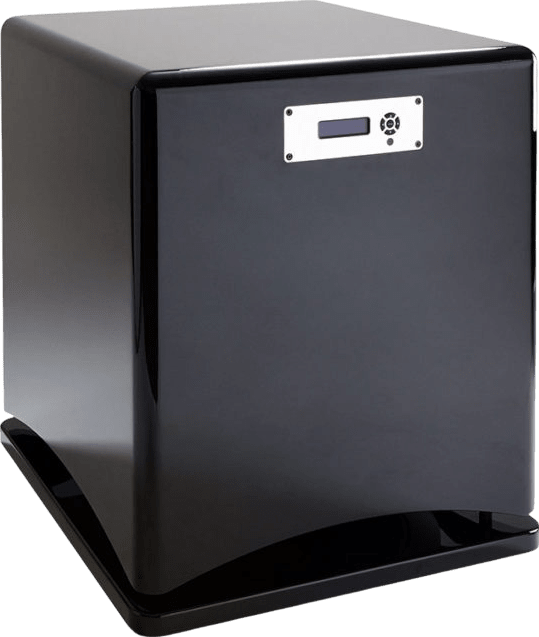

Brand highlights
Taking a step back to look at reviewers' thoughts of the brand's entire lineup—not just this product—what stands out most is the following:
- Coaxial driver design is a core element, used even in their more affordable models, enhancing spatial coherence and minimizing diffraction, a design choice they heavily promote for its acoustic benefits.
- Cabasse often incorporates DSP technology for room correction (ARCS) and sound signature adjustments (DEAP), enabling their speakers to adapt to different listening environments.
- While known for hifi audio, they also offer integrated streaming options, exemplified by their StreamControl app, compatible with various music services and DLNA playback.
- Their signature design is spherical enclosures, minimizing cabinet-induced diffraction and enabling wide sound dispersion, and they are found throughout their product lines, from the entry level to reference models.
Select products
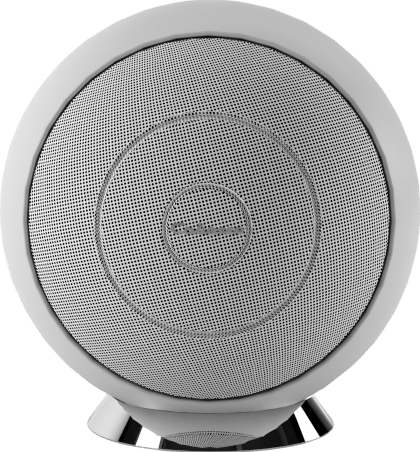
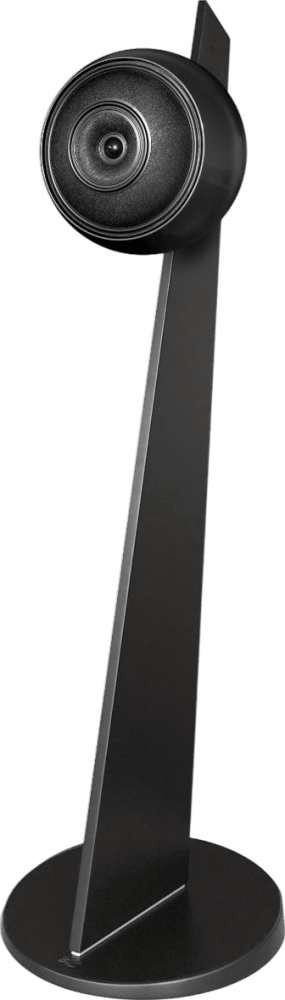
Jersey MC170
- Positioning: The entry-level floorstanding speaker in the Cabasse lineup.
- Description: Offers a rich and dynamic sound with its coaxial midrange-tweeter, providing a wide and stable soundstage. Compared to the Java MC40, it is more affordable and suitable for those seeking a balanced sound in medium-sized rooms.
Java MC40
- Positioning: A mid-range floorstanding speaker offering high-fidelity sound at a competitive price.
- Description: Stands out with its SCS technology and BC10 coaxial unit, delivering precise and realistic sound. It provides a more immersive experience than the Jersey MC170.
Bora
- Positioning: A high-performance bookshelf speaker designed for audiophiles seeking compact yet powerful sound.
- Description: Features a BC13 coaxial midrange-tweeter and a 21 cm Duocell woofer, offering analytical precision and dynamic capability. It surpasses the Antigua MC170 in sound depth.
Murano Alto
- Positioning: A high-end floorstanding speaker, representing the pinnacle of Cabasse's lineup.
- Description: Excels with its 3-way triaxial TC23 and BC13 drivers, delivering exceptional soundstage and tonal balance.

Our take on the brand
Look inside the brand
Our interview with the brand
What are two key technological innovations or strong opinions that differ you from other brands?
I think there are four pillars, but they’re all intertwined. The first is the 75 years of acoustics and R&D. We were one of the first companies to create the coaxial driver itself. Today, a lot of companies use coaxial or geo concentric designs, but we were one of the first in 1958 to develop it. You’ll find this in 90% of our lineup. The second is the connectivity aspect. More than 10 years ago, we were acquired by a company whose specialty was connectivity (UPNP, DLNA, and other connectivity protocols). The CEO saw Cabasse as an amazing brand, and he recognized that the audio market was shifting; similar to how Sonos pioneered multi-room wireless audio in the mid-market in the early 2000s. The same shift started happening in the high-end hi-fi industry, but very few companies had the expertise. So he purchased Cabasse, and now we have acoustics, coaxial driver design, high-excursion woofer technology, and robust connectivity; plus DSP and active filtering. These are things we’ve been doing for a while. And I’d also say the design makes us stand out.
What's your approach to customer support?
Now that we’re basically our own distributor in the U.S., we work directly with dealers. We offer warranties on drivers; ranging from 3 to 5 years, or lifetime depending on the product. We just launched a new product in Munich, and it comes with a lifetime driver warranty. If a customer buys a product and a driver fails, the dealer comes to us and says, “Hey, can you help my client?” Then we either get in touch with the customer directly, if the dealer agrees, or the dealer takes care of it. Not every dealer has the ability to repair, especially since many of our products are heavily electronics-based. In some cases, we’ll just replace the entire unit. We also have a policy where, within a certain period, if the electronics fail, we’ll replace the unit for free. Generally, it’s 3 to 5 years for drivers, and 2 years for electronics.
What are your favorite tracks for showcasing the strength of your products?
We actually have a playlist on Qobuz with all of our demo tracks. Off the top of my head, for precision and showcasing microdetails, I really like the track called “Soft Landing” by Hadouk Trio. It’s a very clean and amazingly recorded track. I also like “Magnetic Lies” by Malia to show the low end and precision. and fact that our woofer technology provides a lot of dispersion without distortion. The coil never leaves the magnetic field, so you get a lot of excursion. Plus, our DSP helps a lot. We want people to experience that at a given price and speaker size; they have a lot to play with.
What other products pair best with yours?

Used
Cabasse









What if you spend more?
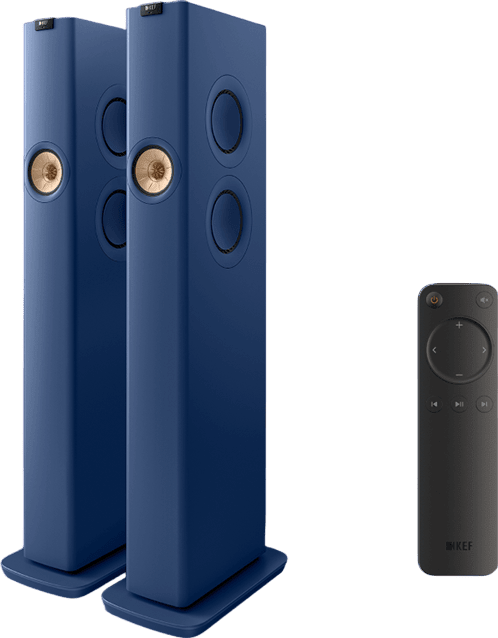


Bring the track spirit into your home with LS60 Wireless Lotus Edition, created in partnership with and inspired by the British Racing Green of the iconic brand.

.svg)
Product Strengths
- Striking, sleek, and modern design that complements modern interiors
- Incorporates KEF's Uni-Q driver array and Metamaterial Absorption Technology (MAT) for neutral, open, detailed sound, reducing unwanted sound from the rear of the tweeter
- Includes Uni-Core force-canceling woofers that reduce cabinet vibrations, contributing to balanced and detailed bass
- The KEF Connect app allows for adjustments to fit the listening environment
- Offers high connectivity and is a true stand-alone system
Product Considerations
- Bass can be a bit too much out of the box, requiring adjustments via the app or placement considerations
- Not well-suited for those who have many signal sources to connect to
- Some reviewers found the bass lacked definition in the upper bass, with unclear instrument placement, even after adjusting EQ settings
- The included remote control is considered basic or cheap
- Mandatory online registration and administrator-level internet connection requirements for the app may be a drawback for privacy-conscious users
Comparisons (according to reviewers)
- Compared to the Bang & Olufsen Beolab 28, the LS60 Wireless can achieve similar sound quality with adjustments, at a lower price point, although the Beolab 28 sounds 'more right' straight out of the factory
- Compared to the KEF LS50 Wireless II, the LS60 Wireless is preferred stylistically, achieves near full-range playback, and has a more slim design, although it costs more and also provides much deeper bass
- Compared to the Q Acoustics Active 400 Towers, the LS60 Wireless has no issues with products not working
Takeaway: The KEF LS60 Wireless are stylish, all-in-one speakers that deliver a balanced, detailed sound with advanced technology. They are a convenient, high-performing solution for those seeking a streamlined audio setup.
Video review
Our take on the brand
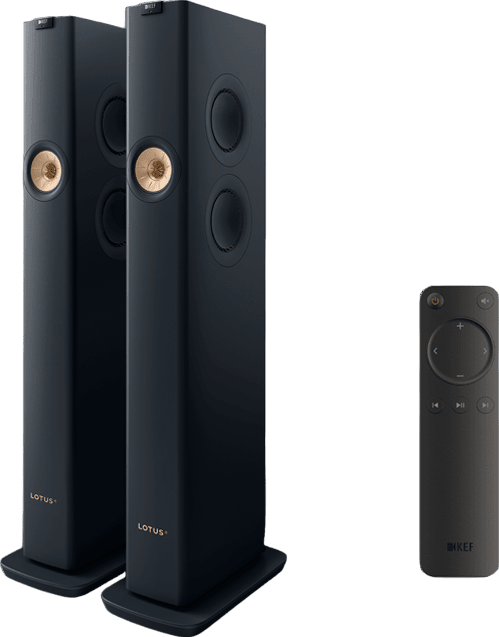
Product Strengths
- Excellent sound quality, with reviews noting neutral and balanced sound, meticulous detail retrieval, and delicate micro-dynamics
- Good imaging and soundstage, with the ability to create a wide and immersive soundstage with precise imaging
- Sleek design, with their elegance and ability to complement modern interiors
- Powerful and well-controlled bass, thanks to the Uni-Core driver technology
- Wide array of connectivity options, including HDMI eARC, optical, coaxial, RCA, Ethernet, Wi-Fi, AirPlay 2, Google Chromecast, Spotify Connect, Tidal Connect, Amazon Music, Deezer, and Qobuz
Product Considerations
- Relatively expensive compared to other active speaker systems
- Some reviewers noted occasional signal dropouts between the primary and secondary speakers when connected wirelessly
- The KEF Connect app is essential for full functionality and optimal setup, which may not appeal to users who prefer physical controls
- Bass output can be sensitive to room placement and may require adjustments to avoid boominess
- Connecting multiple external devices can result in significant cable clutter, despite being marketed as wireless
Comparisons (according to reviewers)
- Vs Bang & Olufsen Beolab 28: The LS60 offers comparable performance at roughly half the price, though the Beolab 28 is noted as sounding better out-of-the-box without EQ
- Vs KEF LS50 Wireless II: The LS60 offers improved performance and near full-range playback, but at a higher price, the LS50 Wireless II offers similar clarity with a slightly warmer sound
- Vs Klipsch Forte 4: The LS60 is more suited for home theater use and surface more detail
- Vs Q Acoustics Q Active 400 Towers, Dali Oberon 7C Wireless, and Bowers & Wilkins Formation Duos: The LS60 is considered a better, more refined and adjustable package
- Vs Hegel H190 & KEF LS50 Meta with KEF KC-62 Subwoofer: The LS60 communicates the forward force of music better and has features such as Tidal Connect and room EQ
- Vs Lindemann TD-AI1120, KEF LS50 Meta & KEF KC-62 Subwoofer: The LS60 cannot be matched in scale and effortless dynamics
Takeaway: The KEF LS60 Wireless is a fantastic, all-in-one speaker system that sounds great and looks stylish. They are easy to set up and use, and will fill a room with music for years to come.
Video review
Our take on the brand
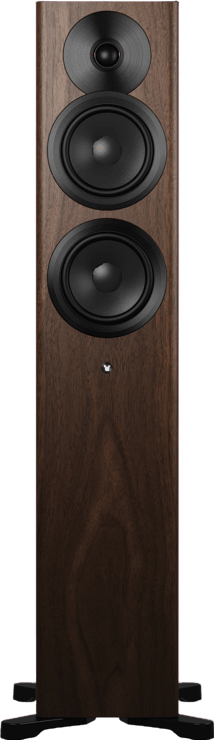

Our summary
Product Strengths
- Transparent presentation, effortless dynamics, pinpoint imaging, and bass extension
- Sounds more neutral, more open and slightly better focused, especially in the lower octaves
- Detail is defined, and the dynamic performance is highly nuanced and sensitive
- Dirac Live compatibility allows for highly customizable and smooth sound
- Plays with an authority normally associated with speakers twice their size
Product Considerations
- The status LED on the front does not replace a display
- Setup is not exactly intuitive
- Without Dirac Live, the bass can sometimes be too strong for music listening
- A dedicated midrange unit would give both strings and woodwinds more depth and body
- Dirac adjustment slightly reduces volume levels, as some frequencies are attenuated
Comparisons (according to reviewers)
- Vs KEF LS60 Wireless: The bass response is tighter and better defined
- Vs KEF LS60 Wireless: The soundstage is more open and transparent
- Vs KEF LS60 Wireless: The stereo perspective is more sharply defined, and the soundstage is larger
- Vs ELAC Navis ARF-51 & NAD C 658: A deeper soundstage is created, with better front-to-back layering and image specificity
- Vs ELAC Navis ARF-51 & NAD C 658: During intense passages, the presentation was more transparent
- Vs KEF LS60 Wireless: Piano sounds better because nuances are more clearly defined and the treble reproduction is airier
Takeaway: The Dynaudio Focus 30 is a great system because it sounds very detailed with pinpoint imaging. The Focus 30 is perfectly suited as a wireless speaker for those seeking excellent sound in their home.
Video review
Our take on the brand

Our summary
Product Strengths
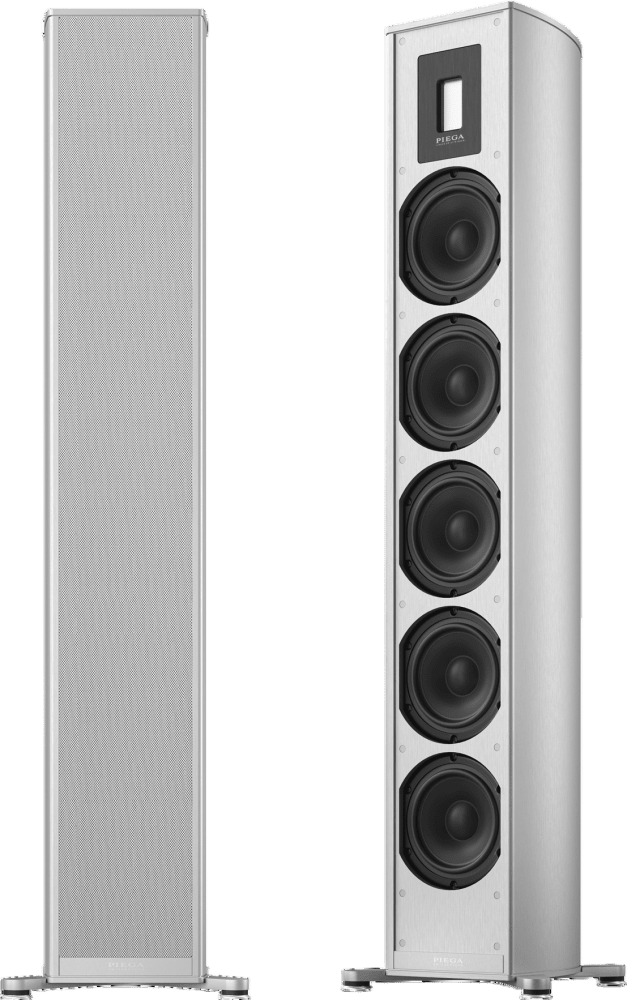
- The aluminum cabinet is cast in one piece, which offers acoustic advantages and looks chic
- The extruded aluminum yields a seamless, curved cabinet, which minimizes standing waves, reduces diffraction, and distributes and controls reflections
- Highs are provided by a ribbon tweeter designed by PIEGA, and made by hand at the company's factory
- It creates an incredibly wide soundstage, always balanced and rich
- They are big enough to make big sound, but small enough to be suitable for a small apartment
Product Considerations
- The fit and finish of the small, square, lightweight Connect is basic—in sharp contrast with the stylish, substantial 701 loudspeakers
- DSP automatically adjusts each speaker's frequency balance according to volume, at a low setting, bass and treble are subtly boosted while, with something closer to party levels, the bass is gently reined in to prevent driver overload
- The Android version won't 'read the room' and only lets one turn the room correction on and off
Comparisons (according to reviewers)
- Vs KEF R3 Meta: it gives a cleaner sounding mid-range and better top-end extension
- Vs Buchardt A700: pairing the speakers to its black box comes with fewer connection hassles
- Vs KEF LS60 wireless: it draws a wider soundstage, better image in the mids, and offers a more extended top end
Takeaway: The PIEGA Premium recMsY5ljWopDD7UU is a stylish speaker that offers a wide soundstage and a rich listening experience. Its modern design and high-quality build make it a great addition to any contemporary living space.
Video review
Our take on the brand
What competes at this price?
Our Summary
Product Strengths
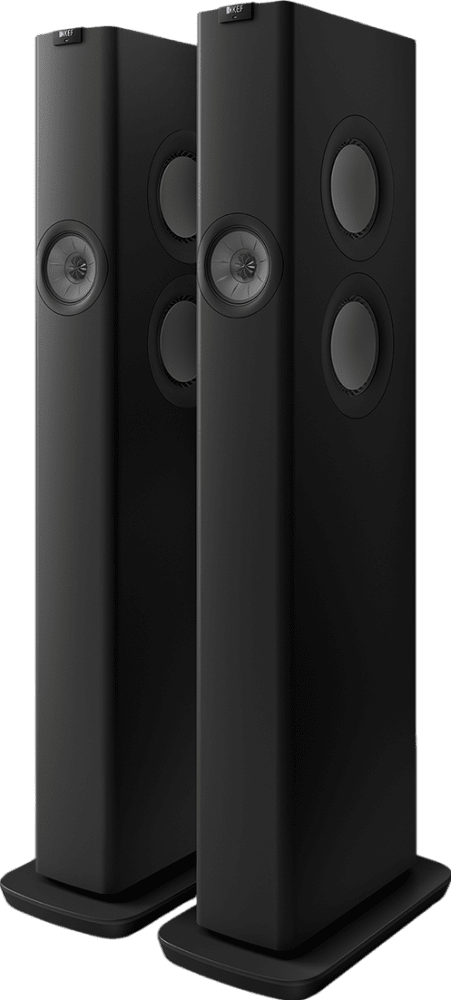
- Phenomenal performance combines with great aesthetics and ease of use
- The Uni-Q driver provides a great, all-encompassing sense of sound and captures every element of the track
- Offers a wealth of customization via the KEF Connect app, including EQ settings, wall mode, and bass extension
- Every driver is paired with a custom amplifier, eliminating the need to choose separate components
- Integrates multiple streaming options including Spotify Connect, AirPlay 2, Bluetooth, and Chromecast
Product Considerations
- Bluetooth 4.2 may be seen as outdated
- The included remote control is basic
- Bass can be too much straight out of the box and may require adjustment
- Some may not like the decision being taken away of choosing a specific amplifier or DAC
- Output may be limited for very large rooms
Comparisons (according to reviewers)
- LS60 uses a lot of similar technology found in the KEF Blades
- LS60 can play much louder and deeper, and are more dynamic and even more open than KEF LS50 Wireless II
- LS60 goes deeper in the bass than Bowers & Wilkins Formation Duo
- LS60 has more outstanding range and bass dynamics than DALI Rubicon 6 C and PIEGA Premium Wireless 701
Takeaway: The KEF LS60 Wireless is a convenient and great-sounding speaker system with a slim design and comprehensive features that's easy to set up and customize for various listening preferences. It's a good choice if you want a simple, high-quality audio solution without needing separate components.
Video review
Our take on the brand


Our Summary
Product Strengths
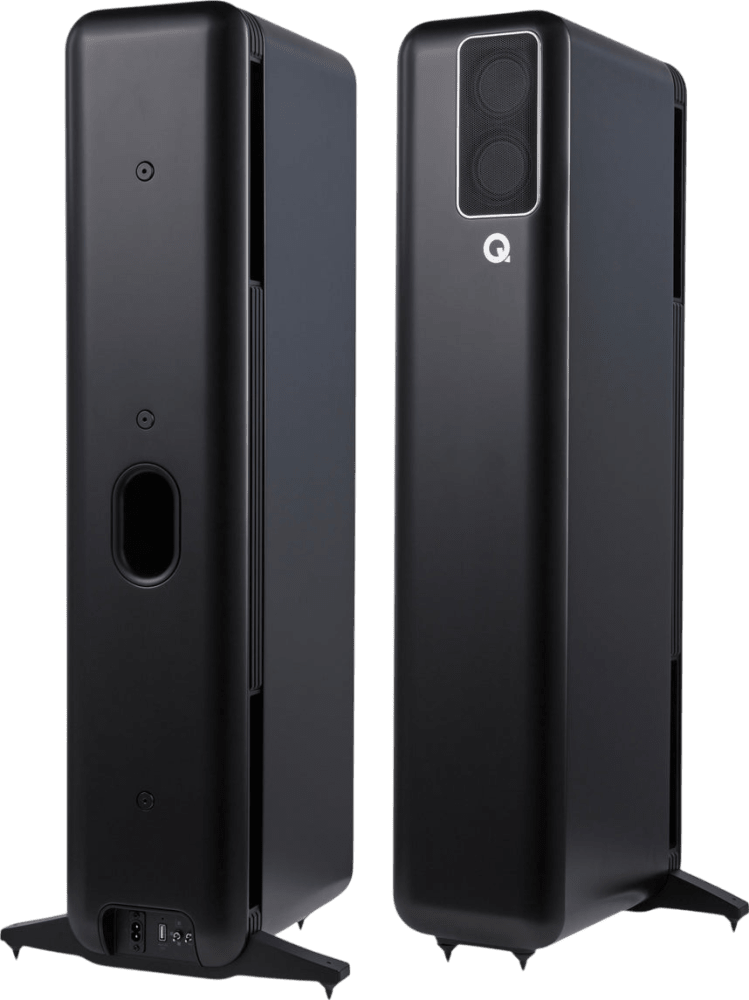
- Expansive sound delivery thanks to BMR drivers, creating a room-filling sound
- Energetic performance and fun sound
- Solid bass response
- Extremely well made and employing a new form of 'Dart' bracing to add stiffness to the cabinet and mechanical stability to the drivers
Product Considerations
- Soundstage loses some focus, not ideal for a specific listening position
- Design is an acquired taste
Comparisons (according to reviewers)
- The Q Active 400 delivers a bigger soundstage and deeper bass than the Q Acoustics Q Active 200
Takeaway: The Q Acoustics Q Active 400 is an impressive wireless system that sounds great and is easy to use, providing a cohesive performance with a wide delivery and powerful bass. It's a flexible system that can integrate into many different home setups to provide an all-in-one solution.
Video review
Our take on the brand


Our Summary
Product Strengths
- Slim, aesthetically pleasing design from Stephan Hurlemann, made with aluminum
- Rigid aluminum enclosure helps resist resonance and ensures frequency linearity
- Smooth, sweet, extended top end from the AMT-1 Air Motion Transformer tweeter
- Sound is lithe, elegant, clean, refined, and precise
- Confident low-frequency performance that is smoothly extended, agile, and tuneful with good articulation
Product Considerations
- Bass is not the weightiest for its class
- Not a speaker for very loud volume levels or trouser-flapping bass
- Sound plays it a little too safe
Comparisons (according to reviewers)
- Vs Bowers & Wilkins 603 S2 Anniversary Edition: The Bowers & Wilkins sounds bigger and bolder with excellent detail resolution
- Vs Scansonic M20: The Scansonic rivals the Piega's finesse, openness, and superb timing
Takeaway: The Piega Ace 50 offers a harmonious blend of style and sound with its gorgeous looks and refined sonics. It is a good choice for anyone who appreciates a clear, open, and tonally natural speaker that does well with most types of music.
Video review
Our take on the brand

Our Summary
Product Strengths
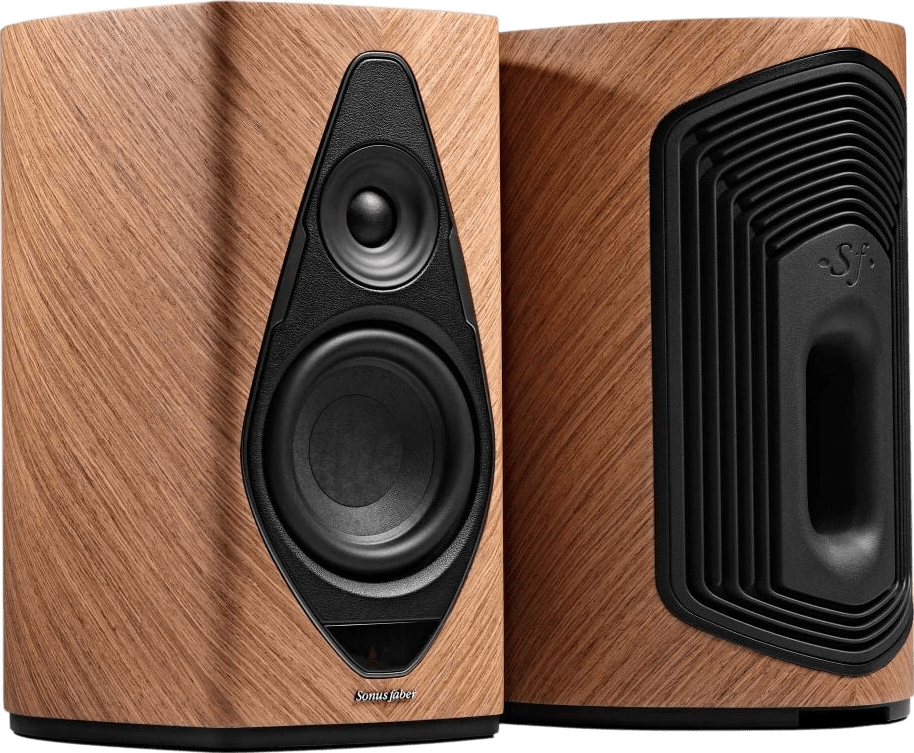
- Gorgeous sound is clear, smooth, detailed, and dynamic
- Elegant design is dashingly elegant, minimalist aesthetic, and painstakingly crafted for equal parts style and substance
- Impressive bass extension and output, described as deep and firm, surprising for their size
- Clear midrange makes voices sound purposeful, characterful, and entirely present
- Versatile connectivity with streaming and input options, including Chromecast, AirPlay 2, phono pre-amp, and HDMI ARC/eARC
Product Considerations
- Some reviewers experienced streaming and HDMI ARC reliability issues
- Input and control layout can be inconvenient and awkward
- Prototype unit had operational bugs
- No bass level adjustment is available, though it could be added in mobile app
Comparisons (according to reviewers)
- Vs KEF LS50 Wireless II—the KEF LS50 Wireless II is a similarly high-end option
- Vs PSB Alpha iQ—the PSB Alpha iQ is a more compact wireless speaker package than the Sonus Faber and is comparatively lighter on bass
Takeaway: The Sonus Faber Duetto speakers are well-suited for those seeking amazing sound and a beautiful design in one package. These speakers are easy to connect and use, and fill the room with rich, detailed audio.
Video review
Our take on the brand
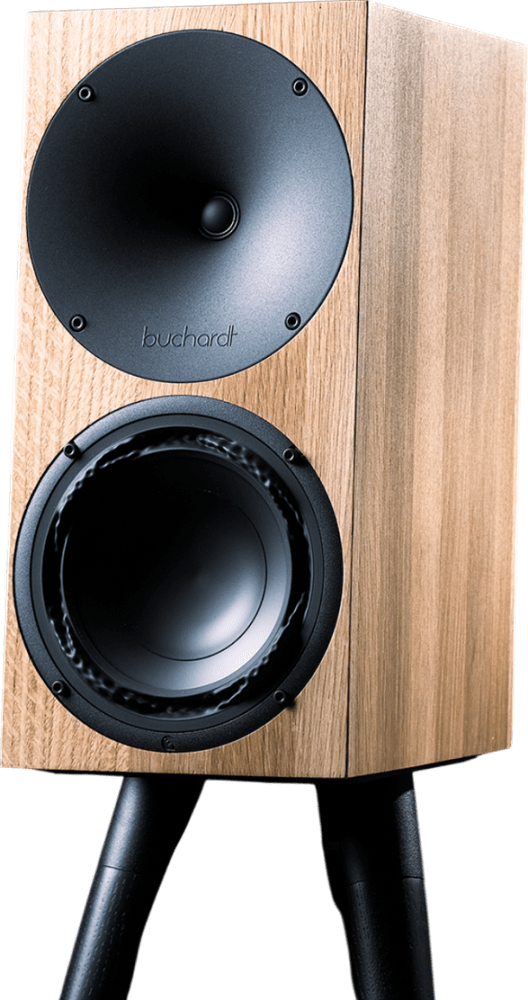

Our Summary
Product Strengths
- Exceptional bass performance for its compact size, with bass that is fast, clear, and tight
- Multiple 'Master Tunings' offer customizable sound profiles, adapting to different room acoustics and user preferences
- A high-quality Purifi woofer and SB Acoustics tweeter contribute to clarity, detail, and low distortion
- A solid wood cabinet made in Denmark provides a luxurious look and feel
Product Considerations
- Bass output may diminish or be limited at high volumes to protect the drivers from damage
- A separate purchase of the Platin Stereo Hub may be required for full wireless functionality and room correction
- The 'Made in China' label applies to the electronics inside the cabinet
- While the A10 offers impressive bass, some may still prefer to add a subwoofer for a true full-range experience
Comparisons (according to reviewers)
- Vs Buchardt S400 Mark II, the A10 is more transparent with greater inner detail, clarity, and top-end extension—and deeper, tighter bass—while the S400 Mark II is more relaxed and forgiving with harsh recordings
- Vs Buchardt A500, the A10 has comparable performance, with possibly a crisper sound in some instances
Takeaway: The Buchardt Anniversary 10 is a compact yet powerful speaker that offers a customizable listening experience. Its impressive bass and versatile tuning options make it a great choice for those seeking a high-quality audio solution in a small to medium-sized room.
Video review
Our take on the brand
How to buy
Speakers
Search all hifi products
Explore our database of 10,000+ new and 25,000+ used hifi products.