




Note that this is a discontinued product. You may want to visit the brand's page here to browse their newer products.
What reviewers think
Bloggers and YouTubers have tried this product—so we've summarized their strongest opinions below. Links to full reviews follow.
Product Strengths
- Superb sound quality makes listening to music an event
- Extraordinary frequency extremes with extended, natural-sounding treble
- Epitome of transparency, revealing details in recordings
- Impressive technology, including Super Rail circuitry, enhances dynamics and reduces distortion
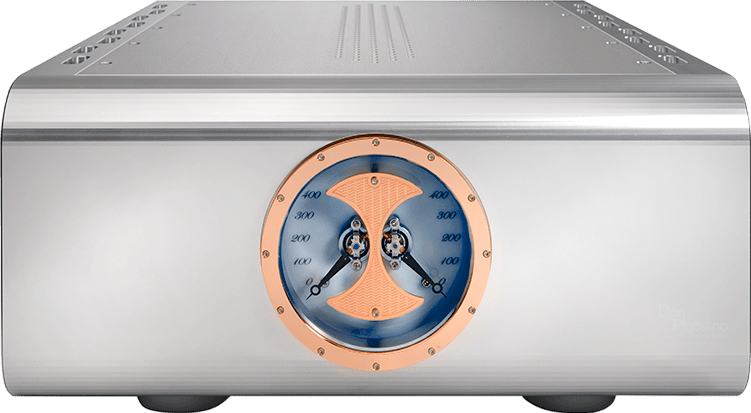
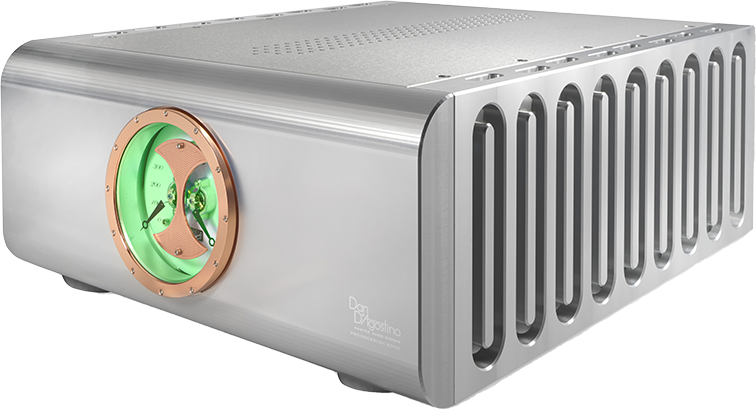
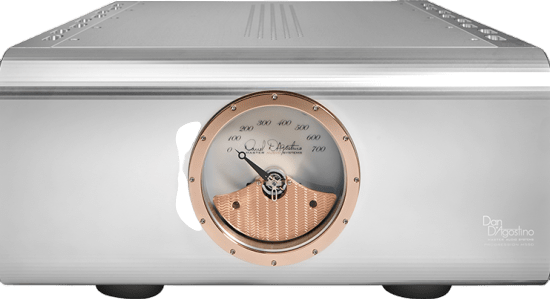
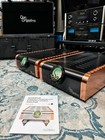
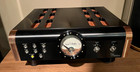
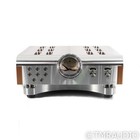
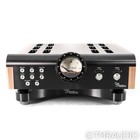
- Visually appealing with a Swiss watch-inspired design and a large, responsive power meter
- Balanced-only connectivity might be a limitation for some users, though unlikely with high end preamps
Product Considerations
- Very heavy (115 pounds) and requires assistance to move—lacking handles
- May be overkill for high-sensitivity speakers
Comparisons (according to reviewers)
- The Progression S350 is on the harsher side, while Griffon Diablo 333 is more warm and balanced
Takeaway: The Progression S350 amplifier provides an outstanding listening experience. It has great transparency and reveals lots of detail in the music.
All
Progression S350
reviews


Manufacturer details
- Signal-to-Noise Ratio: 105 dB, unweighted / 75 dB A weighted
- Total Harmonic Distortion: 350W @ 8Ω .015% @ 1 kHz
- Input Impedance: 100 KΩ
- Output Impedance: 0.1Ω
- Power: 350 watts @ 8Ω, 700 watts @ 4Ω, 1,400 watts @ 2Ω
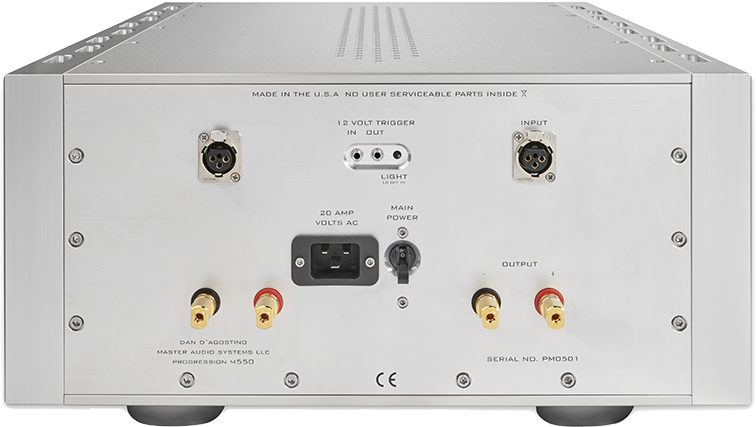
- Inputs: 2 balanced XLR
- Dimensions: 17.875 x 9.0 x 23.0 in (45.4 x 22.9 x 58.4 cm)
- Weight: 115lb (52.2 kg)
- Finish: Silver or Black with Custom Finishes Available Upon Request
Every amplifier employs a voltage rail, actually two, a positive one and its companion negative partner. Voltage rails support the delivery of power to the speaker. The music signal swings between these two rails but due to natural loss, the musical signal never reaches the output rails' full capability.
Our Super Rail overcomes this limitation. Borrowing the idea of a turbo in a car engine, the Super Rail employs higher voltage rails in the sections prior to the output stage. This voltage "boost" allows the musical signal to exploit the full capability of the output voltage rails.
Extending the musical signal swing closer to the output rails maximizes the performance of the output circuitry design itself. The result is improved dynamics, lower distortion, and a fierce grip of the speaker.



Brand highlights
Taking a step back to look at reviewers' thoughts of the brand's entire lineup—not just this product—what stands out most is the following:
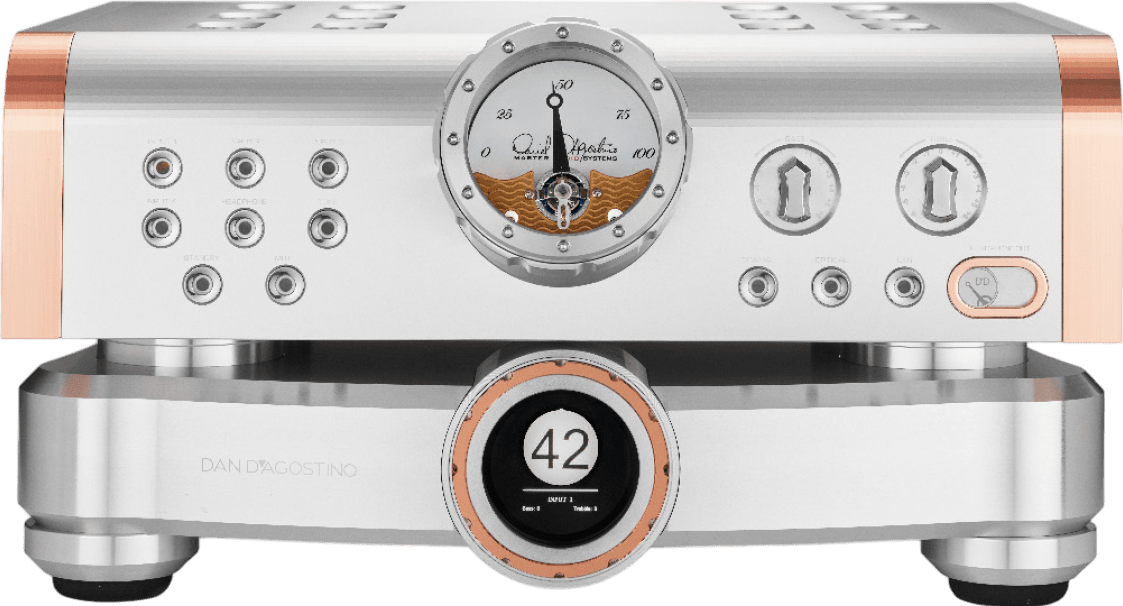
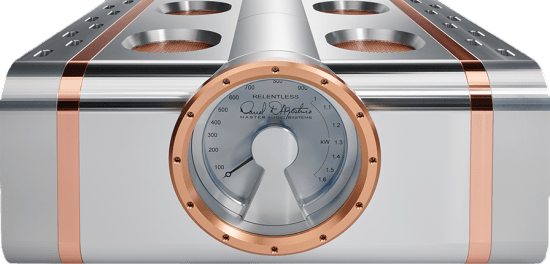
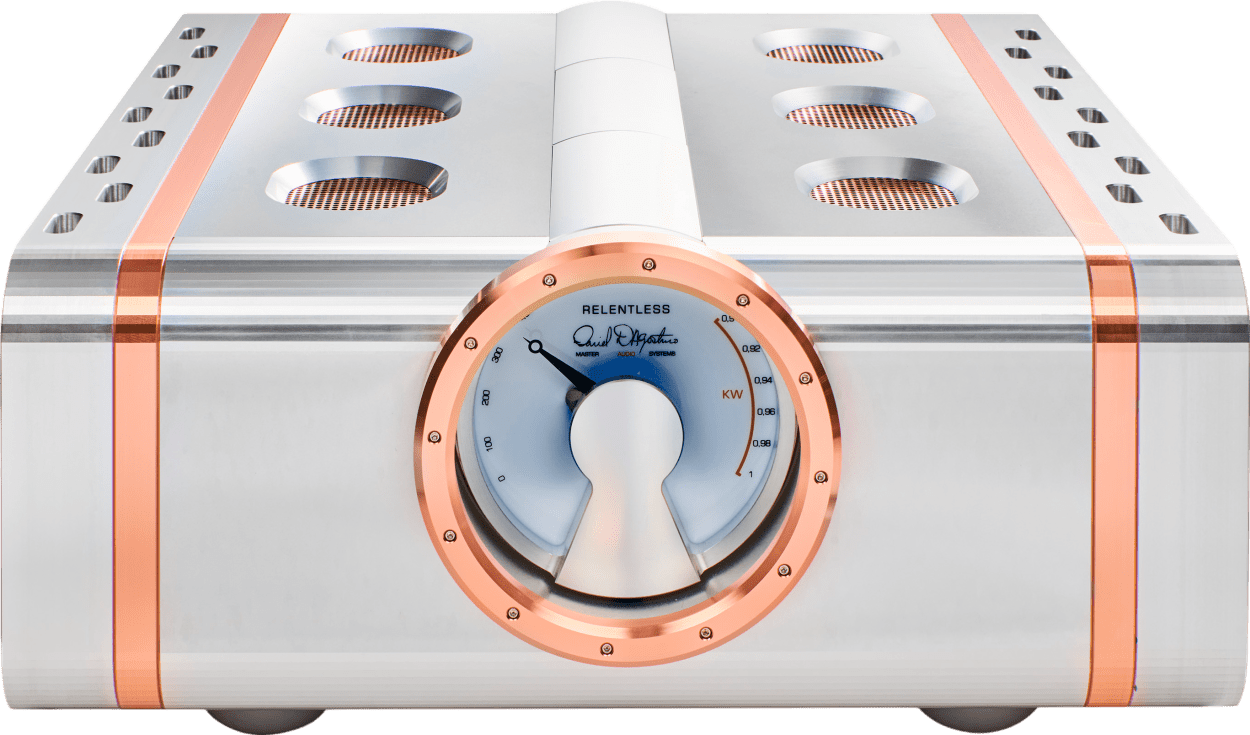
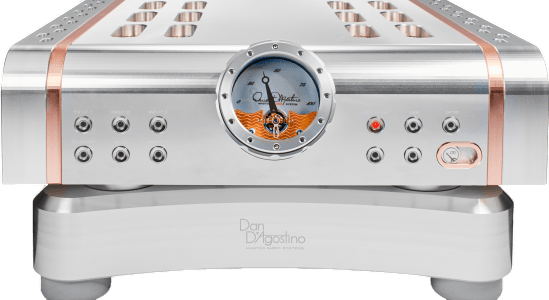
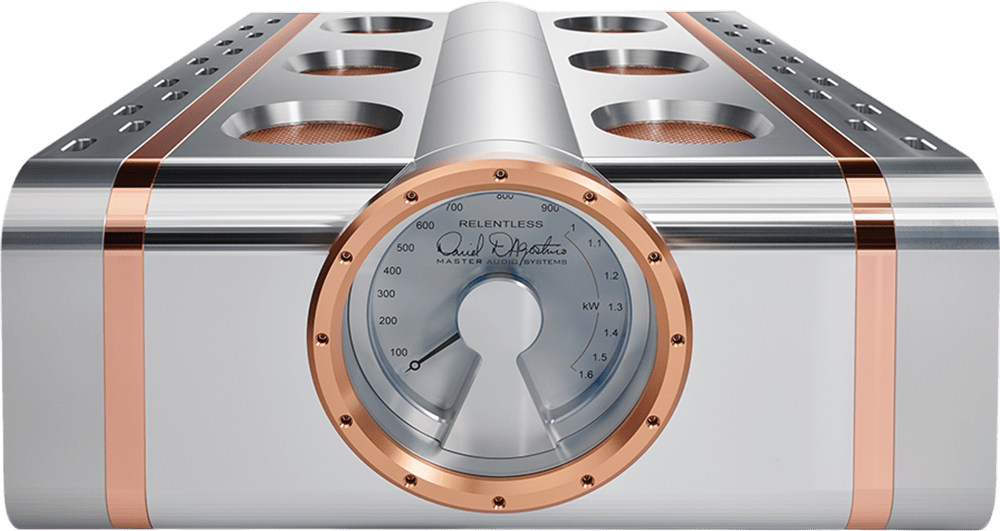
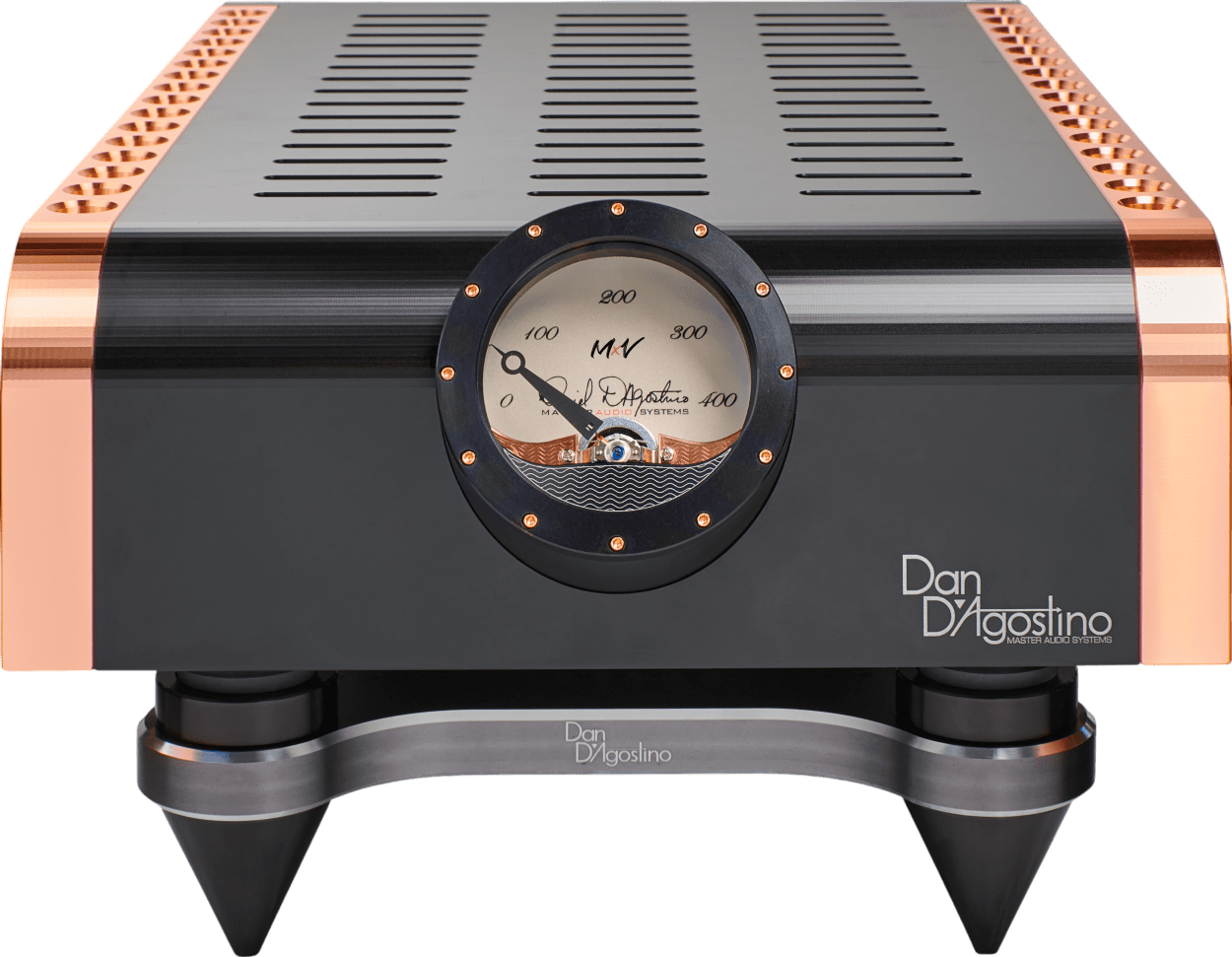
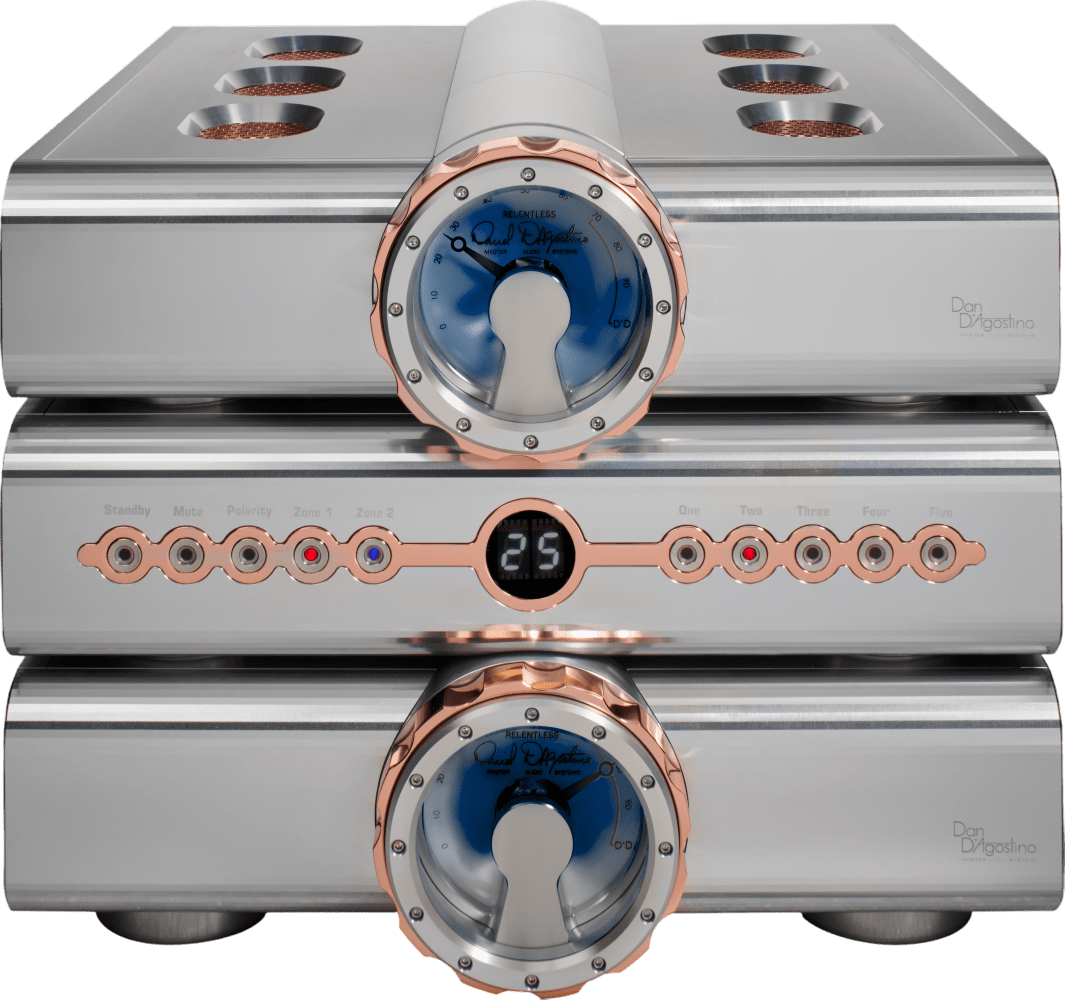
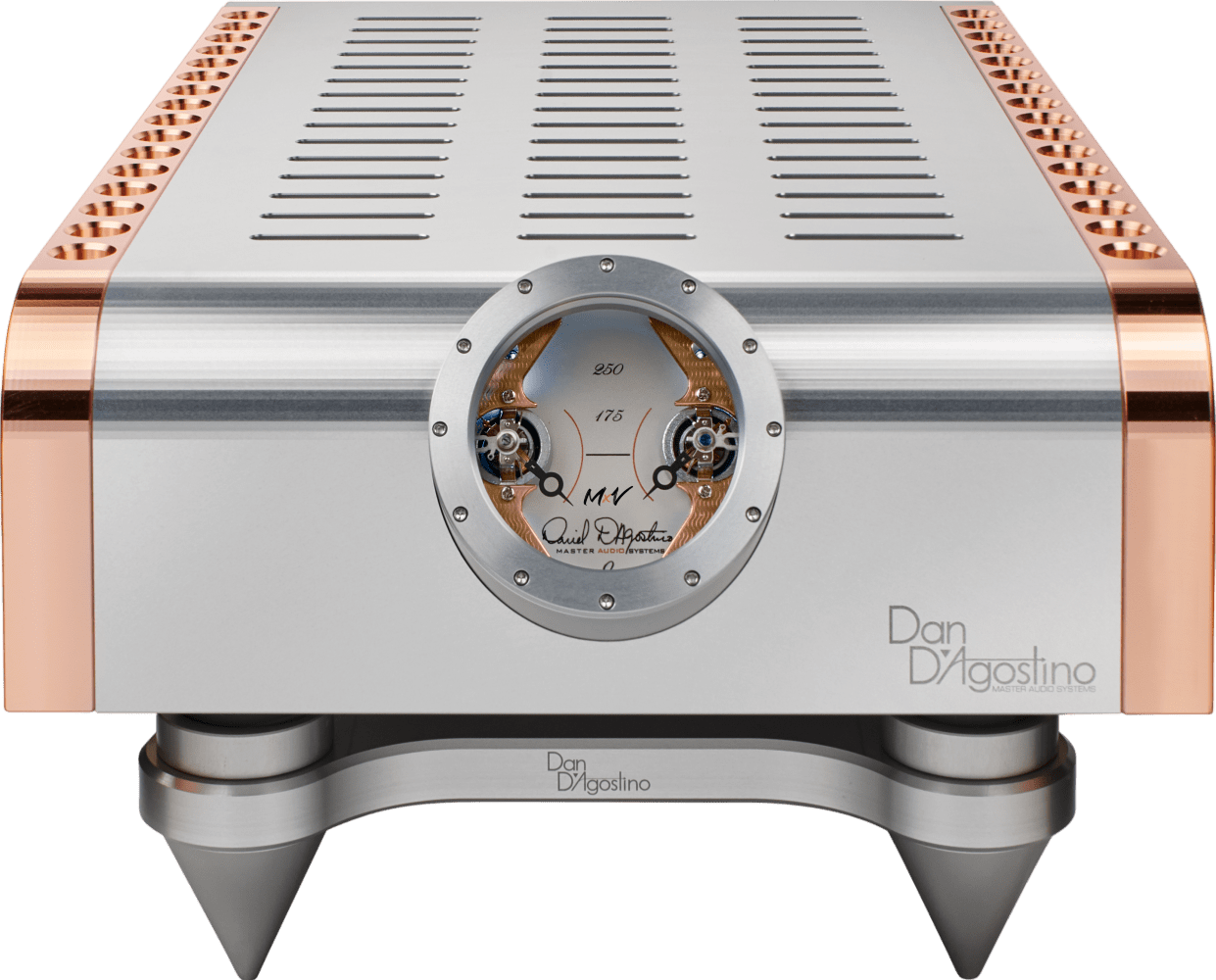
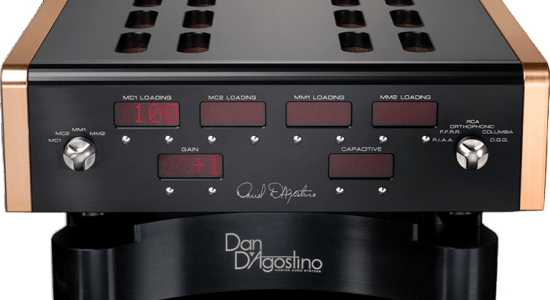
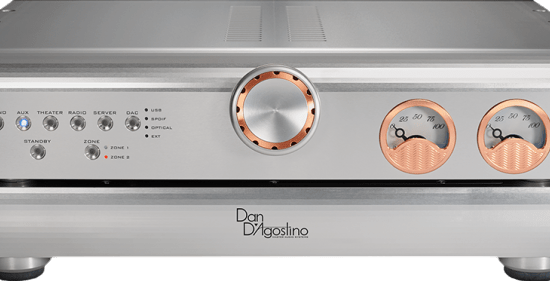
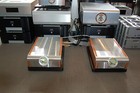
- The lacquered copper heatsinks with venturi tunnels and Breguet-style dials are distinctive visual elements that have been a consistent feature of D'Agostino's amplifiers from the beginning.
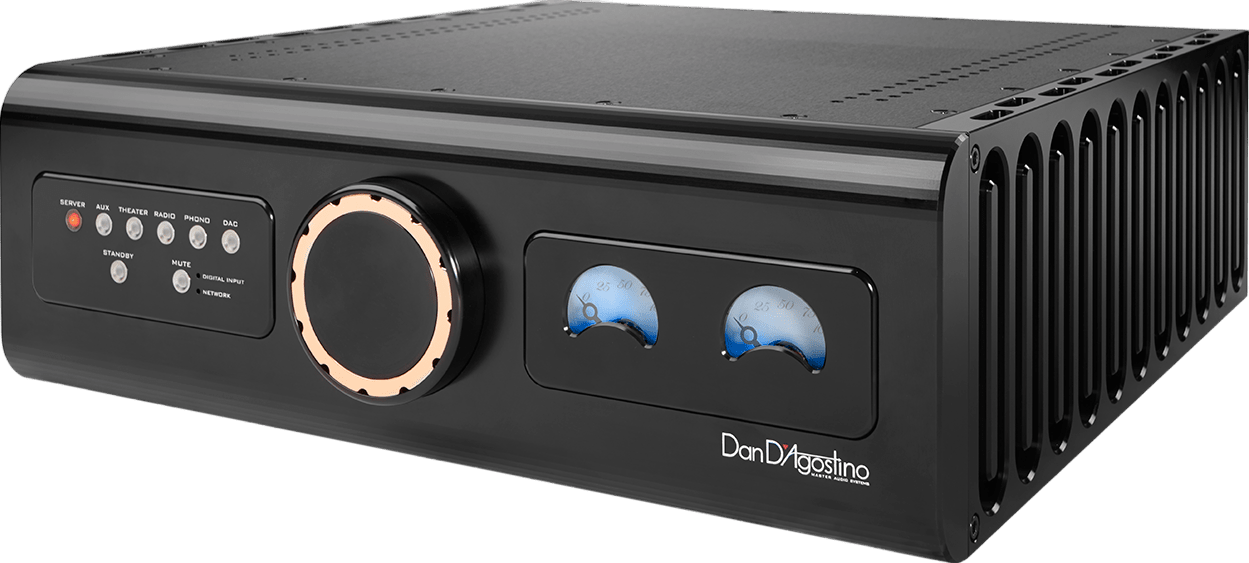
- Dan D'Agostino designs his solid-state creations to be as accessible and 'ear-friendly' as the best valve amps, achieving a sound that is organic, natural, pleasant, and even friendly.
- D'Agostino amplifiers are meticulously hand-built, with painstaking attention to detail and precision in component placement.
Select products
Progression Series
- Positioning: The entry-level line in the D'Agostino amplifier lineup.
- Description: Known for powerful output and musical finesse, making them suitable for larger rooms and those seeking high power without the flagship price.
Momentum Series
- Positioning: Sits in the middle of the D'Agostino lineup.
- Description: Delivers substantial power and refinement in a compact chassis. They incorporate advanced circuit topologies and a unique input stage, setting them apart from the Progression series, which focuses more on raw power.
Relentless Series
- Positioning: The flagship line of D'Agostino amplifiers, representing the pinnacle of performance and luxury.
- Description: Designed without limits, offering practically unlimited power and the ability to drive any loudspeaker to its fullest potential. They feature groundbreaking circuit topologies and new power transistors, differentiating them from the Momentum series, which focuses on compact design and refinement.

Our take on the brand
Look inside the brand
Our interview with the brand
What are two key technological innovations or strong opinions that differ you from other brands?
What's your approach to customer support?
What are your favorite tracks for showcasing the strength of your products?
What other products pair best with yours?

Used
Dan D'Agostino







What if you spend more?



.svg)
Our summary
Product Strengths
- Ample power with minimal distortion
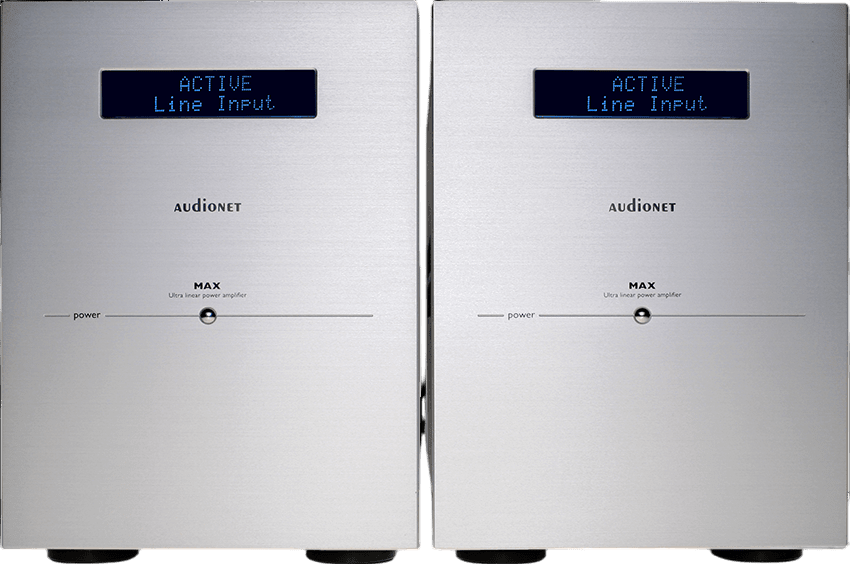
- Audionet's ULA (Ultra-Linear-Amplifier) technology, originally developed for medical engineering
- Impressive dynamic prowess and the ability to plumb the hidden depths of CDs and LPs
- Subtle musical and instrumental details come through cleanly and coherently, without compromising life-likeness of tone colors and harmonic expression
- Exceptional bass reproduction, with a rich, detailed, and uniform low end
Product Considerations
- Positive and negative speaker terminals are close together, requiring caution when connecting speaker cables
- Balanced input use involves an op-amp, which some believe impacts sound quality, single-ended inputs are preferred by some
- A preamp should be used to get the best sound from these amplifiers
- Display text changes locations randomly, which some may find distracting
Comparisons (according to reviewers)
- The Burmester sounded cleaner, airier, and more revealing, but could not quite compete with the AMP II MAX in authority over the bass frequencies and in blackness of the background
- The Pass Labs was tonally rich and pleasurably soft, plus the amp gave an extraordinarily punchy presentation, in that it bettered the performance of the AMP II MAXes, on the other hand, it was rather general in the organization of the soundstage and the background wasn't quite as black as with the AMP II MAXes
- Plinius shone in resolution, as well as delivered exceptionally dimensional soundstage and very neutral overall sound, especially in Class A mode, however, it did not have the same punch as the AMP II MAXes, and the sound wasn't equally gentle
- The McIntosh MC-501 delivered a richer and warmer sound, but with less power and extension than the AMP II MAX
Takeaway: The Audionet Max monoblocks offer a powerful and refined listening experience, making music sound engaging and detailed. Their ability to control speakers and reveal nuances in recordings makes them a great choice for serious audiophiles.
Video review
Our take on the brand
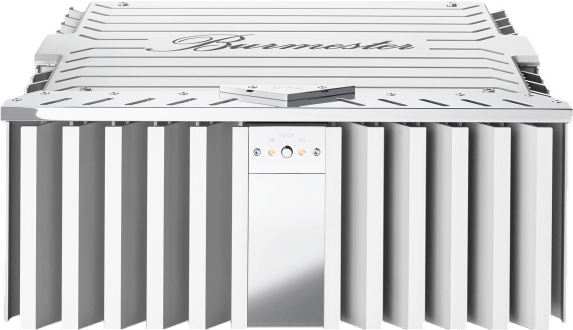

The 911 MK3 power amplifier is a close derivative of the reference power amp 909 and is regarded as one of the quickest and most powerful amps in the audio world. Its strong performance is the result of the knowledge and experience gained during the design and manufacture of the much-acclaimed 909 power amp. The MK3 moniker indicates that Burmester’s second largest power amp has reached its third generation of refinement. With the distinctive appearance of the silver anodized fins of its heat sinks the 911 MK3 exudes power and elegance. It tightly controls any bass driver and proves that there is a lot of musicality in the bass line. Excellent spatial resolution, detail and musical warmth characterize the sonic signature of the 911 MK3.
Product Strengths
- Neutral and grain-free sound, not like typical solid-state or tube amplifiers.
- Powerful and articulate bass, seamless and smooth mids, and extended, non-harsh highs.
- Exceptional build quality and a luxurious feel with immaculate laser-cut detailing and silver anodizing.
Product Considerations
- The glitzy appearance might be divisive.
- High-quality source components and speakers are required to perform at its best.
- The unit is large (almost 50cm wide) and very heavy (32kg), requiring a sturdy rack and careful handling during setup.
Takeaway: The Burmester 911 mk.3 provides exceptionally intricate, powerful, and dynamic sound, making it a very refined amplifier that is a treat for your ears. It is a top-performing amplifier made with great craftsmanship and build quality.
Video review
Our take on the brand
.png)
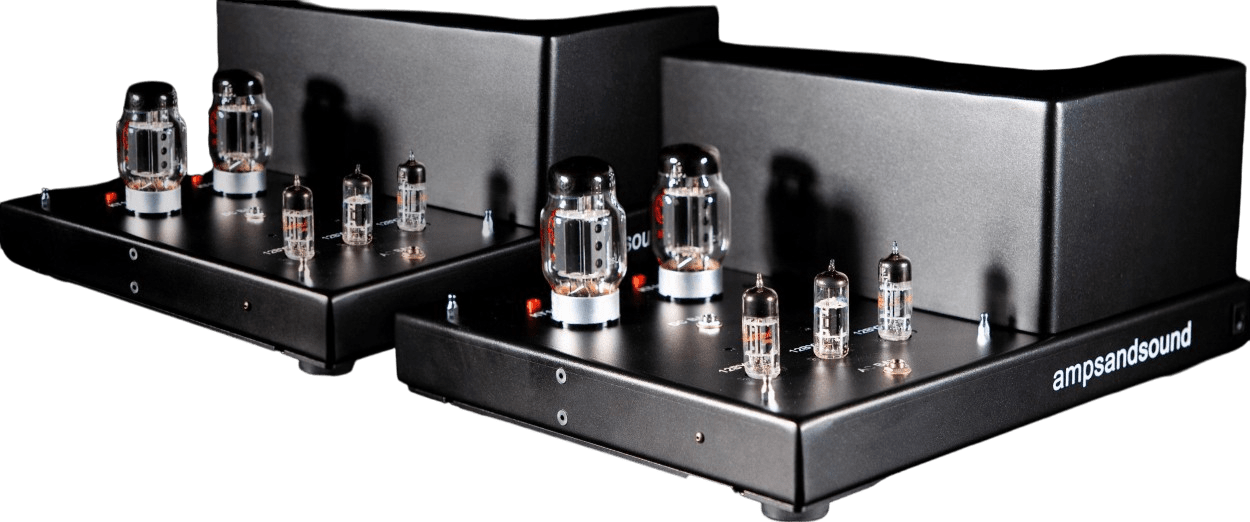
Designing an amplifier that would outperform the Zions in bandwidth, output and transparency was a tall order. This amp would need to express all of ampsandsound's most closely held philosophies at an even higher level. More power or complex circuitry for the sake of increasing the cost was out of the question. Where does one go, once they've scaled Everest?
After extensive listening and research, the Citation II was settled on as the basis for the design. This amplifier was designed to be an amplifier in the tradition of Harry Pearson's Absolute Sound - something which had absolute fidelity resulting from the widest and flattest frequency response and as close to an absence of distortion as possible. This amplifier is the proverbial bigger gun for those customers who require even more power than a Zion.
The original Citation II, much like the Citation V, is underwhelming in the power supply. A significantly more robust version was in order, which can supply eight amps per channel, and allows for tubes capable of greater output than the original. This of course necessitated the design of the highest power input power transformer ampsandsound has ever designed. In the process of redesigning the power supply, careful attention was given to improving dynamics, RMS output, regulation and lower distortion.
Depending on the tube selection, the Arch will output between 60-100W in pure class A, and represents our absolute statement on power output. As with the Zion, everything on the Arch is capable of handling several times the rated output power of the circuit. The result is astonishingly low distortion, and a true-to-source amplifier with massive grip on loudspeakers.
The output transformer on the Arch has a practically unheard of bandwidth of 2hz to 110khz at -3dB. Even the excellent original Freed iron does not achieve these kind of figures under real world test conditions. Total output power is 65 watts with KT88s and 85watts with KT150s. The total power is the measure of this amplifier's magic - not because of the output, but because it achieves astounding frequency linearity and vanishingly low distortion while doing so.
A tube amplifier that can reliably reproduce frequencies lower than 20hz is unheard of and one that can descend into the low single digits is mythical. Perhaps most important is distortion figures that would be considered remarkable for a well designed solid state amp, accomplished in a tube amplifier without a single regulator.
The chassis is 10-gauge cold-rolled steel, which imparts even greater damping than the Zions and makes for an imposing amplifier. The choice of 10-gauge steel was born of our founders ability to make singular decisions on the basis of performance without consideration to costs. Each choice in the Arch came about in the same manner, and reflects a pursuit of absolute performance not a proxy vote for profits.
Each monoblock weighs in at around 100lbs, and represents the pinnacle of our philosophy: hand built on turret boards using ultra pure point-to-point wiring, with no expense spared in creation process or parts selection. Wiring assembly alone takes 18 hours per channel, and is done by hand, before inspection, break in, testing and validation.
This amplifier goes far beyond being a modification or clone of the Citation II. Instead, the Citation II serves as a touchpoint for an amplifier built to completely eliminate questions of output and distortion. The Arch is the pinnacle of the low distortion, high power spirit of the Citation amplifiers, and each unit is personally measured, tested and listened to by Justin Weber before shipping.
The sound of the Arch must be heard to be understood. Suffice to say, the Arch simply sounds like music, and demands partnering equipment of highest calibre. Please contact us if you wish to arrange a demo.
Product Strengths
- Incredibly nimble, with every detail highlighted, providing an extra layer of resolution
- Delivers all of the detail and clarity without the traditional fatigue
- The balanced input transformer properly sums the positive and negative legs of the balanced signal, and in so doing retains much of the benefits that you normally achieve with fully balanced amps—noise rejection
- The distortion numbers are exceptional for a tube amplifier
- Compatibility with nearly every commercially available speaker, due to the support of three impedances (4 ohms, 8 ohms, and 16 ohms), and output power exceeding 60 watts with KT88s, and 80 watts with KT150s
Product Considerations
- There are no modern reproductions of the 12BY7A, requiring matched pairs to run the amplifiers
- The bias is fixed—it's selectable between settings, but dialing in the distortion could not be simplified further
- Heavy at nearly 100 lbs each, as there's a lot of iron in both the transformers and the chassis work
- A hint of tube noise was present in one channel when no music was playing, likely specific to the tubes used
- Not a wise choice to any planer but complex crossovers and difficult loads have not compressed the amp in testing
Comparisons (according to reviewers)
- Vs ampsandsound Zion Monos: The Arch Monos are more neutral, faster, and provide an extra layer of resolution, compared to the richer and more harmonic sound of the Zions
- Vs TAD: The Arch is clean, powerful, and has many characteristics of very good solid-state amp, though the TAD approach was similarly neutral in many ways, albeit with a lightning quickness that the Arch did not have
Takeaway: The ampsandsound Arch Monoblock amplifiers are a technically proficient and beautifully built amplifier that delivers exceptional detail and clarity without fatigue. If one wants a vintage but modern sound, the Arch Monoblocks could be a good choice.
Video review
Our take on the brand
Our summary
Product Strengths
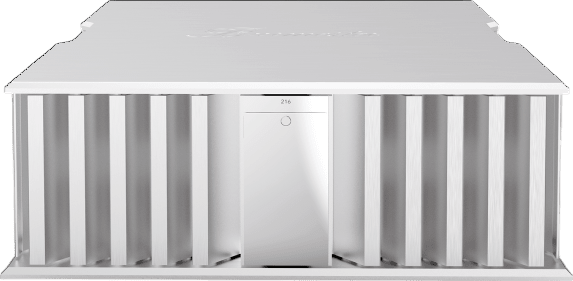
- Completely balanced and DC-coupled
- Uses the Class A 'X-Amp' input stage technology from the 159
- Has a high damping factor over the entire frequency range and a very wide, distortion-free Class-A range
- The thermal concept uses 'universal heat pipes' to keep temperatures constant and low, increasing the lifespan of the amplifier
- Signal processing reaches the input signal unaltered via silver cables
Product Considerations
- The Burmester visual aesthetic will not please everyone
- Power needs are consistently overestimated, and this amp has 100Wpc continuous into 8 ohms
- The single-ended RCA inputs are not available on the back panel, unbalanced input requires an adapter
Comparisons (according to reviewers)
- Vs Burmester 911 Mk 3: The 216 adds extra depth, precision, control, and ability to 'wig out' bass, also more reactive and dynamically dynamic
- Vs Burmester 911 Mk 3: The 216 is the more liquid sounding of the two, is more dynamic, has better bass definition and control, a more even sounding treble, a more open midrange, a keener sense of rhythm
Takeaway: The Burmester 216 is a musical chameleon that is carefully and meticulously crafted, it will bring the best out of any genre. Its utter lack of electronic character is a huge plus, making it a worthwhile consideration for any audiophile.
Video review
Our take on the brand
What competes at this price?

Our Summary
Product Strengths
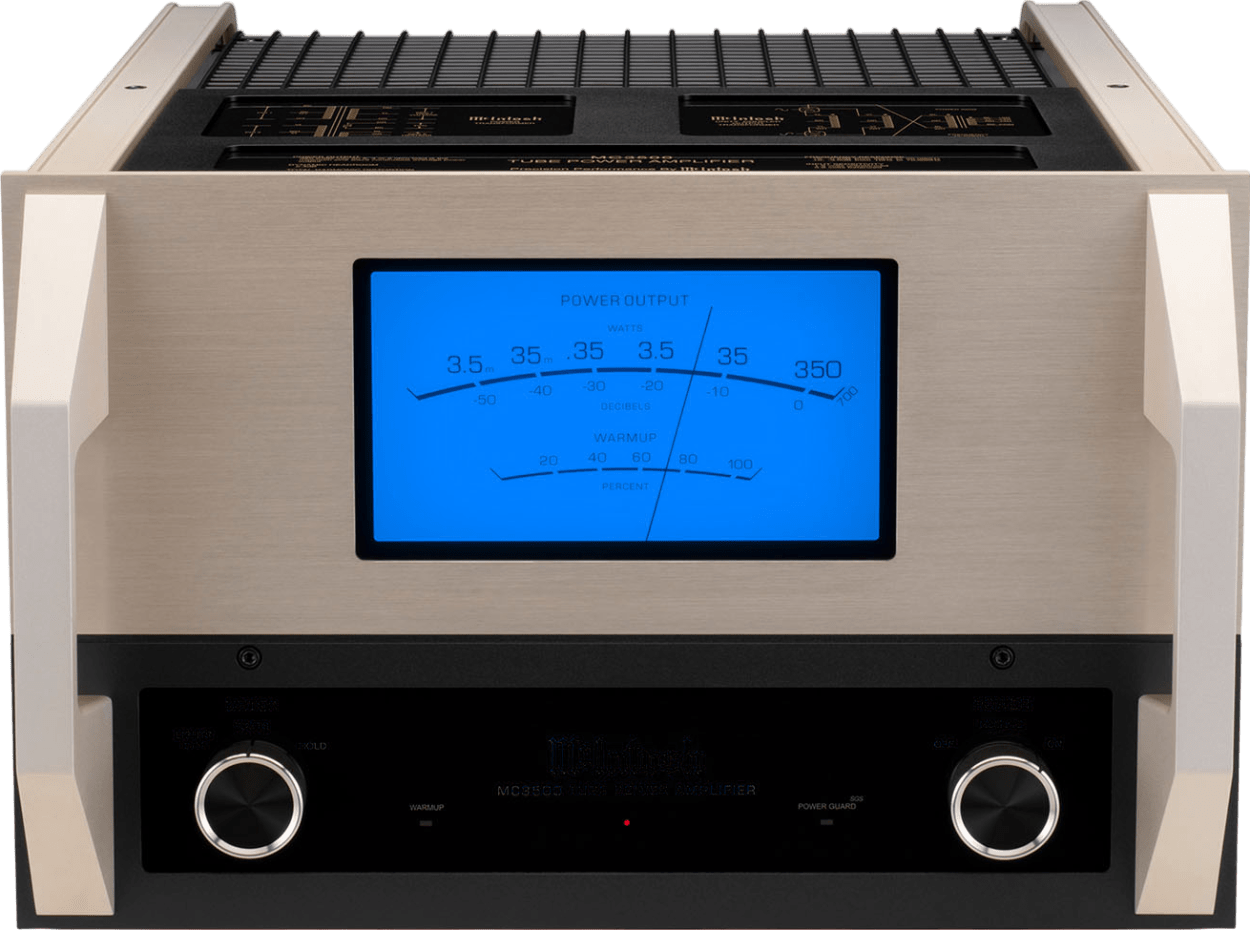
- Delivers 350 watts into 2-ohm, 4-ohm, or 8-ohm loads
- The design has a purity that is quite amazing
- Effortless power
- Soundstage is big
- Transparent
Product Considerations
- Not necessarily suitable for pairing with extremely cold sounding, sterile or bright speakers
Comparisons (according to reviewers)
- MC3500 is more open and airy, with base not as hard fisted, compared to Krell KSA 250
- It compares with brands like soulution, big Audio Research, and CH Precision, but at a lower cost
Takeaway: The MC3500 is an impressive amplifier that delivers a natural and pure sound, able to drive almost any speaker. If you're in the market for a McIntosh amp, this is the one that makes music sound pure, simple and unadulterated.
Video review
Our take on the brand


Our Summary
Product Strengths
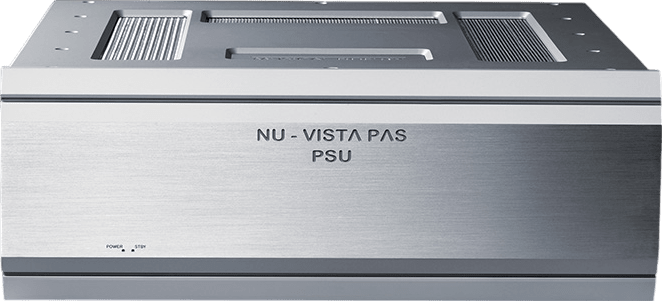
- Exceptionally well built, luxuriously finished with a thick-panelled milled aluminum chassis and first-rate metalwork quality
- Offers satisfying dynamic overtness and excellent transparency to the signal
- Provides exceptional detail retrieval and reveals amazing venue ambience and reverberance
- Offers a solidity and tight punch in the low-end, without artificial bloom or smearing of bass notes
- Features a two-chassis architecture, providing total quietness of the circuit
Product Considerations
- The diameter of each speaker connector's central post is too large, banana plugs are the only practical and safe way to connect speakers
- Stay away from brash metal tweeters and bad recordings, the Nu-Vista PAS will expose their failures
- The Musical Fidelity may not sound quite as fluid, but it's a more direct presentation, a more present—explicit sonic signature that provides exceptional detail retrieval compared to the Gryphon Audio Antileon EVO reference amplifier
Comparisons (according to reviewers)
- The Musical Fidelity may not sound quite as fluid, but it's a more direct presentation, a more present—explicit sonic signature
Takeaway: The Nu-Vista PAS amplifier is a well-built and powerful amplifier that delivers detailed and dynamic sound. Its robust design and revealing nature make it a great choice for audiophiles seeking a high-performance amplifier.
Video review
Our take on the brand
.png)
Our Summary
Product Strengths
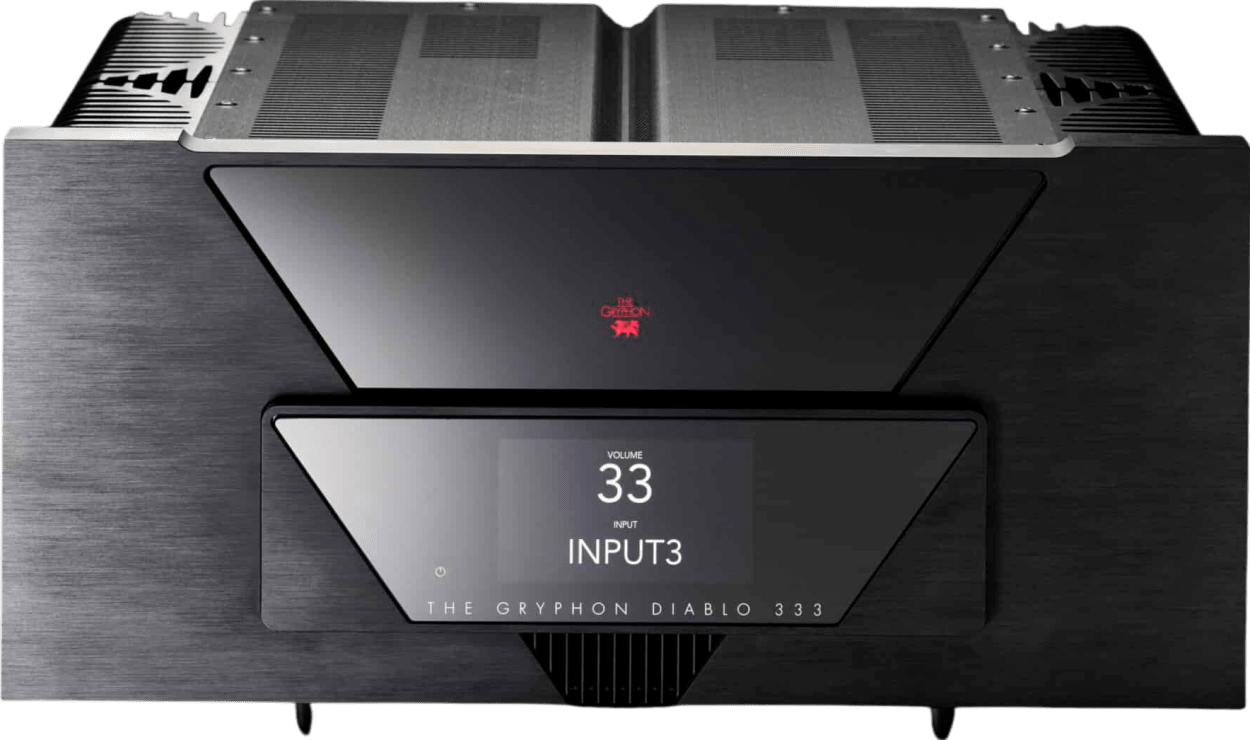
- Exceptional bass control, power, speed, and definition provides a bedrock foundation for the music
- Wide and deep soundstage with precise imaging
- Dead-neutral tonal balance with grain-free clarity, effortless speed, and precision
- Life-like dynamic expression and detail resolution, sounding exquisitely lifelike
- Lively, energetic sound combined with pleasing harmonics, warmth, and a kind of lusciousness achieves a nice balance
Product Considerations
- The binding posts are located low on the rear panel, which might be problematic for some installations
- It gets hot, requiring adequate ventilation
- It's a heavy unit, making it difficult to move and set up
- The cost is very high, making it exclusive-level hifi
- The speaker spiked feet can make it difficult to position the amplifier
Comparisons (according to reviewers)
- Vs Diablo 300, the Diablo 333 gives more music and musical information, developing the soundstage with harmonic information, knitting all the individual parts together; the music becomes less about individual things and more about the whole
- Strong resemblance to the Apex Commander combination, but at a fraction of the cost
- While the Antileon digs deeper and presents a fuller presentation across the low frequencies, the Diablo 333 slams harder and slightly tighter
Takeaway: The Gryphon Diablo 333 is a powerhouse integrated amplifier that combines exceptional power and control with refined sound and detailed musicality making it one of the very best amplifiers, be it integrated or not. Its versatility and musical soul make it a solid choice for anyone looking for an end-game component.
Video review
Our take on the brand

Our Summary
Product Strengths
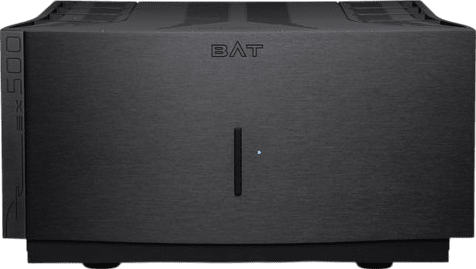
- Powerful, able to drive any speaker at any level with ease
- Delivers a new dimension in realism at any volume level, exposing the timbre of bass instruments unlike ever heard before
- Reveals harmonic quality of instruments and voices
Product Considerations
- Heavy, weighing 140lb (63.5kg), requiring assistance for moving and unboxing
- High running temperature (55-65oC across the chassis) and draws 500W from the wall when idle
- When speaker cables are terminated with spade lugs, caution is advised as the posts are close together
- Output is floating—it should not be connected to any loudspeaker with a grounded 'black' terminal
- BAT components take a long time to "break in" (400-500 hours of use)
Takeaway: The BAT REX 500 is a very powerful amplifier that drives speakers with ease and reveals new levels of realism in familiar recordings. It is a must-audition for those seeking reference-level power amplification.
Video review
Our take on the brand

Our Summary
Product Strengths
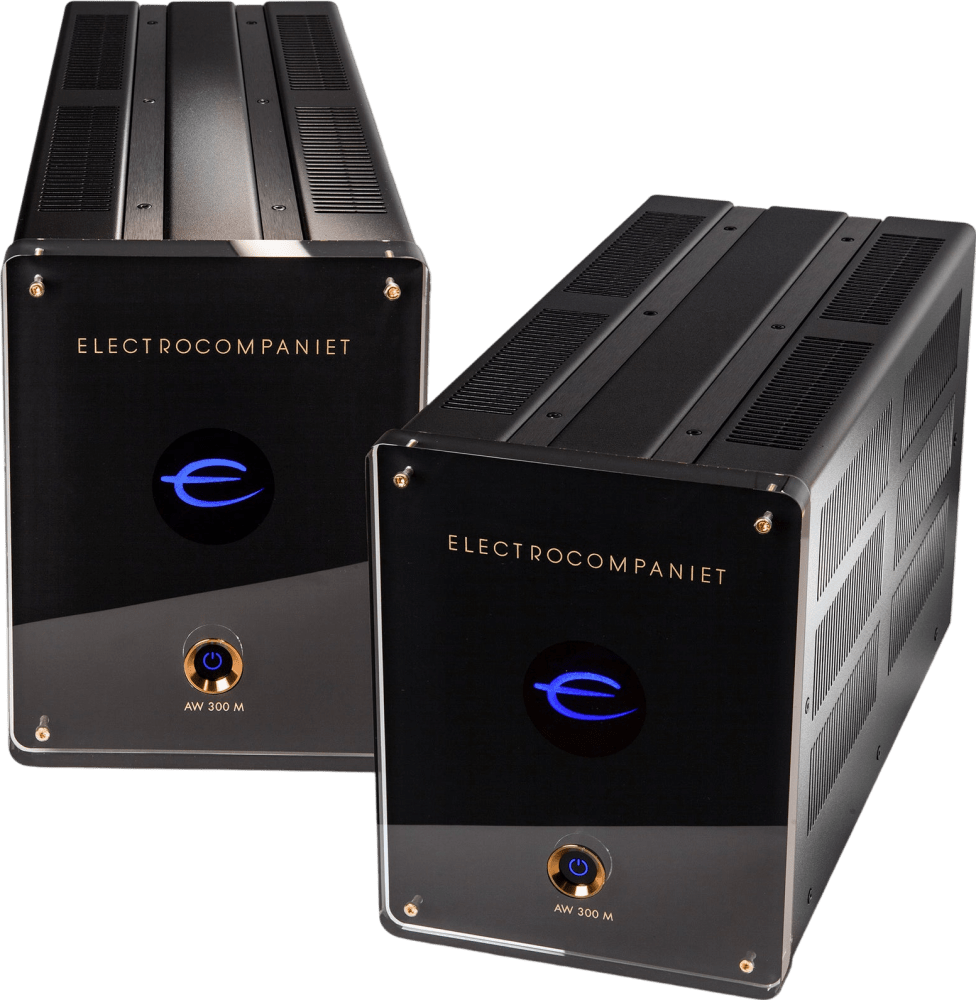
- Prodigious bass output and rich tonality, especially for a solid-state design
- Great presence, a black background, and strong resolution playing effortlessly at very high volume levels
- Offers a wide, well-defined soundstage
- Beautifully designed with a luxurious appearance, relatively compact dimensions, and attention to detail in its internal layout
- Reserves of power will comfortably drive a wide range of speakers to high levels
Product Considerations
- Attacks can be slightly soft on some material
- The soundstage, while wide and well-defined, may lack the pinpoint accuracy and layered depth of some reference amplifiers
- Requires support beneath it on carpeted floors to allow sufficient airflow
Comparisons (according to reviewers)
- Vs soulution 511, the soulution 511 was faster and more accurately conveyed bass notes, threw an image with greater accuracy, and was more open on top
Takeaway: The Electrocompaniet AW 300 M is a gutsy and poised monoblock amplifier that delivers lots of power and handles a variety of speakers, giving an excellent listening experience. Its solid build and high performance make it a great choice for those seeking high-end audio quality.
Video review
Our take on the brand
How to buy
Amplifiers
Search all hifi products
Explore our database of 10,000+ new and 25,000+ used hifi products.