

What's unique about the brand
Brand overview
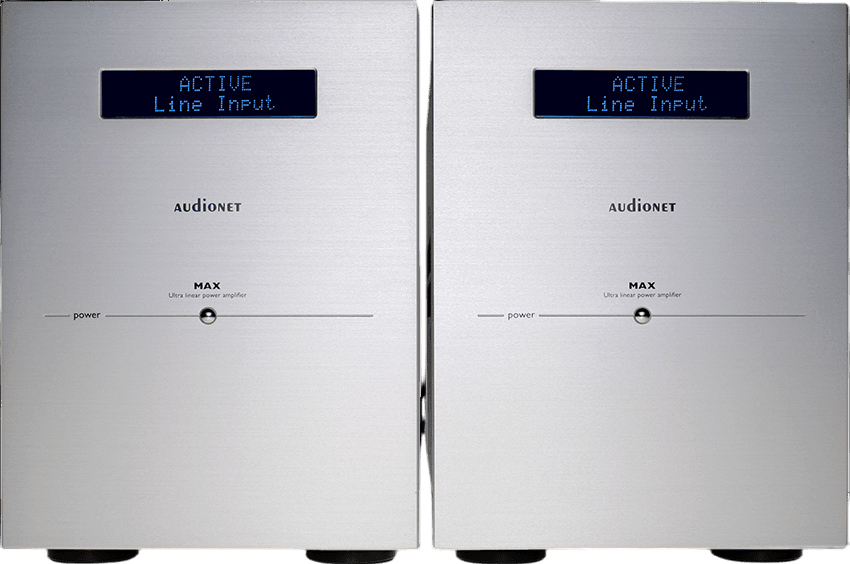
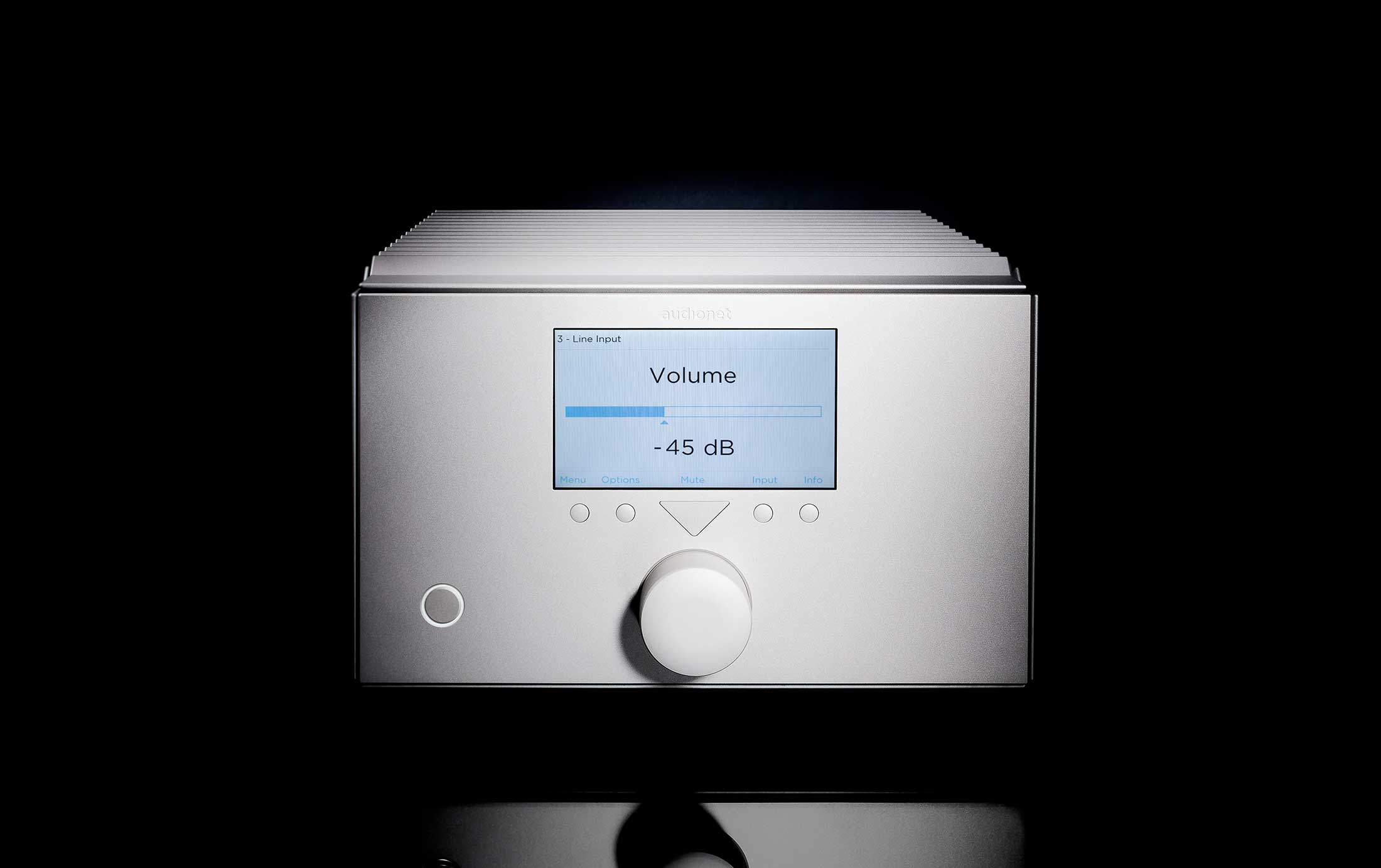
The Watt integrated is the sensible way in. It has power to spare for most speakers, a preamp built in, and the AVshowreports channel heard "95% of the sound of the AudioNet Max monoblocks" from it. Jeffries recommends it for small or medium-sized rooms. Because it reveals everything upstream, he advises good cables and sources. The Humboldt integrated is the step up, with far more power and a weight of just over 134 pounds, and Wetzel couldn't imagine a buyer placing it on a traditional rack, so plan for a sturdy stand. Jeffries also suggests checking that your mains supply is clean, since the protection circuit puts the amp into standby when the voltage sags. It pays to leave the amps on. Stereophile's Jason Victor Serinus kept his Max monoblocks running around the clock, because they took a while to sound their best from turn-on. At the very top, the Stern preamp feeds the Heisenberg monoblocks.
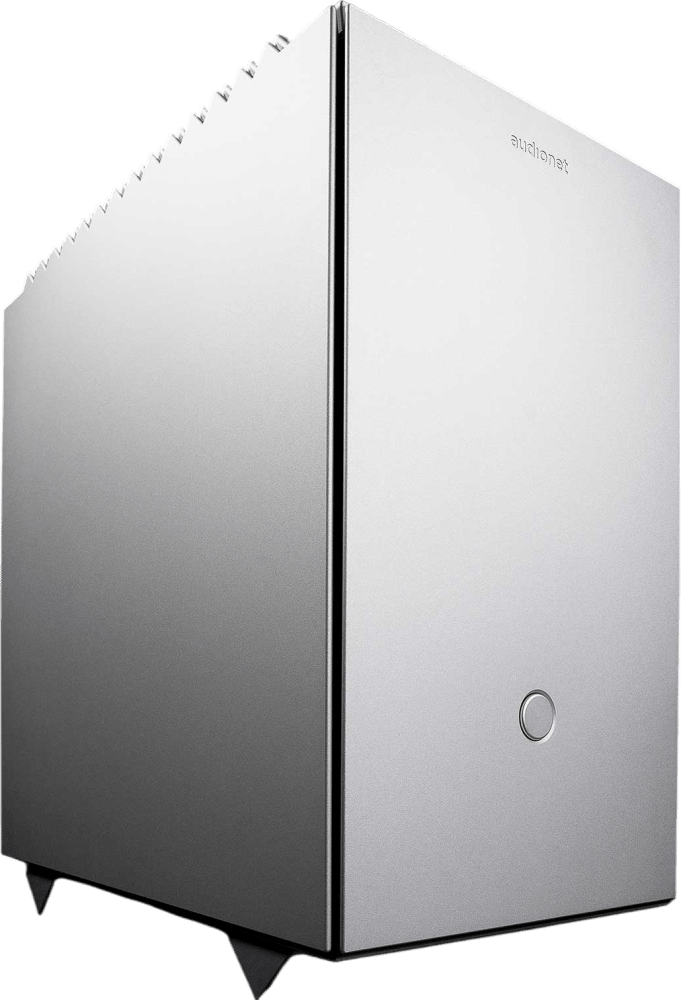
Audionet was founded in Bochum in 1994. Its early markets were Germany, the rest of Europe and Asia, and America met the brand at T.H.E. Show in Las Vegas in 2013. Jon Iverson of Stereophile wrote "I hadn't seen Audionet before," and the host of AVequipmentReviews walked into its room during an organ symphony whose pedal notes he never forgot. The Max monoblocks then built a following driving YG Acoustics speakers at shows, and Serinus called one pairing "an absolute winner." Also in 2013, Audionet began what it called the Lighthouse project, which produced the Stern preamp and Heisenberg monoblocks. Hartmut Esslinger, founder of frog design and designer of Apple's IIc, shaped their cases. Chris Martens of Hi-Fi+ called a YG system with the Max "the finest audio system I had ever heard up to that point," and the Stern and Heisenberg made it quite a lot better. Wetzel reports that a single technician assembles each Humboldt by hand.
Sources
Our interview with the brand
What are two key technological innovations or strong opinions that differ you from other brands?
What's your approach to customer support?
What are your favorite tracks for showcasing the strength of your products?
What other products pair best with yours?

Products overview
Every Audionet amplifier uses Ultra Linear Amplifier circuits and is rated flat from 0 Hz to 500 kHz, which gives a neutral sound. The SAM 20 SE integrated amplifier delivers 110 watts into 8 ohms for an everyday pair of speakers. The Amp I V2 power amplifier adds 450 watts into 2 ohms to drive harder speakers. The Heisenberg mono amplifier reaches 2,100 watts into 2 ohms for the most demanding speakers in large rooms.
- Start here. A first buyer with ordinary speakers who wants one box takes the SAM 20 SE, an integrated amplifier with a phono card built in.
- Sweet spot. The Watt gives an owner who wants one box 443 watts per channel into 2 ohms, so it drives harder speakers than the SAM 20 SE does without needing separate power amplifiers.
- All in. The Heisenberg is priced well above the Humboldt, and as a mono amplifier with absolute channel separation it keeps left and right apart, so large speakers in big rooms get cleaner stereo and more power.
Product list







What reviewers are saying
We read all the reviews, and here's what stands out:
- Audionet products, particularly their amplifiers, consistently prioritize a neutral sonic signature aiming for transparency and an absence of coloration, designed to impart minimal character to the source material.
- They use advanced ULA (Ultra Linear Amplifier) technology, initially developed for medical applications, within their amplifiers, focusing on minimizing distortion and ensuring signal purity.
- The brand emphasizes comprehensive microprocessor control and monitoring within their components, enabling precise function regulation and system protection against potential issues like DC offset, HF oscillation, temperature, and overload, with clear textual error messages displayed.
Quotes we liked:
- "First, the overall system noise floor had gone way, way down (and it had been very low to begin with) and with it the amounts of low-level sonic information revealed were increased in a manner that was just plain breath taking. The musical implications of this change alone were highly significant in that low-level reverberant information was reproduced much more clearly, which in turn made the system sound far more three-dimensional than before (an area where the original system had been excellent, but where it now seemed markedly more expansive and realistic—especially on really good recordings)." (https://hifiplus.com/articles/raising-the-bar-a-preview-audionet-stern-preamplifier-and-heisenberg-monoblock-power-amplifiers)
- "From the moment the needle landed in the groove, the utter naturalness of the presentation became apparent. I was hearing subtleties of hall and performance ambiance that I'd never before heard in all my years of listening to this LP on literally hundreds of systems." (https://www.theabsolutesound.com/articles/audionet-scientist-series-electronics-stern-linestage-and-heisenberg-monoblocks)
- "Frequency extension, from top to bottom, seems limitless, the amp's measured figures substantiating what I heard in the listening room. As icing on the cake, the amp retrieves the subtlest of recorded details with a precision and focus to rival the world's best electron microscopes, unearthing hidden textures and lyrical strands from familiar digital and vinyl sources alike." (https://www.enjoythemusic.com/superioraudio/equipment/1221/AudionetHUMBOLDTIntegratedAmplifierReview.htm)
- "This Audionet combo's ability to reconstruct and integrate the upper-most octaves is simply exceptional. With them in play you are treated to treble with clear, uncongested detail, vivid attack, authentic texture, and clear ambient decay, recording permitting." (https://www.theaudioanalyst.com/audionet-pam-g2-exp)
- "These machines have smooth textures, lots of timbral variation, full body, and warmth like tubes, but also the precision, speed, and power of solid-state. But the PAM G2 edges even closer to valves than the others." (https://positive-feedback.com/reviews/hardware-reviews/audionet-pam-g2-phono-preamplifier)
Used
Audionet
Every month, we find the brand's used items for sale across the web and offline hifi stores. We have the largest database of used hifi products. Search it here.




Similar
Amplifiers
brands


Featured products

About the brand
Our interview with the brand
What are two key technological innovations or strong opinions that differ you from other brands?
What's your approach to customer support?
What are your favorite tracks for showcasing the strength of your products?
What other products pair best with yours?


Featured products

About the brand
Our interview with the brand
What are two key technological innovations or strong opinions that differ you from other brands?
What's your approach to customer support?
What are your favorite tracks for showcasing the strength of your products?
What other products pair best with yours?

Featured products



About the brand
Our interview with the brand
What are two key technological innovations or strong opinions that differ you from other brands?
What's your approach to customer support?
What are your favorite tracks for showcasing the strength of your products?
What other products pair best with yours?

Featured products




About the brand
Our interview with the brand
What are two key technological innovations or strong opinions that differ you from other brands?
What's your approach to customer support?
What are your favorite tracks for showcasing the strength of your products?
What other products pair best with yours?

Featured products


About the brand
Our interview with the brand
What are two key technological innovations or strong opinions that differ you from other brands?
What's your approach to customer support?
What are your favorite tracks for showcasing the strength of your products?
What other products pair best with yours?

Featured products




About the brand
Our interview with the brand
What are two key technological innovations or strong opinions that differ you from other brands?
What's your approach to customer support?
What are your favorite tracks for showcasing the strength of your products?
What other products pair best with yours?
Search hifi products
Explore our database of 10,000+ new and 25,000+ used hifi products.