




Note that this is a discontinued product. You may want to visit the brand's page here to browse their newer products.
What reviewers think
Bloggers and YouTubers have tried this product—so we've summarized their strongest opinions below. Links to full reviews follow.
Product Strengths
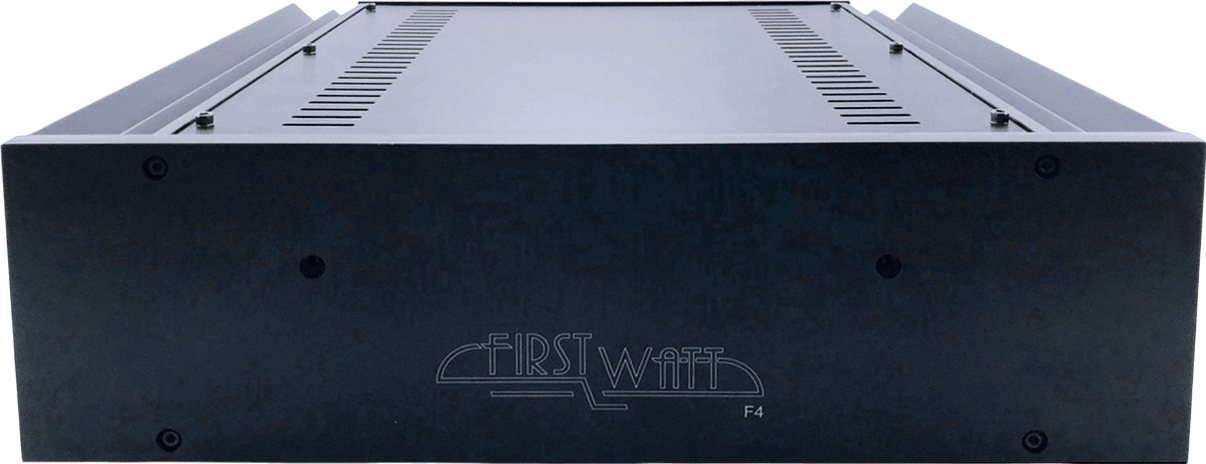
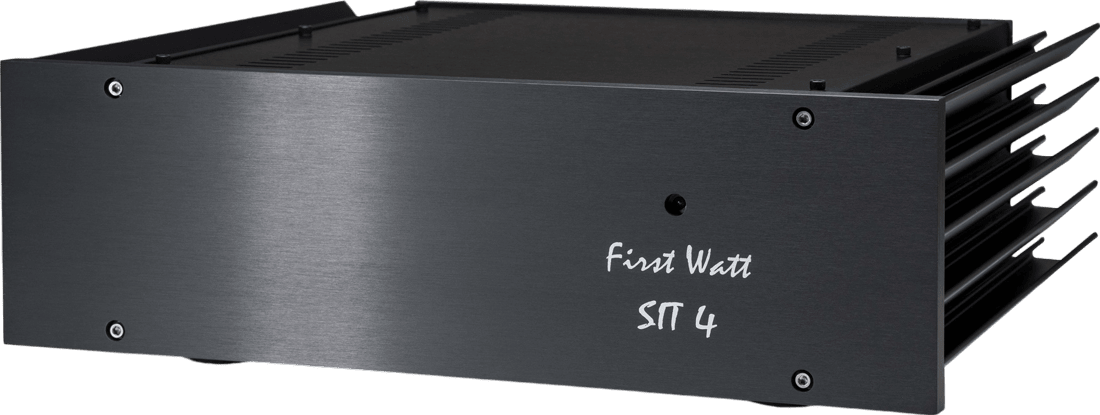
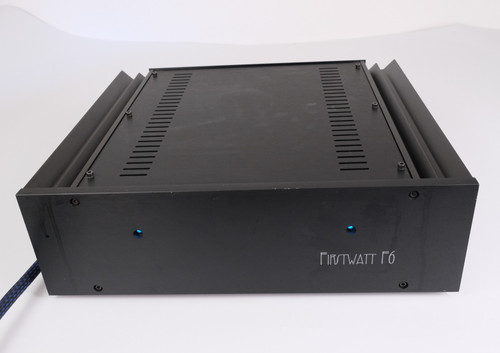
- The F4 conditions the signal and acts as a power buffer or Class A impedance converting amplifier, without voltage gain or feedback
- Current gain is provided, delivering +/- 20 volts in single-ended mode, double that in mono
- It is transparent to the qualities of the preceding preamp and avoids cyborg brutality
- It is ultra-resolved but supremely relaxed, and the harmonic distortion is predominantly the benign 2nd order kind
Product Considerations
- The F4 requires a preamp with sufficient voltage swing to amplify the source signal for desired SPLs
- Its performance is heavily dependent on the preamp's gain structure in relation to the speakers, room size, and desired volume levels
- It runs its heat sinks at about 25 degrees Celsius above ambient temperature, and a 1-hour warm-up period for best sonics is normal
Takeaway: The F4 is a unique amplifier that conditions the signal without adding voltage gain, making it great for systems with high-output sources and sensitive speakers. It delivers a transparent and relaxed sound, enhancing the qualities of the preamp while providing solid-state bass control.
All
F4
reviews


Manufacturer details
- Input Impedance: 47,000 ohms
- Output Impedance: 0.2 ohms
- Power Output (Stereo 8Ω): 25 watts
- Power Output (Stereo 4Ω): 50 watts
- Power Output (Mono 2Ω): 100 watts
- Power Output (Mono Balanced 8Ω): 100 watts at 1%
- Frequency Response: -0.5 dB at 0.1 Hz and 200 KHz
- Damping Factor: 40
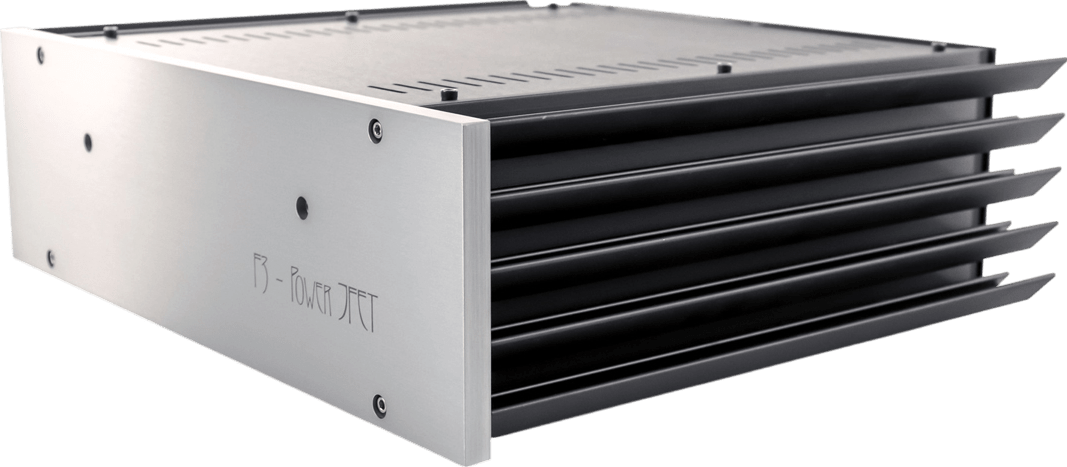
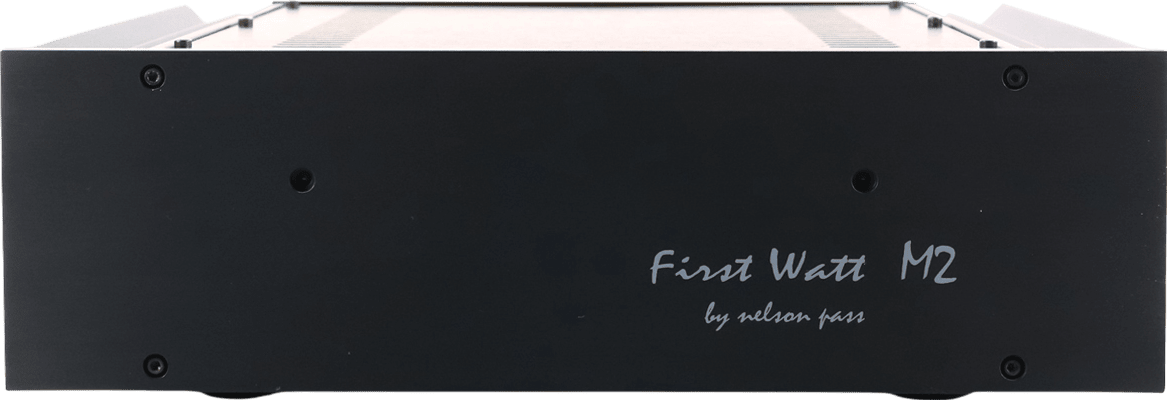
The F4 is Class A impedance converting amplifier, having no voltage gain or feedback. Its input impedance is 47,000 ohms, and its output impedance is about 0.2 ohms. It is suitable for driving a high sensitivity loudspeaker with the output of a preamp or other line-level audio source. It is also useful with a less sensitive loudspeaker in a bi-amped configuration where it takes input from the output of a conventional amplifier.
As a stereo amplifier with single-ended inputs and outputs, it will deliver up to 25 watts into 8 ohms with a damping factor of 40. It will do 50 watts into 4 ohms, and as a mono-block amplifier with parallel inputs and outputs, it will do about 100 watts into 2 ohms. As a mono-block amplifier with balanced inputs and outputs the power output rating is 100 watts into 8 ohms at 1%.
The amplifier operates Class A to 25 watts (50 peak), and the distortion is 2nd and 3rd harmonic in character, rising or declining in proportion to the output power. The amplifier has a direct coupled input and output, with a -0.5 dB rolloff around .1 Hz and 200 KHz. It does a clean square wave at 100 Khz.





Brand highlights
Taking a step back to look at reviewers' thoughts of the brand's entire lineup—not just this product—what stands out most is the following:
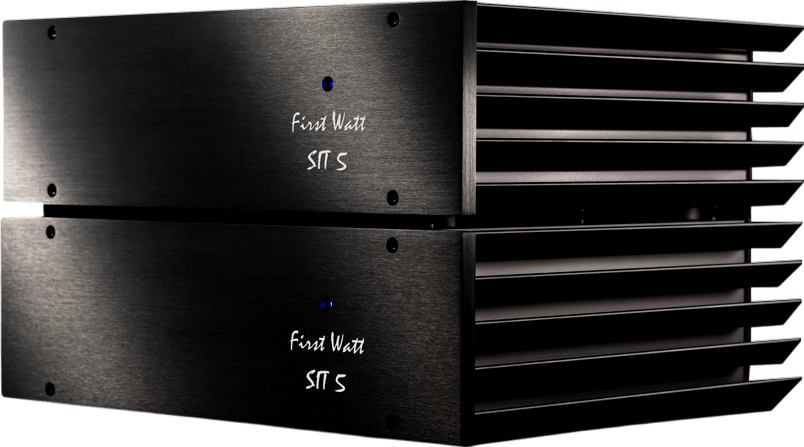
- First Watt amplifiers prioritize simplicity and elegance in design, often featuring only a few gain stages and a minimum number of parts.
- The brand has a reputation for using uncommon or out-of-production components, such as Static Induction Transistors (SITs) and specific JFETs, to achieve a unique sonic signature.
- They often operate in Class A with low power output, typically 25 watts or less, emphasizing sound quality and harmonic accuracy over raw power.
- First Watt does not conform to a specific formula and various topologies are explored, with and without feedback, and with various active devices, each amplifier is unique.
Select products

Our take on the brand
Look inside the brand
Our interview with the brand
What are two key technological innovations or strong opinions that differ you from other brands?
What's your approach to customer support?
What are your favorite tracks for showcasing the strength of your products?
What other products pair best with yours?

Used
First Watt







What if you spend more?


.svg)
Our summary
Product Strengths
- Half-width size is desirable for storage, as two units can fit side-by-side on a typical hifi shelf
- Strong dynamic profile, dimensionality, and power for most performance speakers on the market
- Bass is much more controlled, and leading edges are significantly more defined, compared to the previous version
- Vocals feel lifelike and tangible
- Possesses a nice overall tone and a well executed lack of dryness or 'thin' character
Product Considerations
- A single Aegir 2 box delivers audiophile fun with efficient setups, but shines best in a dual mono two amp situation
- The top of the unit does heat up slightly with use
- May not be the perfect choice for high demand electrostatics
- Requires a balanced connection from the pre amp to bring out the best from the setup
- Takes a little longer to boot up compared to the original Aegir
Comparisons (according to reviewers)
- Vs Schiit Vidar: The Aegir 2 has a sound that is more rich and thick, but still defined
- Vs Aegir G1 (original): The Aegir 2 has increased dynamics and low end control compared to the original
Takeaway: The Schiit Audio Aegir 2 is a fun power amplifier that offers a strong dynamic profile and nice overall tone. It brings dimensionality and sufficient power for most performance speakers, making it an enjoyable addition to any audiophile setup.
Video review
Our take on the brand


Our summary
Product Strengths
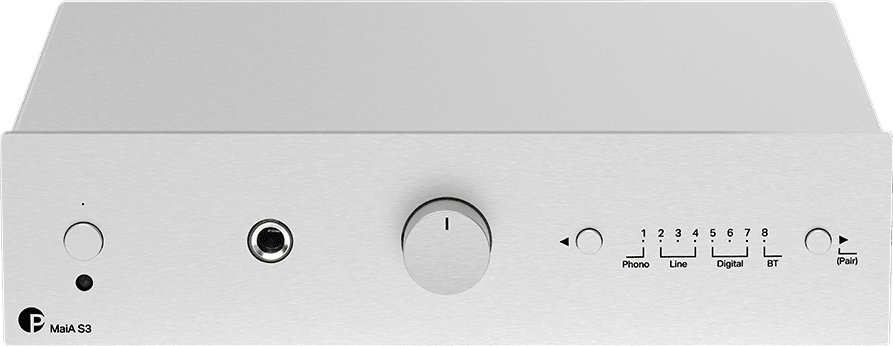
- Noted for its impossibly small and ultra-compact size, making it suitable for compact living spaces
- Offers a feature-rich design with an integrated phono stage, aptX HD Bluetooth connectivity, and additional RCA and TOSLINK digital inputs
- The unit runs cool due to its Class D amplifier design, making it energy-efficient
- Connectivity is praised, particularly the aptX HD Bluetooth, which delivers superior streaming quality
- Delivers a lively and engaging sound with excellent detail across phono and digital connections
Product Considerations
- The limited power output (23W at 8 ohms, 40W at 4 ohms) may be better suited to smaller listening spaces and efficient loudspeakers
- Some reviewers found the bass to be slightly lean, lacking heft or roundness
- The included remote control's button configuration for volume and input selection is unconventional
- The phono stage may benefit from an upgrade with an external phono amplifier for improved performance
- One reviewer found the line out voltage for the subwoofer is not strong enough to drive a powered sub
Comparisons (according to reviewers)
- Compared to the Pro-Ject Stereobox DS2, the MaiA S3 is more affordable and has digital inputs and superior Bluetooth connectivity
- Compared to the Rega Io, the MaiA S3 has strength in depth—specifically referring to the detail across the line, phono and digital connections
- The MaiA S3 is described as more resolving and ultra clean compared to the Rotel amplifier, with the Rotel offering a slightly more colored and warm sound
- Compared to the Technics amplifier, moving to the MaiA S3 results in a faster transit response, especially noticeable in classical music, while the Technics sounds slow in comparison
Takeaway: The Pro-Ject MaiA S3 is a compact and versatile integrated amplifier that delivers impressive sound quality and a range of connectivity options, making it an excellent choice for audiophiles with limited space. It is especially appealing to vinyl enthusiasts looking for a convenient and high-performing solution.
Video review
Our take on the brand
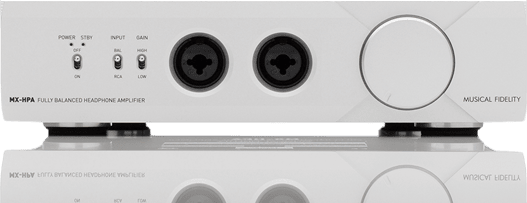

The MX-HPA’s technical performance is stunning. Typically, distortion from 20 Hz to 40 kHz is less than 0.005%. Signal-to-noise ratio is better than 120dB (‘A’ weighted). Frequency response is ruler flat from 10 Hz to 20 kHz (-0.1dB). The MX-HPA is capable of a short-term peak of 10 watts (for one cycle) and has two gain positions: 18dB (8X) and 24dB (15X). Inputs are either balanced or single-ended. The MX-HPA will automatically convert single-ended inputs to balanced. The MX-HPA is genuinely fully balanced from beginning to end.
Product Strengths
- Exceptional build quality with an elegant, minimalist aesthetic
- Fully balanced design
- Exceptional signal-to-noise ratio (>120dB 'A' weighted)
- Versatile because it automatically converts single-ended inputs to balanced signals
- Dual gain settings for versatility with virtually any headphone impedance
Product Considerations
- May be overkill for entry-level headphones
- The twin-XLR alternative is not the only means of balanced connection
Takeaway: The Musical Fidelity MX HPA is a remarkable piece of equipment that represents a significant achievement in balanced amplification design. It delivers a listening experience that is hard to surpass with technical excellence and practical versatility.
Video review
Our take on the brand
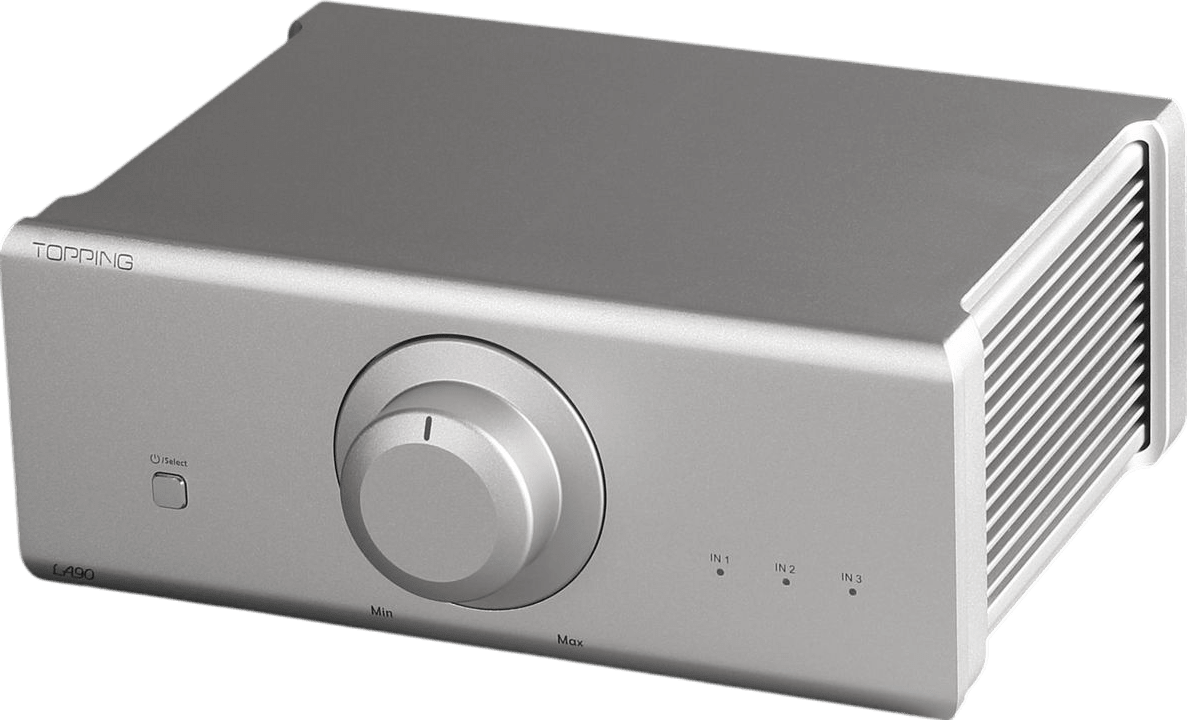

Our summary
Product Strengths
- Delivers a clean and detailed sound, allowing listeners to hear nuances in recordings
- Offers good instrument separation and imaging
- Has a low noise floor, creating a 'black background' and enhancing the listening experience
- Compact size for an A-B amplifier
- Does not have RCA inputs, requiring XLR or TRS balanced connections
Product Considerations
- May not have enough power for inefficient speakers or large rooms
- External power supply 'brick' is large
- No remote control
Comparisons (according to reviewers)
- The LA90 has a more neutral sound than Cambridge Audio AXA25, which is cleaner and more detailed
- The LA90 comes close to Benchmark AHB2's performance, but does not outperform it in bass impact and soundstage size, and the AHB2 also has more protection systems
- The LA90 offers more vocal clarity and fuller bottom end than Schiit Vidar, but the Vidar is more exciting on top
- Emotiva A1's have more power
Takeaway: The Topping LA-90 Discrete is a small amplifier that produces very clear sound with good detail, making it great for those who already have balanced audio equipment. It could be a nice upgrade for those seeking to hear all the subtleties in their music.
Video review
Our take on the brand
What competes at this price?
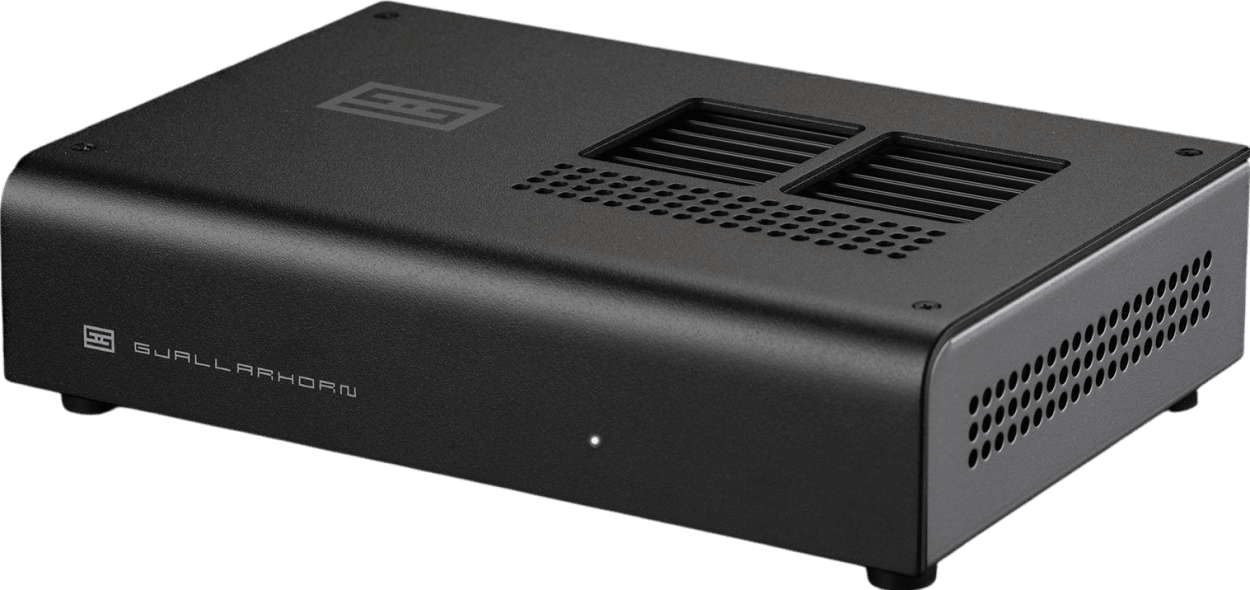

Our Summary
Product Strengths
- Impressive clarity, especially in the midrange, enhances detail in the music
- Bass performance is focused and precise, adding detail and punch to the lower frequencies
- A wide and expansive soundstage creates a sense of space and separation between instruments
- The amp is small and light, but is a fully linear class AB amplifier with a transformer inside
- It offers neutral presentation
- Requires a preamplifier with volume control, as it is a power amplifier without a volume knob itself
- Banana plugs are required for speaker connections, spades are not compatible
- In monoblock configuration, a preamplifier with balanced outputs is required
Product Considerations
- Requires a preamplifier with volume control, as it is a power amplifier without a volume knob itself
- Banana plugs are required for speaker connections, spades are not compatible
- In monoblock configuration, a preamplifier with balanced outputs is required
- 10 watts might not be enough for all listening setups and all environments
- It is important to pair this amp with speakers with high efficiency rating
Comparisons (according to reviewers)
- Versus the Cambridge Audio 651A—the Gjallarhorn had a wider and cleaner soundstage, provided a bigger bass performance, and separated the instruments in a more efficient manner, thus enhancing the clarity
- Versus the Rega Brio-R—the Gjallarhorn had a wider and cleaner soundstage, provided a bigger bass performance, and separated the instruments in a more efficient manner, thus enhancing the clarity
- Versus the Fosi Audio BT20A Pro—the Gjallarhorn had a bit more space and instrument separation
- Versus the Schiit Vidar—the Vidar has a lot more power, which is not the Gjallarhorn's intent
- Versus the Schiit Rekkr—the Gjallarhorn outperforms the Rekkr (2 watts), and is designed for more powerful home set ups rather than desktops
Takeaway: The Gjallarhorn is a versatile amplifier that excels in near-field setups and can be transformed into a powerful monoblock system, delivering clarity and balanced sound. It is a great choice for those seeking a compact yet capable amplifier for smaller spaces or desktop use, especially when paired with efficient speakers.
Video review
Our take on the brand

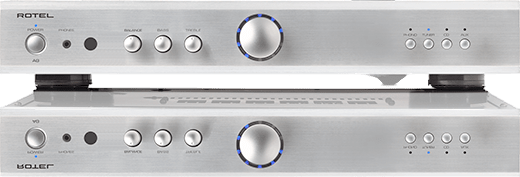

Our Summary
Product Strengths
- Offers a full and robust sound
- Simple, stripped-down integrated amplifier that's easy to set up and use, with the essentials covered
- Solidly made, with good build quality and well-engineered controls
- The phono stage is surprisingly good, especially if paired with a modest turntable
- Features tone controls (bass and treble) adjustable by ±6 decibels, are a notable and highly recommended feature
Product Considerations
- Lacks digital inputs and Bluetooth connectivity which are common at its price point
- Has no outputs on the unit whatsoever, which makes integrating a subwoofer rather difficult
- The remote is a large plastic letdown
- At higher volumes, depending on the speakers used, the sound can become a bit aggressive
- The power output is modest
Comparisons (according to reviewers)
- Vs Marantz PM6007: Delivers a more authentic performance thanks to its pleasing resolution and greater insight into the subtleties
Takeaway: The Rotel A8 is a great starter amplifier that's easy to incorporate into any system and has surprisingly audiophile performance for the price. Its simplicity and sound quality make it ideal for those who appreciate straightforward design and solid performance.
Video review
Our take on the brand
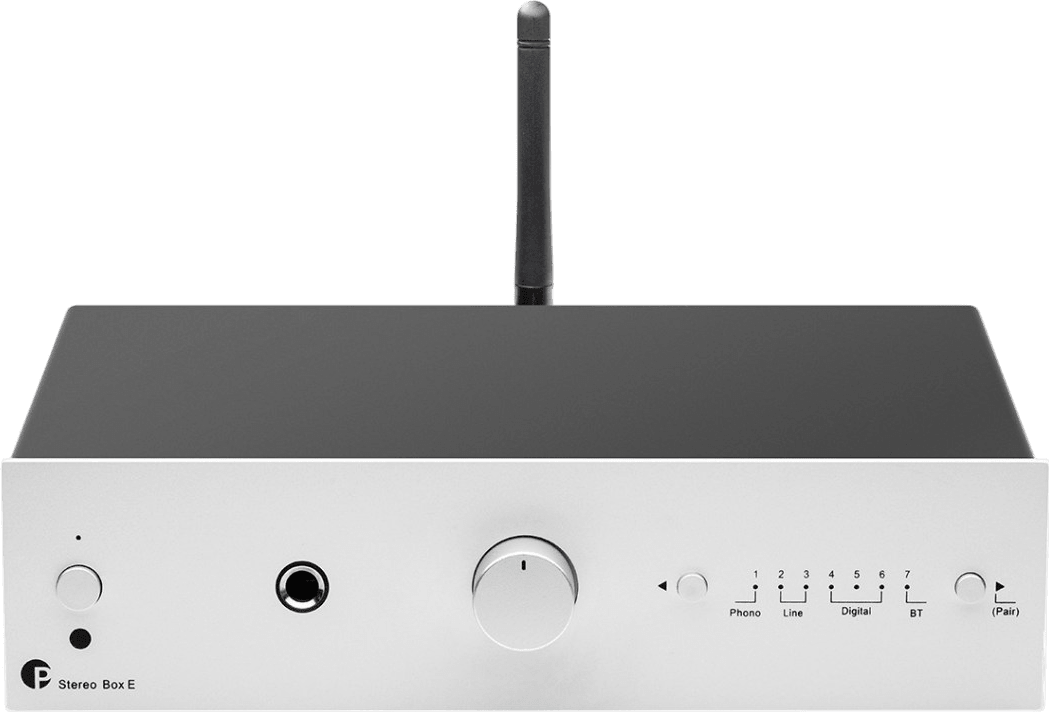

Our Summary
Product Strengths
- Tonally sweet and detailed
- Able to engage with faster material
- Impressive phono stage with low noise and plenty of gain
- Extra functionality that works a charm
- 21-watt output is sufficient for any listening level
- Connectivity options
Product Considerations
- Dinky volume control is a little sensitive to over adjustment
- Input indicator is invisible at any distance
- Block type PSUs mean that they aren't quite as compact as expected
Comparisons (according to reviewers)
- The Node Nano is fractionally better doing its own decoding than the Stereo Box E, when the Node Nano is connected via the analogue out against the coax
Takeaway: The Stereo Box E is a sweet and detailed amplifier with impressive phono stage and sufficient output, which makes it a genuinely good piece of affordable two channel hifi. It provides new arrivals the starting point they need to build systems of their own
Video review
Our take on the brand
.png)
Our Summary
Product Strengths
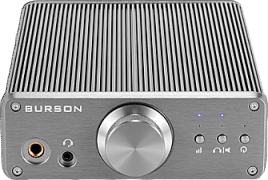
- Good sound quality, especially in the midrange, leads to vivid and well-formed vocals
- Versatile, it works well with both efficient headphones/IEMs and moderately powered speakers
- Compact design and good build quality, with the chassis acting as a heatsink
- Ability to roll op amps allows users to customize the sound signature
- Ample power for most headphones and nearfield speaker setups
- Only one RCA input, which may be limiting for some users
Product Considerations
- Speaker amplifier power (35-45W) might be insufficient for power-hungry speakers or larger rooms
- The base model op amps are sonically inferior to upgrade options
- Mild turn-off thump present
Comparisons (according to reviewers)
- The Funk has a narrower but deeper soundstage with better imaging and layering than the Arylic A08 Pro
- The Funk has superior imaging, but less potential power output depending on the Arylic's power supply than the Arylic A07/A08 Pro
- The Funk is preferred for desktop speaker setups with Vivid opamps when compared to Schiit Aegir
Takeaway: The Burson Funk is a solid choice for people wanting good sound from both their headphones and speakers in a single, convenient unit. The ability to change the sound by swapping op amps is a welcome feature for those who like to tinker and upgrade.
Video review
Our take on the brand

Our Summary
Product Strengths
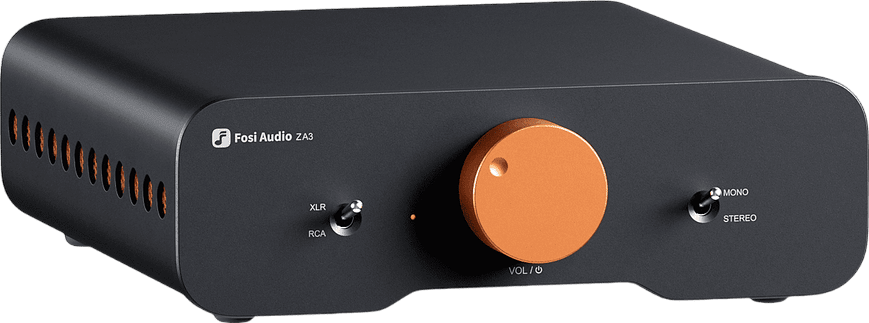
- Great value for the money and an attractive price point
- Balanced input and single-ended RCA input
- Op amps are swappable
- Compact form factor
- Versatile with stereo and mono mode
Product Considerations
- The volume control was found to be touchy by some reviewers
- The included power brick is quite large, almost as big as the unit itself
- The binding posts are small
- The RCA input sounds inferior to the XLR input
- The amplifier does not high pass the mains when a subwoofer is plugged in
Comparisons (according to reviewers)
- Vs Fosi Audio V3: ZA3 is considered a more mature version with stylistic elements and new features like balanced inputs and mono mode, with a naturalness in the tonal quality
- Vs SMSL AO200 MKII: AO200 MKII delivers better clarity, definition, and resolution of the sound
Takeaway: The ZA3 is a versatile and compact amplifier that offers great value, especially for those starting their audio journey. Its ability to be used in both stereo and mono configurations and the option to upgrade components make it a flexible choice for various setups.
Video review
Our take on the brand
Questions? Ask the brand's dealers.
How to buy
Amplifiers
Search all hifi products
Explore our database of 10,000+ new and 25,000+ used hifi products.