

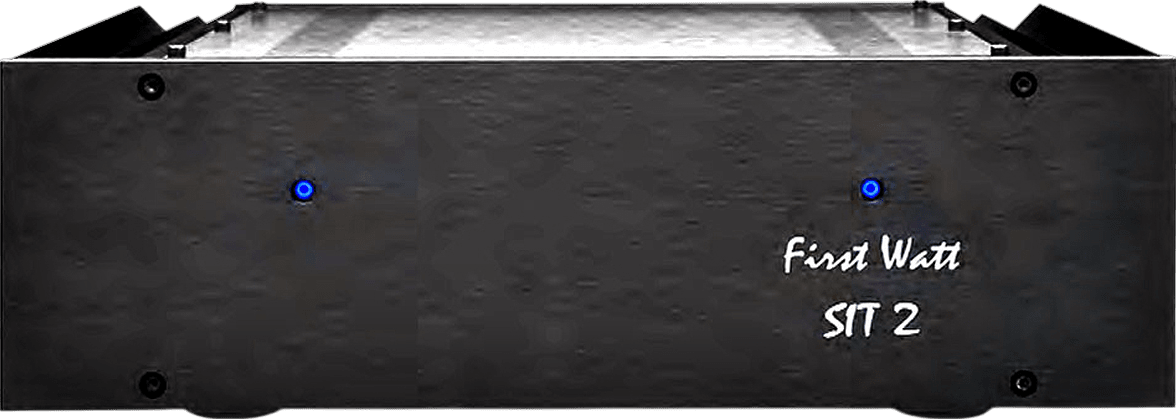


Note that this is a discontinued product. You may want to visit the brand's page here to browse their newer products.
What reviewers think
Bloggers and YouTubers have tried this product—so we've summarized their strongest opinions below. Links to full reviews follow.
Product Strengths
- Tube-like sonic characteristic without the shortcomings of tube designs
- Renders music with beautiful purity regarding tonality/timbres and creates a large, open, and realistic soundstage
- Passes all the micro-details contained in the music with lucidity and clarity
- Does not require much warm-up time, unlike tube amplifiers
- Excellent crosstalk performance of >100dB between left and right sides
Product Considerations
- Only produces 10 watts per channel, requiring relatively high-efficiency speakers
- Runs very hot as a Class A SET design and cannot be placed in an enclosed rack
- Requires a reference-level preamplifier to maintain its purity of tone, colors, and timbres
- High output impedance means the speaker's impedance curve will play a huge part in how well it matches
- High amounts of 2nd and 3rd order harmonics, resulting in high intermodulation distortion
Comparisons (according to reviewers)
- Vs First Watt SIT-2: Pass Amp Camp Amp had a quieter background with less hum or hiss at normal playback volume
Takeaway: The SIT-2 is a unique amplifier known for its ability to render music with purity and clarity, creating a large soundstage. It offers a tube-like experience with solid-state reliability and is best suited for audiophiles who value tone and detail.
All
SIT-2
reviews


Manufacturer details
- Input Impedance: 47000 ohms
- Output Impedance: 4 ohms
- Voltage Gain: 18 dB
- Current Gain: 10,000:1
- Frequency Response: 1.5 Hz to 200 KHz
- Compatible Load Impedance: 4 ohms to 16 ohms



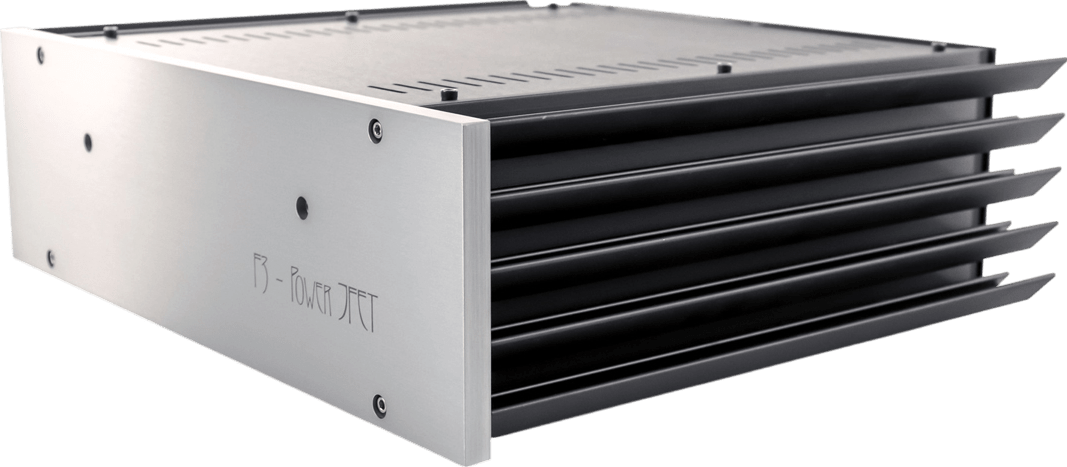

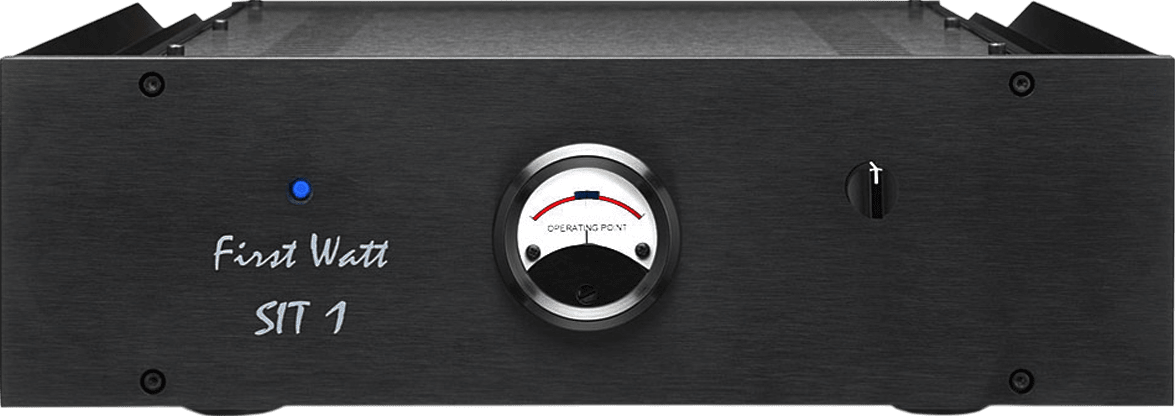
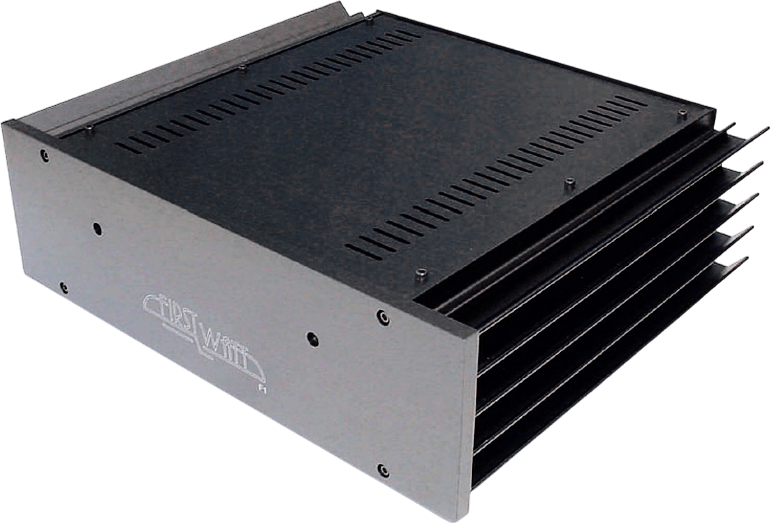
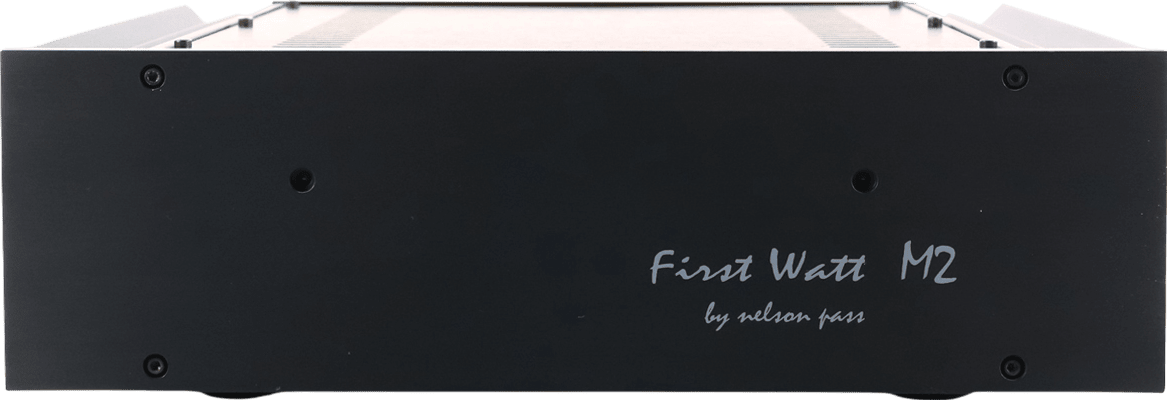
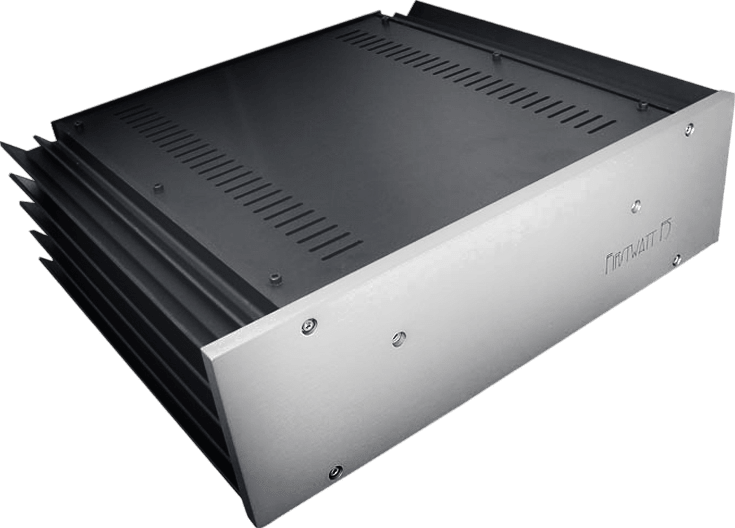
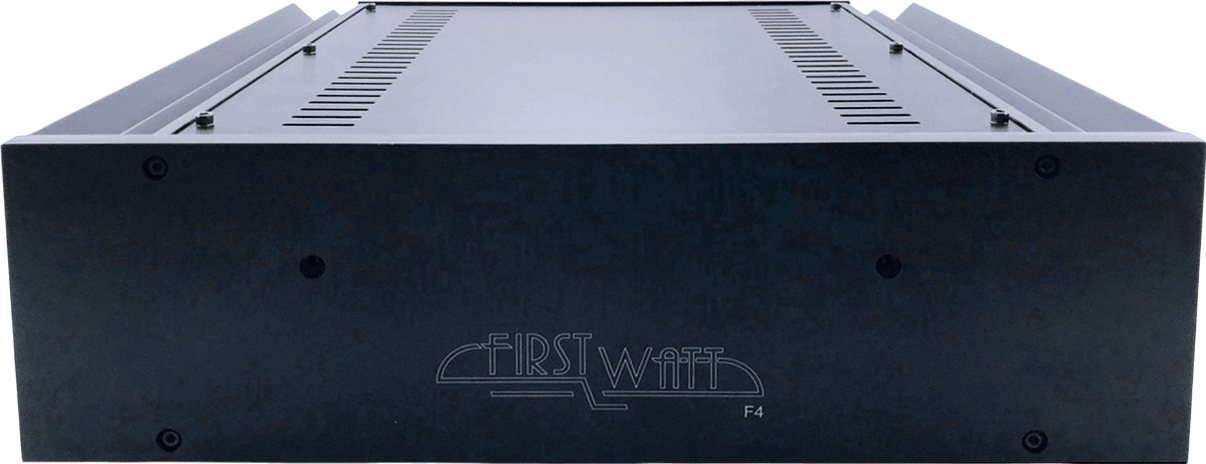

Brand highlights
Taking a step back to look at reviewers' thoughts of the brand's entire lineup—not just this product—what stands out most is the following:
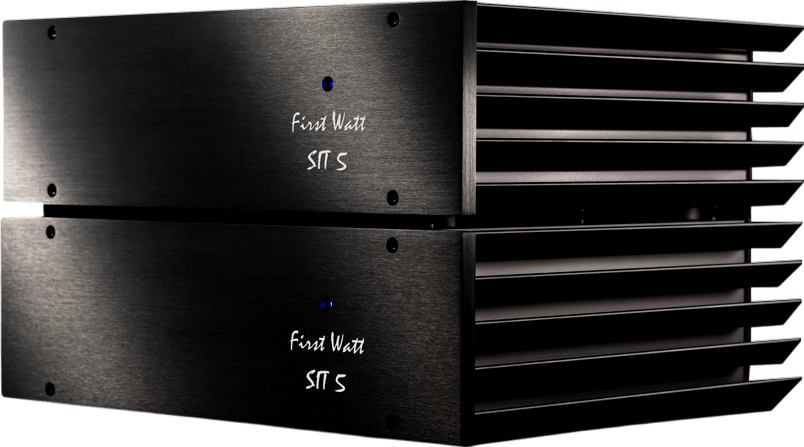
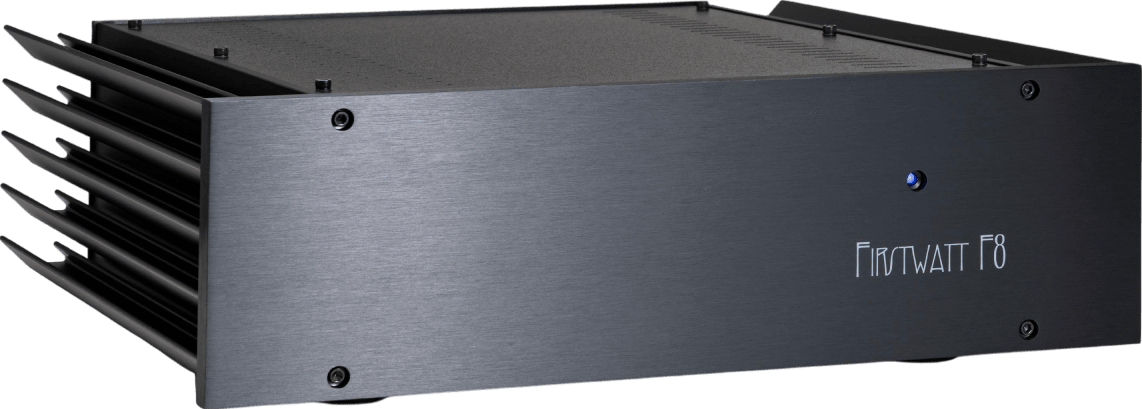
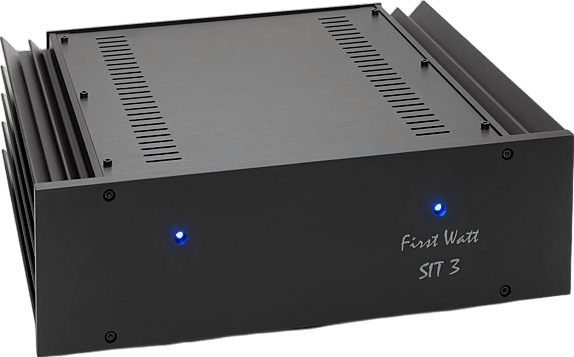
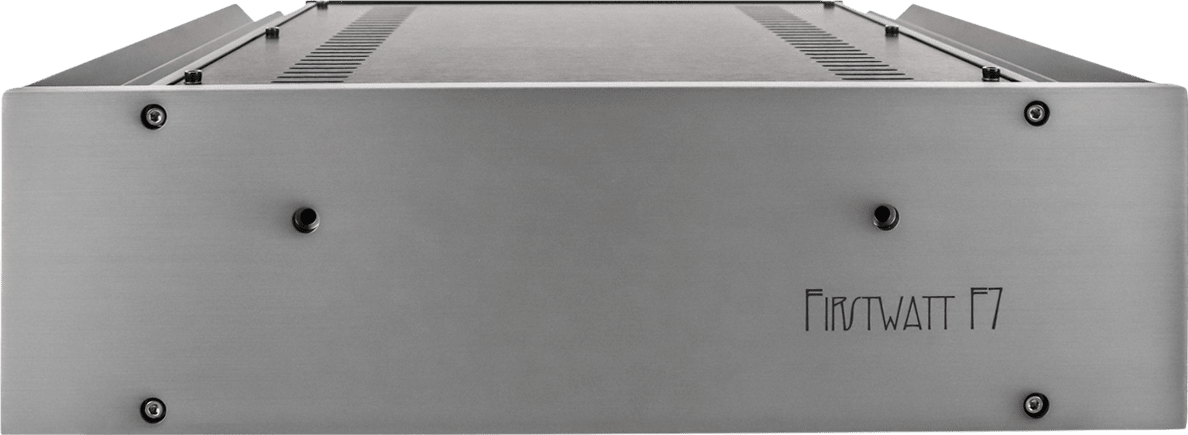
- First Watt amplifiers prioritize simplicity and elegance in design, often featuring only a few gain stages and a minimum number of parts.
- The brand has a reputation for using uncommon or out-of-production components, such as Static Induction Transistors (SITs) and specific JFETs, to achieve a unique sonic signature.
- They often operate in Class A with low power output, typically 25 watts or less, emphasizing sound quality and harmonic accuracy over raw power.
- First Watt does not conform to a specific formula and various topologies are explored, with and without feedback, and with various active devices, each amplifier is unique.
Select products

Our take on the brand
Look inside the brand
Our interview with the brand
What are two key technological innovations or strong opinions that differ you from other brands?
What's your approach to customer support?
What are your favorite tracks for showcasing the strength of your products?
What other products pair best with yours?

Used
First Watt







What if you spend more?
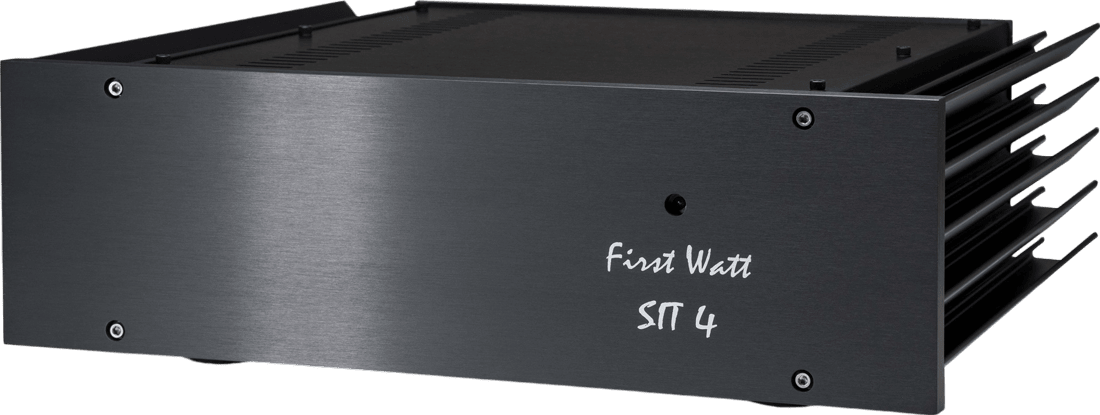


The SIT-4 is the First Watt power amplifier using the industrial grade Static Induction Transistors. It is preceded by the ground breaking SIT-1, 2, and 3 and follows their technical philosophy and construction. An important difference in the SIT-4 is the SIT device itself.
The previous three designs used Silicon Carbide to make a custom vertical power Jfet with a low impedance Drain whose character nicely emulated a power Triode tube, but directly operating at the current and voltage that would drive loudspeakers without the requirement for an output transformer. SITs lend themselves to high quality audio performance with very simple Class A circuits with little or no dependence on other active circuit elements or negative feedback.
The Common Source mode SIT-1 could do the job surrounded by only passive elements, and the SIT-2 required only bias from a current source. The SIT-3 upped the game with Common Drain design biased by a novel Pass circuit, MUFF (Mu Follower/Follower). The SIT-4 follows in the Common Source footsteps but ups the game with an industrial SIT.
The SIT-1/2/3 gain transistors were rated at a few amps and about 50 watts dissipation. This amplifier uses a Tokin THF51s rated at 600 volts, 30 amps and 400 watts. As a practical matter, the limitations of the SIT-4 circuit are the size of the heat sinks. And this big Jfet manages a bandwidth of 50 megaHertz…
The circuit of the SIT-4 is simple. Q1 is a new-old-stock Toshiba 2SK170 which drives the Gate of the Q2 SIT, whose output is biased by a mu-follower current source Q3.

.svg)
Product Strengths
- Uses a Static Induction Transistor (SIT), which has characteristics similar to a triode vacuum tube
- It expands and opens up soundstage, with a gorgeous sound and great midrange, with voices sounding present and full-bodied
- The amp holds a conversation with the speaker, letting it 'have it your way'—rather than forcing its own sound
- It's spectacular on tone complexity, spatial hydration, fleshiness and vividness, making it sound off-charts organic, elastic and tangible
- The main aspect that positions it noticeably above all other amps is immersion, making music three-dimensional, material, enveloping
Product Considerations
- The SIT-4 is a limited production piece due to the limited availability of the Tokin SIT transistors
- The power output is limited (10 watts into 8 ohms, 5 watts into 4 ohms), so it's not a universal amplifier
- It is not ideal for speakers that require a lot of power, like Magnepans or electrostatic speakers
- The power switch is located on the rear of the unit
- Runs very hot
Comparisons (according to reviewers)
- Vs First Watt SIT3: It sounds cooler in tonal balance and has more 3D imaging and body
- Vs Pass Labs XA-25: It sounds more immersive, while the XA-25 is sharper and more focused
- Vs First Watt F7: SIT-4 felt more gathered, punchier and texturally juicier, the F7 was more diffused, innocent, icier, leaner and color-wise opaque
- Vs Elekit TU-8900: It is more rugged and expressive, while the TU-8900 presents recordings more aesthetically
Takeaway: The SIT-4 is a specialized amplifier that produces great sound with the right speakers, with beautiful tone and expands the soundstage. It's a good option for people who like tube amps but want a solid-state amplifier.
Video review
Our take on the brand
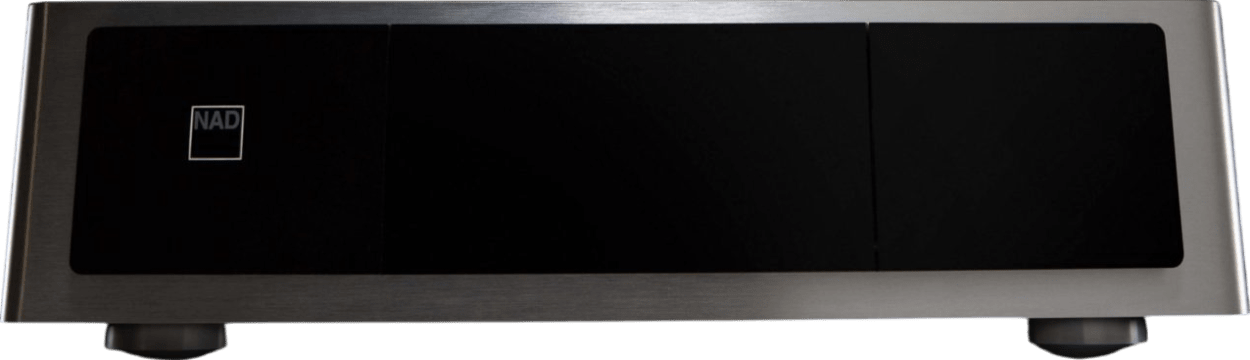

Building on NAD’s long tradition of identifying and developing cutting-edge amplification technology, the M23 HybridDigital Stereo Power Amplifier features Purifi Audio’s Eigentakt™ design, a once-in-a-decade innovation that virtually eliminates harmonic and intermodulation distortion. Noise is inaudible, for a completely black background and exquisite micro-detail. Conservatively rated at 2x200W continuous into 8 ohms and 2x380W into 4 ohms, the M23 can deliver live performance levels through any loudspeaker. With its unique combination of features, performance, and value, the M23 represents the new benchmark for the stereo power amplifier.
Our summary
Product Strengths
- The M23's build quality feels solid and elegant, with impressive small design details
- The sound is striking in its purity and clarity
- It offers up to three levels of gain, switchable on the back panel, to best fit the system
- It provides a clear sound without sounding hard
- It features Purifi Eigentakt Class D amplification, which provides virtually unmeasurable distortion levels
Product Considerations
- The bass is clean but may be perceived as a little on the cool side and not as 'wompy-sounding'
- The M23 is not a forgiving amplifier that makes everything sound sweet and wonderful—it's not for those seeking a soft and mellow sound
- Bridging with speakers below 5 or 6 ohms is not recommended, as the amp will current limit and potentially shut down
- The reviewer found ergonomical challenges using fancy speaker cables in bridged mode due to wide terminal spacing
- The capacitive touch power button can accidentally trigger
Comparisons (according to reviewers)
- Vs Bel Canto C6i: The M23 offered a layer of refinement and better reproduction of the recording space
- Vs Pass XA25: The M23 had more transparent sound and detail, especially in the treble and upper mids, but lacked the organic quality of the XA25
- Vs HiFi Rose RS 520: The M23 sounded cleaner and had better separation/depth, HiFi Rose seemed to have an EQ built-in, emphasizing midrange and bass
- Vs NAD C298: The M23 is more neutral, deals with decay more naturally, and has better casework, making it look high-end
- Vs Anthem M1 monoblock amplifiers: The M23 was slightly more transparent throughout the entire frequency range
- Vs Bryston 4B 3: The Bryston had more grunt but the M23 is more neutral
Takeaway: The NAD M23 is a powerful and precise amplifier that delivers clean and clear sound, making it a great choice for audiophiles who want to hear their music as accurately as possible. It is especially well-suited for those looking to build a high-end system around a quality preamp or DAC.
Video review
Our take on the brand

Our summary
Product Strengths
- Delivers ample, clean, and dynamic power to all channels, ensuring speakers reach their full potential
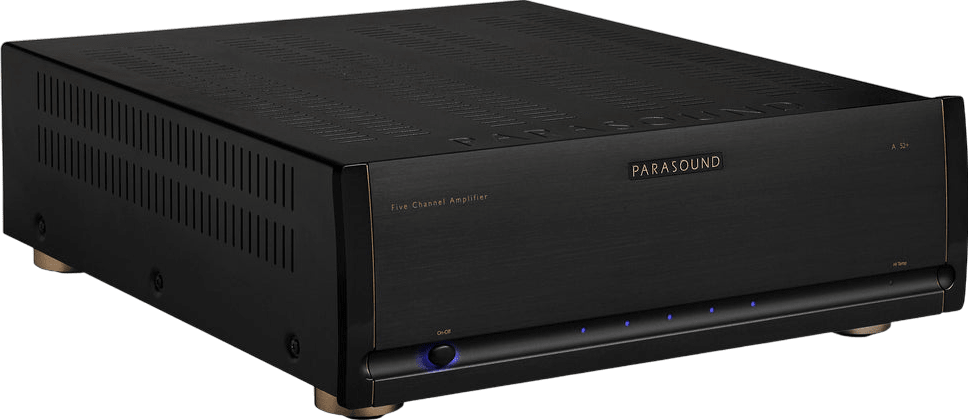
- Designed by John Curl, featuring Class A/AB circuitry for a balance of warmth, richness, efficiency, and punch
- Pleasing sound for dialogue and music, with very high-quality and detail
- Versatile, suitable for both movies and music, with a low noise floor for quiet passages and great transparency—that doesn't color the sound
- Built to last, with high-quality internal components
- Signal-sensing power-on mode can be fussy and may require adjustment
Product Considerations
- Super heavy and large, potentially requiring rearranging a system or dedicated rack space
- Only available in anodized black
Comparisons (according to reviewers)
- The A52 Plus has bigger parts and bigger power than the Outlaw Model 5000, including balanced XLR connections
- A52 Plus is the 'teenager' compared to the elder Parasound A51
- Parasound A52+ sounds better, is more accurate, and more powerful than the Denon receiver's amplifier section
Takeaway: The Parasound A52+ Halo is a versatile and powerful amplifier that delivers clean, dynamic sound for both home theater and music systems, with a build quality designed to last. This is a worthy investment for audiophiles and home theater enthusiasts who seek high-quality audio performance.
Video review
Our take on the brand
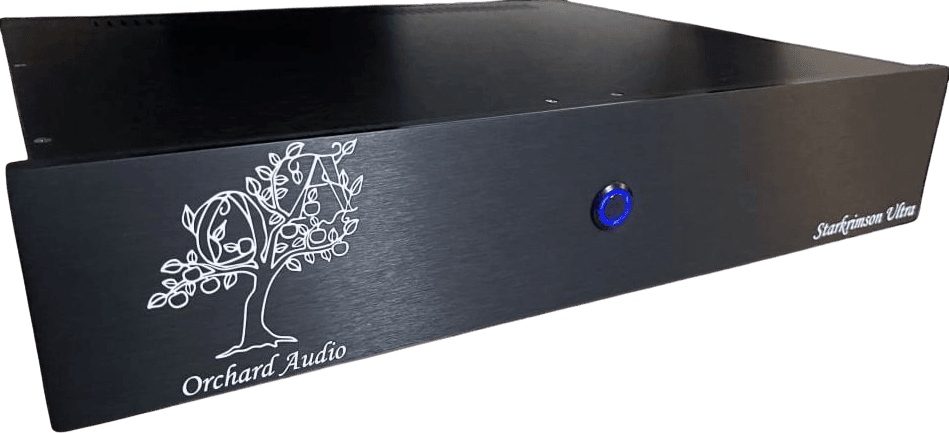

This amplifier has an independent power supply for each channel and 87,200uF (43,600 per channel) of added capacitance on the power supply rails. The Starkrimson® Stereo Ultra DMC offers phenomenal sonic performance. Its advanced design and meticulous construction ensure exceptional clarity, power, and dynamic range. Experience the nuances of your favorite recordings with crystal clear detail and realism. A must-have for discerning audiophiles, and music lovers/enthusiasts seeking to elevate their musical experience.
Our summary
Product Strengths
- Exceptionally transparent sound output quality
- Exceptionally powerful, capable of outputting 500W into a 4-Ohm load
- Delivers a remarkably clean, transparent sound with very little noise or distortion
- The amplifier's ability to reproduce bass is awe-inspiring and delivers deep, powerful bass without distortion
- Runs cool and weighs very little for its sound output, making it easy to move around
Product Considerations
- Options can be a little pricy, such as the 12v trigger and RCA inputs
- The Starkrimson Stereo Ultra may lead to further system upgrades
- Depending on your sources, the Starkrimson Stereo Ultra will play exactly what you feed it, good or bad, and if your source components are slow, the Starkrimson Stereo Ultra will not speed them up
- Power on only after all connections are properly made, including the power cord, analog inputs, and speaker outputs, and wait five minutes after powering it off before removing any of the connections
Comparisons (according to reviewers)
- Compared to the Krell S550i integrated amp, the Starkrimson Stereo Ultra showed a much faster and finer resolution of the upper frequencies of the human voice and a far greater ability to play more of the microdetails of a recording
Takeaway: The Starkrimson amplifier is well-built and provides a level of speed and transparency to hifi music that makes listening to music very fun. Its GaN modules can be upgraded and it is available in several configurations.
Video review
Our take on the brand
What competes at this price?
.png)
Our Summary
Product Strengths
- Delivers a tube-like sound, with a warm and musical presentation
- Robust power supply with substantial capacitance (200,000 microfarads) provides good bass control and dynamics
- Transparent and precise sound, with a wide and deep soundstage
- Balanced design with both RCA and XLR inputs, the latter offering a cleaner and more dynamic sound
- Offers excellent value, outperforming other amplifiers in a similar price range
Product Considerations
- Requires a pre-amplifier to control volume
- May exhibit slight transformer noise when close to the unit
- Does not have pop control, requiring caution when plugging/unplugging connections
- Some reviewers found the logo placement slightly off-center and the blue LED power light too bright
- Bass control is not as punchy or defined for some tastes, leaning towards a tube-like bass delivery
Comparisons (according to reviewers)
- The TSA-75 has a different, more flavorful sound signature compared to the Orchard Audio's neutral sound
- The TSA-75 provides superior micro detail, cleanliness, clarity, and stereo imaging, compared to Schiit Audio Vidar 2
- Performance is head-to-head with the Denafrips Thalo, depending on sound preference—the more balanced, snappy presentation of the Thalo, or the more V-shaped sound with greater depth and soundstage of the TSA-75
- The TSA-75 has a distinct sound signature, unlike Emotiva amps
- The TSA-75 outperforms the McIntosh MC275 Mark VI in audiophile performance
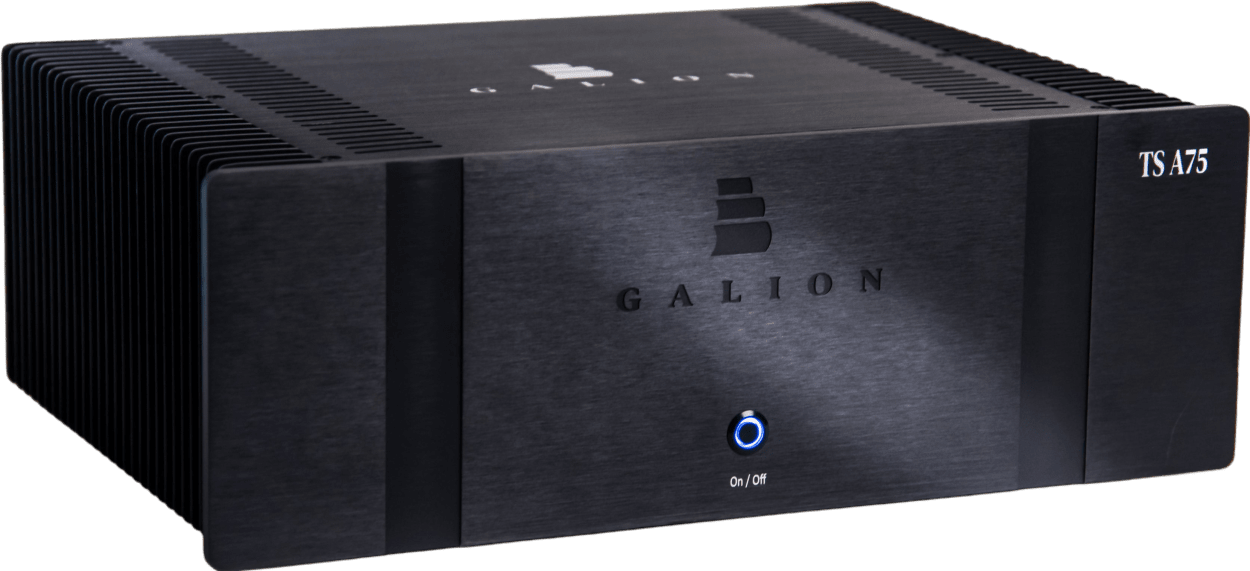
Takeaway: The Galion Audio TS A75 is a well-built amplifier that delivers a warm, tube-like sound with good bass and a wide soundstage. It provides excellent value and is a great choice for those looking for a musical and engaging listening experience.
Video review
Our take on the brand



Our Summary
Product Strengths
- Robust, effortless power with excellent control makes it easy to drive all speakers with authority and deliver a satisfying listening experience.
- Balanced and neutral sound, with a solid low end that prevents it from sounding dull or anemic, while also ensuring it is not too aggressive to cause listening fatigue.
- Excellent timing makes music engaging and foot-tapping, and is particularly impressive with genres such as R&B and soundtracks.
- Built in the USA, it has a 5 year warranty and 15 day satisfaction guarantee
Product Considerations
- Not ideal for listeners seeking a romantic, sweet, and smooth midrange, or those who prefer a very lively sound.
- The amp required careful system matching to achieve its full potential, particularly needing a high-end preamp to unlock greater refinement and resolution.
- Bass performance might be seriously challenged by more modern amplifiers.
- There is a slight differential in gain
Comparisons (according to reviewers)
- Compared to Emotiva A1s, the Tyr has more bass, more clarity in the bass, and is less veiled overall
- Reminiscent of McIntosh 7270—the Tyr gives off similar 'Mac vibes'.
Takeaway:
The Schiit Tyr monoblocks deliver a lot of power and control, making music sound good with a balanced and neutral style. It's a great option for an amplifier that can handle almost any speaker and is versatile.
Video review
Our take on the brand

Our Summary
Product Strengths
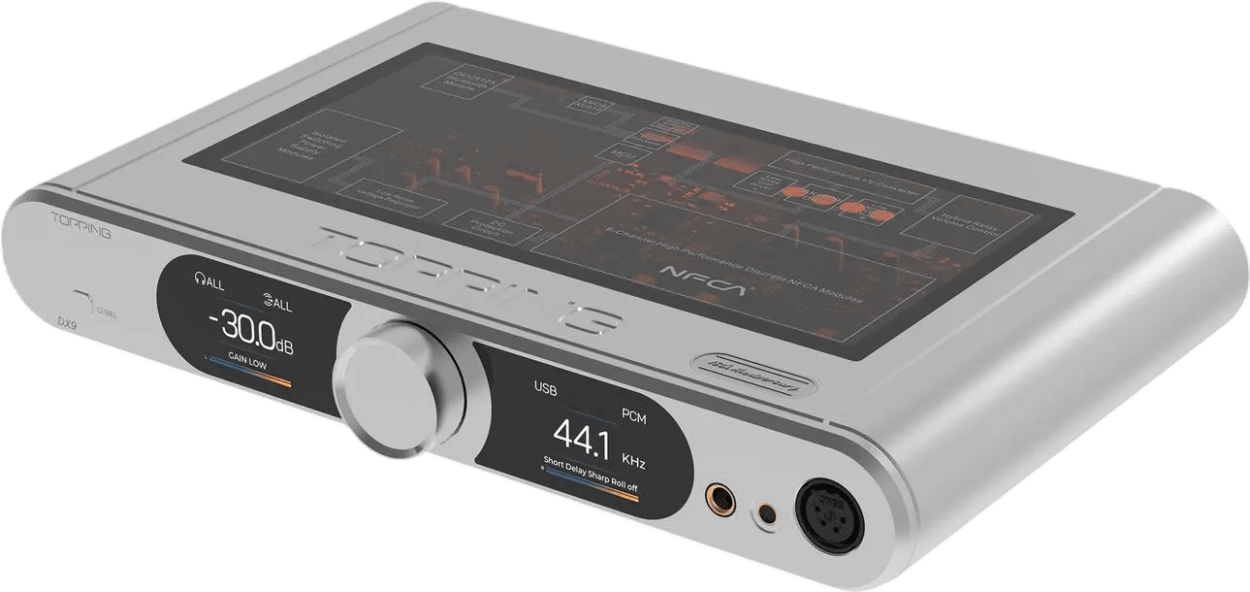
- Breathtaking design with curved corners, symmetrical front faceplate, and a glass component revealing internal circuitry
- Powerful headphone amplifier capable of outputting up to 10W at 16Ω and 7W at 32Ω
- Good sound quality, described as clean, detailed, and punchy, with a balanced tonal presentation
- CNC machined aluminum remote control with rubber buttons
- Multiple inputs and outputs, including 6.35mm, 4.4mm, and 4-pin XLR outputs on the front, and optical, coaxial, AES, IIS, USB, and Bluetooth on the back, with RCA and XLR outputs for lineout and preamplifier lineouts
Product Considerations
- Glass top panel gets hotter than the aluminum housing
- The glass panel is a fingerprint magnet and requires cleaning regularly
- No analog line-in to pair the amplifier with 3rd party DACs
- No streaming capability via WiFi or LAN
- Some menu navigation can be cumbersome, requiring cycling through options rather than direct selection
Comparisons (according to reviewers)
- Compared to the Topping A90 and D90 stack, the DX9 has similar inputs, outputs and power, but the stack is more versatile, as the amp and DAC can be used separately— the DX9 has additional coaxial and optical inputs, and the sound is somewhat similar
- Compared to the HIFIMAN EF400, the DX9 has more inputs/outputs and more power, but the EF400 sounds warmer
- Compared to the Topping D90SE, the DX9 sounds more fun, its bass and midrange has more energy and oomph, but the D90SE is more transparent, though ultimately quite flat
- Compared to the AURALiC Altair G2.1, the DX9 sounds cleaner and better separated, with a small reduction in digital hash
Takeaway: The Topping DX9 is a beautiful and powerful all-in-one DAC/amp that offers a clean and detailed sound, making it suitable for both headphone and speaker setups. Its versatility and attractive design make it a compelling option for those seeking a high-quality audio solution.
Video review
Our take on the brand

Our Summary
Product Strengths
- GANFET transistors switch faster, are more heat resistant, and produce less distortion than MOSFET transistors
- A monstrous 400-watt regulated power supply
- Designed to work specifically with a source with a variable output, be it a silver disc-spinning device or one of today's best yet affordable HD music streamers
- Offers a level of audiophile performance that well exceeds any reasonable expectations that come with the amp's modest price tag
- Offers a super clean minimal setup when paired with the Bluesound Node
Product Considerations
- Has only one digital coaxial input, limiting connectivity options and expansion
- Lacks volume indication on the unit itself, requiring reliance on the source's volume control
- Some reviewers noticed a high-pitched noise coming from early prototypes, which was later fixed by Peachtree
- Isn't the type of amp that makes a poorly recorded song sound better
- Is a non-standard size
Comparisons (according to reviewers)
- Vs Bluesound Power Node: Setup has a much more substantial mid-range, better low-end control, and ever so slightly better speed with rhythmic transient attack
- Vs NAD M10 V2: Is the more dynamically relaxed
- Vs Hegel H190: Reviewers actually preferred the more forward presentation of midrange
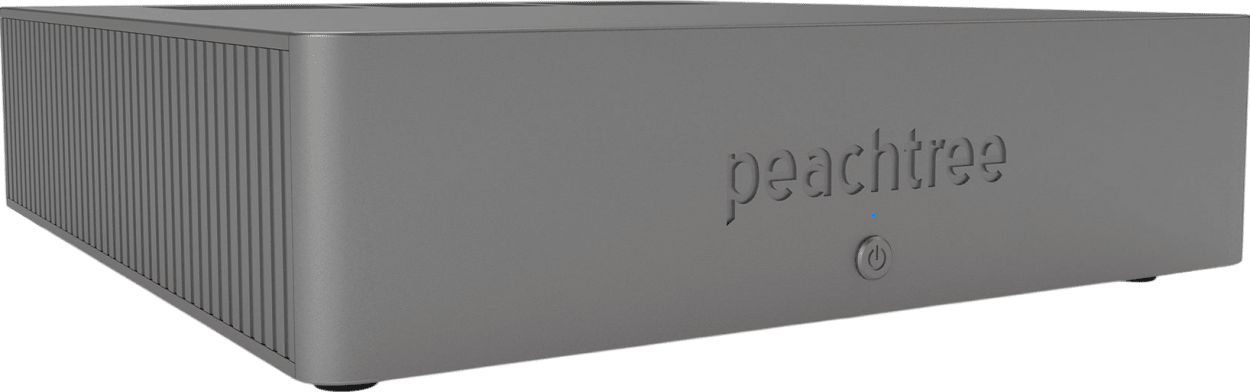
Takeaway: The GAN1 is a forward-thinking piece of tech that prioritizes simplicity and sound quality for those who want to just stream music. It provides outstanding value and impressive performance, especially for those looking for a minimalist, high-fidelity system.
Video review
Our take on the brand
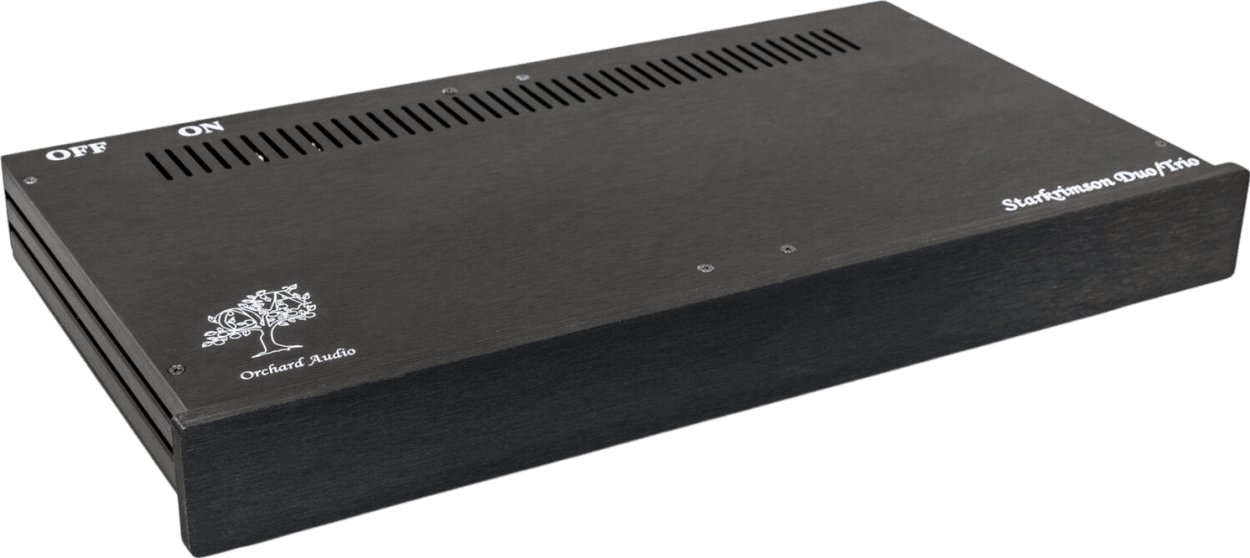

Our Summary
Product Strengths
- Clean and clear music with a very dead black background, allowing the music to breathe and swell naturally
- Very firm and deep bass response, sounding incredibly powerful
- Delivers a muscular sense of control over musical dynamics and instrumental transients, confirming an abundance of reserve power
- Accurate and transparent sound, reflecting changes in equipment and cables
- Sound signature similar to a really good class AB or class A amplifier, with natural and transparent sound and very good power and control
Product Considerations
- Some users may find the lack of an on/off light and remote control disconcerting
- At 105 dB range, the bass control gets weaker and the bass gets less pronounced
- Synergy-wise, it does not work well with R2R pre-stages
- Some found it a little less dynamic and a little too soft, but still good and engaging
- Needs to be powered on only when something is plugged into the outputs to avoid damage
Comparisons (according to reviewers)
- Vs Starke Sound ZA3s: Starkrimson is the next step above in clarity and power for home theater applications
- Vs SMSL A10A: There was an immediate change in soundstage and clarity when Starkrimson replaced the SMSL
- Vs Peachtree Nova: Starkrimson offered a riveting sound presentation, as opposed to the Peachtree Nova, which was less bold, but somewhat more nuanced
- Vs Class AB amp up to $3,000: Starkrimson has better noise control, accuracy, and transparency
Takeaway: The Starke Sound amplifier is a simple unit which produces a clean sound, with good detail and power. This amplifier is a great choice for audiophiles looking for a high-quality listening experience.
Video review
Our take on the brand
Questions? Ask the brand's dealers.
How to buy
Amplifiers
Search all hifi products
Explore our database of 10,000+ new and 25,000+ used hifi products.