

.jpeg)
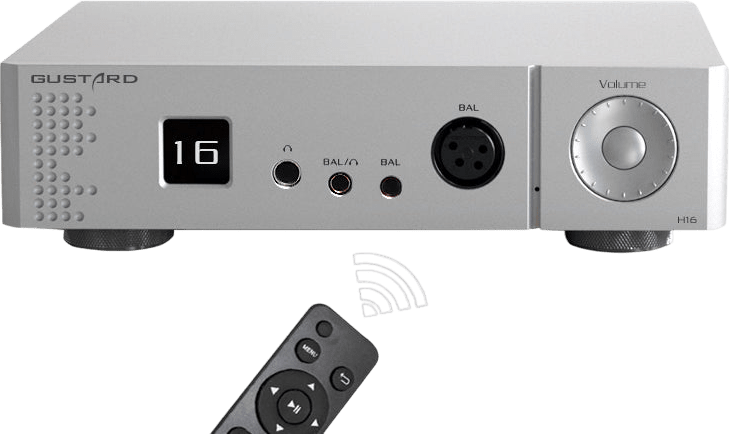


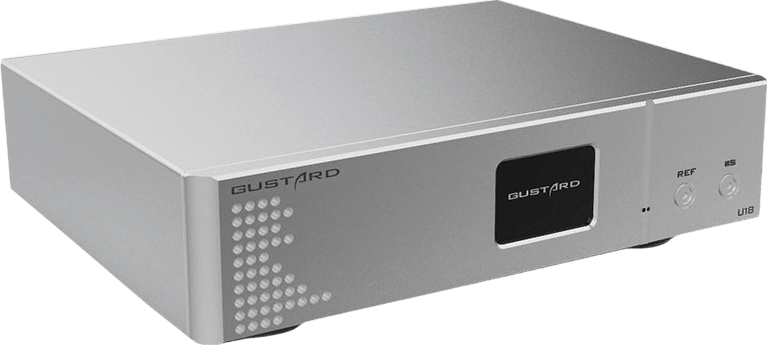
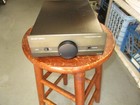
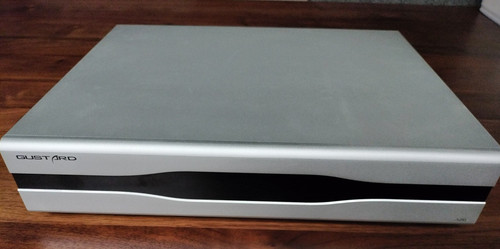
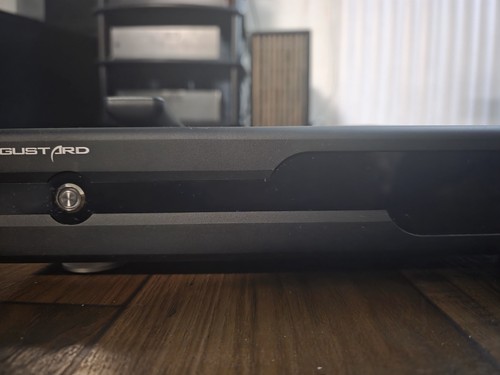
Note that this is a discontinued product. You may want to visit the brand's page here to browse their newer products.
What reviewers think
Bloggers and YouTubers have tried this product—so we've summarized their strongest opinions below. Links to full reviews follow.
Product Strengths
- Nice build quality and feels dense due to the inbuilt transformer
- Remote control support is a huge benefit for some users
- XLR pre-outs are good for connecting to powered monitors
- A unique selection of outputs, including a 3.5mm pro balanced output
- Powerful amplifier, especially at higher impedances
Product Considerations
- The volume dial button is easily bumped, accidentally switching inputs
- The screen that shows the volume is very small
- The quarter-inch jack doesn't let go easily
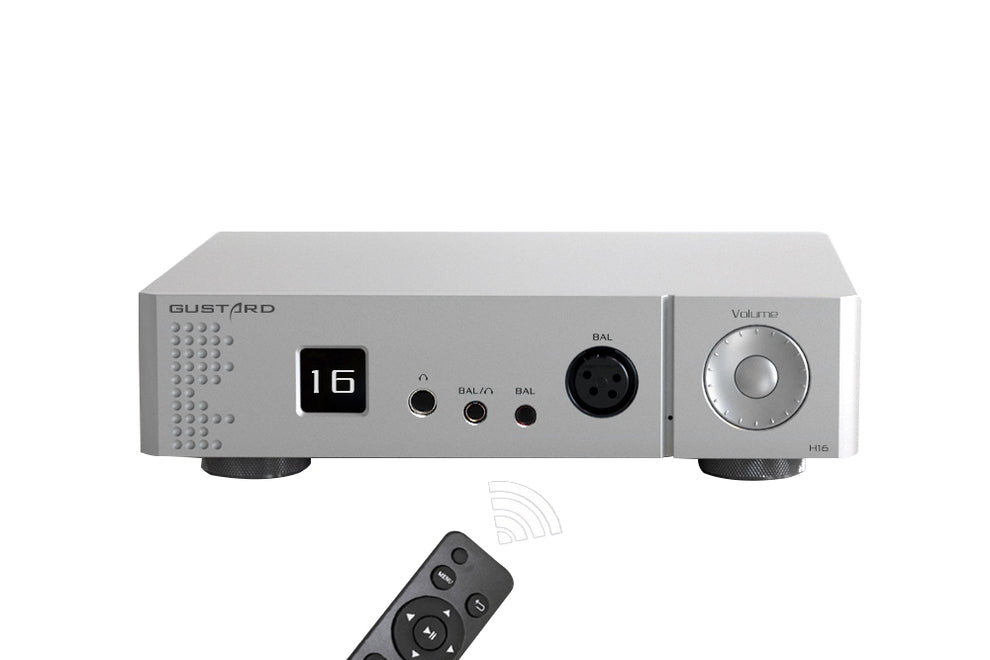
Takeaway: The H16 is a solid amplifier with a good feature set that makes it stand out from the competition, and it has a sound signature that is slightly warmer and smoother than some other popular amps in its price range. It's powerful and could be a great addition to an audio setup.
All
H16
reviews



Manufacturer details
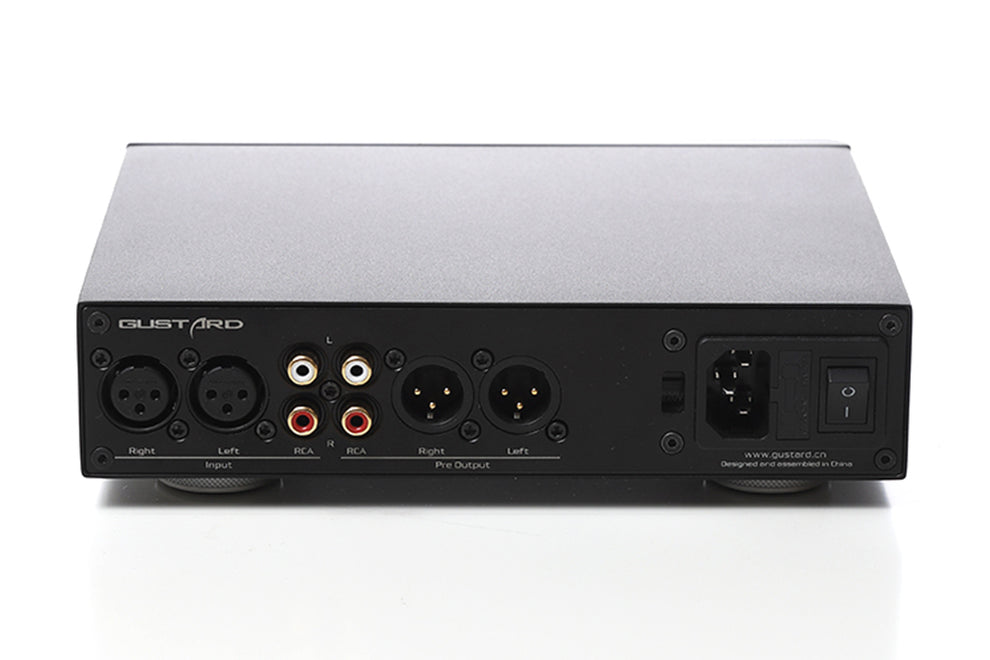
- Analog input: One set of RCA standard input (2Vrms, 4.7kΩ), One set of XLR balanced input (+18dBu typical, +26dBu max, 10kΩ)
- Single port output impedance (6.35mm): 0.1Ω
- Balanced port output impedance (XLR 4 PIN, TRS4.4, 3.5PRO): 0.2Ω
- Frequency response: 20-80kHz/-0.1dB
- Signal to noise ratio: >118dB
- Channel crosstalk: -118dB@1kHz
- THD+N: <0.0005%@3700mW into 64Ω
- IMD: <0.0005%@3700mW into 64Ω
- Maximum output power: 3700mW into 64Ω (balanced)
- Power consumption: <20W
- Dimensions: 220mm x 50mm x 170mm
- Weight: 2.5Kg



Brand highlights
Taking a step back to look at reviewers' thoughts of the brand's entire lineup—not just this product—what stands out most is the following:
- Gustard consistently utilizes high-quality components in its products, such as Accusilicon clocks, toroidal transformers, and discrete analog output stages.
- The brand's DACs often feature a comprehensive array of digital inputs, including I2S via HDMI and Ethernet ports for network streaming capabilities.
- Gustard emphasizes providing a refined and smooth audio presentation, prioritizing musicality and natural sound over solely focusing on measured results.
- They offer advanced internal clock management via custom-built synthesizers and precise femto-second clocks, reducing jitter for a cleaner audio signal.
Select products
DAC-X16
- Positioning: Entry-level line, designed for affordability and compactness.
- Description: Offers a balanced sound with full MQA capabilities and advanced Bluetooth codecs. Compared to the DAC A-18, it provides a more neutral sound, suitable for those who prioritize measurement-focused performance in small spaces or portable setups.
DAC A-18
- Positioning: Mid-range option, balancing performance and value.
- Description: Known for its detailed and transparent sound, with a robust build quality that enhances spatial imaging. It offers a more natural and dynamic sound compared to the DAC-X16.
DAC-A22
- Positioning: High-performance model, focusing on soundstage and depth.
- Description: Features dual AK4499 chips, providing a warm and engaging sound with impressive holographic imaging. It surpasses the DAC A-18 in tonal balance and offers a more immersive experience.
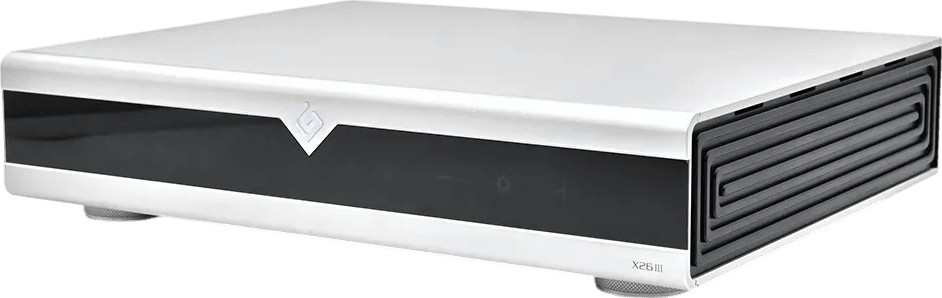
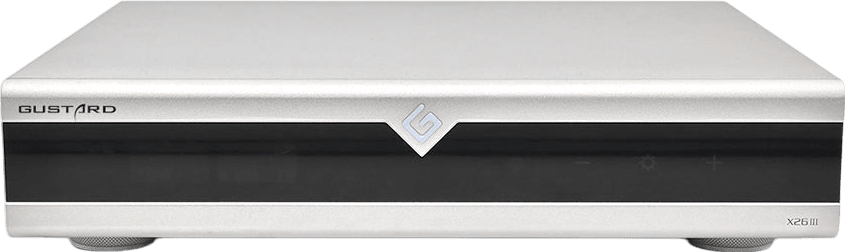
DAC-X26
- Positioning: Premium model, designed for high-end audio systems.
- Description: Celebrated for its class-A warmth and impactful bass, offering a refined and natural sound. It outperforms the DAC-A22 in terms of detail retrieval and transient response.
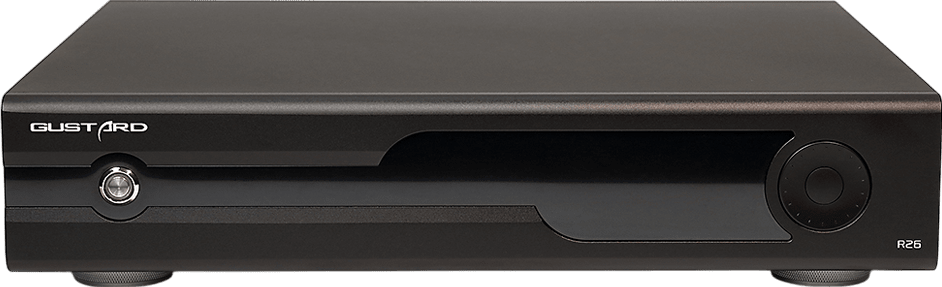
DAC-R26
- Positioning: Reference-grade model, emphasizing musicality and engagement.
- Description: Uses a discrete R-2R ladder design, delivering a highly musical and lifelike sound with exceptional soundstage depth. It offers a unique blend of technical excellence and emotional engagement, surpassing the DAC-X26 in naturalness.
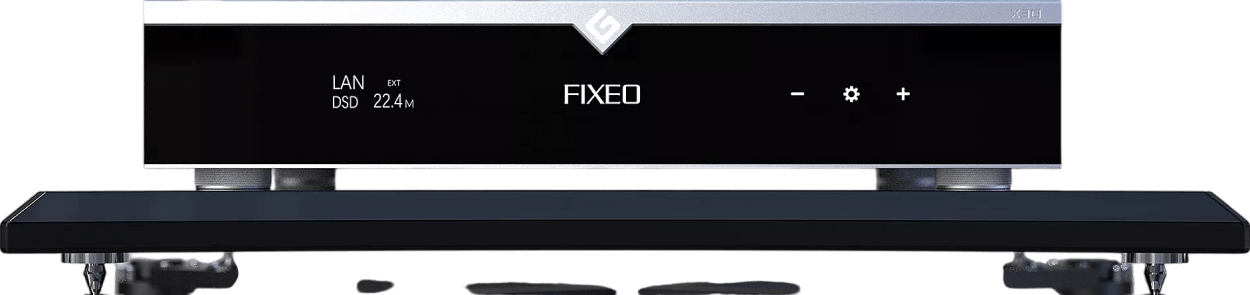
DAC-X30
- Positioning: Flagship model, representing the pinnacle of Gustard's DAC technology.
- Description: Features a quad-mono design with four ES9039 PRO chips, providing exceptional resolution and dynamic range. It offers a more refined and expansive sound compared to the DAC-R26.

Our take on the brand
Look inside the brand
Our interview with the brand
What are two key technological innovations or strong opinions that differ you from other brands?
What's your approach to customer support?
What are your favorite tracks for showcasing the strength of your products?
What other products pair best with yours?

Used
Gustard







What if you spend more?
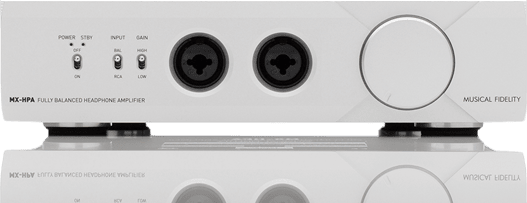


The MX-HPA’s technical performance is stunning. Typically, distortion from 20 Hz to 40 kHz is less than 0.005%. Signal-to-noise ratio is better than 120dB (‘A’ weighted). Frequency response is ruler flat from 10 Hz to 20 kHz (-0.1dB). The MX-HPA is capable of a short-term peak of 10 watts (for one cycle) and has two gain positions: 18dB (8X) and 24dB (15X). Inputs are either balanced or single-ended. The MX-HPA will automatically convert single-ended inputs to balanced. The MX-HPA is genuinely fully balanced from beginning to end.

.svg)
Product Strengths
- Exceptional build quality with an elegant, minimalist aesthetic
- Fully balanced design
- Exceptional signal-to-noise ratio (>120dB 'A' weighted)
- Versatile because it automatically converts single-ended inputs to balanced signals
- Dual gain settings for versatility with virtually any headphone impedance
Product Considerations
- May be overkill for entry-level headphones
- The twin-XLR alternative is not the only means of balanced connection
Takeaway: The Musical Fidelity MX HPA is a remarkable piece of equipment that represents a significant achievement in balanced amplification design. It delivers a listening experience that is hard to surpass with technical excellence and practical versatility.
Video review
Our take on the brand

.png)
Fully balanced design, 4 ultra-low distortion precision linear feedback circuit (PLFC)! The distortion is as low as 0.00006%, and the SNR is as low as 133dB! A total of 99 low-noise op-amps are used in a parallel design. High output power, 16 ohm output power up to 12W, 32 ohms up to 6W; The specially designed volume potentiometer greatly reduces channel deviation; 3 gears gain control, low gain is specially optimized for IEM; Pre-out function, can be used as Hi-End pre-amp; Classic retro toggle switch operation; Ultra-compact design, very suitable for desktop headphone system; High-precision low-temperature drift resistance, performance is not affected by temperature; High-quality relay and non-impact sound design; 20Hz to 100KHz(-0.5dB) frequency response; The headphone amplifier has comprehensive protections such as DC, overvoltage, and overload protection; Built-in high-efficiency and low-noise power system.
Product Strengths
- Original and stylish design
- High power output, up to 12 watts
- Overload protection
- The XLR, RCA input switch, the headphone amplifier or preamplifier switch, and the low, mid, and high gain switches are located on the back of the unit, potentially making them difficult to access
Product Considerations
- The unit uses 99 low-noise op-amps in parallel, which is considered excessive and potentially detrimental to sound quality
- The unit uses the cheapest balanced potentiometer
- The unit uses a couple of switching power supplies
- The total harmonic distortion is only at its super magical level with a very high wattage
Takeaway: The VMV amp has high power and overload protection that might work to drive headphones. It could be a great amp for someone willing to try it out.
Video review
Our take on the brand
Product Strengths
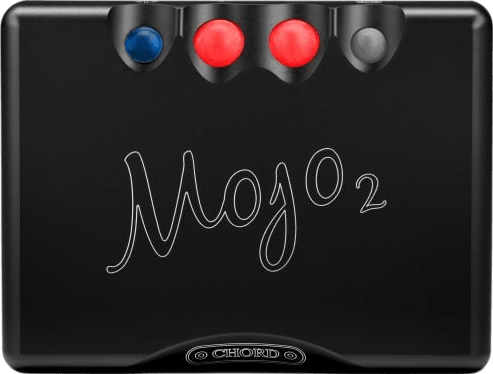
- Improved battery management offering faster charging rates and better efficiency than its predecessor
- Features a new USB-C data input for greater flexibility alongside other inputs
- Offers the world's first lossless DSP for tone adjustments without degrading sound quality, providing customization options
- Excellent resolution and dynamics with a large soundstage and extreme detail
Product Considerations
- The Mojo 2 can get warm when in a pocket for a period of time
- Complicated menu navigation with color-coded buttons that may require the manual
- Still uses Micro-USB for charging, which some find outdated
Takeaway: The Chord Mojo 2 is an exceptional DAC/headphone amplifier for those seeking high-resolution audio and customized sound in a portable format that is easy to move. Its sonic accuracy, detailed soundstage, and improved features provide a versatile and enjoyable listening experience, making it a worthwhile consideration for audio enthusiasts.
Video review
Our take on the brand

Product Strengths
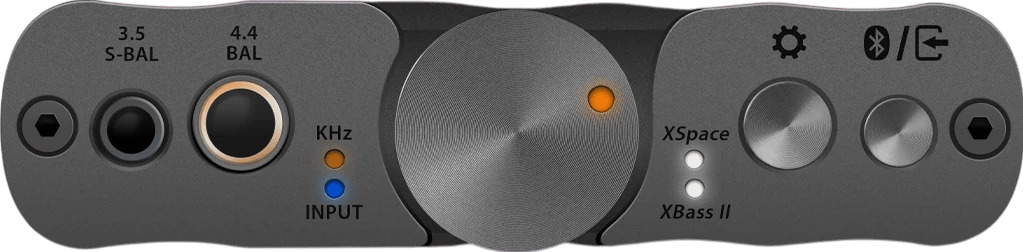
- Versatile connectivity with both wireless (Bluetooth 5.1 with various codecs) and wired options (USB, S/PDIF, analog inputs) makes it suitable for various setups—from desktop to portable usage
- Eloquent, informative, and entertaining sound quality, able to produce clear, non-artificial sound across different headphones
- Features such as XBass II and XSpace provide additional sound shaping options for the user to customize the sound to their liking
- The aluminum build provides a robust and premium feel, with a design that's described as sleek and comfortable to handle
Product Considerations
- The user interface is not very intuitive
- Decent headphones are needed to reveal its quality
- The OLED screen can be difficult to read
- Battery life is around six to eight hours
Comparisons (according to reviewers)
- Compared to the hip-dac2, the Gryphon offers better sound quality, more features, and flexibility
- Compared to the iFi GO bar, the Gryphon is bigger and has a built-in battery, and the GO bar is much smaller and draws power from the source device
- Compared to the iDSD Diablo, the Diablo has more power for very demanding headphones, Gryphon has more functions
- Compared to the Zen DAC, the xDSD Gryphon has a more sophisticated and detailed sound
Takeaway: The iFi xDSD Gryphon is a portable and versatile device delivering high-quality sound with extensive features that cater to audiophiles. Its ability to improve sound quality from various sources and its robust build make it a worthwhile investment for music lovers on the go.
Video review
Our take on the brand
What competes at this price?
Our Summary
Product Strengths
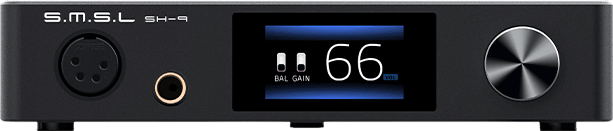
- Excellent build quality, featuring a CNC milled aluminum chassis and durable construction
- Achromatic Audio Amplifier (AAA) technology by THX, aiming for transparent sound reproduction without coloration
- Relay volume control provides precise channel matching
- Plenty of power to drive a wide range of headphones, from sensitive IEMs to demanding planars
- Balanced XLR inputs and outputs
Product Considerations
- No pre-amp output
- The notched volume control might not be to everyone's liking
- Gets quite warm during use, especially with the SU-9 DAC stacked on top
- Some reviewers noticed a clicking noise when adjusting the volume
- The three-feet design may not be as stable as a four-feet design
Comparisons (according to reviewers)
- Vs. SMSL SP200: Better unit at repelling noise, with a higher signal-to-noise ratio and lower total harmonic distortion—completely solved the SP200's issue with not having a pitch-black background
- Vs. Benchmark HPA4: Very close to the HPA4 in performance, with some minor differences observed only with high-end headphones
Takeaway: The SMSL SH-9 is a well-built and powerful headphone amplifier with a clean, transparent sound. It is a good choice for audiophiles looking for an accurate and detailed listening experience.
Video review
Our take on the brand



Our Summary
Product Strengths
- Budget-friendly headphone amplifier focused on quality
- Robust all-aluminum exterior, with rigid toggle switches, and smooth volume control, giving it the same fit and finish as SMSL's higher-end HO200
- Delivers a clean, neutral, and transparent sound, faithfully reproducing the source audio without adding coloration
- Extremely low noise floor
- Versatile due to its three gain levels (low, mid, high) and its ability to drive both sensitive IEMs and harder-to-drive headphones
Product Considerations
- Lacks balanced and unbalanced outputs for connecting to powered speakers, functioning solely as a headphone amplifier
- Does not have preamp capability
- Reviewers have noted average microdetails
- While the design looks smart and subdued, the tempered glass panel easily grabs fingerprints, requiring frequent cleaning
Comparisons (according to reviewers)
- Vs SMSL HO200: HO100 lacks RCA/XLR outputs and has lower wattage, but is more compact and is preferred if the extra power and outputs are not needed
- Vs FiiO K5 PRO: It has better driving power, a lower noise floor with IEMs, and lower distortion at maximum volume
- Vs JDS Labs Atom+: It has higher maximum power, handles maximum volume better with lower distortion, and offers better overall detail in the micro detail, and a more relaxing signature
Takeaway: The SMSL HO100 is a compact yet powerful headphone amplifier that delivers clean, neutral sound suitable for various headphones. It is well-built and offers excellent value for audiophiles seeking a high-quality listening experience.
Video review
Our take on the brand


Our Summary
Product Strengths
- Objectively an excellently performing amplifier with a discrete design and potentially lower noise floor than op-amp based designs
- Subjectively has a slightly bass-focused, full-bodied sound, with a focus on the texture of midrange elements, leading to a more natural vocal presentation
- Offers excellent value for money, competing with Far East manufacturers on both performance and pricing
- Has plenty of power to drive most headphones, including high impedance models
- Features both single-ended and balanced inputs/outputs and can be used as a preamplifier
Product Considerations
- The volume knob may have a scratchy feel
- The halo feedback design may not make a significant difference in terms of measured behavior of headphones
- Protection circuit may kick in and limit power at lower impedances
- Preamp outputs cannot be switched off when using headphones
Comparisons (according to reviewers)
- Vs Schiit Magni+, the Midgard offers better clarity and separation, especially when using the balanced output, but the tonal balance is similar
- Vs Schiit Asgard 3, the Midgard is more neutral and clarity-focused, while the Asgard 3 is warmer and richer, with a better sense of soundstage depth
- Vs Topping A30 Pro, the Midgard offers a resolution and finesse that the A30 Pro cannot reach—being more natural, open and fun
- Vs Schiit Jotunheim 2, both are similar in terms of overall sound quality, but the Midgard stands out because its midrange is stuff from legends
- The Midgard is a magnificent improvement compared to the Schiit Magnius
Takeaway: The Midgard is a powerful and versatile headphone amplifier with a balanced, full-bodied sound that is well-suited for many headphones. Its discrete design and excellent value make it a worthwhile upgrade for audiophiles.
Video review
Our take on the brand
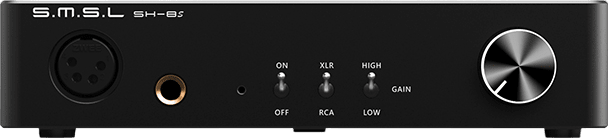
Our Summary
Product Strengths
- Enjoyable overall presentation with a punchy bassline, slightly euphonic midrange, and crystalline treble response
- Expansive soundstage that allows the music to breathe and come to life
- Enough power to drive most moderately hard-to-drive headphones, even those with higher impedance
- Detailed and textured vocal range that is a touch more forward and warmer than clinically accurate
- Tactile controls allow quicker access to changing any of the settings on the device
Product Considerations
- Slight bright tilt, which may require careful pairing with other components
- Bass is present, but slightly rolled off
- Lacks a screen, which some users may find to be a downside
- Balanced connection is present for convenience, as the amplifier itself is not a differential design—meaning it's single-ended by nature
Comparisons (according to reviewers)
- SMSL SH-8s bass tends to be a touch more forward, SMSL SH-9 delivers a slightly tighter bass line
- The SMSL SH-9 has a markedly more controlled treble response
- Both have similar power output at 16Ω, but Topping A30 Pro maintains higher power at 32Ω
- The SMSL SH-8s has a fuller instrument timbre, but Topping A30 Pro has a more euphonic vocal range
- The SMSL SH-8s has much bigger headroom, and feels more spacious compared to the Geshelli Labs Archel 2.5 Pro
- The SMSL SH-8s is clearly digging more details, and is also able to develop a wider soundstage with better separation and layering than the Topping L30
Takeaway: The SMSL SH-8s is a well-built amplifier that sounds promising. If the listener has darker sounding headphones or a darker source, the SMSL SH-8s might be worth checking out to open the sound a little bit.
Video review
Our take on the brand
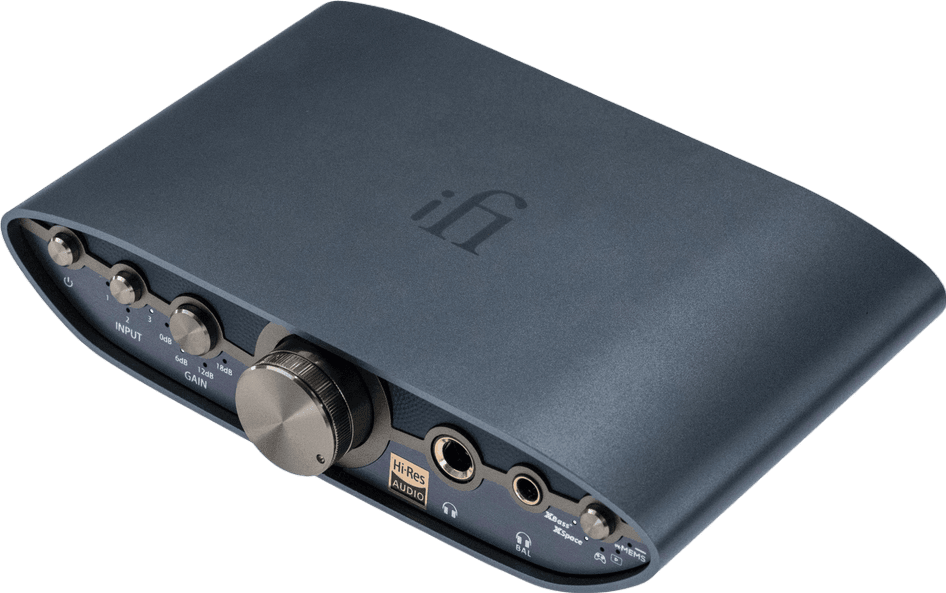

Our Summary
Product Strengths
- Multiple analog and DSP-free modes are featured
- Class A circuitry is designed for flagship iCAN Phantom
- XBass+ and XSpace analog signal processing modes are included
- It can drive a wide range of headphones, including xMEMS IEMs and high-end planars, with up to 2000mW output
- Build quality is robust and durable with a premium aesthetic
Product Considerations
- The included generic power adapter is a disappointment
- XBass+ can sometimes be overpowering, and XSpace might artificially widen the soundstage
- The amp may be too powerful for very sensitive IEMs, giving little volume control in these situations
- Some reviewers found the sound profiles not to audiophile tastes
- The 4.4mm Pentaconn input/output can be somewhat limiting and costly
Takeaway: The ZEN CAN 3 is a versatile amp with a robust build and unique features like XBass+ and XSpace, making it a good choice for those seeking enhanced sound without digital processing. It is great for gaming, movies, and music listening.
Video review
Our take on the brand
Questions? Ask the brand's dealers.
How to buy
Amplifiers
Search all hifi products
Explore our database of 10,000+ new and 25,000+ used hifi products.