AudioQuest
Cables
DACs
Power Conditioners
Best Known For
Cables
/
Used Products
0
 Available
Average Price
$1,001-$2,500
Brand Popularity
154
 of 900+
Products Listed
134
Review Count
76
Founding Year
1980
Headquarters
United States
AudioQuest
Thank you! Your submission has been received!
Oops! Something went wrong while submitting the form.

What's unique about the brand

AudioQuest is an American maker of cables, power products and USB DACs, founded in 1980. Many of its cables use solid conductors, which the company says prevent distortion caused by interaction between strands, along with high-purity copper and direction-controlled conductors that it says drain noise. The Niagara power conditioners give amplifiers high-current, low-impedance outlets and filter the outlets for source components more heavily, and the Niagara 1200 heads our Best Power Conditioners list. The DragonFly Black, DragonFly Red and DragonFly Cobalt are USB DACs that plug into a computer or phone.

Brand overview

Robert Harley of The Absolute Sound listened to a DragonFly Red on his desk for months before moving it into his reference system, where the little USB stick fed a pair of Magico speakers. He wrote that the Red, paired with AudioQuest's JitterBug, sounded "much, much better than it had any right to." The DragonFly is a digital-to-analog converter and headphone amplifier the size of a flash drive, and it plugs into a computer or phone in place of the built-in audio output. Its trick is to let the converter, not the computer, keep time, which cuts down jitter, the timing errors that Mark Fleischmann of Sound & Vision says "smear sound." AudioQuest's stated goal is "Do No Harm." The same thinking guides its cables, which use solid conductors and are tested so each one points the way that drains noise away. AudioQuest suits listeners who want better sound from the laptop or phone they own, and builders who treat power and cabling as part of the system.

Start with the DragonFly Red. Harley found the entry Black short of volume with his Audeze LCD-X headphones and expected most readers to choose the Red, calling it "worth double the price." The Red has nearly twice the output, so it is the one for harder-to-drive headphones. The step up is the Cobalt, with a newer DAC chip, and Alan Taffel of The Absolute Sound heard notes "stop smartly and exactly when they are meant to." Alan Sircom of Hi-Fi+ summed up the three as "good, better, bloody hell!" To use one with a phone you need Apple's Camera Adapter or an Android OTG adapter. Harley calls AudioQuest's JitterBug USB filter a "no-brainer" addition. For a full system, the Niagara 7000 power conditioner gives power amps high-current outlets and filters the source outlets more heavily. Roy Gregory of Hi-Fi+ advises keeping amps, analog sources and digital gear on separate banks and feeding the Niagara with the best power cord you can.

Bill Low began making custom cables in 1978 for his one-man hifi shop. He told StereoNET that cables were the only area of hifi where a customer could spend $20 and say "wow, that made a difference!" His first speaker cable was a finely stranded Litz design by Dave Gore, based on an idea Martin Colloms published in Hi-Fi News in 1977. Low founded AudioQuest in 1980 and showed at CES in Las Vegas in 1981. On long drives across the country he walked into stores that had never heard of him, set up a boom box and was comparing cables with the manager within 20 minutes. The AQ-404 moving-coil cartridge followed in 1982 and HyperLitz cables in 1988. The DragonFly arrived in 2012, and Harley credits it with creating an entirely new product category. The Niagara 7000 came in 2015, and by 2019 Gregory saw Niagaras chief among the power conditioners at hifi shows.

Sources

https://www.audioquest.com/about, https://www.stereonet.com/features/inside-track-bill-low-audioquest-interview, https://www.theabsolutesound.com/articles/audioquest-dragonfly-black-and-dragonfly-red-dacs, https://www.theabsolutesound.com/articles/audioquest-dragonfly-cobalt-dac, https://hifiplus.com/articles/audioquest-dragonfly-cobalt-dac-headphone-amp, https://www.stereophile.com/content/audioquest-dragonfly-cobalt-usb-da-headphone-amplifier, https://www.soundandvision.com/content/audioquest-dragonfly-red-and-dragonfly-black-ampdacs-review, https://hifiplus.com/articles/audioquest-niagara-7000-power-conditioner

Our interview with the brand

What are two key technological innovations or strong opinions that differ you from other brands?

What's your approach to customer support?

What are your favorite tracks for showcasing the strength of your products?

What other products pair best with yours?

From Julian's interview with
.

Products overview

AudioQuest builds its cables from solid or direction controlled high purity conductors, which the maker says prevent distortion and drain noise for a cleaner signal. Golden Gate (RCA) is the entry, with solid Perfect-Surface Copper conductors. Rocket 22 Full Range moves to thick 12 AWG conductors, so it carries a bigger amplifier's current to a speaker pair over longer runs. Rocket 33 Full Range tops the list, switching from a Double Spiral-Pair to a Double Star-Quad layout.

  • Start here. Pick Golden Gate (RCA) if you are connecting a source to an amplifier on a tight budget and want solid copper conductors.
  • Sweet spot. DragonFly Cobalt suits a listener plugging into a computer or phone, adding 2.1 volts of output for harder to drive headphones and digital volume over DragonFly Black.
  • All in. Rocket 33 Full Range extends the Rocket 22 Full Range design, and it suits an owner with a speaker pair who wants the Double Star-Quad layout at the top of the list.
Website author headshot
Julian Shapiro
ExtremeHiFi Writer

Product list

Thank you! Your submission has been received!
Oops! Something went wrong while submitting the form.
Check Amazon
Amazon logo

What reviewers are saying

We read all the reviews, and here's what stands out:

  • They focus on minimizing all types of noise in AC power, not just specific frequencies, across the entire system, including ground noise dissipation and transient power correction.
  • AudioQuest emphasizes the importance of cable directionality and material purity in its power cables, with directionally controlled conductors designed to drain induced noise.
  • The brand differentiates between source and amplifier power needs. Lower power outlets are heavily filtered for source components. High-current, low-impedance outlets are designed for amplifiers with dynamic peaks in mind, prioritizing a low impedance.

Quotes we liked:

  • "Throughout, the Niagara increases fine detail, expands the soundstage and improves the sense of black space. In some ways, listening to the Niagara really is like plunging over a waterfall—it carries you into a new sonic world." (https://www.theabsolutesound.com/articles/audioquest-niagara-7000-low-z-power-noise-dissipation-system)
  • "From the outset it was clear to me that the Niagara is an extraordinary piece of equipment that delivers numerous sonic improvements. Far from sagging in performance, the more components that I plugged into it, the better the Niagara sounded." (https://www.theabsolutesound.com/articles/audioquest-niagara-7000-low-z-power-noise-dissipation-system)
  • "The Cobalt does wonders in cleaning up our laptop's performance, no matter what kind of file we feed it or whether it's streaming from YouTube, Spotify, Tidal or playing from our own hifi library. AudioQuest claims its new DAC 'strips away fuzz and fog that weren't even noticeable until removed', and we'd have to agree." (https://www.whathifi.com/reviews/audioquest-dragonfly-cobalt)
Want to report corrections? Please contact us. We'd love to hear from you. Note that much of the data and summaries on ExtremeHiFi are researched after thousands of hours of loving labor. We archive our site's data and its pages on Archive.org and monitor for those repurposing the data. We also fingerprint data to know when text and numbers came from us.

Used

AudioQuest

Every month, we find the brand's used items for sale across the web and offline hifi stores.  We have the largest database of used hifi products. Search it here.

No items found.

Similar

Cables

brands

Known For
Cables
/
Average Price
$2,501-$5,000
Used Products
0
 Available
Brand Popularity
267
 of 900+
Headquarters
United States

About the brand

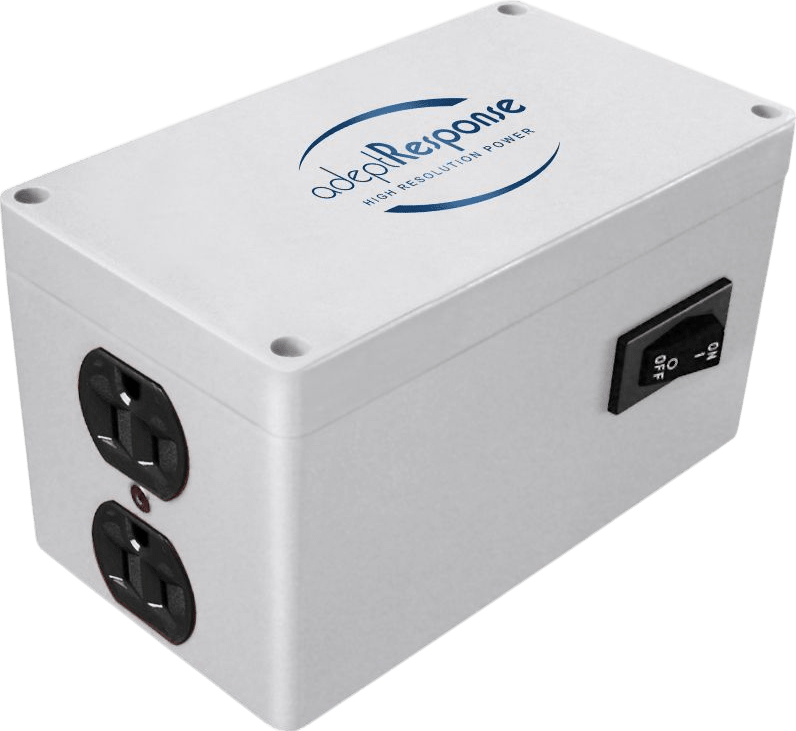
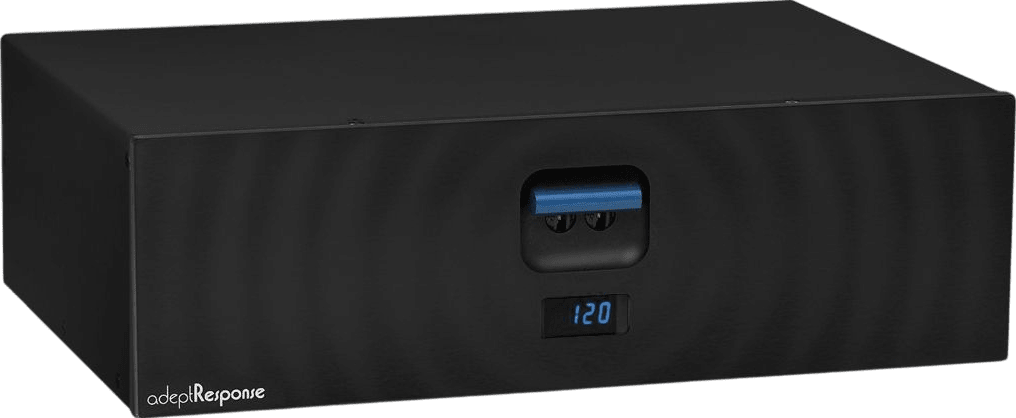
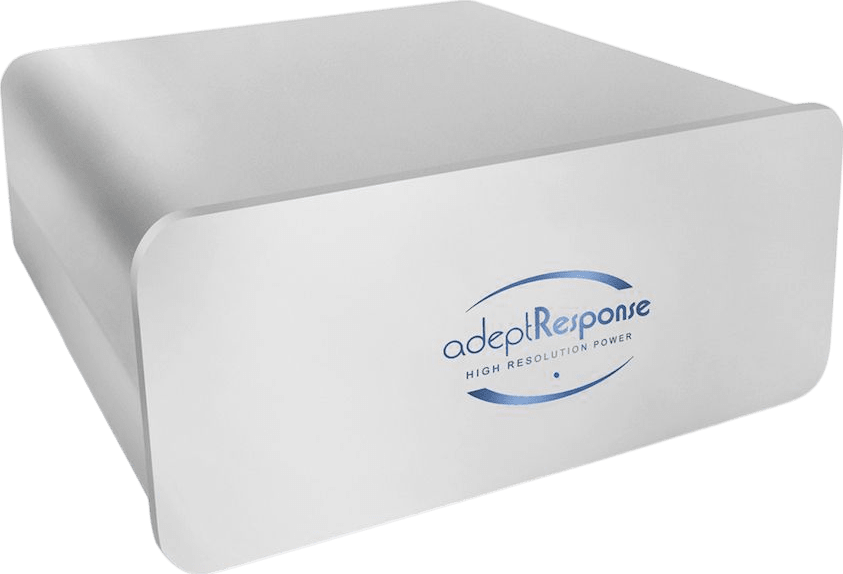
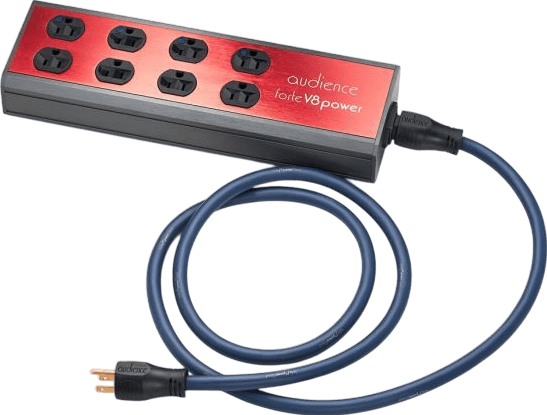
Audience is an American maker of cables, power conditioners and loudspeakers, established in 1997. Everything is hand-built at its factory in San Marcos, California. Its interconnects, speaker cables and power cords are deliberately thin and low in mass, an approach the company says keeps the sound natural. The AdeptResponse power conditioners use capacitors of Audience's own design, with surge suppression that reviewers note does not wear out over time. The 1+1 V5 speaker uses a wide-band driver design with no crossover, and the aR2 and aR12 conditioners are on our Best Power Conditioners list.

Our interview with the brand

What are two key technological innovations or strong opinions that differ you from other brands?

What's your approach to customer support?

What are your favorite tracks for showcasing the strength of your products?

What other products pair best with yours?

Website author headshot
Julian Shapiro
ExtremeHiFi
Brand Page
Known For
Cables
/
Average Price
$2,501-$5,000
Used Products
35
 Available
Brand Popularity
98
 of 900+
Headquarters
United States

About the brand

Synergistic Research is an American maker of cables and power conditioners, founded in 1992. Its power conditioners are built around electromagnetic cells, which reviewers say filter AC power without limiting current, and many isolate analog and digital components on separate outlet banks. The PowerCell 8 SX has two selectable ULF generators, so the owner can switch between voicings, and the conditioners usually come with a power cord and an upgraded wall outlet. Some of its cables use Active Shielding, which puts DC voltage on the shield, and the top models use pure silver conductors.

Our interview with the brand

What are two key technological innovations or strong opinions that differ you from other brands?

What's your approach to customer support?

What are your favorite tracks for showcasing the strength of your products?

What other products pair best with yours?

Website author headshot
Julian Shapiro
ExtremeHiFi
Brand Page
Known For
Cables
/
Average Price
$2,501-$5,000
Used Products
35
 Available
Brand Popularity
97
 of 900+
Headquarters
United States

About the brand

Transparent Audio is an American maker of audio cables and power products, based in Saco, Maine. The range covers interconnects, speaker, digital and HDMI cables, power cords and power conditioners, in performance levels called Reference, XL, Opus and Magnum Opus. Its speaker cables are built around networks, also sold as Speaker Cable Brick Networks for custom installers. Transparent says the Reference Power Isolator uses power factor correction and common-mode noise rejection. Owners of current Transparent products can move up a level through the upgrade program and keep much of their original value.

Our interview with the brand

What are two key technological innovations or strong opinions that differ you from other brands?

What's your approach to customer support?

What are your favorite tracks for showcasing the strength of your products?

What other products pair best with yours?

Website author headshot
Julian Shapiro
ExtremeHiFi
Brand Page
Known For
Cables
/
Average Price
$5,001-$10,000
Used Products
0
 Available
Brand Popularity
544
 of 900+
Headquarters
United States

About the brand

Stealth Audio Cables is an American cable maker based in Olney, Maryland. Its catalog covers analog and phono interconnects, digital and USB cables, loudspeaker cables and AC power cords, and it also builds custom cables. The cables are made by hand, and some use an amorphous, grain-free conductor with helium gas as the dielectric. The Dream series spans loudspeaker and power cables. The Nanofiber is one of its analog interconnects, the cable that links a source to an amplifier.

Our interview with the brand

What are two key technological innovations or strong opinions that differ you from other brands?

What's your approach to customer support?

What are your favorite tracks for showcasing the strength of your products?

What other products pair best with yours?

Website author headshot
Julian Shapiro
ExtremeHiFi
Brand Page
Known For
Cables
/
Average Price
$5,001-$10,000
Used Products
0
 Available
Brand Popularity
469
 of 900+
Headquarters
Netherlands

About the brand

Siltech is a Dutch cable maker, founded in 1983, that builds its cables around silver conductors. In-house measurement equipment led to its first-generation G1 pure silver conductor. The Classic Legend series uses a G9 silver-gold alloy, and the Ruby Crown and Royal Crown series use S10 monocrystal silver, with dielectrics and shielding developed in-house. Every cable is made and tested at the company's factory in the Netherlands, and owners can register each one through its NFC tag. The Saga amplifier system and Symphony speaker system bring the same engineering to electronics and loudspeakers.

Our interview with the brand

What are two key technological innovations or strong opinions that differ you from other brands?

What's your approach to customer support?

What are your favorite tracks for showcasing the strength of your products?

What other products pair best with yours?

Website author headshot
Julian Shapiro
ExtremeHiFi
Brand Page
Known For
Cables
/
Average Price
$500
Used Products
0
 Available
Brand Popularity
552
 of 900+
Headquarters
United Kingdom

About the brand

TCI Cables is a British cable maker based in Lisburn, Northern Ireland. Its founders, Andrew Stacey and John Payne, studied engineering and worked in hifi retail, and nearby aerospace and defense suppliers gave them materials not usually found in hifi. TCI uses aerospace-grade silver-plated copper alloys in its interconnect conductors and designs its own True-Plug connectors. The company says every cable aims for a neutral presentation and a three-dimensional image. TCI says the Constrictor and Temple Constrictor power products reject and filter RFI on UK or Schuko outlets. It also makes Podium supports.

Our interview with the brand

What are two key technological innovations or strong opinions that differ you from other brands?

What's your approach to customer support?

What are your favorite tracks for showcasing the strength of your products?

What other products pair best with yours?

Website author headshot
Julian Shapiro
ExtremeHiFi
Brand Page

Questions? Ask their dealers.

Browse all dealers in our database

Search hifi products

Explore our database of 10,000+ new and 25,000+ used hifi products.