




Note that this is a discontinued product. You may want to visit the brand's page here to browse their newer products.
What reviewers think
Bloggers and YouTubers have tried this product—so we've summarized their strongest opinions below. Links to full reviews follow.
All
Virtus A3
reviews


Manufacturer details
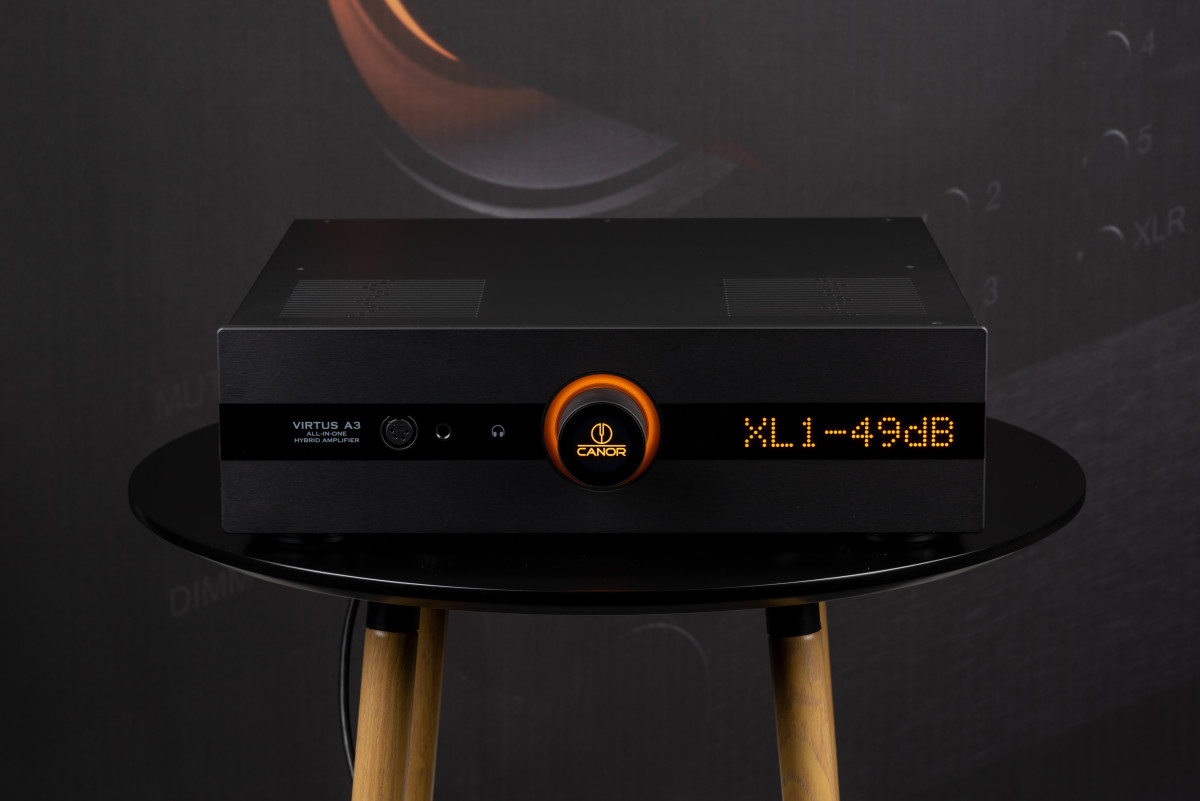
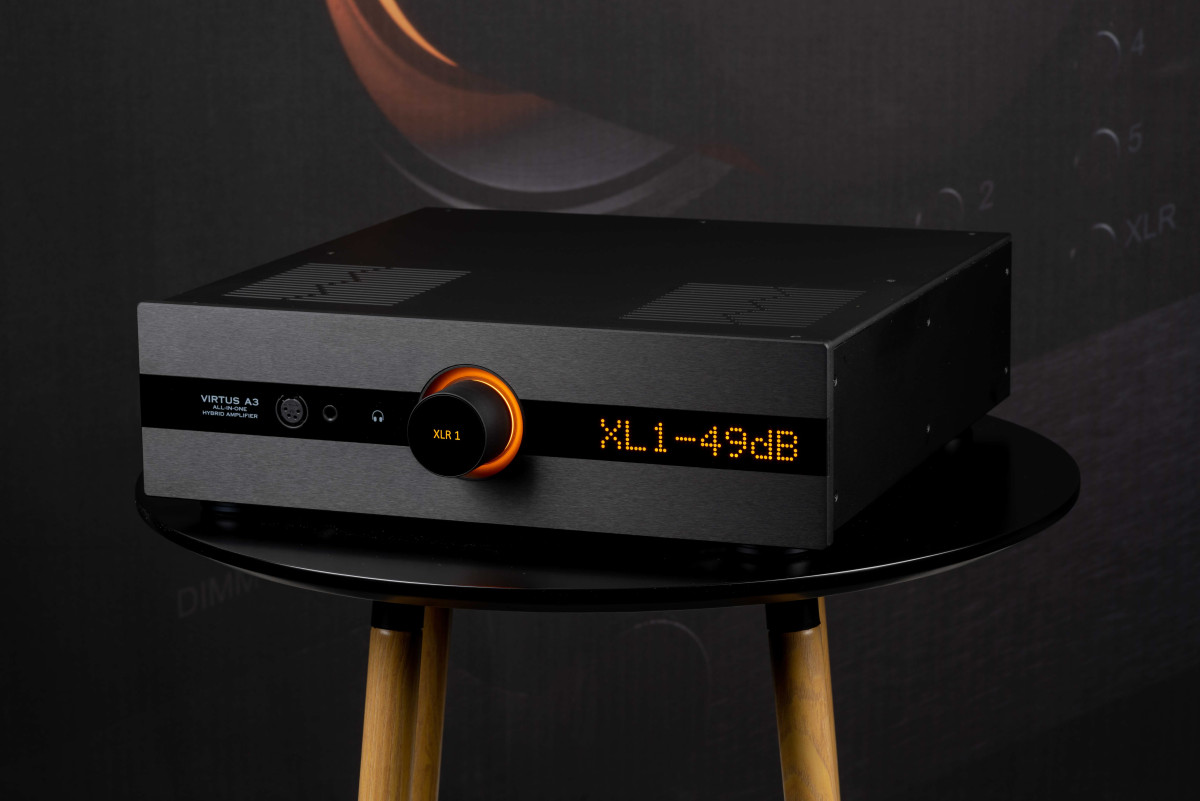
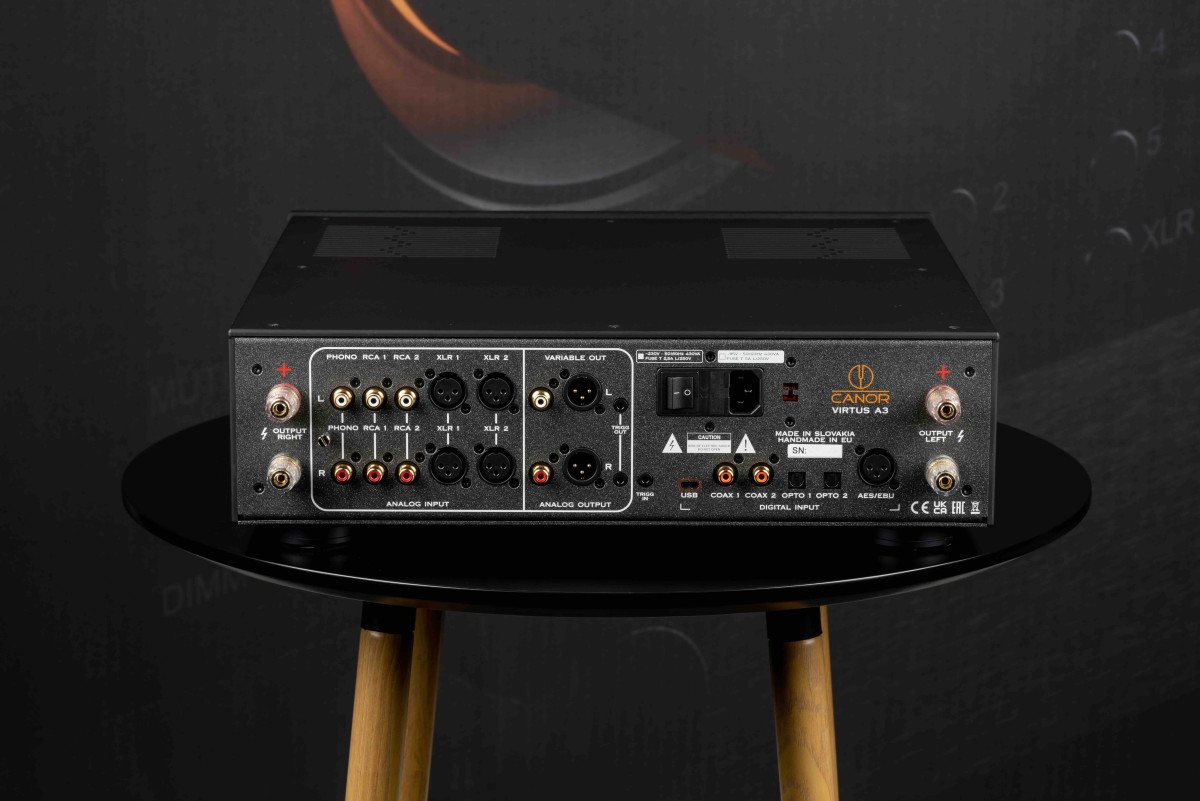
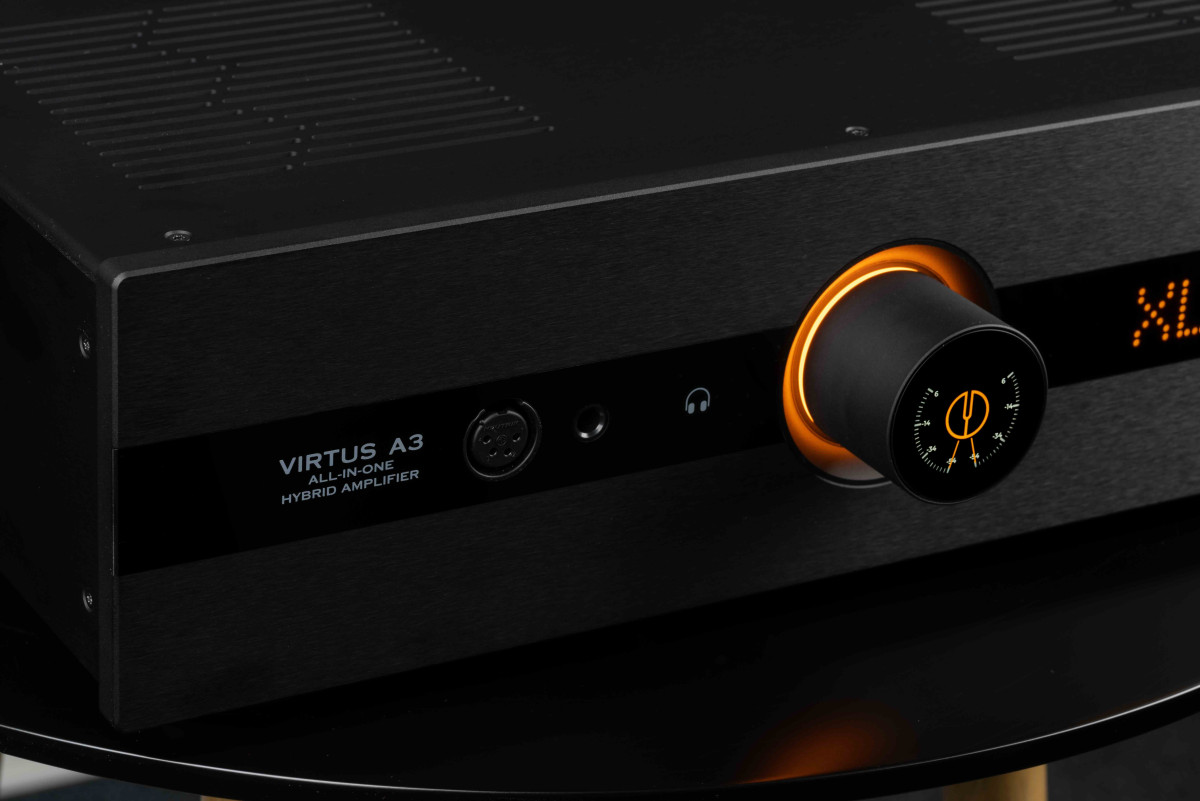
- Stereo Output Power: 2 x 150 W / 4 Ω (IHF Dynamic Power), 2 x 100 W / 8 Ω (IHF Dynamic Power)
- Headphone Unbalanced Output: 500 mW / 30 Ω, 70 mW / 300 Ω
- Headphone Balanced Output: 500 mW / 30 Ω, 270 mW / 300 Ω
- Gain: 34.5 dB
- Input Sensitivity: 550 mV
- Damping Factor: 180 / 4 Ω, 380 / 8 Ω
- Frequency Range: 10 – 35 000 Hz (± 0.5 dB / 5 W)
- Input Impedance: 50 kΩ
- Total Harmonic Distortion: < 0.005 % / 1 kHz, 5 W, < 0.008 % / 1 kHz, 1 W
- Signal-to-noise ratio: > 90 dB (20 Hz – 20 kHz)
- Tube Complement: 2 x E88CC
- Power: 115 / 230 V, 50 – 60 Hz, 820 VA
- Dimensions (W x H x D): 435 x 130 x 460 mm
- Weight: 18 kg (Net), 23 kg (Gross)

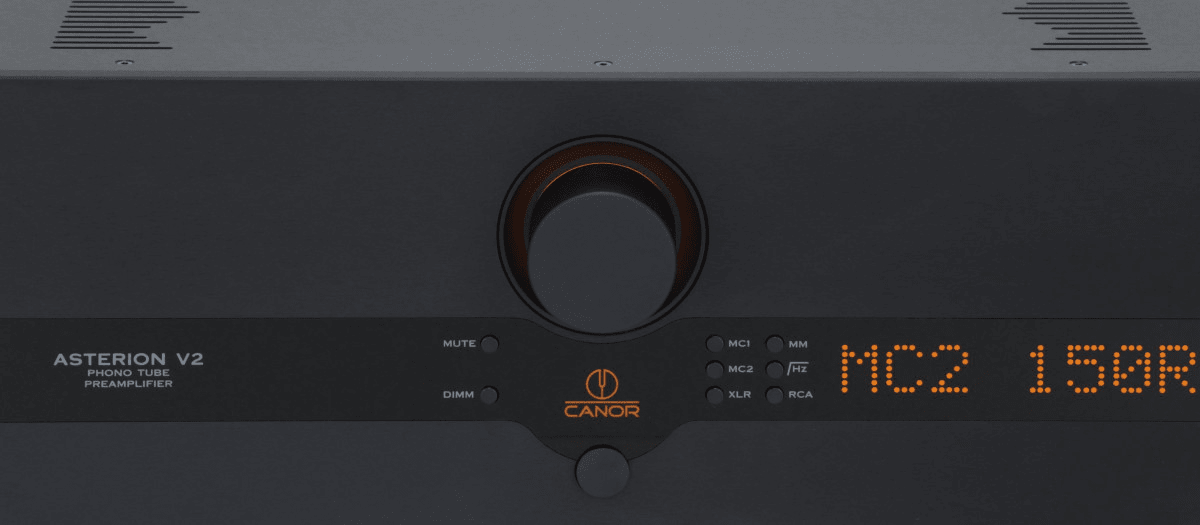
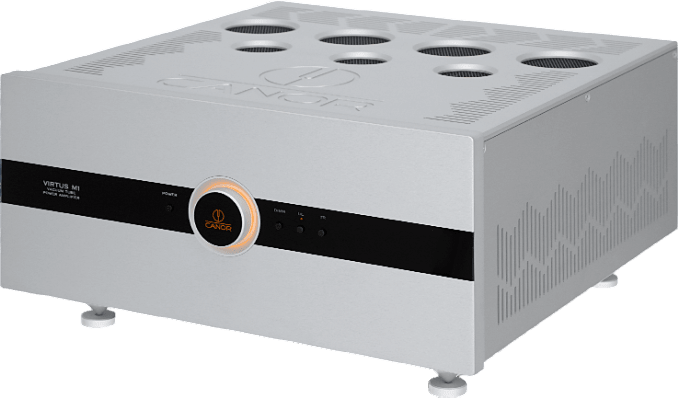
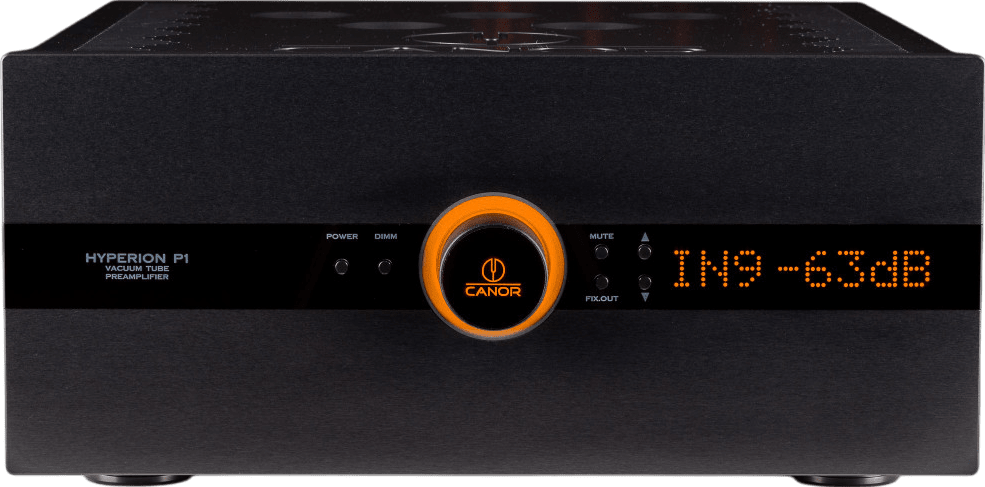
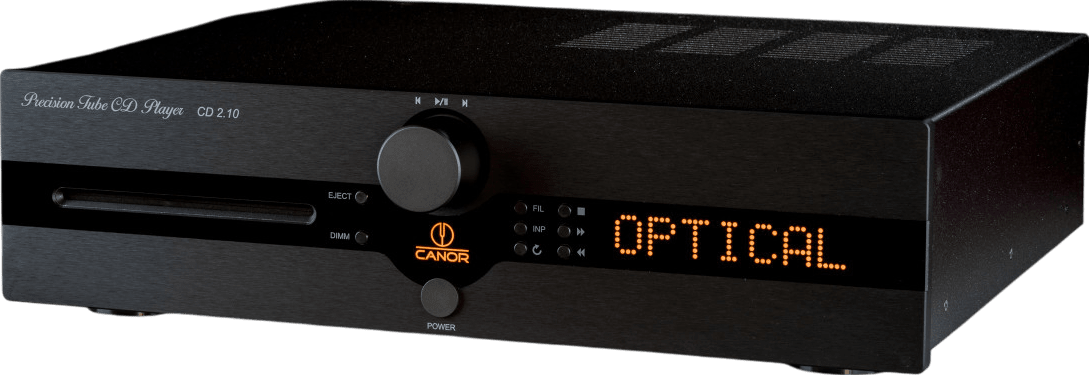



Brand highlights
Taking a step back to look at reviewers' thoughts of the brand's entire lineup—not just this product—what stands out most is the following:
- Canor prioritizes in-house manufacturing of key components, including circuit boards using their proprietary CMT milling technology, and output transformers, allowing for greater control over quality and performance.
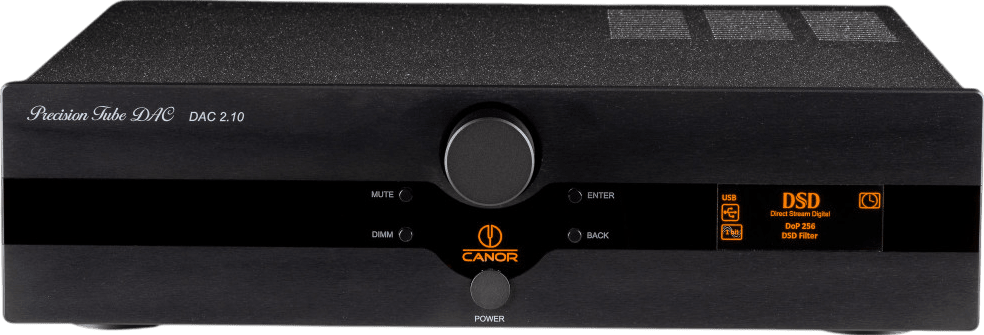
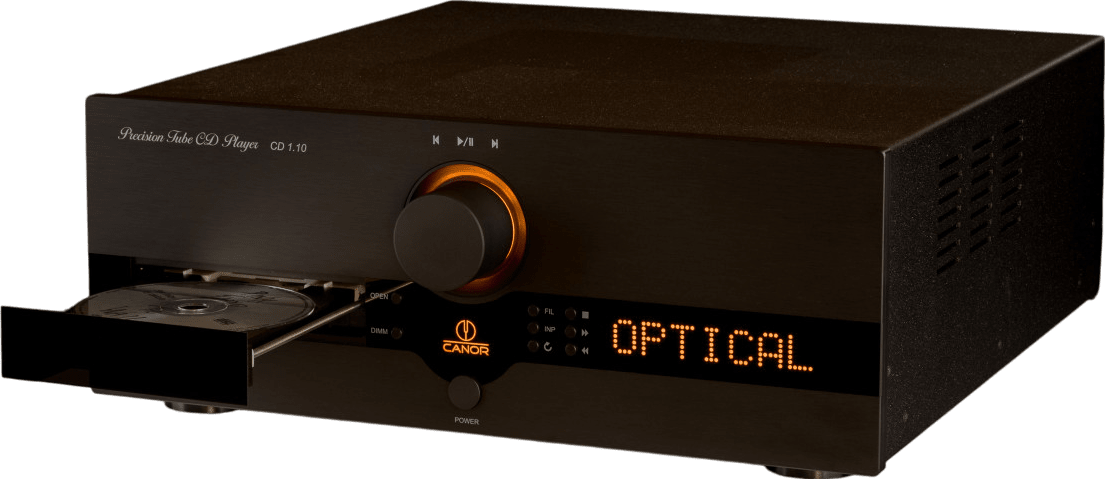
- The brand offers a unique design aesthetic blending modern elements with retro-inspired touches like orange dot-matrix displays, contributing to a distinct and recognizable product identity.
- Canor emphasizes the meticulous selection and testing of vacuum tubes, with matched pairs and carefully chosen brands, aiming for long-life and stable operation in their tube-based designs.
- The units often incorporate tubes in the output stage of their digital components, aiming to add analog warmth to digital playback.
Select products
Virtus M1:
- Positioning: A reference vacuum tube power amplifier operating in pure class-A.
- Description: Features instant feedback switching and high-quality components like silver-coated oxygen-free copper for low distortion. Compared to the integrated amplifiers (AI 2.10, AI 1.20, and Virtus I2) that offer more connectivity options and the high-powered Virtus S1S that provides extreme output for bigger rooms, this unit is best for setups that favor a classic tube sound in a dedicated, moderate-budget environment.
AI 2.10:
- Positioning: An integrated hybrid amplifier from the performance line that combines a tube preamplifier with a class-D power stage.
- Description: Offers efficient power delivery through a filtered, tuned linear power supply along with a relay-controlled tube preamp for low noise performance. Compared to the premium solid-state design of AI 1.20 and the all-tube configuration of Virtus I2, it suits users needing versatility and modern functionality without a high premium price.
AI 1.20:
- Positioning: A premium integrated solid-state amplifier operating in pure class-A with advanced filtering and monoblock capability.
- Description: Uses exceptionally high filtering capacitance and a dual-block relay attenuator to achieve stable, interference-free performance. Compared with the hybrid approach of AI 2.10 and the tube-centric qualities of Virtus I2, it is aimed at buyers who demand refined build quality and stable, high-fidelity sound in controlled setups.
Virtus I2:
- Positioning: A premium integrated tube amplifier that delivers pure class-A operation with flexible mode switching.
- Description: Features auto-bias operation, instant switching between triode and ultra-linear modes, and advanced PCB milling (CMT) to minimize dielectric losses. Compared to the AI series—which target either performance or premium solid-state sound—and the more conventional tube design of Virtus M1, it caters to audiophiles seeking classic tube warmth, detailed sonic refinement, and the flexibility needed for varied listening environments.
Virtus S1S:
- Positioning: A high-end solid-state dual-mono power amplifier primarily operating in class AB with a few watts starting in pure class-A.
- Description: Features innovative heat dissipation using copper plates, error correction circuits, and ultra-low distortion to deliver robust, clear power with exceptional channel separation. Compared with the tube-based Virtus M1 and the integrated amplifiers (AI 2.10, AI 1.20, and Virtus I2), it is designed for large-room applications demanding maximum output and top-tier engineering.

Our take on the brand
Look inside the brand
Our interview with the brand
What are two key technological innovations or strong opinions that differ you from other brands?
We consider ourselves specialists in tube technology. This year marks our 30th anniversary at Canor. Over the past three decades, we have amassed a wealth of experience in tubes and the design of tube-based audio products.
In addition to our core offerings, we design and manufacture audio products for other brands as an Original Design Manufacturer (ODM). We also designed the tube testers, which are essential for precise measuring and testing of tubes. These testers allow us to carefully select and match tubes for our products. Additionally, each tube that passed the measuring and testing process was assigned a unique number. This allows us to track the tubes used in our amplifier and provide the exact replacement for the customer when needed.
Furthermore, we have developed tube “burning” (or ageing) stands that are used to age the tubes we source from producers. This process ensures that the tubes' parameters stabilise before we proceed with precise measuring, testing, and pairing.
As a second technological innovation we are proud of is so-called CMT technology which we used in our tube-based products. This technology allows us to approach the dielectric loss factor (loss tangent) of printed circuit boards to the air loss factor. With this technology, we have achieved such excellent parameters as can be achieved with "wire connections" only by using very expensive and high-quality wires with Teflon insulation. However, our new technology has the advantage of repeatability in production with a 100% identical geometric arrangement (which is not possible with "wire-to-wire" connections). In addition, the advantage over "wire to wire" is that the connections are several times shorter than it is possible to achieve with a "wire to wire" connection.
What's your approach to customer support?
We appreciate every customer of Canor, whether they purchased an old amplifier 25 years ago or the latest model. Our strong relationships with partners, distributors, and dealers ensure that customers can reach out to them with any post-sale inquiries.
In addition, we are here to assist customers directly from all over the world. Anyone can contact us with questions about Canor products or any technical issues. We can provide remote support or collaborate with local service centres by offering technical advice or schematics needed to fix any problems that may arise.
We understand that deciding to buy a new audio product is a significant process. We are also available to assist potential customers by answering any questions they may have, including helping them match our products with other audio devices or loudspeakers.
What are your favorite tracks for showcasing the strength of your products?
That's a tough question, but if we must choose just three tracks, I would mention the following:
- Dominique Fils-Aimé – Rise
- Paul Cauthen - Cocaine Country Dancing
- Two Feet - Had Some Drinks
- And bonus: Rage Against The Machine - Fistful Of Steel
What other products pair best with yours?
We really like Fink Team loudspeakers (Borg, Kim) and Epos speakers. When it comes to more commercial (or well-known) brands, Focal is the one we enjoy playing with as well. Our amplifiers are designed to be compatible with most loudspeakers, and we believe our customers have had very good experiences with other brands.









What if you spend more?
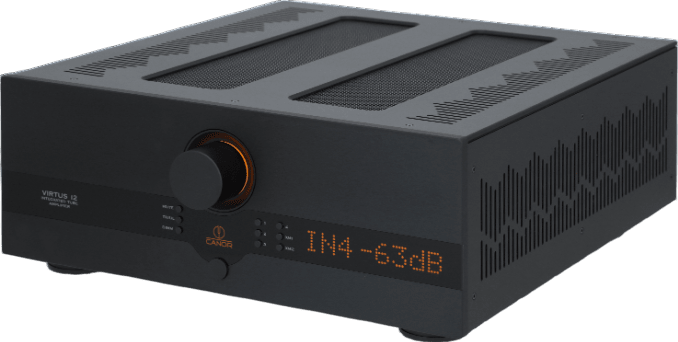


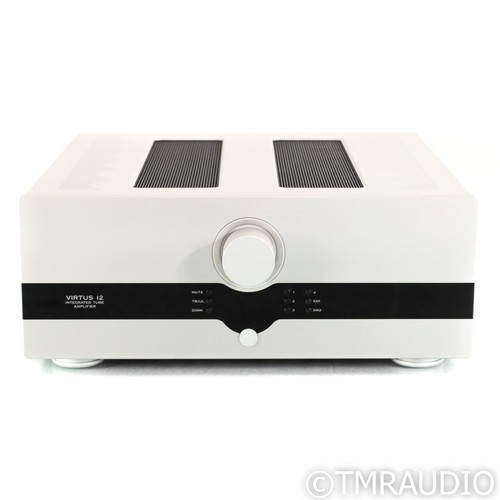
an integrated tube amplifier operating in class A, providing an output power of 2 x 40 W KT88 high-power tubes with autobias with a cathode feedback an option to switch between triode and ultra-linear mode instantly PCB’s utilize our premium CMT ™ technology perfect channel separation using a relay attenuator that features individual blocks for each channel. The gain control is in increments of 1 dB and attenuates up to 63 dB the independently powered control part capacitors with high capacitance in the filter provide energy for precise and well-defined bass the signal path exclusively contains high-quality polypropylene capacitors precise selection and pairing of the tubes meeting above-average parameters the synchronous control option allows the use of two amplifiers in a monoblock mode without the need for an extra preamplifier. This Master/Slave mode has an output power of 80 W per channel

.svg)
Product Strengths
- Excellent build quality with imposing casework and high-quality finish
- Offers flexibility with switchable ultralinear and triode modes for different sound characteristics
- Features auto-bias with cathode feedback for safe and easy tube operation
- Precise gain control with a relay volume control and individual blocks for each channel, attenuating the signal in steps of one decibel
- Transparent yet warm organic sound profile suitable for various music genres
Product Considerations
- Generates significant heat during operation, requiring ample space for air circulation
- High power consumption of 150 watts in idle
- Switching between triode and UL modes can only be done on the amplifier itself, not via the remote
Comparisons (according to reviewers)
- The Virtus I2 is a step up from the Canor AI 1.10
- The Virtus I2 is more affordable than the Canor Virtus M1
Takeaway: The Canor Virtus I2 is a well-engineered tube amplifier with a focus on in-house manufacturing, offering a transparent and engaging sound. Its flexibility and ease of use make it a worthwhile consideration for audiophiles seeking a high-quality tube listening experience.
Video review
Our take on the brand
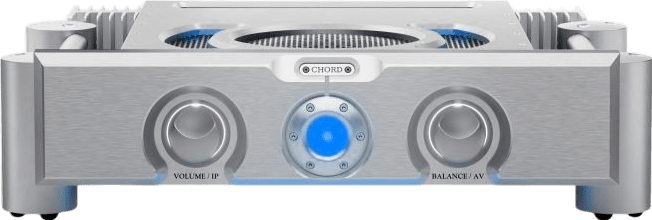

The ULTIMA INTEGRATED is a class-leading 125-watt integrated amplifier benefitting from the latest dual-feed-forward error-correction topology, Chord Electronics' legendary proprietary ultra-high-frequency power supplies, plus an unmistakable industrial aesthetic.
Designed by Chord Electronics' founder, owner and chief engineer, John Franks, the advanced ULTIMA circuit monitors and immediately corrects audio signals before the output stage, for astonishing signal accuracy from a one-box integrated device. The ULTIMA INTEGRATED also takes advantage of the very latest developments in advanced low-distortion power supplies – devices offering exceptionally low noise and outstanding amplifier operation – for even greater fidelity.
A four-input design, one fully balanced and three unbalanced, all enjoy individual buffering and are selectively filtered against potential ingress from radio frequency interference; selection switching is via microprocessor-controlled sealed relays.
The ULTIMA INTEGRATED is the first new Chord Electronics integrated amplifier for seven years and remains the sole full-width integrated model in the range. All metalwork is precision-machined from solid aircraft-grade aluminium, including Chord Electronics' iconic Integra Legs. The fascia sports a 28-mm-thick front panel with a perfectly symmetrical aesthetic, centered around a spherical power on/off control with polychromatic lighting, flanked by illuminated volume and balance controls.
Product Strengths
- Astonishing agility, precision, and clarity
- Spacious and uncluttered presentation
- Sturdy build
- Combines the precision and speed of older designs, but renders the sound with a naturalness
- Provides plenty of power without compromising on detail or clarity
Product Considerations
- Most rivals are better equipped
- Can sound thin if partnered poorly
- Could deliver stronger dynamic contrasts
- The balance control has no center detent or marked position
- No digital inputs or Wi-Fi
Comparisons (according to reviewers)
- Vs Mark Levinson's No.5805 or PMC Cor, some may prefer the warmer, fuller presentation of rivals
- Vs Naim Supernait 3, it doesn't track the music's rhythms with the skill of the Naim
- Vs Rega Elex-R Mk3, the Chord Ultima Integrated delivered undeniably elevated sound in all respects
- Vs Bryston 7B 3 monoblocks, midrange, especially with vocals, was more lifelike through the Ultima Integrated—smoother and more liquid
- Clear preference for Chord Ultima, especially the dynamics
- Vs Accuphase E-270, the Chord is more natural and closer to the CH Precision system in terms of tonality and neutrality
Takeaway: The Ultima Integrated offers much of the performance of Chord's pre/powers in a neat one-box solution, presenting a refreshingly straightforward product to use. The Chord Ultima Integrated is a thrilling and soothing amplifier capable of weaving a wonderfully spellbinding sound.
Video review
Our take on the brand
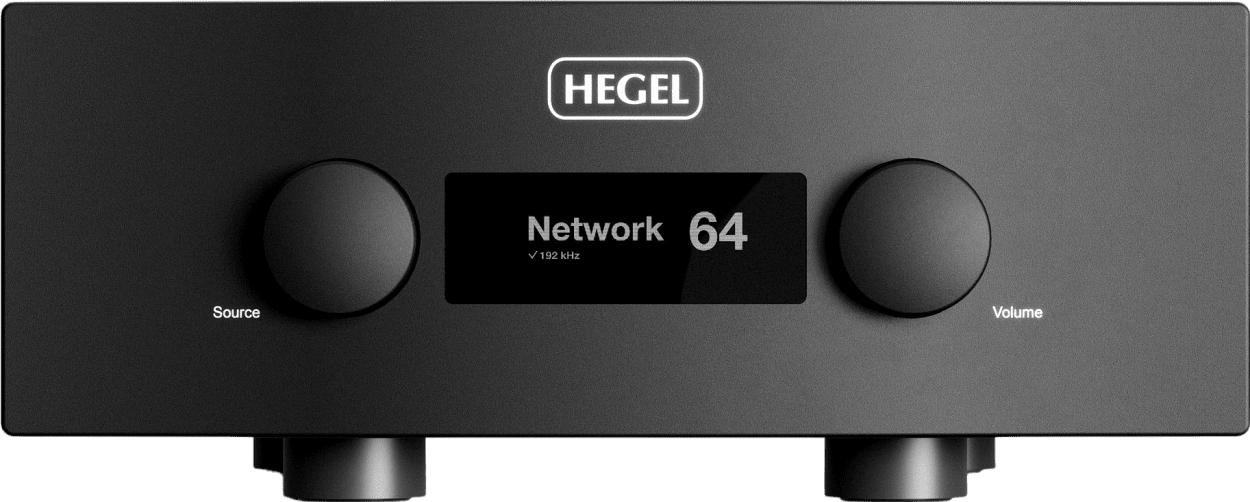

Product Strengths
- Dual-mono design delivers 303W per channel into 8 ohms, providing power and control for any speaker
- High damping factor of over 4000 ensures absolute control over speaker drivers, resulting in pristine sound reproduction
- New DAC implementation based on ESS Sabre 9038Q2M chip offers pure audio fidelity without any resampling or upsampling
- Supports streaming via Apple AirPlay 2, Spotify Connect, Tidal Connect, and UPnP/DLNA
Product Considerations
- Does not have a phonostage
- Lacks an HDMI jack with ARC
- The supplied RC10 remote is slender with tiny buttons
- Weighs 22kg
- Minimalist design may be a bit bland for some
Comparisons (according to reviewers)
- Vs Bryston B135 SST 2, the H600 delivers more effortless presentation at high output
- Vs McIntosh MA9500, the H600 has bigger sound, is crisper and has higher resolution
Takeaway: The H600 is a versatile and powerful integrated amplifier that excels in delivering high-quality audio from both digital and analog sources. Its robust amplification makes it a great choice for audiophiles seeking a simplified yet high-end audio solution.
Video review
Our take on the brand
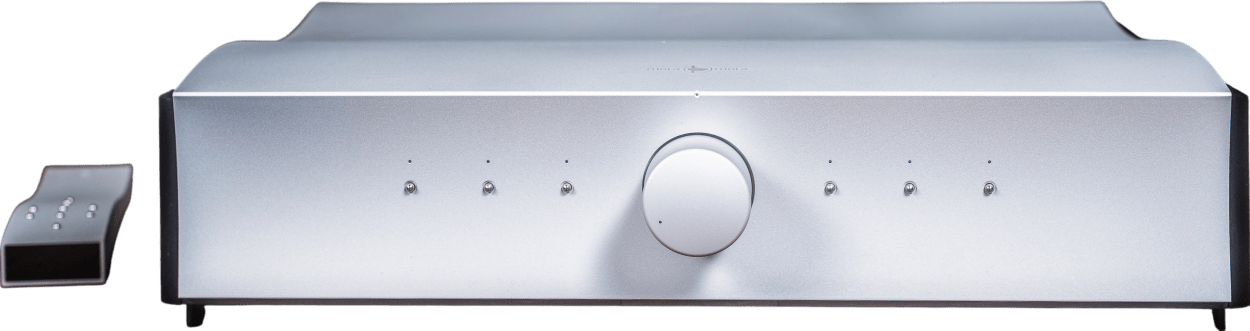

Imagine a sleek, compact design that oozes class. Imagine an amplifier design that packs enough power to comfortably handle even the most demanding of loudspeakers. Imagine a complex yet agile and easy to use fully transparent line stage. Imagine every possible Phono EQ setting available from the comfort of your listening chair. Imagine a highly acclaimed discrete DAC boasting the best specs and sound around. Imagine, combining all of the above!
Reality. Is. Kula!
Kula is an a la carte modular design creating a fusion of highly technical previous accomplishments. The chassis itself is borrowed from the acclaimed Makua preamp, as is the line stage section and its optional phono stage with independent adjustable settings and up to 6 separate inputs. The optional DAC section which also is available in the Makua, is identical to the world-class Tambaqui stand-alone unit and features 5 digital inputs including Roon endpoint and Bluetooth.
Additionally, the Kula incorporates a Mola Mola exclusive amplifier which boast an output of 150 Watts @8 Ohm, doubling into 300 Watts @4 Ohm. Clearly enough power to drive any speaker with ease.
Our summary
Product Strengths
- Exceptional audio quality from its line inputs, optional streaming DAC, and optional Phono stage
- Stunning transparency, commendable focus, and open and airy sound staging
- Inspired and seamless reproduction—with a spark of life quality
- User-configurable phono stage that competes with pricey dedicated boxes
- The DAC module, based on the Tambaqui, rivals many uber-expensive standalone units
Product Considerations
- The Kula gets quite hot during operation, needing a decent amount of ventilation
- The LEDs are very bright, and there is no way of turning them off
- The remote is borrowed from Apple TV and is not refined enough to give decent control over volume
- There is no coaxial digital input
Comparisons (according to reviewers)
- The Kula sounds a little sweeter than Mola Mola Kaluga mono amplifiers
- The Mola Mola Kula sounded like a sibling to Leben CS600
Takeaway: The Mola Mola Kula is a state-of-the-art, all-in-one amplification solution that brings music to life with transparent and life-sized sound. With optional modules, it becomes a highly versatile and elegant solution for audiophiles who want top performance in a single box.
Video review
Our take on the brand
What competes at this price?


Our Summary
Product Strengths
- Impressive build quality, with robust and chunky chassis, thick top plate and high-quality connectors
- Both Ultralinear and Triode modes are offered, providing flexibility in sound and power output—40W and 20W respectively
- It can be used in a monoblock configuration without needing an additional preamplifier
- Phenomenal sound quality, with excellent bass handling, fantastic midrange, and fast, detailed yet silky smooth treble
- Transparency allows users to hear differences when making system changes
Product Considerations
- The remote control's material might feel a little sticky
- It lacks a home theater bypass analog input
- The AI 1.10 requires at least 20 cm of space at the top and back for proper ventilation
- All tubes undergo a critical selection process to ensure long-life and stable operation, so when they need replacing, customers may need to contact Canor directly to maintain optimal sound
Comparisons (according to reviewers)
- The Canor sounded better than the Dynaco ST-70, but it was clear that it was struggling at the frequency extremes
- The AI 1.10 sounds even more tubey and bold by all means—in Triode Class-A mode—at the expense of the extra illumination and even more ambient retrieval at mid & higher freq. spectrum
- The Canor sounded just a bit smoother and slightly more open and transparent in higher extremes than the Jadis Orchestra Reference
Takeaway: The Canor AI 1.10 is a versatile tube amplifier with impressive sound and build quality. With features like auto-bias and switchable modes, it could be a great choice for audiophiles seeking a flexible and enjoyable listening experience.
Video review
Our take on the brand

Our Summary
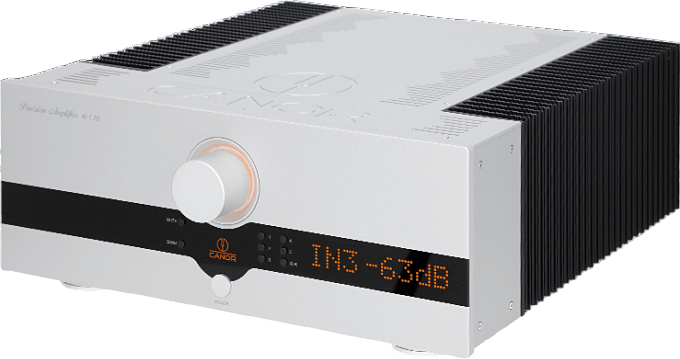
Product Strengths
- Exceptional build and manufacturing quality
- Sounds a little bit tubey for a solid-state amplifier, providing a gloss/warmth to the music
- Has the classic Class A characteristic of high perceived detail resolution alongside a relaxed presentation
- Delivers leading edges without the hardness typical of Class AB amps, and delivers them at high speed
- Can be used as single channel monoblock with a second AI 1.20, doubling the specified output
Product Considerations
- Only accepts single-ended RCA phono connections (until used in monoblock mode)
- Runs hot due to Class A operation and requires ventilation
- Some may want XLR inputs or digital inputs, which the AI 1.20 lacks
- The included remote is described as lightweight
Comparisons (according to reviewers)
- Vs Chord Electronics Etude: The Etude has a noticeably lower noise floor, more substantial/impactful bass, and more resolution, but the AI 1.20 has a smoother—more musical flow
- Vs Gryphon Diablo 300: The Diablo 300 has more raw power and authority in bass delivery, but the AI 1.20 pairing has better bass quality (tautness, incisiveness, and control)
- Vs Nagra Classic integrated amplifier: For less money, the dual AI 1.20s offer a lot more amplifier
Takeaway: The Canor AI 1.20 is a well-built amplifier that offers a smooth, musical sound with high detail resolution. It is especially impressive when used as a monoblock pair, delivering serious performance for audiophiles.
Video review
Our take on the brand
.png)
Our Summary
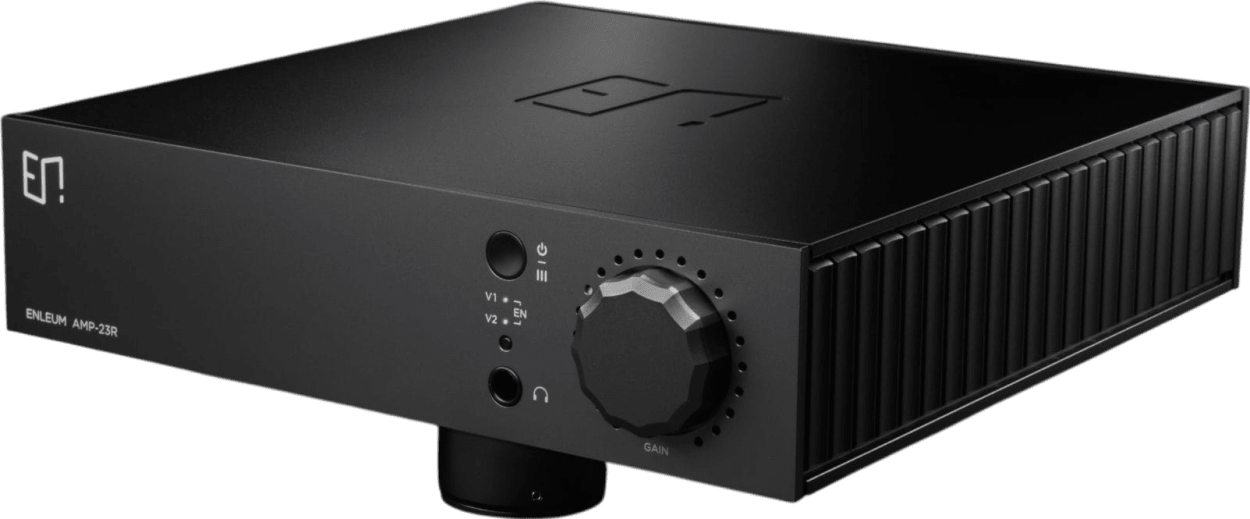
Product Strengths
- Addictive sound signature, unlike any other amp, with otherworldly instrument and voice reproduction
- Delivers serious magic with Fleetwood Deville and Klipsch Heritage speakers, revealing obscure details and creating a massive soundstage
- Dynamics for days
- Combines the qualities of a nice SET amp without the downsides, like noise or tube replacement
- Exceptional build quality and design with high-quality parts
- Only has two RCA inputs, no XLR balanced connections
Product Considerations
- Heavy speaker cables can cause the amp to tilt
- The volume dial functions as a gain dial, which may be different than what some users are accustomed to
- May not be suitable for hard-to-drive speakers in the 85db range that dip into 2–4 ohms
Comparisons (according to reviewers)
- The AMP23R offers more texture, layering, mid-bass, and vocal presence than Nagra INT
- The AMP23R is more organic, ethereal, and dynamic than Kinki Studio EXM1
- It sounds better than the Vinnie Rossi L2iSE, so long as the speakers are easy to drive
- The Enleum has more delicacy and finesse than Pass Labs and Cary Audio
- The AMP23R stacks up with the finest gear such as ampsandsound Bryce monoblocks
- Pass Labs First Watt SIT-3 offers a bit more organic, warmer presentation
Takeaway: The Enleum AMP-23R is a small but mighty integrated amplifier with a unique and addictive sound signature, and it is built with high-quality components. It's a great choice for those with sensitive speakers looking for a reference-quality system in a compact package.
Video review
Our take on the brand

Our Summary
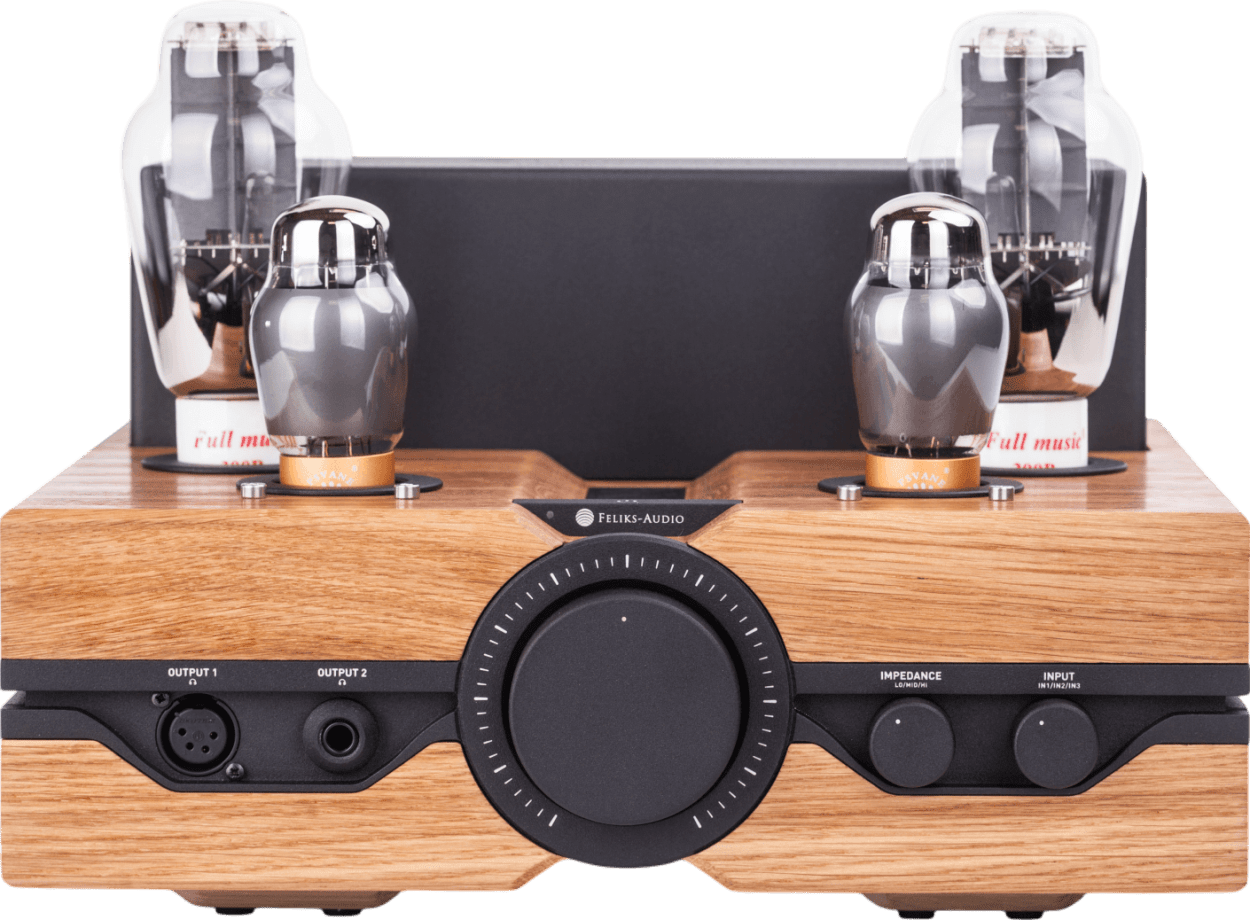
Product Strengths
- Exceptional build quality with a blend of expertly crafted wood and metal, creating a visually striking and durable statement piece
- Dynamic, rich, and effortless sound with excellent detail, texture, and the right amount of tube magic
- Powerful output capable of driving demanding headphones while maintaining clarity and control
- Versatile performance with a variety of headphones (dynamic and planar) due to its output transformer design, often improving sound for warm or neutral headphones
- Value added by its ability to be used as a pre-amplifier in a stereo system
Product Considerations
- Large size and weight (around 15kg) require ample desk space and sturdy furniture
- Generates heat, which could be a concern in warmer environments without adequate ventilation
- Accidental switching of 'On/Off' is possible due to the touch-sensitive bar in the front not being intuitive, so use with care around pets
- Too powerful for some very sensitive IEMs, potentially resulting in overwhelming sound or audible hiss, though this is not the intended design for the amplifier
Comparisons (according to reviewers)
- Vs HIFIMAN Susvara, Envy empowers Susvara's natural presentation while giving it all the dynamics and slam needed
- Vs Cayin HA-300MkII, Envy exhibits more linear mid-to-high frequencies and offers a more transparent sound, while HA-300MkII has a warmer—more engaging midrange
- Vs AURIS Headonia 2A3, Envy performs at the same level, with technically incredibly strong aspects
- Vs Octave V 16, Envy completely demolishes the V 16 when it comes to energy, control, timbre, and resolution
- Vs Ferrum OOR, Envy is more powerful sounding, while also being more detailed with better tonality
Takeaway:
The Felix Audio Envy is a high-end headphone amplifier for audio enthusiasts who want the best quality sound to bring out the magic in their favorite headphones. Its stunning design and versatile performance make it a worthwhile addition to any serious audiophile setup.
Video review
Our take on the brand

Our Summary
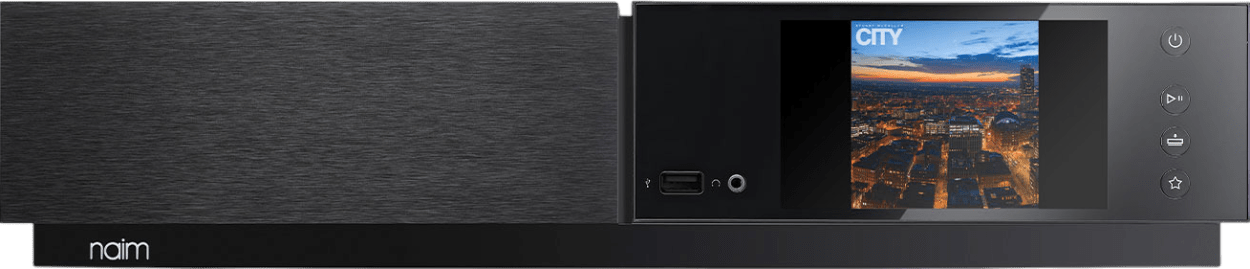
Product Strengths
- Combines comprehensive functionality, connectivity and usability with good performance, and elegant design
- Exceptional sound quality is described as refined, muscular, detailed, confident, transparent, and natural
- Easy to use, has a great control app, a remote, and an intuitive interface that removes itself from the system
- Well-built with premium materials, including CNC-machined aluminum casework, finned heat sinks, and a hefty toroidal transformer
- Has a musicality that makes it hard to be objective about, the music flows as you listen and makes you want to repeat
Product Considerations
- Overheating may occur due to undersized heatsinks under demanding conditions
- Naim's speaker connectors may be unique, although banana plugs are an acceptable workaround
- Although a detail performer, it isn't the quietest digital source or imaging performer in the market
Comparisons (according to reviewers)
- Vs Uniti Star: The Nova has a more substantial amplifier section, with greater current delivery and stability into tricky loads
- Vs SuperUniti: The Nova offers a more dynamic, detailed, fluid, and natural sound–with a bigger soundstage
- Vs Chord Electronics CPM2800 MkII: The Nova is closer spiritually to separates like the Chord CPM2800 MkII than to other all-in-one systems
- Vs NAD M10: The Naim Unit Nova has full unwavering control of the entire frequency range, from the deepest chest-thumping bass to the most delicate highs
- Vs Naim Uniti Atom: The Nova has more power to get a good result in bigger rooms, whereas the Atom needs to be in a smaller room
Takeaway: The Naim Uniti Nova is a well-designed and easy-to-use all-in-one system that combines comprehensive functionality with very good sound quality. It's a good choice for those who want a convenient and high-performing audio solution without the complexity of separates.
Video review
Our take on the brand
How to buy
Amplifiers
Search all hifi products
Explore our database of 10,000+ new and 25,000+ used hifi products.