


What's unique about the brand
What reviewers are saying
We read all the reviews. Here's what reviewers feel most strongly about:
- Mola Mola eschews off-the-shelf DAC chips, opting for a proprietary design featuring upsampling to 3.125MHz/32-bit and conversion to noise-shaped PWM using discrete components and custom algorithms.
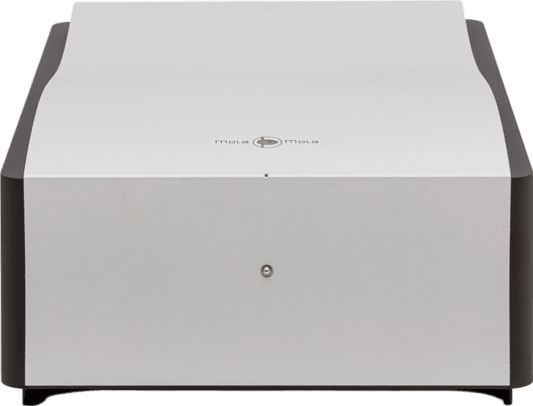
- The brand's products share a unique design aesthetic characterized by a wave-like aluminum chassis, designed to minimize vibration and resonance, setting them apart from more conventional designs.
- Mola Mola offers an unusually high degree of user control via a Bluetooth-connected app, enabling detailed customization of settings and features for each input.
Our favorite reviewer quotes:
- "The first attribute the Tambaqui nearly shouted out at me was its overall sense of ease and organic-ness. It was decidedly less digital sounding, exhibiting none of the more typical leaner body and tonality, and the tell-tale harder, edgier, flattened dimensionality." (https://www.enjoythemusic.com/superioraudio/equipment/0820/MolaMolaTambaquiHiResStereoDAC_Review.htm)
- "Timbre is remarkably genuine (recording permitting) and is depicted with striking resolution as well as with a genuine sense of body, instrumental bloom, and almost reach-out-and-touch texture. Again, the level of Tambaqui's accomplishments in this regard are rare, especially for a digital reconstruction engine that does not use external power and re-clocking devices." (https://www.enjoythemusic.com/superioraudio/equipment/0820/MolaMolaTambaquiHiResStereoDAC_Review.htm)
- "The Mola Mola Tambaqui's strengths, in sum, are its incredible, detail-rich transparency, its astounding dynamic contrasts, and its evocative, nuanced musicality. Further, the Tambaqui's transients are start-and-stop-on-a-dime swift!" (https://www.audiokeyreviews.com/the-reviews/mola-mola-tambaqui)
- "The Tambaqui was providing some things that I've always told people digital can't provide: lifelike dynamics and meaty corporeality. That day, with the Tambaqui DAC, Vilde Frang's playing displayed extra-forceful pluck and bite with rosin-on-the-bowhair descriptiveness that the Bartók and May converters could not match." (https://www.stereophile.com/content/gramophone-dreams-55-mola-mola-tambaqui-da-processor)
- "Its massive scale was joined with dense, corporeal images—again unlike any digital technology I've heard. Music had weight, energy, space, and scale, with large, physical images." (https://www.stereophile.com/content/gramophone-dreams-55-mola-mola-tambaqui-da-processor-ken-micallef-june-2022)
Our interview with the brand
What are two key technological innovations or strong opinions that differ you from other brands?
What's your approach to customer support?
What are your favorite tracks for showcasing the strength of your products?
What other products pair best with yours?

Products




Lineup comparison
We think it's helpful to understand how their products compare. To learn more about each, scroll to the section above to click through to individual product pages.
Kula
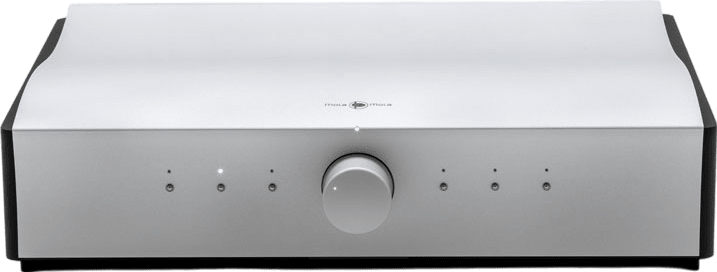
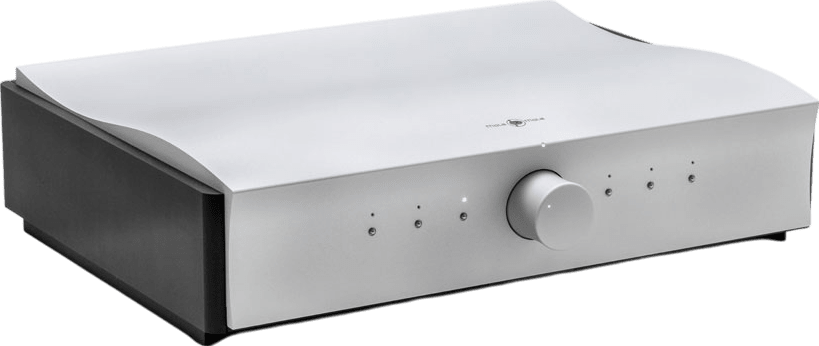
- Positioning: An integrated amplifier in the Mola Mola lineup.
- Description: Combines a sleek design with powerful performance, offering 150 Watts into 8 Ohms and 300 Watts into 4 Ohms, similar to the Perca but with integrated preamp and DAC features. Borrows the chassis and line stage from the Makua and includes the Tambaqui DAC, making it a versatile all-in-one solution.
Perca
- Positioning: A compact stereo power amplifier in Mola Mola's lineup.
- Description: Delivers 150 Watts into 8 Ohms and 300 Watts into 4 Ohms, making it suitable for various speaker setups. Features ultra-low distortion class A input stages and the Mola Mola Trajectum platform, similar to the Kula integrated amplifier, offering refined Class D performance.
Kaluga
- Positioning: A power amplifier in the Mola Mola lineup.
- Description: Uses class-D technology, delivering 400W into 8 Ohms and 700W into 4 Ohms, offering exceptional power and efficiency. Features a unique design with low distortion and noise, outperforming traditional class-A amplifiers, unlike the Perca, which offers a more compact solution.
Lupe
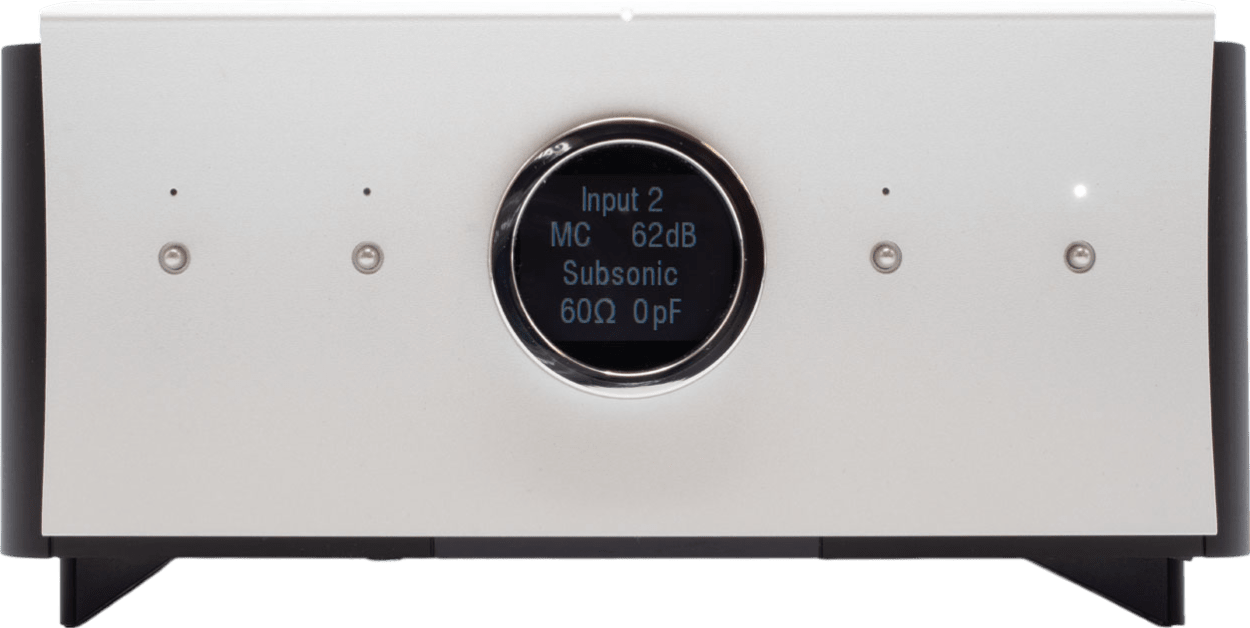
- Positioning: A standalone phono stage in the Mola Mola lineup.
- Description: Features an archival-grade phono stage, offering three single-ended inputs and one balanced input, providing flexibility for vinyl enthusiasts. Has independent MC/MM input stages, unlike the Makua and Kula, which integrate phono stages as optional add-ons, making it the quietest and most versatile phono stage available.
Makua
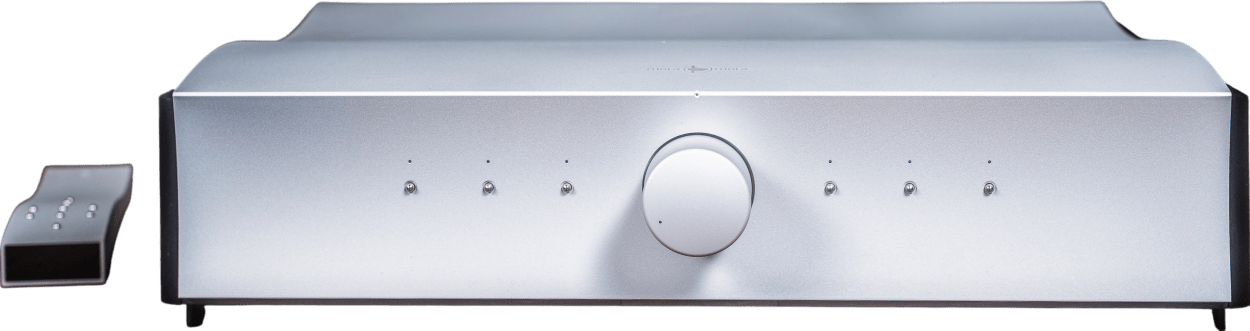
- Positioning: A preamplifier in the Mola Mola lineup.
- Description: Features a transparent gain stage and programmable routing matrix, offering flexibility with optional DAC and phono stage add-ons. Its unique single-ended driven differential topology reduces noise, unlike the Kula, which integrates these features into an all-in-one design.
Tambaqui
- Positioning: A standalone DAC in the Mola Mola lineup.
- Description: Features a discrete DAC design, offering a 130dB SNR and advanced digital processing, making it a top choice for digital audio enthusiasts. Unlike the Makua, which integrates the DAC as an optional module, the Tambaqui provides a dedicated solution for those seeking the highest digital audio quality.


Used
Mola Mola
Every month, we find the brand's used items for sale across the web and offline hifi stores. We have the largest database of used hifi products. Search it here.







Search hifi products
Explore our database of 10,000+ new and 25,000+ used hifi products.
Similar
DACs
brands


Featured products





About the brand
Our interview with the brand
What are two key technological innovations or strong opinions that differ you from other brands?
We love and pursue purity. That’s why our analog output doesn’t choke dynamics with multiple stages, it lets them breathe, preserving the extraordinary SNR of our DAC engine without introducing artifacts or limitations. We’ve developed our own proprietary parallelized DAC conversion engine, complete with over 4,000 lines of custom firmware. Why? To meet our standards for emotional realism. We wrote our own rules—and our own code—to bridge the gap between technical performance and musical truth.
That’s what sets us apart: every circuit, every line of code, every concept is ours.
From our advanced re-clocking systems to our zero-noise rectification bridges—everything is conceived, designed, and executed in-house.
Even our power supply architecture is proprietary: parallelized, ultra-low-noise designs, paired with custom active bridges that eliminate diode-generated noise at rectification.
This isn’t tweaking - this is redefining what’s possible in digital playback. Timing correction is applied at both ends - input and output - with our sequential re-clocking and re-driving architecture. Each device is equipped with multiple femto-level clocks, operating in cascading stages, ensuring absolute signal phase integrity and vanishingly low jitter.
This is a fully upgradeable platform - because we’re always thinking ahead. All of this adds up to something more than specs, more than numbers. It results in sound with unimaginable resolution, breathtaking dynamics, and a texture that’s almost tactile. Whether through USB or SPDIF, our re-clocking and re-driving platforms deliver a musical experience that isn’t just accurate, it’s alive. Music deserves nothing less.
USB Input
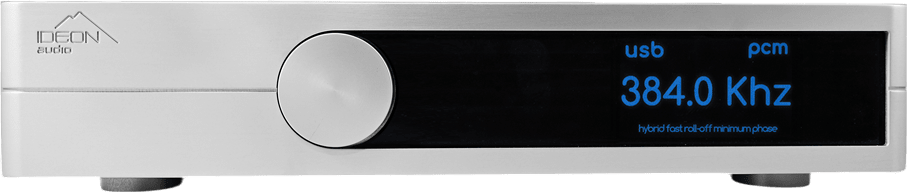
More than 90% of DACs today use the same two generic USB chipsets. We don’t. Instead, we created our own proprietary USB input architecture, hardware and firmware designed together, paired with top-class femto-level clocks. It’s called the Ideon Triple Distillation USB input - a three-stage circuit that eradicates digital noise before the signal even reaches the DAC chip. What reaches the conversion stage is unflavored, untainted, and utterly transparent. A clean slate - ready to be reborn as music. This is our declaration of war on both linear and non-linear distortion. We simply eliminate noise.
Analog Stage
We take a similarly radical approach: one single stage. No coupling capacitors in the signal path. No power FETs or multiple output stages to artificially inflate current or “enhance” dynamics, because we found a better way. Our ultra-low-noise, symmetrical power supplies feed a uniquely designed topology that maintains signal integrity at an unmatched level. The result? Explosive dynamics, natural textures, intense detail—yet nothing is forced, nothing hyped. It just sounds real.
What's your approach to customer support?
Our approach to customer support is structured, customer centric, yet highly responsive. The first level of support is handled by our distributors in each country where we are represented. For territories without a local distributor, customers can contact our technical team directly. In fact, many customers reach out to us even when a distributor is present, especially for specific technical questions. We maintain a dedicated support email and pride ourselves on responding quickly and effectively to every inquiry. Customer satisfaction is at the core of everything we do. We’ve consistently been praised by both customers and partners for our fast, reliable, after-sales support. Whatever the issue, our goal is to resolve it swiftly and professionally. Additionally, all Ideon Audio products are designed with a modular architecture. This means servicing is straightforward and quick, as individual modules can be easily replaced when needed. This way we minimize downtime, ensuring continued performance. We are committed to making sure every customer is satisfied. In fact, we aim for, and maintain a zero unhappy customer record.
What are your favorite tracks for showcasing the strength of your products?
- Sway, Diana Krall
- Jacques Loussier Erik Satie Gnossienne No. 4
- Daft Punk, the Game of Love
- And many others
What other products pair best with yours?
This list is big, as we try to listen to synergies with many different products from a lot of brands. To name a few: Wilson, Estellon, JMF, Elac, Gamut, VTL, Aesthetix, etc.

Featured products


About the brand
Our interview with the brand
What are two key technological innovations or strong opinions that differ you from other brands?
What's your approach to customer support?
What are your favorite tracks for showcasing the strength of your products?
What other products pair best with yours?

Featured products

About the brand
Our interview with the brand
What are two key technological innovations or strong opinions that differ you from other brands?
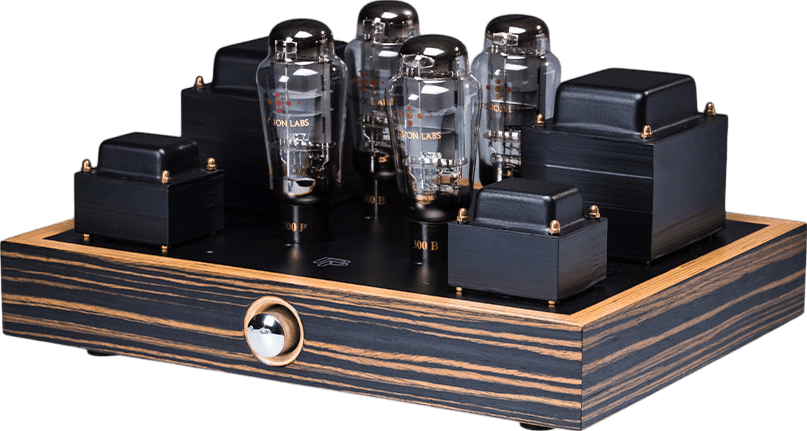
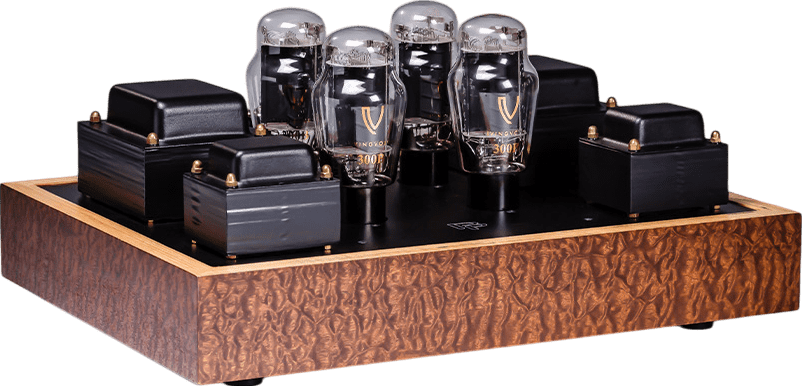
Not sure about technological innovations, as my products unashamedly use old-school tech (valves and R-2R DAC chips), but strong opinions would be:
- I prefer electronics that have minimal signal processing, i.e., DACs without oversampling and digital reconstruction filters, and amplifiers that do not use negative feedback.
- I believe that power supply quality is very, very important and can often define the product’s sound.
What's your approach to customer support?
Direct contact with me. Fast reply, advice on how to get the best from my products or solve technical issues. Quick turnaround with updates on progress of any repair or service issues. I have been in the audio industry for over 35 years as a dealer, manufacturer, designer, service engineer, and just about everything else. Clients get the benefit of that experience when they buy from me.
What are your favorite tracks for showcasing the strength of your products?
This one is hard, as it changes a lot and I listen to lots of different things:
- Wagon Wheels – Sonny Rollins, Way Out West
- Five Feet Tall – Lady Blackbird, Black Acid Soul
- Symphonic Dances – Rachmaninov, Eiji Oue, Minnesota Orchestra
What other products pair best with yours?
Living Voice Loudspeakers

Featured products


About the brand
Our interview with the brand
What are two key technological innovations or strong opinions that differ you from other brands?
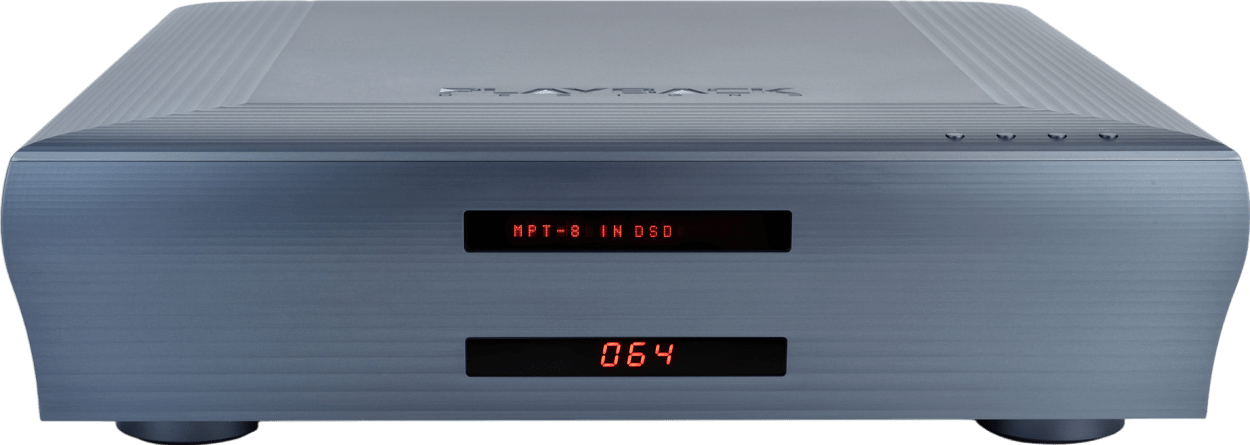
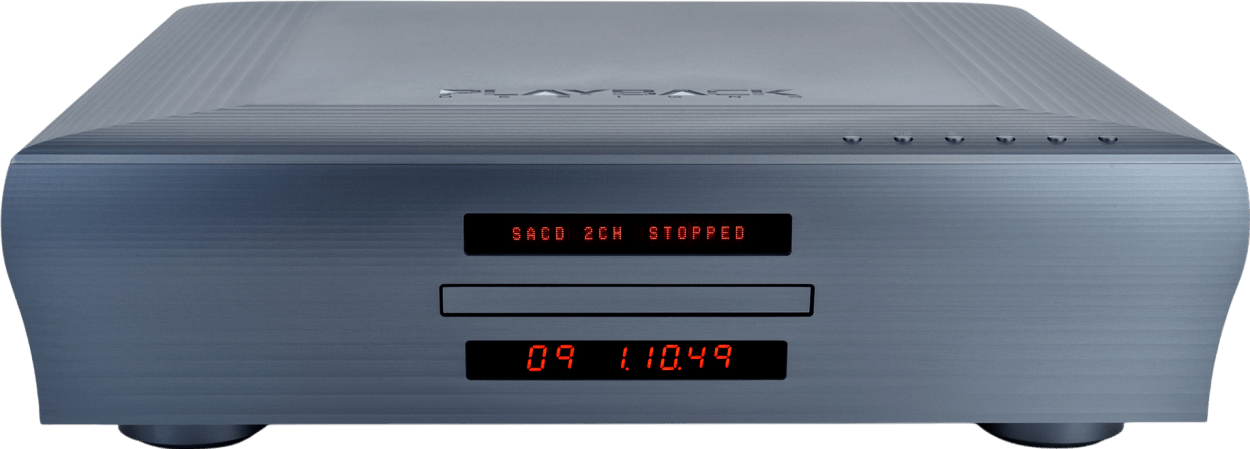
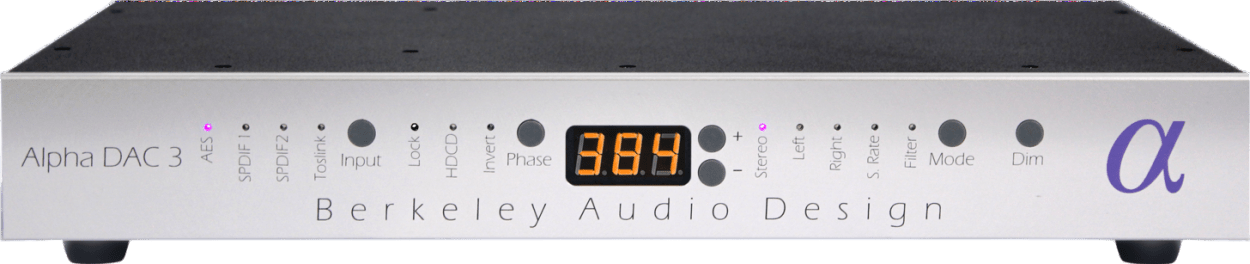
We do not use any standard DAC chip solution from the open market, but rather developed our own proprietary conversion algorithms and programmed them into general FPGA processors that are field upgradeable. In other words, every improvement or change in algorithms can be downloaded from our website and loaded into our products, all by the end user. More details are here.
For one of the most critical components in any DAC we, again, are not using any standard technology, but rather developed a very unique and proprietary algorithm that takes into account the very sensitive properties of our human hearing system and they way it perceives clock jitter. More details here.
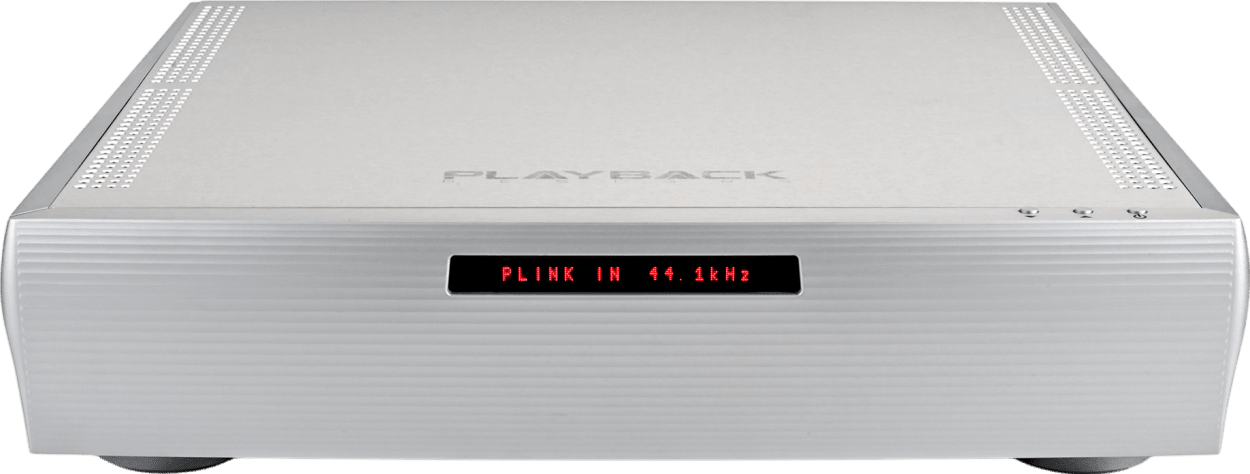
When we were part of the DSD creation team at Sony we were tasked with a very challenging project: the definition of a high speed digital communication protocol that would support any PCM and DSD format (i.e. sample rate). This link should be able to transmit any audio data from any source to a DAC. The solution I came up with is based on a high speed fiber optic data link as it is used in super high speed data links where secure data recovery at the receiver is crucial. While the speed of transmitting audio data is well and way below the capability of such fiber optic links I still chose this physical link because of its superb data and clock integrity / stability. In addition the fiber optic media provides a galvanic separation between digital source and core DAC circuitry. This alone already results in an audible improvement. All our products support this link and we call it PLINK. We use it to connect external transports, servers or USB interfaces to our DACs.
What's your approach to customer support?
We see customer support as an opportunity to show to the customer who we are and how much we care. Usually, I answer all inquiries and customer support requests personally, within 24 hours and with as much technical info as possible. While some of our dealers possess good technical know-how and are able to interact with customers on that level directly, other distributors do not provide any technical support. Either way we encourage customers to contact us directly for any help.
I often get feedback from customers that this kind of direct and expert support ultimately convinced them to buy our products. So obviously the way we do it is not standard in our industry.
What are your favorite tracks for showcasing the strength of your products?
There are many excellent recordings that can demonstrate the behavior of our of DACs, but it is mostly a function of the listener's taste in music. For instance, people who do not like classical music do not hear its finesses when played on our equipment etc. For my own personal taste I often use any DSD re-mastered track of Pink Floyd or Roger Waters. This is also because most of these tracks were mastered using my designs and with that they show off specifically the "analog-like" behavior during transients of our DACs and the resulting 3-dimensionality of the sound stage.
What other products pair best with yours?
As a digital "pure-bread" listener I do not use analog sources myself and only our own electronic designs (including amplification) for playback paired with a variety of different loudspeakers from mid-size to professional near-field monitors. The latter are usually more revealing and neutral than most consumer or audiophile speakers, but are only suitable in small studio environments. Over the years I have been working closely with brands such as Hafler (professional speakers), Evolution Acoustics, Stenheim and many speaker manufacturers.

Featured products
About the brand
Our interview with the brand
What are two key technological innovations or strong opinions that differ you from other brands?
What's your approach to customer support?
What are your favorite tracks for showcasing the strength of your products?
What other products pair best with yours?
.png)
Featured products

About the brand
Our interview with the brand
What are two key technological innovations or strong opinions that differ you from other brands?
What's your approach to customer support?
What are your favorite tracks for showcasing the strength of your products?
What other products pair best with yours?