



Note that this is a discontinued product. You may want to visit the brand's page here to browse their newer products.
What reviewers think
Bloggers and YouTubers have tried this product—so we've summarized their strongest opinions below. Links to full reviews follow.
Product Strengths
- Clean midband, detailed top end, and tonally neutral with a touch of added warmth.
- Large dynamic swings with great energy and attack, with leading edges of notes not softened or slurred.
- A large, spacious, and holographic soundstage with three-dimensionality.
- Powerful enough to drive most speakers cleanly.
- High-grade parts are used throughout including an ALPS volume pot and MIT and Mundorf N-Cap capacitors.
- Only has RCA inputs and no balanced input.
Product Considerations
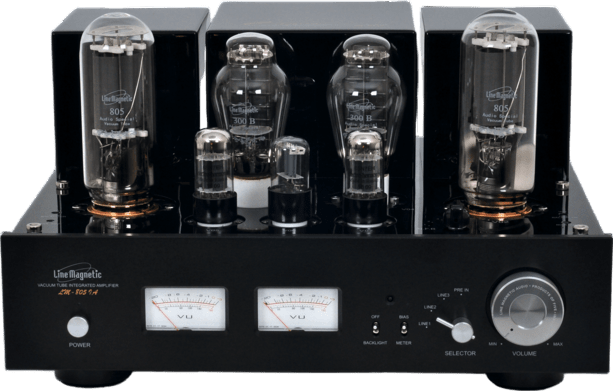
- Generates a lot of heat, and is heavy (42kg) and large, which can be an issue.
- Changing tubes can be an extra maintenance cost.
- The unit lacks a phono preamp section, turntable input, headphone output, and DAC.
- The stock tubes might need upgrading for users with very high expectations.
Comparisons (according to reviewers)
- Compared to the NAD-C298, the LM-805iA offers a warmer sound, unlike the NAD-C298 which is more detailed and accurate.
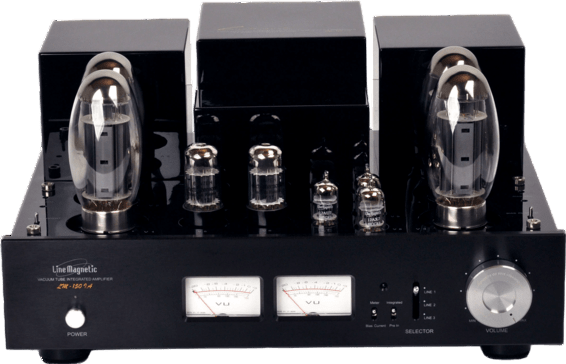
- Compared to the Line Magnetic 508IA, the 805IA has a more polished sound compared to the more visceral and gritty 508IA.
- Compared to the McIntosh MA252, the LM-805iA creates a huge soundscape.
Takeaway: The Line Magnetic LM-805iA is a well-built tube amplifier that offers a balanced sound with enough power to drive most speakers, making it a great choice for audiophiles who appreciate the unique characteristics of tube amplification. Its ability to create a holographic soundstage and its refined sound signature make it a worthwhile investment.
All
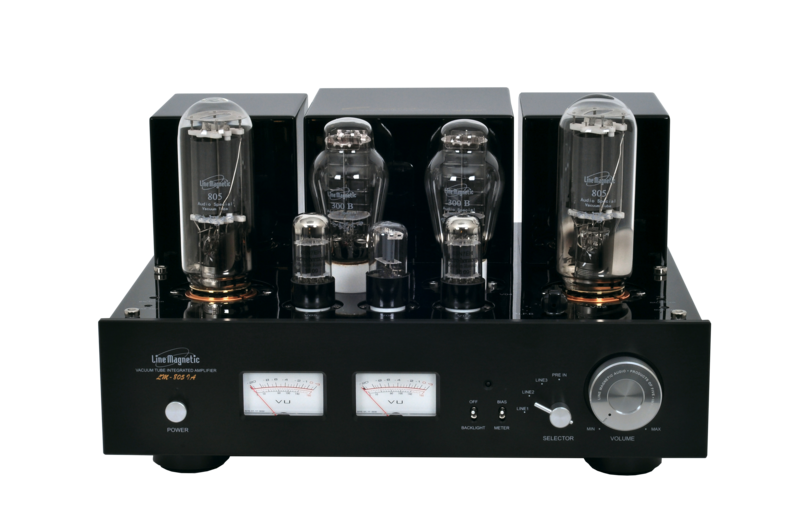
LM-805IA
reviews


Manufacturer details
- Power Output: 2x48W RMS
- THD: 1% (1kHz)
- Signal/Noise ratio: 87dB (Weighted A)
- Frequency Response (-1.5dB): 10 - 50,000 Hz
- Sensitivity: 300 mV (Built-in Mode)
- Input Impedance: 100kΩ
- Load impedance: 4/8/16Ω
- Inputs: 3x Line inputs RCA (pair), 1x Pré-in input
- Outputs: 2x Screw terminals compatible with banana plugs
- Dimensions (WxHxD): 430 x 275 x 415 mm
- Weight: 42 Kg
- Tubes: 1x 6SL7, 2x 6SN7, 2x 300B, 2x 805


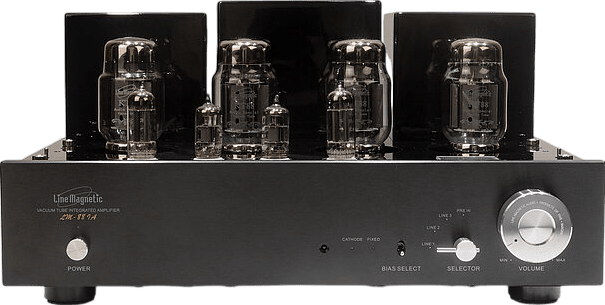
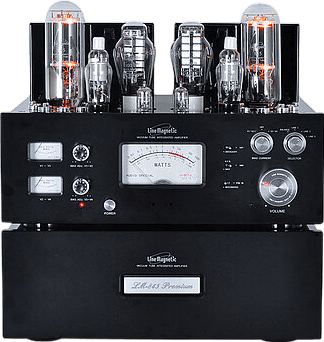
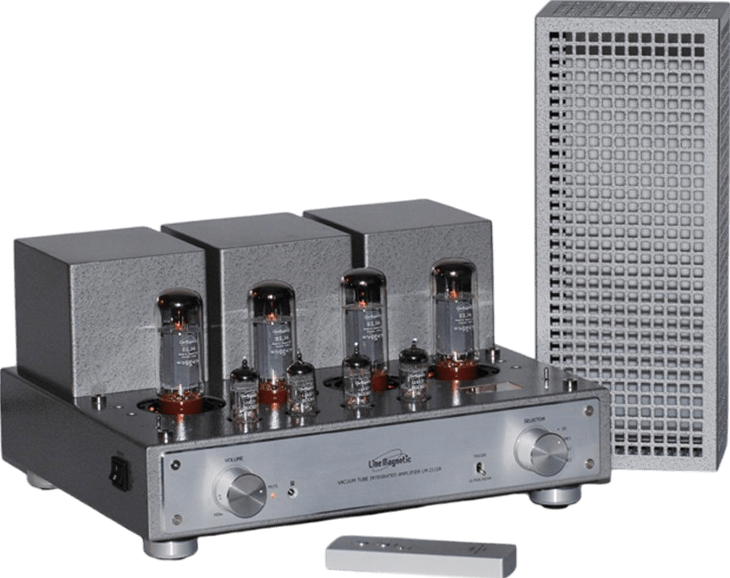

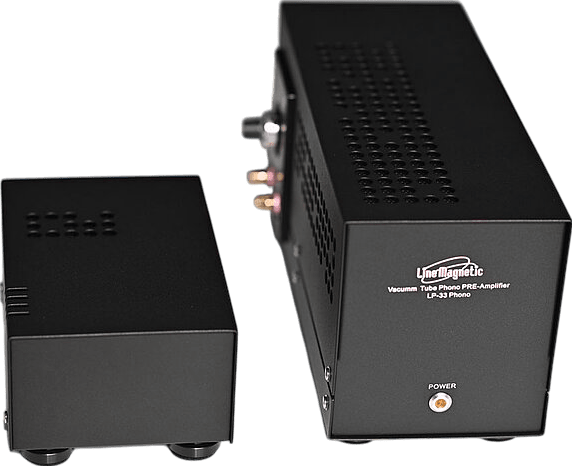
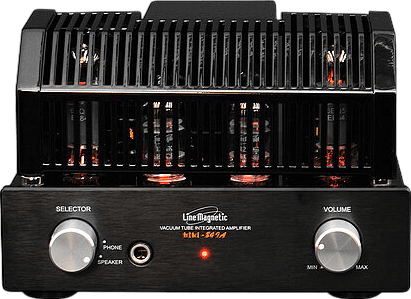

Brand highlights
Taking a step back to look at reviewers' thoughts of the brand's entire lineup—not just this product—what stands out most is the following:
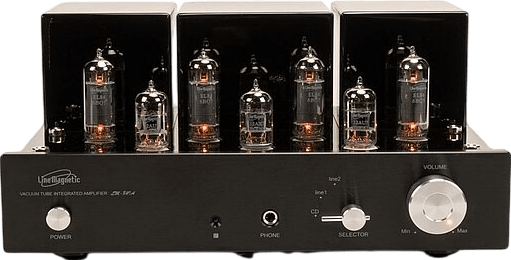
- Their amplifiers often feature point-to-point wiring, a more labor-intensive and traditionally hifi construction method, reflecting a commitment to quality craftsmanship.
- Line Magnetic's SET (Single-Ended Triode) amplifiers deliver a signature free-flowing soundstage, often described as exceptionally natural, emotionally engaging, and vividly 3D.
- They offer models with adjustable negative feedback, a rare feature in tube amplifiers that allows users to fine-tune the sound to their preference or speaker characteristics, offering greater flexibility in system matching.
Select products
LM-mini 84IA
- Positioning: A compact headphone amplifier designed for small spaces and versatility.
- Description: Offers a single-ended output stage using EL84 tubes, providing a warm and detailed sound ideal for audiophile headphones. Unlike larger models like the LM-211IA, it is specifically tailored for headphone use but can also drive small speakers, making it perfect for users with limited space and budget who still want high-quality sound.
LM-211IA
- Positioning: The entry-level integrated amplifier offering a balance of performance and affordability.
- Description: Features a push-pull design with EL34 tubes, delivering a dynamic and natural sound that suits a variety of music genres. It offers more power than the LM-mini 84IA, making it suitable for small to medium-sized rooms.
LM-34IA
- Positioning: A mid-range integrated amplifier with enhanced power and flexibility.
- Description: Stands out with its 40W per channel output and the ability to use different power tubes, offering greater flexibility compared to the LM-211IA. Its pre-in input allows it to function as a power amplifier, providing versatility for those looking to expand their audio setup.
LM-845 Premium
- Positioning: A high-end integrated amplifier designed for audiophiles seeking top-tier performance.
- Description: Distinguished by its single-ended 845 triode design, delivering a rich and immersive sound that sets it apart from other models like the LM-34IA. It offers superior build quality and soundstage.

Our take on the brand
Look inside the brand
Our interview with the brand
What are two key technological innovations or strong opinions that differ you from other brands?
What's your approach to customer support?
What are your favorite tracks for showcasing the strength of your products?
What other products pair best with yours?

Used
Line Magnetic







What if you spend more?



For those who demand the best, but want to keep things simple. The Z40+ Integrated amplifier delivers the magic, realism, and 3D soundstage of our patented ZOTL technology, all in one (gorgeous) package. A single-component solution, the Z40+ Integrated amplifier incorporates the acclaimed ZOTL40+ Reference power amplifier, a Berning-designed preamplifier, and LTA’s digital control system–beautifully packaged in a Fern & Roby-designed case. The Z40i+ generates up to 51 watts per channel. This means the Z40i+ can easily drive speakers with sensitivity ratings at or above 85db for critical listening. For smaller rooms or non-critical listening, it can drive speakers rated down to 80db. In any configuration, listeners enjoy startling realism, plentiful bass, low noise, plus gorgeous mids and highs.

.svg)
Product Strengths
- Balanced and musically persuasive presentation, making it convincing across various music genres
- Superb control coupled with a timbrally rich sound and expansive sound image—wonderfully nuanced and inviting
- Transparent, detail-oriented sound that doesn't sacrifice the body and soul of the music
- The design uses David Berning's ZOTL technology, aiming to deliver tube richness with solid-state resolve and speed
Product Considerations
- May require higher sensitivity speakers to perform optimally, especially in larger rooms
- The lack of dedicated subwoofer outputs might be a drawback for some users
- Its transparent nature means that poorly mastered recordings will be revealed as such
Comparisons (according to reviewers)
- The Z40+ leans to a richer and more fluid sound, whereas the SoulNote A-2 is more concerned with resolution and clarity
- Compared to Pass Labs XP30 preamp and a First Watt F7 power amp, the Pass Labs sounded warmer, fleshier, and bigger, however, the Linear Tube Audio amp had more life to it
- Compared to Pass Labs XP30 preamp and an XA25 Pass Labs amplifier, the Linear Tube Audio has more density to the sound and is more solid sounding than the XA25 with the XP30
Takeaway: The Z40+ offers a unique combination of tube and solid-state qualities, providing a detailed yet musical listening experience. Its design and high-quality components aim to deliver a transparent and honest sound, suitable for a wide range of music and audiophiles who appreciate sonic purity
Video review
Our take on the brand
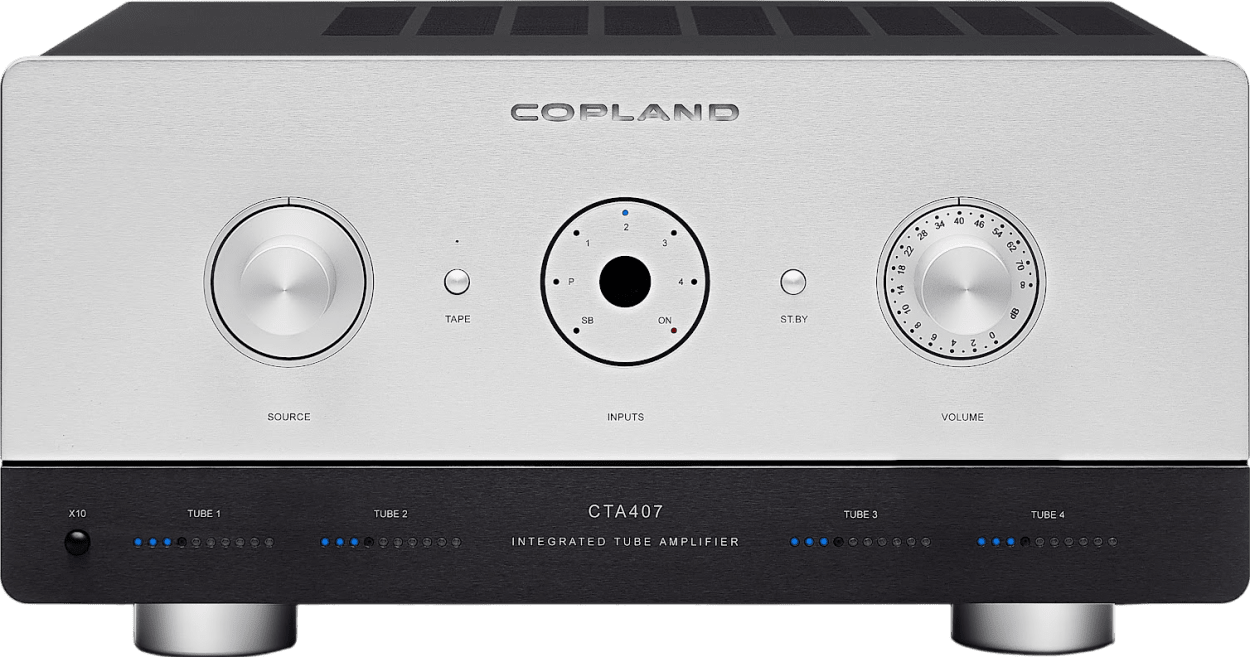

The amplifier is the interface between your signal sources and the speaker system, whatever is lost at this position is lost forever and conversely, whatever is introduced is also amplified. Amplifiers are also products for everyday use. Some successfully deviate from the conventional, they remind us of the strive for perfection – a human virtue we like to recognize and being close to.
There is a distinctive mood of luxurious puritanism to be found in the appearance of most Copland amplifiers. However, with the CTA407 tube amplifier we have compromised simplicity, introducing a fair deal of electronics supporting the audio stages of the amplifier. The forty LED diodes on the front panel (10 for each tube) are the visual part of the CTA407 tube bias and diagnostic system. And yes, the LEDs can be turned off if you don't want to read the status of your power tubes on the fly.
The CTA407 will automatically adjust for any tube in the 6550/KT88/KT120/KT150 family. The CTA407 servo system is not only a lossless automatization of the bias adjustment – it is an integrated part of the CTA407 internal high pass filtering, closely matched to the transfer function of the amplifying circuitry and a vast improvement to the overall fidelity of the amplifier.
The CTA407 employs five line-level inputs including a tape monitor loop and a built-in RIAA phono circuit accommodating moving magnet, as well as high output moving coil cartridges. It is a development of the CTA405 amplifier, an object of desire for audiophiles worldwide since its launch more than a decade ago.
The push pull output stages consist of a pair of matched power tubes in fixed ultra linear configuration, providing the low distortion of triodes and the power of tetrode valves. A pair of 6550 or KT-family tubes in push-pull configuration can deliver more than 100W of audio power. Moderating the power output, the CTA407 delivers 2x50W in high biased class A/AB mode. In practice, this means that the amplifier can deliver most its power in class A state.
Due to the quality of the output transformers, superb linearity is achieved before feedback is employed, reducing the requirements for internal lag compensation networks, and ensuring high stability after the 18dB negative feedback loop is closed. The CTA407 can provide an extraordinarily accurate reproduction of music without tendency towards listening fatigue, featuring strong dynamics and a wide flexibility in the choice of speakers.
The vanishing low perceived noise from the amplifier itself is a bliss, especially for owners of high efficiency speaker systems. The CTA407 employs motor driven volume control and can be fully controlled by the Copland RC102A remote control unit.
Our summary
Product Strengths
- The CTA407 balances accuracy and musicality, creating an amplifier that is greater than the sum of its parts.
- Utterly silent at idle, with neither noise from the amp itself nor through the speakers.
- It delivers the recording with surprising punch and attack within its power output limits.
- The amplifier is well-built, with every control feeling precise in use, exuding functionality.
- It offers a balanced, expressive, and composed performance.
Product Considerations
- The CTA407 is a big amplifier and requires plenty of room in any system.
- The buttons on the remote are prone to sticking.
- It has no headphone output.
- The moving magnet phono stage might not suit all users, as many prefer MM/MC onboard phono sections or separate phono stages.
Comparisons (according to reviewers)
- Vs Copland CTA405: The CTA407 traces back to the CTA405, specifically the CTA405 and not the CTA405a.
- Vs Copland CTA408: The CTA407 replaces both the 405a and the CTA408.
- Vs Yamaha A-S3200: The Copland amplifier doesn't have quite the same control over bass frequencies when playing loudly.
- Vs Audio Research I/50: The Copland amp seems more dynamic and plays with more authority in the bass range.
- Vs Rotel Michi X5: The Copland amplifier doesn't have the same endless power.
Takeaway: The Copland CTA407 delivers a sophisticated and controlled sound, with a rich and nuanced tonal character. It is a well-engineered tube amplifier that offers a balance of power and refinement for an engaging listening experience.
Video review
Our take on the brand


an integrated tube amplifier in class A with an output power of 2 x 40 W KT88 high-power tubes with autobias with a cathode feedback an option to immediately switch between triode and ultra-linear mode PCB’s utilize our premium CMT ™ technology perfect separation of channels by using a relay attenuator / standalone blocks for each channel/gain control by 1 dB and maximum attenuation of 63 dB the independently powered control part filter capacitors with high capacitance deliver energy to accurate and tight basses only use high-quality polypropylene capacitors have been used in the signal path absolute selection and tubes matching with above-average parameters an option of synchronous control enables the use of two amplifiers in a monoblock mode without the need of using an extra preamplifier and that is a Master/Slave mode with an output power of 80 W per channel
Product Strengths
- Impressive build quality, with robust and chunky chassis, thick top plate and high-quality connectors
- Both Ultralinear and Triode modes are offered, providing flexibility in sound and power output—40W and 20W respectively
- It can be used in a monoblock configuration without needing an additional preamplifier
- Phenomenal sound quality, with excellent bass handling, fantastic midrange, and fast, detailed yet silky smooth treble
- Transparency allows users to hear differences when making system changes
Product Considerations
- The remote control's material might feel a little sticky
- It lacks a home theater bypass analog input
- The AI 1.10 requires at least 20 cm of space at the top and back for proper ventilation
- All tubes undergo a critical selection process to ensure long-life and stable operation, so when they need replacing, customers may need to contact Canor directly to maintain optimal sound
Comparisons (according to reviewers)
- The Canor sounded better than the Dynaco ST-70, but it was clear that it was struggling at the frequency extremes
- The AI 1.10 sounds even more tubey and bold by all means—in Triode Class-A mode—at the expense of the extra illumination and even more ambient retrieval at mid & higher freq. spectrum
- The Canor sounded just a bit smoother and slightly more open and transparent in higher extremes than the Jadis Orchestra Reference
Takeaway: The Canor AI 1.10 is a versatile tube amplifier with impressive sound and build quality. With features like auto-bias and switchable modes, it could be a great choice for audiophiles seeking a flexible and enjoyable listening experience.
Video review
Our take on the brand
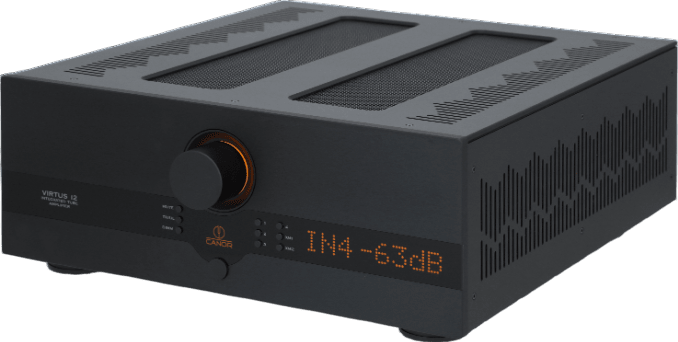
an integrated tube amplifier operating in class A, providing an output power of 2 x 40 W KT88 high-power tubes with autobias with a cathode feedback an option to switch between triode and ultra-linear mode instantly PCB’s utilize our premium CMT ™ technology perfect channel separation using a relay attenuator that features individual blocks for each channel. The gain control is in increments of 1 dB and attenuates up to 63 dB the independently powered control part capacitors with high capacitance in the filter provide energy for precise and well-defined bass the signal path exclusively contains high-quality polypropylene capacitors precise selection and pairing of the tubes meeting above-average parameters the synchronous control option allows the use of two amplifiers in a monoblock mode without the need for an extra preamplifier. This Master/Slave mode has an output power of 80 W per channel
Product Strengths
- Excellent build quality with imposing casework and high-quality finish
- Offers flexibility with switchable ultralinear and triode modes for different sound characteristics
- Features auto-bias with cathode feedback for safe and easy tube operation
- Precise gain control with a relay volume control and individual blocks for each channel, attenuating the signal in steps of one decibel
- Transparent yet warm organic sound profile suitable for various music genres
Product Considerations
- Generates significant heat during operation, requiring ample space for air circulation
- High power consumption of 150 watts in idle
- Switching between triode and UL modes can only be done on the amplifier itself, not via the remote
Comparisons (according to reviewers)
- The Virtus I2 is a step up from the Canor AI 1.10
- The Virtus I2 is more affordable than the Canor Virtus M1
Takeaway: The Canor Virtus I2 is a well-engineered tube amplifier with a focus on in-house manufacturing, offering a transparent and engaging sound. Its flexibility and ease of use make it a worthwhile consideration for audiophiles seeking a high-quality tube listening experience.
Video review
Our take on the brand
What competes at this price?
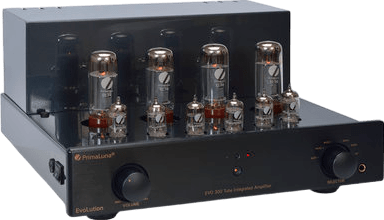

Our Summary
Product Strengths
- Combines the tonal qualities of tubes with the power of solid-state amplification, combining the great aspects of both technologies
- Delivers a clean, detailed, dynamic, and musically insightful sound
- Well-built with high-quality components, including point-to-point wiring in the preamp section
- Includes a headphone amplifier powered by the same internal amp as the speakers, not an op-amp
- Multiple inputs and functions, including home theater bypass, subwoofer output, and tape output
Product Considerations
- Lacks balanced inputs and a pre-amplifier output
- The volume control can be very sensitive at low levels
- Optional MM phono stage requires additional purchase
- Requires good ventilation due to running warm
Comparisons (according to reviewers)
- Versus Cambridge Audio Edge NQ / 2 x Gold Note PA-10 setup, the EVO 300 Hybrid delivers a level of engagement that was captivating, the improvement over the normal setup slightly disconcerting
- Versus Schiit Jotunheim, the PrimaLuna bested it, with a slightly cleaner sound that let a touch more detail through
Takeaway: The PrimaLuna EVO 300 Hybrid offers a balance of tube warmth and solid-state power to give listeners the best of both worlds. Its detailed sound, robust build, and versatility make it a worthwhile addition to any audiophile's system.
Video review
Our take on the brand


Our Summary
Product Strengths
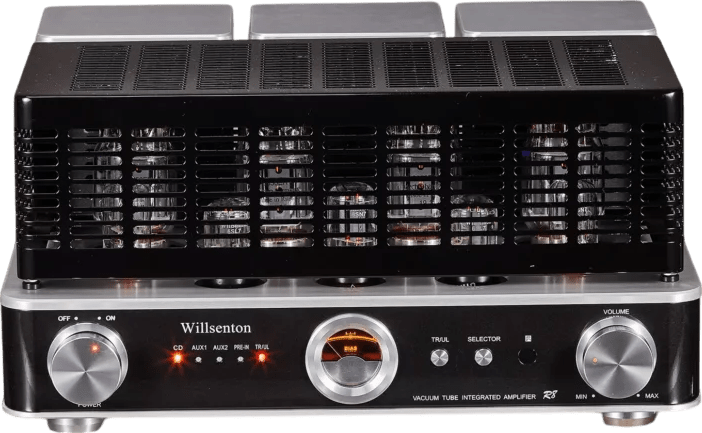
- Impressive build quality and design for the price, with quality parts and point-to-point hand wiring, which is rare these days
- Versatile amplifier integrates into different systems due to the ability to use KT88, EL34, or 6550 tubes
- Offers a choice between triode and ultralinear modes, which can be switched on the fly, and it makes a big difference in sound
- Delivers a wide soundstage with good stereo imaging and a 3D holographic presentation
Product Considerations
- Bass, especially with KT88 tubes, can be strong and might benefit from more nuance, EL34 tubes offer a better balance
- Treble can be a little bright or have a hard edge in the upper midrange, especially with revealing speakers, although this can be addressed with tube rolling
- The remote control is functional but noisy, and the volume steps may not allow for fine adjustment
- May not be suitable for those who listen at very loud volumes, as the sound can harden up at higher levels
- Stock tubes are good, but tube rolling can significantly enhance and fine-tune the sound
Comparisons (according to reviewers)
- Vs PrimaLuna Evo 300: The R8 sounds just as good, if not better, and is built just as good, if not better, but at a fraction of the price
- Vs McIntosh 152: Some reviewers preferred the sound of the R8 over the McIntosh 152 despite the significant price difference
- Vs McIntosh 252: Some reviewers found the R8 better than the McIntosh, especially in ultralinear mode
- Vs Exposure 2510: The R8 offers similar detail and refinement to the Exposure 2510 but surpasses it in acoustic body, tonal richness, scale, and dynamics
- Vs Line Magnetic 219ia: The R8 brought back memories of the Line Magnetic 219ia but had more gusto and oomph while retaining much of the magic
Takeaway: The Willsonton R8 is a versatile and great-sounding tube amplifier that offers exceptional value, making it a worthwhile purchase for those seeking a tube sound experience without breaking the bank. It can enhance the sound of speakers and allows for music enjoyment in a more engaging manner.
Video review
Our take on the brand
.png)
Our Summary
Product Strengths
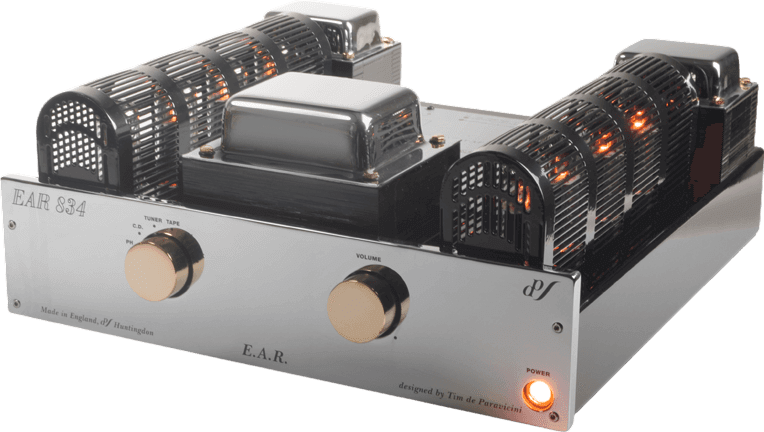
- Very fine sense of detail, especially in the midrange and treble
- Forward presentation makes instrumentalists and vocalists seem to step out in front of the speakers
- The controls have a luscious feel
- The amplifier is beautifully made with that thick gleaming fascia exciting unequivocal admiration
- Rhythmic nuances and microdynamics propelled musical lines along with foot tapping gusto
Product Considerations
- There's a small degree of hum from the mains transformer
- Can be fatiguing to listen to for long periods, especially with aggressive recordings
- Lacks the last word in texture and extension in the bass
- Doesn't present sharply defined three-dimensional images
Comparisons (according to reviewers)
- Vs Blue Circle BC3/BC3.1 and Muse 150 monoblock amps, EAR 834 has softer and less extended bass, slightly less overall detail and clarity, and a somewhat foreshortened soundstage
- Vs E.A.R. 802 preamp combined with a CLASSÉ CA 100 amplifier, the 802/CA 100 combination was quite similar in sound to the 834
Takeaway: The EAR 834 is beautifully made, looks great, and has a special sound that can really draw you into the music and make you feel like you are there. It is an integrated amplifier with a design that invites extended listening sessions.
Video review
Our take on the brand

Our Summary
Product Strengths
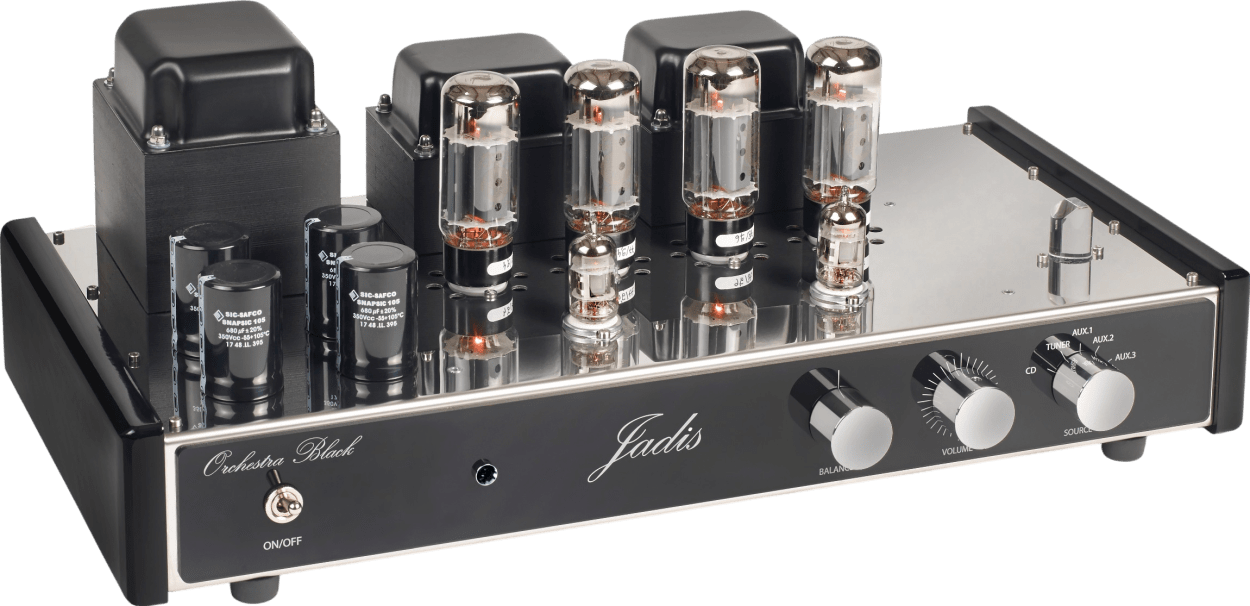
- Beautiful object with its own style, unmistakably a Jadis.
- The fit and finish is up to high standards.
- Not overly romantic and not analytical, sitting right in the sweet spot, it has clarity and transparency.
- The amp's workmanship is robust and exquisite.
- Produces a big sound that's rich, warm, full-bodied and strongly profiled.
Product Considerations
- Adjusting bias is best left to a qualified technician.
- The amp has a natural tendency to roll backward unless grasped firmly.
- Straight out of the box, the Jadis was a little rough.
- Limited absolute power output.
Comparisons (according to reviewers)
- Vs Jadis Orchestra Reference MkII integrated amplifier: The Orchestra Black is a budget version of the Reference with slight internal and external changes to improve the sound and reduce the price.
- Vs Musical Fidelity: The Jadis, a 40-watt valve amp, sounds better than spec suggests.
Takeaway: The Jadis Orchestra Black is a beautiful and well-built amplifier that delivers a smooth, clear, and natural sound. It is a great option for those curious about tubes, with a rich tonal bloom.
Video review
Our take on the brand

Our Summary
Product Strengths
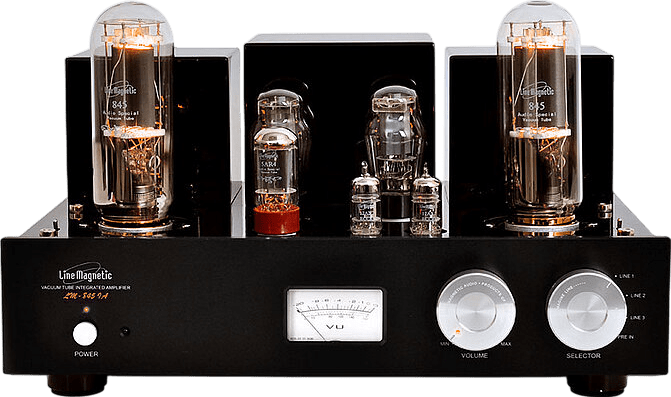
- Pellucid sound, rich tone, and textural detail are characteristic of a well-designed single-ended triode (SET) amplifier.
- Forceful and tuneful bass defies the stereotype of slow or puffy bass in SET amps.
- Expansive soundstage allows instruments and voices to float free of speakers.
- High build quality includes point-to-point wiring and quality components, such as an ALPS potentiometer and RealCap capacitors.
- Dynamic slam and a physically involving sound
Product Considerations
- The 845 tubes operate at high temperatures, potentially causing burns if touched and significantly increasing room temperature.
- No balance control
- Some found the stock tubes to impart an aggressive or steely tone that could be improved with tube rolling.
- Careful matching with speakers is required, one reviewer noted inexplicably harsh sound when paired with certain speakers.
Comparisons (according to reviewers)
- The LM-845IA has changes to internal components and redesigned output transformers, compared to the LM-518IA.
- The LM-845IA has a lighter touch and more refinement, while the Gold Note PA-10 monoblocks sound more solid in the bass.
- The LM-845iA offers a more powerful punch, while the Kora TB140 sounds lighter on its feet and faster.
- The Ayre EX-8 edges out the LM-845iA in clarity and detail.
- The Cambridge Audio Edge NQ sounds similar, but can't quite match the realism or the directness of the Line Magnetic.
Takeaway: The Line Magnetic LM-845IA is a powerful tube amplifier that offers a unique and engaging listening experience. It's a good choice for audiophiles who want a robust and resolving sound with dynamic contrasts.
Video review
Our take on the brand
How to buy
Amplifiers
Search all hifi products
Explore our database of 10,000+ new and 25,000+ used hifi products.

.png)