




Note that this is a discontinued product. You may want to visit the brand's page here to browse their newer products.
What reviewers think
Bloggers and YouTubers have tried this product—so we've summarized their strongest opinions below. Links to full reviews follow.
Product Strengths
- Impressive power output for its size, delivering substantial watts into various impedance loads
- Excellent control over speakers due to its very low output impedance
- Extremely low noise floor, contributing to a very clean sound
- Transparent sound, revealing details in recordings
- Strong macro dynamics, offering a wide dynamic range
Product Considerations
- The bass presentation might sound different than what listeners are accustomed to, potentially sounding 'less developed' due to the lack of overhang
- With low-resolution files, the Kaluga doesn't add euphonic coloration, exposing flaws in the media
- The power cord receptacle is not quite deep enough to permit a tight connection between cable and amp, meaning that any pressure exerted on the amp chassis risks dislodging the power cord from the amplifier power input terminal
Comparisons (according to reviewers)
- Vs Ayre MX-R Twentys, the Kaluga has better iron-fisted bass control and absolute quiet
Takeaway: The Mola Mola Kaluga provides a potent, clean, and transparent sonic experience with high power output and excellent control, making it a worthwhile consideration for audiophiles seeking accuracy and neutrality. Its compact size and impressive performance make it suitable for various listening environments and speaker types.
All
Kaluga
reviews


Manufacturer details
- Power Output: 400W/8 ohm, 700W/4 ohm, 1200W/2 ohm
- Gain: 28dB
- Signal/Noise Ratio: 128dB (unweighted)
- Distortion (THD, IMD): <0.003 % (all frequencies and power levels)
- Input Impedance: 100kohm
- Output Impedance: <0.003 ohm (DF>4000), all frequencies
- Bandwidth: >50kHz
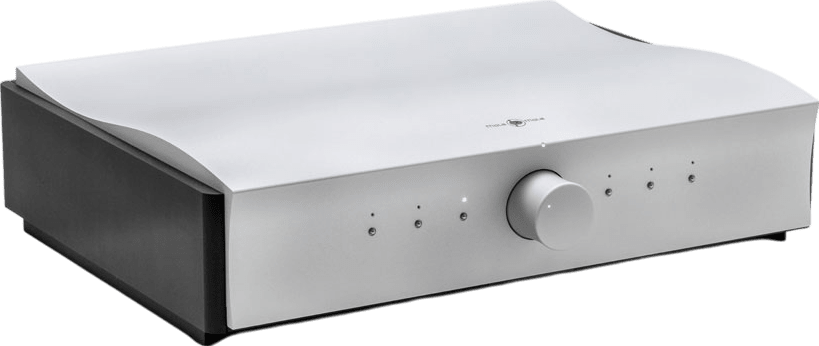
- Dimensions: 200mm (W) x 110mm (H) x 335mm (D)
- Weight: 7kg
For instance, the two supposedly unassailable strongholds of class-A amplifiers are linearity and output impedance, at high frequencies. Plotted on next page are the output impedance as a function of frequency and the output spectrum in a high power (400W), high frequency IMD test. In both cases Kaluga outperforms any power amplifier, regardless of technology, operating class or asking price, of which such test results are available.
The amplifier board is a Mola Mola specific design. The audio circuitry is trimmed to the bare bones and board-to-board connectors are eliminated in favour of soldering star-quad cables directly into the circuit board for the cleanest, lowest impedance connection possible. The input stage is implemented on a separate circuit board that uses the same discrete buffers as those found in the Makua.
The output filter sports monolithic capacitors whose dielectric stability is reflected in an impressively neutral and poised rendition. The days of compromising power efficiency for audio performance are finally over: the Kaluga delivers definitive audio performance with power efficiency thrown in a...

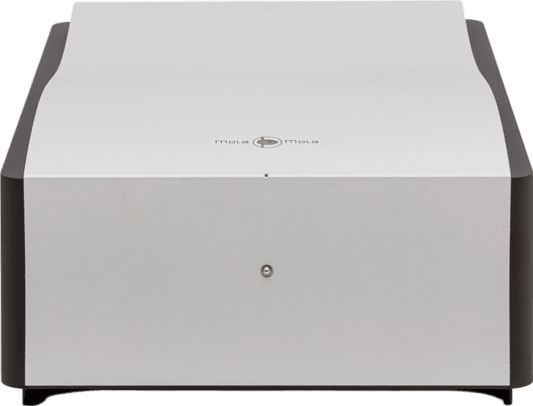
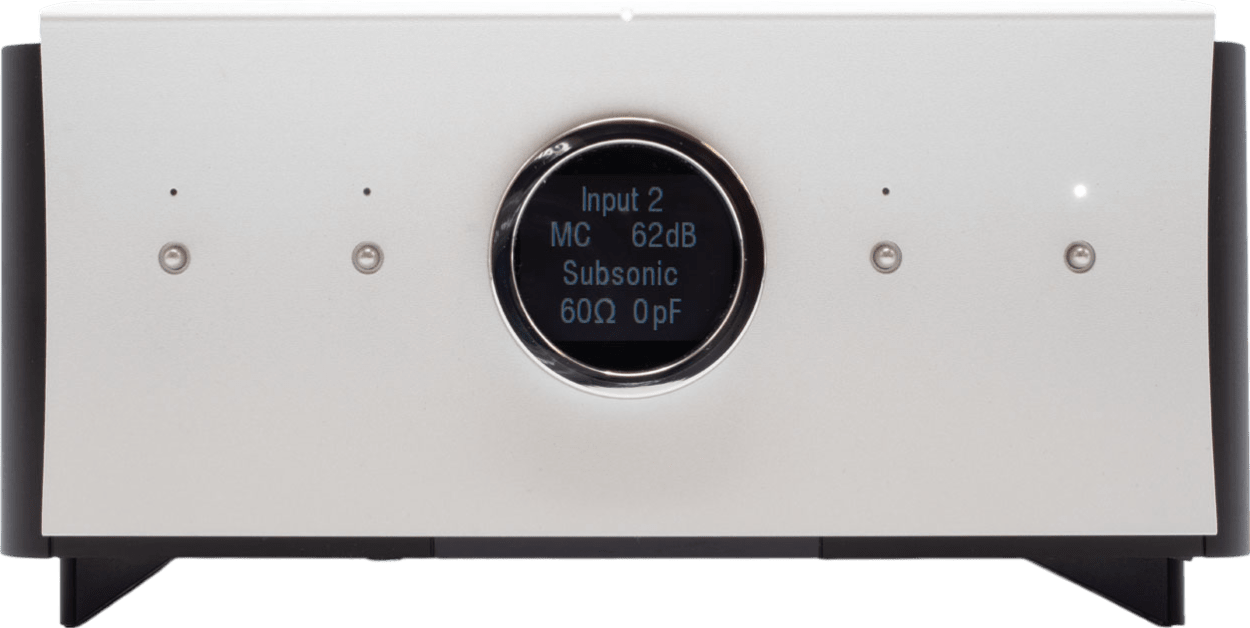
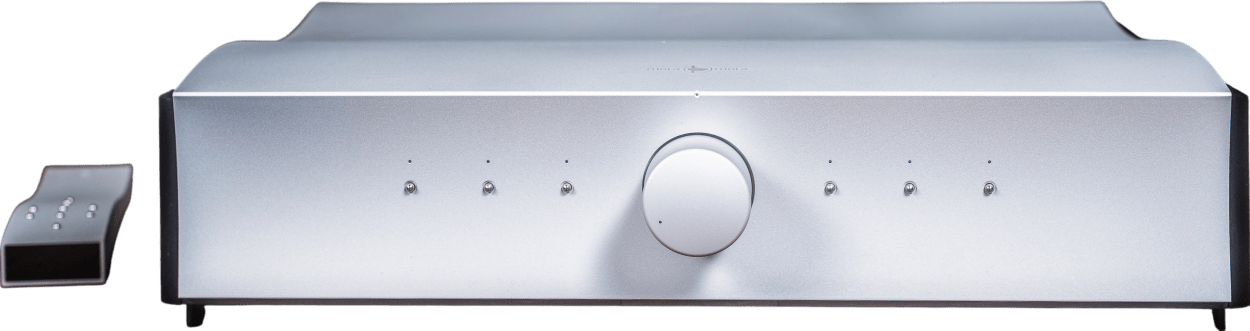
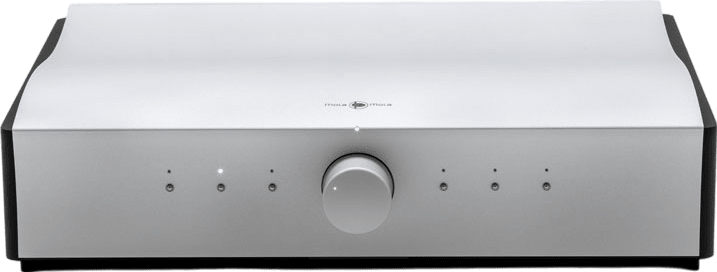


Brand highlights
Taking a step back to look at reviewers' thoughts of the brand's entire lineup—not just this product—what stands out most is the following:
- Mola Mola eschews off-the-shelf DAC chips, opting for a proprietary design featuring upsampling to 3.125MHz/32-bit and conversion to noise-shaped PWM using discrete components and custom algorithms.
- The brand's products share a unique design aesthetic characterized by a wave-like aluminum chassis, designed to minimize vibration and resonance, setting them apart from more conventional designs.
- Mola Mola offers an unusually high degree of user control via a Bluetooth-connected app, enabling detailed customization of settings and features for each input.
Select products
Kula
- Positioning: An integrated amplifier in the Mola Mola lineup.
- Description: Combines a sleek design with powerful performance, offering 150 Watts into 8 Ohms and 300 Watts into 4 Ohms, similar to the Perca but with integrated preamp and DAC features. Borrows the chassis and line stage from the Makua and includes the Tambaqui DAC, making it a versatile all-in-one solution.
Perca
- Positioning: A compact stereo power amplifier in Mola Mola's lineup.
- Description: Delivers 150 Watts into 8 Ohms and 300 Watts into 4 Ohms, making it suitable for various speaker setups. Features ultra-low distortion class A input stages and the Mola Mola Trajectum platform, similar to the Kula integrated amplifier, offering refined Class D performance.
Kaluga
- Positioning: A power amplifier in the Mola Mola lineup.
- Description: Uses class-D technology, delivering 400W into 8 Ohms and 700W into 4 Ohms, offering exceptional power and efficiency. Features a unique design with low distortion and noise, outperforming traditional class-A amplifiers, unlike the Perca, which offers a more compact solution.
Lupe
- Positioning: A standalone phono stage in the Mola Mola lineup.
- Description: Features an archival-grade phono stage, offering three single-ended inputs and one balanced input, providing flexibility for vinyl enthusiasts. Has independent MC/MM input stages, unlike the Makua and Kula, which integrate phono stages as optional add-ons, making it the quietest and most versatile phono stage available.
Makua
- Positioning: A preamplifier in the Mola Mola lineup.
- Description: Features a transparent gain stage and programmable routing matrix, offering flexibility with optional DAC and phono stage add-ons. Its unique single-ended driven differential topology reduces noise, unlike the Kula, which integrates these features into an all-in-one design.
Tambaqui
- Positioning: A standalone DAC in the Mola Mola lineup.
- Description: Features a discrete DAC design, offering a 130dB SNR and advanced digital processing, making it a top choice for digital audio enthusiasts. Unlike the Makua, which integrates the DAC as an optional module, the Tambaqui provides a dedicated solution for those seeking the highest digital audio quality.

Our take on the brand
Look inside the brand
Our interview with the brand
What are two key technological innovations or strong opinions that differ you from other brands?
What's your approach to customer support?
What are your favorite tracks for showcasing the strength of your products?
What other products pair best with yours?

Used
Mola Mola







What if you spend more?



.svg)
Our summary
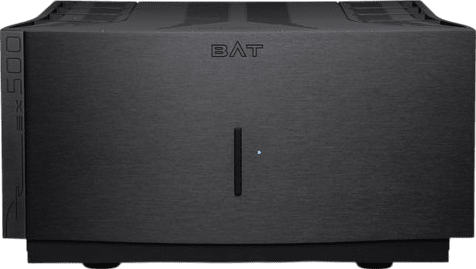
Product Strengths
- Powerful, able to drive any speaker at any level with ease
- Delivers a new dimension in realism at any volume level, exposing the timbre of bass instruments unlike ever heard before
- Reveals harmonic quality of instruments and voices
Product Considerations
- Heavy, weighing 140lb (63.5kg), requiring assistance for moving and unboxing
- High running temperature (55-65oC across the chassis) and draws 500W from the wall when idle
- When speaker cables are terminated with spade lugs, caution is advised as the posts are close together
- Output is floating—it should not be connected to any loudspeaker with a grounded 'black' terminal
- BAT components take a long time to "break in" (400-500 hours of use)
Takeaway: The BAT REX 500 is a very powerful amplifier that drives speakers with ease and reveals new levels of realism in familiar recordings. It is a must-audition for those seeking reference-level power amplification.
Video review
Our take on the brand

Our summary
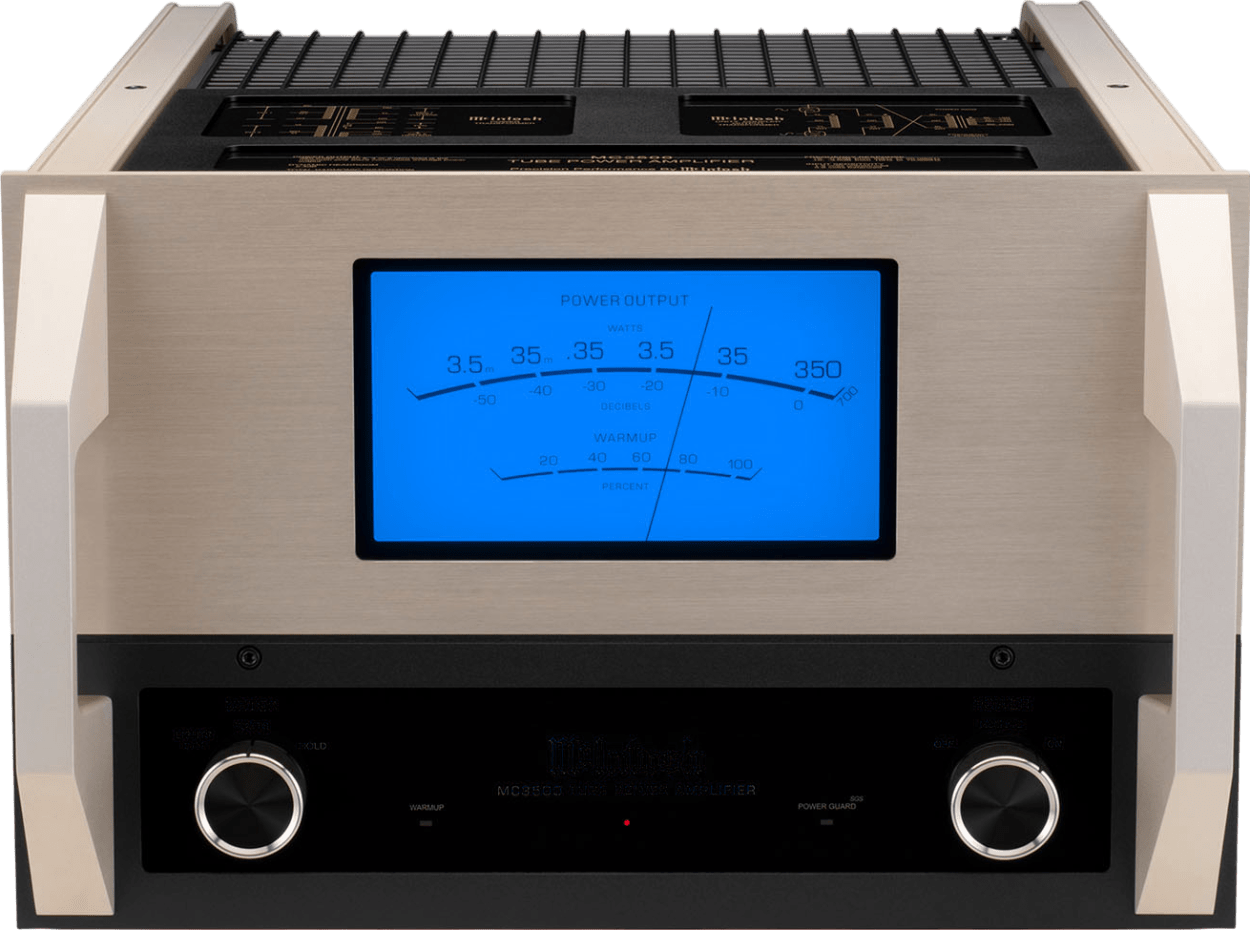
Product Strengths
- Delivers 350 watts into 2-ohm, 4-ohm, or 8-ohm loads
- The design has a purity that is quite amazing
- Effortless power
- Soundstage is big
- Transparent
Product Considerations
- Not necessarily suitable for pairing with extremely cold sounding, sterile or bright speakers
Comparisons (according to reviewers)
- MC3500 is more open and airy, with base not as hard fisted, compared to Krell KSA 250
- It compares with brands like soulution, big Audio Research, and CH Precision, but at a lower cost
Takeaway: The MC3500 is an impressive amplifier that delivers a natural and pure sound, able to drive almost any speaker. If you're in the market for a McIntosh amp, this is the one that makes music sound pure, simple and unadulterated.
Video review
Our take on the brand

Our summary
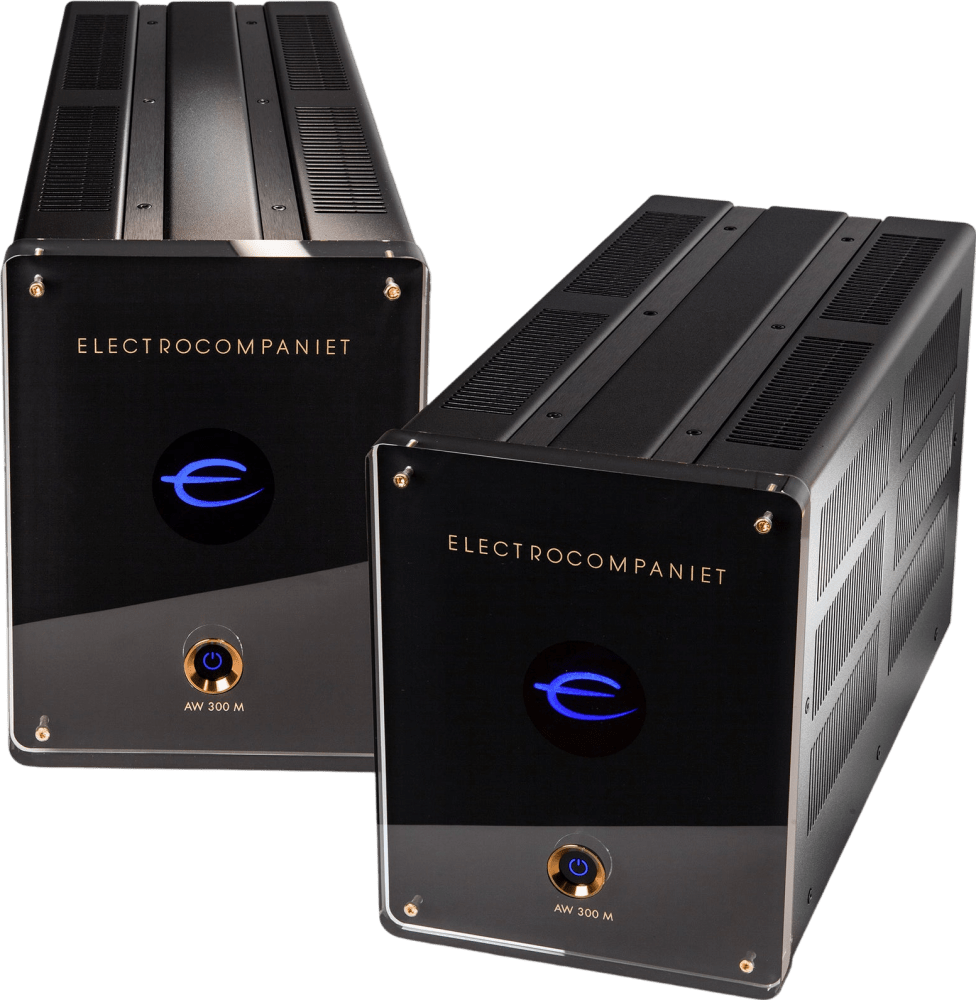
Product Strengths
- Prodigious bass output and rich tonality, especially for a solid-state design
- Great presence, a black background, and strong resolution playing effortlessly at very high volume levels
- Offers a wide, well-defined soundstage
- Beautifully designed with a luxurious appearance, relatively compact dimensions, and attention to detail in its internal layout
- Reserves of power will comfortably drive a wide range of speakers to high levels
Product Considerations
- Attacks can be slightly soft on some material
- The soundstage, while wide and well-defined, may lack the pinpoint accuracy and layered depth of some reference amplifiers
- Requires support beneath it on carpeted floors to allow sufficient airflow
Comparisons (according to reviewers)
- Vs soulution 511, the soulution 511 was faster and more accurately conveyed bass notes, threw an image with greater accuracy, and was more open on top
Takeaway: The Electrocompaniet AW 300 M is a gutsy and poised monoblock amplifier that delivers lots of power and handles a variety of speakers, giving an excellent listening experience. Its solid build and high performance make it a great choice for those seeking high-end audio quality.
Video review
Our take on the brand
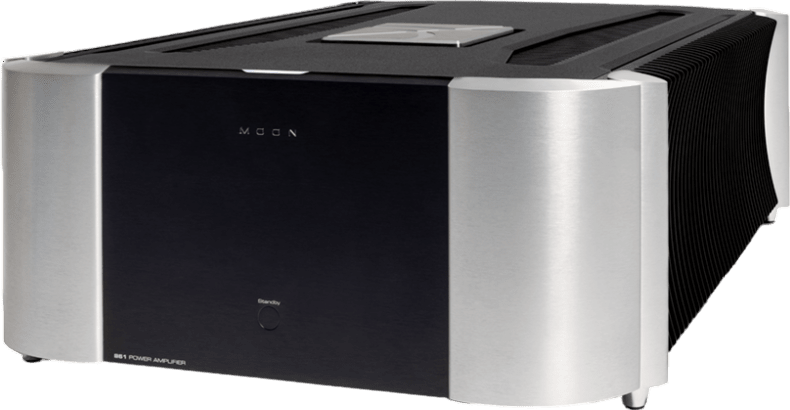

The MOON 861 is a power amplifier with the pedigree of the distinguished MOON 888 and the wholistic design philosophy of the North Collection.
Product Strengths
- Great build quality that feels solid and built to last
- Impressive control, speed, and transparency in sound reproduction, resulting in a highly satisfying and natural sound
- Excellent bass grip, with precisely layered and insightful basslines
- Each instrument is distinct within the orchestra
Product Considerations
- Speaker cable terminals are a bit tight, especially with larger spades
- Software may need updates to ensure devices connect seamlessly
- Setup may be crucial to get the best sound
- According to one commenter, the treble can be hard and tiring
Comparisons (according to reviewers)
- The 861 exceeds the Moon 860A v2 in performance due to improvements in isolation, mechanical damping, and power supply
- The 861 has less pronounced colors than Burmester 218 amplifiers
- The 861 has more weight and oomph than Octave MRE 220 SE
Takeaway: The Moon 861 is a powerful and well-built amplifier that delivers a natural and detailed sound, with excellent control and dynamics. With its power and balanced sound, listeners may find themselves enjoying music even more.
Video review
Our take on the brand
What competes at this price?
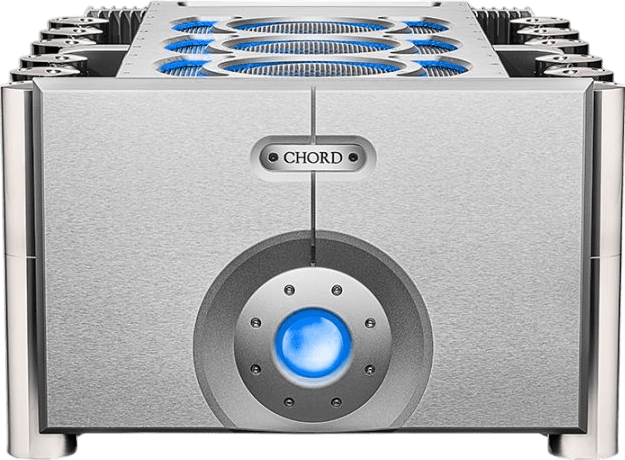

Our Summary
Product Strengths
- Offers a remarkably smooth, unforced, and natural presentation with a touch of warmth
- Excels in detail retrieval and textured presentation of instruments and vocals, making the music feel alive
- Presents a wide and holographic soundstage, especially when paired with speakers that are already strong in this area
- Demonstrates agility, precision, and clarity, combined with a naturalness that eluded earlier generations of Chord amplifiers
- Scales dynamically and has the ability to punch hard when required
Product Considerations
- Has a minimalist design with just four line-level inputs, lacking features like phono stages, tone controls, headphone outputs, or DAC modules
- Some may find its sonic signature prioritizes articulation over qualities such as richness and authority, potentially sounding thin if partnered poorly
- Balance control has no center indent or marked position
- The polychromatic lighting may be an issue for the color-blind
- Remote operation can be affected by direct sunlight
Comparisons (according to reviewers)
- Vs Rega Elex-R Mk3, the Chord Ultima Integrated delivers undeniably elevated sound in all respects, with greater dimensionality and smoother vocals
- Vs Bryston 7B 3 monoblocks, the Chord Ultima Integrated offers a weightier and more thunderous delivery, especially in the midrange and vocals, with more inner warmth in tone
- Vs Benchmark AHB2, the Chord Ultima Integrated provides a more energetic and fun listening experience, with Thor-like bass impact and overall superior dynamics
- Vs Accuphase E-270, the Chord Ultima Integrated is warmer, rounder, more powerful, and refined, with a more fluid and emotionally engaging performance
Takeaway: The Chord Ultima Integrated is a unique and well-built amplifier that combines a visually pleasing design with a captivating sound, full of detail and dynamic precision. It brings music to life with an engaging and immersive experience, making it a worthy addition to any audiophile's setup.
Video review
Our take on the brand

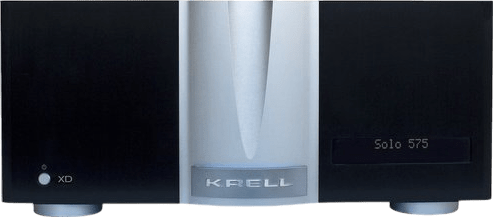

Our Summary
Product Strengths
- Superior grip on woofers
- Muscular, well-textured bottom end
- Unusually powerful for a class-A amp, outputting a claimed 575W RMS into 8 ohms or 900W into 4 ohms, yet weighing only 70 lbs and having no external heatsinks
- Weight and power were undeniable
- Transient slam and grip on the Wilson Audio woofers took it to another level of excitement
Product Considerations
- Aesthetic design uses a thin, U-shaped cover which is more common for home-theater receivers and processors, suggesting it saves on cost compared to milled-aluminum cases
- LCD screen has a somewhat dated look
- Initial impressions were negative, sounding 'broken: glazed and spatially flat, with weak bass,'—but this was resolved
Comparisons (according to reviewers)
- Vs darTZeel NHB-458 monoblocks, the Solo 575 exerted a superior grip on the woofers of the reviewer's Wilson Audio Specialties Alexandria XLF speakers
- Vs Bel Canto Design's Black amplification system, the Krells had a bottom-end whomp that reminded the reviewer of the Bel Canto system
Takeaway: The Krell Solo 575 is a powerful amplifier that delivers impressive bass control and a muscular sound. It could be a great choice for audiophiles looking for a class-A amp with high power output without the need for massive heatsinks.
Video review
Our take on the brand
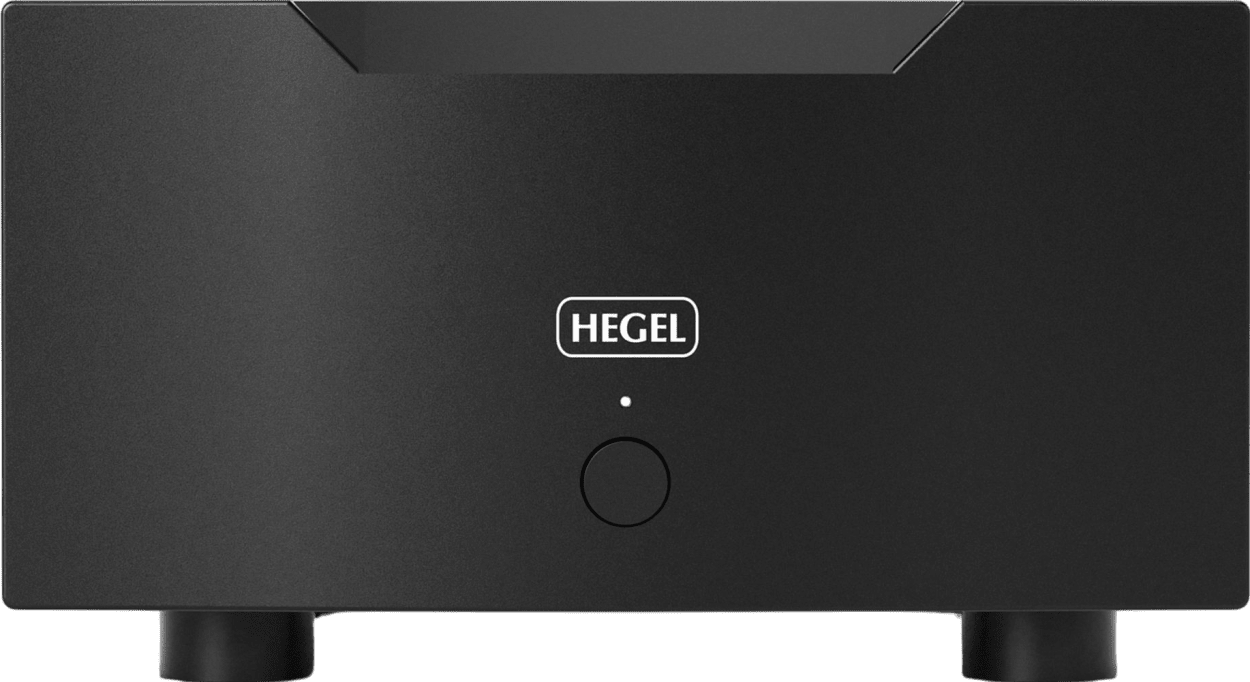

Our Summary
Product Strengths
- A neutral, composed, and powerful amplifier
- Excels with speed and dynamic snap
- Produces huge, well-formed images
- Can drive pretty much anything due to its over-specified design
- Renders bass frequencies with a crackling sense of power through the upper bass and into the midrange, creating corporeal images of instruments
Product Considerations
- Very heavy (104.5 pounds) and large, posing a logistical challenge for placement
- When used in stereo mode, is single-ended, potentially breaking a balanced chain in a fully balanced system
- High input sensitivity may require a low-gain preamp to experience its full potential
- Top plate is sheet aluminum of reasonable thickness, and is somewhat underdamped
Comparisons (according to reviewers)
- Compared to Bryston 4B 3, the H30A juices up realism and pulls the listener more deeply into the performance, especially through revealing speakers, the 4B 3 is a stone-cold bargain though
- Compared to Simaudio Moon 860A v2, the H30A's top end was clear and extended, without the Simaudio's slight softening
Takeaway: The Hegel H30A is a powerful amplifier that delivers a neutral and composed sound. Its ability to create realistic and well-defined images makes it a great choice for those seeking a high-performance listening experience.
Video review
Our take on the brand
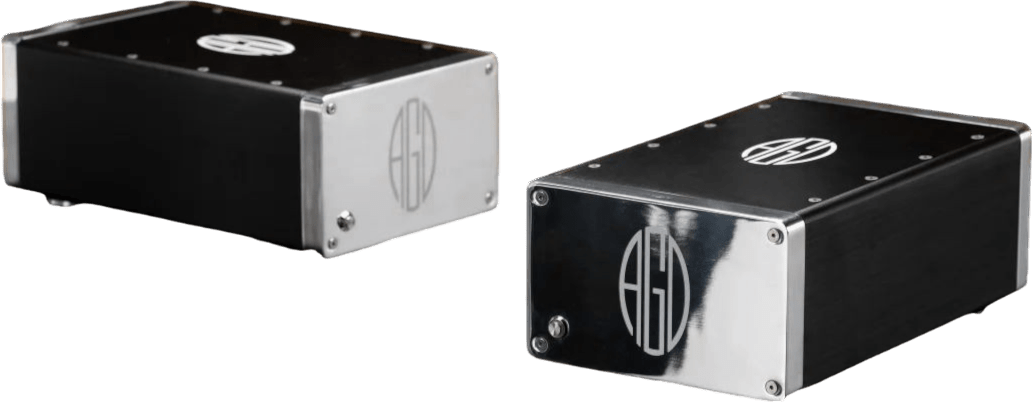

Our Summary
Product Strengths
- Compact size, lightweight, and runs cool compared to traditional high-end amplifiers
- Exceptionally quiet operation, with reviewers noting a complete absence of hum or buzz
- Delivers a clean, crisp, and neutral sound signature without added coloration
- Upgradeable design, allowing users to update the amplifier with new GaN modules as technology evolves
- Produces a Single Ended Triode-like midrange and top end
Product Considerations
- The polished finish is a fingerprint magnet, requiring the use of gloves for handling
Comparisons (according to reviewers)
- Vs AGD Audion MKIII: The Duets offer a cleaner and more refined sound with improved bass and greater immediacy and snap compared to the Audion MKIII
- Vs Daniel Hertz Maria: The AGD Duets seem to have a little more inner resolution
- Vs Pass Labs X250.8: The AGD Duets performed to a higher level
- Vs Peachtree GaN 1/VTV GaN amps: AGD amps seem to be on another level in regards to design, and the sound is more refined and beautiful
- Vs Aavik U-150, Luxman 595, Yamaha A-S 3200, Axxess Forte 1, Line Magnetic 219ia: The AGD Duets performed to a higher level
Takeaway: The AGD Duet amplifiers offer a blend of cutting-edge technology, exceptional sound quality, and user-friendly design. They are a great option for those seeking a high-end audio experience in a compact and energy-efficient package.
Video review
Our take on the brand
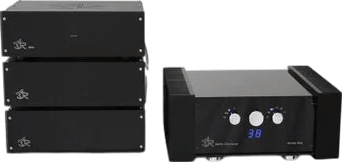

Our Summary
Product Strengths
- Known for combining the musicality of tube amplifiers with the precision and power of solid-state amplifiers.
- It provides a transparent sound with steel control, without the electronic 'shine' associated with transistor amplifiers.
- Exceptional bass performance, described as deep, explosive, and completely controlled.
- Homogeneous frequency range, offering a very high degree of transparency and control.
- Offers an ability to resolve even the finest musically significant details.
Product Considerations
- Requires a substantial amount of space due to its multi-component design.
- The sound offered might be 'too beautiful' for some listeners, as it is not 'brutal' or 'terse' enough.
- Requires care in using its switches to avoid shutdowns.
- Some reviewers note it was 'dark sounding' on the highs, though it did not lack information.
Comparisons (according to reviewers)
- Compared to Quad ESL loudspeakers, it surpasses the musicality and clarity achieved with many tube amps, rivaling even high-end options like Lamm Industries ML2.2 and Miyajima Laboratory 2010.
- The ASR has better bass and is more transparent than MBL, however, it lacks the grace that MBL offers.
- Compared to Rogue 180W monoblocks, the ASR Emitter II delivers better bass.
- The ASR Emitter II has slightly better bass control than Manley Neoclassic 500, but the Neoclassic 500 has a more marvelous style of fiddling.
- Compared to Edge and Audio Research, the ASR is darker sounding.
Takeaway: The ASR Emitter II Exclusive offers a combination of tube-like warmth and solid-state precision, making the listening experience a very involving one. It provides exceptional control and detail across the entire frequency range, making it a great choice for audiophiles.
Video review
Our take on the brand
How to buy
Amplifiers
Search all hifi products
Explore our database of 10,000+ new and 25,000+ used hifi products.