





Note that this is a discontinued product. You may want to visit the brand's page here to browse their newer products.
What reviewers think
Bloggers and YouTubers have tried this product—so we've summarized their strongest opinions below. Links to full reviews follow.
Product Strengths
- Numerous digital and analog configurations
- The inclusion of Weiss' award-winning DAC is terrific for audiophiles looking to combine feature sets
- Audio features are top notch
- Capable of pulling music from an unlimited amount of storage via Ethernet, which is great for music aficionados with gigantic multi-terabyte music collections
- The sound is waanzinnig good (Dutch review), complete, open, fast, airy, and extremely tight and controlled
Product Considerations
- The custom iPad application and music server functionality need a bit more fine tuning to make the product a competitor with the best solutions available
- Both flatness and veiled sound are the two major strikes against the sound quality
- The biggest issue with the Weiss MAN iPad application is its delay when populating different views
- The setup is a bit strange
- There are no services (streaming) and the radio (internet) is unwieldy
Comparisons (according to reviewers)
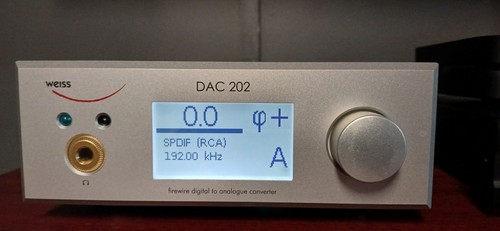
- The DAC / preamp section is nearly identical to the Weiss DAC202
- The DAC is slightly better than DAC202 because it uses four DACs per audio channel while the DAC202 uses two DACs per audio channel
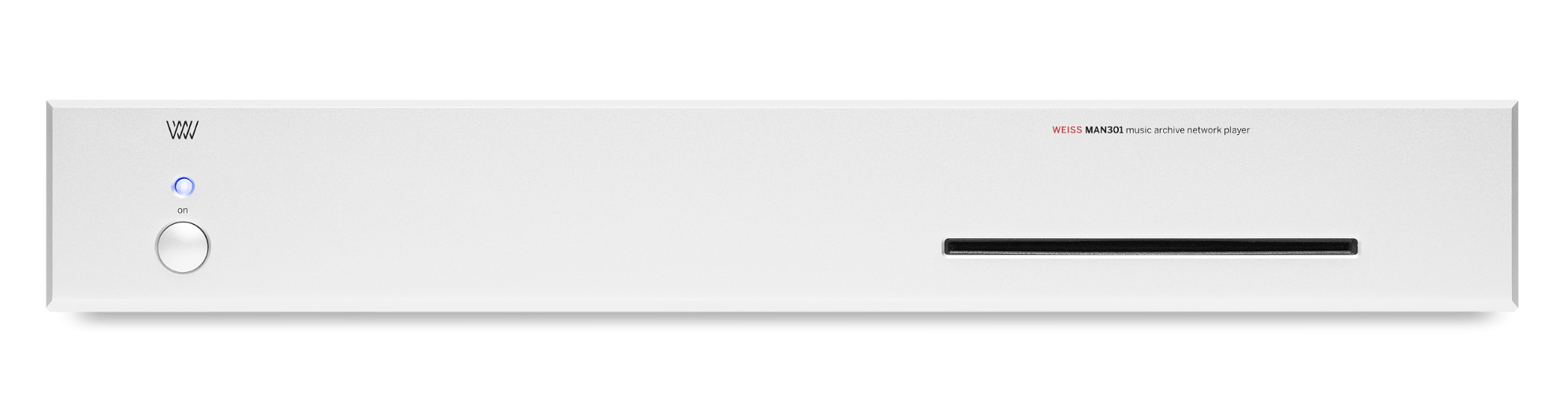
Takeaway: The MAN301 offers many options for audiophiles looking to streamline their setup, with excellent audio quality. The MAN301 could be a good choice for those looking for a high-end music server with DAC capabilities.
All
MAN301
reviews


Manufacturer details
- Digital Inputs: (1) XLR connector, (1) RCA connector, (1) TOSLINK connector (optical), (2) Firewire 800 connectors
- Digital Outputs: (1) XLR connector, (1) RCA connector, (2) Firewire 800 connectors, (1) USB connector
- Analog Outputs (DAC version): (2) XLR connectors (44Ω impedance), (2) RCA connectors (22Ω impedance)
- Supported Sampling Frequencies: 44.1 kHz, 48 kHz, 88.2 kHz, 96 kHz, 176.4 kHz, 192 kHz
- Maximum Input Word Length: 24 Bits
- Dimensions: 45cm x 30cm x 7.4cm (17.7" x 11.8" x 2.9") (with feet)
- Standby Power: 0.5W maximum




Brand highlights
Taking a step back to look at reviewers' thoughts of the brand's entire lineup—not just this product—what stands out most is the following:
- Weiss leverages its extensive experience in professional mastering to offer a DAC that presents music with exceptional clarity, transparency, and a "you are there" realism, capturing the recording's true essence.
- The brand's products provide a Swiss-engineered solution with high-precision internal clocking, contributing to the reduction of jitter and delivering optimal signal quality.
- Weiss offers a broad range of Digital Signal Processing (DSP) options like de-essing, vinyl emulation, and room correction, enabling users to tailor the sound to their preferences and listening environment.
- They prioritize a robust, upgradeable platform, which is evident in their software and firmware updates.
Select products
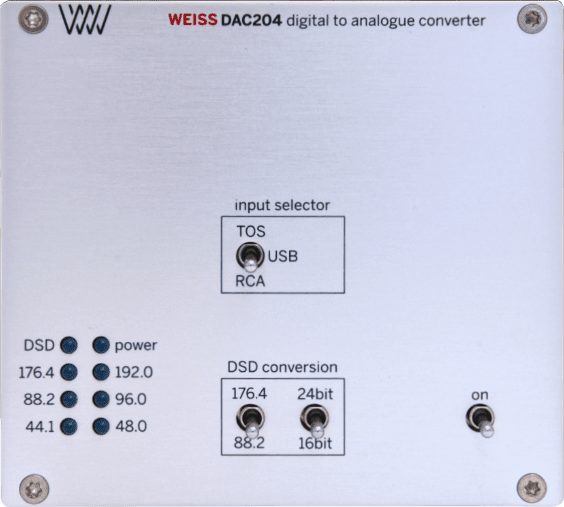
DAC204
- Position: Entry-level line designed for affordability and simplicity.
- Description: Delivers clear, reliable conversion through a modern DAC engine that offers a straightforward interface and ease of use in smaller settings. Its technical setup features fewer connectivity options and processing enhancements compared to the DAC205 and higher-tier DAC501/502 and Helios.
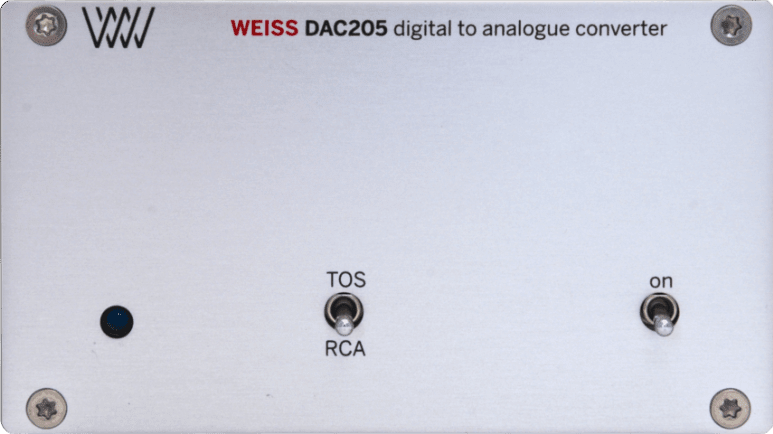
DAC205
- Position: Entry-level multi-format solution focused on flexibility.
- Description: Provides solid performance with support for various digital audio formats, appealing to users in moderate spaces seeking versatile connectivity. Its design offers enhanced format compatibility compared to the DAC204, yet maintains a simpler user interface relative to the more advanced processing and expanded features of the DAC501/502 and Helios.
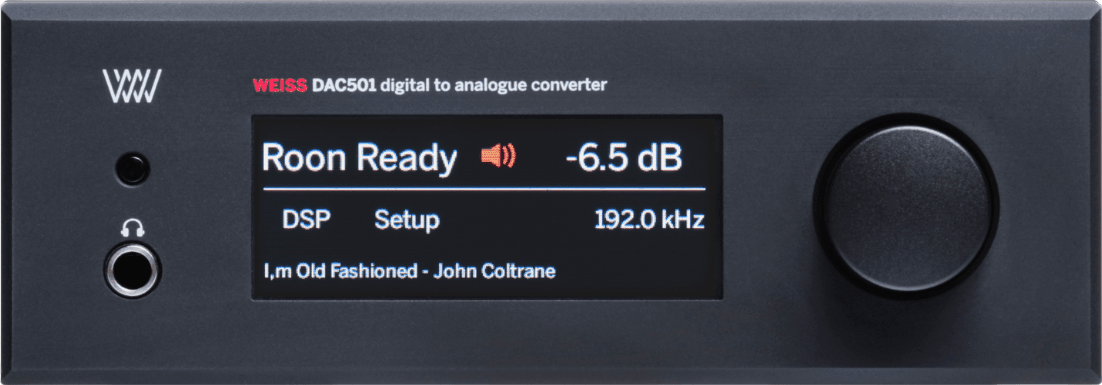
DAC501
- Position: High mid-tier offering presented in a larger chassis with refined connectivity.
- Description: Uses a sophisticated digital processing architecture that ensures precise audio reproduction, making it well suited for larger rooms and critical listening environments. Its design stands out from the more basic DAC204 and DAC205 by offering added connectivity and a robust build, while remaining closely matched in performance to the DAC502.
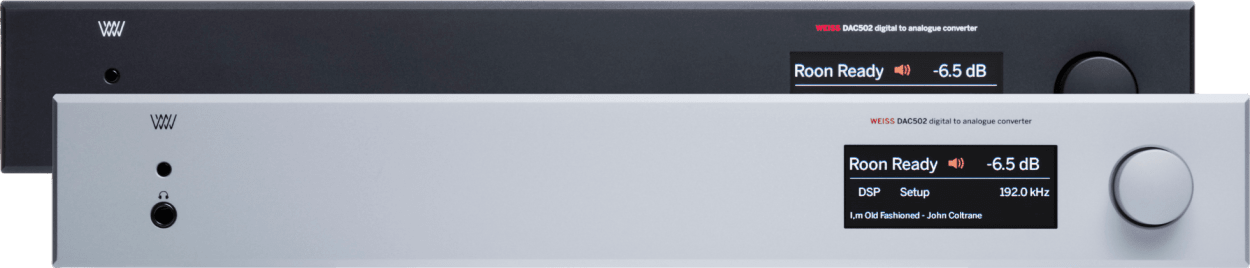
DAC502
- Position: High mid-tier solution distinguished by added monitoring functionality.
- Description: Shares the same advanced conversion technology as its sibling DAC501 but includes an extra four-pin balanced headphone socket for enhanced monitoring options. Compared to the entry-level DAC204 and DAC205, it offers more front-facing control and convenience features.
Helios
- Position: Flagship unit engineered for premium performance and extensive capabilities.
- Description: Combines state-of-the-art digital processing with high-quality analog circuitry to deliver superior clarity and detail. Unlike the other models in the lineup, it offers a broader range of functions and a higher degree of technical sophistication, targeting users with advanced functionality needs.

Our take on the brand
Look inside the brand
Our interview with the brand
What are two key technological innovations or strong opinions that differ you from other brands?
We always try to make no « me too » products. For instance most of our DAC models have a DSP built in for various signal enhancement treatments, like room equalization, creative equalization, de-essing, vinyl emulation and more.
What's your approach to customer support?
I suggest to contact our dealers and/or distributors first. If they cannot handle the issue they are welcome to direct the customer to us. Customer satisfaction is very important, so we try to solve all inquiries as well as possible. We still support our first products dating back to 1985.I suggest to contact our dealers and/or distributors at first. If they cannot handle the issue they are welcome to direct the customer to us. Customer satisfaction is very important, so we try to solve all inquiries as well as possible. We still support our first products dating back to 1985.
What are your favorite tracks for showcasing the strength of your products?
- Nils Lofgren: Bass & Drum Intro
- Daft Punk: Get Lucky (mastered using our pro audio equipment)
- Rufus D: Jugendraum (mastered using our pro audio equipment)
- Plus Classical and Jazz music of course.
What other products pair best with yours?
- Headphones: Audeze
- Speakers: airplain (one of our OEM customers)

Used
Weiss








What if you spend more?



.svg)
Product Strengths
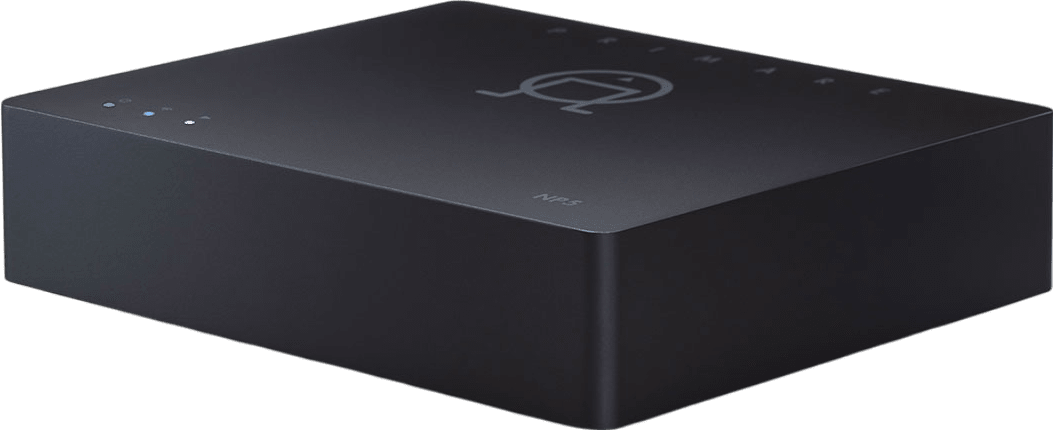
- Open and transparent sound with precise placement and detail without being tiring
- Versatile streaming options through Chromecast, AirPlay 2, Spotify Connect, Tidal, Qobuz, DLNA/UPnP, and Roon Ready
- Good sound quality that enhances the listening experience compared to cheaper network players
- The Prisma platform receives long-term support with updates
- Compact size allows it to fit pretty much anywhere
Product Considerations
- Requires a separate DAC or an amplifier with a built-in DAC
- Basic control is limited to app use
- The included power supply is a cost-effective option that can be upgraded for improved performance
- Internet radio stream selection could be better
Comparisons (according to reviewers)
- Vs Cambridge Audio MX-N10—the NP5 has more mature, defined, transparent, and natural sounds, while the MX-N10 delivers more punch to the sound
- Vs Bluesound Node—the NP5 offers better levels of clarity, soundstage, and definition, but the Bluesound Node is more feature-rich
- Vs WiiM Pro—the NP5 has a bigger, more open, and more dynamic soundstage
- Vs Naim ND5XS—the NP5 is more detailed, tighter defined, and more precise in terms of placement in the stereo image
- Vs Argon Audio Solo—the NP5 has more resolution and separation, and it projects vocals and soundstage a little bit more viscerally
Takeaway: The NP5 Prisma MKII is a versatile streamer that offers great sound for the price. It is a good choice for anyone wanting to add streaming to their existing setup and is worthwhile if seeking an upgrade in sound quality from basic streamers.
Video review
Our take on the brand


Product Strengths
- High-quality build, feels substantial and well-made due to the aluminum casing and hefty weight
- Offers versatility by functioning as both a streamer and a DDC (digital-to-digital converter)
- Delivers very low jitter and noise
- Improves the sound quality, details, and soundstage compared to using a computer directly as a source
- Provides various connectivity options, including I2S, AES, SPDIF (BNC, Coax, Optical), and USB
Product Considerations
- Switching between DDC and streamer modes requires physically disconnecting the USB-B cable and power cycling the device, which is not ideal
- Initial setup and software flashing might be necessary for some users to ensure optimal performance
- Only connects via Ethernet, as it does not have Wi-Fi
- Some users have found that a power conditioner is necessary to get the best sound
Comparisons (according to reviewers)
- The Red provides a wider and deeper soundstage, as well as a lower noise floor, compared to the Raspberry Pi
- Favored for its performance as a DDC and streamer combo, as well as for build quality, the Red is better than the iFi Zen Stream and iFi Neo Stream, the latter of which is considered a good all-in-one solution with a built-in DAC
- Sounds night and day better, the Metrum Amber sounds more distant, fuzzy, and not as crisp
Takeaway: The Hello Audio Red is a versatile device that can function as a streamer and DDC. It offers a clean and detailed sound, making it a worthwhile addition to a high-quality audio setup.
Video review
Our take on the brand
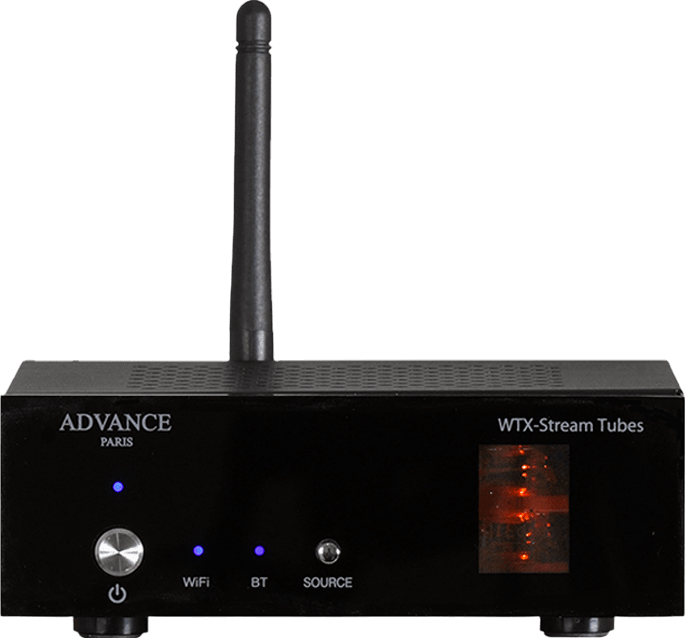

This ability to make music more alive, less aggressive and really "warmer". We sought to obtain this sound from current dematerialized sources. After various prototypes, it turned out that using 5703 subminiature tubes was the ideal solution, so we designed a class A tube output stage that brought the "magic" of vinyl.
Achieving this result seemed possible to us by combining several technologies and design. That's what we did! The WTX-StreamTubes is a WiFi or Ethernet network player, it integrates many streaming services like Spotify, Qobuz, Tidal, Deezer, Amazon Music, etc., several thousand local, national and global radio stations via TuneIn or vTuner, playback of your music library stored locally on your computer, smartphones, tablets or network drive (NAS).
The WTX-StreamTubes has a complete connectivity. You can connect our Bluetooth Direct Digital X-FTB01 or X-FTB02 HD dongle to it via its proprietary port.
The Advance PlayStream application for controlling the WTX-StreamTubes is available for free download on the AppStore (iOS) and GooglePlay store (Android). DLNA compatible. With this application, you can control multiple Advance Paris products that have network functionality. You can play the same music in all rooms or different music in each room.
Our summary
Product Strengths
- Unique tube-based output stage using 5703 subminiature tubes delivers analogue warmth
- Comprehensive streaming service support includes Spotify, Qobuz, Tidal, Deezer, Amazon Music, TuneIn, and vTuner radio services
- Robust multiroom capabilities allow streaming different audio sources to multiple rooms simultaneously
- The app is responsive, controls well, and connects directly with Spotify output
- Sound staging seems to open up a little more—expansive sound staging width, which is very common of tube stage preamps or amplifiers
- Bluetooth connectivity requires optional dongles
Product Considerations
- The app structure is the same for the WiiM streamer app, suggesting shared software programming
Comparisons (according to reviewers)
- Compared to the Topping DAC, the WTX-StreamTubes has a higher voltage output
Takeaway: The WTX-StreamTubes offers a unique way to experience digital music with the warmth of tubes and is easy to use with its responsive app and comprehensive streaming support. Its multiroom capabilities and tube sound make it a good option for those wanting to upgrade their streaming setup
Video review
Our take on the brand

Product Strengths
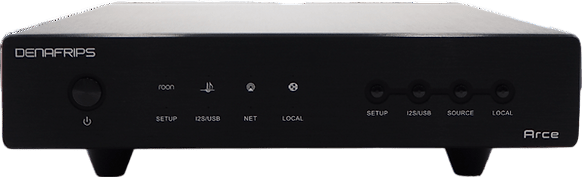
- Designed with a focus on playback quality, using a custom computer platform instead of existing solutions
- Has a rich selection of digital outputs, including S/PDIF, AES/EBU, and I²S, and offers clock sync with Denafrips DACs
- Features a powerful quad-core ARM Cortex processor for fast music streaming
Product Considerations
- DLNA streaming is limited to a resolution of 16-bit/44kHz
- The interface and initial installation can be confusing without instructions
- Roon certification is ongoing and not yet completed
Comparisons (according to reviewers)
- Compared to the Eversolo A6 Master Edition, the Arce offers a more analog sound with richer bass, while the Eversolo is more punchy, dynamic, and in-your-face
- Arce seemed equally musical and detailed as the Metrum Ambre, with a high dose of transparency
- Compared to the Meitner MA3 DAC (internal streamer), Arce sounded similar, losing only a little transparency and space after extremely careful listening
- Arce is slightly faster, more open, more detailed, and has a nicer exterior design than the AlloUSBridge
Takeaway: The Arce streamer is an excellent choice if one wants great sound, a nice look, and useful features, especially if Roon is already being used and there is a good DAC with I²S or AES/EBU. It does a great job streaming music and lets one enjoy the sounds hidden in the digital files.
Video review
Our take on the brand
What competes at this price?

Our Summary
Product Strengths
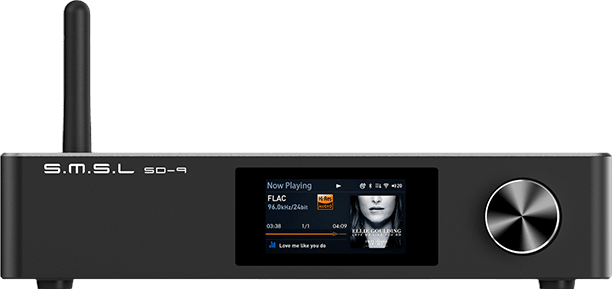
- Versatile connectivity—offering a wide array of input and output options, including USB, optical, coaxial, AES/EBU, I2S (via HDMI), Bluetooth, Ethernet, and Wi-Fi, providing flexibility in connecting to various devices and sources
- Good sound quality—described as balanced, detailed, neutral, resolving, and clean
- Local file playback—can play music from local sources like microSD cards, USB drives, and NAS setups, making it a standalone source device
- EQ and MSEB features—includes an equalizer and MSEB (Magic Sound 8 Ball) for sound customization, offering a way to tweak the sound without full EQ curves
Product Considerations
- Software is described as unpolished, buggy, glitchy, laggy, and finicky
- Streaming via DLNA/UPnP can be unreliable, with dropouts, freezes, and connection losses reported
- Some reviewers experienced issues with AirPlay connectivity
- Menu navigation is considered clunky, with key functions buried deep and requiring multiple clicks to access
- The display is small, making it difficult to read from a distance
Comparisons (according to reviewers)
- Compared to the Cambridge Audio A51n—the SD-9 connected via I2S offers improved sound quality compared to A51n's digital stream via optical
- Compared to the Allo DigiOne—the SD-9 provides a firmer bass and more energy and excitement, the DigiOne is smoother but rolled off on the high frequencies
Takeaway: The SMSL SD-9 is a versatile device with good sound quality and many features. It is a good option if one wants a single device that can play music from many sources, especially local files.
Video review
Our take on the brand


Our Summary
Product Strengths
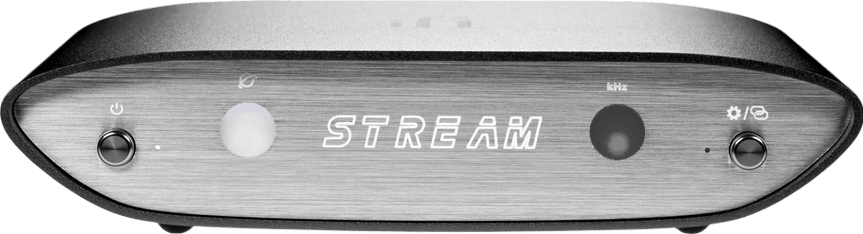
- The iFi ZEN Stream offers a 'tremendously flexible specification' for a network streaming transport, supporting various streaming methods including UPnP, Tidal Connect, Spotify Connect, Roon Endpoint, NAA, and AirPlay
- Offers great functionality and fine sound in a small package at a low price, offering an excellent price-to-performance ratio, making it accessible for a wider audience
- Designed to work with any DAC with a USB or S/PDIF connection, expanding its compatibility and usefulness
- Setup is generally considered easy, particularly for Roon users, making it user-friendly
- Solid build quality with metal construction indicates durability
Product Considerations
- The software experience might have 'minor stability and set up niggles,' sometimes requiring restarts or exhibiting finicky behavior
- The front panel design, particularly the large 'STREAM' logo and LED indicators, may not appeal to all users
- The included owner's manual may be inadequate for those who may want to access specific features of the device
- Some user's found Airplay implementation issues
Comparisons (according to reviewers)
- vs AURALiC Altair G2: The AURALiC sounded more subtly delineated, but the improvement in no way reflected the price difference, showing what fine value the iFi is
- vs Raspberry Pi: Far easier to set up, more user-friendly, and sonically indistinguishable
- vs SOtM SMS200 Neo: The Stream makes the SOtM look decidedly limited in terms of functionality
- vs Bluesound Node: The Bluesound Node offers the addition of a solidly designed and road-tested, closed operating system, analog outputs, and Bluetooth inputs
- vs Pi2Design Pi2AES: A slight advantage to the Zen Stream
Takeaway: The iFi ZEN Stream is a versatile and affordable device for streaming music from various sources to a DAC. It is easy to set up and offers great sound quality, making it a worthwhile addition to any hifi system.
Video review
Our take on the brand

Our Summary
Product Strengths
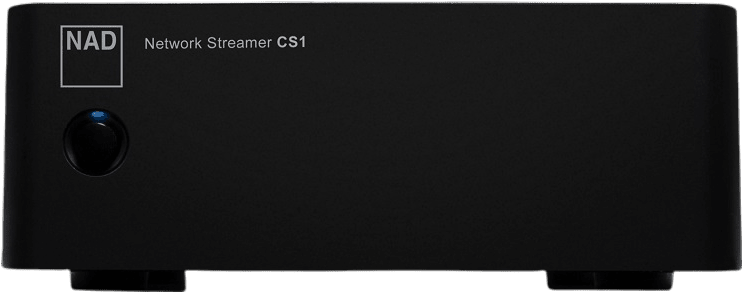
- Excellent build quality
- Simple setup
- Supports AirPlay 2, Chromecast, Bluetooth, Spotify Connect, Tidal Connect, DLNA, and Roon
- Delivers outstanding audio performance with support for up to 24-bit/192kHz resolution
- Offers both digital and analog outputs
Product Considerations
- No dedicated app or physical remote control, relying on third-party apps for control
- Uneven streaming service support
- No hi-res Bluetooth codecs
- Single RCA analog output
- Limited USB input is used only for power
Comparisons (according to reviewers)
- Vs Sonos Port: CS1 has an edge with an optical output, which the Port lacks
- Vs WiiM Pro: CS1 lacks the ability to pipe an external source into the system, something the WiiM Pro can do
- Vs Bluesound Node: Unlike the Bluesound Node, the CS1 does not allow users to upload their own music files
- Vs Bluesound Node: NAD CS-1 is a full endpoint when the Bluesound Node isn't—thus it works better with Roon
Takeaway: The NAD CS1 is a well-built, compact, and simple way to add streaming to a sound system that might be lacking it. It's a great option for those wanting to explore streaming without a big investment.
Video review
Our take on the brand

Our Summary
Product Strengths
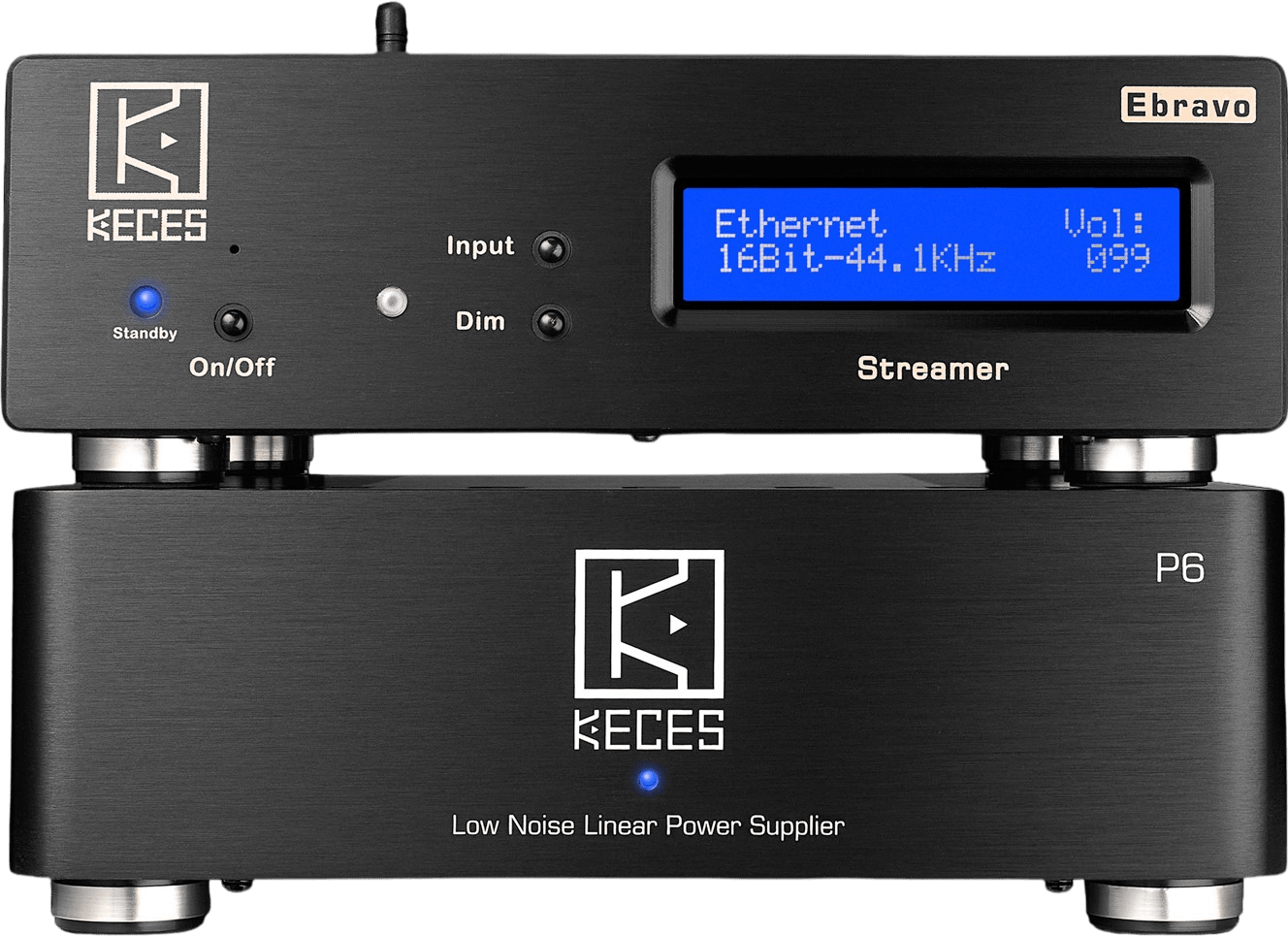
- Delivers superb sound quality, enhancing dynamics and musicality
- Isolates the user from noise, preventing the introduction of noise from connected devices
- Offers excellent build quality with a sturdy chassis
- Integrates flawlessly with Tidal Connect and Spotify Connect
- Provides a cleaner signal with more richness in the bass and a more brilliant treble compared to a computer source
Product Considerations
- The default power supply has a short wire
- Input switching is done via buttons
- An additional DAC is required to function, adding to the overall cost if the user doesn't already have one
- The included 4Stream smartphone app has received mixed reviews from users
- Does not have USB output
Comparisons (according to reviewers)
- Ebravo has easier streaming service integration for Tidal and Spotify, and improves sound drastically with a wider soundstage, compared to Matrix Audio Mini-i Pro 4
- Ebravo sounds more musical, detailed, and has better resolution with a cleaner signal, compared to Soundaware A1x PRO
Takeaway: The Keces Audio Ebravo is a great digital transport that enhances the sonic qualities of music, making it more engaging and dynamic, and it's easy to use with popular streaming services. It may be a worthwhile consideration for a sonically improved listening experience.
Video review
Our take on the brand

Our Summary
Product Strengths
- Supports many file formats and can decode PCM up to 24bit-768kHz and DSD up to DSD256 natively
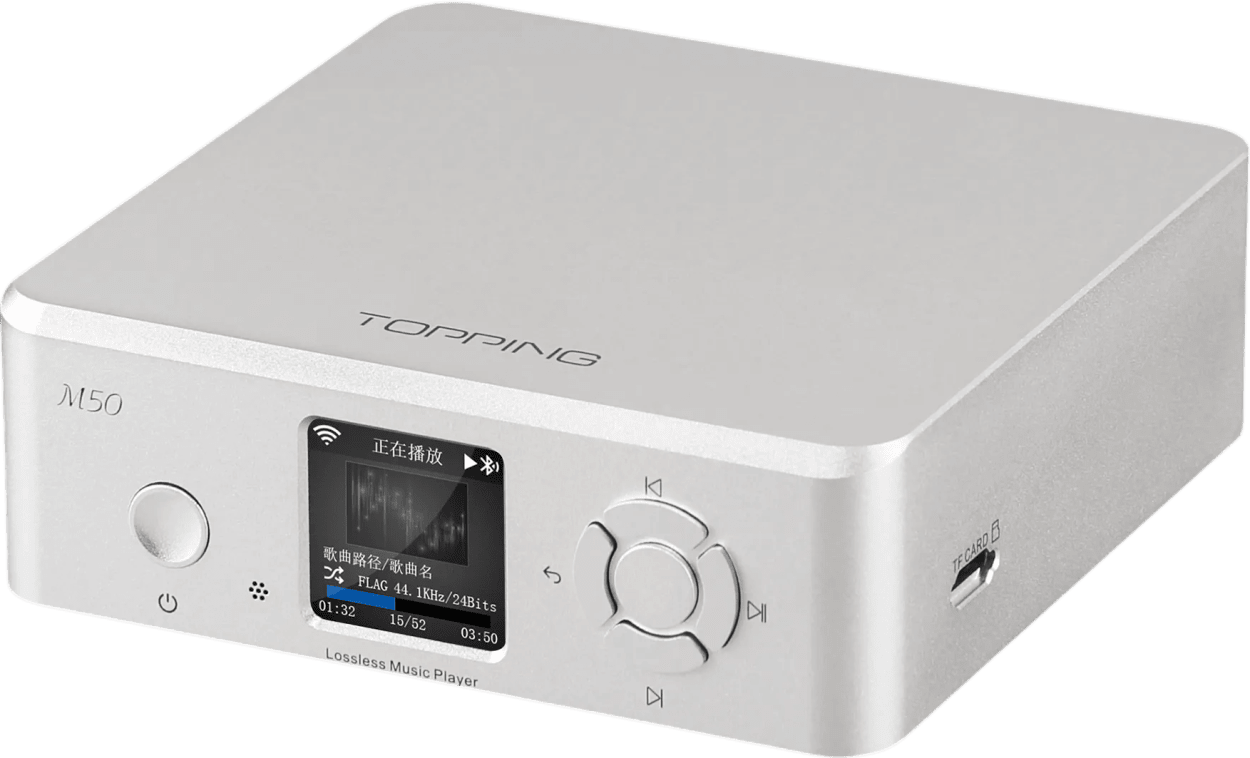
- Offers a wide range of I/O options and wireless capability, including Bluetooth and WiFi
- The device is tiny, measuring 11.9 x 3.8 x 11.1 centimeters, which saves desk space
- The chassis is CNC precision milled with an anodized black finish and an all-aluminum cubic chassis
- Has LDAC / AAC / SBC / APTX Codec Support and USB OTG & Micro SD Support
Product Considerations
- Some buttons on the front side are slightly wobbly
- The screen could be bigger for more comfortable reading
- The M50 comes with old packaging that Topping was using for more than 2 years
- It was hard to see what was selected on the EQ settings screen due to dark blue on black color scheme
- The user interface isn't as smooth when browsing music directly on the device, recommending the Hibby Link app instead
Takeaway: The Topping M50 is a feature-rich digital music player offering versatile connectivity and high-resolution audio playback in a compact size. It is a good option for audiophiles seeking a convenient and capable digital source for their audio systems.
Video review
Our take on the brand
How to buy
Digital Sources
Search all hifi products
Explore our database of 10,000+ new and 25,000+ used hifi products.