Note that this is a discontinued product. You may want to visit the brand's page here to browse their newer products.
What reviewers think
Bloggers and YouTubers have tried this product—so we've summarized their strongest opinions below. Links to full reviews follow.
Product Strengths
- Good finish with a nice texture to the vinyl wrap, and feels sturdy
- Proper five-way binding posts and keyhole mount for wall-mounting
- Wide soundstage with respectably good imaging abilities
- Good dynamic range capability and can get surprisingly loud for their cost
- Front-ported design is a great fit for wall-mounting
Product Considerations
- Vertical off-axis versus on-axis performance is wildly different, with mid-range almost non-existent on vertical access
- The T15 does not behave quite like normal bookshelf speakers, it is best heard at a placement above or below the listening position rather than at a placement with the speakers level with the listener's ears
- Polk Audio marketing team described it as having deep and punchy bass, when the bass is only okay
- Mid-range lacks clarity and is veiled on some songs
- The treble region isn't very pronounced with respect to the mids
Comparisons (according to reviewers)
- Compared to the Klipsch R-41M, the R-41M is a better choice as a front speaker, while the T15 shines with surround sound systems, and the T15 can handle better the lower frequencies than the R-41M—the latter has a crisp sound on the higher end
- Compared to the Sony SS-CS5, the Sony SS-CS5 offers an accurate soundstage and balanced sound, which suits both audiophiles and audio engineers, whereas detail is lost with the T15 for the sake of a more engaging low-end
Takeaway: The T15 is an affordable speaker that can produce reasonably good sound, especially when mounted on a wall or used as a surround speaker. It is a good option for anyone looking for an upgrade from their TV speakers without spending a fortune.
All
T15
reviews


Images
Manufacturer's details
- Total Pieces: 2
- Cabinet Warranty: 5 years
- Drivers Warranty: 5 years
- Height: 10.63" (27 cm)
- Width: 6.5" (16.51 cm)
- Depth: 7.25" (18.42 cm)
- Driver Enclosure Type: Vented
- Driver Complement: (1) 5.25" (13.34 cm) Dynamic Balance mineral filled polymer composite cone driver - Mid/Woofer, (1) 0.75" (1.91 cm) Dynamic Balance silk/polymer composite dome - Tweeter
- Total Frequency Response: 45 Hz → 24,000 Hz
- Nominal Impedance Range: 8 ohms → 6 ohms
- Sensitivity: 89 dB (1 watt @ 1 meter)
- Lower and Upper -3dB Limits: 65 Hz → 20,000 Hz
- Audio Inputs: (1) Pair of 5-Way Binding Posts - Gold-Plated
- Recommended Amplifier Power Per Channel: 20 watts → 100 watts
- Mounting Type: Keyhole Hanger
- Available Orientations: Vertical



Brand highlights
We analyzed reviewers' thoughts of the brand's entire lineup—not just this product—and what stands out most is the following:
- They stand out for incorporating technologies typically found in their higher-end lines, such as ring radiator tweeters and Power Port designs, into more accessible product lines like the Monitor and Signature Elite series.
- Polk specifically designs many of their speakers, especially in-wall and outdoor models, to be versatile and weather-resistant, making them suitable for a variety of listening environments beyond traditional living rooms.
Select products


Polk uses lightweight Dynamic Balance polypropylene cones in many of its models, which give clear midrange and punchy bass. The Monitor XT15 is a compact bookshelf with one 5.25 inch woofer. The Reserve R500 tower adds two 5.25 inch woofers, reaching 32 Hz for a living room. The Legend L800 uses dual 10 inch drivers and reaches 24 Hz for a large room.
- Start here. Choose the Monitor XT15 if you are building a first hifi system on a small budget, since its compact bookshelf size fits a desk or shelf.
- Sweet spot. The Reserve R500 gives a living room real tower bass down to 32 Hz from two woofers, which the XT15 bookshelf cannot, and the models above mostly add larger drivers.
- All in. The Legend L800 is the flagship tier above the Reserve towers, and it pairs deeper bass to 24 Hz with SDA, which counters the crosstalk that narrows a stereo image.


Our take on the brand
Look inside the brand
Our interview with the brand
What are two key technological innovations or strong opinions that differ you from other brands?
What's your approach to customer support?
What are your favorite tracks for showcasing the strength of your products?
What other products pair best with yours?

Used
Polk






What if you spend more?




Product Strengths
- Clean, neutral sound signature with some character, making it suitable for various music genres and movies
- Very strong center image
- Able to get loud without distorting in small to mid-sized rooms
- Excellent build quality for the price point, looks more expensive than it is
- Good soundstage, wide and spacious, allows the speakers to disappear into the music
- Placement is important because bass response is impacted by wall proximity, bass can be overpowering if placed too close to a wall
Product Considerations
- High-frequency performance is more subdued compared to its bass, potentially sounding a little dull if you prefer a brighter speaker
- A bit of volume is needed to come alive dynamically—not great for low-volume listening
- Speaker stands are required to get the tweeter above ear level, vertical off-axis response suffers if the tweeter is below ear level
Comparisons (according to reviewers)
- Versus the Bowers & Wilkins 600 Series, the R200 is better, as the Bowers & Wilkins 600 Series is over-the-top and fatiguing
- Versus the Sonus Faber Lumina 2, the R200 is more neutral, while Lumina 2 is more articulate but not as kind to all types of music, with the R200 being the better all-rounder
- Versus the ELAC Debut Reference, the reviewer had more fun with the R200
- Versus the Klipsch 600m, the R200 is more neutral, though the reviewer admits they might choose the Klipsch for its captivating live quality
- Versus the Wharfedale Diamond 12.1, the R200 and 12.1 have a similar sound signature
Takeaway: The Polk Audio Reserve R200 is a well-rounded loudspeaker suitable for both music and home theater, offering a neutral sound signature with good bass and a wide soundstage. It represents excellent value, delivering performance that rivals speakers at a higher price point.
Video review
Our take on the brand

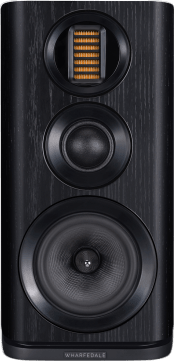

Wharfedale’s new EVO4 has grown out of the extensive research and development that produced the ELYSIAN flagship loudspeakers and borrows much of the technology involved in ELYSIAN.
Our summary
Product Strengths
- Excellent focus and separation, with the speakers 'disappearing' to create a natural soundstage
- Impressive low-end performance, adding authority to the music
- Cohesive driver integration, with no perceivable handover between the AMT tweeter, midrange dome, and woofer
- Remarkable neutrality in the midrange, with a detailed yet smooth treble—avoiding harshness even at higher volumes
- Clear and detailed sound reproduction, extracting nuances and levels of information outstanding for its price
Product Considerations
- Vertical off-axis performance of the AMT tweeter is not good, so correct speaker height and toe-in are important
- Soundstage is not super wide, with the presentation mostly between the speakers
- Some reviewers found the aesthetics or proportions to be awkward or not to suit all tastes
- Bass may be a bit polite for some listeners wanting subwoofer-type rumble
- The midrange can be fatiguing if the listener's ear is at the midrange driver level
Takeaway: The Evo4.2 is a well-rounded speaker that delivers excellent sound quality with impressive imaging, detail, and tonal balance. It is capable of providing an audiophile experience at an affordable price.
Video review
Our take on the brand

Our summary
Product Strengths
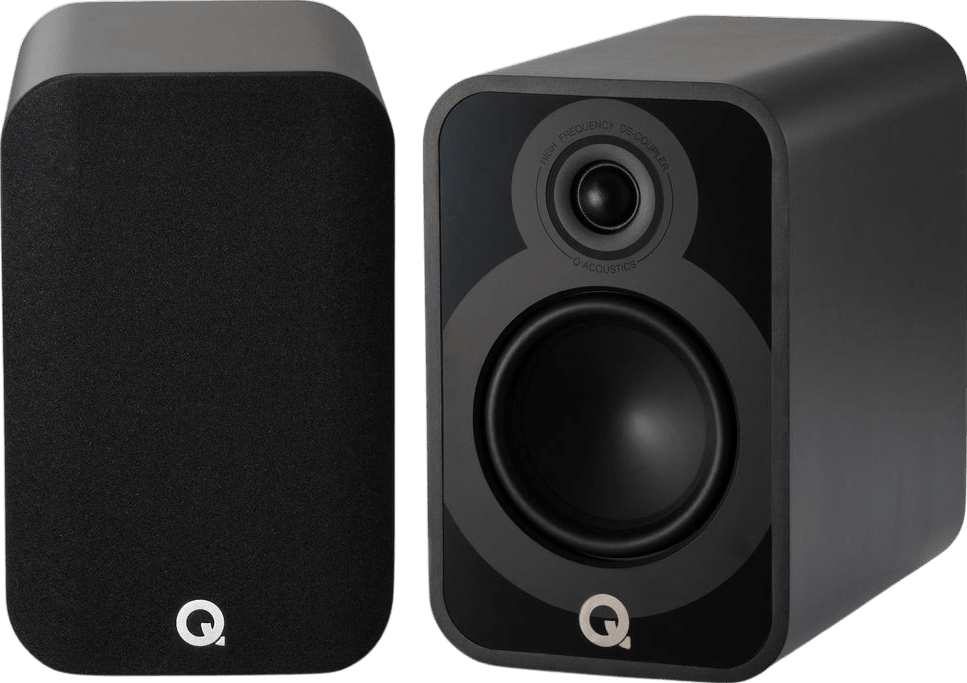
- Attractive design with rounded cabinet edges and multiple finish options (Satin Black, Satin White, Santos Rosewood, Holme Oak)
- Good midrange reproduction—clean and uncolored—especially for the price
- Clear and detailed sound with good separation of instruments
- Taut and agile bass performance
- Internal bracing (P2P) stiffens the cabinet, reducing vibrations and improving stereo image
- Connectivity options such as binding posts
Product Considerations
- Can tend towards brightness, potentially causing fatigue during longer listening sessions—especially with the wrong equipment pairing
- Cabinet size is relatively large for a bookshelf speaker
- Bass response is somewhat subdued
- Some reviewers noted imaging issues, with vocals lacking a firm presence in the center
- Grilles muddle the sound
Takeaway: The Q Acoustics 5020 is a great-looking speaker that offers a rich and musical sound, making it a very entertaining listen for the price. With its ability to reveal details from recordings, it's a wise choice for those looking for a well-built and sonically pleasing speaker.
Video review
Our take on the brand

Product Strengths
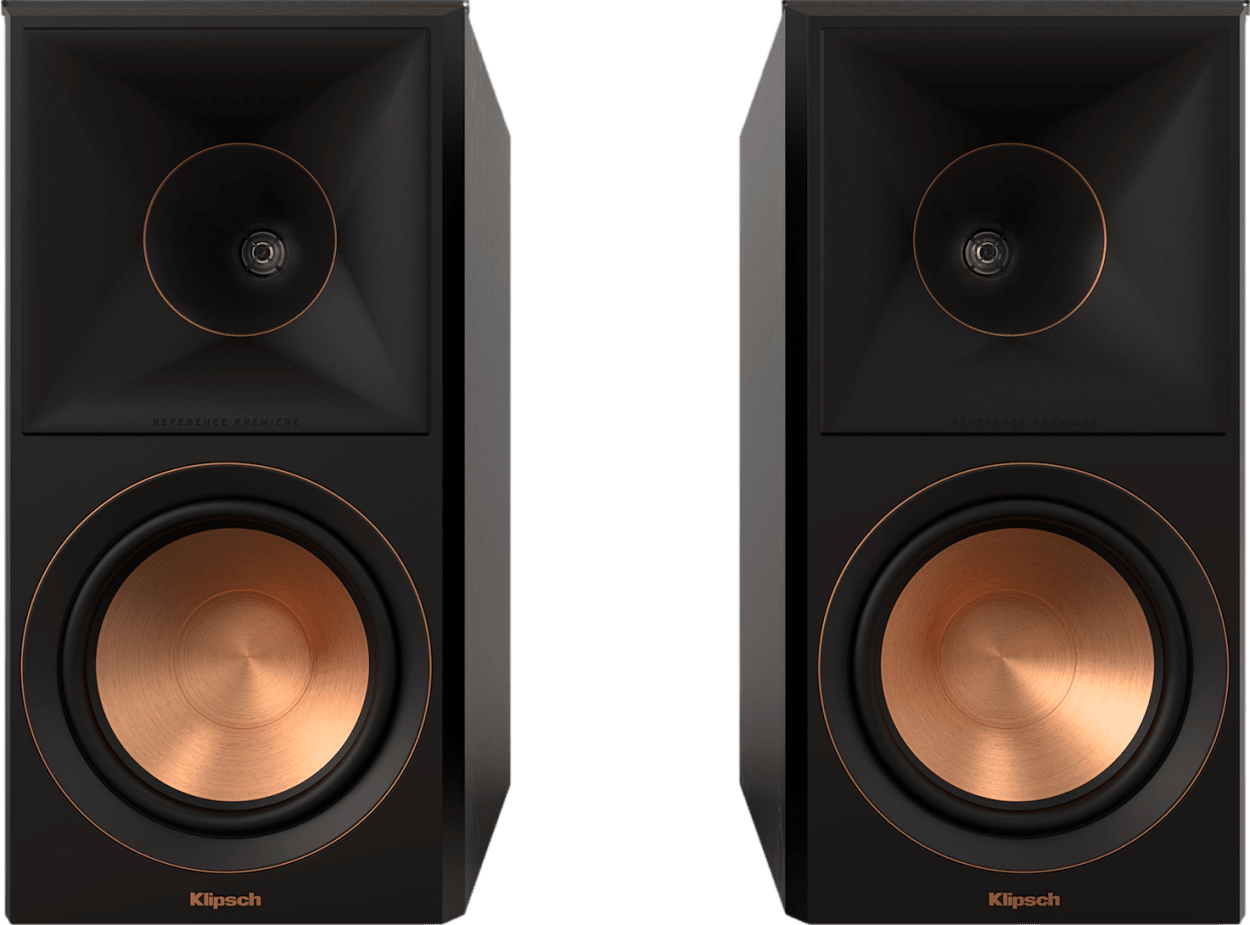
- Larger horn tweeter and a new Cerametallic woofer, compared to its predecessor
- Upgraded binding posts and crossover plate elevate to Reference Premiere status
- Larger diameter voice coils and aluminum shorting rings on the woofers give the speaker better linearity throughout the bass, decrease distortion while upping power handling resulting in improved speed and accuracy
- Better detail retrieval, more articulate bass, and vastly improved soundstage width and imaging, compared to the RP-600M
- The binding posts are the same that are found on costlier Heritage speakers
Product Considerations
- Finish options did not receive an upgrade over the outgoing model, leaving customers with the same ebony or walnut wraps
- The tweeter may be too bright for some listeners who are sensitive to a more aggressive top end
- Rated sensitivity is 94.5dB, which is a decrease compared to the original's reported sensitivity of 96
- Needs a bit of space behind them and to the sides, or at least positioning on open shelves, if the powerful output from that port isn't to muddy the sound
Comparisons (according to reviewers)
- Compared to the older RP-600M, the new sounds far more linear
- The new is very easy to listen to for long periods of time, and while it still has a presence, a speed and transparency to the artist or instrument—at least with respect to the midrange—it is not as forward sounding as past designs
- The new proved to be surprisingly flat, but best of all, not the least bit fatiguing
- There was very little difference in tone with respect to the mids between the new and a costlier Revel bookshelf
- These two are actually pretty neck and neck
- As for the Wharfedale Evo 4.1, the Evo is better constructed, not to mention nicer looking
Takeaway: The RP-600M II is a refined speaker with better components, improved sound, and better bass response and imaging. It's a speaker that would be great for someone who likes to listen to a variety of music genres and wants a good-sounding speaker that can last a long time.
Video review
Our take on the brand
What competes at this price?


Our Summary
Product Strengths
- Clear and natural dialogue projection for movies
- Impressive bass performance, especially in small to medium-sized rooms
- Good imaging, with elements well-placed in the mix
- Durable finish on the cabinet that is scratch resistant
- Engaging sound quality for the price
Product Considerations
- Treble can sound a bit two-dimensional
- The tweeter can be a bit harsh at louder volumes
- Bass is not very refined
- Simplistic box design
- They are heavier than expected
Comparisons (according to reviewers)
- Vs Cerwin-Vega LA-165s, the tweeter on the Cerwin-Vegas is better, but midrange driver from the XT20 is nicer
- Vs Sony SS-CS5, Polk gives nicer bass than Sony
Takeaway: The Polk Monitor XT20 is an affordable speaker that offers good sound quality, especially with its bass performance and clear dialogue, making it a great option to put smiles on people's faces when listening to music or watching movies. Its durable build and engaging sound make it a worthwhile consideration for those starting their audio journey.
Video review
Our take on the brand


Our Summary
Product Strengths
- Great soundstage and imaging.
- Performs well with vocals, both male and female.
- The R100/R200 speakers have a neutral and clean sound.
- The R100 punches above its weight and is one of the best Polk speakers.
Product Considerations
- The R100 may require a subwoofer for those desiring more bass.
- The R100 may exhibit some strain when played at high volumes.
- The R200 is larger than the R100, which could be a consideration for some users.
- At higher volumes the tweeter becomes too much.
Comparisons (according to reviewers)
- The R100 is similar to the Elac DBR-62, but with more flavor, and the Elac DBR-62 had fuller bass and leading edge to its bass.
- Compared to the Bowers & Wilkins 607S2, the R100 is more neutral.
- The R200 has a larger and fuller sound than the R100, with greater ease when playing loud.
- The R200's transparency and purity pulled ahead of the Klipsch RP-600M.
- The Reserve R100 is better for music only, the Monitor Audio Bronze 100 is better in a mixed system because it is so good with dialogue clarity.
- The Elac Uni-Fi UB 52 is just about as good as the Reserve R100.
Takeaway: The Polk Audio Reserve line offers a good balance of performance and value, bringing technology from higher-end models to a more affordable price point. With good soundstage and imaging and clear vocals, these speakers are a solid choice for listeners looking for an engaging and enjoyable listening experience.
Video review
Our take on the brand

Our Summary
Product Strengths
- Clear, detailed sound with good clarity
- Nice bass presence for its size
- Nice looking speaker with and without the grill
- Good value for the price, setting a new bar for budget speakers
- Can handle some power, suitable for small to medium rooms
Product Considerations
- Treble can be slightly harsh and fatiguing at higher volumes after prolonged listening
- Bass response is punchy rather than deep
- May sound a touch boomy if placed too close to the wall
- Sensitivity is a little on the low side, requiring more power
- Lacks wall-mounting capability
Comparisons (according to reviewers)
- Vs Cambridge Audio S30, the XT15 has better soundstage, imaging, and punchier bass, but S30 has a smoother midrange and top end
- Vs Jamo S801, the XT15 has far better bass response
Takeaway: The Polk Monitor XT15 is a great budget speaker that offers clear sound and good bass for its size, making it a solid choice for a first hifi system or for music listening. It's hard to beat for the price, and it provides an excellent performance-to-price ratio.
Video review
Our take on the brand

Our Summary
Product Strengths
- Noticeable step up from budget speakers in design, build, and sound
- Smooth, consistent all-around sound with a satisfyingly large scale presentation
- Good bass performance
- Flexible room placement options
- Weighty and full-bodied sound with good scale
Product Considerations
- Aesthetic presentation is a bit boring
- There is fierce competition in its market sector
- Not optimized for music, as there are better-sounding speakers for the same money
- Not for forensic detail freaks
- Demands more space
Comparisons (according to reviewers)
- Vs Polk ES15: The ES20 offers bigger sound and more weight to the low end, with the ES20 having a 6.5' woofer versus the ES15 having a 5.25' woofer
- Vs ELAC BS U5: The ELACs demonstrate subtler articulation than the ES20s
- Vs Polk S20: The ES20 is cleaner in the treble, has a clearer midband, and sounds firmer and better integrated
- Vs Wharfedale Diamond 12.2: The reviewer much prefers the Polk ES20s
Takeaway: The Signature Elite ES20 speakers are versatile and a good option for creating a bigger audio system within a budget. It is a solid all-around speaker that gets a lot right and puts out a potent punch when called on to.
Video review
Our take on the brand

Our Summary
Product Strengths
- Stylish design is easy on the eye, with modern styling and curves that add charm
- Fantastic build quality feels sturdy, easily competing with speakers double the price
- Clear and detailed sound, with impressive mid-range and high frequencies
- Balanced audio experience suited for various types of content like movies, music, and gaming
- Smooth, non-fatiguing sound works well in a variety of situations and genres
Product Considerations
- The built-in hanger system is a bad design and can negatively affect the sound
- Bass, while punchy, might not satisfy those seeking deep, earth-shattering lows, and a subwoofer may be desired
- Might not feel as sturdy as some other hifi speakers out there
- Not neutral sounding
Comparisons (according to reviewers)
- The Emotiva B1s are a better value speaker for music with better treble, but the ES15 is a better all-rounder for TV and music
- The Q Acoustics 3020s are more neutral, while the ES15 has more lushness, a punchier low end, and smoother treble
- The ES15 offers more control over everything, while the XT20 has a more sparkly top end
Takeaway: The Polk Signature Elite ES15 is a well-built speaker that sounds great and enhances the listening experience for the price, making it a solid choice for a versatile home hifi system. It's easy to match with sources and is forgiving on poor audio masters, making it easy to live with on a daily basis.
Video review
Our take on the brand
How to buy
Speakers
Search every hifi product
Explore our database of 10,000+ new and 25,000+ used hifi products.