Welcome
Under $2,000 buys a floorstander with real bass extension and the cabinet size to fill a normal living room. This is where most people who want towers end up shopping. Ranked by review count. The Klipsch Heresy and KLH Model Five are the heritage designs; the Q Acoustics, Dali and SVS pairs are the modern value picks.


Products on this list





What reviewers think
Product Strengths
- Improved bass performance due to the rear port offers tighter and faster low frequencies, and reduces port noise
- A new midrange horn delivers a much larger and more realistic voice presentation
- Super sensitive at 99DB efficient, even low powered single ended tubes can be magical
- Sound is live and alive
- Sound belies cabinet size
Product Considerations
- A subwoofer may be needed in larger rooms or for bass-heavy music genres
- Not as delicate and nuanced as some modern designs
- The bass response is remarkably balanced but not overly deep
- Looks a bit boxy from the front
- Bass does not dig overly deep
Takeaway: The Klipsch Heresy IV is a classic speaker improved to deliver exciting, dynamic, and lifelike sound. These speakers provide a fun and engaging listening experience.
Video review
About the brand


What reviewers think
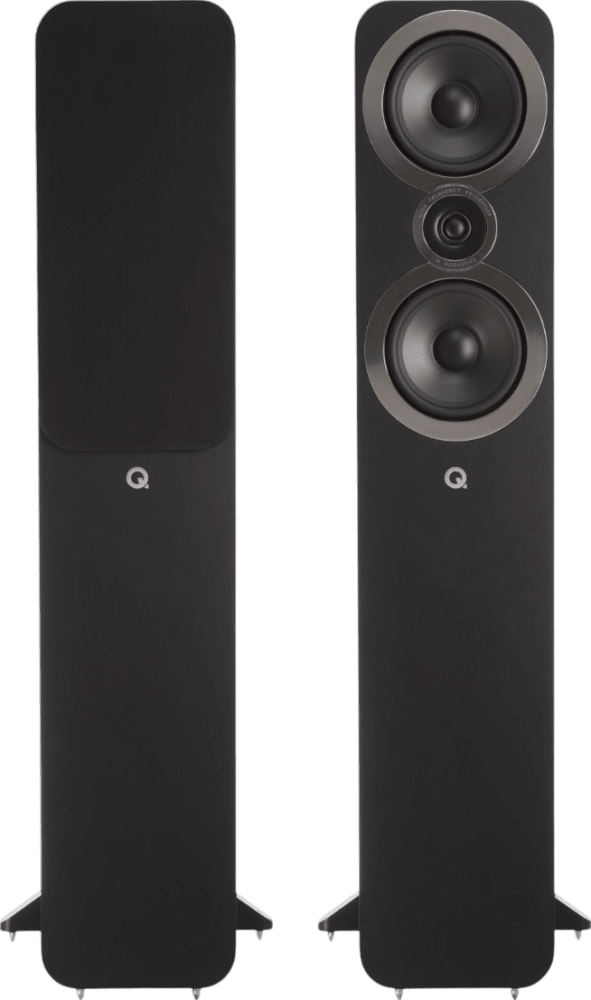
Product Strengths
- Sleek finish and rounded corners make it look more expensive than it is
- Sounded coherent, with a consistent tonal balance and a pleasing overall sound
- Excellent dynamics and good detail in the highs and mids
- Big, powerful bass that doesn't swamp the soundstage
- Easy to drive with a variety of solid-state or valve amplifiers
Product Considerations
- Needs the right electronics, as it's easy to drive them incorrectly
- Muddy and uncontrolled low-end, especially when used for music listening
- Absence of a lacquered gloss black, white, or leather effect option
Comparisons (according to reviewers)
- The 3050i goes lower in the bass, while Definitive Technology's Demand D9 offers greater low-level detail and imaging
- The 3050i sounds punchier, while the ELAC Uni-Fi Slim FS U5 provides a smoother sound with better-defined voices
- The 3050i is lighter, tighter, faster—and more open than before
- The 3050i has more expression and liveliness
Takeaway: The Q Acoustics 3050i speakers offer great value, a sleek design, and good overall sound quality, especially as part of a home theater system. Impressive dynamics and detail bring movies and series to life.
Video review
About the brand


What reviewers think
Product Strengths
- Wide and deep soundstage, placing instruments with precision
- Very good bass for a relatively small, passive floorstander due to its four passive radiators
- The integration of the bass with the highs (from its HVFR tweeter) and midrange frequencies is balanced overall
- The high-velocity folded ribbon (HVFR) tweeter provides detailed and dynamic high frequencies
- Spacious sound
Product Considerations
- Some reviewers found the bass response to be the weakest point, not as good as the mids and highs
- Bass response isn't saturnine
- The bass frequencies still lags a little behind the rest
- Sensitive to room position, requiring experimentation to find the optimal placement
- The box character is very evident
Comparisons (according to reviewers)
- The Triton Fives surpassed the KEF R900s in being able to draw sharper image outlines, which resulted in better lateral imaging
- The Definitive Technology Mythos ST-Ls had a great depth, and an ability to energize the room that neither the Triton Five nor the KEF R900 could match
Takeaway: The Triton Five offers a balanced sound and expansive soundstage at an attainable price, making them great for all listening needs. With a detailed tweeter and good bass for their size, these speakers are a strong choice for value and performance.
Video review
About the brand
What reviewers think
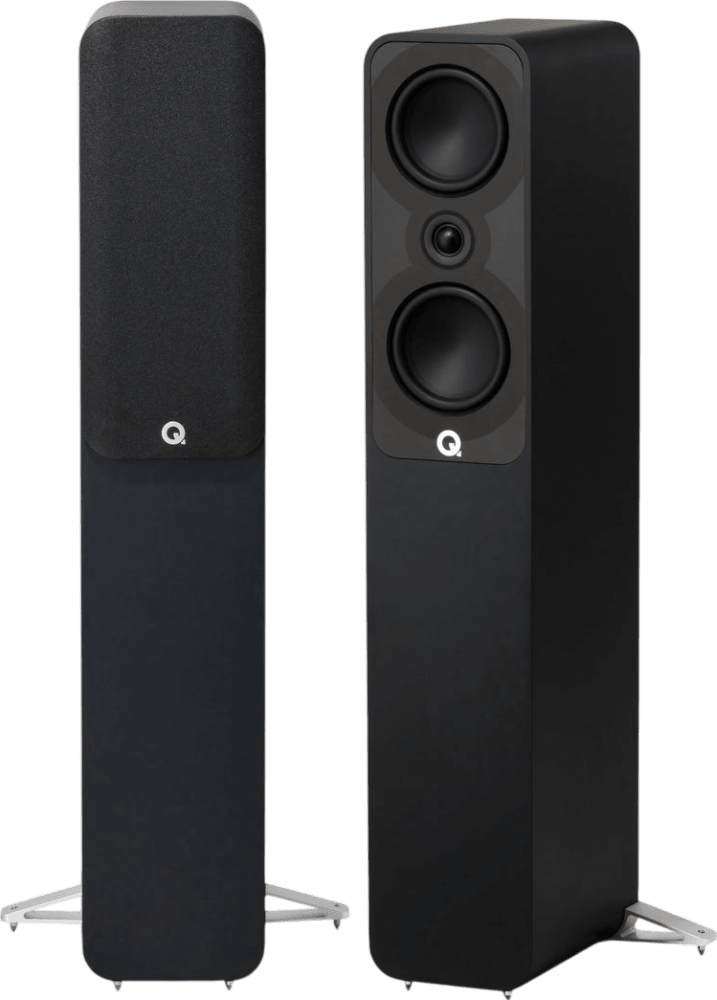
Product Strengths
- Excellent clarity and detail resolution, with leading edges of notes crisply defined
- Accurate reproduction, with precise tonal accuracy and fine spatial definition within the soundstage
- Superb build quality for the money, and they look more expensive than they are
- Easy to drive without requiring excessive power to perform to their best
- Soundstage width is better than the 3050i
Product Considerations
- Needs care in system matching, as they are transparent and will reveal shortcomings in the source or amplifier
- Can sound slightly lean throughout the lower midrange, and the highs can sometimes present as a bit hot depending on the content
- Does not plumb the depths that some other floorstanders do
- Not designed for pokey rooms and cupboard-sized man caves, they need to breathe and require adequate space
- Some reviewers felt the build quality of the binding posts could be better
Comparisons (according to reviewers)
- The 5040 has a more neutral tonal balance with better-defined bass and exceptional clarity, while the 3050i delivers greater overall impact with its larger drivers and cabinet
Takeaway: The Q Acoustics 5040 is a well-built speaker that sounds great and looks modern, making it a good choice for those who want clarity and detail in their music, but system matching is important to avoid a bright presentation. These speakers are a strong statement in the right listening environment for the price.
Video review
About the brand


What reviewers think
Product Strengths
- Smooth and engaging sound is easy and non-fatiguing to listen to for long periods
- Very good bass response is powerful, controlled, and extended, negating the need for a separate subwoofer for many users
- Ability to create a wide, precise, and holographic soundstage with well-defined instrument placement
- Attractive, understated design, especially in the gloss black finish, looks more luxurious and high-end
- Delivers very generous return and price policy
Product Considerations
- Treble response is somewhat recessed or laid-back, potentially lacking 'air' or 'sizzle' for those preferring brighter sound
- While specified as 8 ohms nominal, the impedance can dip to 4 ohms, suggesting it may not be ideal for entry-level AVRs
- Grilles attach mechanically (clip-on) rather than magnetically
- Best suited to placement away from sidewalls to avoid excessive boundary gain
- Fingerprint-attracting gloss black can be high maintainence
Comparisons (according to reviewers)
- The Prime Pinnacle digs deeper with tighter base, while the Revel Performa3 F206 has slightly more openess
- The Prime Pinnacle offers a wider sweet spot and stronger bass, though the Focal Chora 826 has more detailed highs
Takeaway: The SVS Prime Pinnacle is a well-engineered speaker that offers a lot of performance, delivering a smooth sound, powerful bass, and great imaging. It's a great option for both music listening and home theater, especially if you value a balanced sound.
Video review
About the brand

What reviewers think
Product Strengths
- Good value for the money
- Clear and detailed sound
- Impressive bass response
- Excellent build quality and finish
- Versatile for music and home theater
- It can be used in both two-channel and multi-channel audio setups
Product Considerations
- Placement sensitivity, requiring careful positioning to achieve optimal imaging and bass response
- Bass below 150-200Hz can be somewhat bloated with more distortion than desired or 'just sort of there'
- The location of the five-way binding posts on the rear is too low, making connections difficult, especially when using spades
- The Prime Tower is a bit short, requiring listeners to sit lower for the best experience
- Doesn't deliver the 'lush treble response and huge, spacious sound that a lot of audiophiles crave'
Comparisons (according to reviewers)
- Vs. Fluance Signature Series: Prime Towers are just as good in terms of overall sound, and at a slightly cheaper price
- Vs. ELAC Debut F6.2: The ELAC Debut F6.2 offers a similar musicality, shining as part of a stereo amp setup
- Vs. SVS Ultra Towers: The Ultra Towers offer additional features like bass ports and larger woofers, making them overkill for most people
- Vs. Monitor Audio Silver RX6: The Monitor Audio Silver RX6 had a more neutral balance, but lacked the Prime Tower's bass
- Vs. Definitive Technology BP-8060ST: The Definitive Technology BP-8060ST had more defined imaging, but the Prime Tower still held its own
- Vs. Kef Q550, Klipsch Reference 8000f, and Polk Signature S60: These are similarly priced towers that people in the same price range should consider and compare to
Takeaway: The SVS Prime Tower is a well-rounded speaker that delivers great sound for the price, and it can be used for music or movies. Its attractive design and easy setup make it a solid option for various rooms.
Video review
About the brand


What reviewers think
Product Strengths
- Compact size makes them suitable for most rooms, never dominating visually
- High level of musical enjoyment, focusing on musical enjoyment rather than clinical detail
- Creates a spacious and well-defined soundstage that draws one into the heart of compositions
- Well-made with excellent build quality and finishing, with great attention to detail and no gaps in the housing or rough finishings
Product Considerations
- The base can be unstable on some surfaces, requiring a flat and even surface for placement
- Some reviewers thought other speakers in this price point have better technical performance
- Some found high frequencies to be smooth, although a bit dry and perhaps a tad shaded
Comparisons (according to reviewers)
- Vs Bowers & Wilkins 606 S2 Anniversary: Dali had the edge with instrumental texture, separation, micro-dynamics, and pace, Bowers & Wilkins countered with a beautifully balanced tonal response and perhaps even more scale
- Vs Q Acoustics 3050i: The Q Acoustics dig even more deeply into the bass, but lack the sheer expressiveness of these Dalis, particularly through the mid and higher frequencies
- Vs KEF Q550: The sound feels more musical, whereas the Q550 features the KEF's distinctive transparent sound
- Vs Dali Oberon 7: The sound coming from the Oberon 5 is more precise and balanced, with all frequencies blended together more harmoniously
Takeaway: The Dali Oberon 5 speakers are small but mighty, offering a big and fun sound that is enjoyable to listen to for hours. They fit easily into any room and bring music to life with their engaging and well-balanced performance.
Video review
About the brand

What reviewers think
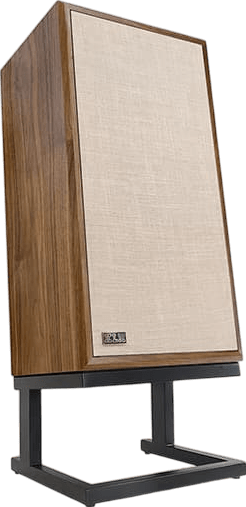
Product Strengths
- Retro aesthetics reminiscent of vintage speakers, with a well-applied veneer and woven front panel
- Balanced sound with clarity in the midrange and treble, creating an immersive listening experience
- Good sensitivity makes them relatively easy to drive with a range of amplifiers
- Acoustic suspension design provides tight bass and allows for flexible placement near walls
- Three-position attenuation switch allows for adjustment to different room acoustics
Product Considerations
- Can sound a bit bright out of the box, requiring a break-in period
- Sound can harden a little when provoked by poor or bright recordings, and they are finicky about upstream electronics
- Bass might not be punchy enough for some listeners, potentially requiring a subwoofer or EQ adjustments
- Lack of provision for spikes to fasten the speakers to the carpet
- Grilles need to be off for best sound, according to one reviewer
Comparisons (according to reviewers)
- Compared to the JBL L100, the Model Five is better balanced and more enjoyable to listen to
- Compared to the NHT C3, the Model Five is an upgraded variant, offering deeper, wider sound and more resolution
- Compared to the Buchardt S400, the Model Five sounds more open, brighter, and more detailed—with better instrument placement
- Compared to the Aurender S5W, the Model Five reaches lower frequencies and has better overall resolution and detail
- Compared to the Graham LS6, they perform on par, albeit via a different approach, trading in some refinement for a more direct—in-your-face sound
Takeaway: The KLH Model Five is a speaker with retro style and balanced sound. They are versatile and can be used in different listening spaces.
Video review
About the brand

What reviewers think
Product Strengths
- Impressive bass response for their size, extending down to 29 Hz due to dual passive radiators
- Exceptional imaging and soundstage, creating a three-dimensional listening experience
- Clear and dynamic high frequencies are attributed to the High-Velocity Folded-Ribbon (HVFR) tweeter
- Amplifier-friendly, working well with both tube and class-D amps due to their 89 dB sensitivity
- Deliver a spacious sound that casts a huge image and makes them easy to place
Product Considerations
- Aesthetics can be polarizing, as the sock-like grill cloth and overall minimalist design may not appeal to everyone
- Some reviewers noted that the appearance looks inexpensive
- Do not have the level of resolution of some more expensive speakers
- The bass, while impressive for the size, may not satisfy those who prefer bass-heavy music genres
Comparisons (according to reviewers)
- Vs Harbeth Compact 7ES3: Triton Sevens lack the same level of resolution, but have better bass extension
- Vs Totem Rainmakers: Triton Sevens have less midrange congestion with solo piano recordings
- Vs Magnepan 1.7: Triton Sevens sound different and better—offering more (sonic) transparency
- Vs Martin Logan Motion 20: Triton Sevens have superior bass extension and smoother integration
- Vs Definitive Technology StudioMonitor 45: Triton Sevens have larger soundstage and deeper, more controlled bass
Takeaway: The Triton Seven speakers offer great sound and impressive bass for their size, making them an excellent option for music lovers who want audiophile-quality audio. These speakers are versatile and easy to set up in various listening environments.
Video review
About the brand

What reviewers think
Product Strengths
- Excellent dynamics and punch with appropriate material
- Impressive rhythmic drive, communicating energy and momentum well
- High sensitivity, plays well with low-powered amplifiers while still performing with higher wattage amps
- Detailed, open, and transparent midrange with 'out-of-box' realism
- Excellent value
Product Considerations
- Requires care in partnering with electronics to avoid brightness or harshness, best paired with warmer sounding amps
- Needs a larger room to breathe and perform optimally, ideally between 20–40m squared
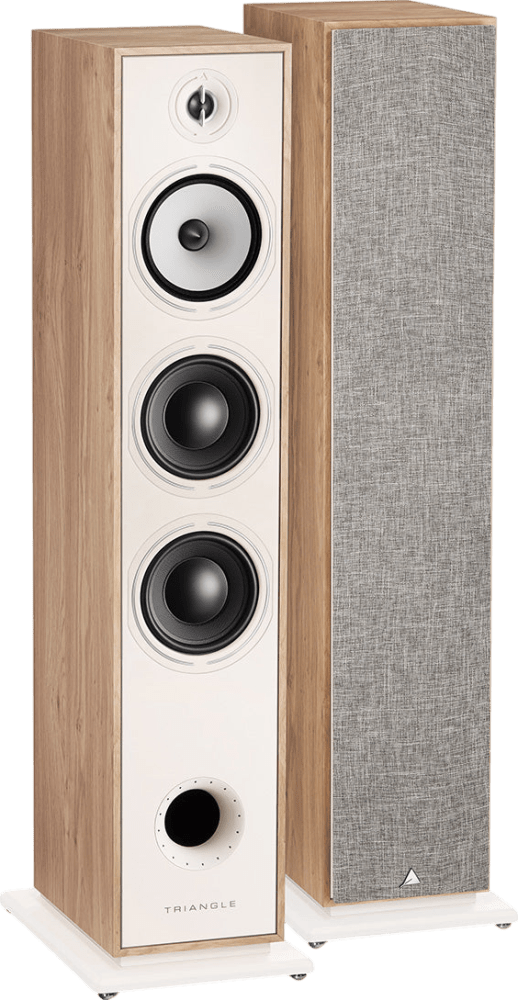
- Cosmetically, the vinyl-wrapped cabinets may not be the most exciting-looking
- Bass can become slightly soft and ponderous at higher volumes
Comparisons (according to reviewers)
- Vs Spendor D9: Offers a glimpse of the performance at a fraction of the price, though the D9s have better bass extension and overall balance
- Vs Triangle Borea BR03: Has more bass fullness
- Vs Focal Chora 806: Offers more slam and chest impact in the bass, while the Chora 806 has slightly more air and space around the midrange and treble
- Vs Dali Oberon 5: Is a very capable speaker in bigger spaces, and likely more fussy about placement and amp than the more easygoing Oberon 5
- Vs Bowers & Wilkins 603 S2: Is more sophisticated and smooth, while the Bowers & Wilkins has better bass quality
Takeaway: The Triangle Borea BR08 is a fun, fast, and dynamic speaker that offers great sound and value. It is an engaging speaker that can fill a room with sound and is best paired with the right equipment to achieve its full potential.
Video review
About the brand

What reviewers think
Product Strengths
- Flat in-room frequency response, especially from 200 Hz upwards, contributes to accurate sound reproduction
- Amplifier and receiver friendly due to its high sensitivity and 8-ohm impedance, performing well with entry-level to flagship AV receivers and amplifiers
- The new, larger Tractrix horn waveguide design offers improved directivity control and high-frequency focus
- Excels in dynamics, delivering raw impact and presence that enhances the excitement of movies and gaming, as well as rock and electronica music
Product Considerations
- Treble might become fatiguing with lesser recordings or at higher volumes, and may not be agreeable with all genres for listeners seeking a very smooth top end
- The midrange, while linear, isn't completely neutral due to some cabinet resonance, adding extra energy that may or may not be desirable depending on listener preference
- For true full-range playback, a subwoofer is required to compensate for the lack of deep bass extension
- The vinyl finish may disappoint fans of natural materials
- Best listened at within a 5-degree angle, and listening at a height level with the tweeter is clearly the best choice
Comparisons (according to reviewers)
- Vs. Polk R700: R700 is a more versatile all-rounder, but preferred for rock and electronica
- Vs. Sonus Faber Lumina 5: The Sonus Faber is better built and looks nicer, but more refined
- Vs. Q Acoustics Concept 50s: The Concept 50s image a little better, disappear just a little bit better, and they are exceptional off-axis, but do not play as low
- Vs. Heco Aurora 1000: The Heco is more linear across the range
- Vs. SVS Prime Pinnacle: The SVS Prime Pinnacle has a tweeter that is lower in level, offering a warmer sound
Takeaway: The Klipsch RP-8000F Mark II is a speaker that brings a dynamic sound to movies, gaming, and music. For speakers that are easy to set up, are amplifier-friendly and deliver punchy, clear audio, these could be a great option.
Video review
About the brand


What reviewers think
Product Strengths
- Combines electrostatic panel for mids/highs with a woofer for bass for a rounded sound
- Offers detailed sound with great imaging, and creates an unusually live atmosphere
- Curved electrostatic panel broadens the sweet spot and allows for easier placement near walls
- Styling is beautiful and an instant conversation piece
- Possesses a level of resolution its predecessor couldn't touch
Product Considerations
- Sound quality is dependent on source material and positioning
- Requires some space away from the front wall to sound best
- Impedance can drop below 4 ohms, putting demands on the amplifier
- Bass is more wiry/slim than fulsome
- Can be a little bit bright sometimes
Comparisons (according to reviewers)
- Vs KEF LS50 Meta, the Martin Logan Electromotion ESL is able to compete on the same level as dynamic speakers
- Vs Neat Momentum 4i, the ElectroMotion ESL has the edge because it has a more dynamic midband
Takeaway: The ElectroMotion ESL is a speaker that offers a detailed and engaging listening experience with a unique electrostatic design. It's a good choice for those wanting high-resolution sound without the need for an additional subwoofer.
Video review
About the brand

What reviewers think
Product Strengths
- High sensitivity (92dB/W/m) allows them to work well with modest amplifiers
- Massive bass from two big aluminum drivers
- Downward-venting bass port makes the speakers easier to position
- Big, bold, room-filling sound with excellent detail and solid stereo image
Product Considerations
- Highs can be a little bit bright or forward depending on the music
- Soundstage depth may not be amazing and could require more break-in time
- The walnut finish with a matte black baffle may not appeal to everyone, giving it a 'macho' look
- Factory rates the speaker at 4 ohms, meaning it can dip below that
Comparisons (according to reviewers)
- The F10 is considered the 'baby brother' to the Martin Logan XT f100, with the f10 having a slightly recessed vocal
Takeaway: The Martin Logan Motion F10 speakers provide a remarkable listening experience with a powerful, detailed sound that works well with a variety of amplifiers, and are easy to set up with flexible placement. They offer excellent build quality, and their high sensitivity allows them to deliver impressive sound even at low listening levels.
Video review
About the brand