Main list product image
HiFi Audio List

Best Integrated Amps Under $2,000

Under $2,000 is where I would spend most people's amplifier budget. The next $2,000 buys less than the first did, every time.
Website author headshot
Julian Shapiro
ExtremeHiFi
Curated
No items found.
Under $2,000 is where I would spend most people's amplifier budget. The next $2,000 buys less than the first did, every time.
Julian Shapiro
ExtremeHiFi Writer

Welcome

Under $2,000 is where most real systems get their amplifier. At this price you get 50 to 100 watts, a DAC that is good enough to use, often a phono input, and from a few makers, streaming too. Ranked by review count. Every amp here drives normal speakers; the headphone-only amps are on their own list.


Video Transcript
Scroll ↓

Products on this list

Product image
Brand logo
Rega
io
725
/
23
Reviews
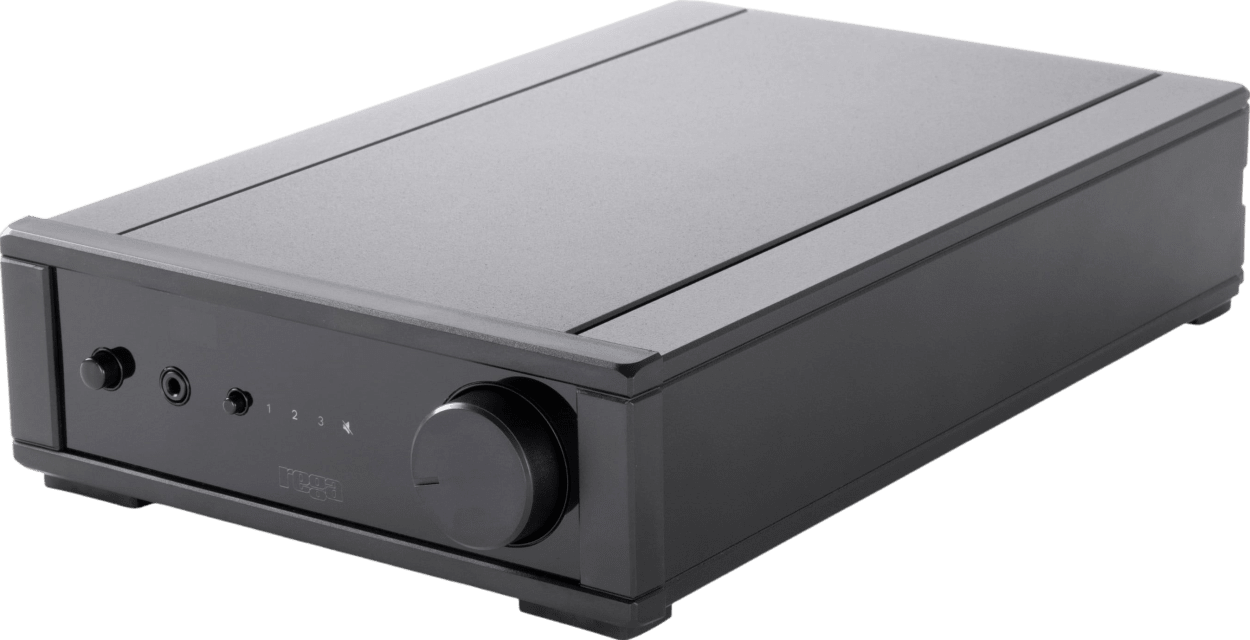
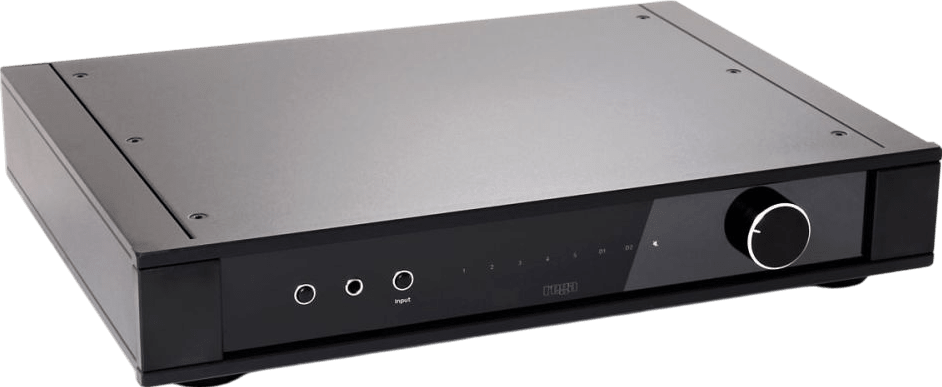
The io has been designed to offer exceptional Rega performance at an affordable price point. It uses the same amplifier stage as the multi-award winning Brio now designed to run at 30 W per channel into 8 Ω. The io features two line level inputs, a high specification Rega moving magnet phono stage, and a dedicated high quality headphone output. The io will integrate seamlessly into any home audio system whilst remaining simple to use and easy to set up.
Rega's turntables are light where everyone else's are heavy. The British company, founded in 1973 and still owned by co-founder Roy Gandy, builds stiff, low-mass plinths, makes its own tonearms, and assembles everything by hand in the south east of England. Reviewers hear the result as timing and musical coherence. The Planar 1 Plus has a phono stage built in, so it plugs straight into an amplifier or a pair of powered speakers, and the Planar 3 heads our Best Turntables list.
Expand Details

What reviewers think

Product Strengths

  • Detailed, rhythmic, and fun sound, recognizable as a descendant of the Rega Brio
  • Moving magnet (MM) phono stage offers palpable midrange richness and three-dimensionality
  • Good headphone output duplicates the good qualities showcased during lower-volume loudspeaker experiments
  • Compact size and well-built chassis, with a satisfyingly simple remote control

Product Considerations

  • Limited power output (30W per channel) demands careful speaker pairing
  • Lacks digital connectivity, as it is purely an analogue amplifier
  • Plastic front panel gives it an unremarkable aesthetic
  • Number of inputs is limited to two line-level inputs and one phono input
  • Volume control via the remote control goes up in relatively large steps

Comparisons (according to reviewers)

  • Vs Rega Brio: The Brio is bigger-sounding with a more polished presentation, greater detail, and dynamic precision
  • Vs Marantz PM6007: The Marantz PM6007 offers more space around the vocals and an overall maturity to the rendition, but its smoother, more laid-back approach comes at the cost of not quite being able to capture the track's energy
  • Vs Rotel A8: The Rotel A8 offers a more even sonic balance, more refinement, and space
  • Vs PS Audio Sprout: Although lacking an onboard digital section, the sound quality of the Rega's discrete design and overall build quality is superior
  • Vs Naim Nait: The Rega io is similar to the Naim Nait, but it has better bass control

Takeaway: The Rega io is a small but capable amplifier, perfect for those who prioritize sound quality and simplicity in an analogue setup. Its compact size and engaging sound make it a great entry point into hifi audio, especially for vinyl enthusiasts.

Video review

About the brand

Rega's turntables are light where everyone else's are heavy. The British company, founded in 1973 and still owned by co-founder Roy Gandy, builds stiff, low-mass plinths, makes its own tonearms, and assembles everything by hand in the south east of England. Reviewers hear the result as timing and musical coherence. The Planar 1 Plus has a phono stage built in, so it plugs straight into an amplifier or a pair of powered speakers, and the Planar 3 heads our Best Turntables list.
Website author headshot
Julian Shapiro
ExtremeHiFi Writer
io
Product Page
Product Page
Product image
Brand logo
Hegel
H95
1925
/
20
Reviews
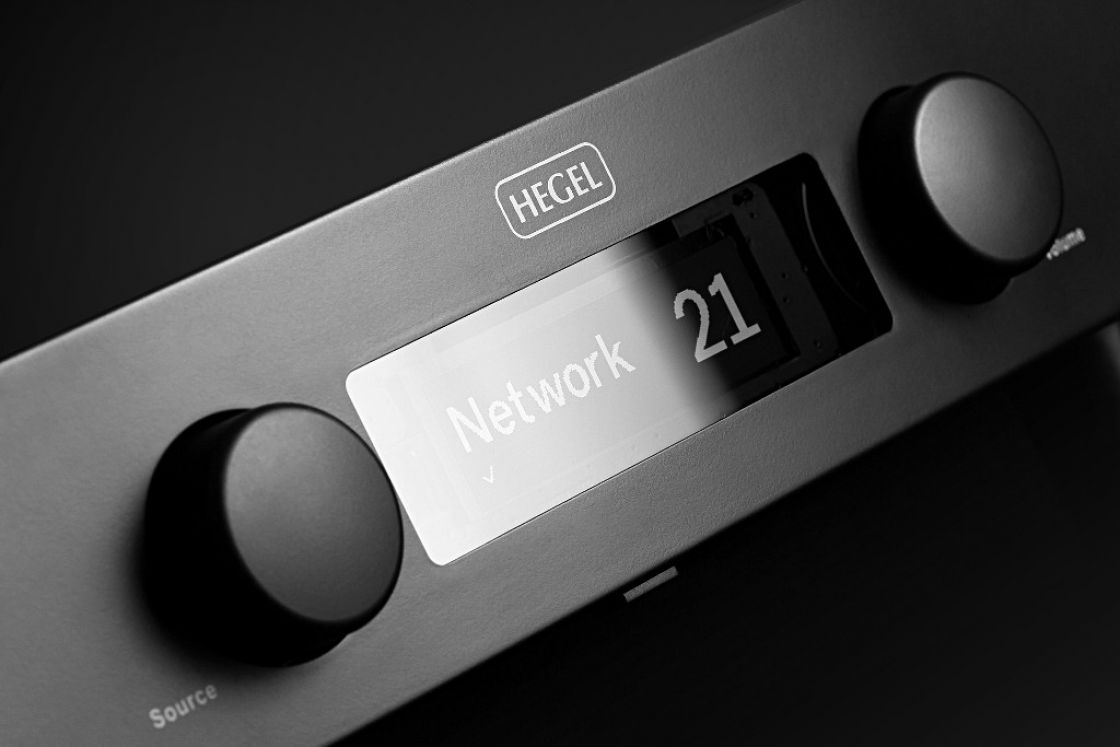
The measure of INTELLIGENCE is the ability to CHANGE, said Albert Einstein. With the H95 we believe we have done this statement justice. The H95 is indeed an intelligent purchase. It is not just an amplifier, but also a complete streaming solution with both AirPlay and UPnP streaming. It fully caters to the modern digital streaming generation.
Hegel is a Norwegian amplifier maker founded by Bent Holter, who named it after a band he played in. Its core technology is SoundEngine, a patented circuit Holter began developing as a student in Trondheim to reduce distortion in real time. Reviewers credit Hegel with firm bass control from high damping factors. The integrated amplifiers are the center of the range, many with Hegel's own DAC stages and streaming built in. The H95 has software that can be upgraded over time, and the H190v adds a phono stage and headphone output.
Expand Details

What reviewers think

Product Strengths

  • Improved DAC from the H90, using the same DAC as the H120 and H190 models, which offers a massive step up in D/A conversion
  • Well-balanced, neutral, and realistic sound, with better dynamics, transparency, and soundstage than its predecessor, the H90
  • Streaming capabilities, such as Spotify Connect, AirPlay, and UPnP, make it a versatile all-in-one system
  • SoundEngine 2 technology reduces distortion effectively
  • Simple, clean, and understated aesthetic
  • Requires LAN cable for network connection, as it has no wireless connectivity

Product Considerations

  • Front panel is made of plastic
  • USB input is limited to PCM resolutions of 24bit/96kHz
  • Lacks Roon endpoint capability and does not support playback of DSD files
  • Remote control is plastic; the metal RC8 remote is an additional cost needed to set start up and maximum volume levels

Comparisons (according to reviewers)

  • Vs H90—H95 has a better power supply, a new board with streaming circuitry and digital-to-analog conversion, and an improved headphone output
  • Vs H90—H95 also provides better dynamics, transparency, and soundstage
  • Vs H120 & H190—H95 shares the DAC from these models but lacks some of their higher-end features and custom installation facilities
  • Vs Primare I15 Prisma—the Primare I15 Prisma is a serious rival, offering a bolder sound and Prisma network platform
  • Vs Schiit Ragnarok 2 Fully Loaded—H95's sound was slightly smoother
  • Vs Cyrus ONE Cast—the H95 is sailing on much closer waters to the Cyrus ONE Cast, thanks to its thick blend of connectivity, features and ergonomics

Takeaway: The H95 is an integrated amplifier for those seeking modern streaming features and quality sound without overspending. It is an all-around good choice for building a simple home audio system.

Video review

About the brand
Hegel is a Norwegian amplifier maker founded by Bent Holter, who named it after a band he played in. Its core technology is SoundEngine, a patented circuit Holter began developing as a student in Trondheim to reduce distortion in real time. Reviewers credit Hegel with firm bass control from high damping factors. The integrated amplifiers are the center of the range, many with Hegel's own DAC stages and streaming built in. The H95 has software that can be upgraded over time, and the H190v adds a phono stage and headphone output.
Website author headshot
Julian Shapiro
ExtremeHiFi Writer
H95
Product Page
Product Page
Product image
Brand logo
Anni
1680
/
20
Reviews
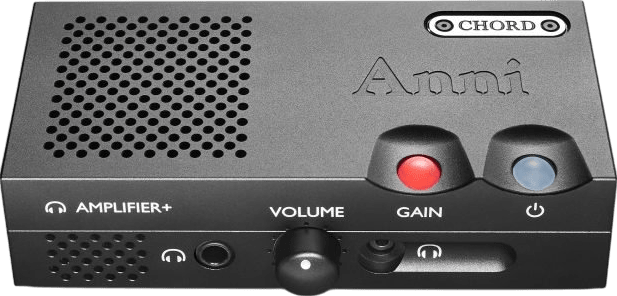
Anni is a desktop integrated amplifier that introduces our next-generation ULTIMA technology to both headphones and compact loudspeakers.
Expand Details

What reviewers think

Product Strengths

  • Joyful sound signature with detailed output
  • Can power a wide range of headphones, due to Ultima technology
  • Compact design, stacks perfectly with the Qutest and Huei
  • Employs trickle-down Ultima technology to allow delivery of enormous peak current outputs
  • Solid build quality using CNC-milled aluminum casework and good heat dissipation
  • Connectivity options include headphone and speaker outputs

Product Considerations

  • No gain switch for the headphone output
  • Default gain level a bit high for sensitive IEMs
  • More power limitations with speakers than headphones—best for smaller, efficient speakers or nearfield listening
  • Runs hot, requiring good ventilation
  • The volume control feels a little wobbly and might be difficult to use in a very precise way, and there is some channel imbalance at very low volumes

Comparisons (according to reviewers)

  • Qutest/Anni pairing justifies its price premium thanks to a more composed and insightful presentation that offers notably more low-end authority, dynamic punch and tonal richness
  • Cyrus ONE HD is plusher, showing that Anni has strong niche appeal
  • The iFi xDSD Gryphon has digital inputs and built-in DAC, while Anni can power speakers

Takeaway: The Chord Electronics Anni is a compact and well-built amplifier that delivers a joyful and detailed sound, making it a great addition to a desktop setup for headphone and nearfield speaker listening. Its use of trickle-down Ultima technology ensures high-quality performance in a small package, and its ability to stack with other Chord devices makes it a good choice for those already invested in the ecosystem.

Video review

About the brand

Website author headshot
Julian Shapiro
ExtremeHiFi Writer
Anni
Product Page
Product Page
Product image
Brand logo
PS Audio
Sprout100
799
/
19
Reviews
As PS Audio's newest, first-tier integrated amplifier, Sprout100 represents our vision of a simple, elegant means of playing music at home. We created it for those of us who want quality sound without the hassles that sometimes come with it. Sprout features a phono preamplifier for vinyl, a Bluetooth receiver for music streamed from smartphones, a high-quality hi-res DAC to handle anything stored on a computer, enough power for any speaker, and a headphone amp that drives even the toughest loads.
PS Audio's signature idea is the power regenerator, which is designed to regenerate the AC from the wall into a clean, stable supply. The American company has designed in Boulder, Colorado, since 1973, and founder Paul McGowan answers listeners' questions on camera every day. Many of its amplifiers pair a tube input stage with a solid-state output stage, and designs are often tuned by ear. Its Aspen loudspeakers use planar drivers. Owners can see and control a PowerPlant from anywhere with PowerPlay, and the PowerPlant 12 is on our Best Power Conditioners list.
Expand Details

What reviewers think

Product Strengths

  • Versatile and feature-rich, with a built-in phono stage, DAC (ESS Sabre 9016), Bluetooth, analog inputs/outputs, and a subwoofer output, catering to both analog and digital sources
  • Delivers a significant power increase compared to the original Sprout, making it suitable for a wider range of speakers and room sizes.
  • Compact and elegant design, praised for its small size, solid build quality (metal chassis, real wood top), and attractive aesthetic, making it suitable for desktop or living room use.
  • Excellent sound quality for the price, achieving a level of detail, clarity, and spaciousness that often exceeds expectations, with a smooth and never fatiguing sound.
  • Simple to operate with intuitive controls, and comes with a remote control for basic functions.

Product Considerations

  • Some reviewers found the default bass boost setting a bit too much, preferring the sound with it turned off for a more balanced presentation.
  • Multiple reviews noted that several rotations of the volume dial are necessary to reach a desired volume, which makes the amp seem weak.
  • Lacking a dedicated remote control button for the bass boost, and cannot switch inputs.
  • Lacks support for higher-quality Bluetooth codecs like aptX or AAC.
  • Internal phono stage only works well with MM carts, and is not compatible with low output moving coil carts.

Comparisons (according to reviewers)

  • Vs. Musical Fidelity M3si—the Sprout100 was preferred due to the Musical Fidelity's brighter and fatiguing sound when paired with Klipsch RP600M speakers.
  • The Sprout100 is a huge improvement over the original Sprout in many aspects—heartier low-end, wider dispersion with more openness and sense of depth, lower noise floor, and higher resolution.

Takeaway: The Sprout100 is a small but capable integrated amplifier that offers great sound and many ways to play your music, making it an excellent value for anyone looking to upgrade their hifi listening experience. It is simple to use and sounds good, allowing one to focus on enjoying their music.

Video review

About the brand
PS Audio's signature idea is the power regenerator, which is designed to regenerate the AC from the wall into a clean, stable supply. The American company has designed in Boulder, Colorado, since 1973, and founder Paul McGowan answers listeners' questions on camera every day. Many of its amplifiers pair a tube input stage with a solid-state output stage, and designs are often tuned by ear. Its Aspen loudspeakers use planar drivers. Owners can see and control a PowerPlant from anywhere with PowerPlay, and the PowerPlant 12 is on our Best Power Conditioners list.
Website author headshot
Julian Shapiro
ExtremeHiFi Writer
Sprout100
Product Page
Product Page
Product image
Brand logo
Bluesound
Powernode
949
/
18
Reviews
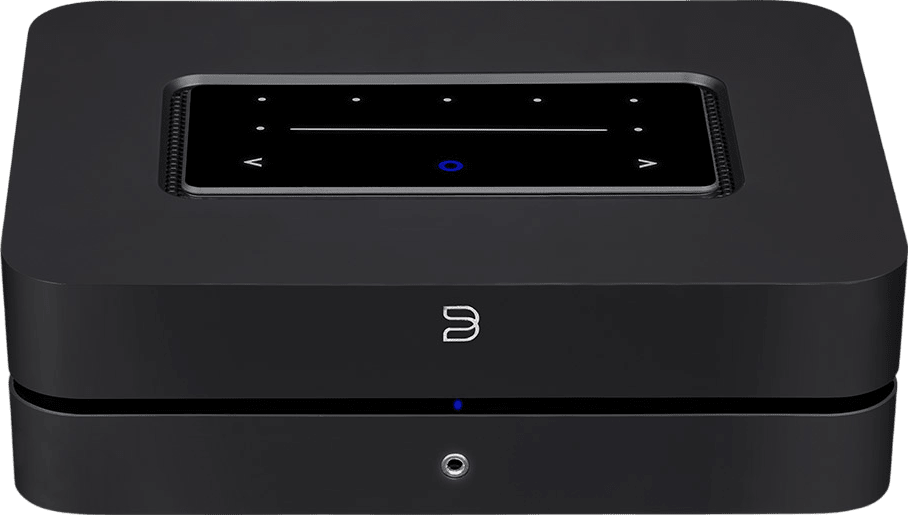
The Bluesound POWERNODE is the HiFi amp reinvented for the streaming age, combining audiophile-grade componentry and multi-room music capabilities to create an intuitive "just add speakers" hi-res sound system for modern music lovers.
Bluesound's idea is BluOS, the streaming platform that links its products, and partner components from NAD and Dali, into one multi-room system. The Canadian company, founded in 2013, makes streamers and streaming amplifiers alongside wireless speakers. Above the Node Nano, the Node adds HDMI eARC and Dirac Live room correction, and the Node Icon has a dual-mono DAC with balanced XLR outputs. The Powernode Edge has 40 watts per channel built in, so it drives passive speakers directly. The Node heads our Best Music Streamers list, with the Node Nano second.
Expand Details

What reviewers think

Product Strengths

  • Punchy and musical performer
  • BluOS is a treat to operate
  • Convenient design as a source and amplifier in one, only needing speakers to complete the system
  • Engagingly musical performer—dynamically fluid and punchy, with plenty of energy
  • More neutral sounding now, making gains in clarity and insight across the frequency range
  • Connectivity options are through 3.5mm headphone-type connectors, shared with mini-TosLink connections

Product Considerations

  • Tough competition from other streaming amplifiers
  • No way to send data out to an external DAC
  • The Powernode was occasionally hard on transients and dynamic bursts
  • There is no included remote

Comparisons (according to reviewers)

  • The Marantz has a wider-scale, roomier soundstage and greater subtlety

Takeaway: The Bluesound Powernode is a superb streaming amplifier that is better than ever, offering excellent sonic talent and a well-rounded feature set. It provides a convenient and high-quality music experience for anyone looking to simplify their home audio setup.

Video review

About the brand
Bluesound's idea is BluOS, the streaming platform that links its products, and partner components from NAD and Dali, into one multi-room system. The Canadian company, founded in 2013, makes streamers and streaming amplifiers alongside wireless speakers. Above the Node Nano, the Node adds HDMI eARC and Dirac Live room correction, and the Node Icon has a dual-mono DAC with balanced XLR outputs. The Powernode Edge has 40 watts per channel built in, so it drives passive speakers directly. The Node heads our Best Music Streamers list, with the Node Nano second.
Website author headshot
Julian Shapiro
ExtremeHiFi Writer
Powernode
Product Page
Product Page
Product image
Brand logo
Cambridge Audio
CXA61
599
/
17
Reviews
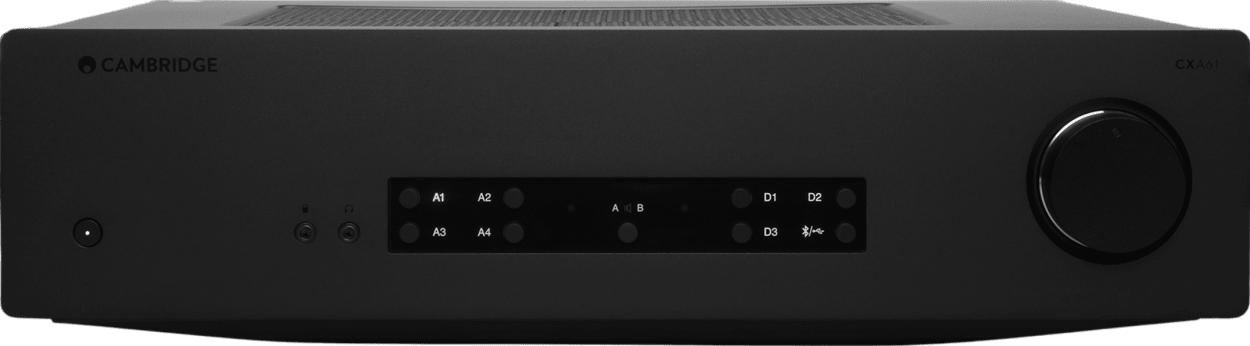
CXA61 builds on the foundations laid by the original CX Series, and over 50 years' experience of designing amplifiers. It provides a fresh perspective, with 60 watts per channel of pure excitement. It's a punchy and upfront listen, without giving away detail or precision – whether you want to recreate the atmosphere of the mosh pit or the concert hall.
Cambridge Audio picks its parts by ear, choosing toroidal transformers and ESS Sabre DAC chips for how they sound rather than how they measure. The British company launched in 1968 and now makes turntables, streamers, amplifiers, speakers and earbuds. The Edge A integrated amplifier uses the company's own Class XA amplification and twin toroidal transformers, and the EVO 75 builds in streaming through the StreamMagic Gen 4 module. Owners who want streaming and amplification in one box can start with the EVO 150, which heads our Best Streaming Amplifiers list.
Expand Details

What reviewers think

Product Strengths

  • Good clarity, speed, and rhythmic snap.
  • Bluetooth aptX HD is integrated, which used to be an add-on.
  • Feature-rich, offering Bluetooth, USB, and subwoofer output.
  • Sound is muscular and punchy—making music listening a rhythmic and fun experience.
  • Extensive feature set.

Product Considerations

  • Lacks tone controls.
  • A separate phono preamp is needed for vinyl enthusiasts.
  • Cambridge Audio CXA61 is not compatible in the CX range.
  • The volume control of the remote will affect both the Pre-Amp on the CXNv2—as well as the volume of the amplifier.

Comparisons (according to reviewers)

  • Versus Audiolab 6000A, the CXA61 is neutral but a little less so than the Audiolab.
  • Versus Audiolab 6000A, the Audiolab offers a low noise presentation but not quite to the same degree as the CXA61.
  • Versus Rega Brio, Cambridge has a more rounded sound which provides better clarity, soundstage, and refinement.
  • Versus Denon PMA 900ne, Cambridge is more punchy and dynamic.
  • Versus Cambridge Audio CXA60, the CXA61 offers improved clarity over the earlier model.
  • Versus Cambridge Audio CXA81, the CXA81 is more analytical and clean, and although it's a very capable amp, it just isn't as much fun.

Takeaway: The Cambridge Audio CXA61 delivers stupendous sound, bursting with energy and life, at an affordable level. Clever design features and an excellent range of features, inputs, and outputs make the Cambridge Audio CXA61 a winner.

Video review

About the brand

Cambridge Audio picks its parts by ear, choosing toroidal transformers and ESS Sabre DAC chips for how they sound rather than how they measure. The British company launched in 1968 and now makes turntables, streamers, amplifiers, speakers and earbuds. The Edge A integrated amplifier uses the company's own Class XA amplification and twin toroidal transformers, and the EVO 75 builds in streaming through the StreamMagic Gen 4 module. Owners who want streaming and amplification in one box can start with the EVO 150, which heads our Best Streaming Amplifiers list.
Website author headshot
Julian Shapiro
ExtremeHiFi Writer
CXA61
Product Page
Product Page
Product image
Brand logo
Audiolab
6000A
1199
/
17
Reviews
An amplifier remains the beating heart of any high-performance audio system, a truly versatile integrated amp needs to cover many bases – digital and analogue sources, wireless connectivity for portable devices, a phono stage to cater for vinyl playback, amplification for headphones as well as speakers… That's a lot to pack in, whilst keeping performance high and the price tag affordable – and yet, that's exactly what the 6000A delivers.
Audiolab's idea from the start was hifi that cost less and was simpler to use than the equipment of its day. The British company was founded in 1983 by Imperial College students Philip Swift and Derek Scotland. It has long built its digital sections around ESS Sabre DAC chips, and the main range has three tiers, the 6000, 7000 and 9000 series. Reviewers hear detailed, punchy sound with refinement. The 7000A adds HDMI ARC for a television, and the Omnia puts an amplifier, CD player and streamer in one box.
Expand Details

What reviewers think

Product Strengths

  • Clear, refined, and articulate sound
  • Big and spacious presentation
  • Confident bass that doesn't sacrifice or trim the low end
  • Tonal balance that performs better than other amplifiers under £1,000
  • Good spread of features, including a quality DAC and a headphone amp

Product Considerations

  • Fragility and delicacy were not great priorities
  • The treble is crisp and accurate, but can be somewhat dry
  • The presentation is a little two-dimensional when it comes to depth perspective

Comparisons (according to reviewers)

  • Vs Rega Brio: The Audiolab 6000A offers a larger and airy presentation—more so than the Rega Brio
  • Vs NAD C 316BEE V2: The 6000A has more attractive appearance, higher build quality, lower noise, and extra features
  • Vs McIntosh C47: The DACs and headphone amps sound the same, and the amps, preamps, and phono preamps sound very close
  • Vs McIntosh MC302: The differences in sound quality were marginal
  • Vs Schiit Jotunheim 2: The Audiolab unit was more relaxed and subtle in its presentation qualities

Takeaway: The Audiolab 6000A is a capable stereo amplifier with a sense of clarity and detail, making listening comfortable for hours. It offers a refined presentation and range of digital features, making it a good value.

Video review

About the brand
Audiolab's idea from the start was hifi that cost less and was simpler to use than the equipment of its day. The British company was founded in 1983 by Imperial College students Philip Swift and Derek Scotland. It has long built its digital sections around ESS Sabre DAC chips, and the main range has three tiers, the 6000, 7000 and 9000 series. Reviewers hear detailed, punchy sound with refinement. The 7000A adds HDMI ARC for a television, and the Omnia puts an amplifier, CD player and streamer in one box.
Website author headshot
Julian Shapiro
ExtremeHiFi Writer
6000A
Product Page
Product Page
Product image
Brand logo
Audiolab
Omnia
1049
/
17
Reviews
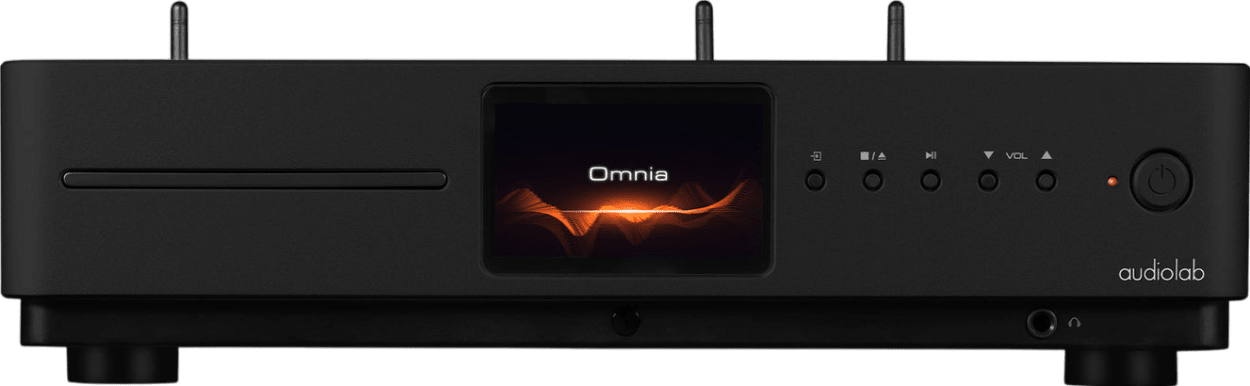
Blurring the lines that generally differentiate hi-fi and lifestyle, Omnia brings all of the pedigree that helps make audiolab electronics the connoisseur's choice. Yet, indulgence in design, material aesthetics, and useability mean it has all of the functionality to make it a sleek, convenient and easy-to-use center-piece, for an uncompromising home audio system.
Audiolab's idea from the start was hifi that cost less and was simpler to use than the equipment of its day. The British company was founded in 1983 by Imperial College students Philip Swift and Derek Scotland. It has long built its digital sections around ESS Sabre DAC chips, and the main range has three tiers, the 6000, 7000 and 9000 series. Reviewers hear detailed, punchy sound with refinement. The 7000A adds HDMI ARC for a television, and the Omnia puts an amplifier, CD player and streamer in one box.
Expand Details

What reviewers think

Product Strengths

  • Offers a comprehensive set of features including CD player, streamer, Bluetooth, headphone amplifier, phono amplifier, and power amplifier, all in one box
  • Sounds very good across digital and analogue inputs, the combination of digital decoding and amplification is exceptionally cohesive
  • Has a sturdy, well-built casework that feels every inch of its price tag, and is built to last
  • Provides clear, detailed and large, spacious sound with an easy-going presentation, and can be part of an expansive wireless multi-room system
  • Incorporates a high-quality ESS Sabre DAC and amplifier based on the Audiolab 6000A design

Product Considerations

  • The software interface using DTS Play-Fi is a little slow, and Play-Fi is still not gapless, Play-Fi is not delivering at the same level of user experience as competitor solutions
  • Rivals have greater dynamic punch, rhythmic accuracy, and energy
  • Some reviewers find that the unit can be a bit sensitive with scratched CDs
  • Remote and fascia controls aren't all that responsive
  • There is no album art displayed on the screen during streaming

Comparisons (according to reviewers)

  • Compared to the Technics SA-C600, the Technics may not be as big-scaled, open or reveal as much detail as the Audiolab Omnia, but it's more adept at conveying enthusiasm, rhythmic precision and dynamic punch
  • In direct competition with the Cambridge Audio Evo 75, the Audiolab Omnia ties Audiolab styling touches into something that is not slavishly retro and gives away absolutely nothing in terms of feel, solidarity and design
  • Compared to the NAD C700, the Audiolab Omnia has functionality they cannot get anywhere near—indeed functionality that leaves everything else under two grand looking rather limited

Takeaway: The Audiolab Omnia is a versatile and well-built all-in-one system that offers a wide range of features and delivers enjoyable sound, making it a great option for those seeking convenience without sacrificing audio quality. It's especially appealing for those who still value CD playback.

Video review

About the brand

Audiolab's idea from the start was hifi that cost less and was simpler to use than the equipment of its day. The British company was founded in 1983 by Imperial College students Philip Swift and Derek Scotland. It has long built its digital sections around ESS Sabre DAC chips, and the main range has three tiers, the 6000, 7000 and 9000 series. Reviewers hear detailed, punchy sound with refinement. The 7000A adds HDMI ARC for a television, and the Omnia puts an amplifier, CD player and streamer in one box.
Website author headshot
Julian Shapiro
ExtremeHiFi Writer
Omnia
Product Page
Product Page
Product image
Brand logo
NAD
C 700
1349
/
16
Reviews
The NAD C 700 BluOS Streaming Amplifier is a compact, "just add speakers" solution that embraces all the possibilities of the streaming age, offering state-of-the-art amplification that will transport you to your favourite musical destination.
NAD's idea is high power and good sound at a reasonable price. The Canadian company, founded in 1972, builds many of its current amplifiers around Purifi Eigentakt and Hypex nCore Class D modules, which run efficiently and stay cool. The Classic Series includes the C 3050, which puts modern circuitry in a retro case, and the M33 is the flagship streaming amplifier in the Masters Series. Listeners who want streaming and room correction in one box can look at the M33, which uses Dirac Live and heads our Best Class D Amplifiers list.
Expand Details

What reviewers think

Product Strengths

  • BluOS integration offers a slick interface with robust functionality, lossless streaming, and great sound quality
  • Compact form factor and lightweight design make it easy to place in various settings
  • The 5-inch color display shows album art and track information, contributing to a sleek and sophisticated user experience
  • HDMI eARC input allows for easy connection to smart TVs for enhanced audio
  • A wide array of connectivity options is available, including digital and analog inputs, pre-outs, and a subwoofer output

Product Considerations

  • Lacks a phono stage input for direct connection of turntables without a preamp
  • Not a touchscreen
  • May sound flat or experience coloration at its peak volume levels
  • May lack the macro dynamics of a more powerful amplifier—better suited for efficient speakers and smaller rooms
  • Some reviewers found it does not pause playback from the main unit, only mutes it

Takeaway: The NAD C 700 is a versatile streaming amplifier with a compact design and a wide range of features, making it a great option for those seeking a simple way to enjoy high-resolution music. Its intuitive BluOS platform and various connectivity options make it a convenient centerpiece for a modern audio setup

Video review

About the brand
NAD's idea is high power and good sound at a reasonable price. The Canadian company, founded in 1972, builds many of its current amplifiers around Purifi Eigentakt and Hypex nCore Class D modules, which run efficiently and stay cool. The Classic Series includes the C 3050, which puts modern circuitry in a retro case, and the M33 is the flagship streaming amplifier in the Masters Series. Listeners who want streaming and room correction in one box can look at the M33, which uses Dirac Live and heads our Best Class D Amplifiers list.
Website author headshot
Julian Shapiro
ExtremeHiFi Writer
C 700
Product Page
Product Page
Product image
Brand logo
Cambridge Audio
CXA81
910
/
15
Reviews
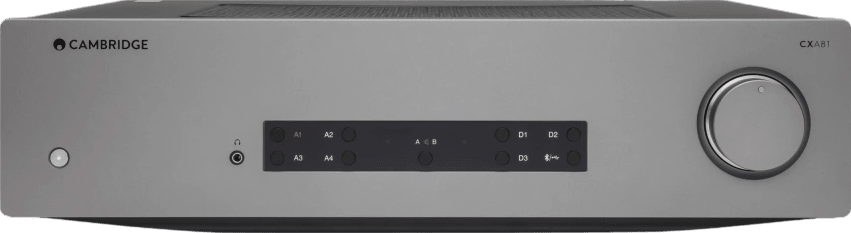
Our CXA81 integrated amplifier builds on the foundations laid by the first CX Series, and over 50 years' experience of building amps. It offers a progressive perspective – effortless, poised and sophisticated. 80 watts per channel give CXA81 complete authority over music, to reveal every emotion and nuance from your whole music collection – be that streamed or on disc.
Cambridge Audio picks its parts by ear, choosing toroidal transformers and ESS Sabre DAC chips for how they sound rather than how they measure. The British company launched in 1968 and now makes turntables, streamers, amplifiers, speakers and earbuds. The Edge A integrated amplifier uses the company's own Class XA amplification and twin toroidal transformers, and the EVO 75 builds in streaming through the StreamMagic Gen 4 module. Owners who want streaming and amplification in one box can start with the EVO 150, which heads our Best Streaming Amplifiers list.
Expand Details

What reviewers think

Product Strengths

  • Bold, powerful, and detailed presentation with expert timing and dynamics.
  • A little bit of warmth is pleasing with vocals.
  • Separate, symmetrical left and right channels are carefully engineered to deliver incredible sound-staging.
  • A built-in DAC and Bluetooth.

Product Considerations

  • Lacks a phono input.
  • One reviewer thought it didn't look as good as it could be.
  • Bass response is good, not great.
  • Dynamics are present, but you have to coax them out.
  • Some found that it lacks tone controls.

Comparisons (according to reviewers)

  • Vs Rega Elex-R: Offers a more polished, insightful—even more mature—presentation.
  • Vs Audiolab 6000A: Has a warmer, more approachable sound, better Bluetooth section and more headroom to drive less sensitive speakers.

Takeaway: The CXA81 is a solid piece worth considering with features and robust construction for listening to digital music. It delivers remarkably detailed sound, and the soundstage is excellent, making it a great amplifier overall.

Video review

About the brand
Cambridge Audio picks its parts by ear, choosing toroidal transformers and ESS Sabre DAC chips for how they sound rather than how they measure. The British company launched in 1968 and now makes turntables, streamers, amplifiers, speakers and earbuds. The Edge A integrated amplifier uses the company's own Class XA amplification and twin toroidal transformers, and the EVO 75 builds in streaming through the StreamMagic Gen 4 module. Owners who want streaming and amplification in one box can start with the EVO 150, which heads our Best Streaming Amplifiers list.
Website author headshot
Julian Shapiro
ExtremeHiFi Writer
CXA81
Product Page
Product Page
Product image
Brand logo
Rega
Elex MK4
1875
/
14
Reviews
The Elex MK4 is a high performance stereo integrated amplifier designed to deliver the purest musical performance. Housed in a brand new case to match the rest of the Rega range, the MK4 builds on previous Rega designs using our multi-award winning class A/B power amplifier circuit which delivers an impressive 72W per channel into 8Ω loads (90W into 6Ω). New rear connectivity options are available with the Elex MK4 now including a Rega DAC circuit with two digital inputs and a high quality headphone output conveniently located on the front panel.
Rega's turntables are light where everyone else's are heavy. The British company, founded in 1973 and still owned by co-founder Roy Gandy, builds stiff, low-mass plinths, makes its own tonearms, and assembles everything by hand in the south east of England. Reviewers hear the result as timing and musical coherence. The Planar 1 Plus has a phono stage built in, so it plugs straight into an amplifier or a pair of powered speakers, and the Planar 3 heads our Best Turntables list.
Expand Details

What reviewers think

Product Strengths

  • Astonishingly revealing sound with terrific timing and agility
  • Good insight and detail, very capable onboard DAC and phono stage, and solid build quality
  • Exceptional tonal realism, managing to sound lively and energetic without tipping over into stridency
  • Good value for the price, with improved sound quality and the addition of an enjoyable onboard DAC
  • Musical, with a balanced tone and detailed sound, offering a well-rounded performance

Product Considerations

  • Careful system matching is needed due to its lean sound, and it may not be ideal for pairing with bright or forward-sounding equipment
  • Lacks features like Bluetooth or network streaming, which some competitors offer
  • No USB input for a direct feed from a computer and no wireless connection option

Comparisons (according to reviewers)

  • The Rega communicates the tempo of a song in a more authoritative and revealing way than the Cambridge Audio CXA81, but the CXA81 has a lively—full-bodied tone

Takeaway: The Rega Elex Mk4 is a musically engaging amplifier with a detailed and balanced sound, making it a great choice for those who appreciate a lively and energetic performance. Its solid build quality and versatile features make it a worthwhile addition to any hifi system.

Video review

About the brand

Rega's turntables are light where everyone else's are heavy. The British company, founded in 1973 and still owned by co-founder Roy Gandy, builds stiff, low-mass plinths, makes its own tonearms, and assembles everything by hand in the south east of England. Reviewers hear the result as timing and musical coherence. The Planar 1 Plus has a phono stage built in, so it plugs straight into an amplifier or a pair of powered speakers, and the Planar 3 heads our Best Turntables list.
Website author headshot
Julian Shapiro
ExtremeHiFi Writer
Elex MK4
Product Page
Product Page
Product image
Brand logo
NAD
C 338
749
/
14
Reviews
The C 338 adds big sound to your favourite music sources and brings incredible flexibility to any stereo system. With Spotify Connect ® , Bluetooth ® , and the first-ever hi-fi amplifier to have built-in Chromecast ® , the C 338 allows you to stream and cast music directly from any music streaming app, letting you enjoy your music wirelessly.
NAD's idea is high power and good sound at a reasonable price. The Canadian company, founded in 1972, builds many of its current amplifiers around Purifi Eigentakt and Hypex nCore Class D modules, which run efficiently and stay cool. The Classic Series includes the C 3050, which puts modern circuitry in a retro case, and the M33 is the flagship streaming amplifier in the Masters Series. Listeners who want streaming and room correction in one box can look at the M33, which uses Dirac Live and heads our Best Class D Amplifiers list.
Expand Details

What reviewers think

Product Strengths

  • Google Chromecast is supported, easy to set up, and provides seamless integration with many online music streaming services, allowing streaming from Tidal, Amazon Music HD, and Spotify
  • A neutral sound field is offered and is capable of very loud sound reinforcement without strain
  • A moving magnet phono stage is included, offering a sonic highlight and is rare in digitally-oriented components
  • A Class D amplifier design is employed that offers high dynamic current capability with extremely low total harmonic distortion and is energy efficient, creating very little heat
  • The amplifier supports connectivity with a wide range of music sources

Product Considerations

  • The provided plastic remote is small, directional, and easily lost
  • The front panel display is hard to read at a distance
  • While the amp has enough life to not sound dull, it struggles to be truly exciting
  • The built-in phono stage may not be suitable for larger rooms

Comparisons (according to reviewers)

  • Vs Unison Research 'Simply Italy'—the NAD C338 is more neutral, whereas the Simply Italy is colored and enriched with midrange harmonics
  • The onboard DAC performs similarly to the Cambridge CXA60 dual Wolfson DACs, with a slight loss of definition and air
  • It does not match the class-leading sound quality of the Rega Brio/Cambridge CXA60
  • It is outperformed by the other NAD Integrated amplifiers, like the D3020 V2/M32 Masters Series
  • The Hegel H95 provides sound separation and bass handling that excels past it
  • The Audiolab M-One provides more fun and excitement, but misses some of the flexibility in it

Takeaway: The NAD C338 is a versatile amplifier with streaming capabilities and a neutral sound, offering an easy and enjoyable listening experience with a wide range of music sources. Its ability to easily integrate into a modern, streaming-focused setup makes it a worthwhile choice.

Video review

About the brand

NAD's idea is high power and good sound at a reasonable price. The Canadian company, founded in 1972, builds many of its current amplifiers around Purifi Eigentakt and Hypex nCore Class D modules, which run efficiently and stay cool. The Classic Series includes the C 3050, which puts modern circuitry in a retro case, and the M33 is the flagship streaming amplifier in the Masters Series. Listeners who want streaming and room correction in one box can look at the M33, which uses Dirac Live and heads our Best Class D Amplifiers list.
Website author headshot
Julian Shapiro
ExtremeHiFi Writer
C 338
Product Page
Product Page
Product image
Brand logo
NAD
C 3050
1399
/
12
Reviews
In the C 3050 Stereophonic Amplifier, NAD's 50-year history of innovation meets the future of hi-fi. With its dual VU meters, push-button input selectors, walnut-finished vinyl-clad cabinet, and 1970s cursive-style branding, the C 3050 recalls the components that helped a generation of music-lovers discover the joys of great audio. With its 100-watt-per-channel HybridDigital UcD amplifier and Texas Instruments high-resolution differential DAC, the C 3050 delivers sound that will thrill today's discerning listeners. And thanks to NAD's MDC2 future-proofing technology, C 3050 owners can add leading-edge capabilities like BluOS high-resolution multi-room streaming and Dirac Live room correction.
NAD's idea is high power and good sound at a reasonable price. The Canadian company, founded in 1972, builds many of its current amplifiers around Purifi Eigentakt and Hypex nCore Class D modules, which run efficiently and stay cool. The Classic Series includes the C 3050, which puts modern circuitry in a retro case, and the M33 is the flagship streaming amplifier in the Masters Series. Listeners who want streaming and room correction in one box can look at the M33, which uses Dirac Live and heads our Best Class D Amplifiers list.
Expand Details

What reviewers think

Product Strengths

  • Retro design takes cues from the NAD 3030
  • Modern features include HDMI eARC, digital inputs, phono input, and Bluetooth
  • Can be expanded with an optional module to add BluOS streaming and Dirac room correction
  • The BluOS app is easy to use and gives access to many streaming services

Product Considerations

  • The 'wood' finish is often a vinyl wrap instead of real wood
  • Limited analog line ins compared to older amplifiers
  • The infinite volume rotary makes it difficult to set precise listening levels
  • Dirac Live room correction is limited to 500Hz without purchasing the full version

Comparisons (according to reviewers)

  • Vs Technics SU-GX70: The Technics is more expensive, has a modern look, and a solid DAC, but has less power and no built-in streamer
  • Vs NAD C700: The C700 has BluOS built-in, but less power and no room correction

Takeaway: The NAD C3050 is a great-sounding amplifier with a vintage look that's packed with modern features like streaming and room correction. For those seeking an amplifier that combines excellent sound quality with retro aesthetics and contemporary technology, it is a worthwhile option.

Video review

About the brand

NAD's idea is high power and good sound at a reasonable price. The Canadian company, founded in 1972, builds many of its current amplifiers around Purifi Eigentakt and Hypex nCore Class D modules, which run efficiently and stay cool. The Classic Series includes the C 3050, which puts modern circuitry in a retro case, and the M33 is the flagship streaming amplifier in the Masters Series. Listeners who want streaming and room correction in one box can look at the M33, which uses Dirac Live and heads our Best Class D Amplifiers list.
Website author headshot
Julian Shapiro
ExtremeHiFi Writer
C 3050
Product Page
Product Page
Product image
Brand logo
Rotel
A14MKII
1699
/
12
Reviews
The A14MKII is the flagship model in the 14 Series family of Rotel products delivering 80 Watts of Class AB amplification into 8 ohm speakers powered by Rotel's in-house manufactured, oversized toroidal transformer and an array of 4 high efficiency slit-foil bulk storage capacitors delivering an effortless acoustic performance.
Rotel's idea is that the power supply comes first, so it winds its own toroidal transformers in its own factory, each one specified for a single model. The Japanese company was founded by Tomoki Tachikawa, and its engineers listen to every design through to production. Products stay in the range for years and are replaced only for a real performance gain. Many of its amplifiers include a moving magnet phono stage, so a turntable plugs straight in, and the S14 adds streaming. The Michi line includes the X5 Series 2 integrated amplifier.
Expand Details

What reviewers think

Product Strengths

  • Great sound quality for the price with a clean and detailed sound
  • Surprisingly powerful for its size, offering 80W into 8 ohms and nearly double into 4 ohms, suitable for a range of speakers
  • Includes a high-quality internal DAC (Texas Instruments 32-bit/384kHz) that offers a fuller, richer presentation
  • Solid build quality and user-friendly design
  • Versatile connectivity, including multiple analog and digital inputs, PC-USB, aptX Bluetooth, and a moving magnet phono stage

Product Considerations

  • The 3.5mm headphone output might not be preferred on a full-sized component, and its black shroud is less visible on black units
  • The menu system can be unintuitive and difficult to navigate
  • Limited advanced features compared to some competitors, such as built-in network streaming or room EQ
  • Aesthetic design is somewhat dated, with a basic front panel display and a plastic, non-backlit remote control
  • A slight thinness from the upper midrange to the top end

Comparisons (according to reviewers)

  • The Rotel A14MkII has a richer and fuller sound, while the Marantz Model 30 has a slightly more open and airy sound with greater transparency

Takeaway: The Rotel A14MKII is a solid amplifier with great sound and enough power to drive most speakers, making it an excellent value for those who appreciate simplicity. Its numerous connectivity options and quality components will provide enjoyment from any source.

Video review

About the brand

Rotel's idea is that the power supply comes first, so it winds its own toroidal transformers in its own factory, each one specified for a single model. The Japanese company was founded by Tomoki Tachikawa, and its engineers listen to every design through to production. Products stay in the range for years and are replaced only for a real performance gain. Many of its amplifiers include a moving magnet phono stage, so a turntable plugs straight in, and the S14 adds streaming. The Michi line includes the X5 Series 2 integrated amplifier.
Website author headshot
Julian Shapiro
ExtremeHiFi Writer
A14MKII
Product Page
Product Page
Product image
Brand logo
NAD
C 368
1199
/
11
Reviews
With the C 368 Hybrid Digital DAC Amplifier, your home audio system will never fall behind the pack. Thanks to our MDC technology, the C 368 is easily customisable and ready for all future features and upgrades. With the optional BluOS® module, the C 368 can connect to your network and be controlled through a smartphone, tablet, or desktop, and connect wirelessly to any other BluOS Enabled device to create a multi-room High Resolution Audio system. You can also instantly connect to the C 368 through Bluetooth, giving you the ability to stream wirelessly from any Bluetooth Enabled device, and if you're a vinyl fan, you can also add a turntable. Enjoying music has never been so easy.
NAD's idea is high power and good sound at a reasonable price. The Canadian company, founded in 1972, builds many of its current amplifiers around Purifi Eigentakt and Hypex nCore Class D modules, which run efficiently and stay cool. The Classic Series includes the C 3050, which puts modern circuitry in a retro case, and the M33 is the flagship streaming amplifier in the Masters Series. Listeners who want streaming and room correction in one box can look at the M33, which uses Dirac Live and heads our Best Class D Amplifiers list.
Expand Details

What reviewers think

Product Strengths

  • Pleasantly smooth, refined, and muscle-bound sound that is very agreeable
  • Open and detailed sonic presentation
  • Good build quality
  • Versatile and stable
  • Implements a PowerDrive amplifier circuit that is designed to optimize power delivery through a wide range of speakers

Product Considerations

  • Lettering on the front of the unit can be offset, like it's misprinted
  • Can sound a little restrained with upbeat songs
  • Lacks get-up-and-go
  • NAD's products are not exceptional

Comparisons (according to reviewers)

  • The NAD C368 is more forward and dynamic in sound, compared to the Marantz KI Lite
  • The NAD C368 has the power to control woofers but lacks refinement, compared to the Audio Note Soro SE
  • The C368 was a smidgen darker, but that's possibly due in part to the difference in speakers, while the Yamaha has a bit more power and a more complete DAC
  • The NAD C368 can sound a little restrained with upbeat songs when comparing liveliness, compared to the Rega Elex-R
  • The Audiolab M-One has an energy to its performance that the NAD can lack

Takeaway: The NAD C368 is a great product with a well-rounded feature set, and its modular design construction allows upgrades with modules for streaming and HDMI connections. It is adaptable and sounds good, so it will be a great addition to any hifi system.

Video review

About the brand

NAD's idea is high power and good sound at a reasonable price. The Canadian company, founded in 1972, builds many of its current amplifiers around Purifi Eigentakt and Hypex nCore Class D modules, which run efficiently and stay cool. The Classic Series includes the C 3050, which puts modern circuitry in a retro case, and the M33 is the flagship streaming amplifier in the Masters Series. Listeners who want streaming and room correction in one box can look at the M33, which uses Dirac Live and heads our Best Class D Amplifiers list.
Website author headshot
Julian Shapiro
ExtremeHiFi Writer
C 368
Product Page
Product Page
Product image
Brand logo
Musical Fidelity
A1
1779
/
11
Reviews
In Hi-Fi, the Musical Fidelity A1 has become one of the most classic designs – inside and out. First released back in 1985, it quickly made waves for being an absolute beast when it came down to driving some of the most difficult speakers of that time, even though it was actually a rather low powered integrated amplifier. But: it was all done in pure Class A with excellent and expertly laid out discrete symmetrical circuitry topology and using only highest quality components. The A1 showed people that there was more to amplifiers than just high power.
Musical Fidelity's integrated amplifiers are built like separates in one box, with independent power supplies and, in the larger models, dual-mono power amplifiers. The company, founded in 1982 and proud of its British heritage, makes amplifiers, CD players, DACs and phono stages. The Nu-Vista models use the brand's Nu-Vista tube technology, and the A1 is on our All Class A Amplifiers list. Reviewers hear an energetic, engaging sound. The M8xi adds a DAC and digital inputs to its dual-mono amplifier, so digital sources connect straight to it.
Expand Details

What reviewers think

Product Strengths

  • Warm, smooth, and engaging musical presentation, reminiscent of a good tube amplifier
  • Phono stage is good, especially the MM option, and quiet in use, providing a warm and enjoyable sound
  • Design stays true to the original 1985 A1, with updated components for improved reliability and performance
  • Remote control is a welcome addition compared to the original, and the volume control feels solid and durable
  • It delivers a bold and full sound, surprising for its small size and power rating, with impressive bass and three-dimensionality
  • Connectivity options such as digital inputs and a headphone output are not available, limiting its versatility compared to modern integrated amplifiers

Product Considerations

  • Runs very hot due to its Class A design, requiring adequate ventilation and caution to avoid burns
  • Relatively low power output (25W) may not be sufficient for demanding speakers or large rooms, especially with loud, dense rock music
  • Some reviewers found the original A1 to be more euphonic
  • Close spacing of analogue inputs and the grounding post for the phono stage can be fiddly to access

Comparisons (according to reviewers)

  • Vs Musical Fidelity M5si: The A1 is often more beguiling to listen to, offering a specially authored view of the recording that defies description
  • Vs Naim NAIT XS3: The A1 renders bright recordings in a more luxurious and silky way, with less fierceness
  • Vs Sugden A21a: The Sugden sounds brighter on certain tracks, while the A1 is warmer-sounding
  • Vs Audiolab 9000a: The A1 offers a more lively, energetic, and bass-bold presentation, whereas the Audiolab has more neutrality
  • Vs Musical Fidelity M2si: The A1 retrieves greater detail and presents a more believable soundstage
  • Vs PrimaLuna EVO 300H: The PrimaLuna sounds better across the board, with more detail and a cleaner soundstage

Takeaway: The Musical Fidelity A1 is a charming and engaging amplifier that brings a unique, warm, and musical character to the listening experience. Its classic design and updated components make it a good choice for those seeking a taste of vintage hifi with modern reliability.

Video review

About the brand
Musical Fidelity's integrated amplifiers are built like separates in one box, with independent power supplies and, in the larger models, dual-mono power amplifiers. The company, founded in 1982 and proud of its British heritage, makes amplifiers, CD players, DACs and phono stages. The Nu-Vista models use the brand's Nu-Vista tube technology, and the A1 is on our All Class A Amplifiers list. Reviewers hear an energetic, engaging sound. The M8xi adds a DAC and digital inputs to its dual-mono amplifier, so digital sources connect straight to it.
Website author headshot
Julian Shapiro
ExtremeHiFi Writer
A1
Product Page
Product Page
Product image
Brand logo
LEAK
Stereo 130 (Silver)
995
/
11
Reviews
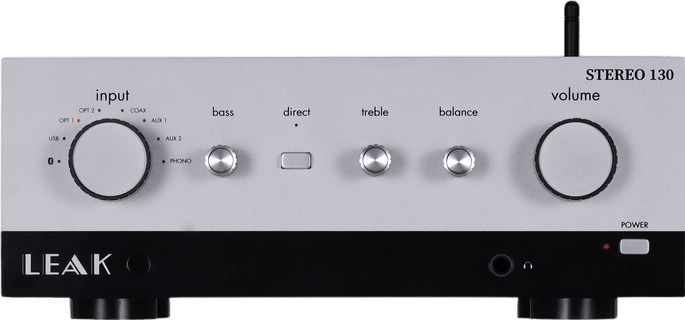
The LEAK STEREO 130 is a high performance, high-fidelity integrated amplifier for the modern-day audio enthusiast. It is designed to be the perfect match to a wide variety of both analog and digital sources, thanks to its diversity of inputs.
Leak is a British hifi brand, founded in 1934 by Harold Joseph Leak. Its TL/12 tube amplifier became a BBC standard in 1951, and its 1961 Sandwich speaker used a diaphragm of expanded polystyrene between two aluminum skins. The brand returned in 2020 with modern electronics in classic Leak styling, in walnut or silver. The Stereo 130 has a JFET phono stage for moving magnet cartridges, a dedicated headphone amplifier and an ESS Sabre DAC, which makes it a complete compact system. The matching CDT CD Transport also plays files from USB.
Expand Details

What reviewers think

Product Strengths

  • Visually appealing retro design, reminiscent of the original Stereo 30
  • Includes modern features like a DAC, Bluetooth (aptX), and a phono stage, making it a versatile integrated amplifier
  • Dynamics are exceptional, with the amplifier able to power loudspeakers without a hint of strain
  • The overall sound is clean and smooth
  • Relatively compact in size

Product Considerations

  • Some reviewers find the sound signature slightly lean or forward of neutral and potentially 'too much of a good thing' when paired with similar-sounding speakers
  • High frequencies can be grating with poorly recorded or modern recordings
  • The source selection indicator light and remote control can be difficult to use due to legibility issues
  • The analog inputs on the back panel can be cramped when using audiophile cables
  • Bass extension and overall weight can be lacking with some loudspeaker pairings

Comparisons (according to reviewers)

  • Vs Audiolab 6000A: The 6000A sounds more modern, brisk, and neutral, while the Stereo 130 emphasizes bass and has a warmer tone
  • Vs Musical Fidelity M3si: The M3si lacks the digital prowess of the Stereo 130, but has more power and a warmer sound
  • Vs NAD C 338: The NAD is described as 'fat, fit, and fun' with a richer midrange, while the Stereo 130 is more incisive

Takeaway: The Leak Stereo 130 offers a unique blend of vintage aesthetics and modern functionality, making it a stylish and versatile option for enjoying various music sources. It could be worth buying to add character and a retro vibe to a listening setup.

Video review

About the brand
Leak is a British hifi brand, founded in 1934 by Harold Joseph Leak. Its TL/12 tube amplifier became a BBC standard in 1951, and its 1961 Sandwich speaker used a diaphragm of expanded polystyrene between two aluminum skins. The brand returned in 2020 with modern electronics in classic Leak styling, in walnut or silver. The Stereo 130 has a JFET phono stage for moving magnet cartridges, a dedicated headphone amplifier and an ESS Sabre DAC, which makes it a complete compact system. The matching CDT CD Transport also plays files from USB.
Website author headshot
Julian Shapiro
ExtremeHiFi Writer
Stereo 130 (Silver)
Product Page
Product Page
Product image
Brand logo
WiiM
Amp & Amp Pro
299
/
11
Reviews
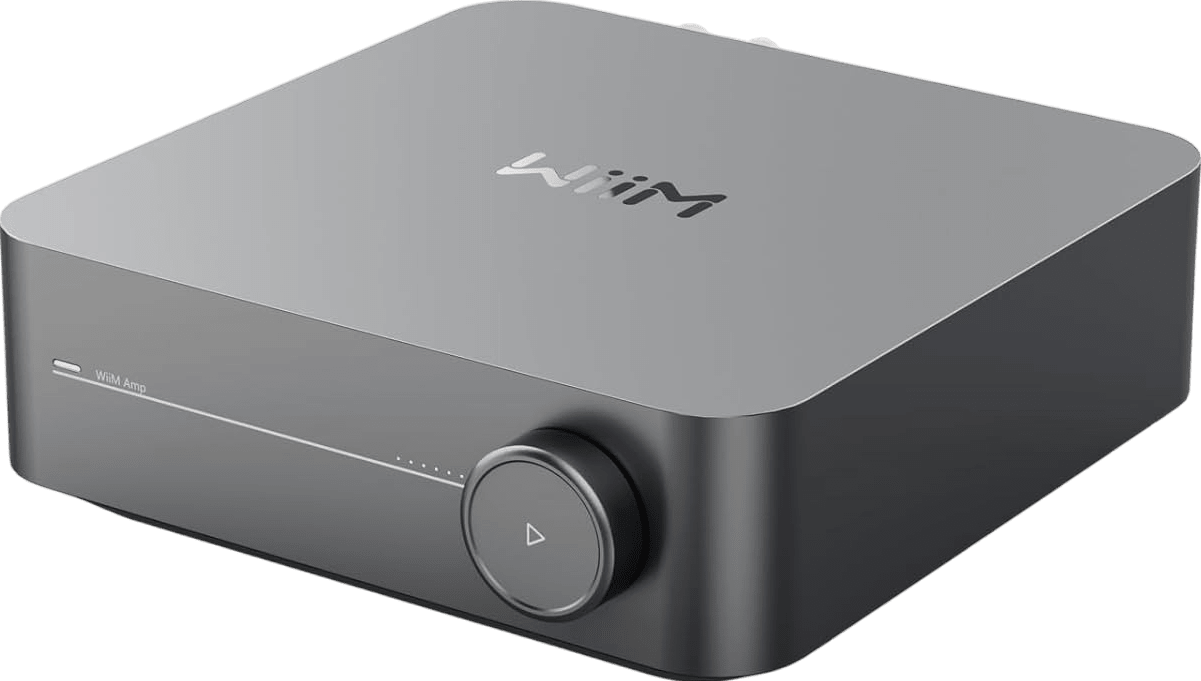
WiiM Amp is a compact yet powerful streaming amplifier that combines Hi-Fi sound quality with modern streaming features. It delivers 60W per channel into 8 ohms and features a high-performance ESS DAC chip for pristine audio reproduction.
WiiM makes network streamers, streaming amplifiers and wireless speakers, all controlled from its WiiM Home app, with most of the hifi range under $600. The app brings streaming services, multi-room grouping, a 10-band parametric EQ and RoomFit room correction into one place, and the hardware works with AirPlay 2, Chromecast, Alexa and Roon. The streamers send a bit-perfect digital signal to an external DAC. The WiiM Pro and Pro Plus add streaming to an existing system, and the WiiM Amp & Amp Pro, on our Best Class D Amplifiers list, drives passive speakers directly.
Expand Details

What reviewers think

Product Strengths

  • Features and performance at an affordable price
  • Stylish, well-made design
  • Native support for nearly all streaming services like Spotify and Tidal, both wired and wirelessly
  • Simple setup via smartphone and the WiiM Home app
  • Includes HDMI with ARC as well as CEC, and a dedicated subwoofer output with bass management

Product Considerations

  • Bluetooth and AirPlay communication can be inconsistent, particularly for iPhone users
  • At higher volumes, the amp can struggle with certain genres of music or recordings with greater dynamic range, resulting in audible distortion and clipping
  • Sound can become more sterile and two-dimensional at higher volumes, glossing over nuance and fine detail
  • May not be suitable for larger spaces or for those who prefer listening at higher volumes, especially with speakers that are hard to drive
  • Some users might hear a faint whine from the chassis or speaker tweeters, as the amplifier is not completely silent

Comparisons (according to reviewers)

  • Vs Arylic B50: The WiiM Amp has a more complete chassis design with an internal power supply, a slicker app, and better overall industrial design, even if they use similar chipsets
  • Vs Bluesound PowerNode/Audiolab 6000A Play/7000A: The Bluesound and Audiolab products are better options for larger spaces or higher listening volumes
  • Vs Denon AV receiver: The Denon AV receiver does not have the streaming comprehensiveness of the WiiM Amp
  • Vs Sonos Amp: The Sonos Amp may sound better, but the WiiM Amp combined with a subwoofer can provide a more complete sound experience for less money
  • Vs PS Audio Sprout 100: The WiiM Amp's amp and DAC sections are superior

Takeaway: The WiiM Amp is a versatile and affordable streaming amplifier packed with features, making it a great entry point into hifi or a convenient solution for smaller spaces. Its comprehensive streaming capabilities and user-friendly app provide a seamless listening experience.

Video review

About the brand
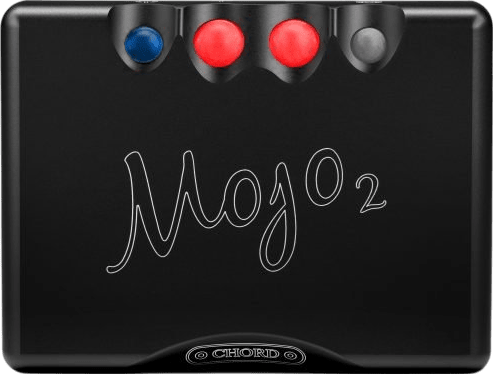
WiiM makes network streamers, streaming amplifiers and wireless speakers, all controlled from its WiiM Home app, with most of the hifi range under $600. The app brings streaming services, multi-room grouping, a 10-band parametric EQ and RoomFit room correction into one place, and the hardware works with AirPlay 2, Chromecast, Alexa and Roon. The streamers send a bit-perfect digital signal to an external DAC. The WiiM Pro and Pro Plus add streaming to an existing system, and the WiiM Amp & Amp Pro, on our Best Class D Amplifiers list, drives passive speakers directly.
Website author headshot
Julian Shapiro
ExtremeHiFi Writer
Amp & Amp Pro
Product Page
Product Page
Product image
Brand logo
Marantz
PM7000N
999
/
10
Reviews
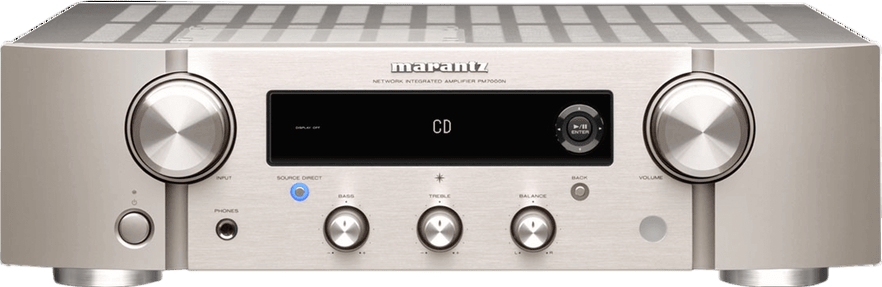
Engineered and extensively tuned by a team drawing on decades of Hi-Fi expertise, the PM7000N provides exceptional performance for your audio collection. Whether digital or analog, enjoy the most musical sound from any source.
Marantz is a hifi and home theater brand founded in 1953. It started in New York, and Shirakawa Audio Works has been its manufacturing home since 2002. Many of its amplifiers use HDAM, Marantz's own modules that replace standard op-amps, and HEOS streaming is built into its receivers and network products for multi-room playback. The CINEMA receivers include the slimline Cinema 70s, and entry receivers have preamp outputs for every channel so power amplifiers can be added later. The PM7000N combines a DAC, network streaming and a phono input in one integrated amplifier.
Expand Details

What reviewers think

Product Strengths

  • The Marantz PM7000N is a 'just-add-speakers' streaming system with an entertaining performance and class-leading clarity
  • It provides big, spacious and insightful sound
  • It integrates a DAC, network module, and access to various music streaming services via the HEOS platform
  • Many reviewers point out its versatility, being an all-in-one solution
  • It has a nice sparkly treble and a deep rounded mid-bass

Product Considerations

  • The HEOS app is considered robust and easy to use, but some find it not as good as BluOS or Naim streaming apps, some point out that it is not integrated with Qobuz
  • The front-panel navigation buttons are described as plasticky
  • Some find the on-unit display screen small, but this is not always seen as a negative
  • It lacks a USB-B input, so it cannot be used as a USB DAC

Comparisons (according to reviewers)

  • The PM7000N offers a more dynamic mid-bass and is tonally more even than the Cyrus 1 Cast, but the Cyrus 1 Cast is more dynamic in the bass department
  • The PM7000N trumps the Bluesound Powernode 2i with greater clarity and expression

Takeaway: The Marantz PM7000N offers a practical way to enjoy a wide variety of music sources with great sound and comprehensive features. Its all-in-one design simplifies a home audio system, and it could be a good choice for audiophiles who appreciate functionality and streaming.

Video review

About the brand
Marantz is a hifi and home theater brand founded in 1953. It started in New York, and Shirakawa Audio Works has been its manufacturing home since 2002. Many of its amplifiers use HDAM, Marantz's own modules that replace standard op-amps, and HEOS streaming is built into its receivers and network products for multi-room playback. The CINEMA receivers include the slimline Cinema 70s, and entry receivers have preamp outputs for every channel so power amplifiers can be added later. The PM7000N combines a DAC, network streaming and a phono input in one integrated amplifier.
Website author headshot
Julian Shapiro
ExtremeHiFi Writer
PM7000N
Product Page
Product Page

Brands

No items found.
What's ExtremeHiFi?

We're the encyclopedia of hifi—the largest library of hifi audio products and reviews. We read every review, talk to every brand, and help you figure out what to buy. We also have the largest database of used products to browse. Search our database to see everything.

Product Categories