Welcome
A power conditioner sits between the wall and the system and removes noise on the mains, or in the case of a regenerator, makes a new sine wave from scratch. Whether it helps depends on how dirty your supply is and how sensitive the equipment is; the effect ranges from nothing to obvious. These are the units with the most reviewer coverage, from a $1,000 filter strip to full regenerators.


Products on this list





What reviewers think
Product Strengths
- Improves sound quality by cleaning electrical lines and lowering the noise floor, resulting in greater clarity and detail
- Acts as a non-sacrificial surge protector, safeguarding connected equipment from power surges and spikes without damaging the unit
- Offers a more composed, tight, and clean sound, enhancing dynamics and liveliness in resolving systems
- Features a well-built and attractive design that looks like a piece of high-end audio equipment
- Ground Noise Dissipation System reduces ground-related noise without creating ground loops
Product Considerations
- Improvement in sound quality may be subtle (3-5%), and might only be noticeable in revealing systems
- Does not come with a power cord, which must be purchased separately
- May not help with buzzing or humming from components if the power is already relatively clean
- Can be considered expensive for what is essentially a power strip, especially when factoring in the cost of a recommended power cord
- Its elongated format can make it difficult to integrate in narrow hifi cabinets
Comparisons (according to reviewers)
- Vs Niagara 1000: The Niagara 1200 has a better design and more attractive aesthetics, and includes an extra high current outlet
Takeaway: The AudioQuest Niagara 1200 is a well-designed power conditioner that protects audio equipment from surges, while subtly enhancing sound quality by lowering the noise floor and improving dynamics, making it a worthwhile addition to a revealing system. It helps the music sound more lively and composed—like cleaning a dirty window.
Video review
About the brand


What reviewers think
Product Strengths
- Eliminates DC from the power line, preventing transformer buzz in amplifiers
- Creates a blacker background and reduces noise and hiss from speakers
- Does not limit current, allowing amplifiers to perform optimally
- Improves clarity, soundstage, and dynamics
Product Considerations
- May sound a little cold out of the box, but improves over time
Comparisons (according to reviewers)
- Vs PS Audio P20: PSM 156 is cleaner and clearer with more treble extension, while P20 offers voltage regulation and a warmer sound
- Vs AudioQuest Niagara 1200/3000: PSM 156 creates a blacker background and sounds bigger and richer
Takeaway: The PSM156 is a great way to clean up power and improve a system's sound. It helps bring out the best in the gear and makes listening more enjoyable.
Video review
About the brand


What reviewers think
Product Strengths
- Nice looking industrial design
- Can eliminate distortion and DC on the mains
- Sleek digital display with comprehensive information regarding incoming and outgoing power, current consumption, and other pertinent details
- Can deliver up to 1.2 KW while being 85% efficient
- Input voltage is allowed to vary considerably without affecting the output voltage, the range is 174 to 275 volts according to PS Audio
Product Considerations
- For the price, mistakes such as razor sharp edges are unexpected
- Instrumentation is not very accurate
- Device is rather noisy at low frequencies
- Meters are not accurate, and are trying to make you feel better about the signal than it really is
- High current port (zone D) has higher impedance due to an inrush limiter, which limits dynamic power, so it is not the one you are supposed to use with high power amplifiers
- There is no single test case of either proper listening tests or measurements that indicates these devices do any good
Takeaway: The PowerPlant has nice industrial design and a sleek digital display with comprehensive information. It helps eliminate distortion and keeps the output voltage steady, making it a stable source of power for audio systems.
Video review
About the brand

What reviewers think
Product Strengths
- Significantly reduces noise and distortion in AC power, leading to improved clarity, detail, and a lower noise floor
- Enhances dynamics, bass performance, and soundstage, and instruments sound more distinct and natural
- Provides a reservoir of current (Transient Power Correction) to support amplifiers, improving their ability to deliver power to speakers
- Offers surge and over-voltage protection, automatically shutting off when detecting 140 volts and up
- Features multiple outlets (12) with separate banks optimized for different components (high-current, digital, analog)
Product Considerations
- The unit is heavy, weighing around 81 pounds, making it difficult to manage and set up
- Requires a high-quality power cord (not included) to maximize its benefits, and the input uses a 20A IEC socket
- Can emit a slight buzzing sound, which may be related to harmonic distortion on the utility line, and this was experienced by a small percentage of users
- Some reviewers feel that the receptacles are physically tight, and inserting a male plug takes considerable effort
- The Niagara 7000 only comes in black
Comparisons (according to reviewers)
- Vs Shunyata Everest 8000: Both reduce AC line distortion and improve sonics, but which one is better is a personal choice
- Vs Shunyata Hydra Denali line: Both make dramatic improvements in noise dissipation, but have different engineering approaches and interface differently with audio equipment
Takeaway: The AudioQuest Niagara 7000 is a high-performance power conditioner that significantly improves audio quality by reducing noise and distortion. It protects your audio system and helps it achieve its full potential.
Video review
About the brand

What reviewers think
Product Strengths
- High-end fit and finish with a thick, rolled aluminum chassis provides a streamlined look, and the component feels extremely solid
- Improved power stability to audio equipment may result in better audio performance, depending on the type of power supply used in components
- Allows more precision and inner detail to shine through
- Reduces noise floor
- Excellent build quality for its price
Product Considerations
- Limited in terms of power demand and system complexity, with its 300-watt maximum continuous output capacity and six power outlets
- Those with Class A or larger Class AB amplifiers will need to plug their amps directly into the wall outlet, or switch the two optional high-current outlets to the "filter high current" mode—and thereby forego the benefits of power regeneration
- Use of LED indicators rather than a touchscreen provides less information visually, and the unit cannot be connected to the internet to view historical data
- The remote control is required to activate the MultiWave and CleanWave functions
- An additional mains distribution lead to increase the number of outlets ups the effective output impedance and can result in overloading the regenerator
Comparisons (according to reviewers)
- Vs PS Audio PerfectWave PowerPlant 5: The Stellar PowerPlant 3 has less power output capacity, but one-third the impedance, and the reviewer could not detect a definite audible difference between the two models
- Vs Shunyata Research Hydra Delta D6 power conditioner, Audioquest Niagara 3000, and IsoTek V5 Aquarius power conditioner: The choice comes down to either power regeneration from PS Audio, or power conditioning from one of these competitors
Takeaway: The Stellar PowerPlant 3 AC regenerator provides a solid, stable power foundation that can improve audio performance. If seeking clean power for a system, this product might be the right choice.
Video review
About the brand


What reviewers think
Product Strengths
- Audibly removes grain from the musical canvas to have all instruments and voices more visible and separated
- Extracts musical content and showcases it in a humane, palpable fashion
- Provides protection against interference and voltage spikes present in the home power grid, and filters current
- Improves the sound and protects the connected gear
Product Considerations
- May force all units to act in a certain way that is more generalized, instead of being able to listen to specialty cables, plugs, amps, rear, DAC, or streamer
- May kill a bit of personality of the connected components
- The unit is sensitive to vibrations and ideally belongs in an Artesania piece of furniture with dampeners, having it on a hard floor next to a speaker is a bad idea
Comparisons (according to reviewers)
- The PC-3 SE EVO+ gave up nothing versus Furutech RTP-6 passive, and merely shifted the subjective balance on the speed/body axis in favor of the latter
- The GigaWatt PC-3 SE EVO+ is not really better than the Acoustic Revive power strip, but it is also not worse, which is something special
- The PC-3 SE EVO+ is more evolved, more organic, more believable, and better in almost every aspect versus MIT Powerbar set
Takeaway: The GigaWatt PC-3 SE EVO+ improves the sound by audibly removing grain and showcasing the musical content. It also protects the connected equipment and could be worth buying if one is trying to get the best sound from their hifi system.
Video review
About the brand


What reviewers think
Product Strengths
- Multifunction power distributor/conditioner with a host of functions to measure the quality of your power supply
- Cleans up the mains supply without affecting the dynamics of the system
- Immediate sense that unwanted noise in the system is lowered, which in turn allows you to hear more of what is going on in the music
- The system gains in discipline, and the stereo image becomes even more clearly defined in space, moving towards the listening position when the system was powered through the Gordian filter
- Significant added value to all styles of music, all sound recording and mixing
Product Considerations
- Some care is needed to connect all the equipment correctly, that is, the live and neutral of each device to the corresponding live and neutral outputs of each Gordian output connector
Comparisons (according to reviewers)
- Plugged into its high-current outlets, these hifi speakers performed better via the Gordian than passive Furutech RTP-6
- The Gordian's active compensation filtering dominate Furutech's passivity
Takeaway: The Lab 12 Gordian cleans up the power supply to allow more detail to be heard in the music. It can also show the analytics of the power supply.
Video review
About the brand


What reviewers think
Product Strengths
- Provides surge suppression up to 20,000 amps without deteriorating over time
- Reduces power line noise interference, resulting in a lower noise floor and blacker background
- Hand built without the use of circuit boards or clip on connections
- Possesses extremely low DC resistance for optimizing dynamic range
- Designed to fully isolate components connected to it from EMI and RFI
Product Considerations
- The aR2p models share a common filter across both outlets
- The aR2p's surge suppression properties do not deteriorate and remain entirely silent
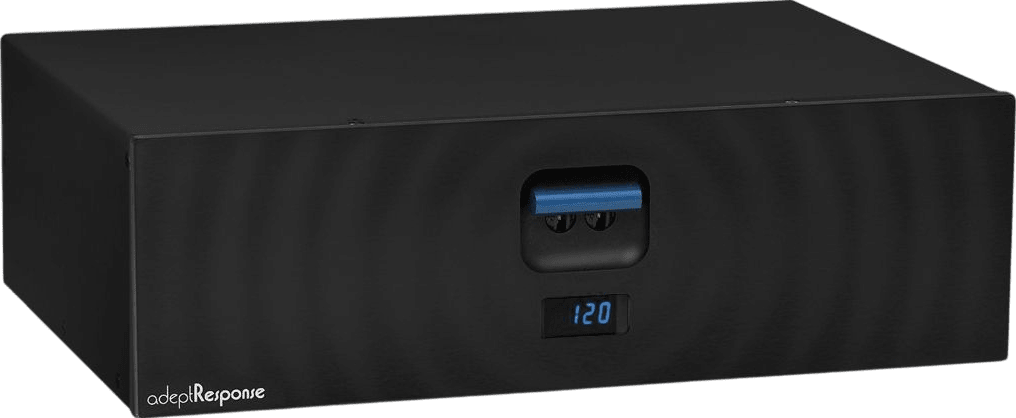
- The smallest Audience power conditioner is limited to two outlets, but larger Audience adeptResponse units can be selected, albeit at significantly higher cost
Takeaway: The aR2 is a helpful addition for any audio enthusiast that wants to clean up power and allow components to live up to their potential. It protects from surges and lowers noise, letting one enjoy music more.
Video review
About the brand

What reviewers think
Product Strengths
- Transient Power Correction (TPC) provides up to 55A peak current for power amps/integrated amps/subwoofers
- AC ground noise dissipation cleans AC power
- Non-sacrificial surge protection protects equipment from power surges up to 6000 volts or 3000 amps without sustaining damage
- A 'black background' in the music is created by lowering the noise floor, allowing for cleaner and clearer music
- The Niagara improves the sound of a high end system in terms of detail, rhythmic drive, palpable images, air, tuneful bass, and extended highs
Product Considerations
- Niagara products do not come with power cords, so one must supply their own
- The chrome faceplate on some Niagara models can pick up micro-scratches
- Sonic benefits may depend on the quality and resolving ability of the existing audio system
- The Niagara 3000 may not be compatible with all amplifiers' protection circuitry
Comparisons (according to reviewers)
- Compared to the AudioQuest Niagara 1200, the Niagara 3000 provides more octaves of level-x, differential-mode noise-filtering, banks of ground-noise dissipation, and transient power correction
- Compared to the AudioQuest Niagara 1200, a reviewer felt they were hearing just a bit more detail and an increase in soundstage height and width
Takeaway: The AudioQuest Niagara helps a system reach its full potential by lowering the noise floor and cleaning up the power. The Niagara can affect sound quality by improving the clarity and spaciousness of music.
Video review
About the brand

What reviewers think
Product Strengths
- Quieter background, revealing more dynamic, textural, and tonal detail in music
- AC ground noise dissipation, which cleans the ground and differentiates AudioQuest from other brands
- Clean power, with the 5000 providing better cleaning than the 3000
- A transient power correction circuit that can supply 80+ amps peak and provides a low impedance for amplifiers
- Ultra-linear noise-dissipation technology that reduces AC line noise over a wide bandwidth
Product Considerations
- Power cords do not come included and must be purchased separately
- The character of the Niagara must be matched to the system
- Sizable unit, similar in size and weight to a stereo amplifier
- The effectiveness of any power conditioner is highly variable and dependent on the user's specific power conditions, so 'try before you buy' is highly appropriate
- Some reviewers found that the Niagara 5000 sounded shrill at first and required a settling in period
Comparisons (according to reviewers)
- Vs PS Audio P20—Niagara 5000 exhibits a more outgoing personality and displays a tad more flamboyance
Takeaway: The Niagara cleans up power, making music clearer and more detailed, which allows components to perform even better. It is a thoughtfully designed conditioner that can be a valuable addition to a system struggling with polluted mains.
Video review
About the brand
What reviewers think
Product Strengths
- Notably quieter, purer backdrop of stillness and silence enhances spatial relationships and dynamic expressiveness
- Delivers an enhanced sense of space and a keener sense of organicness, affording augmented neutrality and naturalness to musical tone and texture
- Elevated clarity adds to the revelation of more intricate musical details and conveys another level of authenticity to the dimensionality found in soundstaging and imaging
- Improved resolution, tone, and dynamic range
- Better midrange and lower-treble resolution lowers the noise floor
Video review
About the brand


What reviewers think
Product Strengths
- Noticeably reduces background noise and provides dead silence when nothing is playing
- Offers tunable RF biasing with red and purple settings to optimize sound to your system and personal tastes
- Provides full current to all 8 outlets, allowing for no compromise when running multiple amplifiers
- Increases detail and resolution, expands the soundstage, and adds clarity to vocals
Product Considerations
- One reviewer found it so light that they needed to affix pads to keep it in place when adding or removing power cords
- The red setting is not optimal for electronic music, as it can become too light
Comparisons (according to reviewers)
- Compared to the Furman IT-Reference 15i, the PowerCell 8 SX provides immediately apparent improvements in detail, resolution, and soundstage, whereas the Furman IT-Reference 15i did not have any discernible difference in sound
- Compared to the original PowerCell8 SE, the PowerCell 8 SX has greater transparency, dynamics, inner detail, and resolution—which creates an actively engaging listening experience
Takeaway: The PowerCell 8 SX unlocks a system's potential by cleaning power and reducing noise. It offers tunable settings to optimize the sound for different music types.
Video review
About the brand


What reviewers think
Product Strengths
- The V5 models (Titan and Sigma) have a much nicer visual design and styling compared to previous EVO3 models, with a better match between the Titan and Sigma aesthetics
- The V5 Sigmas boasts an improved DCR design that brings it closer to the ideal of zero Ohms resistance, which ensures cleaner power delivery and more transparent/accurate audio reproduction
- The V5 Sigmas has seven independent outlets, each with its own dedicated clean power network
- The V5 Sigmas offers versatile outlet configuration with three high current, low impedance outlets (16A) and four medium current outputs (10A)
- The V5 Sigmas has a remarkable 35% improvement in amperage and a 40% increase in current handling capability due to decreased circuit resistance
Product Considerations
- The V5 Sigmas has a premium pricing which may not suit all budgets
- The V5 Titan bass may be a little bit tighter, which may be a problem for the EVO3 Titan because it was a little bit looser—it kind of adds a little bit more bloom and fat to the sound
- The V5 models are hard products to review, because reviewers have to keep powering down and breaking down the whole system to unplug everything, and then have to let it warm up again rinse and repeat multiple times
Comparisons (according to reviewers)
- V5 Titan bass was a little bit tighter than the EVO3 Titan, but the Evo III's bass, because it was a little bit looser, kind of adds a little bit more bloom and fat to the sound
- Unless it's used with an amp beyond the Sigmas scope, the V5 is arguably closer in performance to the EVO3 Titan
Takeaway: The Isotek V5 Titan and Sigmas improve a hifi system's sound, opening up the soundstage and giving a better listening experience. With cleaner power and stylish design, these products can make a system sound its best.
Video review
About the brand

What reviewers think
Product Strengths
- Brings calmness and focus to the sound
- Features both High Current outputs for power amplifiers and Low Current outputs for sources, with different filtering for each
- Measurably drops the noise floor, which is reproducible
- New enclosure has a sleek design
- Delivers greater power with unrestricted current delivery within the limits of the power supply
Product Considerations
- Impossible to predict which model fits best among power conditioners
- It is necessary to have components of the very highest quality, designed specifically for purpose with the correct architecture
- Some might consider these 'exotic', they represent a critical and important part of the function and appropriate to use
- Building a better EVO3 Aquarius was enough of a daunting prospect that it took IsoTek more than a dozen years to make a viable replacement—that is claimed to improve on the EVO3
Comparisons (according to reviewers)
- Vs IsoTek EVO3 Aquarius: The V5 makes the EVO3 sound like it's on strong antipsychotics, providing a peppy, immediate, and upbeat rhythm, leaving the EVO3 behind
Takeaway: The Isotek Aquarius V5 looks great and helps bring out the best sound from equipment by lowering the noise floor. It could be a worthwhile addition to a hifi setup.
Video review
About the brand


What reviewers think
Product Strengths
- Reduces noise in the audio system, leading to a blacker background and improved clarity
- Enhances soundstage definition, making images more palpable and less diffuse
- Does not compress dynamics, providing sufficient power to amplifiers when needed
- Features proprietary technologies like QR/BB, NIC, and CCI for enhanced performance and protection
- Exceptional build quality, with a solid and flawless finish
- Features connectivity options for enhanced usage
Product Considerations
- Relatively expensive, with a price point that may seem high compared to some associated equipment
- May require a break-in period for optimal performance
- The looks are rather unassuming
- The Typhon T2 lacks the cable cradles that are on the Denali
Comparisons (according to reviewers)
- Denali v2 combines Triton v3-like high-current capability with superior noise reduction
Takeaway: The Shunyata Research Denali 6000/S v2 keeps your system safe and helps it perform its best by reducing noise and improving clarity. It is a well-crafted component designed to extract the best performance from connected components, providing peace of mind for audiophiles.
Video review
About the brand


What reviewers think
Product Strengths
- Clean, consistent power, which is essential for optimal sound quality
- Reduces acoustic noise and eliminates floor noise or any background interference
- Isolates equipment from power line impurities and provides surge suppression and noise reduction
- Improves dynamics, detail, imaging, and the sense of scale
- Enhances overall quietness
Product Considerations
- The RM 15 weighs a manageable 21kg (46lbs) measuring 42cm x 29cm x 9cm (16.5" x 11.5" x 3.5")
- It is bigger and much heavier than some alternatives
Comparisons (according to reviewers)
- The RM 15 had evident dynamics and bass, compared to Weizhi
- The RM-15 held its own very well, even though the Audience is more expensive
- The RM 15 gave a slight nod in dynamics, but the HB Cable Designs PowerSlave had more detail, transparency, and general realism
Takeaway: The RM 15 provides pure isolation and consistency, even with spikes in household power or electrical storms, protecting valuable equipment. It enhances musical enjoyment by improving dynamics, detail, and overall sound quality, making it a worthwhile addition to any hifi system.
Video review
About the brand